On 5 December 2013 the six winners announced of the UN Human Rights Prize were announced: Biram Dah Abeid of Mauritania, a son of freed slaves who works to eradicate the heinous practice; Hiljmnijeta Apuk of Kosovo, a campaigner for the rights of people with disproportional restricted growth short stature; Liisa Kauppinen of Finland, President emeritus of the World Federation of the Deaf; Khadija Ryadi, Former President of the Morocco Association for Human Rights; Mexico’s Supreme Court of Justice the Constitutional Court; and Malala Yousafzai, the Pakistani schoolgirl who was shot by the Taliban for attending classes and is now a renowned education activist. The award ceremony will take place at UN Headquarters in New York on 10 December 2013, as part of the annual commemoration of Human Rights Day [The Prize, which is bestowed every five years, is an honorary award given to individuals and organizations in recognition of outstanding achievement in human rights.]
Posts Tagged ‘New York’
Winners of 2013 United Nations human rights prizes announced today
December 5, 2013Iran — Can Human Rights Defenders start thinking about a safe return?
November 19, 2013

Things are clearly changing in Iran. It is too early to think that human rights defenders can all safely go back, but the fact that Arseh Sevom – a moderate and informative blog voice on Iran – devotes a part of today’s post by Peyman Majidzadeh to this question is telling. Here are some excerpts: Read the rest of this entry »
Norway Proposes UN Resolution on Protection of Women Human Rights Defenders
November 2, 2013“Women human rights defenders risk violence, prejudice and exclusion for their courageous work. Through this resolution, we want to contribute to their protection,” says Norway’s Foreign Minister Børge Brende. Norway is coordinating the UN General Assembly’s work in New York on the protection of human rights defenders. The UN Special Rapporteur on the situation of human rights defenders, Margaret Sekaggya, has on several occasions expressed great concern for the challenging working conditions of human rights defenders. This is the first time a resolution on the situation and significance of women human rights defenders has been put on the table. “We want to send a clear signal of support to women who fight for human rights around the world, and we call on member states to enable and allow for their work to make our societies better,” says Brende. The resolution also calls on national human rights institutions, regional organizations and the UN system to take action. The draft resolution was formally presented on Friday 1 November.
via Norway’s Proposal to Protect Women Human Rights Defenders – The Nordic Page – Panorama.
Good Breaking News: Iranian lawyer Nasrin Sotoudeh among freed political prisoners
September 18, 2013Today, 18 September 2013, the BBC and other news media brought the good news that Iran lawyer Nasrin Sotoudeh is among the freed political prisoners which Iran is reported to have freed (at least eight). Nasrin Sotoudeh was arrested in 2010 and jailed for six years on charges of acting against national security. She was one of the three Final Nominees of the MEA in 2012 and winner of the European Parliament’s Sakharov award.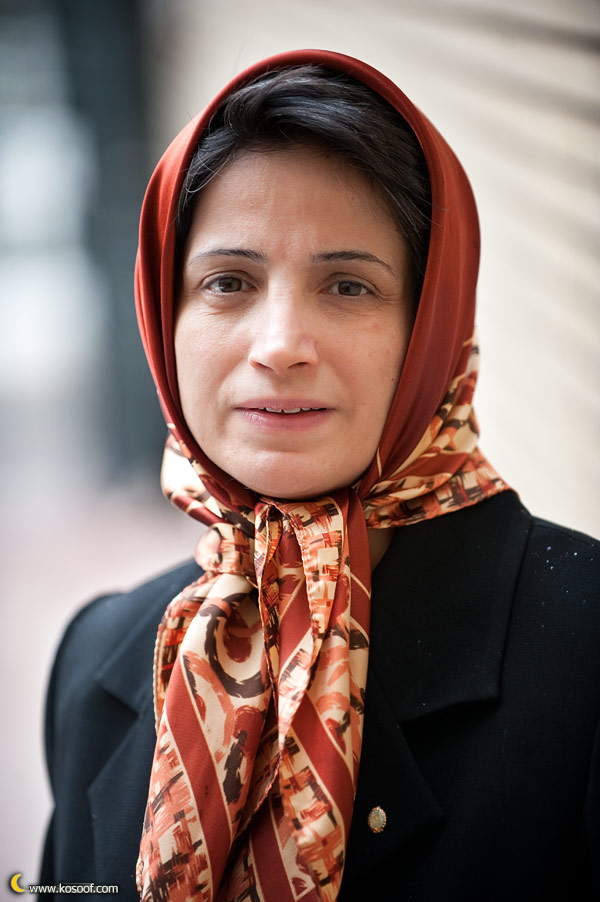
The release of the political prisoners comes just days before Iran’s new President Hassan Rouhani visits New York for the UN General Assembly. In his election campaign, he promised to free political prisoners.
via BBC News – Iran lawyer Nasrin Sotoudeh among freed political prisoners.
Sri Lankan HRD, Sunila Abeysekera, dies: tribute by A paper bird
September 9, 2013
The last time I saw Sunila Abeysekera was almost three years ago, over breakfast on one of her very occasional visits to New York. Some people, myself included, were trying to talk her into applying for my old job at Human Rights Watch, a post I thought far too small for her. She politely demurred, in different terms: “My life is enough of a problem,” she said, “and the last thing I need in it is a large organization.” She talked about the dangers of having your work commodified and separated from the people it’s about – either by a bureaucracy, or by the kinds of personality cults that thrive around those who get called (as she was: often, unwillingly, and accurately) “heroes.” Both distract from the simple realities of the stories you try to tell, and the stories, she said, were what counted.At the same time, she was at one of those points (they came quite frequently) where her life was in serious danger in Sri Lanka. People were threatened enough by the stories for which she was witness and messenger that they wanted to kill her. Her friends wanted her to get out, and she herself said she wanted a quiet place somewhere, to rest and think. She said that kind of thing much more often than she meant it. The resting part was something of which she was utterly incapable. She never did it, not till the very last.
Sunila died on 9 September, back in Colombo, at 61, after a long battle with cancer. I didn’t know her very well, but I thought of her as a role model as well as friend. She was scholar, activist, intellectual, feminist, and listener. Others will have more and better things to say about her. I’ll just remember this: while always subordinating herself to the stories she had to tell – – horrible stories, many of them, about rape, torture, murder in the long Sri Lankan civil war – her passion for truth and her personal compassion were always part of them. Without being that kind of person, a kind you instantly recognize but can’t possibly describe, she would never have heard them, would never have won trust or become a witness. A lot of august philosophers these days write and theorize about the role of the witness in contemporary politics and ethics, but the writing was unnecessary as long as she was alive. You could point at Sunila, and understand.
I would say “rest in peace,” but wherever she is, she isn’t resting.
via Sunila Abeysekera, witness: 1952-2013 | a paper bird.
UN Human Rights Prize 2013 open for nominations till 5 July
May 13, 2013
The prize, which is awarded to individuals or organizations every five years was first given out 45 years ago on the 20th anniversary of the adoption of the Universal Declaration of Human Rights.
Italian Flavia Pansieri new Deputy UN High Commissioner For Human Rights
March 16, 2013
(Flavia Pansieri with Secretary-General Ban Ki-moon. UN Photo/Rick Bajornas)
Two panels in New York on woman human rights defenders on 5 and 12 March 2013
March 2, 2013The first side event “Killings and Violence against Women based on Sexual Orientation and Gender Identity” will take place on 5 March 2013 (16h30) at the Armenian Convention Center
630 2nd Avenue (at 35th street)
Panelists
TAMARA ADRIAN (Venezuela)
General Director of Diverlex Diversidad e Igualdad a Través de la Ley,
World Trans Secretary of ILGA
MONICA TABENGWA (Botswana)
Africa Researcher, LGBT Program, Human Rights Watch
KIM VANCE (Canada)
Co-Director, ARC International
Moderator
CYNTHIA ROTHSCHILD (USA)
Consultant, COC Netherlands Read the rest of this entry »
Law Students Participate in Hearing of human Rights Committee on violations in Cape Verde
March 23, 2012This is just one good example of how students can get practically involved in work as human rights defenders. Four law students from the Indiana Purdue University Indianapolis will go to New York this week to participate in the United Nations Human Rights Committee hearing on allegations of the corporal punishment and sexual abuse of elementary school children in Cape Verde.
The four are part of a group of Robert H. McKinney School of Law students who, in partnership with Delta Cultura Cabo Verde, a Cape Verdean nongovernmental organization, researched and wrote a shadow report to a United Nations committee discussing how the government of Cape Verde has failed to combat corporal punishment and sexual abuse of school children (Articles 2, 7 & 24 of the International Covenant on Civil & Political Rights).
“Writing the shadow report has been a rewarding experience. Not only do we get the practical experience of legal writing, but we learn a little more about the world and help prevent human rights violations globally,” said one of the students. Unlike periodic reports submitted by states parties, a shadow report provides U.N. human rights treaty bodies with various forms of information — including victims’ personal accounts, data and statistics —independently prepared by NGOs and details violations by states parties of a specific treaty. “Shadow reporting enables grass-roots human rights defenders to engage in United Nations human rights monitoring and enforcement mechanisms,” Program in Human Rights Law manager Perfecto Caparas said.
for more information: Diane Brown IU Communications habrown@iupui.edu
Students in New York invited to compete with videos on Human Rights Defenders
October 6, 2011With my predilection for the use of images in the protection of human rights I can only applaud the initiative of the Robert F. Kennedy Center for Justice and Human Rights and New York State United Teachers, who on 5 October launched a student video contest based on the Speak Truth To Power human rights curriculum. The contest invites New York State students to create a 3-6 minute video about a human rights violation and the defender(s) fighting to stop it. The project is aimed at demonstrating the capacity of each individual to create change. “This video contest will engage students in what it means to be a defender against human rights violations.” said NYSUT President Richard C. Iannuzzi
Prior film-making experience or expertise is not required. Details about the contest can be found at http://www.speaktruthvideo.com. All winning videos will be featured on the Speak Truth to Power web site, http://www.rfkcenter.org/sttp. The grand prize video will be shown at the 2012 Tribeca Film Festival. The deadline for entries is January 31, 2012.
 Hans Thoolen on Human Rights Defenders and their awards