Posts Tagged ‘murder’

A sombre reminder: homicide a bigger killer than armed conflict and terrorism combined

December 8, 2023
Globally, homicide is a bigger killer than armed conflict and terrorism combined.

© Unsplash/David von Diemar

On Friday 8 December 2023 the UN Office on Drugs and Crime (UNODC) said that more people were killed due to homicide than armed conflict and terrorism combined in 2021, with an average of 52 lives lost per hour worldwide. The Global Study on Homicide analyzes the complex dynamics behind these violent deaths and includes a special section on how organized crime is driving death rates up in Latin America and the Caribbean.

The report examines homicides related to criminal activities and interpersonal conflict, as well as “socio-politically motivated homicides” such as the deliberate killing of human rights defenders, humanitarian workers and journalists.

UNODC chief Ghada Waly said the loss of thousands of lives each year to homicide is “a sombre reminder” of the collective failure of the international community to reduce all forms of violence by 2030, in line with the Sustainable Development Goals (SDGs). The report revealed that during the period from 2019 to 2021, an average of roughly 440,000 deaths worldwide were due to homicide – more than conflict-related or terrorist killings combined. 

UNODC said 2021 “was an exceptionally lethal year”, marked by 458,000 homicides.  The spike was in part linked to economic repercussions from the COVID-19 pandemic and to a rise in organized crime and gang-related and socio-political violence in several countries.

Organized crime accounted for 22 per cent of homicides globally, and 50 per cent in the Americas, where competition among organized crime groups and gangs can spark a sudden and sharp rise in “intentional homicides”, as has happened in Ecuador and Haiti.

The Americas also lead the world in highest regional homicide rate per capita, with 15 per 100,000 population in 2021, or 154,000 people.

Africa had the highest absolute number of homicides at 176,000, or 12.7 per 100,000 population, “and available data suggests that the homicide rate is not falling, even as decreases have been registered in other regions,” the report said.  Meanwhile rates in Asia, Europe and Oceania were far below the global per capita average of 5.8 per 100,000 population in 2021.

Firearms were used in most killings in the Americas in 2021, or roughly 75 per cent, whereas in Europe and Asia they were involved in 17 and 18 per cent of homicides, respectively. 

Men accounted for 81 per cent of homicide victims and 90 per cent of suspects, but women are more likely to be killed by family members or intimate partners. “Although they represent 19 per cent of homicide victims in total, they account for 54 per cent of all killings in the home and 66 per cent of all victims of intimate partner killings,” UNODC said. 

Aid workers under attack 

The data also showed that the deliberate killings of human rights defenders, environmental defenders, community leaders, journalists, and aid workers represented nine per cent of global homicides. “The threat has increased for humanitarian aid workers, who witnessed a higher average number of fatalities over the period 2017-2022 than 2010-2016,” the authors said. 

https://news.un.org/en/story/2023/12/1144392

Floribert Chebeya: DR Congo policeman sentenced to death for murder

May 13, 2022
Floribet Chebeya
Floribert Chebeya, murdered in 2010, received regular threats in his 20-year career

On 12 May 2022 – via the BBC – came the welcome news that finally a Congolese military court has sentenced a high-ranking policeman to death for his role in the 2010 murder of human rights activist Floribert Chebeya, which caused national outrage. See: https://humanrightsdefenders.blog/2021/02/12/dr-congo-should-reopen-inquiry-into-murder-of-floribert-chebeya/

Commissioner of police Christian Ngoy Kenga Kenga was found guilty of murder, desertion and misappropriation of weapons and ammunition. Mr Chebeya’s body was found bound and gagged in his car in Kinshasa.

There is a moratorium on capital punishments in DR Congo. However, the death penalty has not been abolished and military courts continue to hand down such sentences.

Another policeman, Jacques Migabo, was also sentenced to 12 years during the trial. He admitted to having strangled Mr Chebeya and his driver, Fidèle Bazana.

Police commissioner Paul Mwilambwe, who had been a key witness in the trial, was acquitted, UN-sponsored Radio Okapi says.

Mr Mwilambwe, who had been a fugitive since the murder and was only repatriated last year, named ex-President Joseph Kabila and the former head of police General John Numbi, as having ordered the killing. Neither Mr Kabila nor Gen Numbi have commented publicly, but a military court has charged the general with the murder of Mr Chebeya and his driver. He has fled the country and his current whereabouts are not known.

Kenga, Migabo and Mr Mwilambwe were initially sentenced to death in 2011, with Kenga arrested in 2020 in the southern city of Lubumbashi before the case was re-opened last September. Floribert Chebeya led the Congolese charity Voice of the Voiceless, and as a prominent critic of the government received regular death threats during his career of more than 20 years. See also: https://www.trueheroesfilms.org/thedigest/laureates/BA601D45-292F-61CB-530A-17FE52D5F974

He went to the police headquarters to meet the then head of the national police force, Gen Numbi, on the day he was killed. His driver Mr Bazana also went missing that day with authorities later pronouncing him dead.

See also: https://www.news24.com/news24/africa/news/widow-of-slain-drc-human-rights-defender-urges-drc-to-try-alleged-mastermind-who-fled-20220516

https://au.news.yahoo.com/floribet-chebeya-dr-congo-policeman-112444817.html

Rohingya human rights leader Mohibullah murdered in Bangladesh refugee camp

September 30, 2021

Illustration: Fortify Rights

Illustration: Fortify Rights

Fortify Rights, a human rights organisation on Thursday urged the Bangladesh government to immediately investigate the assassination of Rohingya human rights leader Rohingya human rights leader Mohibullah

In a written statement the organisation called on the authorities to get to the bottom of the murder and hold the perpetrators accountable. No one has claimed responsibility for his murder, but a Rohingya leader claimed that Ullah was killed by the extremist group Arakan Rohingya Salvation Army, which was behind several attacks on Myanmar security posts in recent years.

This is a devastating loss for everyone who knew and loved Mohib Ullah, and it is also a tremendous loss for Myanmar, the Rohingya people, and the human rights movement more broadly,” said Matthew Smith, chief executive officer at Fortify Rights. 

He also said Mohibullah was committed to truth, justice, and human rights and had been facing serious and sustained threats in Bangladesh.  Smith further said the Rohingya leader had needed protection. 

Dhaka must prioritize the protection of Rohingya people, including human rights defenders, who routinely experience heightened threats to their personal security,” he added. 

Mohibullah, 46, who led the Arakan Rohingya Society for Peace and Human Rights, was shot dead at around 8:30pm at a Kutupalong camp office in Cox’s Bazar on Wednesday.  

He had represented the Rohingya community at the United Nations Human Rights Council in 2019.   In his address to UNHRC, he said: “Imagine you have no identity, no ethnicity, no country. Nobody wants you. How would you feel? This is how we feel today as Rohingya …”

For decades we faced a systematic genocide in Myanmar. They took our citizenship. They took our land. They destroyed our mosques. No travel, no higher education, no healthcare, no jobs … We are not stateless. Stop calling us that. We have a state. It is Myanmar.”

Mohibullah came to the limelight on 25 August 2019 when a rally organised by Arakan Rohingya Society to observe two years of the latest Rohingya exodus from the Rakhine state of Myanmar, drew more than 100,000 people.

https://www.tbsnews.net/bangladesh/fortify-rights-calls-swift-probe-rohingya-leader-mohibullah-murder-309355

https://www.theguardian.com/world/2021/sep/29/rohingya-leader-shot-dead-in-bangladesh-refugee-camp

https://www.bnionline.net/en/news/mohibullahs-murder-sends-deadly-message-human-rights-defenders

One of the Killers of Berta Caceras was just brought to justice

July 7, 2021

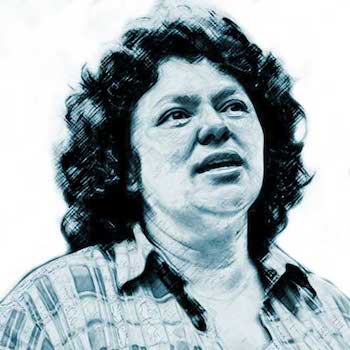
According to Common Dreams, human rights defenders on Monday 5 July 2021 welcomed the conviction of Roberto David Castillo Mejía, a Honduran businessman and former military intelligence officer, for the March 2016 assassination of Indigenous environmental activist Berta Cáceres, while calling on authorities in the Central American nation to bring everyone involved in planning the murder.

Memorial day: Environmental activist Berta Caceres was killed in her home in March 2016 Photo CC by Trocaire on Flickr.
(Photo CC by Trocaire on Flickr.)

The Guardian reports that the Tegucigalpa high court found Castillo—formerly head of the dam company Desarrollos Energéticos, or DESA—guilty of collaborating in Cáceres’ murder. The court ruled that Cáceres was killed for leading the campaign to stop construction of the $50 million Agua Zarca dam, a local grassroots effort which caused delays and monetary losses for DESA.

The environmentally destructive hydroelectric project is located on the Gualcarque River, which is sacred to the Indigenous Lenca people, and was approved despite its failure to comply with Honduran and international environmental requirements.

Cáceres, who was 44 years old when she was murdered, was co-founder and coordinator of the Council of Popular and Indigenous Organizations of Honduras (COPINH), a group dedicated to the defense of the environment in Intibucá and the protection of the Lenca. In 2015 she received the prestigious Goldman Environmental Prize for leading “a grassroots campaign that successfully pressured the world’s largest dam builder to pull out of the Agua Zarca Dam” project at Río Gualcarque. See also: https://humanrightsdefenders.blog/2020/06/10/nina-lakhanis-who-killed-berta-caceres-reviewed/

COPINH hailed Monday’s verdict as “a popular victory for the Honduran people” that “means the criminal power structures failed to corrupt the justice system.”

Erika Guevara-Rosas, Americas director at Amnesty International, said in a statement that “the long-awaited prosecution of David Castillo, convicted as co-author of the murder of Berta Cáceres, is an important step towards justice and the result of her family and COPINH’s tireless efforts to secure truth, justice, and reparation. However, justice for Berta will never be truly complete until everyone who took part in the crime, including those who planned it, is brought to justice.

We urge the prosecutors to keep uncovering the truth,” Guevara-Rosas continued. “Until all those responsible are held accountable, other human rights defenders in Honduras will continue to lose their lives, for raising their voices and defending the most vulnerable. The Honduran authorities must put an end to impunity.”

Noting that Honduras is “the most dangerous country for defenders of land, territory, and the environment,” Guevara-Rosas admonished the Honduran government, which she said “seems to look the other way when human rights defenders are attacked instead of fulfilling its obligation to protect them.”

“Authorities must take this seriously and do whatever is necessary to keep human rights defenders safe from harm, so that a crime like the murder of Berta Cáceres is never repeated,” she added.

A 2017 report (pdf) by international legal experts concluded Cáceres’ murder was not an “isolated incident” and alleged “willful negligence by financial institutions.” The report found that the targeting of Cáceres was part of a “strategy” by DESA employees, private security firms, and public officials “to violate the right to prior, free, and informed consultations of the Lenca.”

“The strategy was to control, neutralize, and eliminate any opposition,” the report said.

Berta received several awards: https://www.trueheroesfilms.org/thedigest/laureates/2AD0CEE4-80CB-3234-04B4-F2ED7ACBE6C5


http://redgreenandblue.org/2021/07/06/environmental-activist-berta-caceras-murdered-killer-just-brought-just

Colombia accounts for half the number of all environmental defenders murdered in 2020

March 3, 2021

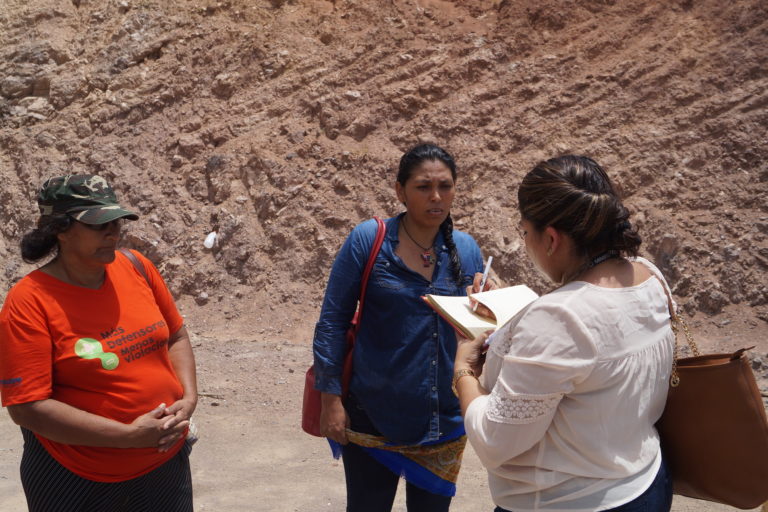
On 2 March 2021 Mongabay writes about the terrible situation that of the 331 murders of environmental defenders registered worldwide in 2020, Colombia had the most murders at 177.

Impunity still reigns when it comes to the murders of human rights defenders around the world, according to the Front Line Defenders organization, in its global analysis of 2020. The analysis examined 331 homicides of leaders who fight for the defense of the land, the environment, Indigenous peoples, women and the LGBTIQ community. Of these, 177 cases occurred in Colombia.

During the COVID-19 pandemic, defenders have been exposed not only to the day-to-day risks they face from their work and the virus, but also to pressure from governments to control information. Not all of these HRDs are recognized, but the Digest counts some 50 laureates from Colombia [see https://www.trueheroesfilms.org/thedigest]

Many of those killed, the report states, supported communities in their fight against COVID-19 , worked on food security issues, access to medical care and were critical of governments. For Front Line Defenders , the health crisis increased risks, especially for women defenders, leaders of the LGBTIQ community and vulnerable populations such as refugees, migrants and sex workers.

Fidel Heras Cruz traded the tranquility of a simple, quiet life for the front line of the fight against economic powers that threaten the environment. Photo: Courtesy COPUDEVER.

For Shirley Muñoz, who coordinates information systems for the Somos Defensores de Colombia, the pandemic made the state abandonment more evident. Colombia accounts for 53% of all rights defenders cases globally in 2020.

“In many territories, the control of the pandemic was exercised by illegal armed groups through fear and threats, and defenders had to be locked up in their homes, which made them more at risk,” Muñoz said in an interview with Mongabay Latam. A large number of the murders that we verified were committed in or near the defenders’ homes.”

Front Line Defenders believes that cases may continue to increase as verifications of allegations are made, and that upcoming figures from Somos Defensores de Colombia will bring the final number of deaths in 2020 higher.

According to Front Line Defenders, 69% of the murders that occurred last year occurred against leaders who worked in defense of the land, the environment and the rights of Indigenous peoples.

Report authors point out that the Intergovernmental Platform for Biodiversity and Ecosystem Services (IPBES) has emphasized that the loss of biodiversity could put world food security at risk and Indigenous communities play a fundamental role in the conservation of ecosystems. Since 2017, Front Line Defenders has registered 327 murders of defenders of the rights of Indigenous peoples in the world.

They tried to kidnap Irma Lemus (center) on her journey into exile. Photo: Radio Progreso.

In Colombia, violence has been particularly directed against those who participate in the implementation of the Peace Agreement with the guerrillas of the Revolutionary Armed Forces of Colombia (Farc), those who are part of the initiatives to replace drug crops, and those who oppose natural resources extraction projects.

In addition to homicides, Front Line Defenders also recorded the most common types of human rights violations, which in the case of Latin America are physical attacks (27%), detentions and arrests (19%), harassment (13%), legal actions against leaders (13%), and smear campaigns (7%) .

The report notes that many defenders who were detained were also exposed to an increased risk of contracting COVID-19. Even though many countries allowed the release of prisoners due to the pandemic, according to the report, defenders were not among those released despite serving sentences for “non-violent crimes.”

In the case of Colombia, it is likely that the number of attacks on defenders reported in 2020 has dropped, but this does not mean – warns Muñoz – that the violence has. The reason is that during the pandemic it is presumed that there is a large under-registration since many organizations in charge of registering this type of human rights violations were not able to monitor the territories. So, Muñoz concludes, “there were attacks, but not all of them were recorded.”

Javier Francisco Parra was shot dead in the municipality of La Macarena, Meta, Colombia. Photo: Cormacarena.

Front Line Defenders stresses that direct human rights violations were compounded by restrictive legislation that was introduced in response to the pandemic. “Several other laws were passed designed to limit the ability of human rights defenders and civil society to function well and safely. […] Other governments, including Peru, Honduras, Mexico and Panama, allowed development, deforestation and mining projects to continue despite economic closures, ”the report indicates.

Human rights defenders not only have to protect themselves from physical attacks and murder, but also from digital attacks.

In 2020, a team of Front Line Defenders protection coordinators received 304 requests for support for the following reasons: 26% received threats via social media such as Facebook, Twitter and Instagram; 16% were hacked or had their social media accounts compromised; 11% reported telephone surveillance; another 11% reported physical monitoring and 9% said that devices with important information were confiscated or stolen from them.

More than a quarter of those most affected by this type of attack are human rights defenders (17%); rights of the land, the environment and Indigenous peoples (16%). Front Line Defenders claims it received dozens of reports of online gatherings – especially from LGBTIQ groups, feminists and black advocates – that were infiltrated by attackers taking advantage of security breaches

https://www.washingtonpost.com/opinions/2021/03/02/colombia-biden-violence-cauca-duque-peace-farc/

Mary Lawlor addresses Lawlessness in case of Berta Caceres and other HRDs

March 3, 2021

On 2 March 2021, Mary Lawlor – the UN’s Special Rapporteur on Human Rights Defenders – wrote for Amnesty International “Five years after Berta Cáceres was murdered, states are still failing to protect human rights defenders". With the presentation of Mary Lawlor's report to the UN Human Rights Council coming up this week, the piece is worth reading in full:

It’s five years today since environmental human rights defender Berta Cáceres was murdered in her home in Honduras. [see: https://www.trueheroesfilms.org/thedigest/laureates/2AD0CEE4-80CB-3234-04B4-F2ED7ACBE6C5]

She was one of hundreds of human rights defenders killed that year because of their peaceful work, and hundreds more defenders have been killed every year since. Those responsible are rarely brought to justice. Although some have been convicted of Berta Cáceres’ killing, others believed to have been involved have still not been brought to account. [see: https://humanrightsdefenders.blog/2020/06/10/nina-lakhanis-who-killed-berta-caceres-reviewed/]

It’s a familiar and continuing story, in Honduras and across the world, where those responsible for the murder of a human rights defender often enjoy impunity. This week I am presenting my latest report to the United National Human Rights Council in Geneva, and it is on the killings of human rights defenders and the threats that often precede them.

At least 281 human rights defenders were killed in 2019, with a similar number expected to be recorded for 2020. Unless radical, immediate action is taken we can expect hundreds more murders again this year.

Since 2015, at least 1,323 defenders have been killed. While Latin America is consistently the most affected region, and environmental human rights defenders like Berta Cáceres often the most targeted, it is a worldwide issue. At least 281 human rights defenders were killed in 2019, with a similar number expected to be recorded for 2020

Between 2015 to 2019, human rights defenders were killed in at least 64 countries, that’s a third of all U.N. member states. Those collecting the data agree that underreporting is a common problem. The number of defenders killed is likely significantly higher than the figures we have.

We know that on every continent, in cities and the countryside, in democracies and dictatorships, governments and other forces threatened and killed human rights defenders. Many, like Berta Cáceres, are killed in the context of large business projects.

Why do so many governments and others kill human rights defenders working peacefully for the rights of others? Partly because they can, safe in the knowledge that there is unlikely to be the political will to punish the perpetrators.

While some states, particularly those with high numbers of such killings, have established dedicated protection mechanisms to prevent and respond to risks and attacks against human rights defenders, defenders often complain that the mechanisms are under-resourced.

And in too many cases, businesses are also shirking their responsibilities to prevent attacks on defenders or are even responsible for the attacks.

These murders are not random acts of violence that come out of nowhere. Many of the killings are preceded by threats. As Amnesty International noted, Berta Cáceres’ murder “was a tragedy waiting to happen,” and she had “repeatedly denounced aggression and death threats against her. They had increased as she campaigned against the construction of a hydroelectric dam project called Agua Zarca and the impact it would have on the territory of the Lenca Indigenous people.”

And yet her government failed to protect her, as so many governments fail to protect their defenders. Since I took up this mandate in May last year I have spoken to hundreds of human rights defenders. Many have told me about their real fears of being murdered, and have shown me death threats made against them, often in public.

They tell me how some threats shouted in person, posted on social media, delivered in phone calls or text messages, or in written notes pushed under a door. Some are threatened by being included on published hit lists, receiving a message passed through an intermediary or having their houses graffitied. Others are sent pictures through the mail showing that they or their families have been under long-term surveillance, while others are told their family members will be killed. It’s not that complicated. It’s up to states to find the political will to prevent killings by responding better to threats against human rights defenders, and to hold murderers to account

I’ve been told by defenders about a coffin being delivered to the office of an NGO; a bullet being left on a dining room table in their home; edited pictures of them being posted on Twitter, showing them having been attacked with axes or knives; and an animal head being tied to the door of their organization’s office.

Those advocating for lesbian, gay, bisexual, transgender and intersex rights, and women and transgender human rights defenders, are often attacked with gendered threats, and targeted because of who they are as well as what they do. Women and LGBTI people demanding rights in a patriarchal, racist, or discriminatory contexts often suffer specific forms of attack, including sexual violence, smears and stigmatisation.

The murders of human rights defenders are not inevitable, many are signalled in advance, and yet governments fail, year after year, to provide enough resources to prevent them, and fail, year after year, to hold the murderers to account. In fact, states should not only end impunity but also publicly applaud the vital contribution that human rights make to societies.

This week I’ll again remind the U.N. that their members are failing in their moral and legal obligations to prevent the killings of human rights defenders. It’s no use for government officials to wring their hands and agree that the murder of Berta Cáceres and other defenders is a terrible problem and that someone should do something about it.

It’s not that complicated. It’s up to states to find the political will to prevent killings by responding better to threats against human rights defenders, and to hold murderers to account.

https://www.amnesty.org/en/latest/news/2021/03/asesinato-berta-caceres-estados-siguen-sin-proteger-defensores/
DR Congo should reopen inquiry into murder of Floribert Chebeya

February 12, 2021
A man wearing a T-shirt with portraits of Floribert Chebeya and Fidèle Bazana attends the trial in Kinshasa on April 30, 2013 of policemen accused of killing the two men in 2010.
A man wearing a T-shirt with portraits of Floribert Chebeya and Fidèle Bazana attends the trial in Kinshasa on April 30, 2013 of policemen accused of killing the two men in 2010. © 2013 Junior D. Kannah/AFP via Getty Images

On 11 February 2021 Human Rights Watch stated that The Democratic Republic of Congo government should reopen its investigation into the 2010 double murder of the leading human rights defender Floribert Chebeya and his driver, Fidèle Bazana, following new revelations about the case. Amid allegations reported by international media outlets that the murders were carried out on the orders of the police chief at that time, Gen. John Numbi, Human Rights Watch called for a credible, impartial, and independent inquiry.

On February 8, 2021, in radio interviews with Radio France Internationale (RFI) and Deutsche Welle, two Congolese police officers in exile admitted to taking part in the murders of Chebeya and Bazana on the premises of police headquarters on June 1, 2010 and provided a detailed account of the murder. At a meeting in April 2019, President Felix Tshisekedi personally told Chebeya’s wife and human rights groups that he was committed to conducting an impartial investigation into the murder.

President Tshisekedi should put his words about investigating the Chebeya murder into action,” said Thomas Fessy, senior Congo researcher at Human Rights Watch. “The latest revelations show the need for a new inquiry and present the best chance to see that justice is done.

On June 1, 2010, Chebeya received a telephone call asking him to attend a meeting at General Numbi’s office. The next day, the police said that Chebeya had been found dead in his car in the Mont Ngafula area of Kinshasa, the capital. The body of his driver, Bazana, is still missing.

Speaking to RFI and Deutsche Welle from an undisclosed location abroad, the former police drivers Hergil Ilunga and Alain Kayeye revealed details about the plan to kill Chebeya and how it was carried out. They alleged that police officers asphyxiated Chebeya and Bazana, one after the other, in different police vehicles at the police headquarters.

They admitted to taking part in the murders and covering them up on the orders of Col. Daniel Mukalay, then the police intelligence chief, and Christian Ngoy, then the commander of the feared Simba battalion. The two former drivers said that both senior officers were acting upon Numbi’s instructions.

Ilunga and Kayeye said they would be ready to face justice if their safety were guaranteed. They claimed to have fled Congo in late 2020 for fear of their lives as Numbi was allegedly looking to kill them.

Chebeya was among Congo’s most vocal human rights defenders, regularly exposing abuses by the country’s security services and successive governments over many years. He was threatened and intimidated repeatedly by Congolese authorities because of his work. He received the now defunct Reebok award: https://www.trueheroesfilms.org/thedigest/laureates/BA601D45-292F-61CB-530A-17FE52D5F974

Following a widely criticized trial by a military court – with a first verdict in June 2011 and an appeal decision in September 2015 – four police officers were found guilty of murdering Chebeya and Bazana. Ngoy, along with Paul Mwilambwe and Jacques Mugabo, were tried in absentia and sentenced to death. Mukalay, the highest-ranking officer on trial, was sentenced to 15 years in prison and is currently serving his sentence at Kinshasa’s central prison. The military court also found the Congolese government at fault and ordered it to pay damages to the families of both victims.

When the trial began in November 2010, Numbi, then police inspector general, was presented to the court as a witness even though he was widely suspected to be behind the murders. In 2014, one of the fugitives, Mwilambwe, resurfaced in Senegal, where he accused Numbi of orchestrating the murders. Senegalese authorities opened an investigation and Mwilambwe was indicted in January 2015. But the proceedings stalled, and the investigation is ongoing in Senegal. Mwilambwe, a presumed key witness, has since moved to Belgium and has also said he was ready to stand trial. [https://humanrightsdefenders.blog/2015/01/13/indictment-in-senegal-a-breakthrough-in-the-congolese-chebeya-bazana-case/]

On September 3, 2020, Ngoy was arrested in Lubumbashi and immediately transferred to Ndolo military prison in Kinshasa for possession of illegal weapons. Following his arrest, Congolese human rights organizations said that the authorities should reopen the Chebeya case.

Following these new revelations, over 100 Congolese human rights groups called for the immediate arrest of Gen. Numbi and the reopening of Chebeya’s case. Ambassadors in Congo from the EU, Belgium, and the US have also all publicly backed reopening the inquiry. The United Nations Joint Human Rights Office said it was “available to assist the judiciary in shedding light on the despicable murder of Chebeya and Bazana.”

“The Chebeya and Bazana families have yet to learn the full truth and obtain justice for the gruesome killings of their loved ones,” Fessy said. “With these new revelations, the Congolese government needs to act. The judiciary should provide safe conditions to hear those who have come forward while General Numbi and other senior officials implicated in the murders should be fully and fairly investigated.”

Note the latest: https://www.theafricareport.com/74437/drc-general-john-numbi-implicated-in-the-chebeya-case-has-fled-the-country/

https://www.hrw.org/news/2021/02/11/dr-congo-reopen-inquiry-prominent-activists-murder

Film The Dissident – about Khashoggi’s murder – soon available for streaming

December 10, 2020

On 9 December 2020) the NEW-York based Human Rights Foundation announced that THE DISSIDENT, a new feature film directed by Academy Award-winning director Bryan Fogel and produced by the Human Rights Foundation (HRF), will arrive on streaming platforms for viewers to rent or own beginning 8 January, 2021. Briarcliff Entertainment, the film’s distribution partner, has also announced a limited national theatrical release on Friday, December 25.

The film exposes the labyrinth of deceit behind the high-profile October 2018 murder of Washington Post columnist Jamal Khashoggi inside the Saudi consulate in Istanbul, Turkey. Featuring never before seen surveillance footage and unprecedented access to a wealth of other damning information previously unavailable to the public, the film weaves together a story of courage, money, power, tyranny, love, and technology run amok. See: https://humanrightsdefenders.blog/tag/jamal-khashoggi/

THE DISSIDENT is a chilling illustration of what results from unchecked power,” said HRF president Thor Halvorssen. “It shines a powerful light on the darkness of authoritarianism. Dictatorships are undone by public exposure and we are committed to taking this story across the world, enlisting the partnership of the general public and civil society across the political and ideological spectrum to hold MBS and his henchmen accountable.

https://mailchi.mp/hrf.org/the-dissident-release-december-25?e=f80cec329e

Fikile Nsthangashe: “I will die for my people” and she did..

November 2, 2020

Portrait of a Community Activist

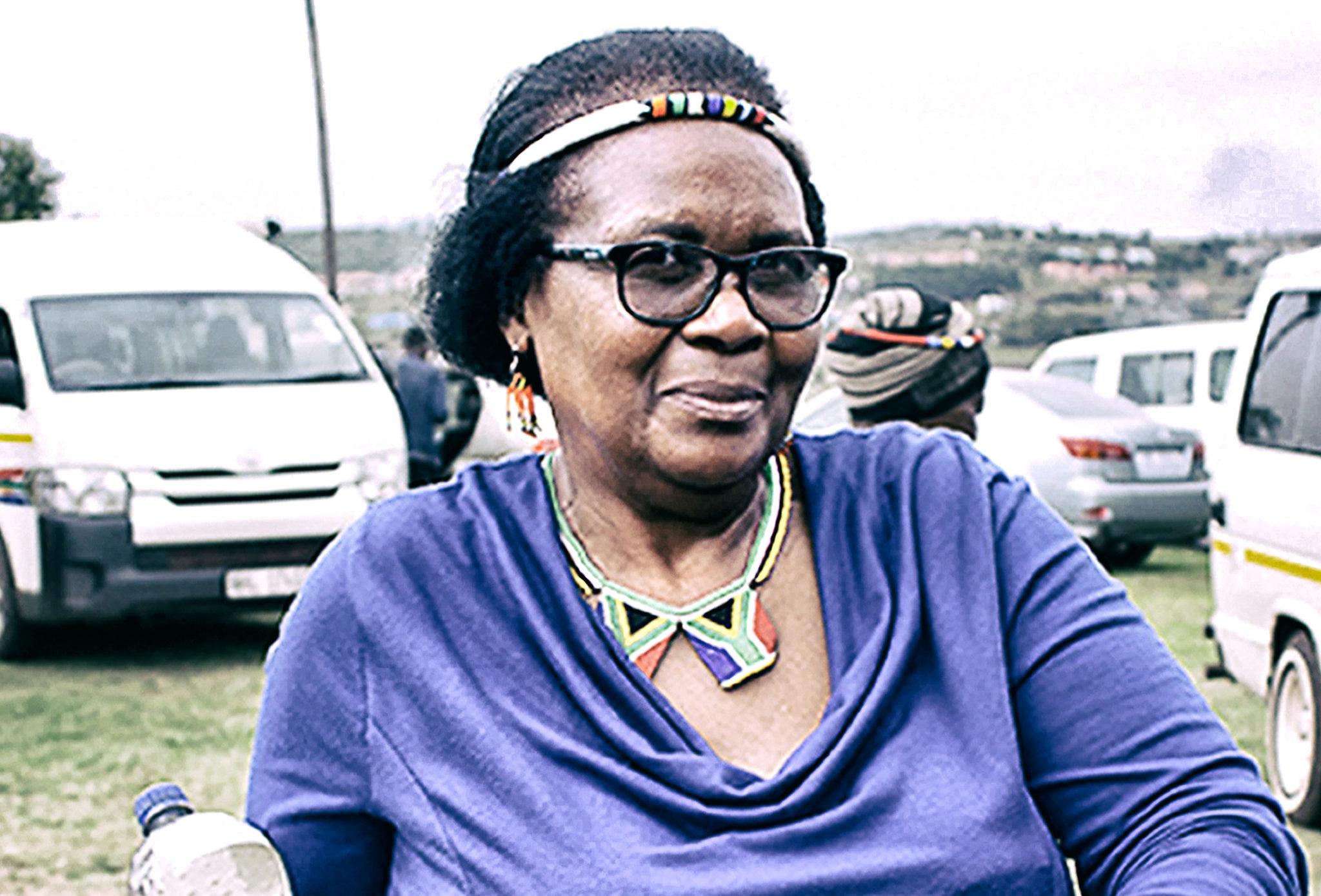
In the Daily Maverick of 1 November 2020 Estelle Ellis tells the sad story of murdered land rights defender Fikile Ntshangase in South Africa

A strongly worded statement from a large number of civil society organisations in South Africa has condemned the death of KwaZulu-Natal community activist Fikile Ntshangashe who was gunned down in her home last week as lawyers were preparing for a groundbreaking appeal fighting an order that her community organisation and those who assisted them should pay for a failed attempt to stop further mining operations in the area.

I refused to sign. I cannot sell out my people. And if need be, I will die for my people.” This was the quote that activists remembered Mama Fikile Nsthangashe by after she was gunned down in her home at Ophondweni near Mtubatuba on 22 October 2020.

As the vice-chairperson of a sub-committee of the Mfolozi Community Environmental Justice Organisation (MCEJO), she was deeply involved in the challenge against the further expansion of a large coal mine at Somkele in KwaZulu-Natal by Tendele Coal Mining (Pty) Ltd. She was described by her fellow activists as a strong, passionate and principled leader.

On Tuesday the Supreme Court of Appeal will hear one of Nsthangashe’s final stands – an appeal in the case brought by MCEJO to stop the mining operations in the area.

According to a joint statement issued by environmental rights NGO Groundworks; Earthlife Africa; Global Environmental Trust, Mining Affected Communities United in Action, the Mfolozi Community Environmental Justice Organisation, the Southern Africa Human Rights Defenders Network and Women Against Mining United in Action the South African Police were called on to act swiftly and arrest those responsible for her death.

The statement alleges that four gunmen arrived at Ntshangashe’s home on 22 October 2020 at about 18:30. Her 11-year-old grandson was with her. She was shot five times and died at the scene.

“Tendele’s coal mining operations have caused untold destruction of the environment and the homes and livelihoods of the residents of Somkhele,” the statement reads. “Over the past few months, tension has been rising in the community over the proposed expansion of Tendele’s operations, and [her organisation’s] opposition to that expansion … Recently, Tendele was pushing for an agreement to be signed between MCEJO and Tendele to the effect that MCEJO would withdraw its Court challenges of Tendele’s expansion of its coal mine at Somkhele. Mama Ntshangase refused to sign the agreement, which certain of her fellow sub-committee members signed, purportedly doing so on behalf of the organisation … She warned sub-committee members that they had no power to make decisions on behalf of MCEJO and that the agreement only benefited Tendele. She also refused to attend any of the secret meetings that other sub-committee members held with Tendele. Days before her brutal killing, Mama Ntshangase stated her intention to write an affidavit, revealing that sub-committee members had spoken to her of a payment of R350,000 in return for her signature,” she added.

According to the statement the expansion of the mine would require the relocation of 21 families (19 of them MCEJO members) from their ancestral land. Many of these families have lived on their land for generations.

We mourn the senseless tragedy of Mama Ntshangase’s murder, and condemn her killing. We call on the South African Police Service to act swiftly to arrest and prosecute her murderers,” the statement concluded.

Martin Mosweu from the Southern Africa Resource Watch said he was deeply saddened and angered by the killing of Ntshangase.

She was hailed as a courageous human rights defender by her community for standing against the Tendele Coal Mine expansion in violation of the right to a safe environment. The murder of Fikile Ntshangase is a cause of concern to the work of human rights defenders in South Africa and in the SADC region. Governments are failing in their international obligations to the Declaration of Human Rights by not protecting and supporting human rights defenders in the context of their work. In Southern Africa, people who live near mines continue to face threats of violence and intimidation from mining companies who blatantly disregard their socio-economic, land, and environmental rights. Human rights defenders continue to be threatened and killed for standing up against powerful mining companies that violate human rights, often with impunity and tacit support from governments. This is why many mining communities throughout the region are now taking a stand and demanding a new order, insisting on extractive projects that secure a beneficial win-win relationship, free and prior informed consent in involuntary displacements, and community engagement in all stages of the mining cycle for inter-generational sustainable livelihoods,” he added.

Papers filed at the Supreme Court of Appeal for a hearing on Tuesday, in one of the last battles that Ntshangase had been passionately fighting on behalf of her community, has painted a stark picture of the conflict in the area.

The appeal, brought by MCEJO and the Global Environmental Trust is against the refusal by the Pietermaritzburg High Court to issue an interdict to stop mining operations in the area.

The community claimed that the mine did not have the necessary environmental authorisation, lacked land use authorisation, had not removed or altered the traditional graves in the area according to law and had failed to comply with the Waste Act.

The mine, however, argued that it had all the valid mining rights and permissions to carry on with its operations. In papers filed at court, lawyers for Tendele, stressed that their operations were conducted in terms of valid Mining Rights and Environmental Management Programmes granted and approved by the Department of Mineral Resources in 2006 and that while the legislative framework had changed there were transitional measures put in place for mines like Tendele.

This, according to papers before court included the waste management at the mine.

According to papers filed at the Supreme Court of Appeal the Centre for Environmental Rights (CER), represented by advocate Max du Plessis SC; intervened in the matter because of its concerns that the judgment opened the door for mining companies to operate illegally. The CER also expressed its concern over a cost order made in the original case as this “would discourage communities from approaching the courts to defend their constitutional rights through the fear of being debilitated by having to pay the legal costs of industry and the state”.

For another land issue in South Africa, see: https://humanrightsdefenders.blog/2020/01/30/rural-women-in-south-africa-win-landmark-case-in-court/

Agnes Callamard calls overturned verdict in Khashoggi case “parody of justice”

September 9, 2020

An independent UN human rights investigator called the overturned verdict of Saudi Arabia’s prosecutor in the 2018 murder of journalist Jamal Khashoggi a “parody of justice” that spared “high-level” plotters.  At a regular press briefing on Tuesday, Rupert Colville, spokesperson for the UN High Commissioner for Human Rights, (OHCHR), quoted Agnes Callamard, the UN Special Rapporteur on Extrajudicial Executions, in saying, “they came at the end of a process which was neither fair nor just, or transparent“. [for earlier posts on Khashoggi, see: https://humanrightsdefenders.blog/tag/jamal-khashoggi/]

In October 2018, the 59-year-old columnist for The Washington Post was killed and dismembered at the kingdom’s consulate in Istanbul. Saudi prosecutors in Riyadh had convicted eight people for the brutal murder. However, on Monday, a Saudi court overturned five death sentences in a final ruling that jailed eight defendants for between seven and 20 years, according to Saudi State media.

The press briefing came on the heels of a series of tweets from the independent UN expert who reacted disparagingly to Monday’s verdict. “The five hitmen are sentenced to 20 years imprisonment, but the high-level officials who organized and embraced the execution of Jamal Khashoggi have walked free from the start – barely touched by the investigation and trial,” Ms. Callamard tweeted.

As for the individual responsibility of the person on top of the State”, the independent UN expert upheld, “the Crown Prince Mohammed bin Salman, he has remained well protected against any kind of meaningful scrutiny in his country“. She stated that “the Saudi Prosecutor performed one more act today in this parody of justice”, adding “but these verdicts carry no legal or moral legitimacy”.