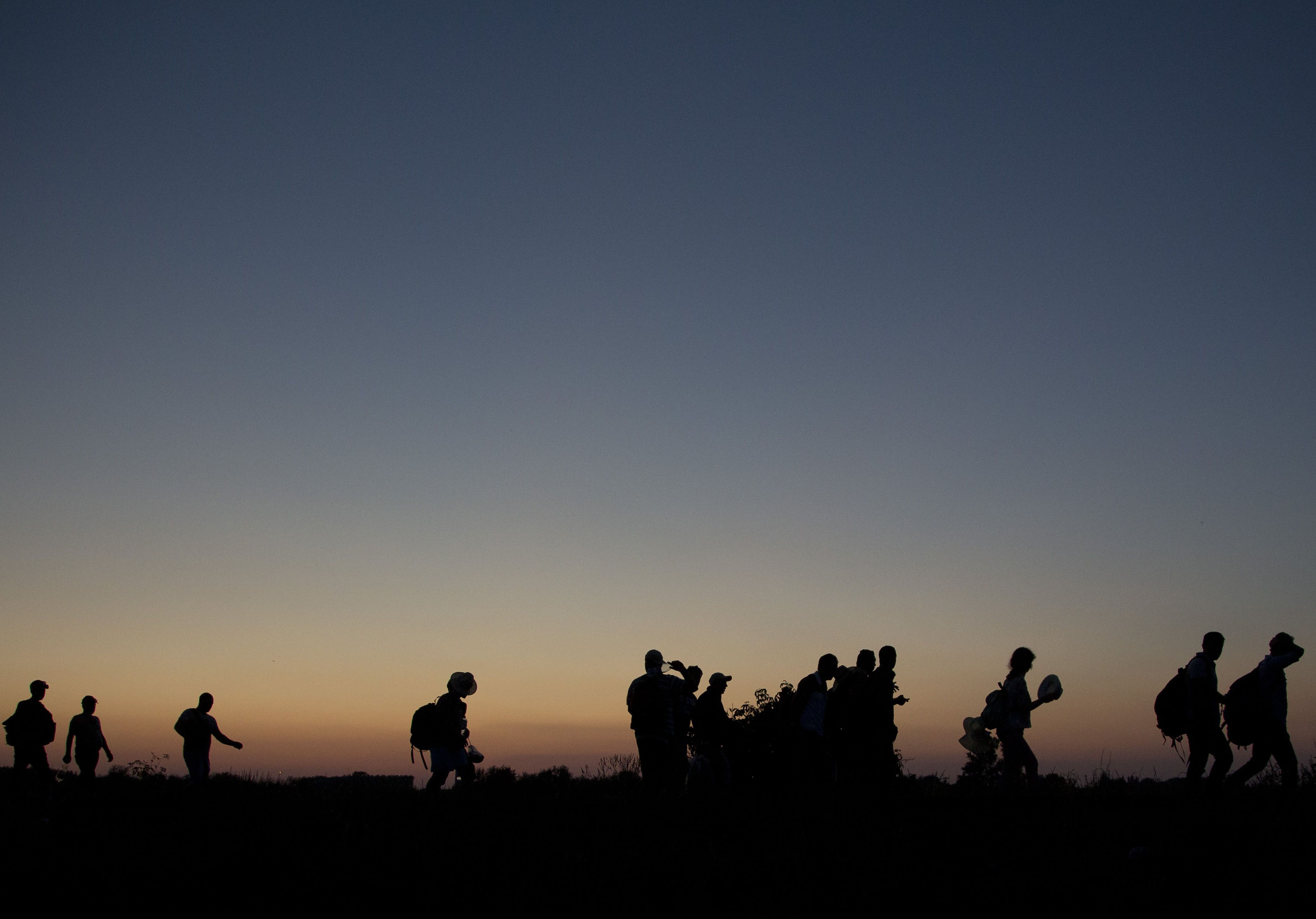
Yesterday, 20 June, was World Refugee Day 2017. Kristy Siegfried, IRIN’s Migration Editor, wrote an excellent ‘summary’ with a selection of 7 short stories ensuring that the problem is not viewed from a euro-centric position.
In recent years, it’s become an annual ritual on World Refugee Day for the UN’s refugee agency, UNHCR, to declare that levels of forced displacement have reached an “unprecedented high”. This year is no exception. As of the end of 2016, there were 65.6 million people worldwide forcibly displaced from their homes by war, violence, or persecution. That figure encompasses 40.3 million people displaced within their countries’ borders (IDPs) and 2.8 million asylum seekers, as well as 22.5 million refugees. While 2016 was another record year for forced displacement, the increase from 2015 was only 300,000. That may not sound like cause for celebration, but when you consider that the figure in 2015 jumped by 5.8 million from the previous year, it is something of an improvement.
……
In 2016, just as in 2015, more than half of refugees (55 percent) came from just three countries, but South Sudan has replaced Somalia as one of those countries. Syria and Afghanistan remain in the top two spots. Contrary to public perceptions in the West, the vast majority of refugees (84 percent) are still being hosted in the developing world. The top three host countries at the end of 2016 were Turkey, Lebanon, and Pakistan (although Uganda is likely to enter the top three this year as it continues to absorb the majority of South Sudanese refugees).
IRIN’s coverage of refugees and forced displacement is year-round and not dependent on how many boats arrive in Italy or Greece. Below is a selection of our 2017 work designed to highlight more recent developments and the wide range of issues facing refugees around the globe today:
An interesting and timely document that deserves more attention than it is getting:
The International Commission of Jurists (ICJ) has published a set of Principles on the Role of Judges and Lawyers in relation to Refugees and Migrants.
The Principles were developed by the ICJ on the basis of consultations with senior judges, lawyers, and legal scholars working in the field of international refugee and migration law (including at the 2016 Geneva Forum of Judges & Lawyers), as well consultations with States and other stakeholders on a draft version during the March 2017 Human Rights Council session, and other feedback.
The Principles seek to help judges and lawyers, as well as legislators and other government officials, better secure human rights and the rule of law in the context of large movements of refugees and migrants. They are intended to complement existing relevant legal and other international instruments, including the New York Declaration, as well as the Principles and practical guidance on the protection of the human rights of migrants in vulnerable situations within large and/or mixed movements being developed by the OHCHR.
The Principles address the role of judges and lawyers in relation to, among other aspects:
determinations of entitlement to international protection;
deprivation of liberty;
removals;
effective remedy and access to justice;
independence, impartiality, and equality before the law;
The ICJ formally launched the published version of the Principles at a side event to the June 2017 session of the Human Rights Council (click here for details), where their importance and utility were recognised by the UN Special Rapporteur on the human rights of migrants, as well as representatives of UNHCR and the OHCHR. The ICJ had earlier released the final text in connection with the Thematic Session on “Human rights of all migrants” for the UN General Assembly Preparatory Process for the Global Compact for Safe, Orderly and Regular Migration to be held in Geneva 8-9 May 2017, where in an oral statementthe ICJ was able to highlight the potential utility of the Principles in the development of the Compact.
More information about the process of development of the Principles, including the list of participants to the 2016 Geneva Forum, is available here. The consultations, preparation and publication of the Principles was made possible with the financial support of the Genève Internationale office of the Republic and Canton of Geneva. For further information, please contact ICJ Senior Legal Adviser Matt Pollard, matt.pollard(a)icj.org
For the 3rd UN Forum on Business and Human Rights (going on at the moment), ISHR published also an article by Alejandra Ancheita, 2014 Martin Ennals Award Laureate and Executive Director of ProDESC. Women defenders and those working on business and human rights represent two groups facing particular risks yet, in Mexico, the State’s response is falling short, concludes Alejandra Ancheita in her article:
“The challenges and risks that human rights defenders (HRDs) are facing in Mexico and other Latin American countries are diverse and growing daily in the absence of comprehensive State action to address this situation. The inadequate response of the Mexican government to the hundreds of cases of attacks and intimidation has become evident in various spaces. For instance in the recent Universal Periodic Review of the United Nations, the Mexican State received 24 recommendations on the situation of human rights defenders and journalists in the country, whilst the Protection Mechanism for Human Rights Defenders and Journalists, in the Interior Ministry, has received 130 applications for protection. Its response has been insufficient, particularly for those groups of defenders who face particular and heightened risks. As a woman human rights defender who works on issues related to business and the environment, I ought to know.……
Importantly, the fact that women human rights defenders face specific threats has been well established. However, existing protection mechanisms have not yet adjusted to incorporate this reality into their functioning, thus leaving women defenders vulnerable to gender-specific threats and aggressions. This is a global phenomenon and, in over 15 years as a human rights defender in Mexico, I have personally suffered violations of my human rights because of my gender and numerous colleagues have found themselves in the same situation.….
Integral security for women defenders must also seek to transform public opinion to understand and support our work. The first step in this regard is for States to recognize that working to defend certain rights can make women HRDs particularly vulnerable, for example by working on indigenous land rights in Latin America. Public statements made by public officials on the importance of our role and the legitimacy of our work are key. Authorities must investigate and punish those responsible for statements that seek to defame or attack defenders or delegitimize their work, even when such statements are made by non-State actors like community leaders or company representatives. Given the severe impact inflammatory statements have on women defenders’ work and wellbeing, they must be treated as aggressions in and of themselves.…..
In the vast majority of countries there are no specific mechanisms in place to protect human rights defenders. Where mechanisms have been created they are often hindered by operational failings, a lack of financial or human resources, the absence of gender-sensitivity, limited options for collective or community measures, and absent political will…..
As my work is based in Mexico, and due to my incorporation into the Federal Protection Mechanism for human rights defenders and journalists last year, this is the Mechanism I am best-placed to comment on. One very positive aspect of the mechanism is that four of the nine members of the decision-making body come from civil society. However, the Mechanism is also faced with several challenges.
The Mechanism falls short in the preventative aspect. Recently, various actors including Amnesty International, Human Rights Watch and the CEDAW Committee have highlighted impunity for violations against women defenders as the greatest obstacle in improving their safety. In spite of this concern, the law establishing the Mechanism does not guarantee the adequate investigation and prosecution of perpetrators.
The Mechanism also fails to incorporate a gender perspective to better understand the situation facing women HRDs. I believe that the Mexican authorities have the opportunity to set best practices in this regard, by providing gender-sensitive training to staff and by developing gender indicators to guide the granting, planning and implementation of protection measures.
Mexican authorities responsible for the Mechanism must also effectively involve defenders in the design and implementation of protection measures, as well as conducting risk assessments in a more transparent way. This is particularly important in the case of defenders working on issues that impact upon private actors such as business, or those defending land rights in isolated communities. Finally, cooperation and coordination between federal, state and local authorities in the implementation of protection measures need to drastically improve……..”
On the eve of celebrations to mark the 70th anniversary of the Normandy landings, MEA Laureate 2008 Mutabar Tadjibayeva speaks out through her exile-based NGO “Fiery Hearts Club”. She passionately appeals to Western politicians invited to the ceremony not to sit next to Russian President Vladimir Putin on the honor podium. The text is below is reproduced as is (it exists also in Russian):
We see the following solid arguments that have pushed us to make this appeal. Firstly, it is continuing policy of Putin’s intervention in the internal affairs of Ukraine that has given rise to the so-called “Ukrainian events”, has led to increased ethnic strife between the fraternal Slavic peoples of Ukraine and escalation of the armed conflict, has resulted in many casualties on both sides of the incomprehensible, artificially stirred up conflict, has led to separatism and threat of the collapse of the independent, sovereign nation. One of these days the Ukrainian people democratically elected their new president. Despite this, the situation in Ukraine causes serious concerns and is far from stability. Putin’s policy of interference and provoking conflicts continues and poses a serious threat to achievement of the peacebuilding process and stabilization of the situation in the country. Western leaders should make it clear to Putin that such interference in the internal affairs of Ukraine is intolerable. They must refuse sitting next to him during the celebrations in Normandy, which is an excellent diplomatic opportunity to express such a stance. Secondly, the major concern is the situation with the civil society in Russia under Putin. Following overall Putin’s “hunt for foreign agents” represented by Russian human rights organizations, the government put the “foreign agent” label on any independent public activity. Russian human rights activists argue that the sign “foreign agent” is offensive for human rights, environmental and social organizations. Their goal is to deliver assistance to people, defend generally valid, legal and democratic principles. This way they serve the country and the peoples of Russia. Human rights activities are not possible without an appeal to the government and the public opinion, without involvement of activists into civic campaigns. The “foreign agent” label in the current social atmosphere of xenophobia and hatred towards the West undermines the very idea of the civilian control because it makes any public activities of non-governmental organizations senseless and first of all their appeals to officials for the sake of interests of individuals and the society. With such a label, work of human rights organizations has no sense, provokes and justifies public hatred towards human rights defenders, and pushes human rights organizations to liquidation or disbandment. How can Putin, the initiator of all-out struggle against “foreign agents” among Russian human rights activists and the oppressor of free activities the of Russian civil society, sit on the podium next to the honorable leaders of democratic countries during the celebrations of the 70th anniversary of the Allied landings in Normandy? It is beyond our understanding. Thirdly, the next reason, which pushed us to make this appeal, is associated with the recent tragic deaths of well-known Russian human rights activist Andrei Mironov and Italian journalist Andrea Roccella in Ukraine during armed conflicts. Italian journalist Andrea Roccella and his translator Andrei Mironov were killed on the night of May 25 in the village of Andreevkaunder Slavyansk. According to preliminary data, their car came under a mortar attack. During the accident, French correspondent William Rogulon was wounded. Although both sides of the conflict, the official Ukrainian armed forces and the separatist armed groups supported by Russia, blame each other for the tragedy, it has been widely discussed in the Internet the version according to which the group of journalists could be attacked by separatists. OSCE has called the death of Roccella and Mironov a terrible reminder of how little is done in the east of Ukraine to protect journalists risking their lives in the conflict zone. This and all other deaths of innocent victims of the Ukrainian conflict require immediate and thorough investigation and punishment of those responsible for casualties. We believe that Russian President Vladimir Putin is personally responsible for what is happening in Ukraine, including the tragic deaths of the Italian journalist and the Russian human rights activist. The solemn events in Normandy is also dedicated to the memory of million victims of World War II, and Putin as one of the main perpetrators of human casualties occurring in Ukraine, is just not worthy to take part in the celebrations in Normandy. Fourthly, it is under Putin’s ruling that numerous cases of kidnapping and illegal extraditions of Uzbek citizens temporarily residing on the territory of Russia occur as well as those who seek asylum from persecution of the Uzbek authorities in third countries, including Uzbek labor migrants, whom the Uzbek authorities want to describe as “religious extremists and terrorists”. It is Putin that allows the Uzbek authorities increase their unauthorized surveillance and monitoring of millions of Uzbek labor migrants working in Russia through their agent intelligence networks. Cases of unauthorized detention and abduction of Uzbek labor migrants in Russia by the Uzbek security services have increased. Sometimes the Uzbek security services work through official channels, make official requests to the Russian authorities, for instance, they make requests for extradition of those, who are suspected of religious extremism in Uzbekistan. The Russian authorities arrest Uzbek labor migrants and extradite them to Uzbekistan, very often even when their complaints are under consideration of the European Court of Human Rights in Strasbourg and/or the Court ordered the Russian authorities not to extradite Uzbek citizens. It is under Putin’s regime that ethnic nationalism is growing in Russia against immigrants or non-indigenous ethnic groups of Russia and numerous fascist and ultranationalist groups conduct their activities with impunity. Every year, these groups murder with impunity and physically maim over a hundred representatives of other ethnic groups residing in Russia. The Russian enforcement agencies do not investigate most of such cases and do not punish those responsible for such crimes. Websites of fascist groups openly promote violence and methods of punishment, torture against “visitors”, and majority of materials of the Russian media are full of discriminatory, one-sided approach to coverage of events related to non-indigenous residents of Russia. Rights of migrant workers from the former Soviet countries are grossly violated in Russia not only by fascist groups, but also by employers, government and administrative bodies and officials. Most of such cases are not investigated and perpetrators remain unpunished. We call Western politicians to refuse sitting next to Putin during the celebrations in Normandy. The U.S.A. President Barack Obama and President of France Francois Hollande will meet with Russian President Vladimir Putin on June 5, 2014 on the eve of the celebrations in Normandy. We call the Presidents of the United States and France to take it seriously and demand that Putin provides clarifications on the above-described human rights violations. Western politicians should pay special attention to the issue of violation of human rights in post-Soviet countries, who are under the influence of Moscow’s policy and the role of Putin’s government in these offenses against citizens of post-Soviet countries, like, for instance, cases of abductions and extraditions. Fiery Hearts Club International Human Rights Organization also intends to organize a protest near the venue of the celebrations to mark the 70th anniversary of the Allied landings in Normandy and in the French capital. We also invite to participate in the planned protest actions those, who will support our appeal. We also call our partners, international organizations, non-profit organizations, ordinary citizens, including citizens of France and other democratic countries of the world, young people in these countries to support our appeal and express their support by signing this appeal. In order to support our appeal, by signing it and/or taking part in the protest, please contact us by email mutabartadjibaeva[at]gmail.com Thank you in advance for your support! Sincerely,
Mutabar Tadjibayeva,
Head of “Fiery Hearts Club”
International Human Rights Organization 28 may 2014
France, Paris
On 30 April 2014, an investigative officer in Russia ordered the psychiatric assessment of human rights defender Ms Tatiana Kotlyar in relation to an ongoing criminal investigation into the allegations that she falsely allowed dozens of migrants to illegally register her own apartment as their place of residence. [Tatiana Kotlyar is the deputy of Obninsk city council and is the chair of the Kaluga movement “For Human Rights”, which specialises in the protection of minority rights, including the rights of Roma and migrants. Since 2011, Tatiana Kotlyar has been allowing dozens of migrants to register her apartment as their place of residence for free. The Investigative Officer Zimin ordered the psychiatric examination, even though Tatiana Kotlyar has no history of psychiatric difficulties and has never received psychiatric treatment. Front Line believes that the decision may be linked to the fact that the human rights defender did not require payment for providing residence registration for more than a hundred people.] For actions see: http://www.frontlinedefenders.org/node/25865/action
In the meantime Front Line Defenders informs us of the death of Elena Ryabinina, a much admired Russian human rights defender, on 4 May 2014 in Moscow, aged 59. Since 2002, Ryabinina had been fighting for the rights of refugees seeking asylum from Central Asian countries. She was renowned for the compassion, enthusiasm, and optimism with which she worked to achieve better rights for refugees and asylum seekers. She must have saved dozens of Uzbeks and Tajiks who sought asylum. Although she did not have formal legal training, Ryabinina developed an impressive knowledge of asylum laws, and consulted and defended people seeking political and religious asylum. She worked with the Civic Assistance Committee and the Memorial Human Rights Center and headed the Right to Asylum program at the Institute for Human Rights.
This is a long but excellent to piece to read over the weekend by Stefania Kulaeva of the remarkable NGO Memorial in Russia:
AT THE TIME of the Olympic Winter Games in Sochi it is important to remember the human rights abuse of minorities and their defenders in Russia. This is a question for gay people but also for Roma, immigrant workers and members of other ethnic communities.Read the rest of this entry »
I happen to live – and quite happily – in Greece but there are moments that I am almost ashamed. I reported on some of these moments before, but today’s report by Human Rights WatchRead the rest of this entry »
The Bangkok Post of 24 May 2013 contains a nice little item that should give heart to those who work on UN special procedures and of wonder about the impact of all this advocacy work: It seems that Thailand has conceded a bit on issues raised by a UN special rapporteurs regarding freedom of expression and migrant labour, and to the fatal harassment of human rights defenders.The ‘admission’ is in a document included in 108 pages of communications involving special rapporteurs of the United Nations recently made available ahead of the 23rd session of the UN Human Rights Council.
The ‘new’ Commissioner for Human Rights of the Council of Europe (who took office on on 24 January 2012) Nils Muižnieks stated in his end of the year message some hard truths about the position of human rights defenders in Europe.
”Defamation, threats, verbal and physical attacks, sanctions and judicial harassment are used to deter human rights activists from working with migrants.” Nils Muižnieks states that in several Council of Europe countries, the rise of xenophobic and anti-migrant discourse has “negatively impacted” on the work of human rights defenders who protect and promote the rights of migrants.“Human rights defenders are even increasingly labelled as traitors who are threatening national identity and security,” he adds. “They are often exposed to intimidation and abuse.
“The situation in Greece is particularly worrisome as migrants have become targets of unacceptable, extreme violence notably by members, including MPs, of the far right political party of Golden Dawn.“Human rights defenders defending migrants are under threat. There have been several instances of lawyers being threatened and physically attacked in Athens as they were assisting migrants in the course of asylum and other legal procedures.
“In some Council of Europe countries the work of defenders working with migrants and their rights is being criminalised. In France, legal provisions corresponding to the so-called délit de solidarité the offence of solidarity concretely result in law enforcement bodies pressuring and punishing human rights defenders providing assistance to irregular migrants. Persons standing up for the rights of migrants have been detained, prosecuted and/or fined.“ “In Belgium, similar tendencies have been identified and persons who have been demonstrating in favour of the rights of migrants have been arrested.”



 Hans Thoolen on Human Rights Defenders and their awards