As the world marked Human Rights Day, Canada reiterated the importance of the protection and promotion of human rights defenders and their critical work. Mélanie Joly, Minister of Foreign Affairs, announced $1.85 million in funding for two projects that support child human rights defenders and a free and independent media worldwide.
Canada is contributing $850,000 to a three-year project led by Child Rights Connect to empower, to protect and promote the rights of child human rights defenders, who are increasingly engaged in global human rights challenges, without the same legal protections as adults. This funding will help Child Rights Connect promote safe and sustainable human rights advocacy by child human rights defenders in Togo, Thailand, Moldova and Brazil.
Canada will also contribute an additional $1 million to the Global Media Defence Fund, bringing Canada’s total contribution to the fund to $4 million. Administered by UNESCO, the Global Media Defence Fund works to enhance the protection of journalists and media organizations so they can carry out their critical work without fear of violence, censorship or intimidation. The fund will also ensure public access to diverse and reliable sources of news and information. [see also: https://humanrightsdefenders.blog/2024/02/12/investigative-journalism-in-arab-states-the-threats-to-journalists/]
“In the face of growing challenges to human rights globally, the work of human rights defenders and the protection of media freedom are more important than ever. Canada stands unwavering in its commitment to working with partners to safeguard and expand the protection and promotion of human rights defenders and journalists around the world.” – Mélanie Joly, Minister of Foreign Affairs
Maria Psara – writing for Euronews of 27June 2023 – says that European Union member States are trying to water down the directives for SLAPPs and Media Freedom…European lawmakers are accusing member states of trying to water down EU legislation aimed at strengthening protections for journalists and media freedom.
It would also establish several procedural safeguards and remedies, such as compensation for damages, and dissuasive penalties for launching abusive lawsuits. The JURI vote will form the basis of the Parliament’s position in negotiations with member states if it is also endorsed by the plenary in mid-July.
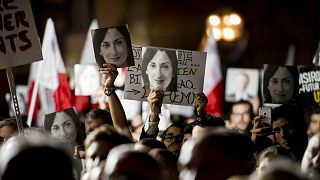
SLAPPs or Strategic lawsuits against public participation are a particular form of harassment used primarily against journalists and human rights defenders to prevent or penalise speaking up on issues of public interest. The Commission’s proposal has been dubbed as the ‘Daphne Law’ in honour of murdered Maltese journalist Daphne Caruana Galizia.
Member states, which together form the Council of the EU, have however sought to water down the text, drawing criticism for the Commission.
“I would like to express my regret concerning the weakening of the remedies against abusive court proceedings, in particular the deletion of the provision on compensation of damage and the weakening of the provision on award of costs,” Didier Reynders, Commissioner for Justice, said earlier this month after member states agreed on their negotiating position.
Parliament is seeking to redress that with German MEP Tiemo Wölken (S&D), the rapporteur on the draft directive, telling Euronews: “We made it stronger and we also added other provisions such as a creation of an ‘one stop shop’ which the SLAPPs targets can contact to receive help by dedicated national networks of specialized lawyers, legal practitioners and psychologists.”
It is not the first time member states are accused of trying to water down a proposal on media freedom. Earlier this month, a deal among the 27 member states on the European Media Freedom Act (EMFA) made a lot of eyebrows rise, because of a planned exemption to allow for the wiretapping of journalists. The regulation, first proposed by the Commission in September 2022, included safeguards against political interference in editorial decisions and against surveillance. The EU’s executive wanted to put focus on the independence and stable funding of public service media as well as on the transparency of media ownership and the allocation of state advertising.
“We have welcomed in particular as a political symbol the draft regulation for EMFA, as the Commission for the first time has adopted a legislative act dealing with all media, a traditionally sensitive subject dealt with at national level only,” Renate Schroeder, director of the European Federation of Journalists (EFJ), told Euronews. Yet, the EPJ and other NGOs, still criticised the proposal as “not ambitious enough”.
“In particular we believed that Article 4 on the protection of journalists’ sources and protection from surveillance has not met Council of Europe standards. We also advocated for stronger binding rules on media transparency,” Schroeder added.
But member states are seeking to add an exemption to Article 4, introduced by France and opposed by Germany only, that would allow them to spy on journalists in the name of national security.
The original proposal sought to ensure that governments could not “detain, sanction, intercept, subject to surveillance or search and seizure” journalists in order to uncover their sources, unless “justified by an overriding requirement in the public interest” while the deployment of spyware was to be restricted only to “serious crimes”.
The Council’s is hoping to broaden the number of offenses allowing such surveillance from 10 to 32.
“The text doesn’t protect journalists anymore and thereby makes the Act almost useless for journalists’ protection at least,” Schroeder said.
“It still proposes useful tools when it comes to independence of public service media, transparency on state advertisement, some minimum rules on media ownership and on editorial independence. But yes, some member-states are afraid of journalism and thereby give hands to illiberal countries such as Hungary who oppose the Act. We hope the European Parliament will be firm, but we are not too optimistic,” underlined the director of EFJ.
However, on 12 July, with 498 votes to 33 and 105 abstentions, MEPs adopted their negotiating position on new rules to protect those working on matters of public interest like fundamental rights, the activities of public officials or corruption allegations.
Andrew Rettman writing in the EUObserver of 27 April 2022
Independent media should have less to fear in future from malicious lawsuits, after the EU Commission put forward a new law to shield them.
Billionaires, big corporations, and autocrats have, in recent years, resorted ever more frequently to so-called strategic lawsuits against public participation (SLAPPs) in order to try to gag adversaries.
But if EU states and MEPs back the commission’s proposed anti-SLAPP directive, then judges will soon get a fresh mandate to throw out bogus cases — and compensate their victims.
“With these measures we are helping to protect those who take risks and speak up when the public interest is at stake,” EU values commissioner Věra Jourová said in Brussels.
“We promised to defend better journalists and human rights defenders,” she said. “The new law does that,” Jourová said.
The directive lists criteria which individual judges can, using their discretion on a case-by-case basis, use to decide whether litigation is genuine or abusive.
These include seeking disproportionately huge financial damages or launching multiple cases at the same time, for instance.
The anti-SLAPP law applies to non-EU or “third” countries, giving European judges leeway to annul vexatious judgments against EU nationals if they are doled out in London, for example.
It is delimited to civil cases “with cross-border implication”. This is because EU competences do not cover national and criminal media laws in member states under the terms of Europe’s treaties. It means a Polish journalist or LGBTI rights activist, for example, who is sued by a Polish entity would normally not be covered.
But the “cross-border” element has been drafted by Jourová’s lawyers in a canny way so that if their case arguably had relevance beyond their national borders then the EU law would kick in.
EUobserver has faced three lawsuits in the past three years that were designated as SLAPPs by leading pro-free media NGOs.
The first saw a Luxembourg-based firm sue us in Belgium about an article on disinformation in Malta — an archetypal example of a “cross-border” lawsuit falling under the directive.
The second saw a Belgian firm sue EUobserver in Belgium, but as the story covered VIP-jet leasing security for EU and Nato heads of state from all over Europe this would also be covered under the cross-border clause.
The final one, which is ongoing, involves a Belarusian firm suing EUobserver in Belgium over an article about alleged money-laundering in Cyprus, but this would also likely fall under both the “third-country” and “cross-border” provisions, NGO experts told this website Wednesday in a flash analysis.
The commission “did the best it could do”, given its jurisdiction, Julie Majerczak, from the Paris-based NGO Reporters Without Borders, said. “It’s not perfect, but it’s a big step forward — two years ago we were nowhere on this,” she added…
There were at least 438 SLAPP cases in 24 member states in 2021 targeting 978 people or entities, the commission noted. Journalists in Bulgaria, Croatia, Poland, and Slovenia were being routinely targeted, Reporters Without Borders said. Journalists in Italy and environmental activists in France and Spain were also notable victims, it added.
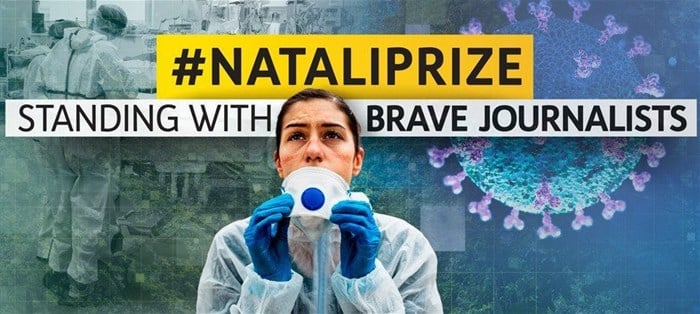
The Lorenzo Natali Media Prize has announced that it is open for applications. The European Union’s journalism award is celebrating its 30th anniversary, and awards journalists reporting on themes such as inequality, poverty, climate, education, migration, employment, digital, healthcare, peace, democracy, and human rights.
Commissioner for International Partnerships, Jutta Urpilainen, said, “The Lorenzo Natali Media Prize celebrates its 30th anniversary. Democratic backsliding that we have witnessed during the pandemic, hybrid threats, disinformation and shrinking space for civil society are all worrying phenomena, which brave journalists tackle. As showcased at the Summit for Democracy in December, the EU is a firm supporter of fundamental freedoms and those who defend them, often with high personal risk. The Lorenzo Natali Media Prize is a symbol of our support to those who give voice to the voiceless and bring truth to light.”:
The submission should be made online in one of the five accepted languages (English, French, Spanish, Portuguese, or German). Applications can be submitted from today until 31 March 2022. Submissions can be entered online here.
A Grand Jury of international renowned journalists and specialists in international development from around the world will choose the winners in each category. Each winner will receive €10,000. The winner of the Best Emerging Journalist category will also be offered work experience with a media partner. The winners will be announced at the Lorenzo Natali Media Prize Award Ceremony during the 2022 European Development Days between 14 – 15 June 2022.
Thomson Reuters Foundation is to host a two-day conference on 17 and 18 November focused on a post-pandemic roadmap to inclusive growth and the protection of free media and civil liberties. Nobel Peace Prize winner Maria Ressa, and an Afghan reporter who fled the Taliban, Zahra Joya, will join a distinguished line-up of speakers that also includes world-renowned Professor of Economics Jeffrey Sachs, Executive Director of Aspen Digital Vivian Schiller and founder of craigslist, philanthropist Craig Newmark.
They will join human rights defenders, innovators, media experts, policymakers and business leaders at the online forum, which brings together thousands of delegates from around the world. The event comes at a critical juncture of the COVID-19 crisis and the UN climate summit, and will address how the pandemic has deepened longstanding social and economic inequalities, has revitalised the drive for a sustainable future and has triggered an alarming spike in media freedom and human rights violations.
With 18 hours of live-streamed talks, plenaries and insight sessions, leading experts from a variety of disciplines will share new insights on shifting the post-pandemic economy onto a more inclusive and sustainable path, one built on the principles of human rights, media freedom and climate justice. They will weigh in on cutting-edge solutions to tackle the world’s most consequential challenges, including the business case for economic inclusion, the path to zero emissions, the human cost of internet shutdowns and a legal network for journalists at risk.
This year’s diverse speakers also include Dr Hilda C. Heine, Senator and former President of the Marshall Islands; Yvonne Aki-Sawyerr OBE, Mayor of Sierra Leone’s capital, Freetown; Zahra Joya, Journalist and founder of Rukhshana Media in Afghanistan; Javier Pallero, Policy Director at Access Now; Shamina Singh, Executive VP for Sustainability at Mastercard; Jorge Rubio Nava, Global Head of Social Finance at Citi; Danielle Belton, Editor-in-Chief of the Huffington Post; Lina Attalah, Co-founder of independent Egyptian news outlet Mada Masr; Alessandra Galloni, Editor-in-Chief of Reuters; Kanbar Hossein Bor, UK Coordinator Media Freedom Campaign & Deputy Director Democratic Governance, FCDO; Ma Jun, Founding Director of the Institute of Public and Environmental Affairs and Caoilfhionn Gallagher QC, Barrister at Doughty Street Chambers, specialising in human rights and civil liberties.
“The converging economic, health and climate crises are putting our democracies, people and planet under an existential threat,” said Thomson Reuters Foundation CEO Antonio Zappulla. “But there is also a great opportunity for a coordinated global response – the success of which depends on how well we work with and learn from each other.
In response to the ongoing, drastic deterioration of media freedoms, the Foundation will also be launching a new Legal Network for Journalists at Risk (LNJAR) at Trust Conference, an initiative in partnership with the Committee to Protect Journalists (CPJ) and Media Defence.
The LNJAR comprises 15 organisations, and strategically coordinates different types of legal support to enable journalists and independent media outlets to continue to cover public interest stories and hold power to account without fear of retribution.
Additionally, the Foundation will unveil its partnership with UNESCO, the International Women’s Media Foundation and the International News Safety Institute (INSI) through which it has developed practical and legal tools for journalists, media managers and newsrooms to counter harassment.
Now in its ninth year, Trust Conference reflects the Thomson Reuters Foundation’s work in tackling the world’s most complex societal issues, with a focus on socio-economic inclusion, sustainability, media freedom and human rights.
The programme and the speaker line-up of Trust Conference are available here. Register for your complimentary ticket here.
Trust Conference Agenda
The 2021 forum will address urgent global challenges through a series of talks, debates and high-profile exchanges. Themes include:
Climate change as a human rights risk
Making a ‘Just Transition’
The impact of financial vulnerability on editorial independence
On Monday 22 February 2021 the Guardian announced that it will be reporting on human rights worldwide, elevating the voices of those working on the frontline to protect rights and freedom.
A year on from the start of the world’s biggest health crisis, we now face a human rights pandemic. Covid-19 has exposed the inequalities and fragilities of health and political systems and allowed authoritarian regimes to impose drastic curbs on rights and freedoms, using the virus as a pretext for restricting free speech and stifling dissent.
There has been a global crackdown on opposition activists and human rights defenders, attacks on journalists, and a roll out of invasive tracking apps and extreme surveillance measures that are likely to far outlast the virus. Over the coming years, the economic fallout of the pandemic will hit millions. Those already facing stigma and marginalisation will suffer the most: women, girls, refugees and asylum seekers, people with disabilities, ethnic minorities and indigenous communities.
Human rights crises in countries including Myanmar, Syria, Venezuela and South Sudan threaten lives, health and freedoms. Yet the pandemic has also seen a growing global momentum of resistance, a fight back to protect hard-won rights. Journalism has always been a crucial tool in holding those in power to account and highlighting the drivers and systems that violate the fundamental rights of every human being, as enshrined in law. With over 200 laureates, journalists are the single biggest professional group among the winners of human rights awards [see: https://thedigestapp.trueheroesfilms.org/laureates]
At this critical moment, there is an urgent need to focus attention on those who are suffering and what can be done to help them. Rights and Freedom is a new Guardian reporting series to investigate and expose human rights abuses, and elevate the voices of people working on the frontline, fighting back for themselves and their communities.
For itsoffice in Nairobi, Kenya, Article 19 seeks a Senior Programme Officer for Media and Protection. The Senior Programme will work to enhance the safety and security of individuals and organizations working to protect and promote freedom of expression and information, as reflected in our strategy, bringing strong project management skills, serving as the primary focal point on our “Media and Protection” thematic areas across the organization.
In collaboration with relevant teams, this Senior Programme Officer will identify new strategic areas for ARTICLE 19 Eastern Africa’s consolidation and growth as a leading advocate organization for free expression, effective protection of activists and organizations, particularly journalists, bloggers, whistleblowers, social communicators and human rights defenders.
Leading in advancing media and protection standards at global and regional fora, in collaboration with relevant teams, the Senior Programme Officer will be a primary force in ensuring effective coordination externally with key INGOs working on media and protection of FoE/I and internally within the organization. This Senior Programme Officer will facilitate programmatic work in the Eastern Africa regional office and programmes, with a particular focus on supporting the monitoring of attacks on communicators and human rights defenders.
Requirements:
Masters Degree level or equivalent with post-graduate qualification in human rights, law, African studies, international relations, political science, media, communication, or other relevant field being an added advantage.
At least 7 years experience in policy work, monitoring, advocacy and/or campaigning work in the human rights sector;
At least 2 years experience of managing budgets and projects;
Experience of working with partner organisations;
Experience of working in a cross-cultural environment.
Media (here the dailysabah of 13 July 2019) have referred to a Global Conference for Media Freedom, co-organized by the British and Canadian foreign ministries. The two-day conference, held at the Printworks event center in London, was joined by over a thousand guests from 100 countries, including journalists, academics, politicians and diplomats. The conference was held to trigger a global initiative to safeguard journalists and fortify global media freedom. Saudi journalist Jamal Khashoggi, who was murdered last October and Maltese journalist Daphne Caruana Galizia, who was killed in a bomb attack in 2017, were widely mentioned and marked by the panelists and participants.
One of the panel discussions placed a lot of importance on efforts to bring to justice those who have killed journalists, review national attempts to resolve cold cases and examine attempts to affect change in U.N. member states to prevent impunity. In addition to these topics and media-government interactions; the increasing relations between the media and investors in digital media also brought about new debates, such as ethical journalism and sustainability of the media.
One of the key proposals of the conference was creating an international judicial committee for journalists which will include judges, lawyers, academics and human rights defenders from all over the world. Also, to reduce pressure against journalists and media on a global scale, prevent journalist murders, attacks, kidnappings and ensure the safety of journalists; a new initiative based on international and civil society pressure to hold the governments accountable is to be created. In my personal opinion I doubt that there is really a need for creating new entities in an area where there are already so many NGOs, coalitions, campaigns and awards, but the severity of the situation perhaps justifies it (2018 was the worst year on record for violence and abuse against journalists – in 2018, at least 99 journalists were killed, a further 348 imprisoned and 60 held hostage. Beyond that, almost 1,000 journalists and media workers have been killed in the past decade. Among them, 93 percent of those killed were local journalists and 7 percent are foreign correspondents). See also: https://humanrightsdefenders.blog/tag/journalists/
Another finding of the research conducted by these institutions is that the impunity for crimes against journalists remains the norm, with justice in only one in 10 cases.
Reporters Without Borders (better known under its French acronym RSF) published its WORLD PRESS FREEDOM INDEX 2018. The rankings you can find by clicking here READ MORE. The regional chapters below give a quick overview of the main trends, including the disturbing downward turn in the USA, the further sinking in ex-sovjet states and China’s nefarious example in Asia.
North Africa’s performance in the 2018 World Press Freedom Index reflects the different pressures to which journalists are exposed. Restrictive laws, reporting problems (especially at protests), and subjects that are off limits all prevent journalists from being free to provide independently reported and pluralist news and information.
Despite having strong constitutional protections to the contrary, the latest World Press Freedom Index findings on the US and Canada reveal two countries whose journalists and media workers face constant challenges to the very freedom to exercise their profession.
The 2018 Index shows a slight overall improvement in respect for press freedom in Latin America but this should not divert attention from the continuing problems of violence, impunity, and authoritarian policies towards journalists in many Latin American countries.
The Chinese model of state-controlled news and information is being copied in other Asian countries, especially Vietnam and Cambodia. North Asia’s democracies are struggling to establish themselves as alternative models. Violence against journalists is increasingly worrying in Afghanistan, India, Pakistan and the Philippines.
SUB-SAHARAN AFRICA HAS MAINTAINED ITS THIRD PLACE IN THE RANKING BY GEOGRAPHICAL REGION, WITH A SLIGHTLY BETTER OVERALL INDICATOR THAN IN 2017. BUT THERE IS A WIDE RANGE OF SITUATIONS WITHIN THE REGION, AND JOURNALISTS ARE OFTEN THE VICTIMS OF INTIMIDATION, PHYSICAL VIOLENCE, AND ARREST.
THE FORMER SOVIET COUNTRIES AND TURKEY CONTINUE TO BE AT THE FOREFRONT OF THE WORLDWIDE DECLINE IN PRESS FREEDOM. ALMOST TWO-THIRDS OF THE REGION’S COUNTRIES ARE RANKED SOMEWHERE NEAR OR BELOW THE 150TH POSITION IN THE INDEX. THE REGION’S OVERALL INDICATOR HAS SUNK ALMOST AS LOW AS THAT OF MIDDLE EAST/NORTH AFRICA, THE REGION THAT IS LAST IN THE RANKING BY REGION.
The European model’s erosion, a trend visible in RSF’s most recent Indexes, has continued in the 2018 Index. The region has been shaken by two murders, as well as by threats to investigative reporters and unprecedented verbal attacks on the media. Even the countries at the top of the Index are affected by this alarming climate.
The Middle East’s countries are yet again at the bottom of RSF’s World Press Freedom Index. Armed conflicts, terrorism charges against independent journalists and media, and growing online surveillance and censorship make reporting extremely dangerous for the region’s journalists.
As part of the global Celebration of World Press Freedom Day, the winner of the “UNESCO/Guillermo Cano World Press Freedom Prize” will be announced on 3 May 2018. for last year’s award: https://humanrightsdefenders.blog/2017/05/04/eritrean-born-journalist-dawit-isaak-awarded-2017-unescos-guillermo-cano-world-press-freedom-prize/
The jury on Monday 23 April awarded the honor to Mahmoud Abu Zeid, known as Shawkan, who has been in jail since he was arrested in Cairo in August 2013 for covering a demonstration at Rabaa Al-Adawiya Square. Egypt’s Foreign Ministry strongly warned UNESCO against the move Sunday, saying that Shawkan faces terror-related charges. The U.N. Working Group on Arbitrary Detentions says Shawkan’s arrest is arbitrary and his continued detention infringes his human rights.

 Imaged sourced:
  Thomson Reuters Foundation is to host a two-day conference on 17 and 18 November focused on a post-pandemic roadmap to inclusive growth and the protection of free media and civil liberties. Nobel Peace Prize winner Maria Ressa, and an Afghan reporter who fled the Taliban, Zahra Joya, will join a distinguished line-up of speakers that also includes world-renowned Professor of Economics Jeffrey Sachs, Executive Director of Aspen Digital Vivian Schiller and founder of craigslist, philanthropist Craig Newmark.

 Hans Thoolen on Human Rights Defenders and their awards