Posts Tagged ‘Latin America’

Global Witness report 2024 documents killings and disappearances of environmental defenders

September 22, 2025

On 17 September 2025 Global Witness published its annual report , documenting killings and long-term disappearances of land and environmental defenders. 2024 shows continuing bad news.

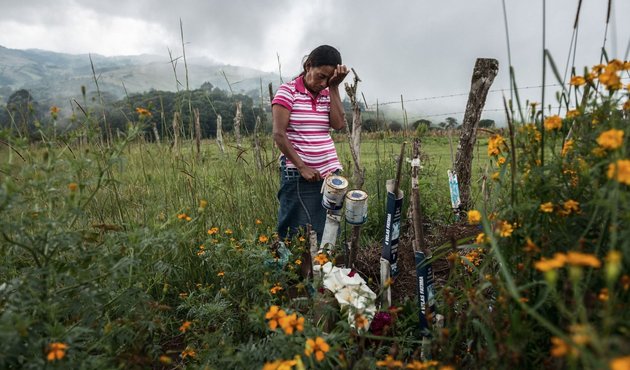
Julia Francisco Martínez stands at the graveside of her husband Juan, a Honduran Indigenous defender who was found murdered in 2015.

Julia Francisco Martínez stands at the graveside of her husband Juan, a Honduran Indigenous defender who was found murdered in 2015. Giles Clarke / Global Witness

Every year, Global Witness works with partners to gather evidence, verify and document every time a land and environmental defender is killed or disappeared. Our methodology follows robust criteria, yet undocumented cases pose challenges when it comes to analysing data

Global Witness documents killings and long-term disappearances of land and environmental defenders globally. In partnership with over 30 local, national and regional organisations in more than 20 countries, we produce an annual report containing these figures, and we have done so since 2012.

Our methodology involves a year-long process of cross-referencing data from different sources to ensure its credibility. Over 2,200 killings or long-term disappearances of defenders appear in our database since 2012 – with 146 cases documented in 2024.

Every year, we maintain a database to keep a record of these crimes and create a comprehensive global picture of the systematic violence defenders face.

The data provides a snapshot of the underlying drivers behind reprisals and indicates how some defenders and their communities face increased risks. Exposing these trends is the first of many steps to ensure that defenders and their communities are protected and can exercise their rights without fearing for their lives.

Killings and disappearances documented between 2012 and 2024

  • 2,253 defenders have been killed or disappeared since 2012 Global Witness
  • 146 of these attacks occurred in 2024 Global Witness

The accompanying press release goes into considerable detail on the methodology used.

For last year’s report see: https://humanrightsdefenders.blog/2024/09/18/global-witness-2023-2024-annual-report-violent-erasure-of-land-and-environmental-defenders/

https://globalwitness.org/en/campaigns/land-and-environmental-defenders/documenting-killings-and-disappearances-of-land-and-environmental-defenders/

https://www.rappler.com/philippines/deadliest-country-asia-environmental-defenders-2024/

The 46/2 Collective demands protection of Nicaraguan opponents exiled in Costa Rica

June 30, 2025

ISHR and the Colectivo 46/2 condemn the assassination of opposition leader Samcam Ruìz by the Nicaraguan Government.

In the joint letter published on 23 June 2025 The 46/2 Collective denounces to the international community the assassination of retired Nicaraguan Army Major Roberto Samcam Ruíz, which took place on 19 June in his home in San José, Costa Rica.

Samcam Ruíz was a strong voice of denunciation against the Ortega-Murillo dictatorship, denouncing the Nicaraguan army and pointing it out as a participant in the repression and extrajudicial executions committed since 2018. He had also denounced an espionage network against opposition refugees in Costa Rica.

The retired major was one of the 94 Nicaraguans denationalised in February 2023 by the dictatorship and since 11 July 2018 had been a refugee in Costa Rica due to persecution and criminalisation by the dictatorship of Daniel Ortega and Rosario Murillo. He obtained Spanish nationality on 26 July 2023.

The assassination of the former retired military officer is not the first attack against opponents on Costa Rican soil.  In 2023, opposition member Joao Maldonado and his wife were shot at with the clear intention of killing them. Maldonado had already suffered another attack in 2021, also in San José, Costa Rica. In 2022, the Nicaraguan opposition leader Rodolfo Rojas was found dead in Honduras. According to relatives, he had been lured to Honduras from Costa Rica, where he had gone into exile. To the list must be added the murder of another refugee, Jaime Luis Ortega, in 2024, in Upala, a canton on the border with Nicaragua. Following these events, Roberto Samcam had spoken to the press, pointing out the direct involvement of the Ortega Murillo regime and indicating that he knew that his life was at risk.

Although the investigations into Samcam’s murder are ongoing, the circumstances of the murder and the profile of the victim raise strong suspicions that it may be a political crime with possible transnational links. This murder takes place in a context in which various human rights organisations have been documenting a sustained pattern of surveillance, threats, harassment and acts of intimidation directed against Nicaraguans in exile in the region, especially in Costa Rica.

We consider that this crime should be analysed and investigated as part of a broader strategy of transnational repression promoted by the Nicaraguan regime to persecute and silence dissent outside its borders, in open violation of the human rights of refugees and exiles. This transnational repression has been documented by the Group of Experts on Human Rights in Nicaragua (GHREN), who have pointed out that ‘The Government’s repressive actions transcend the country’s borders and affect people who are opponents or perceived as such abroad. The government has also continued to target family members of opponents inside Nicaragua, including children, by mere association, as a way of punishing opponents and/or deterring them from speaking out wherever they are’.

Given the gravity of this crime and the sustained pattern of transnational repression against exiled Nicaraguans, we urgently call on the international community to demand that the Nicaraguan State immediately cease all forms of persecution, surveillance and violence against dissidents in exile. We also request that the international community strengthen political, technical and financial support for the protection mechanisms for human rights defenders in exile. We also urge the establishment of bilateral or multilateral channels of communication with the host countries of Nicaraguans in order to assess the security situation and articulate preventive responses to possible acts of transnational persecution. Finally, we call on international human rights bodies to urgently follow up on these cases as part of a systematic pattern of cross-border repression, and to ensure justice and truth for the victims.

Signatories:

  • Collective Nicaragua Never Again
  • Centre for International Law and Justice – CEJIL
  • International Federation for Human Rights – FIDH
  • International Institute on Race, Equality and Human Rights
  • Autonomous Women’s Movement – MAM
  • World Organisation Against Torture (OMCT)
  • Peace Brigades International – PBI
  • International Network on Human Rights Europe – RIDHE
  • Legal Defence, Registry and Memory Unit – UDJUDR
  • Open ballot boxes
  • International Service for Human Rights – ISHR

Additional information:

The 46/2 Collective is a coalition of 19 international, regional and Nicaraguan human rights organisations that regularly informs the international community about the lack of action by the Nicaraguan regime to meet its international human rights obligations.  

https://ishr.ch/latest-updates/the-international-community-must-act-to-protect-nicaraguan-opponents-in-exile-in-costa-rica

Environmental defenders and the Escazú Agreement

April 28, 2025

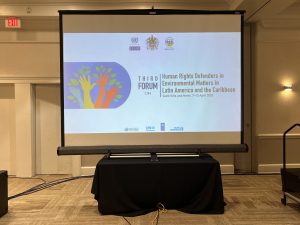
From 7-10 April, the Latin American and Caribbean Forum on Environmental Human Rights Defenders brought together environmental defenders, Indigenous Peoples, civil society, and government representatives in Basseterre, Saint Kitts and Nevis.

The Escazú Agreement is a landmark regional human rights treaty that guarantees access to environmental information, public participation and justice in Latin America and the Caribbean. Article 9 describes States’ obligation to protect human rights defenders in environmental matters and guarantee their rights, including those related to access to information, participation, and justice, as set forth in the agreement.  

As of today, 17 countries are parties to the agreement, while other key countries in the region still haven’t signed or ratified it. In February 2025, Special Procedures mandate holders sent a communication to these countries urging them to sign and ratify the agreement.  

The 2024 Action Plan adopted by the parties to the Escazú Agreement aims to implement practical protections for human rights defenders in environmental matters. It outlines capacity building and assessment, calling for urgent national action to address immediate threats and ensure the continuity of defenders’ work.

Since April 2024, individuals who believe that a State is not complying with its obligations as a party to the Escazú Agreement can send information (‘communications’) to the treaty’s Implementation and Compliance Support Committee. At a 2024 Conference of the Parties (COP) to the Agreement, States agreed to incorporate a gender perspective within the Escazú Agreement, recognising the unique risks faced by women human rights defenders in environmental matters.

This decision further requires States to consider gender-based violence and ensure women’s participation, enhancing security and effectiveness for all defenders. 

At the Forum on Environmental Human Rights Defenders, the #EscazuEnlaCorteIDH initiative was presented during the Third Forum. This initiative seeks to ensure that Escazú standards are included in the Inter-American Court’s forthcoming advisory opinion on the climate emergency.

A central piece of this effort was the amicus brief co-submitted by ISHR. 

see also: https://humanrightsdefenders.blog/tag/escazu-agreement/

https://ishr.ch/latest-updates/better-protection-and-participation-of-environmental-human-rights-defenders-through-effective-implementation-of-the-escazu-agreement

Dejusticia 2025 fellowships for defenders from the Global South

December 20, 2024

Members of the 2024 cohort of our Global South Defenders program.

This opportunity allows human rights defenders from countries in the Global South who are in emergency or high-risk situations to develop their projects and participate in an academic and cultural exchange in a safe space.

There are 14 thematic areas within Dejusticia to whichyou can apply.

The fellowship will begin in the second semester of 2025.

Who is eligible to be part of the program?

We seek human rights defenders from the Global South who meet the following criteria:

  • They come from an emergency or high-risk context. This includes regions affected by armed conflict, civil unrest, or authoritarian regimes, where there is an imminent threat to the security of the grantee. This may involve situations where the grantee and/or their organization have been subjected to threats, intimidation, or populist propaganda, or where they have been excluded from funding due to government or private sector influence.
  • The grantee may be at risk of burnout and is seeking a quiet place to continue working on human rights issues, but in a different context.
  • They belong to human rights organizations in the Global South that are interested in engaging in exchanges and joint research or advocacy work with Dejusticia.
  • They aim to build lasting relationships with other fellows and with Dejusticia. This ensures that our fellowships function as acceleration hubs for connections that will make the human rights movement more cohesive and impactful.

What will fellows receive from Dejusticia?

Dejusticia will cover travel expenses (visa, tickets) and provide a monthly stipend based on the fellow’s profile and experience. Although Dejusticia will offer support at the beginning of the process, including a two-week training period on applied research and on the fellow’s specific work, it is important to note that fellows will be responsible for managing their stipend to cover housing, transportation, and food expenses.

What are the commitments of the Global South Fellow?

The fellow will allocate their time at Dejusticia as follows:

How to apply for the fellowship program?

Before January 31, 2025, please fill out the form

CF: 2024:

10 December: Latin American bishops want to save human rights defenders

December 10, 2024

The “Life is hanging on by a thread” campaign will shine a light on the countless stories of human rights defenders and environmentalists who risk their lives for their causes.

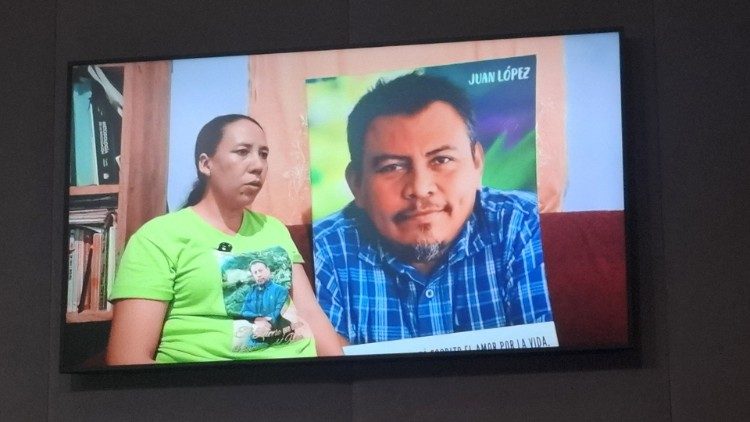
On September 14, Juan Antonio López, a city council member and environmental activist was murdered in Honduras. He was a member of the Mesoamerican Ecclesial Network and international organizations recognized his work. His assassination underscored the vulnerable situation of human rights defenders and leaders throughout Latin America.

In response, the Latin American Bishops’ Conference, together with the Platform for Peace, Democracy, and Human Rights and the Latin American Protection Community, is launching the campaign “Life is hanging on by a thread.” 

The official launch of the campaign is scheduled for December 10, which will be held virtually to bring representatives from all over Latin America. It will coincide with events being held in Honduras to honour López.

The goal of the “Life is hanging on by a thread” campaign is to shine a light on symbolic cases of human rights and environmental defenders in Latin America and the Caribbean. Various testimonies of people defending human rights and indigenous peoples will come to light.

Promoters of the campaign stress its importance because “situations like the murder of Juan Antonio López are not isolated events, but part of a systematic pattern in Latin America, one of the deadliest regions for environmental and human rights defenders.” Global Witness, an international NGO, reports that 85% of environmental defenders who were killed in 2023 took place in Latin America. Specifically, in Honduras, 18 environmentalists were murdered last year. [see: https://humanrightsdefenders.blog/2024/09/18/global-witness-2023-2024-annual-report-violent-erasure-of-land-and-environmental-defenders/]

Juan Antonio López was an environmentalist killed on September 14, 2024

Juan Antonio López was an environmentalist killed on September 14, 2024

The campaign will end on December 10, 2025, coinciding with the Jubilee of Hope.

https://www.vaticannews.va/en/church/news/2024-12/latin-america-bishops-environmentalists-campaign-human-rights.html

https://www.ucanews.com/news/latin-american-bishops-to-protect-rights-activists/107245

Global Witness 2023-2024 Annual Report: Violent Erasure of Land and Environmental Defenders

September 18, 2024

According to a new report by Global Witness released on 10 September, more than 2,100 land and environmental defenders were killed globally between 2012 and 2023.

  • An estimated 196 land and environmental defenders were killed in 2023 around the world, according to a new Global Witness report published today
  • The new figures take the total number of defenders killed between 2012 to 2023 to 2,106
  • For the second year running, Colombia had the highest number of killings worldwide – with a record 79 defenders killed last year, followed by Brazil (25), Mexico (18) and Honduras (18)
  • Once again, Latin America had the highest number of recorded killings worldwide, with 166 killings overall – 54 killings across Mexico and Central America and 112 in South America
  • Environmental defenders are also being increasingly subject to range of tactics for silencing those who speak out for the planet across Asia, the UK, EU and US

The new figures bring the total number of defender killings to 2,106 between 2012 and 2023.

Overall, Colombia was found to be the deadliest country in the world, with 79 deaths in total last year – compared to 60 in 2022, and 33 in 2021. This is the most defenders killed in one country in a single year Global Witness has ever recorded. With 461 killings from 2012 to 2023, Colombia has the highest number of reported environmental defender killings globally on record.

See:https://humanrightsdefenders.blog/2023/09/25/global-witness-annual-report-2022-a-land-rights-defender-killed-every-other-day/

Other deadly countries in Latin America include Brazil, with 25 killings last year, and Mexico and Honduras, which both had 18 killings.

Central America has emerged as one of the most dangerous places in the world for defenders. With 18 defenders killed in Honduras, the country had the highest number of killings per capita in 2023. A total of 10 defenders were also killed in Nicaragua last year, while four were killed in Guatemala, and four in Panama.

Worldwide, Indigenous Peoples and Afrodescendents continue to be disproportionately targeted, accounting for 49% of total murders.

Laura Furones, Lead Author and Senior Advisor to the Land and Environmental Defenders Campaign at Global Witness, said:

“As the climate crisis accelerates, those who use their voice to courageously defend our planet are met with violence, intimidation, and murder. Our data shows that the number of killings remains alarmingly high, a situation that is simply unacceptable.

While establishing a direct relationship between the murder of a defender and specific corporate interests remains difficult, Global Witness identified mining as the biggest industry driverby far, with 25 defenders killed after opposing mining operations in 2023. Other industries include fishing (5), logging (5), agribusiness (4), roads and infrastructure (4) and hydropower (2).

In total, 23 of the 25 mining-related killings globally last year happened in Latin America. But more than 40% of all mining-related killings between 2012 and 2023 occurred in Asia – home to significant natural reserves of key critical minerals vital for clean energy technologies.

As well as highlighting the number of killings worldwide, the report unearths wider trends in non-lethal attacks and their harmful impacts on communities globally. It highlights cases of enforced disappearances and abductions, pointed tactics used in both the Philippines and Mexico in particular, as well as the wider use of criminalisation as a tactic to silence activists across the world.

The report also explores the crackdown on environmental activists across the UK, Europe and the US, where laws are increasingly being weaponised against defenders, and harsh sentences are more frequently imposed on those who have played a role in climate protests. The findings form part of a concerning trend of criminalisation cases emerging worldwide.

https://www.euronews.com/green/2024/09/11/european-governments-are-using-harsh-overly-broad-laws-to-silence-climate-protesters

Despite the escalating climate crisis – and governments pledging to achieve the Paris Agreement target of 1.5C – land and environmental defenders are being increasingly subject to a wide range of attacks to stop their efforts to protect the planet. At least 1,500 defenders have been killed since the adoption of the Paris Agreement on 12 December 2015.

Nonhle Mbuthuma, author of the report’s foreword and Goldman Environmental Prize Winner 2024, said:

“Across every corner of the globe, those who dare to expose the devastating impact of extractive industries — deforestation, pollution, and land grabbing — are met with violence and intimidation. This is especially true for Indigenous Peoples, who are essential in the fight against climate change, yet are disproportionately targeted year after year.

Download Report (PDF | 2.76 MB | Full Report)

Inter-American Court on the Escazú Agreement’s protection for environmental defenders

March 8, 2024

On 7 March 2024, the ISHR report that the Inter-American Court of Human Rights examined the Escazú Agreement’s role in safeguarding environmental defenders, a landmark move for climate justice and human rights

The Advisory Opinion, which has already garnered a record number of interventions – over 250, a record in the history of the court – will mark a rare instance in which the Court will analyse a treaty that is not part of the Inter-American System, but of the Economic Commission for Latin America and the Caribbean: the ‘Regional Agreement on Access to Information, Public Participation and Justice in Environmental Matters in Latin America and the Caribbean’, also known as the ‘Escazú Agreement‘. For more on this, see: https://humanrightsdefenders.blog/tag/escazu-agreement/

In order to support the protection of environmental defenders, ISHR filed an intervention on environmental defenders, in collaboration with CIEL, FARN, and other international, regional and national organisations and human rights experts. 

The obligation to effectively protect EHRDs

The Inter-American Court of Human Rights has already recognised that States are obliged to protect human rights defenders, arising from the general obligations to protect the rights to life and integrity of the person, among others. However, the Court has yet to expressly establish whether protecting environmental defenders is an obligation that also derives from environmental commitments made by States, as these stakeholders are an indispensable partner in the fight against climate change. 

This is an opportunity for the Court to recognise that, in order to guarantee the right to a clean, healthy and sustainable environment, States must protect environmental defenders, as violating their rights also violates the rights they are defending.

The Court is also called to elaborate upon the specific protection needs of Indigenous, women and youth defenders. These groups face particular forms of attacks which must be addressed with cultural and gender perspectives, taking into account not only the particularities of the attacks they suffer, but also of their needs and desires. 

In the case of Indigenous groups, the existing jurisprudence of the Court on recognising collective rights, along with the language used in article 9 of the Escazú Agreement – which establishes that ‘persons, groups and organisations’ can defend human rights – provides an opportunity to firmly establish the existence of a collective right to defend human rights, as well as the State’s obligation to set up and adapt their protection measures and mechanisms to ensure that collective protection is available when needed.

Environmental defenders and ‘access rights’

While the express mention of environmental defenders in the Escazú Agreement is extremely important, it is not its main focus. The treaty contains several obligations for States to guarantee access to information, to decision-making spaces and to justice in environmental matters. 

These ‘access rights’ are applicable to all persons, but the Inter-American Court must reaffirm and elaborate upon its own jurisprudence related to their applicability for environmental defenders, which states that: ‘defenders cannot properly defend environmental rights if they cannot exercise their own rights of access to information, freedom of expression, assembly and peaceful association, guarantees of non-discrimination and participation in decision-making‘.

This is also an opportunity for the Court to clearly assert that private actors are also under the obligation to respect these rights, which includes conducting meaningful consultations and ensuring the free, prior and informed consent of communities affected by their projects.

The extent of the Advisory Opinion

Latin America is the region with the most and the oldest laws and protection mechanisms regarding human rights defenders, so it was only logical that it would be the first region to adopt the first treaty that expressly protects them.

The Inter-American Court has also been a pioneer in this regard. It was the first regional human rights court to deal with human rights defenders’ cases and order structural reforms to better protect them.

These successes must be celebrated, but there is still work to be done. The coming years will see an increase in three areas, all linked with one another: climate crisis, the amount of environmental defenders, and the risks faced by defenders. 

The Court must seize this opportunity and set an example for countries in the region and beyond on how to properly defend the rights of those that defend our rights.

See the intervention here: Amicus 1 IACrtHR AO on CC and EHRDs

https://ishr.ch/latest-updates/environmental-defenders-and-the-inter-american-court-advisory-opinion-on-climate-change
Venezuela closes UN human rights office

February 16, 2024

On 15 February 2024 AP carried the story that Venezuela’s government has ordered the local UN office on human rights to suspend operations, giving its staff 72 hours to leave, after accusing the office of promoting opposition to the South American country. The UN office was established in Caracas in September 2019.

The foreign affairs minister, Yván Gil, announced the decision at a news conference in Caracas on Thursday. Gil’s announcement came on the heels of the detention of the human rights attorney Rocío San Miguel, which set off a wave of criticism inside and outside Venezuela.

The South American country’s government said it had made a decision “to suspend the activities of the technical advisory office of the UN high commissioner for human rights and carry out a holistic revision of the technical cooperation terms”.

The government said the UN human rights office must rectify its “colonialist, abusive and violating attitude”, accusing it of playing an “inappropriate role” in the country and supporting impunity for people involved in attempts at assassination, coups, conspiracies and other plots.

The Venezuelan government regularly accuses members of the political opposition of plotting takeovers or the assassination of President Nicolas Maduro, all accusations vehemently denied by opposing parties and their members.

We regret this announcement and are evaluating the next steps. We continue to engage with the authorities and other stakeholders,” said UN human rights office spokesperson Ravina Shamdasani. “Our guiding principle has been and remains the promotion and protection of the human rights of the people of Venezuela.”

Venezuelan state television on Wednesday harshly criticized comments by the UN’s special rapporteur on the right to food, Michael Fakhri, who just concluded a visit to Venezuela. Fakhri had said in a statement the government food program does not tackle the root causes of hunger and is susceptible to political influences.

San Miguel was taken into custody on Friday at the airport near Caracas while she and her daughter awaited a flight to Miami. Authorities did not acknowledge her detention until Sunday, and as of Wednesday her attorney had not been allowed to meet with her.

The attorney general, Tarek William Saab, earlier in the week said she was being held at the Helicoide prison, an infamous institution for political prisoners.

San Miguel’s daughter, ex-husband, two brothers and former partner were also detained following her arrest. Of them, only her former partner remains in custody.

https://www.theguardian.com/world/2024/feb/15/venezuela-closes-un-human-rights-office

Thomas Antkowiak urges priority for the safety of front-line human rights workers

January 20, 2024

On January 12, 2024, Thomas Antkowiak in Just Security reflects on dangers of HRDs in Mexico and Latin america generally, motivated by the fate of his friends Ricardo and Antonio Díaz Valencia.

…Strategic use of the legal mechanisms—bolstered by the research and financial resources, political leverage, reputations, and media connections of Northern institutions—can be very effective to obtain remedies for victims of rights violations, and even to bring about legal reform and structural change. But the methods are toothless, and even misguided, without partners like Ricardo, the expert local attorneys. Truly, without such counterparts, this kind of human rights project lacks legitimacy. Without sustained connections to the affected communities, it would become just another decree handed down from the ivory tower.

In our isolated and polarized world, virtual meetings may have increased productivity in international lawyering, but they can further insulate us—cutting off deeper engagements to our clients abroad and the communities we hope to work with. In contrast, frontline defenders are fully connected and, of course, face all the risks. Authoritarian governments, criminal organizations, and complicit transnational corporations are all closing in. Can we still sense their peril?

If these human rights advocates are in more jeopardy than ever, so are the human rights themselves. Frontline defenders are the torchbearers of the international human rights movement. As such, they deserve the honors, the funding, and the protection. For the work to continue, we urgently need to do our part: the Global North’s human rights organizations, governments, universities, foundations, and businesses must coordinate to shield and support them.

Certainly, some institutions are already doing good work. Where to redouble our efforts? First, let’s ask the defenders themselves what they most need, recalling that their role is primary and their safety paramount. In the case of Mexico, there is almost total impunity for these types of cases. If the cartels, corrupt officials, and their accomplices cannot be held accountable, the killings will continue unabated (and thousands will keep fleeing from the violence to the southern U.S. border). When the defenders’ work becomes too hazardous, asylum must be streamlined—and the opportunity forever preserved. U.S. legislation and political pressure on Mexico play key roles here. So does divestment from colluding transnational corporations.

Every day, I wish that we could have somehow prevented the disappearance of my cherished friend and long-time collaborator. Through various channels, Global Rights Advocacy, other colleagues, and my clinic continue to push the Mexican government to find Ricardo and Antonio, and to prosecute the case. The world cannot afford the loss of another Ricardo, Berta Cáceres, Thulani Maseko. Without such guiding lights, we won’t be marking another 75 years of the international human rights movement.

A sombre reminder: homicide a bigger killer than armed conflict and terrorism combined

December 8, 2023
Globally, homicide is a bigger killer than armed conflict and terrorism combined.

© Unsplash/David von Diemar

On Friday 8 December 2023 the UN Office on Drugs and Crime (UNODC) said that more people were killed due to homicide than armed conflict and terrorism combined in 2021, with an average of 52 lives lost per hour worldwide. The Global Study on Homicide analyzes the complex dynamics behind these violent deaths and includes a special section on how organized crime is driving death rates up in Latin America and the Caribbean.

The report examines homicides related to criminal activities and interpersonal conflict, as well as “socio-politically motivated homicides” such as the deliberate killing of human rights defenders, humanitarian workers and journalists.

UNODC chief Ghada Waly said the loss of thousands of lives each year to homicide is “a sombre reminder” of the collective failure of the international community to reduce all forms of violence by 2030, in line with the Sustainable Development Goals (SDGs). The report revealed that during the period from 2019 to 2021, an average of roughly 440,000 deaths worldwide were due to homicide – more than conflict-related or terrorist killings combined. 

UNODC said 2021 “was an exceptionally lethal year”, marked by 458,000 homicides.  The spike was in part linked to economic repercussions from the COVID-19 pandemic and to a rise in organized crime and gang-related and socio-political violence in several countries.

Organized crime accounted for 22 per cent of homicides globally, and 50 per cent in the Americas, where competition among organized crime groups and gangs can spark a sudden and sharp rise in “intentional homicides”, as has happened in Ecuador and Haiti.

The Americas also lead the world in highest regional homicide rate per capita, with 15 per 100,000 population in 2021, or 154,000 people.

Africa had the highest absolute number of homicides at 176,000, or 12.7 per 100,000 population, “and available data suggests that the homicide rate is not falling, even as decreases have been registered in other regions,” the report said.  Meanwhile rates in Asia, Europe and Oceania were far below the global per capita average of 5.8 per 100,000 population in 2021.

Firearms were used in most killings in the Americas in 2021, or roughly 75 per cent, whereas in Europe and Asia they were involved in 17 and 18 per cent of homicides, respectively. 

Men accounted for 81 per cent of homicide victims and 90 per cent of suspects, but women are more likely to be killed by family members or intimate partners. “Although they represent 19 per cent of homicide victims in total, they account for 54 per cent of all killings in the home and 66 per cent of all victims of intimate partner killings,” UNODC said. 

Aid workers under attack 

The data also showed that the deliberate killings of human rights defenders, environmental defenders, community leaders, journalists, and aid workers represented nine per cent of global homicides. “The threat has increased for humanitarian aid workers, who witnessed a higher average number of fatalities over the period 2017-2022 than 2010-2016,” the authors said. 

https://news.un.org/en/story/2023/12/1144392