The 972 deaths recorded between 2016 and 2025 make Colombia “one of the most dangerous countries in the world” for such activists, according to the UN’s High Commissioner for Human Rights, Volker Türk.
Following the historic peace accords between the government and the Revolutionary Armed Forces of Colombia (FARC) in 2016, the report noted a gradual increase in assassinations. This was linked to the state’s inability to maintain a strong presence in areas previously controlled by the guerrilla group.
Over 70% of identified perpetrators were armed non-state actors, with the majority of cases analyzed by the report involved in drug trafficking, illegal mining, illegal logging, and human trafficking. The number of attacks and threats against human rights defenders investigated by the UN between 2022 and 2025 was 2,018, however this is thought to represent “only a fraction” of the true number due to underreporting and the lack of efficient government records of such cases.
The report recognized the work of the current Historic Pact (Pacto Histórico) government of Gustavo Petro, which has publicly recognized the gravity of the situation and worked to develop a national strategy to counter it. This included the 2022 law that established peace as a matter of state policy, recognizing the state’s responsibility to “guarantee human security” through a “territorial and intersectional approach”.
However, the UN says the state’s response has failed human rights defenders due to its fragmented nature that lacks coordination between national, departmental, and municipal authorities.
“In addition to ensuring accountability for the murders that have taken place, addressing the structural causes of this human tragedy through a comprehensive approach must be a priority for all relevant authorities in Colombia, in order to protect human rights defenders and enable them to carry out their vital work safely,” Türk said.
High levels of impunity have also persisted, with only 55 out of the 800 cases investigated between 2022 and 2025 ending in sentencing. In over half of these cases, no suspects have been identified.
Nearly a quarter of victims identified by the UN were Indigenous (23%) highlighting a disproportionate effect on this population that represents less than 5% of Colombians.
Other disproportionately affected groups include Afro-Colombians, LGBTQ+ individuals, rural community leaders and environmental protectors, as well as political leaders.
The report concluded by urging the Colombian state to take action to combat this issue, recommending institutional reforms and criminal investigations into perpetrators.
Every journalist who dares to speak the truth faces danger, yet their courage lights the path for all of us. Remembering those killed is not enough; we must demand justice, protection, and a world where truth can be spoken without fear”. Burhan Sonmez, PEN International President
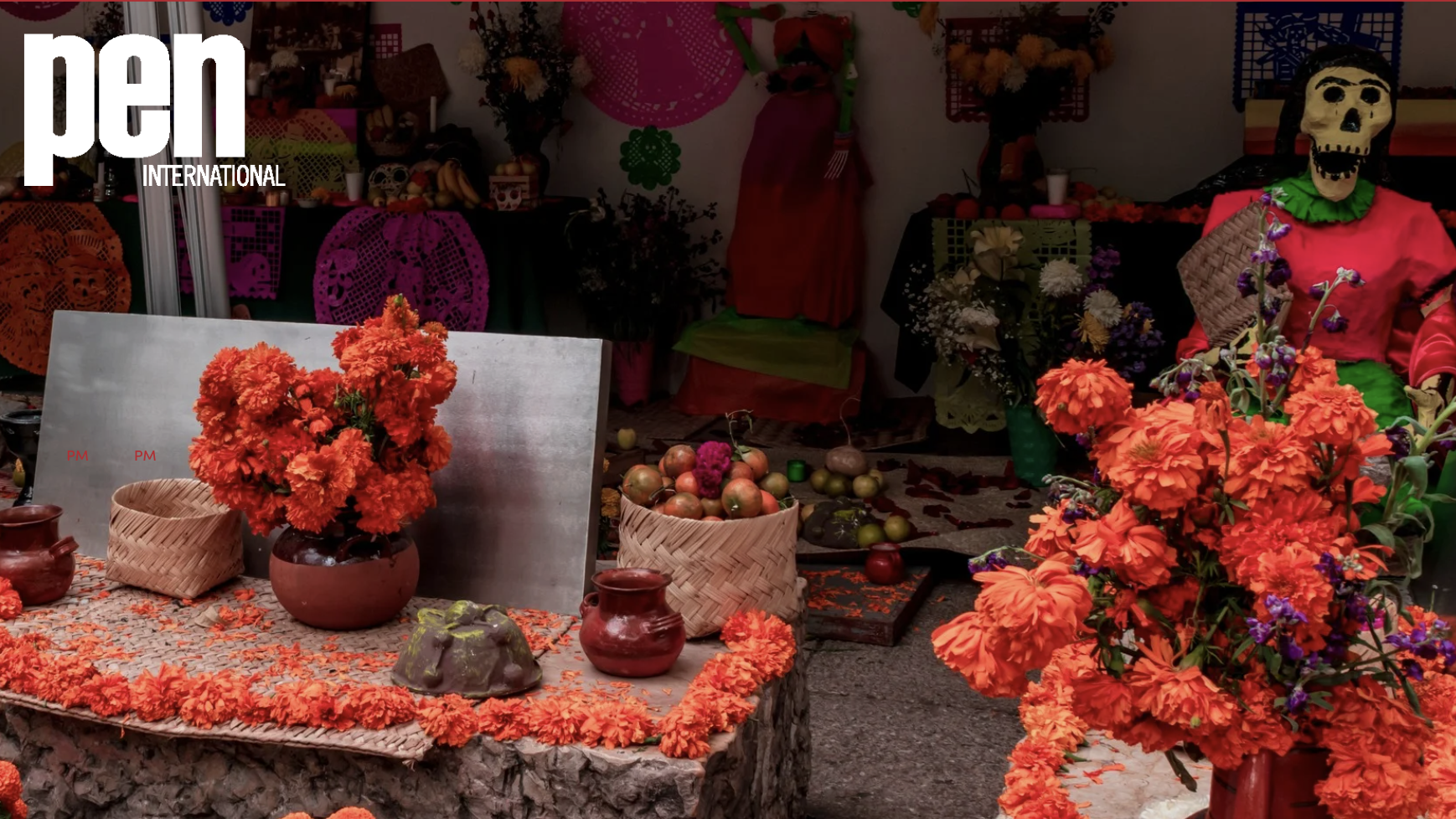
31 October 2025: On the Day of the Dead, we the undersigned, honour the journalists in Mexico who have been killed for their work. This act of remembrance is also an urgent appeal: violence against the press has reached alarming levels in the region. In Mexico, practicing journalism carries deadly risks. The Mexican State must acknowledge this reality and take immediate action.
PEN International and Article 19’s Mexico and Central America office have documented the killing of at least ten journalists over the past twelve months in Mexico. Seven of these cases are believed to be directly linked to their work, while the motives behind the remaining three killings are still under investigation. The past year, UNESCO, PEN, CPJ, RSF also recorded the murder of journalists in Brazil (1), Colombia (3), Ecuador (2), Honduras (1), Guatemala (1), Haiti (2), and Peru (2), positioning Mexico once again as the country with the highest number of journalists murdered in the continent. The murders of journalists are closely linked to their reporting on matters of high public interest, including corruption, organised crime, drug trafficking, human rights violations, environmental concerns, and abuses of power.
The brutality of the attacks, combined with entrenched impunity, has created a perpetual cycle of violence that undermines not only the right to freedom of expression but also the public’s right to be informed.
Despite its international obligations, the Mexican State continues to fail to ensure the protection of journalists and a safe environment for journalism, and to deliver effective justice for victims and their families.
This reflects a reality that cannot be ignored: Mexico faces not only a crisis of violence, but also a crisis of structural impunity that enables attacks to continue without consequence. Such impunity creates a chilling effect of self-censorship, restraint, and fear among journalists.
Emblematic cases
We remember the journalists Kristian Uriel Martínez Zavala andCalletano de Jesús Guerrero, killed in Mexico in 2025. …
Mexico’s ongoing crisis is no accident. It is the result of entrenched impunity and a state either unable or unwilling to protect those who bring truth to light.
We urge the Mexican State to:
Take concrete steps to guarantee that journalists in Mexico can exercise their right to freedom of expression without fear of reprisals.
Review and strengthen the Protection Mechanism for Human Rights Defenders and Journalists, ensuring that effective measures are deployed swiftly.
Undertake thorough, impartial, and independent investigations into the killings of and attacks on journalists, and deliver effective justice for victims and their families.
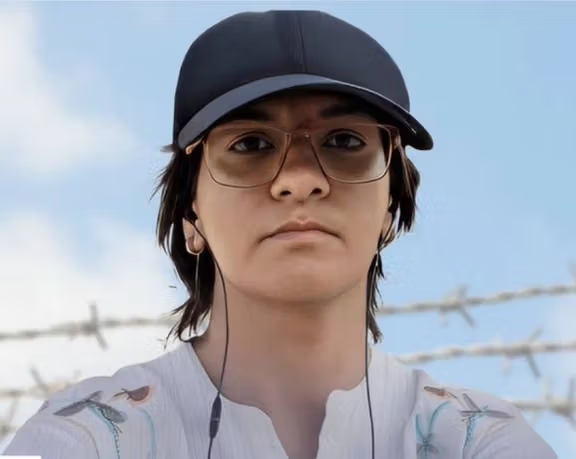
The death of a female Iranian political prisoner in hospital following a series of seizures has sparked outrage from Iran’s two Nobel laureates and right groups who have labeled her death a state-sponsored murder. Somayeh Rashididied after several days in hospital following her transfer from Qarchak Prison near Tehran, Iran’s judiciary-affiliated Mizan news agency reported on Thursday.
Rashidi, born in 1983, was detained in April for allegedly writing anti-government graffiti slogans in Tehran’s Javadieh district.
Nobel Peace laureates Narges Mohammadi condemned her death in custody, describing it as part of a pattern of abuse in detention. “This devastating loss of Somayeh Rashidi is not an accident but the result of a systematic policy of neglect and cruelty inside Iranian prisons,” Mohammadi said in a post on X.
Rights groups and activists including Nobel laureate Shirin Ebadi had previously raised alarm about Rashidi’s deteriorating condition, highlighting her urgent need for medical attention.
Iran International reported earlier this month that Rashidi’s condition had severely declined, with doctors holding little hope for her recovery.
Human rights groups including the Norway-based Iran Human Rights (IHR) have publicly called for the closure of Qarchak, describing it as “one of the darkest symbols of systematic human rights violations in the Islamic Republic.” Rashidi death comes less than a week after another prisoner, Maryam Shahraki, died in Qarchak last Friday. According to Norway-based rights group Hengaw Organizattion, three women have already died in this facility this year due to lack of adequate medical care — Jamileh Azizi on September 19, Shahraki on September 13, and Farzaneh Bijanipour on Januar
Now finally there is some closure as reported by ANP on 4 June 2025:
In El Salvador, three suspects have been found guilty of murdering four Dutch journalists that were working for IKON in 1982. All three were handed a prison sentence of 15 years, several Salvadorian media outlets reported, including the newspaper Diario El Salvador.
After a hearing that took longer than 11 hours, the jury ruled that all the suspects were involved in the death of the journalists. The suspects are the former Minister of Defense, Guillermo Garcia (91), former director of a special police service, Francisco Antonio Moran (93), and former colonel Mario Reyes Mena (85).
Koos Koster, Jan Kuiper, Hans ter Laag, and Joop Willemsen, four journalists who worked for the now defunct broadcaster IKON, were reporting on the civil war in the country in 1982. They walked into an ambush at Chalatenango and were killed. A now-repealed amnesty law prevented the prosecution of the perpetrators for years.
Sonja ter Laag (70), the sister of Hans ter Laag, responded to the verdict. “I am very happy that the people who murdered my brother have been convicted. And that they will go to their graves as murderers. We can finally close this after 43 years.”
She added that the victim’s relatives have been living in a state of hope and desperation for the convictions for 43 years. “That costs a lot of energy, you don’t want to know. And now it is over. The people who gave the order to murder my brother, an innocent 25-year-old boy, will be punished.” Ter Laag did not mind that the elderly men would not have long to live anymore. “In any case, they will not go to their grave decorated.”
The judges imposed a lower sentence than the maximum set by the law. Instead of a prison sentence of 30 years, they imposed 15 years because of the defendants’ age and poor health.
García and Morán are being treated in a private hospital. El Salvador has requested the extradition of Reyes Mena. He currently lives in the U.S.
Cândida Schaedler on 12 February 2025 asks whether anything can be done to protect them.
In 2023, 196 land and environmental defenders were murdered around the world – the vast majority of them in Latin America. In fact, just four countries – Brazil, Colombia, Honduras and Mexico – accounted for over 70 percent of those killings. Colombia was by far the deadliest country, with 79 murders, followed by Brazil, with 25.
We spoke with some of these brave activists to learn more about the threats they face, how they stay safe and how Colombia and Brazil are working to keep them alive.
Quilombolas in the Jequitinhonha Valley in Minas Gerais, Brazil. Photo: Mídia NINJA, Flickr
“When we recognized ourselves and declared ourselves a quilombo, our peace was over”, recalls Elza,* a Brazilian Quilombola leader in her late 50s.
In December 2008, she was shot and injured in an attack that killed her brother and sister. Since then, she hasn’t left her home alone – not even for a walk in her own territory, one of the 11 urban quilombos in Porto Alegre, the capital of Rio Grande do Sul in southern Brazil.
Quilombos are Afro-Brazilian communities that were originally founded by escaped slaves in colonial times.
Today, they are officially defined as “ethno-racial groups that, by self-definition, have their own historical trajectory, maintain specific territorial relations and are presumed to have Black ancestry related to resistance against historical oppression.” Brazil has recognized quilombos in its constitution since 1988, but the process of gaining legal recognition is time-consuming and often fraught with obstacles. Elza’s community was officially designated a quilombo in 2005, but only after its residents agreed to give up half their territory. Ever since, they’ve been battling gangs and real estate speculators who want control of the same 58 hectares of land they call home.
In 2022, they once again came under attack. Armed men showed up at their door in an attempt to take over a housing project under construction in the quilombo, which had been put on hold due to a dispute with the bank financing it….
Elza and her daughter, Carolina,* live under the protection of the Brazilian government, which has a program to safeguard human rights defenders, environmentalists and communicators.
Jesus Pinilla leads a workshop for the Network of Young Guardians of the Atrato. Photo courtesy of Jesus Pinilla
Jesus Pinilla is a 26-year-old Afro-Colombian activist from a small community in the Chocó Department in western Colombia. He is a member of the Network of Young Guardians of the Atrato, a group composed of 36 young people defending the Atrato River – considered the mightiest river in Colombia.
Back in 2016, the Atrato was the first Colombian river to be given legal rights. Enforcing those rights are a group of 10 guardians, along with the Young Guardians, who are embroiled in a constant battle against mining companies exploiting the river’s waters.
Pinilla works as an environmental educator. He first became an environmental activist at the age of 14, but he fears that the risks often drive young people away from climate and environmental movements in Colombia.
“My community is located by the river, so we are constantly dealing with it on a daily basis,” he says. “We depend on it for our basic needs.”
Policing is not enough to tackle the threats facing land and environmental defenders in Latin America. Photo: Agência Brasília, Flickr
“When combined with the interests of communities, the internal armed conflict becomes even more dangerous,” says Leonardo González Perafán, director of the Institute for Development and Peace Studies (Indepaz) in the capital, Bogotá.
“That’s when actions against environmental defenders and communities come into play,” he explains, adding that environmental conflicts often occur in countries with abundant mineral resources.
In most cases, communities are forced to self-organize to ensure their own safety due to the absence of the state.
“They provide self-protection through Indigenous or campesino [farmer] guards,” he explains.
The communities have also developed communication strategies to share information with each other, as well as with the authorities and other organizations.
But as long as the armed conflict persists, it will be very difficult for the government to tackle systemic threats against environmental defenders, especially in areas where it has little authority, says Franklin Castañeda, director of human rights at Colombia’s Ministry of the Interior.
Castañeda explains that more than 15,000 people are currently protected under the National Protection Unit (UNP), which aims to ensure the safety of members of Congress, mayors, journalists, human rights defenders, community leaders and other individuals facing threats due to their work.
The majority – around 9,000 – of these people are social leaders, including environmental defenders. The UNP provides them with security measures such as bulletproof vests, private escorts, armored vehicles or other measures as deemed necessary on a case-by-case basis.
Still, Castañeda emphasizes that individual measures are a last resort. The government has also invested in prevention, such as ensuring that the military and police are not involved in illegal activities.
Despite these efforts, Castañeda concedes that there is still plenty of work to be done to address the structural drivers of conflict, such as high levels of socioeconomic inequality.
“Most of the territories where social conflicts arise are the least developed ones that the government still cannot reach.”
He says these areas will need internet access, highways and other infrastructure to improve the government’s ability to ensure safety and the rule of law.
A quilombo in southern Brazil. Photo: Cândida Schaedler
In Brazil, the main drivers of conflict are deforestation, illegal mining, real estate speculation and the expansion of agriculture.
The program’s coordinator, Igo Martini, emphasizes the importance of listening to the communities to respond quickly to their protection needs. Last year, it carried out 54 public consultations to devise a National Plan to address threats to these communities. But Martini also points out the need to address the root causes rather than merely deploying the police.
“If we don’t solve the underlying causes, the program will continue for another 20 or 40 years just responding to emergencies,” he warns. “A movement from the states is also necessary, not just from the federal government.”
“We need to strengthen agencies, monitoring systems and prevention systems, like the Brazilian Institute of the Environment and Renewable Natural Resources (Ibama), for example.”
The PPDDH operates in three areas: state protection, justice protection and collective protection.
While state and justice protection are offered by the police and courts respectively, collective protection involves strengthening communities and providing them with the tools to communicate with each other and report threats to the authorities to safeguard their territory.
In June 2017, Indigenous Ñomndaa’ journalist Marcela de Jesus Natalia found herself fighting for her life. A gunman waited for her outside the radio station where she worked and shot her three times.
“I didn’t think he wanted to kill me,” she said. “I turned around. The first bullet went to my forehead. I put my hand up, [and] the bullet went in and came out. The second one shattered my jaw. Then this guy held me, dragged me, gave me a final shot in my head and laid me on the pavement.”
Though at first presumed dead, Marcela de Jesús survived the attack and, with the support of lawyers and advocates, as well as of UN Human Rights, continues to fight for justice for the crime perpetrated against her. Marcela de Jesús was attacked because she angered powerful people by informing Indigenous Peoples about their rights, such as the importance of education, justice, and in particular, violence against women, thus empowering them to fight against historical discrimination against them.
“Journalists who expose wrongdoing and show us the horrific reality of conflict are human rights defenders,” said Volker Türk, UN Human Rights Chief, in a statement commemorating the International Day to End Impunity for Crimes against Journalists, observed every year on November 2. “Attacks against them affect everyone’s right to freedom of expression and access to information, leaving us all less well informed.”
In 2023, 71 journalists and media workers were killed and over 300 imprisoned around the globe, Türk said.
Marcela de Jesús is an Indigenous Ñomndaa’ woman born in Xochistlahuaca, in the state of Guerrero, on Mexico’s Pacific coast. From a young age, Marcela de Jesús witnessed violence and attacks by men in positions of power and even the military. It was there that her desire to defend her people was born and she realised that to confront abusers she needed to learn Spanish.
Marcela de Jesús migrated to the state of Oaxaca, and by her own efforts, she managed to continue studying and encountered a radio station that was looking for an Indigenous person from Guerrero who spoke Ñomndaa’ and Spanish and had completed middle school.
“I went behind my husband’s back, took the exam and passed,” she said. “I remember that the director [of the radio station] said to me, ‘Why do you want to be an announcer?’ ‘I always wanted to be the voice of my people,’ I answered.” Later, she returned to the state of Guerrero and got a precarious job as a radio announcer, but with patience and hard work she managed to become the radio manager.
It was after her return to her home state that she began to encounter opposition to her “voice.” Marcela de Jesús was told by powerful people in her town that she was not supposed to inform Indigenous Peoples; that the only thing they were interested in was whether a goat or a cow was lost, and not to get into trouble. She fought against and won lawsuits filed against her for giving Indigenous Peoples news.
It is my conviction that my people should be guaranteed the right that is enshrined in the Constitution and in international treaties, that we have the right to information.
“They couldn’t [silence me] because what is legal is legal. What is morally good is morally good. And that is the reason for the attack against me,” said Marcela de Jesús.
According to UN Human Rights in Mexico, at least five journalists and one media worker have been killed and one more media worker was disappeared this year because of their work. This continuous danger in which journalists have had to operate for years, led universal and regional human rights mechanisms to recommend to the Mexican State the creation of a Mechanism for the Protection of Human Rights Defenders and Journalists.
…The gunman who shot Marcela de Jesus has been arrested and sentenced for his crime, but the ones who called for her shooting are still out there. She is hopeful for them to be brought to justice.
“I have a lot of faith that the alleged intellectual author will forget about me. I have faith that nothing is forever,” said Marcela de Jesús. She added: “Nothing and no one, not jail, not this attack with three bullets, takes away my desire to continue being the voice of my people, to continue with my activism, my defence of human rights. I am fulfilling my dream of being the voice of my people at the national and international level.”
On 22 May 2024 Front Line Defenders launched its Global Analysis 2023/24 on the situation of human rights defenders (HRDs) at risk around the world, an in-depth annual publication detailing the variety of risks, threats and attacks faced by HRDs around the world.
The report also reveals statistics gathered and verified by the HRD Memorial initiative – which Front Line Defenders coordinates – documenting the killings of at least 300 HRDs in 28 countries in 2023. Almost a third of those killed (31%) were Indigenous people’s rights defenders. This brings the total documented killings of HRDs in the last decade to nearly 3,000.
“This appalling wave of attacks on human rights defenders is a direct result of an international human rights framework left in tatters and governments’ double standards when it comes to respecting human rights,” said Alan Glasgow, Executive Director of Front Line Defenders. “A quarter decade after the UN adopted a Declaration on human rights defenders, not enough progress has been made to ensure defenders are valued and protected. In this time, thousands of defenders have paid with their lives and many more face ongoing attacks and intimidation for their peaceful work. Urgent action is needed to change this.”
Wide-ranging risks to HRDs
Globally, the violation most commonly cited by HRDs was arbitrary arrest/detention (15%), followed by legal action (13%), continuing an ongoing trend of criminalisation as the most-reported risk. This was followed by death threats (10.2%), surveillance (9.8%) and physical attacks (8.5%). Trans and non gender-conforming HRDs reported slightly higher rates of physical attacks, and a much greater risk of smear campaigns. Globally, the five most targeted areas of human rights defence were: LGBTIQ+ rights (10.2%); Women’s rights (9.7%); Human rights movements (8.5%); Indigenous peoples’ rights (7.1%); and Human rights documentation (5.2%).
The statistics in the Global Analysis are derived from Front Line Defenders’ casework and approved grant applications between 1 January and 31 December 2023. The statistics are based on 1,538 reported violations in 105 countries. Front Line Defenders documents multiple violations per case or grant, as this is the reality of the situation for human rights defenders. For more details on how these and the HRD Memorial data are gathered, please refer to the Methodology section at the end of the report.
Associated Press on 23 January 2023 informs us that Colombia’s human rights watchdog is reporting that 215 human rights advocates were killed last year, the highest death toll since a peace accord was signed with leftist rebels in 2016.
José Ricaurte Quintero, who founded the Maná Survivors Association, was one of the last victims of 2022. He was assassinated in the street in Armenia in December. His group supported families of people who disappeared during more than five decades of armed conflict in Colombia.
The ombudsman’s office says the murders coincide with places that are strategically important to organized crime groups involved in drug trafficking, illegal mining and contraband.
The government of Gustavo Petro — Colombia’s first-ever leftist president — has proposed in his “total peace” policy to initiate peace talks with armed groups such as the ELN guerrillas and to reach out to FARC dissidents who refused to sign the peace accord, as well as the Gulf Clan cartel, with whom the government announced a truce.
Ombudsman Carlos Camargo expressed hope that such talks would lead to a reduction in actions against leaders of human rights groups.
The UN defines environmental human rights defenders as “individuals and groups who, in their personal or professional capacity and in a peaceful manner, strive to protect and promote human rights relating to the environment, including water, air, land, flora and fauna”.
“For their tireless work in empowering communities and protecting ecosystems, environmental defenders are killed in startling numbers. Murder is not the only way environmental defenders are persecuted; for every 1 killed, there are 20 to 100 others harassed, unlawfully and lawfully arrested, and sued for defamation, amongst other intimidations” – John Knox, former UN Special Rapporteur on Human Rights and the Environment.
The United Nations has recognized the threats to environmental defenders and called for their protection. The UN Environment Programme (UNEP) builds on this work to support environmental defenders through its Defenders Policy, through which we:
Denounce the attacks, torture, intimidation and murders of environmental defenders;
Advocate with states and non-state actors, including business, for better protection of environmental rights and the people standing up for these rights;
Support the responsible management of natural resources;
Request government and companies’ accountability for the different events where environmental defenders have been affected / murdered.
Forst, in his report, puts it like this: “states must address the root causes of mobilisation” not the mobilisation itself. Indeed, tackling protesters and not oil producers is the democratic equivalent of rearranging deckchairs on the Titanic.
On Friday 8 December 2023 the UN Office on Drugs and Crime (UNODC) said that more people were killed due to homicide than armed conflict and terrorism combined in 2021, with an average of 52 lives lost per hour worldwide. The Global Study on Homicide analyzes the complex dynamics behind these violent deaths and includes a special section on how organized crime is driving death rates up in Latin America and the Caribbean.
The report examines homicides related to criminal activities and interpersonal conflict, as well as “socio-politically motivated homicides” such as the deliberate killing of human rights defenders, humanitarian workers and journalists.
UNODC chief Ghada Waly said the loss of thousands of lives each year to homicide is “a sombre reminder” of the collective failure of the international community to reduce all forms of violence by 2030, in line with the Sustainable Development Goals (SDGs). The report revealed that during the period from 2019 to 2021, an average of roughly 440,000 deaths worldwide were due to homicide – more than conflict-related or terrorist killings combined.
UNODC said 2021 “was an exceptionally lethal year”, marked by 458,000 homicides. The spike was in part linked to economic repercussions from the COVID-19 pandemic and to a rise in organized crime and gang-related and socio-political violence in several countries.
Organized crime accounted for 22 per cent of homicides globally, and 50 per cent in the Americas, where competition among organized crime groups and gangs can spark a sudden and sharp rise in “intentional homicides”, as has happened in Ecuador and Haiti.
The Americas also lead the world in highest regional homicide rate per capita, with 15 per 100,000 population in 2021, or 154,000 people.
Africa had the highest absolute number of homicides at 176,000, or 12.7 per 100,000 population, “and available data suggests that the homicide rate is not falling, even as decreases have been registered in other regions,” the report said. Meanwhile rates in Asia, Europe and Oceania were far below the global per capita average of 5.8 per 100,000 population in 2021.
Firearms were used in most killings in the Americas in 2021, or roughly 75 per cent, whereas in Europe and Asia they were involved in 17 and 18 per cent of homicides, respectively.
Men accounted for 81 per cent of homicide victims and 90 per cent of suspects, but women are more likely to be killed by family members or intimate partners. “Although they represent 19 per cent of homicide victims in total, they account for 54 per cent of all killings in the home and 66 per cent of all victims of intimate partner killings,” UNODC said.
Aid workers under attack
The data also showed that the deliberate killings of human rights defenders, environmental defenders, community leaders, journalists, and aid workers represented nine per cent of global homicides. “The threat has increased for humanitarian aid workers, who witnessed a higher average number of fatalities over the period 2017-2022 than 2010-2016,” the authors said.


 Hans Thoolen on Human Rights Defenders and their awards