Posts Tagged ‘Kenya’
December 21, 2013

The Brussels-based NGO ‘Protection International’ held a Global meeting, from 18 to 22 November 2013, bringing teams from the field and its Brussels headquarters together in Mombassa, Kenya. The meeting was an opportunity for teams from Colombia, Guatemala, Indonesia, Kenya, the Democratic Republic of Congo and Thailand to exchange and compare their experiences, strategies and knowledge on security management and the protection of defenders. During the meeting topics were addressed such as the conceptual framework for research on community protection networks, the psychosocial care of human rights defenders, and the use of outcome mapping to strengthen the monitoring of the work done with communities and civil society organizations. The contents of a “Facilitators Guide on protection for human rights defenders” – to be published in early 2014 – was also discussed. [The Global Meeting follows an earlier Latin American Regional Meeting held in August in Guatemala]
via PI Global Meeting in Kenya: Strengthening Protection networks | | Protection InternationalProtection International.
Posted in human rights, Human Rights Defenders, Protection International | Leave a Comment »
Tags: Africa, Brussels, civil society organisations, Democratic Republic of Congo, Guatemala, Human Rights Defenders, international protection, Kenya, Latin America, meeting, Mombasa, NGO 'Protection International, PI, Protection International, psychosocial care, strategy, Thailand
November 19, 2013
The Information and Communications Amendment Bill of 2013 was passed in Kenya by parliament on October 31, 2013, but has not yet been signed by the president. Another problematic draft law, the Media Council Bill, is due to
 be debated in parliament in the coming weeks. Moreover, on October 30 the attorney general also proposed controversial new provisions regulating the work of nongovernmental organizations (NGOs), including a proposed cap at 15 percent of foreign funding. “These new laws are an attempt to undermine freedoms of expression and association in Kenya,” said Daniel Bekele, Africa director of Human Rights Watch on 12 November. “Kenya’s leaders should act swiftly to prevent these bills from becoming law and focus on the country’s real challenges, like police reform and accountability.”
The new idea of restricting (foreign) funding follows similar efforts by an increasing number of other countries, signaling a dangerous trend:
On October 30, the office of the attorney published in the official gazette – the mandatory first step before a bill is introduced to parliament – the Miscellaneous Amendment Bill of 2013. This bill includes provisions that would grant broad discretionary powers to a new government body to regulate nonprofit organizations and would limit access to foreign funding for these groups. The amendment would empower a new government body, the Public Benefits Organizations Authority, to “impose terms and conditions for the grant of certificates of registration, permits of operation, and public benefit organization status.” The chairperson would be appointed by the president, increasing executive powers over nongovernmental groups. Critics of the law fear that the wide powers vested in the executive branch could be used to restrict nongovernmental organizations or even penalize organizations that fall out of favor with the Kenyan authorities.
The amendment would also introduce new limits on funding for nongovernmental organizations. It states that “a public benefit organization shall not receive more than 15 percent of its total funding from external donors,” unless otherwise approved by the minister for finance. Funding to nonprofits would be channeled through a new Public Benefits Organizations Federation rather than directly from donors – which could create new operational difficulties for nongovernmental organizations and delays in their projects.
“This new law requiring nongovernmental organizations to raise 85 percent of their funding locally may well have the effect of weakening independent voices,” Bekele said. “As we have seen elsewhere in the region, including in Ethiopia, these laws are an assault on basic freedoms and Kenya’s citizens and leadership should soundly reject them.”
Kenya: New Laws Would Undermine Basic Rights | Human Rights Watch.
Posted in HRW, human rights, Human Rights Defenders | 1 Comment »
Tags: Africa, Daniel Bekele, Ethiopia, foreign funding, freedom of association, freedom of expression, funding restrictions, HRW, Human right, Human Rights Defenders, Human Rights Watch, Kenya, media, Non-governmental organization, nongovernmental organizations
November 18, 2013
Today, 18 November, a group of 14 Africa-based NGOs came out with a strong statement supporting the ICC which has its annual meeting coming up 20-28 November in the Hague: “African governments should reject special exemptions for sitting officials before the International Criminal Court (ICC)“, African organizations and international organizations with a presence in Africa said in a document released today. The ICC faces important challenges in Africa. In October the African Union said that the trials of Kenya’s president and vice president, Uhuru Kenyatta and William Ruto, should be suspended
Read the rest of this entry »
Posted in FIDH, HRW, human rights, Human Rights Defenders, ICJ, OMCT | 2 Comments »
Tags: Africa, African Commission on Human and Peoples' Rights, african NGOs, African Union, East and Horn of Africa Human Rights Defenders Project, ICC, impunity, International Criminal Court, international criminal law, Kenya, Kenya Human Rights Commission, NGOs, Security Council, Uhuru Kenyatta, United Nations Security Council, William Ruto
October 15, 2013
Posted in Front Line, HRW, human rights, Human Rights Defenders | 1 Comment »
Tags: Africa, bloggers, Bunge La Mwananchi, Daniel Bekele, Dennis Itumbi, detention, Front Line Defenders, harassment, HRW, Human rights defender, Human Rights Defenders, Human Rights Watch, International Criminal Court, Kenya, Kenya National Commission on Human Rights, Maina Kiai, police brutality, Ruth Mumbi, threats, Uhuru Kenyatta, United Nations Special Rapporteur, William Ruto, women human rights defenders
October 7, 2013
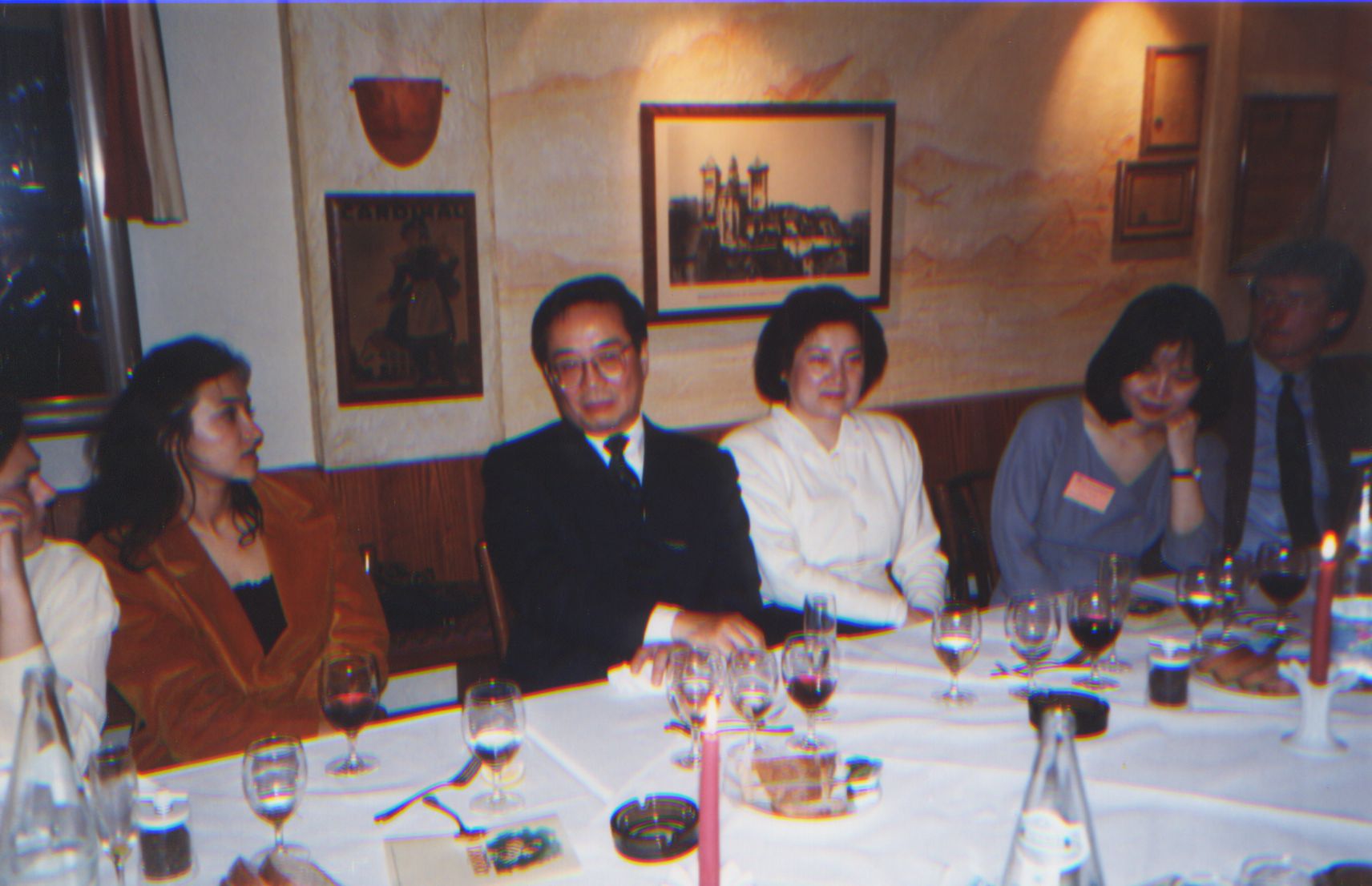
This blog tends to prioritize news on human rights defenders who are in trouble. This makes one overlook perhaps too often the contribution made by those who are working for the cause in other ways. To rectify I want to pay tribute to another woman who has contributed enormously to the creation and growth of the Martin Ennals Award for Human Rights Defenders: Simia Ahmadi. After 20 years she is leaving the Board of the Foundation on 7 October, just before the 20th ceremony tomorrow.
In 1992 Simia was a young, upcoming human rights worker who had just finished an internship with the UN. To her great regret she never met Martin Ennals in person. Her main motivation was that an award could be effective and volunteered to help it being set up. After successful initial fundraising she was the part-time Secretariat in the first year.

(Simia, left of first Laureate Harry Wu in 1994, Geneva)
After that, she worked several years for the International Federation for Human Rights (FIDH). Thereafter she was Programme Coordinator of the Legal and Human Rights Centre in Tanzania and from 2006-2009 she served as FIDH’s Representative to the UN in Geneva. After her move to Kenya in 2010, she served as the Chief of Party of the Public International Law and Policy Group in Kenya. Now she devoting her considerable energy to Kahesa, of which she is the Director-Founder and undertakes consultancy work such as evaluations KAHESA is a social enterprise that produces decorative and environmentally-sound paper through the employment of mentally-challenged Kenyans. Check out her www.kahesa.com and Facebook page: Kahesa paper
For being at the cradle of the MEA and making sure that the there is no grave for long time she deserve the deepest thanks from all especially Human Rights Defenders around the world.
Posted in FIDH, human rights, Human Rights Defenders, MEA | Leave a Comment »
Tags: FIDH, Geneva, Harry Wu, human rights, International Federation for Human Rights, Kahesa, Kenya, Legal and Human Rights Centre, Martin Ennals, Martin Ennals Award, Martin Ennals Award for Human Rights Defenders, Martin Ennals Foundation, MEA, Tanzania, United Nations, woman human rights defender
June 30, 2013
On 27 June 2013, human rights defender John Abok was arrested and held in police custody over allegations of impersonation. Read the rest of this entry »
Posted in Front Line, human rights, Human Rights Defenders | Leave a Comment »
Tags: Bunge La Mwananchi, Frontline, Frontline Defenders, harassment, Human right, Human Rights and Liberties, Human rights defender, illegal detention, John Abok, Kenya, Nairobi, Police officer, release on bail
June 17, 2013
Gmedia concluded its 4th workshop in its Media Empowerment on Human Rights programme held in Geneva from 13 to 17 May 2013 in collaboration with OMCT and with the participation of thirteen journalists, four from Guatemala and nine from Kenya. As part of the programme, Gmedia makes its workshops run in parallel with the UN Committee on Torture (CAT) sessions. Journalists participated in debates and discussions conducted by Human Rights experts from the academia, Media, UN Agencies, Permanent Missions and International NGOs on such topics as the Human Rights doctrine, monitoring mechanisms and institutions, sharing experiences and good practices, and challenging the role of media as a human rights defender. Journalists had also the opportunity to attend and report on the Committee against torture session concerning their respective countries.
As a result, the course can point to 37 published articles, video broadcasted and radio programs by participants in Guatemala and Kenya and 3 live coverage on CAT broadcasted in Kenyan television. Gmedia is currently working on the development of its next workshop to follow the sessions of the UPR in October 2013.
via Newsletter June 2013.
Posted in human rights, Human Rights Defenders, OMCT | Leave a Comment »
Tags: CAT, films, Geneva, Gmedia, Guatemala, Human right, human rights, Human rights defender, Human Rights Defenders, Journalist, journalists, Kenya, Non-governmental organization, radio, television, torture, video, World Organisation Against Torture
June 6, 2013
In the Huffington Post of 6 June 2013 there is an excellent post by Jane Cohen, researcher at Human Rights Watch about the link between the protection of the environment and that of human rights defenders. The whole piece is worth reading but here is the essential message: Read the rest of this entry »
Posted in human rights | 1 Comment »
Tags: Bangladesh, China, environmental issues, exploitation, Huffington Post, Human right, Human rights defender, Human Rights Defenders, Human Rights Watch, Jane Cohen, Kenya, Non-governmental organization, right to clean environment, toxic mercury, UN, UNEP, World Environment Day, Zimbabwe
June 5, 2013
On 1 June 2013 at dawn, Kenyan human rights defender Ms Lydia Mukami was abandoned in a bush after being abducted by unidentified men who had spent several hours subjecting her to physical assault. Lydia Mukami is the chairperson of Mwea Foundation, a grassroots organisation of rice farmers in the Mwea constituency that has been at the forefront of an ongoing campaign to challenge the constitutionality of Kenya’s 1966 Irrigation Act. Read the rest of this entry »
Posted in human rights | Leave a Comment »
Tags: assault, death threats, environmental issues, Frontline Defenders, human rights, Human rights defender, ill treatment, intimidation, Kenya, land rights, Lydia Mukami, Mwea, Mwea Foundation, Nairobi, National Irrigation Board, protection, woman human rights defender
February 24, 2013
Bukeni Waruzi – just back from a field trip to Kenya – posted an excellent piece on “Witness‘ blog on 23 February under the title “Can Cell Phones Save Kenya’s Elections?. Here some excerpts:
The December 2007 elections were marred by unprecedented violence: killings, rapes, lootings, attacks on civilians, and massive displacement. Historically peaceful, Kenya devolved into violence that caught many unprepared—including human rights activists who were unable to use video to document the magnitude of what was happening.
Posted in films, Human Rights Defenders | Leave a Comment »
Tags: Africa, Bukeni Waruzi, civil society organizations, documenting, election violence, Elections in Kenya, filming, human rights activists, Human Rights Defenders, Kenya, Nairobi, video, violence, Witness