Posts Tagged ‘journalists’

Shelter City Netherlands: Call for Applications for September 2021

April 29, 2021

Justice and Peace Netherlands is launching a new call for applications for at risk human rights defenders to participate in Shelter City. The deadline for applications is 14 May 2021 at 23:59 CEST (Central European Time). Please be aware that special conditions apply because of the COVID-19 situation (see conditions below).

Shelter City provides temporary safe and inspiring spaces for human rights defenders at risk where they re-energise, receive tailor-made support and engage with allies. The term human rights defender is intended to refer to the broad range of activists, journalists and independent media professionals, scholars, writers, artists, lawyers, civil and political rights defenders, civil society members, and others working to advance human rights and democracy around the world in a peaceful manner.

From September 2021 onwards, several cities in the Netherlands will receive human rights defenders for a period of three months. At the end of their stay in the Netherlands, participants are expected to return with new tools and energy to carry out their work at home.

Journalists’ Safe Haven Initiative

Justice and Peace aims to promote the safety of journalists, and in particular women journalists, worldwide so that they can build new strategies and continue their important work for freedom of expression in their country of origin. With the support of the Dutch Ministry of Foreign Affairs, Justice and Peace will be able to provide two additional temporary safe spaces per year in The Hague for journalists at risk and provide them with tailor-made support.

Shelter City and COVID-19

Please note that the current situation of the coronavirus (COVID-19) may pose certain challenges to the stay of human rights defenders in the Netherlands in 2021. These challenges can include:

  • Limitations and/or changes in the programme that we can offer human rights defenders during their stay in the Netherlands;
  • New measures and restrictions (including a lockdown) taken by the Dutch government;
  • Cancellation of flights to/from the Netherlands;
  • Postponement of return to the home country after 3 months because of travel restrictions;
  • Participants might be requested to self-quarantine for 5-10 days upon arrival in the Netherlands (the Shelter City programme will be adapted accordingly) and to take other preventive measures due to COVID-19 (including a COVID-19 test before travelling to the Netherlands).

Please consider these potential challenges carefully before applying to the programme.

Applicants must fulfil the following conditions:

In order to be eligible to the Shelter City programme, applicants must meet the following conditions:

  1. They implement a non-violent approach in their work;
  2. They are threatened or otherwise under pressure due to their work;
  3. They can be relocated for a maximum period of 3 months. Limited spots are available for people who are not able to stay for the full 3 months;
  4. They are willing and able to return to their country of origin after 3 months;
  5. They are willing to speak publicly about their experience or about human rights in their country to the extent that their security situation allows;
  6. They have a conversational level* of English (limited spots are available for French or Spanish speaking HRDs);
  7. They are willing and able to come to The Netherlands without the accompaniment of family members;
  8. They have a valid passport (with no less than six months of validity) or be willing to carry out the procedures for its issuance. Justice and Peace covers the costs of issuing a passport and/or visa (if applicable);
  9. They are not subjected to any measure or judicial prohibition to leaving the country;
  10. They are willing to begin their stay in The Netherlands around September 2021.

Note that additional factors will be taken into consideration in the final round of selection, such as the added value of a stay in the Netherlands as well as gender, geographic, and thematic balance. Please note that we can only accept human rights defenders currently residing in a third country under exceptional circumstances.

To apply or submit the application of a human rights defender, please fill in the form by clicking ‘Apply Now’ below. Application forms must be completed by 14 May 2021, at 23:59 CEST (Central European Summer Time). An independent commission will select the participants.

Note that the selected human rights defenders will not automatically participate in Shelter City as Justice and Peace is not in control of issuing the required visas to enter the Netherlands.

For last year’s call see: https://humanrightsdefenders.blog/2020/11/24/new-call-for-applications-for-human-rights-defenders-at-risk-to-participate-in-shelter-city-netherlands/

Apply now for Shelter City 2021

For more information, please contact us at sheltercity[at]justiceandpeace.nl.

World Press Freedom Index 2021 is out

April 24, 2021

The 2021 World Press Freedom Index compiled by Reporters Without Borders (RSF) shows that journalism, the main vaccine against disinformation, is completely or partly blocked in 73% of the 180 countries ranked by the organisation.

This year’s Index, which evaluates the press freedom situation in 180 countries and territories annually, shows that journalism, which is arguably the best vaccine against the virus of disinformation, is totally blocked or seriously impeded in 73 countries and constrained in 59 others, which together represent 73% of the countries evaluated. These countries are classified as having “very bad,” “bad” or “problematic” environments for press freedom, and are identified accordingly in black, red or orange on the World Press Freedom map. To compare with last year, see: https://humanrightsdefenders.blog/2020/04/21/2020-world-press-freedom-index-is-out/

The Index data reflect a dramatic deterioration in people’s access to information and an increase in obstacles to news coverage. The coronavirus pandemic has been used as grounds to block journalists’ access to information sources and reporting in the field. Will this access be restored when the pandemic is over? The data shows that journalists are finding it increasingly hard to investigate and report sensitive stories, especially in Asia, the Middle East and Europe.

The 2021 Edelman Trust barometer reveals a disturbing level of public mistrust of journalists, with 59% of respondents in 28 countries saying that journalists deliberately try to mislead the public by reporting information they know to be false. In reality, journalistic pluralism and rigorous reporting serve to combat disinformation and “infodemics”, including false and misleading information.

“Journalism is the best vaccine against disinformation,” RSF secretary-general Christophe Deloire said. “Unfortunately, its production and distribution are too often blocked by political, economic, technological and, sometimes, even cultural factors. In response to the virality of disinformation across borders, on digital platforms and via social media, journalism provides the most effective means of ensuring  that  public debate is based on a diverse range of established facts.”

For example, President Jair Bolsonaro of Brazil (down 4 at 111th) and President Nicolás Maduro of Venezuela (down 1 at 148th) promoted medically unproven Covid-19 remedies. Their false claims were debunked by investigative journalists at media outlets such as Brazil’s Agência Pública and in-depth reporting by Venezuela’s few remaining independent publications. In Iran (down 1 at 174th), the authorities tightened their control over news coverage and stepped up trials of journalists in order to weaken the media’s ability to scrutinise the country’s Covid-19 death toll. In Egypt (166th), President Abdel Fattah Al-Sisi’s government simply banned the publication of any pandemic statistics that didn’t come from the Ministry of Health. In Zimbabwe (down 4 at 130th), the investigative reporter Hopewell Chin’ono was arrested shortly after helping to expose the overbilling practices of a medical equipment supply company.

Biggest movements in the Index

Norway is ranked first in the Index for the fifth year running even though its media have complained of a lack of access to state-held information about the pandemic. Finland maintained its position in second place while Sweden (up 1 at 3rd) recovered its third place ranking, which it had yielded to Denmark (down 1 at 4th) last year. The 2021 Index demonstrates the success of these Nordic nations’ approach towards upholding press freedom.

The World Press Freedom map has not had so few countries coloured white – indicating a country situation that is at least good if not optimal – since 2013, when the current evaluation method was adopted. This year, only 12 of the Index’s 180 countries (7%) can claim to offer a favourable environment for journalism, as opposed to 13 countries (8%) last year. The country to have been stripped of its “good” classification is Germany (down 2 at 13th). Dozens of its journalists were attacked by supporters of extremist and conspiracy theory believers  during protests against pandemic restriction….The country that fell the furthest in 2021 was Malaysia (down 18 at 119th), where the problems include a recent “anti-fake news” decree allowing the government to impose its own version of the truth. Big descents were also registered by Comoros (down 9 at 84th) and El Salvador (down 8 at 82nd), where journalists have struggled to obtain state-held information about the government’s handling of the pandemic.

https://rsf.org/en/2021-world-press-freedom-index-journalism-vaccine-against-disinformation-blocked-more-130-countries

A new tool to champion human rights defenders

March 2, 2021

Pip Cook published on 2 March 2021 a piece in Geneva Solutions which is hard to ignore for me in view of my own participation in it: the Digest: “A new tool to champion human rights defenders“. [see also:https://humanrightsdefenders.blog/2021/02/02/digest-of-laureates-ready-this-blog-changes-orientation/]

From left to right: Neri Colmenares, Abdul Aziz Muhamat, Juwairiya Mohideen, Nemonte Nenquimo and Intisar Al-Amyal. (True Heroes Films)

A new online tool has been launched to champion human rights defenders and bring greater recognition to their work. Launched this month by True Heroes Films, a Geneva-based media organisation which uses digital storytelling to raise the profile of human rights defenders around the world, the Digest of Human Rights Awards includes over 2,800 winners of 220 prestigious awards.

The Digest, while raising awareness about the work of human rights defenders, also  aims to serve as a useful tool for both the media and the human rights world to go beyond the often fleeting publicity that surrounds award ceremonies and ensure their work is not forgotten.

Hans Thoolen, co-founder of True Heroes and the Martin Ennals Award, told Geneva Solutions that the idea for the digest came out of a research project he undertook in 2013 into the value of human rights awards.

Awards help bring greater recognition to a cause, boosting an individual’s profile and granting them greater protection, be it through prize money or the support of NGOs. However, many awards remain relatively unheard of and receive very little publicity, which Thoolen said is “absolutely crucial” to their value.

“Journalists are incorporated into the broad human rights movement. Without publicity, human rights defenders would be working mostly for nothing,” said Thoolen. “They need public attention for their cause and what they are trying to change. Without it, nobody would know what they are doing.”

In fact, the Digest reveals journalists make up the largest professional group of award recipients, with more than 400 laureates from the media. The database also provides images of the laureates and biographies of their life and work, as well as details of the awards themselves.

“Human rights awards generally try to achieve three main objectives,” explained Thoolen. “One is recognition at a psychological level, which should not be underestimated. Many human rights defenders are not very popular in their own society, sometimes not even within their own family, so when they get recognition that can be a very important boost to their mental health. ”

The value of awards also lies in “concrete support”, be it in the form of prize money or training opportunities, or the chance to connect with others working in the same field. They also provide protection for the laureates, which is another reason publicity is essential – to make it known that the world is watching. Although this publicity can bring with it some risks, Thoolen explains that his long career working in the human rights world has shown him that these are outweighed by the benefits.

“The feedback we get from lawyers is always the same: the [human rights defenders] have already taken enormous risks by going public. They are not afraid, and clearly the publicity helps them. ”

Showcasing the work of thousands of people from all different backgrounds, championing everything from women’s rights to freedom of speech, Thoolen also hopes the Digest will serve as a “hall of fame” for role models to inspire the next generation of human rights defenders.

“Most people get into human rights work when they’re hit by something, but usually it’s not by reading the Universal Declaration of Human Rights,” said Thoolen. “What inspires people is seeing and hearing a person: a human rights defender. They are the entry point into the much broader human rights movement. ”

The piece then gives some recent winners of prestigious human rights awards featured in the Digest:

Abdul Aziz Muhamat – Martin Ennals Award, 2019. 

Juwairiya Mohideen – The Front Line Defenders Award, 2020. 

Nemonte Nenquimo – Goldman Environment Award, 2020.

Mohammad Mosaed – International Press Freedom Awards and Deutsche Welle’s Freedom of Speech, 2020. . 

Rugiati Turay – Theodor Haecker Prize, 2020. 

Intisar Al-Amyal – Per Anger Prize, 2020. 

Soltan Achilova has issued a rare rebuke of the Turkmen President – On YouTube

February 23, 2021

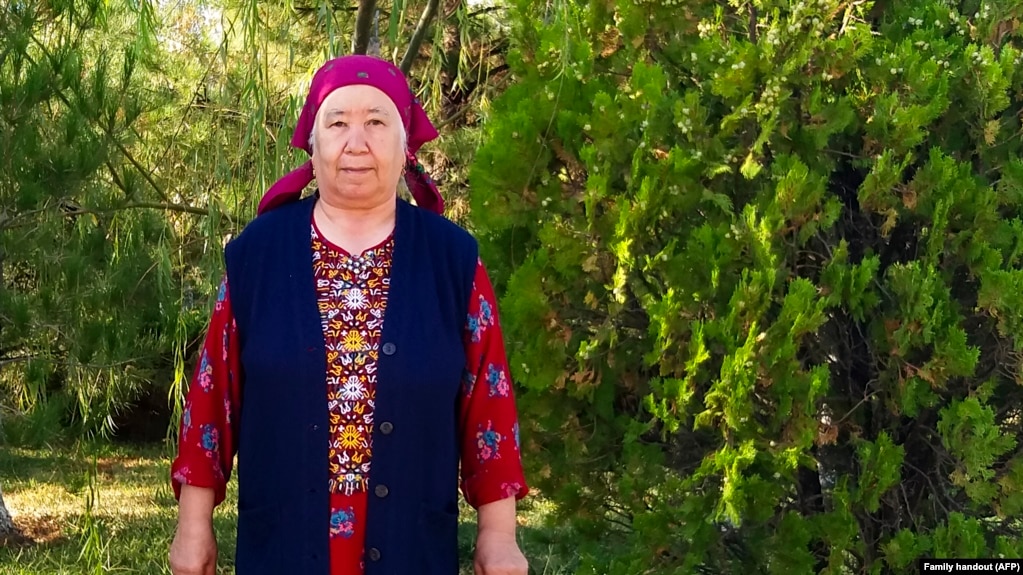
Turkmen journalist Soltan Achilova (file photo)

On 19 February 2021 RFE/RL reported that 71-year-old Turkmen journalist Soltan Achilova has issued a rare rebuke of the Central Asian nation’s authoritarian President Gurbanguly Berdymukhammedov, criticizing him and his government in a video posted on YouTube for failing to provide proper heating and water supply to Ashgabat residents during winter.

In the video statement that appeared on YouTube late on February 18, Achilova, who has previously worked as a reporter for RFE/RL’s Turkmen Service, said she will no longer call Berdymukhammedov “respected” because “millions of Turkmen had stopped respecting you long ago.”

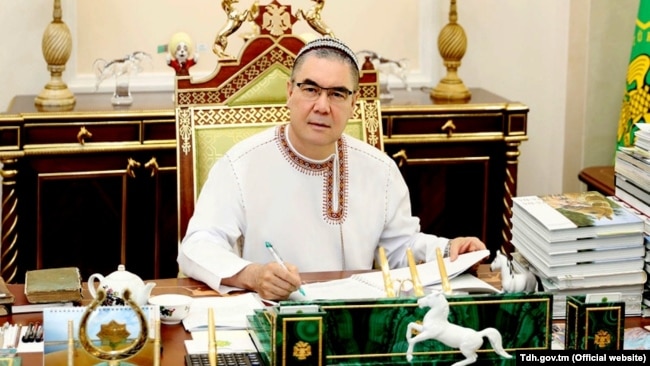
Turkmen President Gurbanguly Berdymukhammedov (file photo)

Such an act of public dissent is a rare occurrence in Turkmenistan, where Berdymukhammedov has run the former Soviet republic with an iron fist since 2006, becoming the center of an elaborate personality cult

Last month, Achilova was named as one of three finalists for the Martin Ennals Award for Human Rights Defenders for her reports from Turkmenistan, one of the most repressive countries in the world. SEE ALSO: Turkmen Journalist Achilova Among Finalists For Top Human Rights Prize [https://humanrightsdefenders.blog/2021/01/18/%e2%80%8b%e2%80%8bmartin-ennals-award-finalists-2021-announced/]. See also: https://www.martinennalsaward.org/hrd/soltan-achilova/#film

Achilova also criticized Berdymukhammedov and his government for what she called a “failure to provide” ordinary people with decent food at acceptable prices, adding that “miserable pensions and salaries in the country” do not provide people with the means to shop for regular items at local markets. Achilova added that the heating system in her apartment had been switched off several times in recent days, which she called an intentional warning over her journalistic activities.

“Our fellow Turkmen citizens working in foreign countries have staged several protests recently demanding your resignation. We join those protests and demand your resignation as well because you are incapable of carrying out your duties. We are suffering and you do not even care about it. All you are capable of is ruining our homes and causing our people to suffer,” Achilova said.

Based in Ashgabat, Achilova is currently a contributor to the Vienna-based independent news website Khronika Turkmenistana (Chronicles of Turkmenistan), which focuses on news and developments in Turkmenistan.
Turkmen authorities, who don’t tolerate an independent press, have targeted Achilova in the past for her work as a journalist. SEE ALSO: RFE/RL Correspondent Roughed Up — Again — In Turkmenistan

https://www.rferl.org/a/turkmenistan-journalist-achilova-rare-public-rebuke-president-berdymukhammedov/31111278.html

https://www.timesca.com/index.php/news/23482-turkmenistan-journalist-posts-rare-public-rebuke-of-president-on-youtube

The Guardian starts new series ‘Rights and freedom’

February 23, 2021
Humanity United

On Monday 22 February 2021 the Guardian announced that it will be reporting on human rights worldwide, elevating the voices of those working on the frontline to protect rights and freedom.

A year on from the start of the world’s biggest health crisis, we now face a human rights pandemic. Covid-19 has exposed the inequalities and fragilities of health and political systems and allowed authoritarian regimes to impose drastic curbs on rights and freedoms, using the virus as a pretext for restricting free speech and stifling dissent.

There has been a global crackdown on opposition activists and human rights defenders, attacks on journalists, and a roll out of invasive tracking apps and extreme surveillance measures that are likely to far outlast the virus. Over the coming years, the economic fallout of the pandemic will hit millions. Those already facing stigma and marginalisation will suffer the most: women, girls, refugees and asylum seekers, people with disabilities, ethnic minorities and indigenous communities.

Human rights crises in countries including Myanmar, Syria, Venezuela and South Sudan threaten lives, health and freedoms. Yet the pandemic has also seen a growing global momentum of resistance, a fight back to protect hard-won rights. Journalism has always been a crucial tool in holding those in power to account and highlighting the drivers and systems that violate the fundamental rights of every human being, as enshrined in law. With over 200 laureates, journalists are the single biggest professional group among the winners of human rights awards [see: https://thedigestapp.trueheroesfilms.org/laureates]

At this critical moment, there is an urgent need to focus attention on those who are suffering and what can be done to help them. Rights and Freedom is a new Guardian reporting series to investigate and expose human rights abuses, and elevate the voices of people working on the frontline, fighting back for themselves and their communities.

See also: https://humanrightsdefenders.blog/2020/10/16/journalism-under-fire-a-global-surge-in-violations-against-journalists/ as well as https://humanrightsdefenders.blog/2021/02/18/journalists-on-the-ground-are-often-the-real-heroes/

https://www.theguardian.com/global-development/2021/feb/22/rights-and-freedom-welcome-to-our-series

Journalists on the ground are often the real heroes

February 18, 2021

Janine di Giovanni, Senior Fellow at Yale University, wrote on 9 February 2021 in iwpr.net/ a piece “The real heroes are the journalists on the ground, fighting to bring truth to light”

Based on her many years of reporting in North Africa and the Middle East and observing revolution after revolution she published the book: The Morning They Came for Us. Here she looks back on the Arab spring and the current situation. Journalists are indeed among the most targeted as also shown by the Digest for Human Rights Laureates recently launched by THF: there are some 450 journalists and media workers among the laureates [see:https://www.trueheroesfilms.org/thedigest/laureates].

Spotlight

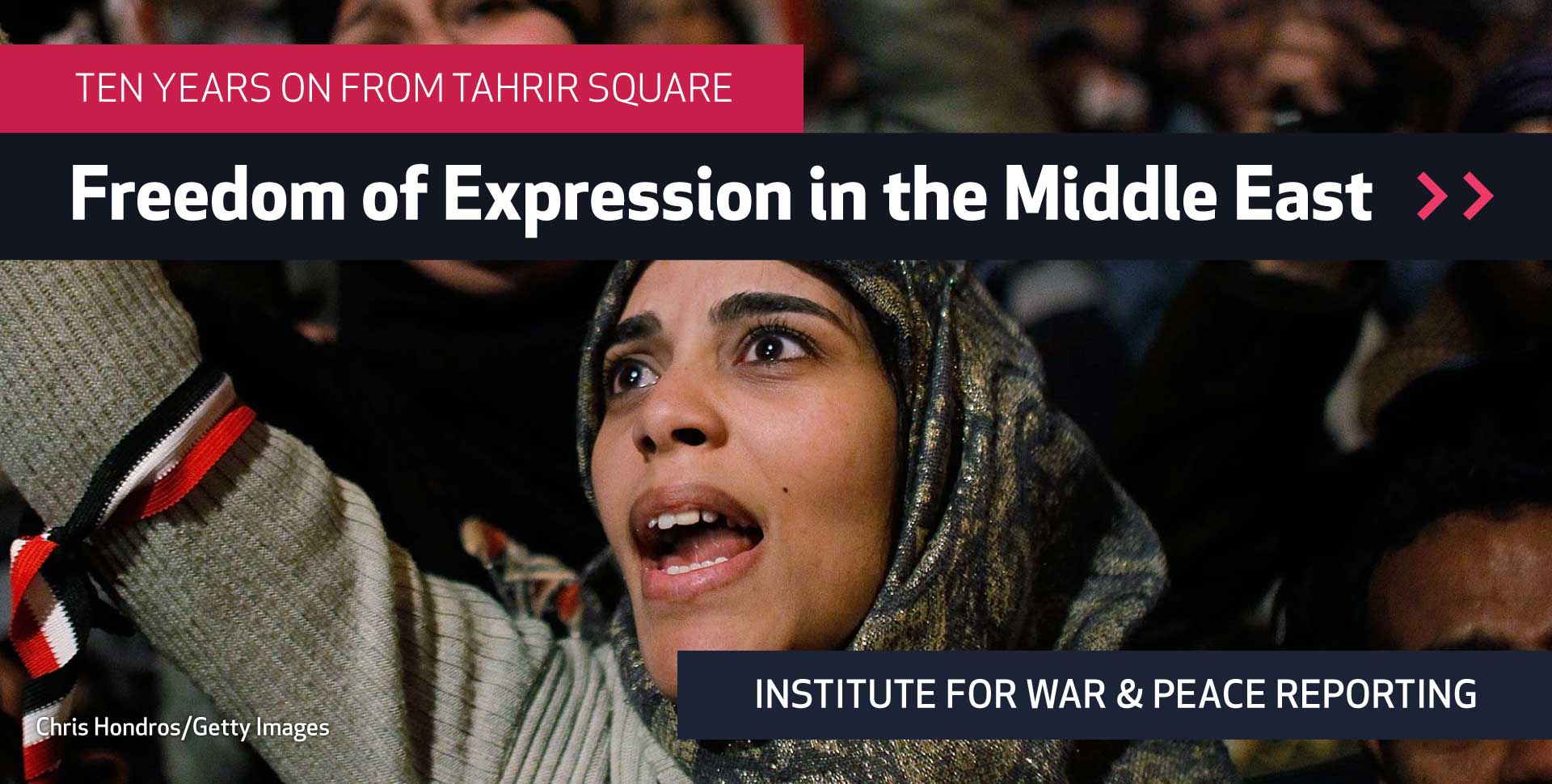
Back in 2011, it was a revelation to see thousands of people marching for freedom. Each demonstration, each revolution was different but there were common themes. The main rallying cry from the crowds in Tahrir Square or Ben Ghazi or Homs or Aleppo or Tunis was always the same: we want our freedom.

It was exhilarating. Crowds were rising up against decades of dictatorships, of corruption, voicing their frustration at the lack of opportunity. What they wanted was the right to speak and write and live in accordance with their personal liberties. 

As someone who grew up first in North America, later in the UK and France, freedom of speech was a tenet of human rights I took for granted. Not so for my colleagues in Tunis who had to work underground with white-hat hackers like Anonymous to overthrow Ben Ali’s ministry of information and get their messages out. Not so for my Syrian colleagues in Aleppo or Damascus who risked everything to plead for freedom, and if they were caught, were thrown into prison and tortured or killed. Or my Egyptian friends who were tortured in prison and stripped of all rights. 

What the authorities want to say is, “It’s dangerous to speak out”. The number of the missing in Syria, the number of imprisoned in Egypt is enormous: many of them are our comrades and colleagues who tried to express and explain what was happening. These activists and journalists are what their repressive governments say is a threat to “national security”. 

Ten years on, what have we learned? Egypt under General Sisi remains even more repressed and dangerous for journalists than ever. The proportions of journalists attacked in 2020 as opposed to ten years ago is shocking:  according to the Committee to Protect Journalists, nearly 27 journalists are imprisoned, two murdered and one missing. 

This includes Aamar Abdelmonem, a freelancer, imprisoned in December 2020 on false charges, denied medication in prison (he is diabetic) and his eyeglasses. When I read about the cases of my colleagues who are incarcerated for simply telling the truth, I realize how lucky I am to live in a society where I can write what I choose. 

Always, when I think of press freedom I think of my colleague Jamal Khashoggi, murdered by henchmen under the order of Prince Mohammed bin Salman of Saudi Arabia. Jamal’s work is not over – it lives on in the spirit of every reporter working to bring truth to light. They are not only journalists but also lawyers, human rights defenders, members of civil society. You might not hear about them – because they are working quietly but with great precision and care. They are my heroes.

As an international journalist, I am forever grateful to the journalists working under the radar in these countries – the ones who risked arrest to meet with me or speak with me or share their experiences or notes, the ones who came to my hotel in Cairo, risking everything, the ones who met me in Damascus cafes under the eyes of the mukhabarat, then saw the security guards and had to flee. The ones on the ground working when the international press cannot. 

They are our heroes, our inspiration and above all, our colleagues. We must not forget them – and we must do everything in our power to protect them. Part of the reason I am proud to be a part of the IWPR international board is to spread the word of the excellent work that is done on the ground by my colleagues. In the words of the former assistant secretary general for human rights at the United Nations, Andrew Gilmour, we are living in times when the pushback to human rights has never been greater. Which means those of us who can raise our voices louder to protect our friends on the ground must do so, with conviction and passion.

Janine di Giovanni is a Senior Fellow at Yale University’s Jackson Institute for Global Affairs, IWPR international board member and the author of nine books. In 2020, the American Academy of Arts and Letters gave her their highest prize for non-fiction for her lifetime body of work, which largely focuses on human rights.

https://iwpr.net/global-voices/why-local-voices-matter

Prominent human rights defender Eren Keskin given six-year jail sentence in Turkey

February 16, 2021

’I have been prosecuted many times and jailed for my thoughts. I’m still here. I’m not going anywhere’ – Eren Keskin tweeted after she was sentenced.

Amnesty International has condemned the sentencing of four Turkish human rights defenders on “terrorism-related” in a case involving Özgür Gündem – a daily newspaper that was closed down in 2016. Eren Keskin, a prominent human rights defender and lawyer in Turkey – was sentenced to six years in jail for supposed “membership of an armed terrorist organisation”. See: https://www.trueheroesfilms.org/thedigest/laureates/BFDBB222-0FE0-32BF-ADD6-4D342A315C22

Zana Kaya, the newspaper’s editor-in-chief was sentenced to one year and 13 months in prison for “making propaganda for a terrorist organisation.” Özgür Gündem’s former publisher, Kemal Sancılı and the newspaper’s managing editor İnan Kızılkaya have been sentenced to six years and three months in prison for “being a member of an armed terrorist organisation” – the same sentence as Eren Keskin’s.

All four remain at liberty pending their appeals. This case is latest where anti-terrorism laws used to criminalise legitimate and peaceful activity in Turkey. Milena Buyum, Turkey Campaigner at Amnesty International said: “Today a human rights lawyer who has spoken out against injustice for more than three decades, has become the victim of injustice herself.

“Eren Keskin has dedicated her life to defending the rights of women, prisoners and fought for justice for the families of the disappeared. This verdict is yet another shocking example of anti-terrorism laws being used to criminalise legitimate, peaceful activities.See also: https://humanrightsdefenders.blog/2019/05/12/martin-ennals-award-finalist-eren-keskin-honoured-in-ankara/

https://www.amnesty.org.uk/press-releases/turkey-human-rights-lawyer-eren-keskin-given-six-year-jail-sentence-terrorism

Afghanistan: 65 media workers and rights defenders killed since 2018

February 15, 2021

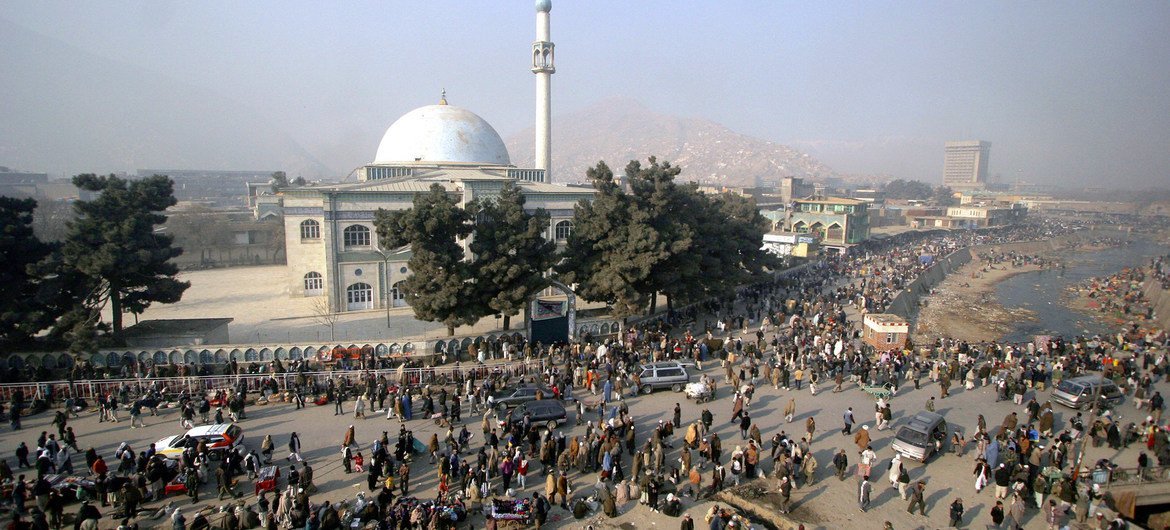
UNAMA/Freshta DuniaThe Pul-e-Kheshti Mosque in Kabul, Afghanistan. (file photo) 15 February 2021Human Rights

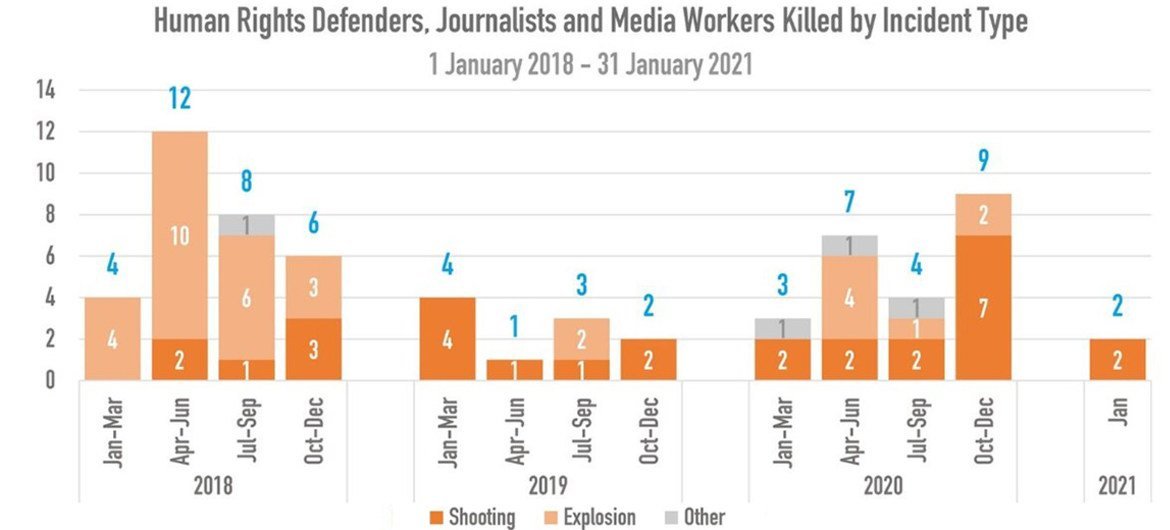
On 15 February 2021 the UN reported that 65 journalists, media professionals and human rights defenders were killed in Afghanistan between 1 January 2018 and 31 January 2021, with 11 losing their lives since the start of peace negotiations last September. 

“This trend, combined with the absence of claims of responsibility, has generated a climate of fear among the population”, the UN Assistance Mission in Afghanistan (UNAMA) said in a news release, announcing the findings from its latest report. 

The violence, the Mission said, resulted in contraction of the human rights and media space, with many professionals exercising self-censorship in their work, quitting their jobs, and leaving their homes, communities – and even the country – in hope it will improve their safety.  See also: https://humanrightsdefenders.blog/2019/11/26/afghanistan-human-rights-defenders-targeted-but-fearless/. The Digest of Human Rights Laureates lists some 20 defenders: https://www.trueheroesfilms.org/thedigest

“The killings have had the broader impact across society of also diminishing expectations around efforts towards peace”, UNAMA added. 

The special report Killings of Human Rights Defender and Media Professionals also documented “changing patterns” of attacks.  The most recent wave, that of intentional, premeditated and deliberate targeting of individuals with perpetrators remaining anonymous contrasts to previous years, UNAMA said. In the past, such deaths were mainly as a result of proximity of individuals to attacks by organized armed groups, mainly the Islamic State in the Levant-Khorasan-Province (ISIL-KP), involving the use of improvised explosive devices (IEDs). See also: https://humanrightsdefenders.blog/2020/06/30/car-bomb-kills-two-human-rights-workers-in-afghanistan/

The report underscored the role of all actors in preventing such killings and intimidation, promoting accountability and preventing impunity. Investigations into killings must be independent, impartial, prompt, thorough, effective, credible and transparent, it urged, adding that the prosecution of suspected perpetrators should strictly follow due process and fair trial standards.   

Deborah Lyons, Special Representative of the Secretary-General for Afghanistan and the head of UNAMA, underscored the importance of media professionals and human rights activists. 

“The voices of human rights defenders and the media are critical for any open and decent society. At a time when dialogue and an end to the conflict through talks and political settlement should be the focus, the voices from human rights and the media need to be heard more than ever before, instead they are being silenced”, she said. 

“The Afghan people need and deserve a flourishing civic space – a society where people can think, write and voice their views openly, without fear”, Ms. Lyons added  UNAMA reportHuman rights defenders, journalists and media workers killed by incident type

Recommendations 

Among its recommendations, the report called on the Government to put in place an adequate preventive framework, including special protective and proactive security measures for rights defenders, journalists and media workers subject to threats or other types of intimidation.  

It urged the Taliban to adopt, publicize and enforce policies that prohibit the killings of human rights defenders, journalists and media workers, as well as to repeal existing and refrain from new policies that limit civic space. 

The report also called on the international community to continue to engage with rights defenders, journalists and media workers at risk and increase support to programs that provide security, travel, financial, capacity building and other assistance to them.

It also called on non-state actors to stop all killings of human rights defenders, journalists and media workers, in accordance with international human rights and humanitarian law. 

Killings of Human Rights Defender and Media Professionals

Five individuals now listed as foreign agents in Russia

January 11, 2021

On 8 January, 2021 RFE/RL’s Tatar-Bashkir Service reports on a worrying development in Russia: On 28 December, Russia said it had placed five people — three journalists who contribute to RFE/RL and two human rights activists — on the Justice Ministry’s registry of “foreign mass media performing the functions of a foreign agent.” Previously, only foreign-funded NGOs had been placed on the registry, in keeping with Russia’s passage of its controversial “foreign agents law” in 2012. The law was later expanded to include media outlets and independent journalists [SEE: https://humanrightsdefenders.blog/2019/11/19/russias-foreign-agents-bill-goes-in-overdrive/]

The three listed individuals affiliated with RFE/RL are Lyudmila Stavitskaya and Sergei Markelov, freelance correspondents for the North Desk of RFE/RL’s Russian Service; and Denis Kamalyagin, editor in chief of the online news site Pskov Province and a contributor to RFE/RL’s Russian Service.

Prominent human rights activist Lev Ponomaryov [see: https://humanrightsdefenders.blog/2013/06/25/russian-ngo-for-human-rights-forcibly-evicted-from-offices/]was also named to the registry, as was activist and Red Cross worker Daria Apakhonchich.

On December 29, the ministry expanded the list again, adding the Nasiliu.net human rights center, which deals with domestic violence cases. The additions bring the total number of individuals or entities listed to 18, the majority of them affiliated with RFE/RL.

Two international rights organisations have expressed concerns:

“The UN Human Rights Office regrets the inclusion of the five individuals in the foreign agents list, which targets human rights defenders and journalists and appears to be aimed at limiting their freedom of expression and speech,” Liz Throssell, a spokeswoman for the UN Human Rights Office, said in a comment to RFE/RL on January 8.

The Office of the OSCE Representative on Freedom of the Media added in a separate comment that the move “narrows the space for freedom of expression, freedom of the media, and free flow of information in the Russian Federation.“

The Justice Ministry did not explain on what grounds it included the recent additions of the five individuals and one entity to the registry.

In 2017, Human Rights Watch, a U.S.-based rights group, called the law “devastating” for local NGOs, saying more than a dozen had been forced to close their doors.

RFE/RL has said it is “reprehensible” that professional journalists were among the first individuals singled out by Russia as “foreign agents.”

The Council of Europe also has expressed concerns over situation, saying that the foreign agent law in general — “stifles the development of civil society and freedom of expression.”

https://www.rferl.org/a/russia-foreign-agents-list-united-nations-regrets/31038877.html

CIVICUS 2020 report “People Power Under Attack” – Africa

December 14, 2020

Africa: Civic Rights Were Eroded Across Africa in 2020

The most common violations of civic space registered by the CIVICUS Monitor were the detention of journalists, followed by disruption of protests, censorship, intimidation and the detention of protestors. Almost half of CIVICUS Monitor updates in 28 different countries mentioned the detention of journalists. 14 December 2020. Fundamental civic rights, including freedoms of association, peaceful assembly and expression, deteriorated across Africa in 2020. [See also: https://humanrightsdefenders.blog/2016/10/24/today-civicus-launches-its-worldwide-monitor-to-track-civil-space/]

In an allAfrica.com guest column Sylvia Mbataru and Ine Van Severen – CIVICUS researchers who contributed to People Power Under Attack 2020 – unpack what the report says about Sub-Saharan Africa. They conclude that civic space has been reduced in four West African nations (Côte d’Ivoire, Guinea, Niger and Togo) and has improved in the Democratic Republic of Congo and Sudan.

Over the past year the CIVICUS Monitor has documented several drivers of civic space violations in Africa including mass protests that were met with violent repression, and electoral processes, mostly presidential elections. Violations in the context of elections often involve the arrest of opposition members and pro-democracy activists, internet shutdowns, detention of journalists and crackdowns on protesters.

In three of the four West African countries that were downgraded – Côte d’Ivoire , Guinea and Togo – constitutional changes were adopted in recent years, leaving incumbent presidents Alassane Ouattara, Alpha Condé and Fauré Gnassingbé all claiming that new constitutions allowed them to run for further terms. The process of changing constitutions or bypassing term limits led to mass protests that were met with excessive force, the adoption and use of restrictive legislation, and punishment for dissenters criticising those in power, in particular pro-democracy activists.

Niger has also been downgraded by the CIVICUS Monitor. Even though a peaceful political change of power seems likely in the elections later this month, serious questions remain about Niger’s democratic prospects as human rights violations continue and civil society is subjected to restrictions.

These countries in West Africa have not been alone in efforts to muzzle dissent, exclude opposition and crack down on protests in the context of elections.  This bleak picture is further seen in Eastern and Southern Africa.

In Burundi, ahead of the May 2020 elections, state security forces and members of the youth league of the ruling party threatened, intimidated and killed opposition party members, and stifled the media and civil society organisations.

In Tanzania, as the country prepared for its August 2020 vote, the government embarked on a major crackdown to suppress dissent, including by enacting new laws and regulations to stop opposition members from actively campaigning, prevent civil society organisations and independent observers from observing the electoral process, weaken civil society and the media, and limit the use of online platforms by journalists and voters.

Despite this difficult picture, the year also proved the resilience of people and civil society in exercising their civic freedoms, leading to fundamental democratic changes. In Malawi, although the period surrounding the disputed May 2019 election was characterised by violations including internet shutdowns and repression of protests, civil society successfully contested the results, leading to a new election and a change of government in June 2020 .

However, many other African countries are moving away from holding free and fair elections. With several countries gearing up to hold elections in the coming months, civic rights violations are being reported in countries across the continent.

In Uganda, opposition members and their supporters are being violently prevented from holding rallies and journalists are being arrested and violently attacked while covering events held by opposition candidates and civil society; human rights defenders are being threatened by state authorities, including by having their bank accounts frozen and their operational licences withheld.

In Ethiopia, civil society groups have expressed concern at the crackdown on dissenting political views ahead of the general elections slated for 2021. Similarly, in Zambia, civil society has denounced an escalating trend of judicial harassment, repression and attacks on human rights defenders ahead of the August 2021 general elections. In Benin, electoral laws have been adopted that make it difficult for opposition candidates to stand in the 2021 presidential  election, which might lead to President Patrice Talon running almost unopposed.

The situation is so bleak that for the first time in a decade, according to the 2020 Mo Ibrahim Index of African Governance, overall governance in Africa has declined. The Index highlighted that, “in terms of rights, civil society space and participation, the continent had long before embarked on a deteriorating path and the pandemic simply aggravated this existing negative trajectory.”

With even more elections on the cards in 2021 – in Djbouti, Chad and Somalia among others – governments should prioritise the respect of fundamental freedoms, including the right of people to express themselves without intimidation and to assemble peacefully to express their dissent. Africa’s leaders should adhere to the African Charter on Democracy, Elections and Government, ensuring that free and fair elections take place. 2021 must be the year in which Africa’s dismal trends are reversed.

https://findings2020.monitor.civicus.org/africa.html

https://findings2020.monitor.civicus.org/africa.html