The Prize, with the support of the European Parliament, will be awarded annually to in-depth journalism pieces undertaken by EU-based professional journalists. The Prize is open to individual professional journalists or teams of professional journalists of any nationality. Applications may be submitted by authors themselves or by professional media organisations and associations on their behalf.
Applications must be submitted via the online platform by 31 July 2022,12 AM (CEST).
The Prize aims to recognise outstanding in-depth journalism work on topics that are relevant for the European Union (EU) as a whole or some of its Member States, and contribute to the promotion of principles and values of the EU, as enshrined in the European Charter of Human Rights
This day is one on which the world stands still to think about press freedom and journalists who are persecuted. I want to start with some quotes from an excellent piece in the Economist on 2 May by Indian reporter Rana Ayyub who wonders whether plaudits such as “brave” normalise their persecution:
“When a journalist is killed or incarcerated or assassinated, obituaries scream bravado, editorials claim courage. Have such plaudits normalised the persecution of journalists? Why does a journalist have to be brave to report facts as they are? Why does she need to be persecuted for her story to reach the world? Consider Gauri Lankesh, Daphne Caruana Galizia and Jamal Khashoggi—all journalists with a profile, all brazenly killed in broad daylight. Their murders dominated the front pages of international publications. But their killers, men in power, remain unquestioned not just by the authorities but often by publishers and editors who develop a comfortable amnesia when meeting those in power. They do not want to lose access to them.“
“Journalists are the new enemy of the state; we are going through one of the toughest phases in the history of the profession. We document the truth at a time marked both by a voracious demand for news and by the persecution of minorities, genocide and war crimes. We witness savage attacks on minorities in India, Myanmar, China, Palestine or Ukraine even as bumbling editors still frame arguments and narratives through the prism of “‘both sides”. For example attacks on Palestinians, even during Ramadan, are often referred to as “clashes”. Despite one side having grenades thrown at them, and pelting stones in defence, the lens of the mainstream media remains firmly aligned with the oppressor. In India attacks on Muslims by Hindu nationalists often are reported as “riots” or “clashes”, too. The distinction between oppressor and oppressed can be blurred as convenient“….
“Journalism was never a nine-to-five profession. We knew it was an unconventional calling, and one where we might not leave the office for days, or where our families might have no communication from us as we report on crucial investigations, wars and undercover operations. Journalism schools taught us the ethics of our profession, but they did not warn us about nervous breakdowns, or about spending more time in courtrooms than newsrooms. We owe it to the next generation of journalists to create a safer environment in which to work. They should fear only the distortion of truth, never reporting the truth itself.“
At the Global Conference for World Press Freedom Day, May 2-5 in Uruguay, DW Akademie hosted a panel on digital authoritarianism. International media experts (Nanjala Nyabola, Laís Martins, Vladimir Cortés Roshdestvensky and Annie Zaman) discussed fighting disinformation and censorship.
Digital authoritarianism – when governments assert power and control information using digital tools and the internet – disrupts journalism and can endanger reporters and human rights defenders.
Regardless of recognition of press freedom under international legislations and under state constitutional provisions, the attack on journalists and ultimately on access to information remains a growing concern. According to the UN, 55 journalists were killed in 2021, while 62 of them were killed in 2020. A number of global networks of journalists have led the work of advocating press freedom and provide a platform for journalists to fight such state and non-state actors in unison.
The NWMI is a network of over 600 women journalists across India providing a space or a forum for women in Indian media to come together and share information, exchange ideas, discuss media ethics and promote gender equality in media. The collective aims to provide a holistic system to support women journalists in terms of space, resources and access to justice in case of rights violations. It also works for getting recognition, fair pay and decent working conditions for women independent journalists in the country. https://nwmindia.org/
International Federation of Journalists (IFJ)
IFJ is a Paris-based organisation representing as many as 6,00,000 media professionals across 140 countries. The collective works to strengthen labour rights of journalists and advocates for their fair pay, decent working conditions and gender equality in media recruitment at a global level. One can access records and data documented by IFJ through their campaigns focusing on violence against journalists, impunity to the perpetrators and countries where media freedom is curbed through state laws or private entities.
Reporters Sans Frontiers or Reporters without Borders (RSF)
With 115 correspondents across the world, RWB is a non-profit organisation started by four journalists and headquartered in Paris. RWB is known for its annual Press Freedom Index, one of the most credible indicators of the status of media freedom in over 180 countries of the world. In addition to this, RWB also tracks censorship activities and various kinds of abuse that journalists are subjected to and communicates the information in five different languages. RWB works in cooperation with international rights based organisations to further recommendations to the state in order to provide legal and material resources for journalists and advocate their safety as media personnel.
CPJ is known for its Global Impunity Index analysing the state impunity provided to murderers of journalists in democracies as well as in war-torn countries. As an independent and non-profit organisation based in New York City, CPJ documents attacks on journalists and the subsequent press freedom violations and works with the state actors to provide rapid response assistance, legal support and other resources to journalists in danger.
Article 19 mainly works to improve access to information, protect the civic spaces to discuss and dissent and strengthen human rights in the digital space too. Its key areas of work include information, censorship, gender and sexuality, freedom of religion and belief, equality and hate speech and media freedom among others. In line with its objectives to create a safe space for free flow of information, the organisation channelises its resources for the protection of journalists and human rights defenders. Article 19’s annual Global Expression Report and GxR metric provides a detailed picture of the condition of freedom of expression across the world. https://www.article19.org/about-us/
Media Defence
Media Defence’s focus lies on providing legal advice, support and resources to journalists, independent journalists and citizen journalists, who are under threat for their reportage and enable them to carry out reporting on issues of larger public interest. An international human rights organisation, in addition to documenting cases, it also intervenes to provide legal recourse to the journalists undergoing trial. https://www.mediadefence.org/legal-resources/
And of course – marking World Press Freedom Day, Reporters Without Borders (RSF) published their 2022 World Press Freedom Index that indicates a two-fold increase in polarization exacerbated by information disorder — that is, media polarization fuelling divisions within countries, as well as polarization between countries at the international level. See: https://rsf.org/en/index
“Within democratic societies, divisions are growing as a result of the spread of opinion media following the ‘Fox News model’ and the spread of disinformation circuits that are amplified by the way social media functions,” the watchdog said in a statement.
At the same time, the disparity between open societies and autocratic governments that dominate their media and online platforms while waging propaganda campaigns against democracies is eroding democratic institutions around the world. Therefore, the polarization on different levels is fuelling increased tensions, according to RSF.
Assessing the state of journalism in 180 countries and territories worldwide, the World Press Freedom Index showed how the crisis in the world reflects on the media.
On 20 April 2022, Justice & Peace Netherlands launched a new call for applications for at risk human rights defenders to participate in Shelter City. The deadline for applications is 3 May 2022.
Shelter City provides temporary safe and inspiring spaces for human rights defenders at risk where they re-energise, receive tailor-made support and engage with allies. The term human rights defender is intended to refer to the broad range of activists, journalists and independent media professionals, scholars, writers, artists, lawyers, civil and political rights defenders, civil society members, and others working to advance human rights and democracy around the world in a peaceful manner.
From September 2022 onwards, several cities in the Netherlands will receive human rights defenders for a period of three months. At the end of their stay in the Netherlands, participants are expected to return with new tools and energy to carry out their work at home.
Justice & Peace aims to promote the safety of journalists, and in particular women journalists, worldwide so that they can build new strategies and continue their important work for freedom of expression in their country of origin. With support from the Dutch Ministry of Foreign Affairs, Justice & Peace will be able to provide two additional temporary safe spaces per year in The Hague for journalists at risk and provide them with tailor-made support.
Justice & Peace and the Asser Institute have established a collaborative relationship to strengthen and support the capacity of local human rights defenders worldwide. In the context of the Institute’s Visiting Researchers Programme, the Asser Institute hosts one Fellow per year within the framework of the Shelter City initiative by Justice & Peace. The selected Fellow will carry out a research project during the three-month period and take part in other human rights relevant (research) activities of the Asser Institute. Only in English.
To be eligible for Shelter City, human rights defenders should meet the following conditions:
They implement a non-violent approach in their work;
They are threatened or otherwise under pressure due to their work or activism;
They are willing and able to return to their country of origin after 3 months;
They are willing to speak publicly about their experience or about human rights in their country to the extent that their security situation allows;
They have a conversational level* of English (limited spots are available for French or Spanish speaking human rights defenders);
They have a valid passport (with no less than six months of validity) or be willing to carry out the procedures necessary for its issuance. Justice & Peace covers the costs of issuing a passport and / or visa (if applicable);
They are not subjected to any measure or judicial prohibition to leave the country;
They are willing to begin their stay in The Netherlands around September 2022.
Note that additional factors will be taken into consideration in the final round of selection, such as the added value of a stay in The Netherlands as well as gender, geographic, and thematic balance. Please note that only under exceptional circumstances are we able to accept human rights defenders currently residing in a third country.
To apply for Shelter City, please click on the link below. Application forms must be submitted by 3 May 2022 at 23:59 CET (Central European Time). An independent commission will select the participants.
Note that selected human rights defenders will not automatically participate in Shelter City as Justice & Peace is not in control of issuing the required visas to enter the Netherlands.
On 12 April 2022 SRSG-SVC Pramila Patten made a statement at a side event in New York on the Protection of Women Human Rights Defenders and Journalists:
…..Today’s meeting is a critical opportunity to take stock of both the persistent and entrenched, as well as new and emerging, challenges that women activists, women human rights defenders, and women journalists face in their daily lives. The annual Report of the Secretary-General on Conflict-Related Sexual Violence, which is due to be debated tomorrow by the Security Council, notes that in 2021, women peace builders and human rights defenders were specifically targeted, including through sexual violence and harassment as a form of reprisal, in order to exclude them from public life in a number of country settings, such as Afghanistan, Libya, Myanmar, Yemen and elsewhere. Moreover, activists working to highlight the plight and rights of survivors of conflict-related sexual violence, and to support their access to justice and services, were also subjected to reprisals and intimidation, which has a chilling effect on their critical work.
The high-risk environment in which women leaders and activists are compelled to operate is directly correlated with the trend of intersecting humanitarian, security and political crises, including coups, military takeovers, and unconstitutional shifts of power seen in recent months. This has exacerbated the root causes and drivers of conflict-related sexual violence, including militarization, the proliferation of arms, impunity, the collapse of rule of law institutions, structural gender-based inequality, and harmful social norms.
Today, we will hear directly from powerful women activists who have raised their voices against injustice, at great personal risk, and continue to advocate for the eradication of conflict-related sexual violence, and the closure of accountability and protection gaps. Today’s panel of speakers will highlight the tireless efforts of women human rights defenders and journalists, as well as the risks they endure working on the frontlines of armed conflict and civic strife. In the work of my mandate, I am continually reminded that we are only as strong as our partnerships. Since I took up this mandate in 2017, I have consistently emphasized the importance of working directly with survivors as the co-creators of solutions. It is in this spirit that today, I recognize Ms. Jineth Bedoya Lima, a trailblazing survivor, activist, and agent of change, with the demonstrated ability to lead and influence others to take action to end the scourge of conflict-related sexual violence. [see: https://www.trueheroesfilms.org/thedigest/laureates/6f49a0f6-7dd6-4f95-902c-9d9f126e0bcc] I commend her courage and commitment in elevating the issue of conflict-related sexual violence onto the public agenda and historical record in Colombia and globally, and her two-decade quest for justice, truth and reparations for these heinous crimes. Her vision and determination contributed to the establishment of the National Day for the Dignity of Women Victims of Sexual Violence in the context of the internal armed conflict in Colombia, which is commemorated every year on the 25th of May. [see also: https://humanrightsdefenders.blog/2021/10/19/inter-american-court-holds-colombia-responsible-in-the-case-of-jineth-bedoya/]
I also congratulate Ms. Bedoya on the emblematic judgment delivered by the Inter-American Court of Human Rights on 18 October 2021, in connection with her case, which sets a powerful precedent for women activists, journalists, human rights defenders, and peace builders the world-over, who are subjected to, or at risk of, sexual violence. This ruling marks the first time that a court has specifically considered the use of sexual violence as a tool to silence a female journalist in the context of the Colombian armed conflict. Significantly, the judgment also entailed important reparative measures, such as the creation of a fund for the prevention, protection, and assistance of women journalists who are victims of sexual and gender-based violence.
I am pleased to announce that today I am naming Ms. Jineth Bedoya Lima a Global Champion for the Fight Against Sexual Violence in Conflict. In this capacity, she will contribute to the efforts of my mandate to enhance advocacy and awareness-raising, and to amplify the voices of survivors.
Please join me in showing our appreciation for Jineth’s remarkable journey and infinite courage. Jineth, I look forward to working with you in common cause to break not only the silence of history, which has hidden these crimes, but also the vicious cycle of violence and impunity, which must be replaced with a virtuous cycle of recognition and redress for all survivors. It is only by facing difficult truths that we can transcend them and end the seemingly endless cycle of violence.
TechCrunch of 5 April 2022 reports that Investigators say they have found evidence that a Jordanian journalist and human rights defender’s iPhone was hacked with the Pegasus spyware just weeks after Apple sued the spyware’s maker NSO Group to stop it from targeting Apple’s customers.
Award-winning journalist Suhair Jaradat’s phone was hacked with the notorious spyware as recently as December 5, 2021, according to an analysis of her phone by Front Line Defenders and Citizen Lab that was shared with TechCrunch ahead of its publication. Jaradat was sent a WhatsApp message from someone impersonating a popular anti-government critic with links to the Pegasus spyware, compromising her phone. According to the forensic analysis, Jaradat’s iPhone was hacked several times in the preceding months and as far back as February 2021.
Apple had filed a lawsuit against Israeli spyware maker NSO Group in November 2021, seeking a court-issued injunction aimed at banning NSO from using Apple’s products and services to develop and deploy hacks against its customers. See also: https://humanrightsdefenders.blog/2021/07/21/nsos-pegasus-spyware-now-really-in-the-firing-line/…But so far the case has gotten off to a slow start after the first judge assigned to the case recused herself, with no decision on the case likely to be made any time before June.
Jaradat is one of several Jordanians, including human rights defenders, lawyers and fellow journalists whose phones were compromised likely by agencies of the Jordanian government, according to Front Line Defenders and Citizen Lab’s findings out Tuesday.
Among the others targeted include Malik Abu Orabi, a human rights lawyer whose work has included defending the teachers’ union, which in 2019 led the longest public sector strike in the country’s history. Abu Orabi’s phone was targeted as early as August 2019 until June 2021. Also, the phone of Ahmed Al-Neimat, a human rights defender and anti-corruption activist, was targeted by the ForcedEntry exploit in February 2021. The researchers said the hacking of Al-Neimat’s phone is believed to be the earliest suspected use of ForcedEntry.
Another Jordanian journalist and human rights defender’s phone was targeted, according to the researchers, but who asked for her identity not to be disclosed.
—
Meanwhile, on 5 April 2022, AFP reported that Palestinian lawyer Salah Hamouri, who is in Israeli detention, filed a complaint in France Tuesday against surveillance firm NSO Group for having “illegally infiltrated” his mobile phone with the spyware Pegasus.
Hamouri, who also holds French citizenship, is serving a four-month term of administrative detention ordered by an Israeli military court in March on the claim he is a “threat to security”.
On Tuesday, the International Federation for Human Rights (FIDH), the Human Rights League (LDH) and Hamouri filed a complaint with the Paris prosecutor. It accused NSO of “having illegally infiltrated the telephone of rights defender Salah Hamouri,” they said in a statement sent to the AFP bureau in Jerusalem.
“Obviously, this is an operation that is part of a largely political framework given the harassment Hamouri has been subjected to for years and the attacks on human rights defenders in Israel,” attorney Patrick Baudouin, honorary president of the FIDH, told AFP.
IFEX Deputy Executive Director Rachael Kay delivered a presentation on the situation of human rights defenders, journalists, and media organisations to the Canadian House of Commons Subcommittee on International Human Rights.
—
…Like everyone, we see the expansion of authoritarianism in all its forms. Information is being weaponized in ways that has a profound impact on people and is creating a kind of information chaos. In our network alone, we’ve seen how misuse of access to information legislation, internet shutdowns, misinformation, attacks on media and of course the murder of journalists is becoming routine. When those targeted directly with online disinformation and smear campaigns are women, the form the attacks take is usually gendered and often results in self-censorship.
The aim is to silence these voices, and it is doing just that.
We can see this played out in the current context. Immediate action is required in the most urgent situations, Ukraine/Russia, Afghanistan, Belarus, Ethiopia, Myanmar, Nicaragua and Sudan, just to name a few. It is imperative that coordinated systems of emergency support for journalists at risk and their families are created, something where we see Canada is already moving in the right direction. But we must continue to increase our effectiveness.
And to be effective, these systems should include providing emergency visas that have simple and secure methods of submission and, in the absence of such, they must expedite the processing of visas for journalists and their families, as well as ensure safe passage. Key to the success of any intervention is effective coordination with local and international civil society organisations working to protect and evacuate journalists.
We see that media freedom has never been more crucial. Democracies cannot survive and flourish without free, independent and pluralistic media. We need to reverse engineer the current branding of the media as fake news and the enemy of the people as normal. It has been the lexicon adopted around the world – language mimicked and acted upon that includes continued verbal and physical attacks on the media with total impunity. This has had a profound impact on press freedom and journalists in particular. And be sure, no country, including Canada, is exempt from this trend.
The narrative needs to be countered forcefully with words and actions. Outside of intervening in urgent situations, the government must play a significant, ongoing role in reinforcing the need for press freedom and respect for journalists in its own national context.
There is also the need for accountability. The criminalisation of journalism and abuse of law by state actors has to end and we call on multilateral relationships and institutions to ensure that those who attack the media face real consequences for their actions – otherwise attacks against the press will continue to escalate and any standards championed by Canada will remain empty.
…..
At IFEX our network of over 100 member organisations in more than 70 countries actively advocate for freedom of expression and information as a fundamental human right – many do so in very dangerous circumstances. The targeted repression of press freedom advocates and journalists, and attacks on communities and institutions, see accepted norms being increasingly undermined and weakened.
We have been called on to do more direct support for our members, across all regions, who find themselves increasingly under attack by authoritarian states focused on shutting down the voices of civil society and threatening dissent at any price.
Organisations whose offices and staff are targeted and harassed with no other aim but closure and erasure need to be supported, funded and engaged with – because these are the voices that call for accountability and if these voices are shuttered it will leave a vacuum for democracy.
We know these issues are complex. IFEX’s members and allies around the world have been working on them, doing grassroots advocacy, publishing reports, indexes and offering solutions and campaigning for years. They are a rich pool of knowledge that could inform Canada’s policies and discussions with nuance and a national and global perspective. As part of your efforts in focusing on press freedom we would welcome being a conduit to these sources.
Governments and civil society groups need to continue to find ways to collaborate, to be at the table together.
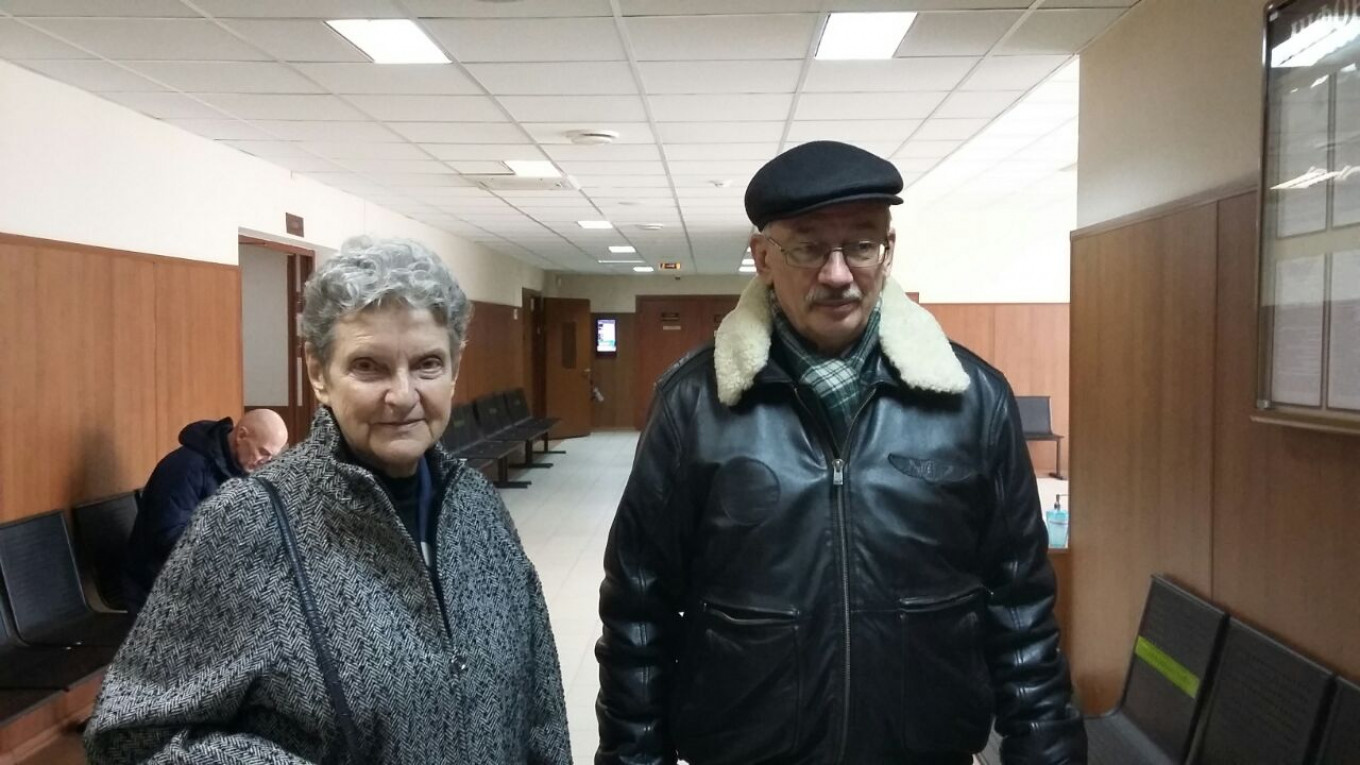
For many years, veteran Russian human rights defender Oleg Orlov thought his country’s darkest days were behind it. Not anymore. “I don’t think I have ever seen a darker period,” says Orlov, 68, who began a lifetime of activism in the early 1980s handing out leaflets against the Soviet war in Afghanistan.
“What is happening now cannot be compared with anything that happened before in Russia, maybe anywhere in the world… when a country that left totalitarianism behind went back.”
For Orlov and other activists of his generation, the conflict in Ukraine has marked the definite end of a hopeful time that started with Soviet leader Mikhail Gorbachev’s reforms in the 1980s. Nearly 40 years later, Russian troops are again fighting and dying abroad, Kremlin opponents are in jail, independent media have been shut down and thousands of Russians have decided to flee the country.
“The hopes we had did not come true, there have been terrible disappointments,” says Svetlana Gannushkina, 80, one of Russia’s most prominent post-Soviet rights activists. “Today we have a country that can no longer be called authoritarian, this is already a totalitarian regime.“
Orlov and Gannushkina are two of the last few critical voices still at work in Russia, and in interviews with AFP in Moscow this week both said they had no plans to quit or to leave. Orlov was in the offices of Memorial, which was shut down last year after decades as Russia’s most prominent rights group, where bookcases sat empty, desks had been cleared and packing boxes were piled on the floor. [see: https://humanrightsdefenders.blog/2021/12/29/russias-supreme-court-orders-closure-emblematic-memorial/]
“I don’t see myself outside Russia. I… have always wanted to live and die in this country,” says Orlov.
A biologist by training, Orlov joined Memorial in the late 1980s when the group was set up to document Soviet-era crimes. He went on to record rights abuses in a series of post-Soviet conflicts, especially in Russia’s two wars in Chechnya in the 1990s. In 1995 he was part of a group who swapped themselves for hostages taken by Chechen fighters and were eventually released, and in 2007 he was abducted, beaten and threatened with execution by a group of masked gunmen in Ingushetia next to Chechnya. After serving two years in the mid-2000s on Russia’s presidential human rights council, Orlov has since been active in opposing President Vladimir Putin. He was arrested at a March 6 protest against the military action in Ukraine, and returned home one day this week to find his front door painted over with the letter “Z” — a symbol used to show support for Russia in the conflict — and a sign reading “collaborator.”
The harsh new political climate and impact of severe sanctions have prompted thousands of Russians to leave in recent weeks, including many of the country’s young, opposition-minded liberals. Gannushkina has seen it at her Civic Assistance Committee, the group she founded in 1990 to help refugees and migrants in an often-hostile environment. “Unfortunately, our wonderful young people, who followed their hearts to our organization, are leaving,” she says…These young people, who we had so much hope for, feel in danger and helpless, so they leave. And we are left here with this insanity...”
The former mathematics professor set up the Civic Assistance Committee to help the thousands displaced by conflicts as the Soviet Union fell apart in 1991. From its modest Moscow offices, it provides legal assistance and help with finding jobs and housing, as well as campaigning for the rights of marginalized groups. Gannushkina also worked with Memorial and like Orlov served on the presidential human rights council before resigning in 2012. A letter of thanks for her service signed by Putin still hangs on her office wall. She remains very active, taking the time to meet individually with people seeking help. [see: https://www.trueheroesfilms.org/thedigest/laureates/215E5731-7786-434A-9C20-923168E65F44]
“No, I don’t think about leaving,” Gannushkina says, though she admits she is glad her children and grandchildren live abroad. I am happy they are not here, because it gives me the chance to say what I think, to everyone and everywhere.”
“We had a chance to create a normal federation, which would be governed in the way other federations are governed in democratic regimes. We missed that chance,” she says. All she can do now, Gannushkina says, is “hope that time will pass and we will get another chance. “But most likely I won’t be here to see it.”
Also on 31 March 2022 The Washington Post had an editorial: A generation of independent Russian journalists meets its grim end:
In his lecture accepting the Nobel Peace Prize on Dec. 10, the editor of the Russian investigative newspaper Novaya Gazeta, Dmitry Muratov, declared that “journalism in Russia is going through a dark valley.” He said more than 100 journalists, media outlets, human rights defenders and nongovernmental organizations have been branded “foreign agents,” a label equivalent to “enemies of the people.” Many journalists lost their jobs and fled the country. [see: https://www.trueheroesfilms.org/thedigest/laureates/bdbb2312-8b7a-4e44-bb4c-1864474daec7]
Now Novaya Gazeta itself has suspended publication, threatened by the government for failing to label a group as a “foreign agent” and because of an onerous new law that makes it a crime with penalties up to 15 years in prison to “discredit” the armed forces — including use of the words “war,” “invasion” or “attack” to describe President Vladimir Putin’s onslaught against Ukraine. A day after the invasion, Novaya Gazeta expressed outrage with a front-page three-word banner headline against a black background: “Russia. Bombs. Ukraine.” The paper continued to report, including from a correspondent in Ukraine, until it could no longer. The decision to suspend was portrayed by Mr. Muratov as temporary, but the future for all independent media in Russia appears grim.
This is a tombstone moment for a generation of independent journalists. In the final years of Soviet glasnost and in the unbridled and exuberant first years of Russia’s democracy, they threw off the straitjacket of censors and state-dominated media outlets to create newspapers, magazines, radio stations, television broadcasts and digital and social media that drew large and information-hungry audiences. To be sure, the audiences often were liberal, elite and urban, but at the very least, Russians benefited from information sources outside state control. Even in the authoritarian years of Mr. Putin’s rise, some were permitted to function. Novaya Gazeta distinguished itself with hard-hitting investigations, as Mr. Muratov noted in his lecture, fearlessly exposing money-laundering and the exploitation of Siberian forests, among other topics. Six of the paper’s reporters have been killed over the years.
But now it seems that Russia is moving from authoritarianism to totalitarianism, where the state can no longer tolerate any independent outlets. Echo Moskvy, a bastion of open discussion on radio and online, has been silenced and closed. TV Dozhd, founded in 2010, has suspended operations, and some of its journalists have fled. The popular news website Znak.com has also closed. A similar trend has swept independent media in Russia’s regions.
Mr. Putin completely missed the ferment and exhilaration of the late-1980s glasnost years — he was serving in the KGB in East Germany — and in his two decades in power, he has shown little patience for free speech. Lately, dozens of people have been arrested for expressing anti-war sentiments. Vera Bashmakova, the editor of a popular science magazine, was detained for several hours when she showed up at preschool to pick up her daughter with a “No to war!” sign in her car window. She was charged with “discrediting the army.” This is indeed a “dark valley” for Russia, and it is growing darker by the day.
On 22 February 2022 Imogen Foulkes (a journalist reporting from Geneva for SWI swissinfo.ch as well as the BBC) published a piece: “What can the Human Rights Council do for you?”
It’s too easy, sometimes, to be overwhelmed by all the paperwork and protocol of the human rights council. The 47 council members sit, day after day, in the vast council chamber, listening to those endless reports, and waiting for their two minutes to speak.
Of course, the content of the reports is utterly serious; from possible war crimes and crimes against humanity in Syria, Yemen, or Myanmar, to the plight of child soldiers, to violence against women, and racial discrimination. Our world continues, day after day, to flout the human rights standards we’ve all signed on to defend.
But the very quantity of those reports, the way multiple human rights crises are addressed in a single day, before moving on to the next litany of cruelty and misery, can be exhausting, and, somehow, desensitising. I, and my journalist colleagues at the UN in Geneva, often find it difficult to interest our editors in what the human rights council is doing. Not least because, when those editors ask “so, once they’ve passed the resolution condemning x or y country, what happens then?” our answer has to be “not much”. The council has no power to impose sanctions, it cannot prosecute, its investigators can never apprehend someone they know to be a war criminal, and drag him or her to the International Criminal Court.
So what’s the point of it? That’s the question we try to answer in this week’s edition of Inside Geneva. We talk to human rights investigators, and to human rights defenders, people who bring their own testimonies of atrocities to the UN, often at great risk to themselves, and, often, because the UN is their last and only hope.
Andrew Clapham, who is currently a member of the UN team investigating violations in South Sudan, tells us that “The idea that someone has listened to your story, and you have taken your case to the United Nations is incredibly important.”
But is that enough? Is the UN’s human rights work simply a form of counselling, a way for victims of violations to talk through their trauma?
Feliciano Reyna, a human rights defender from Venezuela, explains that the UN’s regular reviews of a country’s record, from its upholding of the convention against torture, on women’s rights or the rights of the child, allow human rights defenders to participate – they come to Geneva to present their version of what’s happening in their country. This process, Feliciano tells Inside Geneva has been “absolutely key in advancing our work on human rights and putting Venezuela on the international and local agenda”.
We also talk to Collette Flanagan, whose son Clinton was shot and killed by Dallas police in 2013. Together with many other US mothers who have lost a child to police violence, Collette brought her case to the UN, because, she told us, her attempts at home to get answers for what had happened to her son, who was unarmed, were “dismissed by…the police department, we couldn’t get any answers to what happened to our child.”
Collette’s campaigning resulted, eventually in the UN’s report on the treatment of people of African descent. Presenting that report last year, UN Human Rights Commissioner Michelle Bachelet drew a direct link between slavery and the violence and discrimination inflicted on people of African descent today. She said there was “an urgent need to confront the legacies of enslavement” and called for “amends for centuries of violence and discrimination”, including “formal acknowledgment and apologies, truth-telling processes and reparations in various forms”.
For Collette, the report was a hugely important sign that even the most powerful country on earth, with its oft repeated promise of “liberty and justice for all”, is not above international scrutiny.
“The United States is a democracy,” Collette says. “And we are supposed to uphold life, liberty and freedom for every citizen. And that is not happening in the United States. And if those things are not happening in the United States then that is an egregious attack on democracy and human rights and freedom. How can the United Nations not be involved?”
One of the most disturbing investigations currently underway by UN human rights officers is the Fact Finding Mission on Myanmar, which is examining, among other things, the treatment of the Rohingya Muslim community by Myanmar’s ruling military regime.
In 2016 and 2017 over a million Rohingya fled appalling violence. When human rights officer Ilaria Ciarla arrived in the refugee camps in Bangladesh to take witness accounts, among them from mothers whose babies had been killed before their eyes, she tells Inside Geneva her initial reaction was “incredulity… is this possible? How can human beings do such horrible things to other human beings?”
Australian lawyer Chris Sidoti also served on the Fact Finding Mission, and highlights the inherent weakness in the human rights council’s inability to legally hold perpetrators to account. “I still know that the Myanmar butchers who are responsible for what happened may never individually be brought to justice,” he says.
But, he explains, those UN investigations are quietly growing some teeth. Names of perpetrators, and all the evidence to convict them, is available to courts, national or international, who do have the power to try and convict.
“We are seeing court cases in the top international courts now, dealing with Myanmar,” he notes. “The International Court of Justice is using our report. The International Criminal Court is using our report.”
And for Khin Ohmar, who has devoted her life to the struggle for democracy in her native Myanmar, this is a milestone. “Oh yes, that is what I have been working for, there is no other way. We have allowed this military to enjoy blanket impunity for so long, and that must stop,” she says. “These perpetrators [must be] held to account by law, and there is no domestic law available, so now we need international law to hold them to account for all the crimes they have committed against the people of Myanmar.”
Poland must investigate all allegations of harassment of human rights defenders, including media workers and interpreters, at the border with Belarus, and grant access to journalists and humanitarian workers to the border area ensuring that they can work freely and safely, UN human rights experts* said on 16 February 2022.
“I am receiving several reports of harassments from human rights defenders who assist migrants and document human rights violations against them at the Polish-Belarusian border, and I am deeply concerned at this practice,” said Mary Lawlor, the Special Rapporteur on the situation of human rights defenders.
Jakub Sypiański, a volunteer interpreter assisting migrants and asylum-seekers, was reportedly stopped by armed soldiers when driving home in November 2021. The soldiers, who were in an unmarked vehicle, did not identify themselves nor explain their actions. They forced open the car door, took the keys out of the ignition and tried pulling him out by his legs.
“Most of the migrants at the border do not speak Polish,” said Mary Lawlor. “Interpreters play a vital role in ensuring their human rights are protected both at the border and in immigration detention centres.”
At around the same time, armed soldiers reportedly harassed journalists covering the arrival of migrants and asylum seekers. Soldiers who did not identify themselves stopped, searched and handcuffed photojournalists Maciej Moskwa and Maciej Nabrdalik outside a military camp. The soldiers searched their equipment, scrutinising their photos, and documented their phone messages and incoming calls.
Journalists Olivia Kortas and Christoph Kürbel, along with two local Polish residents, were allegedly harassed by soldiers while filming a documentary about the human rights situation of migrants at the border.
“Reports that these journalists are being persecuted for documenting such human rights violations are appalling,” said Irene Khan, the Special Rapporteur on the right to freedom of opinion and expression. “Their work is crucial for everyone’s access to information about the situation unfolding at the border. If they are not allowed to do their job, there are very serious consequences for the human rights of migrants”.
“Interpreters and journalists, along with medics, lawyers and others who peacefully work for the protection of human rights or who provide humanitarian aid, are human rights defenders, according to the UN Declaration on Human Rights Defenders. Poland should bear this in mind and ensure that they are able to carry out their legitimate work in a safe and enabling environment and with full access to the border area,” said Lawlor.
The experts are in contact with the Polish authorities on the matter.
The experts’ call was endorsed by: Mr. Felipe González Morales, Special Rapporteur on the human rights of migrants, and Ms. Elina Steinerte (Chair-Rapporteur), Ms. Miriam Estrada-Castillo (Vice-Chair), Ms. Leigh Toomey, Mr. Mumba Malila, and Ms. Priya Gopalan, Working Group on arbitrary detention.
The Lorenzo Natali Media Prize has announced that it is open for applications. The European Union’s journalism award is celebrating its 30th anniversary, and awards journalists reporting on themes such as inequality, poverty, climate, education, migration, employment, digital, healthcare, peace, democracy, and human rights.
Commissioner for International Partnerships, Jutta Urpilainen, said, “The Lorenzo Natali Media Prize celebrates its 30th anniversary. Democratic backsliding that we have witnessed during the pandemic, hybrid threats, disinformation and shrinking space for civil society are all worrying phenomena, which brave journalists tackle. As showcased at the Summit for Democracy in December, the EU is a firm supporter of fundamental freedoms and those who defend them, often with high personal risk. The Lorenzo Natali Media Prize is a symbol of our support to those who give voice to the voiceless and bring truth to light.”:
The submission should be made online in one of the five accepted languages (English, French, Spanish, Portuguese, or German). Applications can be submitted from today until 31 March 2022. Submissions can be entered online here.
A Grand Jury of international renowned journalists and specialists in international development from around the world will choose the winners in each category. Each winner will receive €10,000. The winner of the Best Emerging Journalist category will also be offered work experience with a media partner. The winners will be announced at the Lorenzo Natali Media Prize Award Ceremony during the 2022 European Development Days between 14 – 15 June 2022.


 Imaged sourced:
