Posts Tagged ‘ISHR’

Young human rights defenders from China (Uyghur, Tibetan and Hong Kong) trained on the UN’s human rights bodies.

October 6, 2023

ISHR and Freedom House hosted a group of young defenders from the diaspora for a training on UN human rights mechanisms and joint advocacy meetings in Geneva.

Eight activists working on Uyghur, Tibetan and Hong Kong rights across six countries, including Canada, Germany, India, the Netherlands, the United Kingdom and the United States, participated in the United Nations Advocacy Training (UNAT) program to learn and strategise together on ways to hold the Chinese government accountable for its human rights violations at the international level.

Why a training for youth diaspora activists?

Young activists play a critical role in diaspora movements to address and counter the Chinese government’s persecution of peoples from the Uyghur region, Tibet, and Hong Kong. When capacity building and support are available to them, they can meaningfully engage their host governments and international institutions, like the UN, to hold the Chinese government accountable for its ongoing abuses against their communities inside the People’s Republic of China, and acts of transnational repression outside Chinese borders. Unfortunately, youth diaspora activists don’t have many opportunities to convene and collaborate in those international spaces. 

Working together as allies and partners, these groups can help increase the confidence in their efforts and improve impact and sustainability. Opportunities to network, train together, and work on joint advocacy efforts will help individual diaspora groups communicate and coordinate more effectively amongst themselves and with other relevant local and international groups to amplify and sustain pressure on the Chinese government for meaningful human rights change.

Aged between 19 and 28 years old, this was the first time that young activists from these communities came together in Geneva to work on cross-cutting community issues and build solidarity. Participants are engaged in rights advocacy through their work with established groups like the Hong Kong Democracy Council, Free Uyghur Now, and the Uyghur Human Rights Project or have founded impactful youth led organisations in their host countries, such as Students for a Free Tibet, Harvard College Students for Uyghur Solidarity, and Uyghur Youth Initiative. They are working toward better visibility and accountability towards violations outlined in the UN’s Xinjiang report published last August 2022, including the curtailment of free assembly and expression, mass surveillance, forced labour, and cultural and religious persecution.

During the interactive training programme, participants engaged with one another through peer check-in sessions, with human rights experts and advocates through live Q&As, discussions on the Human Rights Council, Special Procedures, Treaty Bodies and the Universal Periodic Review, and considered how to engage in advocacy activities at the UN in order to effect change for their communities.

The in-person training was designed to coincide with the 54th Session of the Human Rights Council so that the participants could attend the United Nations for the first time in their careers. As well as receiving additional advocacy training modules on all the UN human rights mechanisms from a range of experts, participants had the opportunity to build networks in Geneva and around the world, engage in meetings with UN member States and UN staff, and produce a powerful solidarity video statement which summarises their call to action to the UN States members.

All of the participants expressed they were satisfied with the training and  increased their skills and networks to engage in advocacy at the UN. Freedom House and ISHR will continue to support these participants as they develop joint advocacy initiatives and build solidarity among their communities. 

Participants in front of the flags of UN Member States, at UN Office at Geneva

Participants in front of the flags of UN Member States, at UN Office, Geneva

https://ishr.ch/latest-updates/young-uyghur-tibetan-and-hong-konger-defenders-share-their-priorities-with-the-uns-human-rights-bodies-in-geneva/

UN Secretary-General’s Report 2022/23 on Reprisals : lack of progress

September 29, 2023

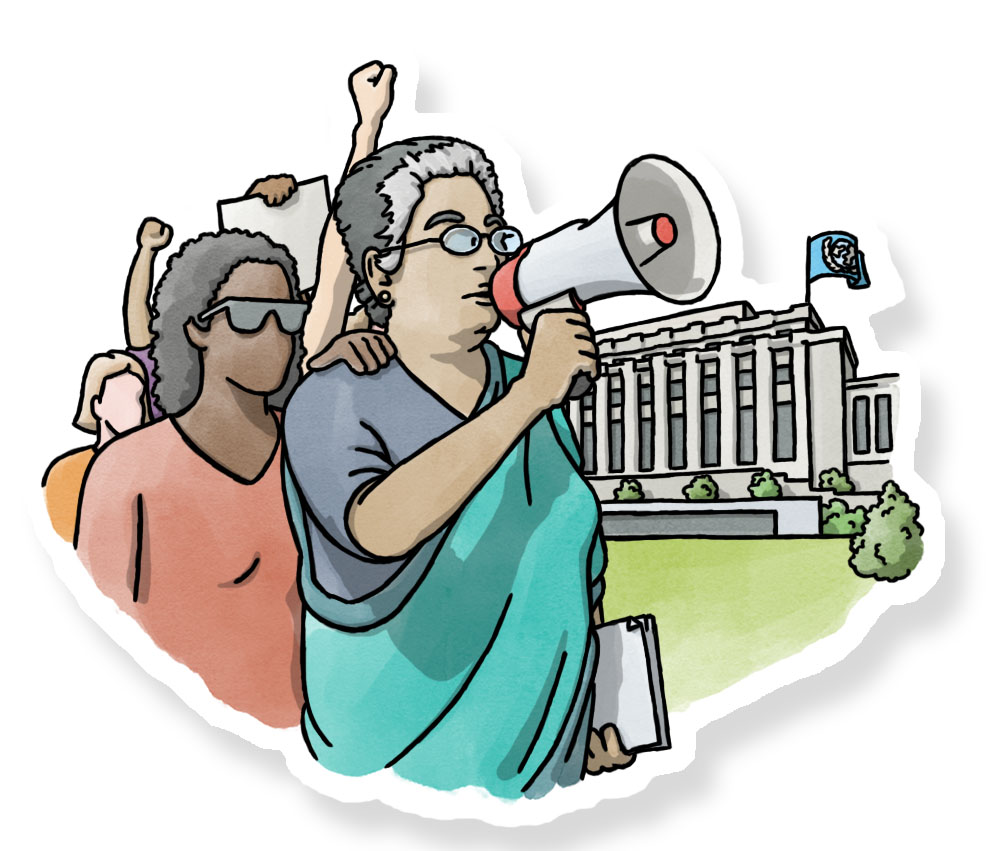
On Monday 18 September, over 50 activists, members of civil society organisations and diplomatic partners gathered on Geneva’s Place des Nations, unfurling a giant banner celebrating the right to defend human rights, as enshrined in the foundational UN Declaration on Human Rights Defenders.

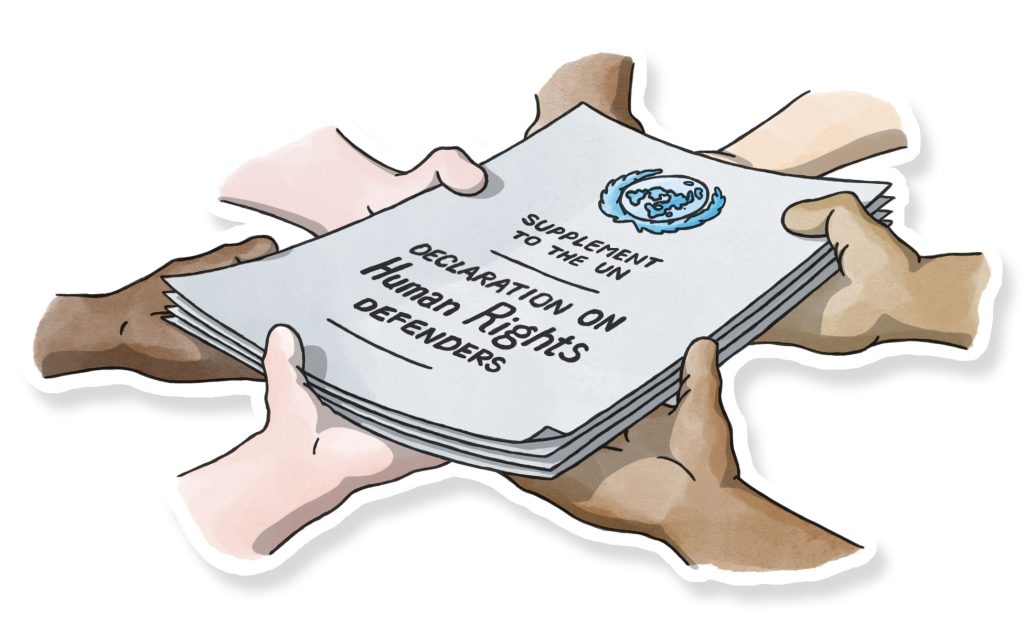
The banner and gathering were meant to mark the 25th anniversary of the Declaration, which was adopted by the UN General Assembly in 1998. The document explicitly laid out the rights of human rights defenders and the protection owed to them by governments and businesses, emphasising that everyone has the right to advocate and defend rights and fundamental freedoms.

On 28 September 2023, the UN Secretary-General’s report on reprisals was presented, which covers the period from 1 May 2022 to 30 April 2023. Over 220 individuals and 25 organizations in 40 countries across the world faced threats and retaliation from State and non-State actors for cooperating with the UN on human rights.

Human rights defenders and other civil society actors are increasingly under surveillance and continued to face legal proceedings, travel bans and threats, and be given prison sentences for cooperating with the UN and the UN’s human mechanisms.

A global context of shrinking civic space is making it increasingly difficult to properly document, report and respond to cases of reprisals, which means that the number is likely much higher,” said Assistant Secretary-General for Human Rights Ilze Brands Kehris in her presentation to the Human Rights Council in Geneva. [see also: https://humanrightsdefenders.blog/2020/11/16/new-assistant-secretary-general-wants-to-improve-civil-society-participation-in-the-general-assembly/]

Among the growing trends noted in the report is the increase in people either choosing not to cooperate with the UN due to concerns for their safety, or only doing so if kept anonymous. 

Victims and witnesses in two-thirds of the States listed in the report requested anonymous reporting of reprisals, compared with one-third in last year’s report.  And most people who reported facing reprisals for their cooperation with the Security Council and its peace operations, as well as with the UN Permanent Forum on Indigenous Issues did so on the condition of anonymity.

A second trend was the increasing surveillance of those who cooperate or attempt to cooperate with the UN, being reported in half of the countries named in the report.  An increase in physical surveillance by State actors was also noted, likely linked to the return to in-person forms of engagement with the UN.

Third, almost forty-five per cent of the in the report continued to apply or enact new laws and regulations concerning civil society, counter-terrorism and national security, which punish, deter or hinder cooperation with the UN and its human rights mechanisms. 
These legislative frameworks represent severe obstacles to long-standing human rights partners of the UN worldwide, and were used to outlaw some of them, raid their offices, and question, threaten or try their staff.

Finally, the specificity and severity of acts of reprisals against women and girls, which constitute half of the victims in this year’s report, was once again identified with concern.

Most of them are human rights defenders and civil society representatives targeted for their cooperation with UN human rights mechanisms and peace operations, but there is also a significant number of judicial officers and lawyers subjected to reprisals for their cooperation with the UN in search of accountability and remedy.

We have a duty to those who put their trust in us,” said Brands Kehris. “That is why at the UN, we are determined to live up to our collective responsibility to prevent and address intimidation and reprisals against those who cooperate with the organization and its human rights mechanisms.” 

The 40 States referred to in the report are: Algeria, Afghanistan, Andorra, Bahrain, Bangladesh, Belarus, Burundi, Cameroon, China, Colombia, Cuba, Democratic Republic of the Congo, Djibouti, Egypt, France, Guatemala, India, Indonesia, Iran (Islamic Republic of), Iraq, Israel, Saudi Arabia, Libya, Maldives, Mali, Mexico, Myanmar, Nicaragua, Pakistan, the Philippines, Qatar, the Russian Federation, South Sudan, United Republic of Tanzania, United Arab Emirates, Uzbekistan, Viet Nam, Venezuela (Bolivarian Republic of), Yemen, and the State of Palestine.

The full report at A/HRC/54/61

https://ishr.ch/latest-updates/defenders-gather-before-the-un-headquarters-to-call-for-better-protection-of-their-work/

https://genevasolutions.news/human-rights/punished-for-speaking-up-at-the-un

The story of Camila Zuluaga, HRD from Colombia

July 26, 2023

Camila Zuluaga is an international advocacy lawyer at the Colombian Commission of Jurists (CCJ). She spoke to ISHR about her hopes for Colombia, which she hopes to make a safer country for human rights defenders. Camila was also one of the participants to ISHR’s flagship training course, the Human Rights Defender Advocacy Programme (HRDAP).

To learn more about her and other defenders like her: https://ishr.ch/defender-stories/huma…

https://ishr.ch/defender-stories/human-rights-defenders-story-camila-zuluaga-from-colombia/

Tunisia no longer poster child of Arab spring

June 29, 2023

The Human Rights Council should urgently address the deterioration of the human rights situation in Tunisia, four human rights organizations said on 27 June 2023 as the 53rd Council’s session is underway.

In a letter sent to UN Member States’ Representatives on 5 June 2023, the four undersigned organizations warned against the rapidly worsening situation in Tunisia, and urged States to seize the opportunity of the ongoing Human Rights Council’s session to address it. The organizations called on the Council and Member States to press the Tunisian authorities to comply with their obligations under international human rights law particularly those guaranteeing the rights to fair trial, freedom of expression, freedom of peaceful assembly and association, and non-discrimination.

The Human Rights Council should urge Tunisia to end the ongoing crackdown on peaceful dissent and freedom of expression, and drop charges against, and release, all individuals being detained and prosecuted solely on the basis of their peaceful political activities and the exercise of their human rights. The Council should also call on Tunisia to conduct prompt, thorough, independent, impartial and transparent and investigation into a wave of anti-Black violence – including assaults and summary evictions – against Black African foreign nationals, including migrants, asylum seekers and refugees, and bring to justice anyone reasonably suspected to be responsible, and provide victims with access to justice and effective remedies.

Over the past two years, Tunisia has witnessed a significant rollback on human rights. Judicial independence guarantees have been dismantled and individual judges and prosecutors have been subjected to arbitrary dismissal, politicized criminal prosecutions and increased interference by the executive. Lawyers are being prosecuted for the discharge of their professional duties and exercise of their right to freedom of expression.

The Tunisian authorities’ interference in the judiciary and attacks on lawyers have greatly undermined the right to fair trial and public trust in the integrity of the justice system. The authorities must ensure that the courts are not weaponized to crush dissent and free expression,’ said International Commission of Jurists’ MENA director Said Benarbia. 

Under the guise of ‘fighting offences related to information and communication systems’,  punishable by up to a 10 years’ imprisonment and a hefty fine according to Decree Law 54, at least 13 individuals, including journalists, political opponents, lawyers, human rights defenders and activists, have been subject to police or judicial investigations and are facing possible prosecutions.

‘With Tunisia facing political uncertainty and economic crisis, it’s more important than ever that Tunisians be free to debate their country’s future without fear of reprisal. The authorities should strive to allow the effective enjoyment of the right to freedom of expression of everyone; instead, they are attacking it,’ said Rawya Rageh, Amnesty International’s acting deputy director for the Middle East and North Africa.

Last week, the UN High Commissioner for Human Rights called on the Tunisian authorities to stop restricting media freedoms and criminalizing independent journalism. In a statement published on 23 June, Volker Türk expressed deep concern at the increasing restrictions on the right to freedom of expression and press freedom in Tunisia, noting that vague legislation is being used to criminalize independent journalism and stifle criticism of the authorities. ‘It is troubling to see Tunisia, a country that once held so much hope, regressing and losing the human rights gains of the last decade,’ said the High Commissioner.

Since February 2023, a wave of arrests targeted political opponents and perceived critics of Tunisia’s President, Kais Saied. In the absence of credible evidence of any offences, judges are investigating at least 48 people, such as dissidents, opposition figures, and lawyers, for allegedly conspiring against the State or threatening State security, among other charges. At least 17 of them are being investigated under Tunisia’s 2015 counter-terrorism law.

‘By jailing political leaders and banning opposition meetings, the authorities are dangerously trampling on the fundamental rights that underpin a vibrant democracy. The democratic backsliding and the human rights violations, which are unprecedented since the 2011 revolution, require urgent attention from the Human Rights Council and Member States,’ said Salsabil Chellali, Tunisia director at Human Rights Watch.

Signatories:

  1. International Commission of Jurists (ICJ)
  2. International Service for Human Rights (ISHR)
  3. Amnesty International
  4. Human Rights Watch (HRW)

Download as PDF

Side event on the 25th Anniversary of the UN Declaration on human rights defenders

June 20, 2023

The last 25 years have seen significant developments in international law and standards on the role, recognition and protection of human rights defenders. Five years ago, the Human Rights Defenders World Summit called for action, including to: “Take stock of the developments in normative frameworks related to the protection of defenders since 1998 and further develop and deepen the norms contained in the Declaration with the view to afford enhanced protection”. [see: https://humanrightsdefenders.blog/2019/11/01/one-year-after-the-2018-human-rights-defenders-world-summit/ as well as: https://humanrightsdefenders.blog/2018/12/18/premiere-powerful-video-summarizes-human-rights-defenders-world-summit-2018/]. The Declaration +25 Project is a civil society-led initiative that seeks to do just that while putting civil society at the centre of a conversation fundamental to them and their work – the right to defend rights.

A bit too late to actually follow the event (which took place on 20 June), I like to draw attention to the programme. The event was live-streamed on ISHR’s YouTube channel.

This side event, which is co-sponsored by a number of civil society organisations,

wanted to: 

  • enhance awareness of the UN Declaration on human rights defenders, and of the Declaration +25 Project;
  • present developments in the last 25 years in international law and standards on the role, recognition and protection of human rights defenders;
  • encourage greater dialogue on the protection needs of defenders;
  • hear from human rights defenders on their protection needs and the role the Declaration has played to date. 

Speakers: 

  • Ketakandriana Rafitoson, Transparency International – Initiative Madagascar
  • Camila Zuluaga Hoyos, Colombian Commission of Jurists 
  • Robby Mokgalaka, The Groundwork Trust, South Africa
  • Birgit Kainz-Labbe, Coordinator of Civic Space Unit, OHCHR

Moderator: Tess McEvoy, International Service for Human Rights

https://mailchi.mp/ishr/human-rights-council-elections-discussions-of-candidates-aspirations-and-visions-in-new-york-and-geneva-33909?e=d1945ebb90

Human Rights Defenders issues at the 53rd Session of the UN Human Rights Council

June 20, 2023

The 53rd session of the UN Human Rights Council started 19 June (to end on 14 July 2023). Thanks to the – as usual – excellent documentation prepared by the International Service for Human Rights (ISHR) I will highlight the themes mostly affecting HRDs.

To stay up-to-date you can follow @ISHRglobal and #HRC53 on Twitter, and look out for its Human Rights Council Monitor. During the session, follow the live-updated programme of work on Sched.

See also: https://humanrightsdefenders.blog/2023/05/09/hrc52-civil-society-presents-key-takeaways-from-human-rights-council/

Here are some highlights of the session’s thematic discussions

Human rights of migrants

The Council will consider a resolution on the human rights of migrants this session, where a big problem is the criminalisation of the provision of solidarity and support, including rescues at sea, by migrant rights defenders.

Reprisals

..States raising cases is an important aspect of seeking accountability and ending impunity for acts of reprisal and intimidation against defenders engaging with the UN. It can also send a powerful message of solidarity to defenders, supporting and sustaining their work in repressive environments.

This month ISHR launched a new campaign regarding five cases. ISHR urges States to raise these cases in their statements:

  • Anexa Alfred Cunningham (Nicaragua), a Miskitu Indigenous leader, woman human rights defender, lawyer and expert on Indigenous peoples rights from Nicaragua, who has been denied entry back into her country since July 2022, when she participated in a session of a group of United Nations experts on the rights of Indigenous Peoples. States should demand that Anexa be permitted to return to her country, community and family and enabled to continue her work safely and without restriction.
  • Vanessa Mendoza (Andorra), a psychologist and the president of Associació Stop Violències, which focuses on gender-based violence, sexual and reproductive rights, and advocates for safe and legal abortion in Andorra. After engaging with CEDAW in 2019, Vanessa was charged with ‘slander with publicity’, ‘slander against the co-princes’ and ‘crimes against the prestige of the institutions’. She has been indicted for the alleged “crimes against the prestige of the institutions” involving a potentially heavy fine (up to 30,000 euros) and a criminal record if convicted. States should demand that the authorities in Andorra unconditionally drop all charges against Vanessa and amend laws which violate the rights to freedom of expression and association.
  • Kadar Abdi Ibrahim (Djibouti) is a human rights defender and journalist from Djibouti. He is also the Secretary-General of the political party Movement for Democracy and Freedom (MoDEL). Days after returning from Geneva, where Kadar carried out advocacy activities ahead of Djibouti’s Universal Periodic Review (UPR), intelligence service agents raided his house and confiscated his passport. He has thus been banned from travel for five years. States should call on the authorities in Djibouti to lift the travel ban and return Kadar’s passport immediately and unconditionally.
  • Hong Kong civil society (Hong Kong): Until 2020, civil society in Hong Kong was vibrant and had engaged consistently and constructively with the UN. This engagement came to a screeching halt after the imposition by Beijing of the National Security Law for Hong Kong (NSL), which entered into force on 1 July 2020. States should urge the Hong Kong authorities to repeal the offensive National Security Law and desist from criminalizing cooperation with the UN and other work to defend human rights.
  • Maryam al-Balushi and Amina al-Abduli (United Arab Emirates), Amina Al-Abdouli used to work as a school teacher. She was advocating for the Arab Spring and the Syrian uprising. She is a mother of five. Maryam Al Balushi was a student at the College of Technology. They were arrested for their human rights work, and held in incommunicado detention, tortured and forced into self-incriminatory confessions. After the UN Special Procedures mandate holders sent a letter to the UAE authorities raising concerns about their torture and ill treatment in detention in 2019, the UAE charged Amina and Maryam with three additional crimes. The UN Working Group on Arbitrary Detention found their detention arbitrary and a clear case of reprisals for communicating with Special Procedures. In April 2021, a court sentenced them to three additional years of prison for “publishing false information that disturbs the public order”. States should demand that authorities in the UAE immediately and unconditionally release Maryam and Amina and provide them with reparations for their arbitrary detention and ill-treatment.

Other thematic reports

At this 53rd session, the Council will discuss a range of civil, political, economic, social and cultural rights through dedicated debates with the mandate holders and the High Commissioner, including:

  • The Special Rapporteur on the rights to freedom of peaceful assembly and of association
  • The Independent Expert on protection against violence and discrimination based on sexual orientation and gender identity
  • The Special Rapporteur on the right to freedom of expression
  • The Special Rapporteur on the right to health
  • The Special Rapporteur on extrajudicial, summary of arbitrary executions
  • The Special Rapporteur on promotion and protection of human rights in the context of climate change
  • The Special Rapporteur on contemporary forms of racism, racial discrimination, xenophobia and related intolerance
  • The Working Group on the issue of human rights and transnational corporations and other business enterprises
  • The High Commissioner on the importance of casualty recording for the promotion and protection of human rights
  • The Special Adviser to the Secretary-General on the Prevention of Genocide

In addition, the Council will hold dedicated debates on the rights of specific groups including:

  • The Working Group on discrimination against women and girls
  • The Special Rapporteur on violence against women and girls, its causes and consequences
  • The Special Rapporteur on the human rights of migrants
  • The Special Rapporteur on trafficking in persons, especially women and children
  • The Special Rapporteur on independence of judges and lawyers

#HRC53 | Country-specific developments

Afghanistan

The Human Rights Council will hold its Enhanced Interactive Dialogue on Afghanistan, with the Special Rapporteur on the situation in Afghanistan and the Working Group on Discrimination against Women in Law and Practice. The joint report of the two mandates follows up from an urgent debate held last year on the situation of women and girls in the country. Their visit to the country concluded that there exist manifestations of systemic discrimination violating human rights and fundamental freedoms in both public and private lives. ISHR has joined many around the world to argue that the situation amounts to gender apartheid, and welcomes the call of the two mandate holders to develop normative standards and tools to address this as “an institutionalised system of discrimination, segregation, humiliation and exclusion of women and girls”. The gravity and severity is urgent, and requires that States act on the ongoing calls by Afghan civil society to establish an accountability mechanism for crimes against humanity.

Algeria

On 15 June, fifteen activists and peaceful protesters will face trial in Algiers on the basis of unfounded charges which include ‘enrolment in a terrorist or subversive organisation active abroad or in Algeria’ and ‘propaganda likely to harm the national interest, of foreign origin or inspiration’. The activists were arrested between 23 and 27 April 2021, and arbitrarily prosecuted within one criminal case. If convicted of these charges, they face a prison sentence of up to twenty years. This case includes HRDs Kaddour Chouicha, Jamila Loukil and Said Boudour who were members of the LADDH before its dissolution by the Administrative Court of Algiers following a complaint filed by the Interior Ministry on 29 June 2022.  We urge States to monitor the prosecution closely, including by attending the trial. We also urge States to demand that Algeria, a HRC member, end its crackdown on human rights defenders and civil society organisations, amend laws used to silence peaceful dissent and stifle civil society, and immediately and unconditionally release arbitrarily detained human rights defenders.

China

The recent findings of the Committee on Economic, Social and Cultural Rights in March, the Committee on the Elimination of Discrimination against Women in May, and the seven key benchmarks on Xinjiang by 15 Special Rapporteurs add up to wide range of UN expert voices that have collectively raised profound concern at the Chinese government’s treatment of Uyghurs, Tibetans, Hong Kongers and HRDs in mainland China. Seldom has the gap between the breadth of UN documentation on crimes against humanity and other grave violations and the lack of action by the Human Rights Council in response to such overwhelming evidence been so flagrant: the Council’s credibility is at stake. ISHR calls on the Council to promptly adopt a resolution requesting updated information on the human rights situation in Xinjiang, and a dialogue among all stakeholders on the matter. Governments from all regions should avoid selectivity, put an end to China’s exceptionalism, and provide a meaningful response to atrocity crimes on the basis of impartial UN-corroborated information.

The recent convictions of prominent rights defenders Ding Jiaxi and Xu Zhiyong to 12 and 14 years in jail respectively, and the recent detention of 2022 Martin Ennals awardee Yu Wensheng and his wife Xu Yan for ‘subversion of State power’ a year after his release, point to the need for sustained attention to the fate of HRDs in China. States should address in a joint statement the abuse of national security and other root causes of violations that commonly affect Uyghurs, Tibetans, Hong Kongers and mainland Chinese HRDs. States should also ask for the prompt release of human rights defenders, including human rights lawyers Chang Weiping, Yu Wensheng and Ding Jiaxi, legal scholar Xu Zhiyong, feminist activists Huang Xueqin and Li Qiaochu, Uyghur doctor Gulshan Abbas, Hong Kong lawyer Chow Hang-tung, and Tibetan climate activist A-nya Sengdra.

Egypt

Since the joint statement delivered by States in March 2021 at the HRC, there has been no significant improvement in the human rights situation in Egypt despite the launching of the national human rights strategy and the national dialogue. The Egyptian government has failed to address, adequately or at all, the repeated serious concerns expressed by several UN Special Procedures over the broad and expansive definition of “terrorism”, which enables the conflation of civil disobedience and peaceful criticism with “terrorism”. The Human Rights Committee raised its concerns “that these laws are used, in combination with restrictive legislation on fundamental freedoms, to silence actual or perceived critics of the Government, including peaceful protesters, lawyers, journalists, political opponents and human rights defenders”. Egyptian and international civil society organisations have been calling on the HRC to establish a monitoring and reporting mechanism on the human rights situation in Egypt, applying objective criteria and in light of the Egyptian government’s absolute lack of genuine will to acknowledge, let alone address, the country’s deep-rooted human rights crisis.

Israel and OPT

Civil society continues to call on the OHCHR to implement, in full, the mandate provided by HRC resolution 31/36 of March 2016 with regards to the UN database of businesses involved in Israel’s illegal settlement industry. The resolution mandated the release of a report containing the names of the companies involved in Israel’s settlement enterprise, to be annually updated. The initial report containing a list of 112 companies was released by the OHCHR in February 2020, three years after the mandated release date and despite undue political pressure. Since then, the UN database has not been updated. UN member states should continue to call on the OHCHR to implement the mandate in full and publish an annual update, as this represents a question of credibility of the Office of the High Commissioner and the Council.

The Commission of Inquiry on the Occupied Palestinian Territory, including East Jerusalem, and Israel will present its second report to the Council on 20 June. Member states should continue to support the work of the CoI to investigate the root causes of the situation in line with its mandate with a view to putting an end to 75 years of denial of the Palestinian’s people inalienable rights to self-determination and return. As the Palestinian people commemorate 75 years of Nakba (the destruction of Palestinian homeland and society), the CoI needs to address the root causes of the situation, including by investigating the ongoing denial of the Palestinian people’s right to self-determination and the return of refugees, as well as the ongoing forcible displacement of Palestinians on both sides of the Green Line in the context of Israel’s imposition of a system of colonial apartheid.

In addition, on 10 July, the Council will hold an interactive dialogue with the Special Rapporteur on the situation of human rights in the Palestinian territories occupied since 1967.

Saudi Arabia

In light of the ongoing diplomatic rehabilitation of crown prince and de facto ruler Mohammed bin Salman, the Saudi authorities’ brazen repression continues to intensify, as ALQST has documented. Some notable recent trends include, but are not limited to: the further harsh sentencing of activists for peaceful social media use, such as women activists Salma al-Shehab (27 years), Fatima al-Shawarbi (30 years and six months) and Sukaynah al-Aithan (40 years); the ongoing detention of prisoners of conscience beyond the expiry of their sentences, some of whom continue to be held incommunicado such as human rights defenders Mohammed al-Qahtani and Essa al-Nukheifi, and; regressive developments in relation to the death penalty, including a wave of new death sentences passed and a surge in executions (47 individuals were executed from March-May 2023), raising concerns for those currently on death row, including several young men at risk for crimes they allegedly committed as minors. We call on the HRC to respond to the calls of NGOs from around the world to create a monitoring and reporting mechanism on the ever-deteriorating human rights situation in Saudi Arabia.

Nicaragua

Continued attention should be paid by States at the HRC to the steadily worsening situation in Nicaragua. On 2 June, the spokesperson for the UN High Commissioner for Human Rights raised ‘growing concerns that the authorities in Nicaragua are actively silencing any critical or dissenting voices in the country and are using the justice system to this end’. The OHCHR reports 63 individuals arbitrarily detained in May alone, with 55 charged with ‘conspiracy to undermine national integrity’ and ‘spreading false news’ within one single night, without access to a lawyer of their choosing. States should express support for the monitoring and investigation work of the OHCHR and the Group of Human Rights Experts on Nicaragua (GHREN), and call on the Nicaraguan government to release the remaining 46 political prisoners, revoke its decision to strip deported political prisoners off their nationality, and take meaningful measures to prevent, address and investigate violence by armed settlers against Indigenous Peoples and Afro-descendants.

Russia

Russia’s war of aggression against Ukraine has also been accompanied by a domestic war of repression against human rights defenders, independent journalists and political dissent. Most recently, Russia has adopted a sweeping new law criminalising assistance to or cooperation with a range of international bodies, including the International Criminal Court, ad hoc tribunals, foreign courts and arguably even the UN Human Rights Council itself. This law is manifestly incompatible with the right to communicate and cooperate with international bodies, and a flagrant and institutionalised case of reprisal. With Russian authorities having been found by a UN-mandated Commission of Inquiry to be possibly responsible for crimes against humanity and war crimes, and having a closed and highly repressive environment for civil society (ranking 17/100 in the CIVICUS Monitor), Russia is plainly unfit to be elected to the UN Human Rights Council and should be regarded as an illegitimate candidate. States should support and cooperate with the mandate of the new Special Rapporteur on the human rights situation in Russia, as well as with the Commission of Inquiry into human rights violations and abuses associated with Russia’s illegal war of aggression against Ukraine.

Sudan

Since the beginning of the war in Sudan on 15 April 2023, increasing numbers of Sudanese WHRDs are receiving threats and subject to grave danger. WHRDs are facing challenges in evacuating from Sudan and face further protection risks in neighboring countries. Sudanese women groups and WHRDs are risking their lives to provide support, solidarity, and report on the rising numbers of sexual and gender-based violence crimes. Many survivors are trapped in fighting areas unable to access support, and the occupation of hospitals by RSF is hindering women’s access to health services. The Council must urgently establish an international investigation in Sudan with sufficient resources, including to investigate the threats and reprisals against WHRDs for their work, and to document sexual and gender-based violence. During the debate with the High Commissioner and designated expert on Sudan on 19 June, we urge States to condemn sexual and gender-based violence (SGBV). States should highlight the impacts of the war on women and girls, including sexual and reproductive health as well as lack of support services for survivors of SGBV. States should reaffirm the importance of participation of women and their demands, and amplify the critical work of WHRDs on the ground despite the imminent risks to their lives and safety. States should also condemn the increasing threats against WHRDs and demand their effective protection.

Venezuela

On 5 July, the High Commissioner will present his report on the human rights situation in Venezuela, which will include an assessment of the level of implementation of UN recommendations already made to the State. The Council focus on Venezuela remains critical at a time when some States’ efforts to normalize relations with Venezuela risk erasing human rights from key agendas. Council members and observers should actively engage in the interactive dialogue with the High Commissioner to make evident that the human rights situation in the country remains at the heart of their concerns. The human rights and humanitarian situation in the country remains grave. Human rights defenders face ongoing and potentially increasing restrictions. We urge States to:

  • Express concern about the NGO bill, sitting with the Venezuelan National Assembly, and call for it to be withdrawn. The potential implications of this bill are to drastically shrink civic space, including by criminalising the work of human rights defenders;
  • Call for the release of all those detained arbitrarily – including defender Javier Tarazona who has been held since July 2021 and whose state of health is deteriorating;
  • Call for the rights of human rights defenders and journalists to be respected including during electoral periods, with a mind to Presidential elections next year; and
  • Call on Venezuela to engage fully with all UN agencies and mechanisms, including OHCHR, and develop a clear plan for the implementation of UN human rights recommendations made to it.

Tunisia

Civil society organisations have raised alarm at the escalating pattern of human rights violations and the rapidly worsening situation in Tunisia following President Kais Saied’s power grab on 25 July 2021 leading to the erosion of the rule of law, attacks on the independence of the judiciary, a crackdown on peaceful political opposition and abusive use of “counter-terrorism” law, as well as attacks on freedom of expression. The High Commissioner has addressed the deteriorating situation in the three latest global updates to the HRC. Special Procedures issued at least 8 communications in less than one year addressing attacks against the independence of the judiciary, as well as attacks against freedom of expression and assembly. Despite the fact that in 2011 Tunisia extended a standing invitation to all UN Special Procedures, and received 16 visits by UN Special Procedures since, Tunisia’s recent postponement of the visit of the Special Rapporteur on the independence of judges and lawyers, is another sign of Tunisia disengaging from international human rights mechanisms and declining levels of cooperation. The upcoming session provides a window of opportunity for the Council to exercise its prevention mandate and address the situation before the imminent risk of closure of civic space in Tunisia and regress in Tunisia’s engagement with the HRC and its mechanisms is complete.  

Syria

On 5 July, the Council will hold an interactive dialogue with the Commission of Inquiry on Syria. In a report to the Human Rights Council in 2021, the Commission of Inquiry on Syria called for the establishment of a mechanism to reveal the fate of the missing and disappeared. On 28 March 2023, during the 77th session of the UN General Assembly, the Secretary-General and UN High Commissioner for Human Rights briefed UN Member States on the situation of the missing in Syria, and the findings of the study conducted by the Secretary-General as mandated by Resolution UNGA 76/228. The study concluded that in order to address the situation of the missing in Syria and its impact on families’ lives, it is necessary to create an institution to reveal the fate and whereabouts of the disappeared and to provide support to their families. As discussions are taking place in the UNGA to adopt a resolution establishing a humanitarian institution to reveal the fate and whereabouts of the disappeared, civil society, led by the Truth and Justice Charter, urges States to support the families of the missing to know the truth about the fate and whereabouts of their loved ones by voting in favour of the resolution at the UNGA.

Other country situations

The High Commissioner will present the annual report on 19 June. The Council will hold an interactive dialogue on the High Commissioner’s annual report on 20 June 2023. The Council will hold debates on and is expected to consider resolutions addressing a range of country situations, in some instances involving the renewal of the relevant expert mandates. These include:

  • Interactive Dialogue with the Special Rapporteur on Eritrea
  • Interactive Dialogues with the High Commissioner and the Special Rapporteur on Myanmar
  • Interactive Dialogue with the Special Rapporteur on Burundi
  • Interactive Dialogue with the High Commissioner on Ukraine
  • Interactive Dialogue with the Special Rapporteur on Belarus
  • Interactive Dialogue with the Fact-Finding Mission on Iran
  • Interactive Dialogue with the Independent Expert on Central African Republic

Appointment of mandate holders

The President of the Human Rights Council has proposed candidates for the following mandates:

  1. Special Rapporteur on minority issues (Mr Nicolas Levrat, Switzerland)
  2. Special Rapporteur on the human rights of migrants (Ms Anna Triandafyllidou, Greece)
  3. Special Rapporteur on the promotion and protection of human rights and fundamental freedoms while countering terrorism (Mr Ben Saul, Australia).

Resolutions to be presented to the Council’s 53rd session

At the organisational meeting on 5 June the following resolutions (selected) were announced (States leading the resolution in brackets):

  1. Human rights situation in Syria (Germany, France, Italy, Jordan, Netherlands, Qatar, Turkey, USA, UK)
  2. New and emerging digital technologies and human rights (Austria, Brazil, Denmark, South Korea, Morocco, Singapore)
  3. Civil society space (Chile, Ireland, Japan, Sierra Leone, Tunisia)
  4. Independence and impartiality of the judiciary, jurors and assessors, and the independence of lawyers – mandate renewal (Australia, Botswana, Hungary, Maldives, Mexico, Thailand)
  5. Human rights of migrants (Mexico)
  6. Mandate of the Special Rapporteur on the situation of human rights in Belarus mandate renewal (EU)
  7. Mandate of the Special Rapporteur on the human rights situation in Eritrea mandate renewal (EU)
  8. Business and human rights – mandate renewal (Russian Federation, Ghana, Argentina and Switzerland)
  9. Extrajudicial, summary or arbitrary executions mandate renewal (Finland, Sweden)
  10. Situation of human rights of Rohiynga muslims and other minorities in Myanmar (Pakistan on behalf of OIC)

Adoption of Universal Periodic Review (UPR) reports

During this session, the Council will adopt the UPR working group reports on Argentina, Benin, Czechia, Gabon, Ghana, Guatemala, Japan, Pakistan, Peru, Republic of Korea, Sri Lanka, Switzerland and Zambia.

Panel discussions

During each Council session, panel discussions are held to provide member States and NGOs with opportunities to hear from subject-matter experts and raise questions. 5 panel discussions are scheduled for this upcoming session:

  1. Panel discussion on the measures necessary to find durable solutions to the Rohingya crisis and to end all forms of human rights violations and abuses against Rohingya Muslims and other minorities in Myanmar
  2. Annual full-day discussion on the human rights of women [accessible panel]. Theme: Gender-based violence against women and girls in public and political life
  3. Annual full-day discussion on the human rights of women [accessible panel]. Theme: Social protection: women’s participation and leadership
  4. Annual panel discussion on the adverse impacts of climate change on human rights [accessible panel]. Theme: Adverse impact of climate change on the full realisation of the right to food
  5. Panel discussion on the role of digital, media and information literacy in the promotion and enjoyment of the right to freedom of opinion and expression [accessible panel]

https://ishr.ch/latest-updates/hrc53-key-issues-on-agenda-of-june-2023-session-of-the-human-rights-council/

https://www.reuters.com/world/asia-pacific/un-rights-chief-seeks-establish-presence-china-india-2023-06-19/

Pierre-Claver Akolly Amégnikpo Dekpoh from Togo tells his story

May 12, 2023

Pierre-Claver Akolly Amégnikpo Dekpoh works at the West African Human Rights Defenders Network (WAHRDN) in Lome, Togo. He spoke to ISHR about what drove him to become a human rights defender and about the challenges that he and his colleagues in Togo and West Africa face in working towards the realisation of human rights.

https://ishr.ch/defender-stories/human-rights-defenders-story-pierre-claver-akolly-amegnikpo-dekpoh-from-togo/

ISHR documents cases of reprisals in 23 countries for UN Submission

May 12, 2023

On 17 April 2023, ISHR sent its annual submission to the report of the UN Secretary-General on reprisals and intimidation against defenders engaging or seeking to engage with the UN and its human rights mechanisms. The submission presents a disturbing pattern of intimidation and reprisals in 23 countries.

ISHR’s annual submission to the report of the UN Secretary-General on reprisals demonstrates the need for the UN and States to do more to prevent and ensure accountability for intimidation and reprisals against human rights defenders and others cooperating or seeking to cooperate with the UN and its human rights mechanisms. ISHR’s submission outlines developments in the international human rights system, and documents a number of new cases, as well as follow-up on previously submitted cases.

In order for the international human rights system to function to its fullest potential, human rights defenders must be able to share crucial information and perspectives, safely and unhindered. However, many defenders still face unacceptable risks and are unable to cooperate safely with the UN.” Madeleine Sinclair, New York Office Co-Director and Legal Counsel. “The vast majority of cases remain unresolved year after year. More must be done to ensure the efforts to document and address reprisals cases also include sustained and consistent follow up. Otherwise, the cost of carrying out reprisals remains too low, impunity reigns and perpetrators are further emboldened“.

The submission presents a disturbing pattern of intimidation and reprisals in 23 countries, with the addition this year of Algeria and France. Cases of reprisals featured in the submission range from States defaming and stigmatising defenders, to criminalising their work, but also to arbitrarily detaining, arresting and killing them. 

  • In Israel, Palestinian defenders face ongoing intimidation and repression as reprisals for their cooperation with UN human rights mechanisms.
  • In Bahrain, the situation still shows no signs of improving, with human rights defenders continuing to be arbitrarily detained and denied timely and adequate medical treatment by the government.
  • In Algeria, Andorra, Cameroon and India defenders continue to be criminalised.
  • In China defenders are still facing online surveillance, harassment and enforced disappearance.
  • In Egypt, the United Arab Emirates, Venezuela and Yemen many more defenders face arbitrary detention, ill-treatment and criminalisation.  

Other cases of reprisals include threats, harassment, hate speech, surveillance, property damage, disbarment, death threats, travel bans, enforced disappearances, unjustified raids, dissolution of associations, judicial harassment, smear campaigns, forced deportations, confiscation of travel documents, red tagging, denial of healthcare and family visits as well as accusations of terrorism, among others. Other countries cited in the report include cases in the Andorra, Bahamas, Bangladesh, Burundi, Djibouti, Equatorial Guinea, France, The Maldives, Morocco, Nicaragua, The Philippines, Russia, and Thailand.

ISHR also submitted follow-up information on a large number of cases, demonstrating that incidents of reprisals and intimidation are very rarely, if ever, adequately resolved.

This year, ISHR is running again its #EndReprisals campaign. The campaign will raise the profile of 6 cases (all included in the submission) and seek to achieve a more sustained attention on the issue of reprisals and follow-up of the cases throughout the UN system. In particular, we want the UN Secretary General to include all the reprisal and intimidation cases in his upcoming report and UN member States to use the opportunity of the interactive dialogue at the Human Rights Council on the Secretary-General’s report in September, as well as Item 5 debates at all sessions, to raise specific cases and hold their peers accountable. 

Read the report

ISHR launches its 2023 Annual Report, highlighting ‘wins’

April 25, 2023

Human rights defenders around the world are coming together in powerful coalitions and turning to international human rights laws and systems to achieve justice and accountability. And while the threats and challenges remain enormous, we’re starting to win! says ISHR in its latest annual report, outlining key impacts during the last year and its vision for 2023 and the years ahead.

Here are just a few examples:  In July 2022, a coalition of more than 1200 NGOs from almost 150 countries secured a win for equality with the renewal of a vital international mechanism to combat violence and discrimination on the grounds of sexual orientation or gender identity. Just a few weeks later, land, environment and indigenous rights defenders secured a win for climate justice with the landmark recognition of the right to a clean, healthy and sustainable environment at the UN General Assembly. Wins for accountability were achieved in April and October when international, regional and national civil society organisations coordinated successful campaigns to suspend Russia from the UN Human Rights Council and establish an independent international expert monitoring mechanism on the human rights situation in the country. International human rights organisations and Uyghur communities came together to score a win against impunity in August by securing the release of a landmark UN Rights Office report on the human rights crisis in Xinjiang, as well as the first ever formal initiative on China at the Human Rights Council just weeks later in September.

See more achievements by visiting the website!
In a recent conversation with Björk, environmental activist Greta Thunberg reflected that hope is not something you feel, but something you do. ‘When people act,’ she said, ‘they create hope’. In 2023, fuelled by indignation and sustained by hope, ISHR’s commitment is to provide solidarity to defenders, contribute to positive momentum and, with your support, achieve even more significant human rights wins!

https://mailchi.mp/ishr/ishrs-human-rights-council-monitor-june-33837?e=d1945ebb90

Human rights defender Pierre-Claver Akolly Amégnikpo Dekpoh from Togo

March 22, 2023

Witnessing the realisation of human rights in our countries would be a great joy because that is what we work towards.’

Pierre-Claver Akolly Amégnikpo Dekpoh works at the West African Human Rights Defenders Network (WAHRDN) in Lome, Togo. He spoke to ISHR about what drove him to become a human rights defender and about the challenges that he and his colleagues in Togo and West Africa face in working towards the realisation of human rights.

Learn more about Pierre-Claver and hear the stories of other human rights defenders like him: https://ishr.ch/defender-stories/

https://ishr.ch/defender-stories/human-rights-defenders-story-pierre-claver-akolly-amegnikpo-dekpoh-from-togo/