“The rights of migrant workers is a global problem, and actors in different jurisdictions have to come together to make a difference in this particular area,” says Barun Ghimire, a human rights lawyer based in Kathmandu, Nepal. “And we need to create a collective narrative that is based on a rights-based approach of migrant workers”.
Barun Ghimire is a human rights lawyer and programme manager at the Law and Policy Forum for Social Justice. Barun works for the protection and defence of the rights of migrant workers in Kathmandu, Nepal.
In this video, Barun explains his work in relation to the rights of migrants, as well as how Covid-19 has affected this group, which is facing even stronger vulnerability. He also calls the international community and other actors to come together and help improve the situation of migrants workers as well as their families. To achieve this goal, it is necessary to create a new narrative and defend and promote the rights of migrant people in vulnerable situations, especially during and after Covid-19.
Barun was also a participant in ISHR’s Human Rights Defender Advocacy Programme (HRDAP) in 2020.
The ISHR is Launching “A Seat At The Table” – A guide to crafting effective narratives at the UN about human rights and the people who defend them
The stories and narratives that are told about human rights defenders at the UN have a major impact on how they are understood and supported on the ground. Over the past 9 months, the ISHR has explored perceptions and views that diplomats working at the UN have about human rights and people who defend them. The objective was to understand the messages that best increase support for human rights defenders and to craft more effective human rights narratives, particularly as they relate to people who defend human rights. ISHR is now ready to share its findings with you and launch the new practitioners’ guide “A Seat At The Table“, meant for anyone working within or engaging with the UN system to promote and protect human rights, whether they be advocates with organisations, diplomats or frontline community activists and leaders.
This event will be held online. In order to attend the event, please RSVP here.
Welcome: Ambassador Marc Bichler, Permanent Mission of Luxembourg
Panelists:
Tom Clarke, human rights campaigner, communications specialist and guide co-author
Sophie Mulphin, human rights communications specialist and guide co-author
Mary Lawlor, Special Rapporteur on the situation of human rights defenders
Ambassador Nazhat Shameen Khan, President of the Human Rights Council
Ilze Brands Kehris, Assistant Secretary-General for human rights
Guadalupe Marengo, Amnesty International
Thomas Coombes, human rights strategist and communications expert, founder of hope-based communications
Moderator: Marianne Bertrand, International Service for Human Rights
30 June 2021 1:00-2:30pm CEST Online event Register now
According to the Bureau minutes of 2 and 4 June 2021, the extraordinary modalities for the 47th session should be similar to the modalities applied during the 46th session.
Thematic areas of interest:
Sexual orientation and gender identity
The Independent Expert on protection against violence and discrimination based on sexual orientation and gender identity will present his report, followed by an interactive dialogue on 24 June. The report seeks to document how particular narratives on gender are being used to fuel violence and discrimination based on sexual orientation and gender identity. In the report, the Expert examines how the incorporation of comprehensive gender theory enables more accurate and appropriate consideration of dynamics of negation and stigma, and the key role of law, public policy and access to justice in promoting either continuity of injustice or social change.
The report highlights the mandate’s position in relation to current narratives and constructions through which the application of gender frameworks, especially its promise for gender equality across diverse persons, is challenged; and build on gender concepts and feminist analysis to further substantiate the mandate’s understanding of root causes and dynamics of violence and discrimination based on sexual orientation and gender identity.
This report will be presented in the context of high levels of violence against trans and gender nonconforming people and those defending their rights. Beyond this, the COVID-19 pandemic has disproportionately impacted trans and gender nonconforming people and those defending their rights worldwide, especially those most marginalised.
Systemic racism, police brutality and violence against peaceful protests in the United States and globally
The High Commissioner will present the comprehensive report of Resolution 43/1 to the Council on 12 July followed by an interactive dialogue. ISHR previously joined 171 families of victims of police violence in the United States and over 270 civil society organisations from more than 40 countries in calling on the Council to establish an independent commission of inquiry into police killings of Black men and women, as well as violent law enforcement responses to protests in the United States….
The Council should ensure the establishment of robust international accountability mechanisms which would further support and complement, not undermine, efforts to dismantle systemic racism in the United States and globally, especially in the context of police violence against Black people.
Business and human rights
June 2021 marks the tenth anniversary of the unanimous endorsement by the Council of the United Nations Guiding Principles on Business and Human Rights (UNGPs). The Guiding Principles have become one of the key frameworks for private business to carry out their responsibility to respect human rights, for States to discharge their obligations under international law in relation to business activities, and for civil society and human rights defenders to utilise the UNGPs to demand structural changes in the way companies operate internationally. Human rights need to be an essential element of how businesses design their operations. After 10 years, we have the chance to look back and into the future with a critical eye. In that regard, a ‘Roadmap for the Next Decade’ will be presented by the UN Working Group on Business and Human Rights this month. ISHR continues to work with the UN, civil society and progressive companies to protect and promote the work of human rights defenders.
In tandem with its annual report, the UN Working Group will also present in June a long-awaited guidance document on business and human rights defenders based on the UNGPs. The ‘United Nations Guidance on the role of the Guiding Principles for engaging with, safeguarding and ensuring respect for the rights of human rights defenders’ was supported and informed by ISHR and partners, and builds on the experiences gathered through the Business Network on Civic Freedoms and Human Rights Defenders, an initiative ISHR co-founded with the Business and Human Rights Resource Centre. This document will become a key instrument for civil society, businesses and States in ensuring that human rights defenders are protected and recognised as essential actors in maintaining rule of law and a functioning shared civic space.
During the 42nd session, the Council adopted a resolution which listed key trends such as the patterns of reprisals, increasing self-censorship, the use of national security arguments and counter-terrorism strategies by States as justification for blocking access to the UN. The resolution also acknowledged the specific risks to individuals in vulnerable situations or belonging to marginalised groups, and called on the UN to implement gender-responsive policies to end reprisals. The Council called on States to combat impunity and to report back to it on how they are preventing reprisals, both online and offline.
Item 5 of the Human Rights Council’s agenda provides a key opportunity for States to raise concerns about reprisals, and for governments involved in existing cases to provide an update to the Council on any investigation or action taken toward accountability to be carried out.
During the organisational meeting held on 7 June, the President of the Council stressed the importance of ensuring the safety of those participating in the Council’s work, and the obligation of States to prevent intimidation or reprisals.
ISHR recently launched a study analysing 709 reprisals cases and situations documented by the UN Secretary-General between 2010 and 2020 and looked at trends and patterns in the kinds of cases documented by the UNSG, how these cases have been followed up on over time, and whether reprisal victims consider the UN’s response effective. Among other things, the study found that nearly half the countries serving on the Council have been cited for perpetrating reprisals. The study also found that the HRC Presidency appears to have been conspicuously inactive on intimidation and reprisals, despite the overall growing numbers of cases that are reported by the UNSG – including on individuals’ or groups’ engagement with the HRC – and despite the Presidency’s legal obligation to address such violations. The study found that the HRC Presidency took publicly reported action in only 6 percent of cases or situations where individuals or organisations had engaged with the HRC. Not only is this a particularly poor record in its own right, it also compares badly with other UN actors.
In line with previous calls, ISHR expects the President of the Human Rights Council to publicly identify and denounce specific instances of reprisals by issuing formal statements, conducting press-briefings, corresponding directly with the State concerned, publicly releasing such correspondence, and insisting on undertakings from the State concerned to investigate, hold the perpetrators accountable and report back to the Council on action taken.
Other thematic reports
At this 47th session, the Council will have dedicated debates with the mandate holders and the High Commissioner, including interactive dialogues with:
The High Commissioner on State response to pandemics
The Special Rapporteur on the right to housing
The Special Rapporteur on the right of everyone to the enjoyment of the highest attainable standard of physical and mental health
The Independent Expert on human rights and international solidarity
The Special Rapporteur on the right to education
The Special Rapporteur on extreme poverty and human rights
The Special Rapporteur on extrajudicial, summary or arbitrary executions
The Special Rapporteur on the rights to freedom of peaceful assembly and of association
The Special Rapporteur on the promotion and protection of the right to freedom of opinion and expression
The Working Group on arbitrary detention on its study on drug policies
The Special Rapporteur on the right to privacy
In addition, the Council will hold dedicated debates on the rights of specific groups including:
The Special Rapporteur on the human rights of migrants
The Special Rapporteur on the human rights of internally displaced persons
The Special Adviser on Prevention of Genocide
The Working Group on discrimination against women and girls
The Special Rapporteur on violence against women, its causes and consequences
The Special Rapporteur on trafficking in persons, especially women and children
The Special Rapporteur on the independence of judges and lawyers
The Special Rapporetur on the elimination of discrimination against persons affected by leprosy and their family members
Country-specific developments
China
One year after the UN Special Procedures issued a sweeping statement calling for the international community to take ‘decisive action’ on the human rights situation in China, much more remains to be done. Calls are growing for more clear and timely reporting from the UN, including the High Commissioner for Human Rights and her Office, on the repressive policies and practices targeting Uyghurs and other Turkic Muslims. At the same time, worrying news continues about violations of cultural rights of Tibetans, while Hong Kong’s democratic institutions – and its people – have suffered a series of blows from legislative, policy and legal decision targeting pro-democracy leaders. For the first time since 1989, peaceful public demonstrations to commemorate the massacre on Tiananmen Square were prohibited.
At the 46th session of the Council, over 30 States led by Finland urged Egypt to end its repression of human rights defenders, LGBTI persons, journalists, politicians and lawyers under the guise of countering-terrorism. The joint State statement ended years of a lack of collective action at the Council on Egypt, despite the sharply deteriorating human rights situation in the country. Egypt must answers these calls, starting by releasing the thousands arbitrarily detained, protecting those in custody from torture and other ill-treatment, and ending the crackdown on peaceful activists. The UN Working Group on Arbitrary Detention has previously concluded that arbitrary detention is a systematic problem in Egypt and the Committee against Torture has concluded that torture is a systematic practice in Egypt. To date, Egypt has failed to address all the concerns expressed by States, the High Commissioner and Special Procedures, despite repeated calls on the government, including most recently by over 60 NGOs. ISHR joined over 100 NGOs from across the world in urging the Council to establish a monitoring and reporting mechanism on Egypt and will continue to do so until there is meaningful and sustained improvement in the country’s human rights situation.
Saudi Arabia
This session will mark two years since the Special Rapporteur on extrajudicial, summary or arbitrary executions presented to the Council the investigation into the unlawful death of Saudi journalist Jamal Khashoggi, and yet no meaningful steps towards accountability have been taken by the Saudi authorities. The Special Rapporteur called on Saudi Arabia to “demonstrate non-repetition by: releasing all individuals imprisoned for the peaceful expression of their opinion and belief; independently investigating all allegations of torture and lethal use of force in formal and informal places of detention; and independently investigating all allegations of enforced disappearances and making public the whereabouts of individuals disappeared”. To date, Saudi Arabia has refused to address these key concerns, which were also raised by over 40 States at the Council in March 2019, September 2019 and September 2020, further demonstrating its lack of political will to genuinely improve the human rights situation and to engage constructively with the Council. The sentencing and subsequent release of several women’s rights activists highlights the importance of the Council’s scrutiny which must be sustained in order to secure meaningful, concrete, and systematic gains. We recall that the Special Rapporteur also called on Member States to support resolutions that seek to ensure or strengthen accountability for the execution of Khashoggi. ISHR reiterates its call on the Council to establish a monitoring and reporting mechanism on the human rights situation in Saudi Arabia.
Colombia
After more than a month of strikes and street protests in Colombia, which have seen protestors killed at the hands of law enforcement officers and civilians, and human rights defenders covering the events threatened and attacked, the Council session provides States with the opportunity to take action. States must call on Colombia to respect the human rights of its people – including the right to freedom of peaceful assembly – and address the underlying causes of the protests, including violations of economic, social and cultural rights, inequality and racial discrimination. This situation of violence and non-compliance with all standards of the use of force has had a particular impact on the Afro-descendant population. Specific calls from Colombian civil society include for OHCHR to investigate and report on the protests in the country including gather statistical data on the facts that threaten the human rights of Afro-Colombian people; for the High Commissioner to visit Colombia when possible; and for Colombia to open its doors to a range of Special Rapporteurs to allow for ongoing monitoring and reporting. The High Commissioner, who has made a statement on the situation in the country, will present her annual report at the start of the session and it is hoped and expected that Colombia will feature as a country of concern. [see also: https://humanrightsdefenders.blog/2020/01/20/colombia-21-january-2020-civil-society-begins-a-much-needed-patriotic-march/]
Nicaragua
Last March, the Council renewed its resolution on the human rights situation in Nicaragua, which strengthened the High Commissioner’s office monitoring and reporting mandate, by including an interim oral update with recommendations in the context of upcoming national elections. Despite the resolution’s clear calls on the Government to repeal recently adopted laws that harshly restrict civic space, stop targeting human rights defenders and journalists, and urgently implement reforms to ensure free and credible elections, the Nicaraguan authorities have acted in the opposite direction. While UN experts ‘deplore spate of attacks and arrests of human rights defenders’, the OHCHR publicly expressed their deep concern that ‘Nicaragua’s chances of holding free and genuine elections on 7 November are diminishing as a result of measures taken by authorities against political parties, candidates and independent journalists, which further restrict the civic and democratic space’. As the High Commissioner will present her oral update on Nicaragua on 22 June, States should call on Nicaragua to urgently reverse course and implement the recommendations from resolution 46/2, in particular to guarantee the enjoyment of the rights to freedom of information, expression, association and assembly, and the right to take part in the conduct of public affairs; and to swiftly put an end to the harassment (including the judicial harassment) and detention of journalists and ex-members of the Violeta Chamorro Foundation and Confidencial media outlet.
Venezuela
Venezuela will be back on the Council’s agenda with OHCHR providing an update on the situation of human rights in the country, including in regard to UN recommendations (5 July). Recent positive developments in the country, including the nomination to the National Electoral Council of individuals supported by a broad swathe of civil society, are offset by continuing human rights and humanitarian crises. The UN’s recommendations to Venezuela are numerous, wide-ranging and largely ignored. States must use opportunities at the Council to press home the importance of those recommendations being heeded. ISHR looks forward to making a statement during the dialogue, focusing in on levels of implementation of recommendations. Given that reprisals against Venezuelan defenders have been common over recent years – with cases cited in eight of the Secretary General’s reports on cooperation with the UN since 2010 – it is essential that States speak out in support of civil society engagement and that the UN define a preventative strategy to ensure defenders’ protection.
Burundi
On 30 June 2020, the Supreme Court of Burundi set aside the ruling by the Appeals Court to uphold the 32-year sentence in Rukuki’s case and ordered a second appeal hearing, citing violations to his right to a fair trial. This second appeal hearing took place 8 months later on 24 March 2021 in Ngozi prison, where he is currently detained. According to the Burundian Code of Criminal Procedure, following the hearing the Court has 30 days to return a verdict on the case, but this verdict is still pending nearly 60 days later. This delay clearly demonstrates a lack of due process in the case of the internationally recognised human rights defender and political prisoner. In an open letter, a group of civil society organisations denounced the dysfunctioning of judicial proceedings in the country. After confirming the 32 years sentence of defender Germain Rukuki, Burundi continues its crackdown against civil society. Germain Rukuki has now spent nearly 4 years in prison. He has already waited an additional 30 days for this final verdict to be announced without any legal reason; he should not have to wait any longer. In addition to ensuring the continued work of the Commission of Inquiry on Burundi, members of the Council need to call on Burundi to demonstrate their commitment to respect the independence of the judiciary and comply fully with the fair trial obligations of Burundi under international law and announce the verdict in this case without any further delay. [see also: https://humanrightsdefenders.blog/2019/03/29/ngo-statement-condemns-new-irregularities-in-the-case-of-germain-rukuki-burundi/]
The Council will consider reports on and is expected to consider resolutions addressing a range of country situations, in some instances involving the renewal of the relevant expert mandates. These include:
Interactive Dialogue with the SR on the situation of human rights in Eritrea
Oral update by the High Commissioner on the situation of human rights in Nicaragua
Interactive Dialogue with the SR on the situation of human rights in Belarus
Interactive Dialogue with the Commission of Inquiry on the Syrian Arab Republic
Interactive Dialogue with the High Commissioner on the human rights situation of Rohingya Muslims and other minorities in Myanmar and Interactive Dialogue with the SR on the situation of human rights in Myanmar
Interactive Dialogue with the SR on the situation of human rights in the Palestinian Territories occupied since 1967
Interactive Dialogue with the High Commissioner on Ukraine and interim report of the Secretary-General on human rights in Crimea
Interactive Dialogue with the Independent Expert on the situation of human rights in the Central African Republic
Council programme, appointments and resolutions
During the organisational meeting for the 47th session held on 7 June the President of the Human Rights Council presented the programme of work. It includes seven panel discussions. States also announced at least 22 proposed resolutions. Read here the reports presented this session.
The President of the Human Rights Council will propose seven candidates for the following sevent mandates:
The Independent Expert on the enjoyment of human rights by persons with albinism;
The Special Rapporteur on the right to privacy;
The Special Rapporteur on violence against women, its causes and consequences;
Two members of the Working Group of Experts on People of African Descent (one from Asia-Pacific States and one from Eastern European States);
A member of the Working Group on Enforced or Involuntary Disappearances, from Western European and other States;
The Independent Expert on the effects of foreign debt and other related international financial obligations of States on the full enjoyment of all human rights, particularly economic, social and cultural rights
As of 8 June, however, the recommended candidates list was only available for four of the above positions, due to challenges among the Consultative Group, the five individuals appointed from each UN region to interview and shortlist candidates. It is critical that the process overcome such delays, so as to avoid any protection gaps arising from a failure to appoint a new mandate holder.
Resolutions to be presented to the Council’s 47th session
The following resolutions were announced (States leading the resolution in brackets):
Menstrual hygiene, human rights and gender equality (Africa Group)
Elimination of harmful practices (Africa Group)
Cooperation with and assistance to Ukraine in the field of human rights (Ukraine)
Situation of human rights of Rohingya Muslims and other minorities in Myanmar (OIC)
The protection of human rights in the context of human immunodeficiency virus (HIV) and acquired immunodeficiency syndrome (AIDS) (Brazil, Colombia, Mozambique, Portugal, Thailand)
The human rights situation in the Syrian Arab Republic, on missing persons and enforced disappearances (France, Germany, Italy, Jordan, Kuwait, Netherlands, Qatar, Turkey, United Kingdom of Great Britain and Northern Ireland, United States of America)
The human rights situation in Belarus, mandate renewal (EU)
The human rights situation in Eritrea, mandate renewal (EU)
Negative impact of corruption on the enjoyment of human rights ( Austria, Argentina, Brazil, Ethiopia, Indonesia, Morocco, Poland, United Kingdom of Great Britain and Northern Ireland)
Enhancement of international cooperation in the field of human rights (Azerbaijan on behalf of NAM)
New and emerging digital technologies and human rights (Austria, Brazil, Denmark, Morocco, Republic of Korea, Singapore)
Human rights of migrants (Mexico)
Impact of arms transfers on human rights (Ecuador, Peru)
Civil society space (Chile, Ireland, Japan, Sierra Leone, Tunisia)
Realizing the equal enjoyment of the right to education by every girl (UAE, UK)
Preventable maternal mortality and morbidity (Colombia, New Zealand, Estonia)
The promotion, protection and enjoyment of human rights on the Internet (Brazil, Nigeria, Sweden, Tunisia, United States of America)
Accelerating efforts to eliminate all forms of violence against women (Canada)
Right to education (Portugal)
Adoption of Universal Periodic Review (UPR) reports
During this session, the Council will adopt the UPR working group reports on Federated States of Micronesia, Lebanon, Mauritania, Saint Kitts and Nevis, Australia, Saint Lucia, Nepal, Oman, Austria, Myanmar, Rwanda, Georgia, Sao Tome and Principe and Nauru.
ISHR supports human rights defenders in their interaction with the UPR. We publish and submit briefing papers regarding the situation facing human rights defenders in some States under review and advocate for the UPR to be used as a mechanism to support and protect human rights defenders on the ground.
Panel discussions
During each Council session, panel discussions are held to provide member States and NGOs with opportunities to hear from subject-matter experts and raise questions. Seven panel discussions are scheduled for this upcoming session:
High-level panel discussion on the multisectoral prevention of and response to female genital mutilation
Panel discussion on the tenth anniversary of the Guiding Principles on Business and Human Rights
Panel discussion on the human rights of older persons in the context of climate change [accessible panel]
Annual full-day discussion on the human rights of women, one on violence against women and girls with disabilities, and another on gender-equal socioeconomic recovery from the COVID-19 pandemic
Quadrennial panel discussion on promoting human rights through sport and the Olympic ideal [accessible panel]. Theme: The potential of leveraging sport and the Olympic ideal for promoting human rights for young people
Annual thematic panel discussion on technical cooperation and capacity-building. Theme: Technical cooperation to advance the right to education and ensure inclusive and equitable quality education and lifelong learning for all
The Voices of Uyghur camp survivors : a conversation with Gulbahar Jalilova, is organised by the International Service for Human Rights and the World Uygur Congress. This event will be held in English, with Uyghur and French interpretation. Time 25 May 2021 11:00 AM in Zurich
Description Over a million Uyghurs and Turkic Muslims people are held in internment camps in the Uyghur region, exposed to harsh detention conditions, sexual violence, and the suppression of culture and religious practice.
Gülbahar Jalilova was arbitrarily detained for sixteen months: now in exile, she’s decided to speak out on what she’s been through as a woman detainee despite the very high risks she faces.
Last February, ten UN independent experts wrote to the Chinese government about her case, raising grave concern about violations of international human rights and requesting explanations. What is the impact of this letter? What can the United Nations do to push for greater documentation, accountability, and justice for victims?
An event with Gülbahar Jalilova, Elizabeth Broderick (Chair of the UN Working Group on discrimination against women and girls), and Zumretay Arkin (Program and Advocacy Manager, World Uyghur Congress). Moderation by Raphael Viana David (ISHR).
Janika Spannagel on 29 Apr 2021 announced the publication of this new report of the International Service for Human Rights (ISHR). A virtual event to launch ISHR’s new quantitative analysis of the scope and impact of UN action to combat intimidation and reprisals will take place later today at 16h00 Geneva time
The ability of the UN human rights system to function depends on the testimonies of thousands of human rights defenders and victims from across the world who engage with UN mechanisms every year. However, interactions with the UN often come with risks for activists – many face reprisals from their home countries, ranging from severe, violent retaliation to equally effective administrative hurdles to their work in human rights.
Some of these reprisal cases are raised by UN bodies with the responsible government and reported in annual reports by the UN Secretary-General. However, what becomes of the affected individuals’ cases after the UN’s involvement remains largely unclear.
This study aims to both establish a clear understanding of which reprisal cases are raised by UN communications, and to shed light on the question of their effectiveness in improving individuals’ situations.
The project was funded by the International Service for Human Rights (ISHR) and conducted jointly with their New York office between November 2020 and March 2021.
published its latest annual report, outlining key impacts during the last year and its vision for 2021 and the years ahead . They have remained deeply interconnected with defenders and have supported, protected and amplified their work at the national, regional and international levels. With them, the “essential workers” of our times, ISHR strives for a 2021 full of freedom, equality, dignity and justice.
What did we achieve in 2020?
Here are just a few examples of our collective impact:
Working with UN experts, governments from all regions, and major investors to issue public statements of concern regarding human rights in China and to call for independent investigation and monitoring of widespread and systematic violations in Xinjiang and Hong Kong
Partnering with family members, human rights defenders and civil society partners to secure an urgent debate at the UN on the issue of police violence and systemic racism and to mandate the UN High Commissioner for Human Rights to investigate and report on this issue in the US and globally
Working with civil society partners to ensure that key international principles on equality and justice for LGBTI persons are reflected in laws, policies, practices and jurisprudence at the national, regional and international levels
Developing a new five-year strategy setting out the ways in which we will support and act in solidarity with defenders
Strengthening our own governance, transparency, accountability and sustainability, including through the establishment of a Working Group on Wellbeing and a Working Group on Non-Discrimination, Divers
UN Photo/Jean-Marc FerréA general view of the Geneva-based UN Human Rights Council in session. 24 March 2021
The UN’s top rights forum passed resolutions condemning abuses of fundamental freedoms in Belarus and Myanmar on Wednesday, in response to ongoing concerns over the human rights situation in both countries.
The ISHR and another 15 organisations (see below) produced as usual their reflections on the key outcomes of the 46th session of the UN Human Rights Council, as well as the missed opportunities to address key issues and situations including pushbacks and other human rights violations faced by migrants and refugees, and the human rights situations in Algeria, Cameroon, China, India, Kashmir and the Philippines.
They welcome some important procedural advances such as the possibility for NGOs to make video statements, which should be maintained and expanded after the pandemic for all discussions, including in general debates. …They are concerned by the renewal for another year of the ‘efficiency’ measures piloted in 2020, despite their negative impact on civil society participation in a year also impacted by the COVID-19 pandemic. We urge States to reinstate general debates in the June sessions, to preserve their open-ended nature, and maintain the option of video intervention also in general debates.
Environmental justice:
They welcome the joint statement calling for the recognition of the right of all to a safe, clean, healthy and sustainable environment that was delivered by the Maldives, on behalf of Costa Rica, Morocco, Slovenia and Switzerland and supported by 55 States. We call on all States to seize this historic opportunity to support the core-group as they continue to work towards UN recognition so that everyone in the world, wherever they live, and without discrimination, has the right to live in a safe, clean and sustainable environment.
We welcome the joint statement that was delivered by Bangladesh, on behalf of 55 States, calling the Council to create a new Special Rapporteur on human rights and climate change. We believe this new mandate would be essential to supporting a stronger human rights-based approach to climate change, engaging in country visits, normative work and capacity-building, and further addressing the human rights impacts of climate responses, in order to support the most vulnerable. This mandate should be established without further delay.
Racial Justice: Over 150 States jointly welcomed that the implementation of HRC Resolution43/1 will center victims and their families. They urge the Council to respond to the High Commissioner’s call to address root causes of racism including the “legacies of enslavement, the transatlantic trade in enslaved Africans, and its context of colonialism”. The Council must answer to the demands of victims’ families and civil society’s, and establish – at its next session – an independent inquiry to investigate systemic racism in law enforcement in the United States and a thematic commission of inquiry to investigate systemic racism in law enforcement globally, especially where it is related to legacies of colonialism and transatlantic slavery.
Right to health: The resolution on ensuring equitable, affordable, timely, and universal access by all countries to vaccines in response to the COVID-19 pandemic is a welcome move in highlighting the need for States not to have export and other restrictions on access to safe diagnostics, therapeutics, medicines, and vaccines, and essential health technologies, and their components, as well as equipment and encouraged States to use all flexibilities within TRIPs. However, a revised version of the resolution tabled was further weakened by the deletion of one paragraph on stockpiling of vaccines and the reference to ‘unequal allocation and distribution among countries”. The specific deletion highlights the collusion between rich States and big pharmaceuticals, their investment in furthering monopolistic intellectual property regimes resulting in grave human rights violations. The reluctance of States, predominantly WEOG States who continue to defend intellectual property regimes and States’ refusal to hold business enterprises accountable to human rights standards is very concerning during this Global crisis.
Attempts to undermine HRC mandate: They regret that once again this Council has adopted a resolution, purportedly advancing ‘mutual beneficial cooperation’ which seeks to undermine and reinterpret both the principle of universality and its mandate. Technical assistance, dialogue and cooperation must be pursued with the goal of promoting and protecting human rights, not as an end in itself or as a means of facilitating inter-State relations. We reiterate our call on all States, and especially Council members, to consider country situations in an independent manner, based on objective human rights criteria supported by credible UN and civil society information. This is an essential part of the Council’s work; reliance on cooperation alone hobbles the Council’s ability to act to support the defenders and communities that look to it for justice.
Country-specific resolutions: They welcome the new mandate for the High Commissioner focused on the human rights situation in Belarus in the context of the 2020 Presidential election. It is now essential for States to support the High Commissioner’s office, ensuring the resources and expertise are made available so that the mandate can be operationalised as quickly as possible. Immediately afterwards, on 24 March, 2021 the Human Rights House Foundation published a call by 64 Belarusian and international human rights organisations, welcoming the resolution passed by the UN Human Rights Council mandating the High Commissioner to create a new robust monitoring and reporting mandate focused on accountability for human rights violations in Belarus that have taken place since 1 May 2020. In so doing, the Council demonstrated its determination to hold Belarusian authorities to account. This mandate needs immediate action. We urge the international community to support this critical next step. The mandate should provide a complementary and expert international mechanism to regional accountability processes already under way. Furthermore, it should assist in the identification of those responsible for the most serious violations for future prosecution. [https://humanrightshouse.org/statements/civil-society-organisations-call-for-the-immediate-operationalisation-of-hrcs-new-mandate-on-belarus/]
They welcome the renewal of the mandate of the Special Rapporteur on Iran, and urge Council to consider further action to hold Iranian authorities accountable, in view of the systematic impunity and lack of transparency surrounding violations of human rights in the country.
They welcome the call for additional resources for the Special Rapporteur on Myanmar, increased reporting by OHCHR as well as the work of the IIMM. Lack of international monitoring on, the imposition of martial law in Myanmar to prosecute civilians, including protesters, before military courts, the dangerous escalation of violence by the Tatmadaw and the widespread human rights violations amounting to crimes against humanity demand more efforts to ensure accountability.
They welcome the renewal and strengthening of the OHCHR’s monitoring and reporting mandate on Nicaragua, in a context of steady human rights deterioration marked by the Government’s refusal to cooperate constructively with the Office, over two years after its expulsion from the country. The adopted resolution lays out steps that Nicaragua should take to resume good faith cooperation and improve the situation ahead of this year’s national elections. It is also vital that this Council and its members continue to closely follow the situation in Nicaragua, and live up to the resolution’s commitments, by considering all available measures should the situation deteriorate by next year.
They welcome the increased monitoring and reporting on the situation of human rights in Sri Lanka. However, in light of the High Commissioner’s report on the rapidly deteriorating human rights situation and Sri Lanka’s incapacity and unwillingness to pursue accountability for crimes under international law, the Council should have urged States to seek other avenues to advance accountability, including through extraterritorial or universal jurisdiction.
While they welcome the extension of the mandate of the Commission on Human Rights in South Sudan (CHRSS), they regret the adoption of a competing resolution under the inadequate agenda item 10. This resolution sends a wrong signal as myriads of local-level conflicts and ongoing SGBV and other violations of fundamental rights continue to threaten the country’s stability. We urge South Sudan to continue cooperating with the CHRSS and to demonstrate concrete progress on key benchmarks and indicators.
They welcome the report by the Commission of Inquiry on Syria on arbitrary imprisonment and detention and reiterate the recommendation to establish an independent mechanism “to locate the missing or their remains”, and call on States to ensure the meaningful participation of victims and adopt a victim-centered approach, including by taking into consideration the Truth and Justice Charter of Syrian associations of survivors and families of disappeared when addressing arbitrary detention and enforced disappearance.
Country-specific State statements: They welcome States’ leadership and statements on human rights situations that merit the HRC’s attention.
They welcome the joint statement on the situation in Ethiopia’s Tigray region and urge all actors, including the Ethiopian Federal Government, to protect civilians and ensure unhindered humanitarian access. Those responsible for crimes under international law, including Ethiopian soldiers, members of armed militias and non-State groups, and Eritrean soldiers involved in Tigray, must be held criminally accountable. The HRC should mandate an independent investigation and reporting by the High Commissioner.
For the first time in seven years, States at the HRC have united to condemn the widespread human rights violations by Egypt and its misuse of counter-terrorism measures to imprison human rights defenders, LGBTI persons, journalists, politicians and lawyers and peaceful critics. They welcome the cross-regional joint statement by 32 States and we reiterate our call supported by over 100 NGOs from across the world on the HRC to establish a monitoring and reporting mechanism on the situation.
They welcome the joint statement by 45 States focused on the human rights situation in Russia, including the imprisonment of Alexi Navalny and the large number of arbitrary arrests of protestors across Russia. The statement rightly expresses concern for shrinking civil society space in Russia through recent legislative amendments and Russia using its “tools of State” to attack independent media and civil society.
The next session will receive a report on pushbacks from the Special Rapporteur on human rights of migrants. The Council must respond to the severity and scale of pushbacks and other human rights violations faced by migrants and refugees in transit and at borders and the ongoing suppression of solidarity, including by answering the High Commissioner’s call for independent monitoring. The Council’s silence feeds impunity, it must build on the momentum of the joint statement of over 90 States reaffirming their commitment to protection of the human rights of all migrants regardless of status.
While the OHCHR expressed deep concern about the deteriorating human rights situation and the ongoing crackdown on civil society in Algeria, and called for the immediate and unconditional release of arbitrarily detained individuals, the Council has remained largely silent. As authorities are increasingly arbitrarily and violently arresting protesters – at least 1,500 since the resumption of the Hirak pro-democracy movement on 13 February, they call on the Council to address the criminalisation of public freedoms, to protect peaceful protesters, activists and the media.
Cameroon is one of the human rights crises the Council has failed to address for too long. They condemn the acts of intimidation and reprisal exercised by the Cameroonian government in response to NGOs raising concerns, including DefendDefenders. This is unacceptable behavior by a Council member. The Council should consider collective action to address the gross human rights violations and abuses occurring in the country.
They echo the calls of many governments for the Council to step up its meaningful action to ensure that concerns raised by civil society, the UN Special Procedures and the OHCHR about the human rights situation in China be properly addressed, including through an independent international investigation. We also regret that a number of States have taken an unprincipled approach of voicing support to actions, such as those by the Chinese government, including in Xinjiang and Hong Kong, through their national and other joint statements.
They call for the Council’s attention on the rapid deterioration of human rights in India. Violent crackdowns on recent farmers’ protests, internet shutdowns in protest areas, sedition and criminal charges against journalists reporting on these protests, and criminalisation of human rights defenders signal an ongoing dangerous trend in restrictions of fundamental freedoms in India. We call on India to ensure fundamental freedoms and allow journalists, HRDs and civil society to continue their legitimate work without intimidation and fear of reprisals. [see also: https://humanrightsdefenders.blog/2020/10/29/also-un-calls-on-india-to-protect-human-rights-defenders/]
We once again regret the lack of Council’s attention on the human rights crisis in Kashmir. Fundamental freedoms in the Indian-administered Kashmir remains severely curtailed since the revocation of the constitutional autonomy in August 2019. Raids in October and November 2020 on residences and offices of human rights defenders and civil society organisations by India’s anti-terrorism authorities in a clear attempt at intimidation have further exacerbated the ongoing crisis. We call on the OHCHR to continue to monitor and regularly report to the Council on the situation in both Indian and Pakistani administered Kashmir, and on Indian and Pakistani authorities to give the OHCHR and independent observers unfettered access to the region. [See also; https://humanrightsdefenders.blog/2020/02/09/forgotten-kashmir-something-has-to-be-done/]
Nearly six months since its adoption, the Council Resolution 45/33 on technical assistance to the Philippines has proven utterly insufficient to address the widespread human rights violations and persistent impunity. Killings in the war on drugs continue, and attacks on human rights defenders and activists have escalated. The killing of nine unarmed activists on 7 March 2021 clearly demonstrates that no amount of technical assistance will end the killings as long as the President and senior officials continue to incite violence and killings as official State policy. It is imperative that the Council sets up an international accountability mechanism to end the cycle of violence and impunity in the Philippines. [see also: https://humanrightsdefenders.blog/2021/03/09/philippines-killings-continue-and-de-lima-stays-in-jail/]
Watch the statement:
*The statement was also endorsed by: Franciscans International; Egyptian Initiative for Personal Rights (EIPR); International Commission of Jurists (ICJ); International Movement Against All Forms of Discrimination and Racism (IMADR); Asian Forum for Human Rights and Development (FORUM-ASIA); African Centre For Democracy And Human Rights Studies; International Federation for Human Rights Leagues (FIDH); MENA Rights Group; International Lesbian and Gay Association; Impact Iran; Ensemble contre la Peine de Mort (ECPM); Siamak Pourzand Foundation; Cairo Institute for Human Rights Studies (CIHRS); ARTICLE 19; CIVICUS: World Alliance for Citizen Participation.
NOTE: The 47th regular session of the Human Rights Council is scheduled from 21 June 2021 to 9 July 2021.
On 29 January 2021 the ISHR published this interview withNicoline Nwenushi wazeh Tumasang, an inspiring human rights defender from Cameroon who shares her story of hope, resilience and fight for gender equality.
I am Nicoline Nwenushi wazeh Tumasang, a gender and development specialist, jurist, human rights defender and civil society activist. I am also the CEO and founder of Pathways for Women’s Empowerment and Development and its Integrated agricultural Training Center (PaWED/IATC), whose missions are to ensure a gender just society in which men and women enjoy equity, contribute and benefit as equal partners in the development of the country and the world. I am also one of the chairs of Cameroon Women’s Peace Movement (CAWOPEM).
My priority areas of intervention include but are not limited to research on women’s equal and meaningful participation; empowerment for women and girl’s for economic rights and freedom; campaign and advocacy towards the realisation of the right to education for crisis-affected and displaced children and youth; advocacy and campaign to end the Anglophone crisis in Cameroon and limit atrocities especially sexual and gender-based violence (SGBV) on women and girls; capacity and movement building; advocacy and lobbying; networking and fundraising.
The year is 2050 : what does the world look like – in particular for women, ethnic minorities, LGBTI people, etc. ?
It is a world where gender and social justice prevails and all stakeholders work in synergy to ensure equity, safety, and contribute their full potential and benefit as common humanity….Through designing advocacy and campaign strategies, empowering, creating awareness and holding service providers accountable. Contributing to building the resilience of the vulnerable masses and creating safe spaces for women, girls and other socially vulnerable groups.
Was there a defining moment in your life that motivated you to defend human rights?
Before joining the civil society world as a human rights defender, I palpated vulnerability in accessing justice. These vulnerabilities, especially that of widows, triggered my passion to defend human rights. However, the outbreak of the Anglophone crisis in 2016 was a decisive period for me.
Do you face any threats and attacks because of your work?
Although I have personally not faced any physical attacks and threats, our work has been greatly impeded by intimidation from government, shrinking civic space measures, insecurity due to the ongoing armed conflicts and government’s denial to call for ceasefire, as well as threats and intimidation from the non-State armed groups.
What could be done for you to be able to work and live safely?
A specific legislation on the protection of human rights defenders particularly women human rights defenders, scrupulous punishment of offenders and compensation for damage will provide us with a safe and conducive working environment. Also, funding of our projects will give our work better visibility and respect.
How does the Covid-19 pandemic affect your work?
From an economic perspective, COVID-19 and the lockdown measures have devastating effects on the women’s economic empowerment projects that we were running hitherto. Our inability to sell three thousand (3000) broiler chickens in our Integrated Agricultural Training Center (IATC) has caused us damages worth some $8000 and a risk for the Microfinance institution to forfeit our assets used as collateral to obtain the loan. This equally means that the women who were beneficiaries of this project and had gained a certain degree of financial independence and security from gender-based violence have lost their livelihood activities and will have to strive to start all over again. Furthermore, telecommuting has left most of our beneficiaries behind due to the lack of android gadgets, sustainable connectivity and power supply.
Photo credit (in order of appearance): PaWED; Center regional delegation of MINPROF for PAWED; Yaoundé’s Women’s March against Kumba killings
Although I have decided to focus this blog mostly on human rights defenders and their awards, I will make an exception for the regular sessions of the UN Human Rights Council of which the46th session has started on 22 February and which will last until to 23 March 2021. This post is based on the as always excellent general overview published by the International Service for Human rights: “HRC46 | Key issues on agenda of March 2021 session”. Here’s an overview of some of the key issues on the agenda which affect HRDs directly:
Modalities for NGOs this year: According to the Bureau minutes of 4 February 2021: “Concerning the participation of NGOs in the 46th session, the President clarified that under the proposed extraordinary modalities, NGOs in consultative status with the ECOSOC would be invited to submit pre-recorded video statements for a maximum of three general debates in addition to the interactive dialogues, panel discussions and UPR adoptions as they had been able to do during the 45th session. In addition, “the Bureau agreed that events organised virtually by NGOs in consultative status with the ECOSOC could be listed on the HRC Extranet for information purposes.”
Human Rights implications of COVID-19
The pandemic – and States’ response to it – has presented various new challenges and threats for those defending human rights. The pandemic has exposed and deepened existing discrimination, violence and other violations. Governments have used COVID as a pretext for further restricting fundamental rights, including through the enactment of legislation, and specific groups of defenders – including WHRDs and LGBTI rights defenders – have lost their livelihoods, access to health services have reduced and they have been excluded from participating in pandemic responses. Action to address the pandemic must be comprehensive and systemic, it must apply a feminist, human rights-based, and intersectional lens, centred on non-discrimination, participation and empowerment of vulnerable communities. Last March ISHR joined a coalition of 187 organisations to draw the Council’s attention to the situation of LGBTI persons and defenders in the context of the pandemic.
Reports of cases of intimidation and reprisals against those cooperating or seeking to cooperate with the UN not only continue, but grow. Intimidation and reprisals violate the rights of the individuals concerned, they constitute violations of international human rights law and undermine the UN human rights system. See also: https://humanrightsdefenders.blog/tag/reprisals/
The UN has taken action towards addressing this critical issue including:
Establishing a dedicated dialogue under item 5 to take place every September;
Affirmation by the Council of the particular responsibilities of its Members, President and Vice-Presidents to investigate and promote accountability for reprisals and intimidation; and
Appointment of the UN Assistant Secretary General on Human Rights as the Senior Official on addressing reprisals.
ISHR remains deeply concerned about reprisals against civil society actors who try to engage with UN mechanisms, and consistent in its calls for all States and the Council to do more to address the situation.
During its 42nd session, the Council adopted a resolution which listed key trends such as the patterns of reprisals, increasing self-censorship, the use of national security arguments and counter-terrorism strategies by States as justification for blocking access to the UN. The resolution also acknowledged the specific risks to individuals in vulnerable situations or belonging to marginalised groups, and called on the UN to implement gender-responsive policies to end reprisals. The Council called on States to combat impunity and to report back to it on how they are preventing reprisals, both online and offline.
Item 5 of the Human Rights Council’s agenda provides a key opportunity for States to raise concerns about reprisals, and for governments involved in existing cases to provide an update to the Council on any investigation or action taken toward accountability to be carried out.
During the organisational meeting held on 8 February, the President of the Council stressed the importance of ensuring the safety of those participating in the Council’s work, and the obligation of States to prevent intimidation or reprisals.
In line with previous calls, ISHR expects the President of the Human Rights Council to publicly identify and denounce specific instances of reprisals by issuing formal statements, conducting press-briefings, corresponding directly with the State concerned, publicly releasing such correspondence with States involved, and insist on undertakings from the State concerned to investigate, hold the perpetrators accountable and report back to the Council on action taken.
Other thematic reports
At this 46th session, the Council will discuss a range of economic, social and cultural rights in depth through dedicated debates with mandate holders, and consider the annual report of the Secretary-General on the question of the realization in all countries of economic, social and cultural rights. The debates with mandate holders include:
The Special Rapporteur in the field of cultural rights, annual report on COVID-19, culture and culture rights and country visit to Tuvalu
The Special Rapporteur on the right to adequate housing, annual report on twenty years on the right to adequate housing: taking stock – moving ahead and country visit to New Zealand
The Council will discuss a range of civil and political rights through dedicated debates with the mandate holders, including:
The Special Rapporteur on freedom of religion or belief, annual report on combating anti-Muslim hatred
The Special Rapporteur on the right to privacy, annual report on artificial intelligence and privacy, and children’s privacy, and country visit reports to the United Kingdom, France, Germany, United States of America, Argentina, and Republic of Korea.
In addition, the Council will hold dedicated debates on the rights of specific groups including:
In addition, the Council will hold dedicated debates on interrelation of human rights and human rights thematic issues including:
The Special Rapporteur on human rights and the environment, annual report on human rights and the global water crisis: water pollution, water scarcity and water-related disasters
The Special Rapporteur on the promotion and protection of human rights while countering terrorism, annual report on human rights impact of counter-terrorism and countering (violent) extremism policies and practices on the rights of women, girls and the family
Country-specific developments
China
A pile of evidence continues to mount, including the assessment from the UN Committee on the Elimination of Racial Discrimination, about policies of the Chinese government targeting ethnic and religious minorities, including Uyghurs, Tibetans and Mongolians. The rule of law is being further eroded in Hong Kong, as deeply-respected principles of due process and pluralistic democracy are disappearing at an alarming rate. Human rights defenders and ordinary citizens confront ongoing crackdowns on civic freedoms, pervasive censorship and lightning-fast recourse to administrative sanction, enforced disappearance and trumped-up national security charges to silence critics. – In the face of this, inaction has become indefensible.
The UN Special Procedures issued a sweeping statement in June 2020, calling for the international community to take ‘decisive action’ on the human rights situation in the country. At the March session, ISHR urges States to convey at the highest level the incompatibility of China’s actions domestically with its obligations as a new Council member, and to continue to press for transparency, actionable reporting and monitoring of the situation. Statements throughout the Council are key moments to show solidarity with individual defenders – by name – , their families, and communities struggling to survive. And finally, States should take every opportunity to support efforts by China that meaningfully seek to advance human rights – while resolutely refuting, at all stages of the process, initiatives that seek to distort principles of human rights and universality; upend the Council’s impressive work to hold States up to scrutiny; and weaken the effectiveness and impact of the Council for victims of violations and human rights defenders. Furthermore, other Council members should step up their commitments to the body’s mandate and purpose, and reject efforts by China and its partners and proxies. See also: https://humanrightsdefenders.blog/tag/china/
Egypt
The Egyptian authorities continue to systematically carry out patterns of reprisals against human rights defenders for their legitimate work, including for engagement with UN Special Procedures. These have included arbitrary arrests and detention, enforced disappearance, torture, unlawful surveillance, threats and summons for questioning by security agencies. The government’s refusal to address key concerns raised by States in its response to the UPR in March 2020 demonstrated its lack of political will to address its deep challenges and to engage constructively with the Council. ISHR reiterates its call on the Council to establish a monitoring and reporting mechanism on the human rights situation in Egypt. See also: https://humanrightsdefenders.blog/tag/egypt/
Saudi Arabia
In 2020, the Council continued its scrutiny over the human rights situation in Saudi Arabia. Yet, the Saudi government has failed the litmus test to immediately and unconditionally release the women’s rights activists and human rights defenders, instead they continued to prosecute and harshly sentence them for their peaceful activism. On 10 February 2021, it was reported that WHRDs Loujain Al-Hathloul, and Nouf Abdulaziz have been released conditionally from prison after spending over two and a half years in detention solely for advocating for women’s rights, including the right to drive and the dismantling of the male guardianship system. ALQST reported that WHRDs Nassima al-Sadah and Samar Badawi remain in detention and that “in a worrying development, the Public Prosecution has appealed the initial sentence issued on 25 November 2020 by the Criminal Court against al-Sadah of five years and eight months in prison, half of it suspended, seemingly with the aim of securing an even harsher sentence”. See: https://www.trueheroesfilms.org/thedigest/laureates/1a6d84c0-b494-11ea-b00d-9db077762c6c
The government’s refusal to address this key concern raised in the three joint statements demonstrates its lack of political will to genuinely improve the human rights situation and to engage constructively with the Council. ISHR reiterates its call on the Council to establish a monitoring and reporting mechanism on the human rights situation in Saudi Arabia.
Nicaragua
On 24 February, the Council will hold an interactive dialogue on the High Commissioner’s report on Nicaragua. Despite the renewal of Resolution 43/2, the human rights situation in Nicaragua has steadily deteriorated over the last months. Civil society space has sharply shrank, due to new restrictive laws on foreign agents and counter-terrorism, while attacks against journalists and human rights defenders -the last remaining independent human rights observers – continue. The lack of an independent judiciary or NHRI further deprives victims of the possibility to seek justice and redress. Whilst the repression deepens, State inaction in the face of the Covid-19 pandemic and the passage of hurricanes have also exacerbated the ongoing humanitarian crisis and the deprivation of economic, social, and cultural rights. In light of upcoming elections in Nicaragua, ISHR urges the Council to renew and strengthen its resolution on the human rights situation in Nicaragua, laying down a clear benchmark of key steps the State should take to demonstrate its willingness to cooperate in good faith, while clearly signaling the intention to move towards international investigation and accountability should such cooperation steps not be met within the year. States should also increase support to targeted defenders and CSOs by raising in their statements the cases of student Kevin Solís, Aníbal Toruño and Radio Darío journalists, trans activist Celia Cruz, as well as the CENIDH and seven other CSOs subject to cancellation of their legal status.
Venezuela
Venezuela will come under the spotlight several times with oral updates from OHCHR on the situation of human rights in the country (25 February, 11 March) and an update from the international fact-finding mission on Venezuela (10 March). OHCHR is mandated to report on the implementation of the recommendations made to Venezuela, including in reports (here and here) presented last June. The fact-finding mission has started work on its renewed and strengthened 2-year mandate, despite delays in the disbursement of funds and is due to outline its plans to the Council. Intensifying threats and attacks on civil society in Venezuela since November 2020, provide a bleak context to these discussions. States should engage actively in dialogue on Venezuela, urging that recommendations be implemented – including facilitating visits from Special Rapporteurs; that the fact-finding mission be granted access to the country and that civil society be promoted and safeguarded in its essential work.
Burundi
On 2 February 2021, the Supreme Court of Burundi announced its decision allegedly adopted on 23 June 2020 to sentence 12 defenders to life in prison. The date of the adoption of this decision was announced after the Court decided to defer it further to 30 June 2020 and again after that. The Court never assigned or informed the 12 concerned of the proceedings. This case was investigated and judged in the absence of all those concerned and the sentence only made public seven months after the alleged proceedings took place. Among the victims of this arbitrary procedure are renown lawyers such as Me Armel Niyongere, Vital Nshimirimana and Dieudonné Bashirahishize, who are being targeted for their engagement in the defense of victims of the 2015 repression in Burundi and for filing complaints for victims to the International Criminal Court (ICC) in The Hague. A group of civil society organisations denounced the dysfunctioning and lack of independence of judicial proceedings in the country. After confirming the 32 years sentence of defender Germain Rukuki, Burundi continues its crackdown against civil society. In addition to ensuring the continued work of the Commission of Inquiry on Burundi, members of the Council need to call on Burundi to uphold its international obligations and stop reprisals against defenders for engaging with any international mechanisms. See also: https://humanrightsdefenders.blog/2019/03/29/ngo-statement-condemns-new-irregularities-in-the-case-of-germain-rukuki-burundi/ The Council will hold an interactive dialogue with the Commission of Inquiry on Burundi on 10 March.
The High Commissioner will provide an oral update to the Council on 25 February. The Council will consider updates, reports on and is expected to consider resolutions addressing a range of country situations, in some instances involving the renewal of the relevant expert mandates. These include:
Oral update and interactive dialogue with the Special Rapporteur on Eritrea
Interactive Dialogue on the High Commissioner’s report on Sri Lanka
Enhanced Interactive Dialogue on the High Commissioner’s report on Belarus
Oral update and interactive dialogue with the Group of Eminent International and Regional Experts on Yemen
Interactive Dialogue on the High Commissioner’s report on ensuring accountability and justice in the Occupied Palestinian Territory, including East Jerusalem
Interactive Dialogue with the Special Rapporteur on the situation of human rights in the Islamic Republic of Iran
Interactive Dialogue with the Special Rapporteur on the situation of human rights in the Democratic People’s Republic of Korea
Interactive Dialogue with the Commission on Human Rights in South Sudan
Interactive Dialogue with the Commission of Inquiry on the Syrian Arab Republic
Interactive Dialogue with the Special Rapporteur on the situation of human rights in Myanmar
Interactive Dialogue with the High Commissioner on the situation of human rights in Ukraine
Oral updates and enhanced interactive dialogue with the High Commissioner on the situation of human rights in the Democratic Republic of the Congo, and the team of international experts on the situation in Kasai
High-level Interactive Dialogue with the Independent Expert on the situation of human rights in the Central African Republic
Interactive Dialogue with the Independent Expert on the situation of human rights in Mali
Council programme, appointments and resolutions
During the organisational meeting for the 46th session held on 8 February, the President of the Human Rights Council presented the programme of work. It includes seven panel discussions. States also announced at least 28 proposed resolutions. Read here the reports presented this session.
Appointment of mandate holders
The President of the Human Rights Council proposed candidates for the following mandates:
Expert Mechanism on the Rights of Indigenous Peoples (member from Africa)
Expert Mechanism on the Rights of Indigenous Peoples (member from North America)
Special Rapporteur on extrajudicial, summary or arbitrary executions
Special Rapporteur on the situation of human rights in Cambodia
Working Group of Experts on People of African Descent (member from African States)
Working Group on Arbitrary Detention (member from Asia-Pacific States).
Resolutions to be presented to the Council’s 46th session
At the organisational meeting on 8 February the following resolutions were announced (States leading the resolution in brackets):
Promotion of the enjoyment of the cultural rights of everyone and respect for cultural diversity (Cuba)
Human rights and the environment, mandate renewal (Costa Rica, Maldives, Morocco, Slovenia, Switzerland)
Prevention of torture and other cruel, inhuman or degrading treatment or punishment (Denmark)
Question of the realization in all countries of economic, social and cultural rights (Portugal)
Guarantee of the right to the health through equitable and universal access to vaccines in response to pandemics and other health emergencies (Ecuador)
Negative impacts of unilateral coercive measures (Azerbaijan on behalf of the Non-Aligned Movement-NAM)
Human rights, democracy and the rule of law (Morocco, Norway, Peru, Romania, Republic of Korea, Tunisia)
Freedom of religion or belief (EU)
Situation of human rights in the Democratic People’s Republic of Korea, mandate renewal (EU)
Situation of human rights in Myanmar, mandate renewal (EU)
Combating intolerance based on religion or belief (OIC)
Ensuring accountability and justice for all violations of international law in the Occupied Palestinian Territory, including East Jerusalem (OIC)
Right of the Palestinian people to self-determination (OIC)
Human rights situation in the Occupied Palestinian Territory, including East Jerusalem (OIC)
Israeli settlements in the Occupied Palestinian Territory, including East Jerusalem, and in the occupied Syrian Golan (OIC)
Technical assistance and capacity-building for Mali in the field of human rights (African Group)
Persons with albinism (African Group)
Impact of non-repatriation of funds of illicit origin to countries of origin (African Group)
The situation of human rights in Iran, mandate renewal (Moldova, United Kingdom of Great Britain and Northern Ireland, Iceland)
The right to privacy in the digital age, mandate renewal (Austria, Brazil, Germany, Liechtenstein, Mexico)
The human rights situation in the Syrian Arab Republic, mandate renewal (France, Germany, Italy, Jordan, Kuwait, Morocco, Netherlands, Qatar, Turkey, United Kingdom of Great Britain and Northern Ireland)
Promoting reconciliation, accountability and human rights in Sri Lanka (Canada, Germany, Montenegro, North Macedonia, United Kingdom of Great Britain and Northern Ireland)
Situation of human rights in South Sudan, mandate renewal (Albania, Norway, UK)
Adoption of Universal Periodic Review (UPR) reports
During this session, the Council will adopt the UPR working group reports on Belarus, Liberia, Malawi, Panama, Mongolia, Maldives, Andorra, Honduras, Bulgaria, the Marshall Islands, the United States of America, Croatia, Libya and Jamaica. ISHR supports human rights defenders in their interaction with the UPR. It publishes and submits briefing papers regarding the situation facing human rights defenders in some States under review and advocate for the UPR to be used as a mechanism to support and protect human rights defenders on the ground.
Panel discussions
During each Council session, panel discussions are held to provide member States and NGOs with opportunities to hear from subject-matter experts and raise questions. Panel discussions scheduled for this upcoming session:
Annual high-level panel discussion on human rights mainstreaming. Theme: The state of play in the fight against racism and discrimination 20 years after the adoption of the Durban Declaration and Plan of Action and the exacerbating effects the COVID-19 pandemic has had on these efforts
Biennial high-level panel discussion on the question of the death penalty. Theme: Human rights violations related to the use of the death penalty, in particular with respect to whether the use of the death penalty has a deterrent effect on crime rate
Meeting on the role of poverty alleviation in promoting and protecting human rights
Annual full-day meeting on the rights of the child [two accessible panels]. Theme: Rights of the child and the Sustainable Development Goals
Annual interactive debate on the rights of persons with disabilities [accessible panel]. Theme: Participation in sport under article 30 of the Convention on the Rights of Persons with Disabilities
Debate on the midterm review of the International Decade for People of African Descent. (Commemoration of the International Day for the Elimination of Racial Discrimination)
To stay up-to-date: Follow @ISHRglobal and #HRC46 on Twitter, and look out for the Human Rights Council Monitor. During the session, follow the live-updated programme of work on Sched.
On 15 January 2021 The International Service for Human Rights (ISHR) published a long interview with Alicia Wallace, a human rights defender from the Bahamas. Here it is in full:
“I remember to be hopeful, not because it feels good or because I am waiting for something to happen on its own, but because I believe in my own power and the magic we create when queer people, Black people, women come together to channel our rage, righteous and raw, into sustained action.”
The year is 2050. What does the world look like – in particular for women, Black people, LGBTI people?
We are making strides toward equality and we are centered in all decision-making processes. We are protected and respected. It is a norm for us to be in positions of leadership. Diversity is expected. We are as safe at night as anyone is during the day. We have access to education, healthcare, food, and housing. All of our needs are met. Redistribution of wealth is in progress. Our survival is not dependent on or propping up the capitalist system. We are defining justice for ourselves. We recognise ourselves as the source of our own healing.
How did your work help achieve the vision you just described?
My work provoked conversation. It made information, from academic theory to changemaking methodologies, accessible to everyone. I created spaces where people have been comfortable to question, critique, challenge, learn, share, and create. I developed tools for all of us to be able to think outside of the reality we used to know. We knew we were not bound to it because I put significant emphasis on imagination and future-making. I found a way to fight the injustice we faced and facilitate collaborative visioning, imagining, and creating. We channeled our rage, weaponised hope (inspired by the work of artist Angelika Wallace-Whitfield), and we came together to co-create the futures. I helped to create tools and systems to enable that practice.
Was there a defining moment in your life that motivated you to defend human rights?
I am a queer Black woman. I have student loan debt. I am unwaged. I am a survivor of violence. My life is a collection of moments that make it necessary for me to defend and promote human rights if I am to survive and leave the world better than I met it. Perhaps what prompts me to action is recognition of another important fact—I have privilege. I have had experiences I may never speak of, and I know that my circumstances could be a lot worse. It is important for me to use what I have to help us all get what we ought to have had a long time ago. For me, the defining moment happens over and over again, when I feel rage threatens to control my body, and I remember to be hopeful, not because it feels good or because I am waiting for something to happen on its own, but because I believe in my own power and the magic we create when queer people, Black people, women come together to turn channel our rage, righteous and raw, into sustained action.
Do you face any threats and attacks because of your work?
I’ve been experiencing rape and death threats for the past six years. Most of it has been online. The most troubling threats come following participation in direct action or agitation from people in positions of influence. In 2018, when I participated in the 71st session of the Committee on the Elimination of Discrimination against Women (CEDAW) in Geneva, a radio personality made dangerous statements about me on the air. The same person incited the first threats of violence against me in 2014, so I knew I needed to take it seriously. I made a report to the CEDAW focal point on reprisals, but the outcome was not favorable. A government representative called me to suggest I report the incident to the police, but did not offer support in doing so and could not cite an offense, according to Bahamian law, that I would be reporting. It was a ridiculous suggestion that gave me no help. The government, of course, reported its “action” to the UN, even claiming that I said I no longer felt unsafe. I told the focal point that this was untrue and that, at the very least, the government should have been instructed to publicly state its support for human rights defenders, enact hate speech and hate crime legislation, and direct the radio personality to cease and desist all reference to me and any other human rights defenders. It would have cost the UN nothing to support me and other human rights defenders by making these recommendations to the government. Instead, I am left to fend for myself in a place where I continue to live and work without protection, legal or otherwise.
On this see what was stated by Andrew Gilmour in December 2019: “The Bahamas responded to the allegations of intimidation and reprisals against woman human rights defender Alicia Wallace after she engaged with the Committee on Elimination of all forms of Discrimination against Women (CEDAW). She and her colleagues were subjected to hate speech by a well-known radio personality, the effect of which was to create an unsafe environment for Ms. Wallace and other women human rights defenders. The Bahamas affirmed its commitment to protect human rights defenders and ensure that they can engage freely with the UN. The delegation told the Council that authorities proactively provided assistance to Ms. Wallace to guarantee her safety.”[from: https://humanrightsdefenders.blog/2019/09/23/andrew-gilmours-2019-report-on-reprisals-it-gets-worse-but-response-remains-mostly-rhetoric/]
What could be done for you to be able to work safely and effectively?
Institutions and people in positions of power need to rebuke violence, harassment, and threats of violence. The State needs to enact legislation against hate crimes and hate speech. It needs to publicly state its support of human rights defenders, make it clear that the relationship between itself and advocates is complementary, not adversarial, and assert that it will protect us. The United Nations and other bodies in control of international mechanisms and reporting processes need to take responsibility for the safety and security of the human rights defenders it depends on to monitor and evaluate State action. These organisations need to raise the bar, calling States to higher standards. They have to make it clear to States and the general public that the safety and security of human rights defenders are a matter of priority before we are detained, disappeared, or murdered.
How has the Covid-19 pandemic affected your work?
It has, as predicted, increased the volume of work. People, especially vulnerable people, are suffering. The pandemic has created crisis after crisis, from domestic violence and unpaid care work to unemployment and disruption of education. In anticipation of the effects of COVID-19 and State actions in response to it, Feminist Alliance for Rights (FAR)—where I am a steering committee member—produced guidelines for feminist policymaking during this time. This is one of the most critical pieces of work I have contributed to this year. In addition, I have been engaged in rapid response, working on policy recommendations to end gender-based violence, and continuing the regular programming of Equality Bahamas. It has been a busy year, but one of learning and where I have been able to see and strengthen my own agility. Human rights defenders have to be able to anticipate, prepare, respond, pivot, assess, and revise at all times, and especially during the crisis. The work has intensified and been taxing, but I believe that we have learned more this year than we have in years gone by, people are more aware of inequalities, and in addition to getting more people on our team, we can get institutions to make substantive change.
You are the producer of a monthly newsletter called The Culture RUSH. How does fusing pop culture with social justice help achieve your vision?
I want people to understand the movement for justice and equality. I want to see a broader understanding of feminism, women’s rights, LGBTQ+ people’s rights, and the importance of centering vulnerable people in decision-making processes, programmes, and activities. We need more people on our team. That requires two main actions: communicating in clear, accessible ways, and meeting them where they are in order to deliver the message. Academic text, feminist theory, and the language of institutions and advocacy are not as appealing or accessible as pop culture. People know what’s going on in Cardi B’s marriage, Megan Thee Stallion’s friend group, and the lives of real housewives. If WAP gets us talking about women’s pleasure, let’s talk about women in rap, lyrics, and music videos. In The Culture RUSH, I make connections between pop culture and social justice. In January 2021, I am starting Scorch, a paid subscription newsletter breaking feminist theory and academic text down into digestible bites (similar to Blinkist). I’m excited about making human rights and social justice accessible and interesting to wider audiences. When people are interested, they’re more likely to get invested, and when they’re invested, we can convince them to take action with us. People power is how we win.
Thank you, Alicia!
Alicia A. Wallace is a queer Black feminist, gender expert, and research consultant. She is the Director of Equality Bahamas which promotes women’s and LGBTQ+ rights as human rights through public education, community programming, and advocacy. Her work has included a two-year educational campaign ahead of a national referendum on gender and citizenship, the design and coordination of Women’s Wednesdays—a month event series bringing women together to share knowledge and ideas—and management of a disaster relief donation and distribution center. Alicia is also a steering committee member of Feminist Alliance for Rights (FAR). She has a weekly column on social and political issues in the Bahamian daily newspaper The Tribune and has published academic papers.
Photo credits in order of appearance: Blair J. Meadows, Equality and Justice Alliance, Equality Bahamas


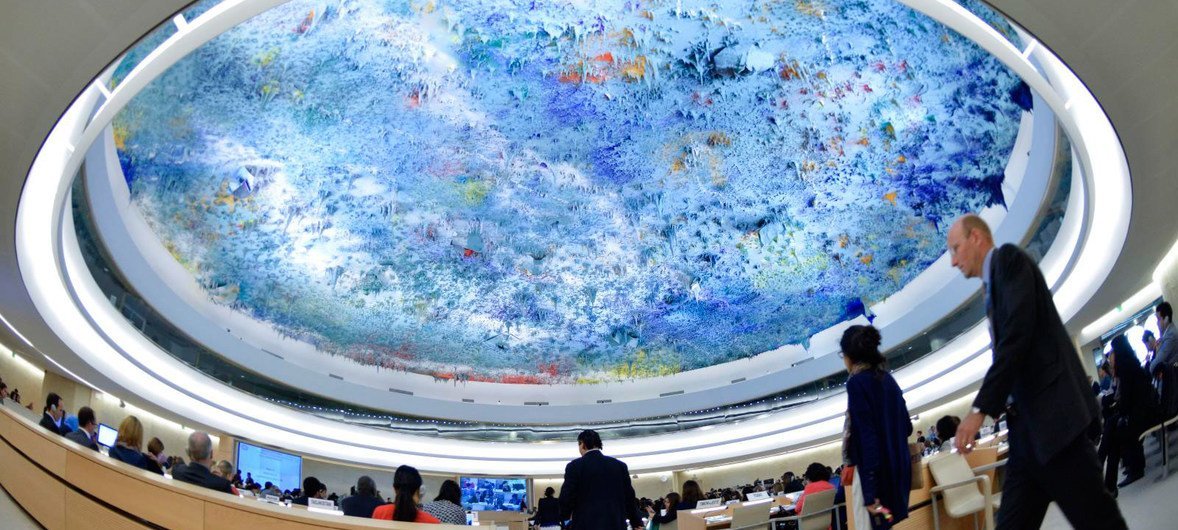




 Hans Thoolen on Human Rights Defenders and their awards