Posts Tagged ‘ISHR’

Donovan Ortega, young Human Rights Defender from Mexico

February 5, 2022

We try to defend happiness from a principle of reality” – Donovan Ortega, Human Rights Defender.
Donovan Ortega is a human rights defender from Mexico who participated in the 2021 online edition of ISHR’s Human Rights Defender Advocacy Programme (HRDAP).
Donovan is responsible for the international advocacy agenda at the Fray Francisco de Vitoria Human Rights Center in Mexico, and had the opportunity to do advocacy activities at the Human Rights Council in the framework of Mexico’s Universal Periodic Review (UPR).

In this short video, he explains how his work will help to achieve his objectives and vision in the future.

Mauricio Ochieng – transgender human rights defender from Kenya

December 14, 2021

Mauricio Ochieng‘ is a transgender activist and a SOGIESC human rights defender from the Western part of Kenya. In this short video, posted by the ISHR, he explains how his work will help to fight discrimination, achieve equality and create a better future for transgender people in Kenya. “So I saw the need of engaging different activists and human rights defenders across the region to make sure that this kind of arrest should not happen to anybody because of their gender identity or sexual orientation.”

https://ishr.ch/defender-stories/human-rights-defenders-story-mauricio-ochieng-from-kenya/

Apply now for ISHR’s Human Rights Defender Advocacy Programme 2022

December 10, 2021

If you are you a human rights defender keen to use the UN you would do well to apply to the 2022 edition of ISHR’s flagship training the Human Rights Defender Advocacy Programme (HRDAP).

After two successful online editions in 2020 and 2021, ISHR has launched the call for applications for the third online edition which will take place remotely between 4 April and 24 June 2022. [for last year’s see: https://humanrightsdefenders.blog/2019/11/07/applications-now-open-for-ishrs-2020-training-for-human-rights-defenders/]

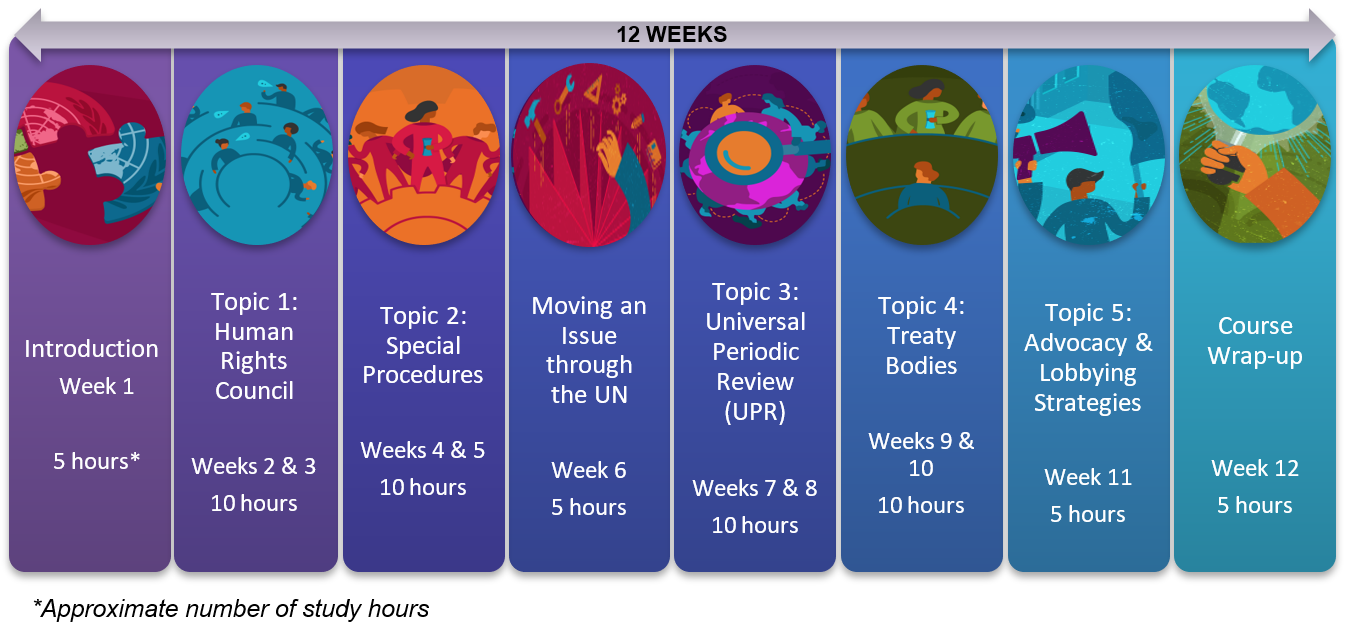
The course equips human rights defenders with the knowledge and skills to integrate the UN human rights system into their existing work at the national level in a strategic manner, and provides an opportunity for participants to prepare for and engage in lobbying and advocacy activities at the UN with the aim to effect change back home.

Applications for HRDAP22 will remain open until Monday 3 January 2022.

The 12-week course allows defenders to continue their vital work on the ground, while diving into the inner workings of each key UN human rights mechanism, and gaining first-hand experience from advocates and UN staff on how civil society can strategically engage in the international human rights space.  

By participating in HRDAP, defenders:

  1. Gain knowledge and tools, which they can use to ensure their voice is central in international human rights decision-making
  2. Explore and compare the benefits of engagement with the Human Rights Council, the Special Procedures, the OHCHR, the UPR and the Treaty Bodies, and examine how they can use them to bolster their work at the national level
  3. Develop strategies and lobbying techniques to increase the potential of their national and regional advocacy work

During the last training, 19 human rights defenders from 17 countries took part in the programme. At the end of the training, 100% of those surveyed were satisfied with the programme, with 82% indicating they were “very satisfied”. Find out more about what they learnt here.

This programme is directed at experienced human rights defenders in non-governmental organisations, with existing advocacy experience at the national level and some prior knowledge of the international human rights system. ISHR supports, and promotes solidarity with and between, defenders working in the following areas or contexts, which we recognise as intersectional and interdependent:

  1. Equality, dignity and non-discrimination
  2. Environmental justice and sustainability
  3. International accountability for the repression of human rights defenders
  4. Transparency and rule of law

Download the HRDAP22 Programme Description to find out more and apply before Monday 3 January 2022!

What are the next steps?

https://ishr.ch/latest-updates/hrdap-2022-apply-now-for-ishrs-training-for-human-rights-defenders/

Profile of Rosana Lezama Sanchez from Venezuela

October 27, 2021

The International Service for Human Rights published on 30 September 2021 “Human rights defender’s story: Rosana Lezama Sanchez from Venezuela”.

What is needed from the international community in general, and from within the UN, is a concrete, coherent and unified voice in favour of the protection of human rights defenders, the safeguard of the fundamental liberties, the civic space and human dignity,” says Rosana Lezama Sanchez, a law student in Venezuela working with three national human rights organisations.

Rosana Lezama is a law student in Venezuela working with three national human rights organisations: Centro para los Defensores y la Justicia (CDJ) / Observatorio Venezolano de Conflictividad Social (OVCS) / Centro de Derechos Humanos de la Universidad Católica Andrés Bello (CDH-UCAB). Her work includes the protection of human rights defenders, issues of transitional justice, rule of law, the right to peaceful assembly, and State repression. In this video, Rosana talks about her vision for the future and her work to achieve it.

Rosana was also a participant in ISHR’s Human Rights Defender Advocacy Programme (HRDAP) and ISHR Academy in 2021. 

https://ishr.ch/defender-stories/human-rights-defenders-story-rosana-lezama-sanchez-from-venezuela/

48th session of the Human Rights Council: outcomes

October 19, 2021

On 11 October 2021 14 NGOs shared reflections on the key outcomes of the 48th session of the UN Human Rights Council, as well as the missed opportunities to address key issues and situations [See also: https://humanrightsdefenders.blog/2021/09/13/human-rights-defenders-issues-in-the-48th-session-of-he-un-human-rights-council/]:

We welcome the adoption of the resolution on the establishment of the UN Special Rapporteur on human rights and climate change, who will focus on the interdependence between human rights, a healthy environment, and combating climate change and we welcome the Council’s historic recognition of the human right to a clean, healthy and sustainable environment. These are vital steps towards addressing the climate crisis and achieving environmental justice.

Ensuring a safe and enabling environment for civil society participation at the national and international levels is essential.

We welcome the adoption by consensus of the resolution on cooperation with the UN in the field of human rights, in particular the invitation to the Secretary-General to submit his annual reprisals report to the General Assembly, which will ensure greater attention to the issue and contribute to a more coherent system-wide response across the UN.

We express concern over the reclassification of NGO written statements submitted to the 48th session of the HRC from Agenda Item 4 to Agenda Item 3 without informing or consulting with the submitting organizations, and without transparency for the reasons or scope of this reclassification.

We welcome that the resolution on equal participation in political and public affairs puts an important focus on the context of elections and on the impact of COVID-19, underscoring the importance of protecting civil society participation at every level  as part of an effective response to the pandemic, in post-pandemic recovery and as a vital component of democratic electoral processes. We regret that, in this and other resolutions, there has been systematic pushbacks against the inclusion of references to children’s right to participate in public affairs, in particular girls, in contravention of international human rights standards.

We also welcome the resolution on privacy in the digital age. Among other issues, the resolution responds to recent Pegasus revelations and includes new commitments on the use of privately-developed surveillance tools against journalists and human rights defenders. It is now essential that the Council goes further and champions the call made by various UN human rights experts to implement a global moratorium on the sale, export, transfer, and use of private surveillance technology without proper human rights safeguards. We also welcome new language in the text on privacy violations and abuses arising from new and emerging technologies, including biometric identification and recognition technologies. In future iterations of the text, we encourage the core group to go further in calling for a ban on technologies that cannot be operated in compliance with international human rights obligations.

With the withdrawal of the resolution on the realisation of a ‘better life’, we are glad to see that the Council’s mandate and resources will not be diverted to efforts that would distract from its core work or dilute human rights standards.

We regret that it was not possible to schedule the briefing by the Peacebuilding Commission (PBC) as per resolution 45/31 – and look forward to future opportunities for exchanges between the HRC and the PBC to learn from one another in efforts to address common contemporary challenges.

We deplore the abandonment of the Yemeni people by the HRC member States who did not support the renewal of the Group of Eminent Experts on Yemen. This failure of the HRC gives the green light to all parties to the conflict to continue their campaign of death and destruction in Yemen. We demand an international criminal investigative mechanism. Anything less is unacceptable.

We regret that the HRC has not responded to the calls of civil society and the evidence of widespread violations in countries including China, Egypt and Saudi Arabia where the situations manifestly warrant the establishment of international investigation and accountability mechanisms.

The establishment of a Special Rapporteur on the situation of human rights in Afghanistan supported by additional and dedicated expertise in OHCHR should bring much needed scrutiny. While we are disappointed that the Council did not establish the full-fledged investigative and monitoring mechanism that the situation warrants, we hope this decision represents a first step towards a stronger response to ensure accountability for human rights violations and crimes under international law in Afghanistan.

While the extension of international scrutiny in Burundi, including through ongoing documentation of violations, is welcome, we regret the absence of a clear strategy post-Commission of Inquiry. As the Burundian government continues to reject cooperation with the Council and its mechanisms and to deny violations, and given that the newly-created Special Rapporteur will not have access to the country for the foreseeable future, it is vital for the Council to rely on benchmarks to design the next steps of its action on, and engagement with, Burundi. We thank the COI for its important work since 2016. It has set the bar high for investigative mechanisms.

We welcome the extension of the mandate of the Special Rapporteur on the situation of human rights in Cambodia with a mandate to provide an additional oral update to the Council. However, the resolution falls short of the minimum action required to credibly address the increasing regression in democratic space and civil and political rights and to put in place necessary measures to create an environment conducive for free, fair and inclusive elections in 2022 and 2023, including mandating enhanced monitoring and reporting by the High Commissioner.

More than four years after the beginning of the conflict in the North-West and South-West regions in Cameroon, we deeply regret States’ failure, once again, to collectively address the country’s human rights crisis. As other international and regional bodies remain silent, the Council has a responsibility to act, including through the creation of an investigative and accountability mechanism. 

We welcome the renewal of the mandate of the Fact-Finding Mission (FFM) on Libya but regret that the mandate has only been extended for a 9-month period. The severity of ongoing and past violations and abuses in Libya, including war crimes, requires an FFM with a sustained and properly resourced mandate.

We welcome a second joint statement on Nicaragua, and urge concerned States to step up collective action in light of increasing repression ahead of the November 7 elections. Should the Government not revert course, it is fundamental that the Council takes stock and provides an adequate, strong response, including the establishment of an international mechanism at its 49th session.

We welcome the High Commissioner’s oral updates on the Philippines.  While the UN Joint Program on Human Rights (UNJP) might provide a framework for improvements, we remain concerned that the UN Joint Programme on Human Rights is instrumentalized by the Government only to please the international community. The national accountability mechanism fails to show meaningful progress. We continue to urge the Council to consider establishing a Commission of Inquiry on the Philippines, to eventually start the long-overdue independent and transparent investigation into the human rights violation in the country.

We welcome the robust resolution that extends the mandate of the Independent Expert on Somalia for a further year. 

While human rights advancements since 2019 in Sudan should be recognized, Sudan still faces significant human rights challenges including threats of the militarization of the State which is also the most challenging peril for women’s rights and WHRDs in Sudan. The transition is not complete, and political uncertainty remains. Against this backdrop, the Council’s decision to discontinue its formal monitoring of and reporting on Sudan is premature as the military establishment continues to pose a threat to democracy and stability in Sudan. We urge the Sudanese authorities to fully cooperate with the UN human rights system to address ongoing violations including sexual and gender based violence and the legacy of 30 years of dictatorship, including impunity for crimes under international law.

Signatories: International Service for Human Rights (ISHR), Cairo Institute for Human Rights Studies; DefendDefenders (East and Horn of Africa Human Rights Defenders Project); Commonwealth Human Rights Initiative (CHRI); FIDH; ARTICLE 19; International Commission of Jurists; FORUM ASIA; International Bar Association; Franciscans International; CIVICUS: World Alliance for Citizen Participation; Association of Progressive Communications – APC; child rights connect; Gulf Center for Human Rights

https://ishr.ch/latest-updates/hrc48-civil-society-presents-key-takeaways-from-human-rights-council/

Reprisals on the agenda of the UN and the new ISHR campaign to #EndReprisals!

September 30, 2021

On 29 September 2021 took place – in the 48th session of the UN Human Rights Council – the Interactive Dialogue on the Report of the Secretary-General on Cooperation with the United Nations, its Representatives and Mechanisms in the Field of Human Rights.

Allegations of reprisals and intimidation were documented against some 240 civil society members, activists and journalists, across 45 countries in the year up to 31 April, simply because they had been cooperating with the United Nations.  

That’s according to data from a new report presented on Wednesday to the Human Rights Council by the UN Assistant Secretary-General for Human Rights, Ilze Brands Kehris.  

Many cases were reported anonymously, because of fear of reprisal.  There were also around 50 individuals who experienced detention, while others were subjected to house arrest. 

Despite some push-back, Ms. Brands Kehris said the report “makes clear” that “the scope and severity of cases of intimidation and reprisal persist and in unacceptably high numbers.” 

The Assistant Secretary-General for Human Rights, presenting the report of the Secretary-General on cooperation with the United Nations, its representatives and mechanisms in the field of human rights, drew attention to four key trends that emerged from the report. First, in close to half of the countries mentioned in the report, she said that the United Nations had received allegations of monitoring and surveillance, both online and offline, of individuals and groups who cooperated, or attempted to cooperate, with the United Nations. Numerous cases included hacking of accounts, travel bans and other movement restrictions. Second, the United Nations saw signs of a possible pattern in several countries: China, Egypt, Iran, Saudi Arabia and Viet Nam, as well as India, Israel, Myanmar, Philippines and Venezuela. In the first five, the United Nations had identified serious issues with the detention of victims of reprisals and intimidation.

Third, some cases concerned the use of restrictive legislation that prevented or punished cooperation with the United Nations, notably on grounds of national security, including counter-terrorism measures, or based on laws governing activities of civil society organizations. Fourth, the increasingly challenging, or even at times repressive, environments for victims, human rights defenders, journalists and other civil society actors were indicated by the fact that many were deterred from providing specific details about a case, or declined to draw the United Nations’ attention altogether.

Victims of acts of reprisal and intimidation for cooperation with the United Nations continued to be subjected to serious human rights violations – in particular, arbitrary arrests and detention, but also torture and ill-treatment and, even death in custody, killing and enforced disappearances. In the digital sphere, activists and journalists had been attacked on social media after speaking at United Nations meetings and victims had been targeted for submitting information to or communicating electronically with the United Nations. While the report noted that more women were increasingly cooperating with the United Nations, including by using on-line opportunities, the price of such interactions for some included arrests and detention, harassment and intimidation, as well as stigmatisation and vilification. The United Nations could not tolerate that those who brought critical perspectives to the United Nations were silenced. More and better needed to be done to provide safe and open spaces for interaction, where those who spoke up could be heard, and could do so without fear of any sort of retribution.

Speakers regretted that the number of reprisals remained high and that the cases mentioned reflected solely the tip of the iceberg. They were worried about the continued trend of using justifications of any kind for blocking access to the United Nations as well as measures adopted in response to the COVID-19 pandemic as a pretext to stifle civil society space. Concerns were expressed about cases of intimidation and reprisals committed by Human Right Council Members, since they should uphold the highest standards in the promotion and protection of human right, especially against women. Some speakers praised the important and vital role played by civil society in promoting and advancing the global human rights agenda, including through meaningful engagement with the United Nations human rights machinery. They deplored any act of reprisal aiming to restrict or hinder the ability of individuals to access and communicate with international bodies, in particular the United Nations, its representatives and mechanisms in the field of human rights. Some speakers said that reprisals and intimidation against those who cooperated with the United Nations were an attack against the very essence and proper functioning of the United Nations system itself. They condemned any form of intimidation, harassment and reprisals, both offline and online, and called on all States to respect and protect persons cooperating with the United Nations system.

Some speakers stressed the importance of having a constructive and meaningful dialogue on any alleged cases of reprisal and called upon all to pay special attention to fulfil their responsibilities in providing credible and reliable information that should be thoroughly checked and corroborated in order to avoid reaching any false conclusions. They believed it was the mutual responsibility and duty of all stakeholders to collaborate together in order to preserve the efficiency and credibility of the United Nations human rights machinery. One speaker regretted the unfounded mentions contained in the report presented by the Assistant Secretary-General on alleged cases of reprisals. They invited the Assistant Secretary-General to address with objectivity, transparency and impartiality alleged reprisals, which could not be taken a priori as true, as they were not.

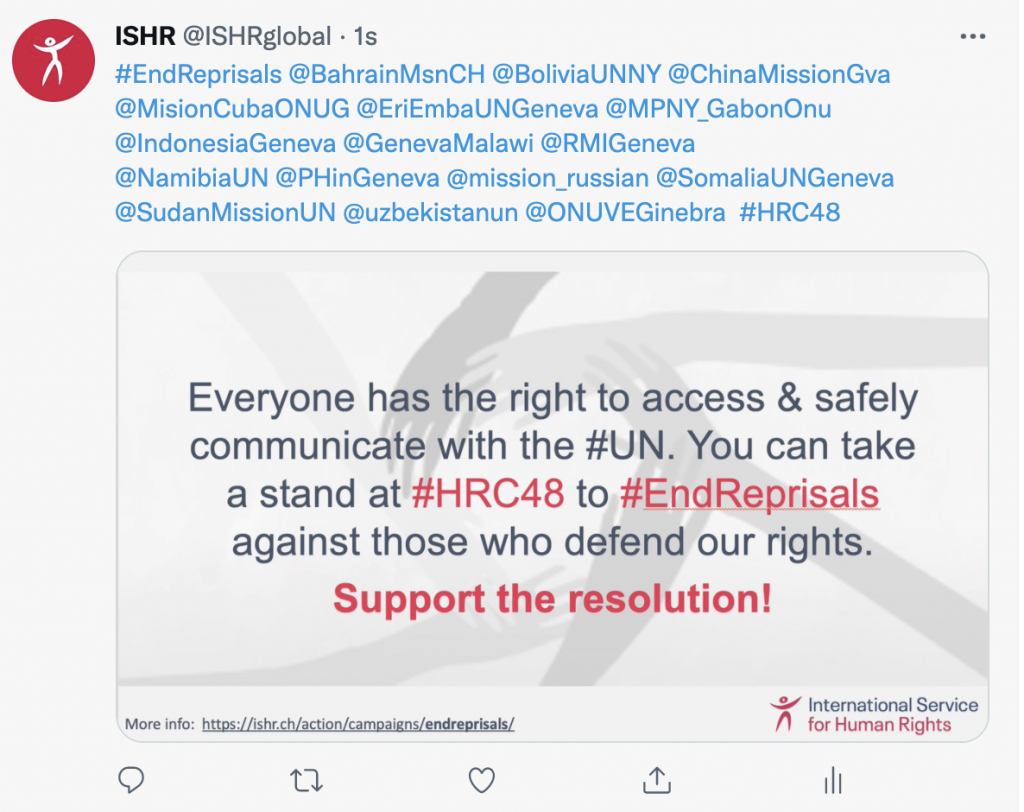
The International Service for Human Rights (ISHR) which is following this topic most keenly says: People who defend human rights must be able to access and communicate with the UN freely & safely. It started a campaign to Call on States at the UN to #EndReprisals!

Help us to #EndReprisals at the UN

Human rights defenders work to make a fairer, more sustainable and just world by promoting and protecting human rights. In considering human rights situations around the world, the UN system is profoundly dependent on the information and testimonies provided by human rights defenders who document situations, abuses and violations. They are essential voices from our communities that need to be part of the conversations at the United Nations.

This important role is a key reason why some States seek to systematically prevent defenders from engaging with UN bodies and mechanisms, and to reprimand and punish those who do engage. They do so through repressive tactics that range from administrative hurdles and travel restrictions to intimidation, imprisonment and killings. 

This is not right. Everyone has the right to access and safely communicate with the UN.

Human rights defenders must be able to share crucial information and perspectives with the UN, safely and unhindered.

Do you agree ? Then send a tweet to States at the UN and ask them to support a resolution to #EndReprisals.

Click to tweet!

We want human rights defenders to have a ‘seat at the UN table’ and be able to effectively and safely engage with UN human rights mechanisms and bodies. We want States and non-State actors to refrain from intimidating or carrying out reprisals against defenders when they engage or seek to engage with the UN. When intimidation and reprisals do occur, we want  the UN to effectively address these cases, support the victims and push for accountability and redress. 

How do we achieve this? 

The countries on the Human Rights Council have the opportunity to take a clear stand on reprisals and intimidation against those who engage with the UN.  During the 48th session of the Human Rights Council, between the 17 September and 4 October 2021, States will negotiate a resolution that aims to strengthen the response by the UN and States to intimidation and reprisals. The resolution invites the UN Secretary General to submit his annual report on reprisals and intimidation to the UN General Assembly.  Until now, the report has only been presented to the Human Rights Council. The General Assembly is the main policy-making forum of the UN and all 193 States are represented there. Reprisals and intimidation related to cooperating with the UN is a serious system-wide issue and having it discussed at the General Assembly amongst all Member States is crucial to effectively preventing and addressing it. We are calling on States, through meetings, letters and on social media to support the resolution and resist any efforts to undermine and weaken it.

States must take a clear and public position at the UN against intimidation and reprisals and hold their peers to account. Every year the UN Secretary-General publishes a report on incidents of reprisals and intimidation. That report will be discussed at the Human Rights Council on 29 September 2021. We therefore also call on governments States to take a stand during the discussion, publicly condemn reprisals and intimidation against those who engage with the UN, and raise specific cases of victims. 

What you can do? 

Together we can make sure a strong resolution on reprisals is adopted and push for everyone at the UN to take this issue seriously. This is a crucial step to #EndReprisals. Click on the image below before 4 October to send a tweet to States on the Human Rights Council who have not been supportive of this issue in the past and call on them to support the resolution. 

Click to tweet!

If you prefer to write or engage directly with States representatives, here you can find an advocacy kit with a draft email, as well as their addresses and twitter contacts

https://reliefweb.int/report/world/high-commissioner-human-rights-council-has-given-disturbing-diagnosis-human-rights

https://news.un.org/en/story/2021/09/1101722

https://ishr.ch/action/campaigns/endreprisals/

Human Rights Defenders issues in the 48th session of he UN Human Rights Council

September 13, 2021

The International Service for Human Rights (HRC) published again it – as usual – very useful Guide to the next (48th) Session of the UN Human Rights Council, from 13 September to 8 October 2021. Here is an overview of some of the key issues on the agenda directly affecting human rights defenders. Stay up-to-date: Follow @ISHRglobal and #HRC48 on Twitter, and look out for their Human Rights Council Monitor and during the session. [for last year’s, see: https://humanrightsdefenders.blog/2021/06/22/key-issues-affecting-hrds-in-47th-session-of-un-human-rights-council-june-2021/

Thematic areas of interest

Reprisals

On 29 September, the Assistant Secretary General Ilze Brands Kehris for Human Rights will present the Secretary General’s annual report on Cooperation with the United Nations, its representatives and mechanisms in the field of human rights (also known as ‘the Reprisals Report’) to the Council in her capacity as UN senior official on reprisals. The presentation of the report will be followed by a dedicated interactive dialogue, as mandated by the September 2017 resolution on reprisals. ISHR remains deeply concerned about reprisals against civil society actors who engage or seek to engage with UN bodies mechanisms. We continue to call for all States and the Council to do more to address the situation. The dedicated dialogue provides a key opportunity for States to raise concerns about specific cases of reprisals, and demand that Governments provide an update on any investigation or action taken toward accountability. An increasing number of States have raised concerns in recent sessions about individual cases of reprisals, including in Egypt, Nicaragua, Cuba, Saudi Arabia, Malaysia, Bahrain, Yemen, Burundi, China and Venezuela, Egypt, Burundi, Lao and China,  

During the 48th session, Ghana, Fiji, Hungary, Ireland and Uruguay will present a draft resolution on cooperation with the UN. The draft resolution aims to strengthen the responses by the UN and States to put an end to acts of intimidation and reprisals. ISHR urges all delegations to support the adoption of the draft resolution and resist any efforts to undermine and weaken it.

ISHR recently launched a study analysing 709 reprisals cases and situations documented by the UN Secretary-General between 2010 and 2020. The study examines trends and patterns in the kinds of cases documented by the UNSG, how these cases have been followed up on over time, and whether reprisal victims consider the UN’s response effective. Among other things, the study found that nearly half the countries serving on the Council have been cited for perpetrating reprisals. The study found that public advocacy and statements by high level actors condemning reprisals can be one of the most effective tools to prevent and promote accountability for reprisals, particularly when public pressure is sustained over time. The study also found that, overall, the HRC Presidency appears to have been conspicuously inactive on intimidation and reprisals, despite the overall growing numbers of cases that are reported by the UNSG – including in relation to retaliation against individuals or groups in connection with their engagement with the HRC – and despite the Presidency’s legal obligation to address such violations. The study found that the HRC Presidency took publicly reported action in only 6 percent of cases or situations where individuals or organisations had engaged with the HRC. Not only is this a particularly poor record in its own right, it also compares badly with other UN actors. [see also: https://humanrightsdefenders.blog/2021/05/06/un-action-on-reprisals-towards-greater-impact/]

In line with previous calls, ISHR expects the President of the Human Rights Council to publicly identify and denounce specific instances of reprisals by issuing formal statements, conducting press-briefings, corresponding directly with the State concerned, publicly releasing such correspondence with States involved, and insisting on undertakings from the State concerned to investigate, hold the perpetrators accountable and report back to the Council on action taken.

Environmental Justice

It’s high time the Council responds at this session to the repeated calls by diverse States and civil society to recognize the right of all to a safe, clean, healthy and sustainable environment and establish a new mandate for a Special Rapporteur on human rights and climate change. ISHR joins a broad civil society coalition in calling on all States to seize this historic opportunity to support the core-group of the resolution on human rights and environment (Costa Rica, Maldives, Morocco, Slovenia, Switzerland) as they work towards UN recognition of the right to environment so that everyone in the world, wherever they live, and without discrimination, can live in a safe, clean and sustainable environment. Furthermore, ISHR also joins a broad civil society coalition in calling on States to establish a new Special Rapporteur on climate change at this session. This new mandate is essential to strengthen a human rights-based approach to climate change, engage in country visits, undertake normative work and capacity-building, and further address the human rights impacts of climate responses, in order to support the most vulnerable. [see also the recent Global witness report: https://humanrightsdefenders.blog/2021/09/13/global-witness-2020-the-worst-year-on-record-for-environmental-human-rights-defenders/]

Other thematic reports

At this 48th session, the Council will discuss a range of civil, political, economic, social and cultural rights and issues through dedicated debates, including interactive dialogues with the:

  1. Special Rapporteur on the human rights to safe drinking water and sanitation
  2. Special Rapporteur on the negative impact of unilateral coercive measures on the enjoyment of human rights 
  3. Special Rapporteur on truth, justice, reparation and guarantees of non-recurrence
  4. Special Rapporteur on contemporary forms of slavery, including its causes and consequences 
  5. Working Group on Arbitrary Detention
  6. Working Group on Enforced or Involuntary Disappearances
  7. Special Rapporteur on the implications for human rights of the environmentally sound management and disposal of hazardous substances and wastes 
  8. The Special Rapporteur on contemporary forms of racism, racial discrimination, xenophobia and related intolerance

In addition, the Council will hold dedicated debates on the rights of specific groups including with the:

  1. High Commissioner on the current state of play of the mainstreaming of the human rights of women and girls in conflict and post-conflict situations
  2. Special Rapporteur  on the rights of indigenous peoples and the Expert Mechanism on the Rights of Indigenous Peoples
  3. Working Group of Experts on People of African Descent 

Country-specific developments

Afghanistan

ISHR has joined 50 civil society organisations to urge UN Member States to ensure the adoption of a robust resolution to establish a Fact-Finding Mission or similar independent investigative mechanism on Afghanistan as a matter of priority at the upcoming 48th regular session of the HRC.  We expressed profound regret at the failure of the recent HRC special session on Afghanistan to deliver a credible response to the escalating human rights crisis gripping the country, falling short of the consistent calls of the Afghanistan Independent Human Rights Commission (AIHRC), the UN High Commissioner for Human Rights, Special Procedures and civil society organisations, and does not live up to the mandate of the HRC to effectively address situations of violations of human rights, including gross and systematic violations. The Council must establish a Fact-Finding Mission, or similar independent investigative mechanism, with a gender-responsive and multi-year mandate and resources to monitor and regularly report on, and to collect evidence of, human rights violations and abuses committed across the country by all parties. 

China 

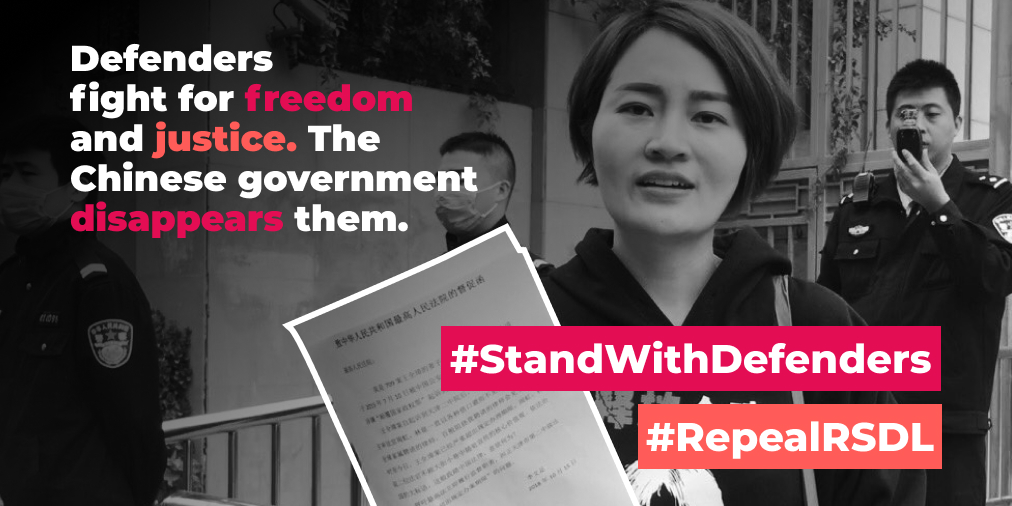
It has now been three years since High Commissioner Bachelet announced concerns about the treatment of Uyghurs and other Turkic Muslims – including mass arbitrary detention, surveillance and discrimination – in the Xinjiang Uyghur Autonomous Region of China. During the intervening three years, further substantial and incontrovertible evidence has been presented indicating crimes against humanity in the region. ISHR joins a 300+ strong coalition of global civil society that continues to call for accountability for these and other violations, including in Tibet and Hong Kong, by the Chinese authorities. At this session, ISHR highlights that arbitrary detention is – as has been noted by the Special Procedures – a systemic issue in China. Chinese authorities are long overdue in taking any meaningful action in response to the experts’ concerns, such as ceasing the abuse of ‘residential surveillance in a designated location’, or RSDL. ISHR reiterates its calls from the 46th and 47th sessions for a clearly articulated plan from OHCHR to ensure public monitoring and reporting of the situation, in line with their mandate and with full engagement of civil society, regardless of the outcome of long-stalled negotiations for High Commissioner access to the country. This would be a critical first step for future, more concrete actions that would respond to demands of victims, their families and communities, and others defending human rights in the People’s Republic of China. 

Burundi

We request the Council to continue its scrutiny and pursue its work towards justice and accountability in Burundi. The Council should adopt a resolution that acknowledges that despite some improvements over the past year, the human rights situation in Burundi has not changed in a substantial or sustainable way, as all the structural issues identified by the Commission of Inquiry on Burundi (CoI) and other human rights actors have identified since 2015 remain in place. The Council should adopt an approach that focuses on continued independent documentation on the situation of human rights in Burundi which should be carried out by the CoI, or a similarly independent mechanism or team of experts, who are solely focused on Burundi. The Council’s approach should also ensure that there is follow up to the work and recommendations of the CoI, in particular, on justice and accountability. See joint letter released ahead of the UN Human Rights Council’s 48th session.

Egypt

Despite Egypt’s assurances during the UPR Working Group in 2019 that reprisals are unacceptable, since 2017, Egypt has been consistently cited in the UN Secretary General’s annual reprisals reports. The Assistant Secretary-General raised the patterns of intimidation and reprisal in the country in the 2020 reprisals report, as well as UN Special Procedures documenting violations including detention, torture and ill-treatment of defenders. In her latest communication to the Government, the Special Rapporteur on human rights defenders highlighted the arbitrary detention of 12 defenders, including three targeted for their engagement with the UN: Mohamed Al-Baqer, human rights lawyer and Director of the Adalah Centre for Rights and Freedoms, arbitrarily detained since 29 September 2019; Ibrahim Metwally, coordinator for the Association of the Families of the Disappeared in Egypt, arbitrarily detained since 10 September 2017; and Ramy Kamel, Copitic rights activist, arbitrarily detained since 23 November 2019. Both States and the HRC Presidency should publicly follow up on these cases. Furthermore, in light of Egypt’s failure to address concerns expressed by States, the High Commissioner and Special Procedures, ISHR reiterates our joint call with over 100 NGOs on the Council to establish a monitoring and reporting mechanism on Egypt and will continue to do so until there is meaningful and sustained improvement in the country’s human rights situation. 

Nicaragua

The human rights crisis in Nicaragua has steadily deteriorated since May 2021. Given the reported lack of implementation of resolution 46/2 and the absence of meaningful engagement with the UN and regional mechanisms by the Government, stepping up collective pressure has become vital. We warmly welcome the joint statement delivered by Costa Rica on behalf of a cross-regional group of 59 States on 21 June 2021. This is a positive first step in escalating multilateral pressure. Further collective action should build on this initiative and seek to demonstrate global, cross-regional concern for the human rights situation in the country. In her oral update, the High Commissioner stressed ‘as set out in [the Council’s] latest resolution, I call on this Council to urgently consider all measures within its power to strengthen the promotion and protection of human rights in Nicaragua. This includes accountability for the serious violations committed since April 2018.’ We call on all States to support a joint statement at the 48th session of the Human Rights Council, urging the Government to implement priority recommendations with a view to revert course on the ongoing human rights crisis, and indicating clear intention to escalate action should the Nicaraguan Government not take meaningful action.

Saudi Arabia

While many of the WHRDs mentioned in previous joint statements at the Council have been released from detention, severe restrictions have been imposed including travel bans, or making public statements of any kind. Most of the defenders have no social media presence. Furthermore, COVID-19 restrictions and the G20 Summit in November 2020 coincided with a slow down in prosecutions of those expressing peaceful opinions and a decline in the use of the death penalty. However, throughout 2021 the pace of violations has resumed. This has included fresh new waves of arrests of bloggers and ordinary citizens, often followed by periods of enforced disappearance, lengthy prison terms issued against human rights defenders and prisoners of conscience, and abuse in prison, including deliberate medical neglect. In addition, despite announcing the halt of the death penalty against minors, the Saudi government recently executed someone who may have been 17 at the time of the alleged offense, and the number of executions in 2021 is already more than double the total figure for 2020. Saudi Arabia has refused to address the repeated calls by UN Special Procedures and over 40 States at the Council in March 2019, September 2019 and September 2020, further demonstrating its lack of political will to genuinely improve the human rights situation and to engage constructively with the Council. ISHR reiterates its call on the Council to establish a monitoring and reporting mechanism on the human rights situation in Saudi Arabia.

Venezuela 

With the environment becoming all the more hostile for civil society organisations in Venezuela, the Council will once again focus attention on the human rights situation in the country at the upcoming session. On 24 September, the Independent International Fact-Finding Mission will provide its second report to the Council building on its findings of likely crimes against humanity committed in the country. ISHR looks forward to making an oral statement during the dialogue with the Mission. In addition, the High Commissioner will provide an oral update on the situation in the country and the work of her office in-country, on 13 September. The Special Rapporteur on Unilateral Coercive Measures will present her report following her in-person visit to the country in February 2021. Finally, it’s expected that the report of the Secretary General on reprisals will include cases related to Venezuela. During all these opportunities to engage, States should remind Venezuela of the need to implement UN recommendations; engage with UN human rights mechanisms, including the Mission; and organise visits for Special Rapporteurs already identified for prioritisation by OHCHR. 

Yemen

ISHR joined over 60 civil society organisations to use the upcoming session of the HRC to establish an international criminally-focused investigation body for Yemen, and simultaneously ensure the continuity of the Group of Eminent Experts on Yemen (GEE) through an ongoing or multi-year mandate. In their last report, “A Pandemic of Impunity in a Tortured Land”, the UN Group of Eminent International and Regional Experts on Yemen (GEE) underscored Yemen’s “acute accountability gap”, concluding that the international community “can and should” do more to “help bridge” this gap in Yemen. They recommended that the international community take measures to support criminal accountability for those responsible for serious violations of international humanitarian law and egregious human rights abuses. In particular, they supported the “establishment of a criminally focused investigation body” (similar to the mechanisms established for Syria and Myanmar) and “stressed the need to realize victims’ rights to an effective remedy (including reparations)”.  Such a mechanism would facilitate and expedite fair and independent criminal proceedings, in accordance with international law standards, and lay the groundwork for effective redress, including reparations for victims. 

Other country situations:

The High Commissioner will provide an oral update to the Council on 13 September 2021. The Council will consider updates, reports and is expected to consider resolutions addressing a range of country situations, in some instances involving the renewal of the relevant expert mandates. These include:

  • Interactive Dialogue on the High Commissioner’s written update on Myanmar, including of Rohingya Muslims and other minorities, an interactive dialogue on the report of on the Independent Investigative Mechanism, and an Interactive Dialogue with the Special Rapporteur 
  • Oral update by the High Commissioner and enhanced interactive dialogue on the Tigray region of Ethiopia
  • Enhanced Interactive Dialogue with the Commission on Human Rights in South Sudan
  • Interactive Dialogue with the Commission of Inquiry on Syria and oral update by OHCHR on the extent of civilian casualties
  • Oral update by OHCHR and interactive dialogue on Belarus
  • Oral update by the High Commissioner on the progress made in the implementation of the Council’s 30th Special Session resolution on the Occupied Palestinian Territory, including East Jerusalem, and in Israel, and presentation of the High Commissiner’s report on allocation of water resources in Occupied Palestinian Territory, including East Jerusalem
  • Interactive Dialogue with the High Commissioner on Ukraine 
  • Enhanced Interactive Dialogue with the High Commissioner on the Democratic Republic of the Congo and on the final report of the team of international experts on the situation in Kasai
  • Enhanced Interactive Dialogue on the oral update of the High Commissioner on South Sudan
  • Interactive Dialogue with the Special Rapporteur on Cambodia and presentation of the Secretary-General’s report 
  • Enhanced Interactive Dialogue on the report of the High Commissioner on Sudan
  • Interactive Dialogue with the Independent Expert on Somalia
  • Interactive Dialogue with the Independent Expert on the Central African Republic 
  • Interactive Dialogue with the Fact-finding mission on Libya
  • Presentation of the High Commissioner’s report on cooperation with Georgia 
  • Oral update by the High Commissioner on the Philippines

#HRC48 | Council programme, appointments and resolutions

During the organisational meeting for the 48th session held on 30 August the President of the Human Rights Council presented the programme of work. It includes six panel discussions. States also announced at least 20 proposed resolutions. Read here the 87 reports presented this session. 

Appointment of mandate holders

  1. The Special Rapporteur in the field of cultural rights
  2. a member of the Working Group on the issue of human rights and transnational corporations and other business enterprises from Latin American and Caribbean States; 
  3. a member of the Working Group of Experts on People of African Descent, also from Latin American and Caribbean States (an unforeseen vacancy that has arisen due to the resignation of a current member).

Resolutions to be presented to the Council’s 48th session

At the organisational meeting on 30 August the following resolutions inter alia were announced (States or groups leading the resolution in brackets):

  1. Human rights situation in Burundi (EU)
  2. Human rights and environment (Costa Rica, Maldives, Morocco, Slovenia, Switzerland) 
  3. Cooperation with the United Nations, its representatives and mechanisms in the field of human rights  (Fiji, Ghana, Hungary, Ireland, Uruguay) 
  4. Human rights situation in Yemen (Belgium, Canada, Ireland, Luxembourg, Netherlands) 
  5. Elimination of child, early and forced marriage (Argentina, Canada  Italy, Honduras, Montenegro, Poland, Sierra Leone, Switzerland, UK, Uruguay, Zambia, Netherlands) 
  6. Technical assistance and capacity-building in the field of human rights in the Democratic Republic of the Congo (African Group) 
  7. Technical assistance and capacity-building to improve human rights in Libya (African Group)
  8. From rhetoric to reality: a global call for concrete action against racism, racial discrimination, xenophobia and related intolerance (African Group)
  9. Human rights and indigenous peoples (Mexico, Guatemala)
  10. Human rights situation in Syria (France, Germany, Italy, Jordan, Kuwait, Netherlands, Qatar, Turkey, UK, USA)
  11. Advisory services and technical assistance for Cambodia – mandate renewal (Japan) 
  12. Enhancement of technical cooperation and capacity-building in the field of human rights (Thailand, Brazil, Honduras, Indonesia, Morocco, Norway, Qatar, Singapore, Turkey)
  13. Technical assistance and capacity building to Yemen (Arab Group)
  14. Equal participation in political and public affairs (Czech Republic, Botswana, indonesia, Peru, Netherlands)
  15. Right of privacy in the digital age (Germany, Brazil, Liechtenstein, Austria, Mexico) 
  16. The question of the death penalty (Belgium, Benin, Costa Rica, France, Mexico, Mongolia, Moldova, Switzerland) 

Adoption of Universal Periodic Review (UPR) reports

During this session, the Council will adopt the UPR working group reports on Myanmar, Namibia, the Niger, Mozambique, Estonia, Belgium, Paraguay, Denmark, Somalia, Palau, Solomon Islands, Seychelles, Latvia, Singapore and Sierra Leone.

Panel discussions

During each Council session, panel discussions are held to provide member States and NGOs with opportunities to hear from subject-matter experts and raise questions. Six panel discussions are scheduled for this upcoming session:

  1. Biennial panel discussion on the issue of unilateral coercive measures and human rights
  2. Annual discussion on the integration of a gender perspective throughout the work of the Human Rights Council and that of its mechanisms
  3. Annual half-day panel discussion on the rights of indigenous peoples on the theme “Situation of human rights of indigenous peoples facing the COVID-19 pandemic, with a special focus on the right to participation” (accessible to persons with disabilities)
  4. Half-day panel discussion on deepening inequalities exacerbated by the COVID-19 pandemic and their implications for the realization of human rights (accessible to persons with disabilities)
  5. High-level panel discussion on the theme “The tenth anniversary of the United Nations Declaration on Human Rights Education and Training: good practices, challenges and the way forward” (accessible to persons with disabilities
  6. Panel discussion on the promotion and protection of human rights in the context of peaceful protests, with a particular focus on achievements and contemporary challenges (accessible to persons with disabilities)

Read here ISHR’s recommendations on the the key issues that are or should be on the agenda of the UN Human Rights Council in 2021.

https://ishr.ch/
Results of 47th session of the Human Rights Council

August 7, 2021

The ISHR and 17 other organisations (see below for their names) share reflections on the key outcomes of the 47th session of the UN Human Rights Council, as well as the missed opportunities to address key issues and situations. See also: https://humanrightsdefenders.blog/2021/06/22/key-issues-affecting-hrds-in-47th-session-of-un-human-rights-council-june-2021/

CIVIL SOCIETY PARTICIPATION

We deplore the systemic underfunding of the UN human rights system and the drive for so-called efficiency, including the cancellation of general debates in June, which are a vital part of the agenda by which NGOs can address the Council without restrictions. We call for the reinstatement of general debates at all sessions, with the option of civil society participation through video statements.  We welcome the focus of the civil society space resolution on the critical role played by civil society in the COVID-19 response, and the existential threats to civil society engendered or exacerbated by the pandemic. For the resolution to fulfil its goal, States must now take action to address these threats; while we welcome the broad support indicated by a consensus text, this cannot come at the cost of initiatives that will protect and support civil society.

HUMAN RIGHTS ONLINE

We welcome a resolution on the promotion, protection and enjoyment of human rights on the Internet and its thematic focus on bridging digital divides, an issue which has become ever-important during the COVID-19 pandemic. We urge all States to implement the resolution by taking concrete measures to enhance Internet accessibility and affordability and by ceasing Internet shutdowns and other disruptions, such as website blocking and filtering and network throttling. In future iterations of the text, we encourage the core group to go further in mentioning concrete examples that could be explored by States in adopting alternative models for expanding accessibility, such as the sharing of infrastructure and community networks.  We welcome the resolution on new and emerging digital technologies and human rights, which aims to promote a greater role for human rights in technical standard-setting processes for new and emerging digital technologies, and in the policies of States and businesses. While aspects of the resolution risk perpetuating “technology solutionism”, we welcome that it places a stronger focus on the human rights impacts of new and emerging digital technologies since the previous version of the resolution, such as introducing new language reiterating the importance of respecting and promoting human rights in the conception, design, use, development, further deployment and impact assessments of such technologies.

GENDER EQUALITY AND NON-DISCRIMINATION

We are concerned by the increasing number of amendments and attempts to weaken the texts. We are particularly concerned by the continued resistance of many States to previously adopted texts and States’ willful misinterpretation of key concepts related in resolutions on human rights in the context of HIV and AIDS, accelerating efforts to eliminate all forms of violence against women and girls: preventing and responding to all forms of violence against women and girls with disabilities and preventable maternal mortality and morbidity and human rights on maternal morbidities. We deplore the instrumentalising of women’s rights and sexual and reproductive health and rights. We encourage States to center the rights of people most affected and adopt strong texts on these resolutions. We welcome the resolution on menstrual hygiene management, human rights and gender equality as the first step in addressing deep-rooted stigma and discrimination. We urge all States to address the root causes for the discrimination and stigma on menstruation and its impact.

RACIAL JUSTICE AND EQUALITY

The High Commissioner’s report highlighted the long-overdue need to confront legacies of slavery, the transatlantic trade in enslaved Africans and colonialism and to seek reparatory justice. We welcome the historic consensus decision, led by the Africa Group, to adopt a resolution mandating an independent international expert mechanism to address systemic racism and promote racial justice and equality for Africans and people of African descent. The adoption of this resolution is testament to the resilience, bravery and commitment of victims, their families, their representatives and anti-racism defenders globally. We deplore efforts by some Western States, particularly former colonial powers, to weaken the text and urge them to now cooperate fully with the mechanism to dismantle systemic racism, ensure accountability and reparations for past and present gross human rights violations against Black people, end impunity for racialized State violence and address the root causes, especially the legacies of enslavement, colonialism, and the transatlantic trade in enslaved Africans.

MIGRANTS RIGHTS

Whilst we welcome the return of a resolution on human rights of migrants, we deplore the continued failure of the Council to respond meaningfully to the severity and global scale of human rights violations at international borders including connected to pushbacks. International borders are not and must not be treated as places outside of international human rights law. Migrants are not and must not be treated as people outside of international human rights law. Expressions of deep concern in interactive dialogues must be translated into action on independent monitoring and accountability.

ARMS TRANSFERS AND HUMAN RIGHTS

We welcome the resolution on the impact of arms transfers on human rights and its focus on children and youth. However, we note with concern the resistance of the Council to meaningfully focus on legal arms transfers beyond those diverted, unregulated or illicitly transferred. The Council should be concerned with all negative human rights impacts of arms transfers, without focusing only on those stemming from diversion and unregulated or illicit trade.

CLIMATE CHANGE

We are disappointed that the resolution on human rights and climate change fails to establish a new Special Rapporteur. However, we welcome the increasing cross regional support for a new mandate. It is a matter of urgent priority for the Council to establish it this year.

COUNTRY SPECIFIC SITUATIONS

ALGERIA

While special procedures, the OHCHR and multiple States have recognized the intensifying Algerian authorities’ crackdown on freedom of association and expression, the Council failed to act to protect Algerians striving to advance human rights and democracy.

BELARUS

We welcome the renewal of the mandate of the UN Special Rapporteur on Belarus. Given the ongoing human rights crisis in Belarus, the mandate complements the OHCHR Examination in ensuring continuous monitoring of the situation, and the mandate remains an accessible and safe channel for Belarusian civil society to deliver diverse and up-to-date information from within the country.

CHINA

The Council has once again failed to respond meaningfully to grave human rights violations committed by Chinese authorities. We reiterate our call on the High Commissioner and member States to take decisive action toward accountability.

COLOMBIA

We are disappointed that few States made mention of the use of excessive force against protestors in a context of serious human rights violations, including systemic racism, and urge greater resolve in support of the right to freedom of peaceful assembly in the country and globally

ETHIOPIA

The resolution on Ethiopia’s Tigray region, albeit modest in its scope and language, ensures much-needed international scrutiny and public discussions on one of Africa’s worst human rights crises. We urge the Ethiopian government to engage ahead of HRC48.

ERITREA

We welcome the extension of the mandate of the Special Rapporteur on Eritrea, as scrutiny for violations committed at home and in Tigray is vital.

NICARAGUA

We warmly welcome the joint statement delivered by Canada on behalf of 59 States, on harassment and detention of journalists, human rights defenders, and presidential pre-candidates, urging Nicaragua to engage with the international community and take meaningful steps for free and fair elections. States should closely monitor the implementation of resolution 46/2, and send a strong collective message to Nicaragua at the 48th session of the Council, as the Council should ‘urgently consider all measures within its power’ to strengthen human rights protection in the country.

PALESTINE

We welcome the Special Rapporteur’s report that “Israeli settlements are the engine of this forever occupation, and amount to a war crime,” emphasizing that settler colonialism infringes on “the right of the indigenous population […] to be free from racial and ethnic discrimination and apartheid.” We also reiterate his recommendation to the High Commissioner “to regularly update the database of businesses involved in settlements, in accordance with Human Rights Council resolution 31/36.”

THE PHILIPPINES

While acknowledging the signing of the Joint Human Rights Programme with the UN OHCHR, the Government of the Philippines fails to address the long-standing issues on law enforcement and accountability institutions, including in the context of war on drugs. We continue to urge the Council to launch the long-overdue independent and transparent investigation on the on-going human rights violations.

SYRIA

We welcome mounting recognition for the need to establish a mechanism to reveal the fate and whereabouts of the missing in Syria, including by UN member states during the interactive dialogue on Syria, and the adoption of the resolution on Syria addressing the issue of the missing and emphasizing the centrality of victim participation, building on the momentum created by the Syrian Charter for Truth and Justice.

VENEZUELA

In the context of the recent arbitrary detention of 3 defenders from NGO Fundaredes, we welcome the denunciation by several States of persistent restrictions on civil society and again for visits of Special Rapporteurs to be accepted and accelerated.

*American Civil Liberties Union, Association for Progressive Communications, Cairo Institute for Human Rights Studies, Centro de Estudios Legales y Sociales (CELS), Center for Reproductive Rights, Child Rights Connect, CIVICUS: World Alliance for Citizen Participation, Commonwealth Human Rights Initiative, Conectas Direitos Humanos, Egyptian Initiative for Personal Rights, FIDH, Franciscans International, Human Rights House Foundation, International Bar Association’s Human Rights Institute, International Commission of Jurists, International Lesbian and Gay Association, International Service for Human Rights, US Human Rights Network

https://ishr.ch/latest-updates/hrc47-civil-society-presents-key-takeaways-from-human-rights-council/

China in the 47th session of the UN Human Rights Council: Uyghurs and jailed human rights defenders

July 6, 2021

In a statement 22 June 2021, the ISHR on behalf of over 20 civil society organisations called for unequivocal action by the High Commissioner to monitor and report on the human rights situation in China. The violations targeting Uyghurs and other Turkic Muslims, the groups underlined, have been determined by Amnesty International and Human Rights Watch to constitute crimes against humanity.

‘The Special Procedures and treaty bodies have repeatedly, for the last five years, raised serious concerns about the human rights situation in China,’ said Sarah M Brooks, ISHR programme director. ‘But despite these efforts, little has changed. More is needed.’

The gravity of the situation was underlined also by a joint statement delivered by Canada, on behalf of more than 40 states, earlier today. Listing a range of concerns about treatment of Uyghurs, those governments pressed China to allow ‘immediate, meaningful and unfettered’ access to the region for the High Commissioner.

The weight of evidence and the gravity of allegations of crimes against humanity against Uyghurs demands that the High Commissioner commence remote monitoring and public reporting immediately. The full statement can be accessed here

Anadolu on 29 June 2021 reported that Mary Lawlor, the UN special rapporteur on human rights defenders, says she has countless reports about mistreatment of activists in China.

The UN’s independent expert on human rights defenders said that she feared activists in China were arbitrarily sentenced to long prison terms, house arrest and tortured and also denied access to medical treatment, their lawyers and families.

Condemning human rights defenders…to long terms in prison for their peaceful human rights work, abusing them in custody and failing to provide them with adequate medical care…cannot continue,” Mary Lawlor, the UN special rapporteur on human rights defenders, said in a statement.

She said she had “countless reports” pointing to the mistreatment of human rights defenders in Chinese custody, which is “endemic.”

Geneva’s Chinese mission spokesman Liu Yuyin later refuted Lawlor’s criticism, accusing the UN expert of having “deliberately smeared China, spread disinformation and interfered in China’s judicial sovereignty under the pretext of human rights.”

“The individuals that Ms. Lawlor and other special procedure mandate holders mentioned have committed a series of crimes such as inciting subversion of state power and splitting the state. The facts are clear and the evidence is solid,” he added.

Lawlor said the treatment meted out to those jailed may amount to torture and other cruel and inhuman treatment, despite a plethora of recommendations from the UN mechanisms over the years, including from the Committee Against Torture.

Some defenders, such as Gao Zhisheng, have been “forcibly disappeared,” while others such as Guo Hongwei have died in prison, she said. Lawlor said she knew of at least 13 human rights defenders sentenced on “spurious charges” such as “picking quarrels” or “provoking trouble” to 10 years or more in prison for peacefully defending the rights of others. Among them is Qin Yongmin, sentenced to 35 years in prison for work that included promoting engagement with the UN, and Ilham Tohti, a “moderate scholar” serving a life sentence.

“Tohti was arbitrarily arrested, allegedly tortured and sentenced to life after a closed-door trial. He was not allowed any family visits and no information has been provided by Chinese authorities since,” said Lawlor. He is a much-recognised defender: https://www.trueheroesfilms.org/thedigest/laureates/37AE7DC4-16DB-51E9-4CF8-AB0828AEF491

Human rights defender Chen Xi, serving 10 years in prison, has chronic enteritis, which causes dehydration and fever. In winter, he contracts severe frostbite on his hands, ears and abdomen, and in his lifetime, he has been sentenced to 23 years in prison, said the expert.

https://www.ishr.ch/news/hrc47-governments-ngos-call-high-commissioner-step-work-protect-uyghurs

https://www.globalvillagespace.com/un-expert-raises-concern-on-jailed-activist-in-china/

Profile of Barun Ghimire, human rights defender from Nepal

July 5, 2021

The rights of migrant workers is a global problem, and actors in different jurisdictions have to come together to make a difference in this particular area,” says Barun Ghimire, a human rights lawyer based in Kathmandu, Nepal. “And we need to create a collective narrative that is based on a rights-based approach of migrant workers”.

Barun Ghimire is a human rights lawyer and programme manager at the Law and Policy Forum for Social Justice. Barun works for the protection and defence of the rights of migrant workers in Kathmandu, Nepal. 

In this video, Barun explains his work in relation to the rights of migrants, as well as how Covid-19 has affected this group, which is facing even stronger vulnerability. He also calls the international community and other actors to come together and help improve the situation of migrants workers as well as their families.  To achieve this goal, it is necessary to create a new narrative and defend and promote the rights of migrant people in vulnerable situations, especially during and after Covid-19.

Barun was also a participant in ISHR’s Human Rights Defender Advocacy Programme (HRDAP) in 2020.

https://www.ishr.ch/news/human-rights-defenders-story-barun-ghimire-nepal