Posts Tagged ‘Iran’

What the Human Rights Council did on HRDs in March 2015

April 7, 2015

For those (few, I hope) who do not regularly read the Human Rights Monitor of the ISHR, here is a wrap-up of the 28th session of the Human Rights Council in relation to human rights defenders:ISHR-logo-colour-high

5 Resolutions adopted: Read the rest of this entry »

Interview with Karim Lahidji on the 36th anniversary of the Islamic regime in Iran

February 18, 2015

11 February 2015 marks the 36th anniversary of the Islamic regime in Iran. Karim Lahidji, President of the International Federation for Human Rights (FIDH), answers questions about freedoms and liberties in Iran today. The very experienced and well-respected Iranian exile recalls briefly the historical background and states the record on freedom of religion in Iran: Read the rest of this entry »

UN General Assembly votes today on Iran: Joint appeal by NGOs

November 18, 2014

Today – 18 November 2014 – the General Assembly is due to vote on a Resolution concerning Iran. Although the human rights situation in Iran has shown some slight improvements since Rouhani became president, it seems that hardliners keep firm control over the judiciary and thus over the life and well-being of human rights defenders. Also Iran continues to deny access to the UN Special Rapporteur on Iran. The Joint Letter to the Member States of the UN General Assembly signed by numerous NGOs makes the point quite clearly:

see also: https://thoolen.wordpress.com/tag/iran/

Text of Letter:

Your Excellency:

We, the undersigned human rights and civil society organizations, write to urge your government to vote in favor of Resolution A/RES/69/L on the promotion and protection of human rights in the Islamic Republic of Iran. This vote will take place during the 69th session of the United Nations General Assembly, scheduled to take place in the Third Committee this Tuesday, 18 November 2014.

This resolution provides a crucial opportunity to reiterate ongoing human rights concerns identified by members of the international community and Iranian civil society. Sixteen months into the presidency of Hassan Rouhani, who won the election after promising to improve the human rights situation, those living in Iran continue to suffer violations at the hands of the authorities. Indeed, during last month’s Universal Periodic Review (UPR) of Iran at the UN Human Rights Council, several UN member states expressed dismay at Iran’s lack of progress over the last four years, including on many of the recommendations Iran had accepted during the first UPR cycle in 2010.

Human rights abuses are deeply rooted in Iran’s laws and policies, both of which pose serious obstacles for much-needed rights reforms to take place. On 28 October 2014, the UN Special Rapporteur on the situation of human rights in the Islamic Republic of Iran, Dr. Ahmed Shaheed, reported that human rights in the country “remain of concern” and detailed violations of the rights to life, the rights to freedom from torture and discrimination based on gender, religion, and ethnicity, the rights to education, health, fair trial, freedom of expression, association, assembly, religion and belief, as well as limits on the press. Despite its 2005 standing invitation to the United Nations’ Special Procedures, Iran remains unwilling to accept their repeated requests to visit the country. Furthermore, the authorities have systematically worked to undermine the efforts of civil society in the country to promote and protect international human rights standards.

The continued attention of the international community is required if the Islamic Republic of Iran is to end this pattern of abuse and noncooperation. UN member states must continue to express their concern about these abuses. In doing so, member states provide support to civil society as well as to those in the Iranian government who wish to see improvements in the human rights situation. By voting in favour of the resolution, states will encourage Iran’s government to prioritize human rights and to advance and protect the rights of Iran’s population.

Since the beginning of 2014, Iran has executed at least 600 people. This figure includes juvenile offenders and individuals who may have been executed for peacefully exercising their rights including the rights to freedom of expression, association, and assembly. Death sentences in Iran are often imposed without any regard to internationally prescribed safeguards. Authorities executed Reyhaneh Jabbari on 25 October 2014, despite repeated calls from UN human rights mechanisms, including the Office of the High Commissioner for Human Rights, to stay the execution out of concern that her prosecution had failed to meet international fair trial standards. Moreover, the vast majority of executions in Iran are implemented for offenses, such as drug-related offenses, that do not meet the threshold of the “most serious crimes.” Iranian law maintains the death penalty for consensual sexual relations between adults, including for adultery and same-sex relations, and for financial crimes. Iran continues to execute in public despite calls by the UN Secretary-General on authorities to halt the practice.

Executions based on national security-related charges that may be politically motivated appear to be carried out disproportionately against members of Iran’s ethnic minority communities, including Ahwazi Arabs, Kurds, and Baluchis. Rights groups are concerned about the situation of 33 Sunni Kurds, most of whom are held in Raha’i Shahr Prison in Karaj and face imminent risk of execution. The men were sentenced to death following grossly unfair trials during which basic safeguards, such as the right to defense, were disregarded, in contravention of international fair trial standards.

The Special Rapporteur and human rights organizations continue to express grave concerns for scores of activists, journalists, human rights defenders, women’s rights activists, trade unionists, students, and members of ethnic and religious minorities currently languishing in arbitrary detention. Iranian detainees and prisoners consistently face the risk of torture or other ill-treatment, including prolonged solitary confinement and denial of medical treatment. They are regularly denied access to legal counsel or fair trials. Many detainees are prosecuted under vaguely defined national security charges, which are regularly used to silence peaceful expression, association, assembly, and religious activity. In July 2014, for example, journalist Sajedeh Arabsorkhi began serving a one-year imprisonment sentence on the charge of “spreading propaganda against the system.” It appears that the charge is related to her open letters to her father, Feyzollah Arabsorkhi, a former deputy trade minister and a senior member of a reformist political party, during the time he was imprisoned.

Systematic discrimination against women in law and practice also merits serious concern. In the past few years, the authorities have increasingly put in place discriminatory measures aimed at restricting women’s access to higher education, including gender quotas, and have adopted new population policies resulting in women’s restricted access to sexual health and family planning programs. The authorities continue to persecute those protesting such discriminatory laws and practices, often by accusing them of vaguely worded national security offences. This month, for example, Ghoncheh Ghavami learned of her one-year prison sentence and two-year travel ban by a Tehran court on the charge of “spreading propaganda against the system”. She was arrested after she protested a ban on women watching matches at sports stadium during a game played by Iran’s national volleyball team.

This resolution on the promotion and protection of human rights in Iran of the 69th UNGA is a vital opportunity for the international community to give expression to human rights concerns. The resolution welcomes recent positive statements by Iranian officials, while effectively drawing attention to the broad range of ongoing violations. Moreover, the resolution calls on authorities to cooperate with all UN Special Procedures, including the Special Rapporteur on the situation of human rights in the Islamic Republic of Iran.

Substantive cooperation with UN mechanisms and tangible rights improvements in line with Iran’s international legal obligations are the real measures of progress. By voting in favor of this resolution on 18 November, the UN General Assembly will send a strong signal to the government and all Iranians that the world is invested in genuine human rights improvements in the country.

Letter to the Member States of the UN General Assembly.

Glimmer of hope for Sotoudeh and Iran crashed by Tehran Bar Association

October 21, 2014

The glimmer of hope for Nasrin Sotoudeh and Iran which I saw in my post of 6 September [https://thoolen.wordpress.com/2014/09/06/glimmer-of-hope-in-iran-nasrin-sotoudehs-ban-to-practice-overruled/] seems to have been crushed already. Yesterday, 20 october, the Observatory for the Protection of Human Rights Defenders, the joint programme of FIDH and OMCT, has received new information that on 18 October 2014, a three-member disciplinary investigation panel of Tehran’s Bar Association has now suspended Nasrin Sotoudeh’s law license for three years, based on a complaint filed by the Islamic Revolution Court’s Prosecution Office (unlike the first disciplinary panel of the Tehran Bar Association which rejected a similar request). Read the rest of this entry »

Canadian web defenders high up among Tulip nominations

October 12, 2014

ASL19, founded by Iranian-Canadian Ali Karimzadeh Bangi, develops ways for Iranians to counter the country's “Great Firewall” of censorship.

(ASL19, founded by Iranian-Canadian Ali Karimzadeh Bangi, develops ways for Iranians to counter the country’s “Great Firewall” of censorship – COLIN MCCONNELL / TORONTO STAR)

Olivia Ward, Foreign Affairs Reporter of the Toronto Star, reports on 9 October 2014 that a Canadian-based human rights research and technology lab is shortlisted for the Netherlands Human Rights Tulip award which is partly crowdsourced, with voting on the Internet (now closed). An international jury headed by former UN Special Rapporteur Frank La Rue will make the final selection from six top picks, three of them chosen by the public. [see: http://www.trueheroesfilms.org/thedigest/award/tulip-award and https://thoolen.wordpress.com/2013/10/17/tulip-award-introduces-novelty-on-line-voting-for-human-rights-prize/]

The prize aims to reward groups that use innovation to promote human rights. Of the 30 shortlisted candidates, ASL19, founded by Iranian-Canadian Ali Karimzadeh Bangi, is running fourth.

The remainder of the article sets out how the group helps Iranians to evade censorship.

Canadian web defenders up for top human rights award | Toronto Star.

Kirk-Rubio Bill in US Senate risks to undermine Human Rights Defenders in Iran

September 14, 2014

A marvelous example of how (bellicose) sanctions can harm human rights defenders is to be found in this piece of 10 September by

Tyler CullisTyler CullisJamal Abdi.

Under the title Kirk-Rubio Bill Would Undermine Human Rights in Iran, Torpedo Nuclear Talks”, they argue that a new Senate bill (fortunately still pending) that purports to support human rights in Iran would actually ratchet up broad sanctions on the Iranian population, bolster Iranian hardliners, and even directly target some Iranian human rights defenders. The bill would impose new sanctions under the guise of human rights and threaten to derail the nuclear talks while undermining human rights defenders inside Iran. Considering that Senator Kirk has previously called on the US to collectively punish and “take the food out of the mouths” of Iranians, this charade of human rights concern is especially callous.

As Iranian human rights defenders [including MEA Laureate Emad Baghi] continue to speak out against sanctions and in support of current diplomatic efforts, the Kirk-Rubio bill would escalate Iran’s isolation through broad sanctions and risk torpedoeing nuclear talks. If passed, the legislation would be a gift to hardline political factions in Iran, who themselves are widely suspected of  ratcheting up abuses to gain the upper-hand against moderates seeking to implement internal reforms and secure a diplomatic deal with world powers.


Kirk-Rubio Bill Would Undermine Human Rights in Iran, Torpedo Nuclear Talks – National Iranian American Council NIAC.

Glimmer of hope in Iran: Nasrin Sotoudeh’s ban to practice overruled

September 6, 2014

NASRIN_SOTOUDEH_PORTRAIT The International Campaign for Human Rights in Iran reports on 5 September that the Lawyers’ Court denied the Tehran Prosecutor’s Office request for the suspension of Sotoudeh’s license to practice, and stated in a ruling that, “In the opinion of the Lawyer’s Court, Ms. Sotoudeh’s temporary suspension was unwarranted and will be overruled”. According to this ruling Ms. Sotoudeh can continue her profession as a lawyer says her husband Reza Khandan on Facebook.

[Prominent lawyer and human rights defender Nasrin Sotoudeh – final nominee of the MEA in 2012 and winner of the Sakharov prize- was arrested on September 4, 2010. A lower court sentenced her to 11 years in prison, a 20-year ban on her legal practice, and a 20-year ban on foreign travel, on charges of “acting against national security,” “propaganda against the state,” and “membership in the Human Rights Defenders Center.” An appeals court reduced her sentence to six years in prison and a 10-year ban on her legal practice. After almost three years in prison, Nasrin Sotoudeh was released on September 18, 2013. Upon release, Nasrin Sotoudeh objected to the ruling by the Tehran Revolutionary Court to suspend her license to practice law, asserting the Court’s lack of jurisdiction over this matter. She subsequently renewed her license and announced that she would continue her legal practice. However, judges have refused to allow her to appear in court to represent her clients.]

via Ten-Year Ban on Nasrin Sotoudeh’s Legal Practice Overruled: Prominent Human Rights Lawyer Returns to Law : International Campaign for Human Rights in Iran.

for more posts on Sotoudeh: https://thoolen.wordpress.com/tag/nasrin-sotoudeh/


Retaliation against Iranian Human Rights Defender for meeting with Ashton

June 12, 2014

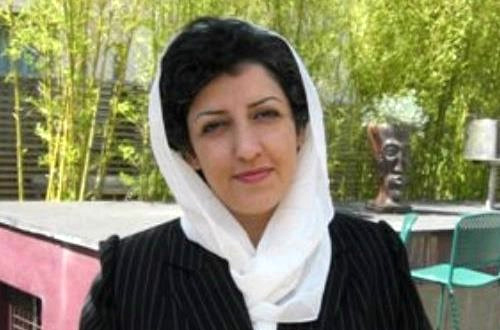
Reprisals are not limited to human rights defenders cooperating with the UN. Narges Mohammadi, a prominent human rights defender in Iran, told the NGO ‘International Campaign for Human Rights in Iran’ that new charges have been brought against her stemming from her March 8, 2014 meeting with the EU foreign policy chief Catherine Ashton. Mohammadi was charged with “propaganda against the state” and “collusion against national security” for her meeting with Ashton at the Austrian Embassy in Tehran. She was released on $10,000 bail. [Mohammadi was one of several women activists who accepted an invitation to meet the EU foreign policy head during her March visit to Tehran. The meeting took Iranian officials by surprise and unleashed a flurry of criticism by conservatives who described the meeting as “foreign interference in Iranian domestic affairs” and labeled the Iranian participants as foreign collaborators.]

Mohammadi stated: “I have been ‘charged’ with every single civil activity I have engaged in since my release from Zanjan Prison in August 2012, such as participating in gatherings on women’s rights, air pollution, and [Rouhani’s] Citizenship Rights Charter. I was also accused of honoring families of political prisoners at meetings, or attending a gathering with Gonabadi Dervishes in front of the Prosecutor’s Office, or giving interviews to media outside Iran. I told them there that when you fit all my civil activities into these two charges, it means that I must remain silent and still.”

Mohammadi was arrested in 2009 and charged with “assembly and collusion against national security,” “membership in the Defenders of Human Rights Center,” and “propaganda against the state.” She was first sentenced to 11 years in prison, but Branch 54 of the Tehran Appeals Court reduced her sentence to six years in prison. She was released in 2013 for medical reasons after a severe illness in Zanjan prison.

Prominent Rights Defender Faces New Charges for Her Meeting with Ashton : International Campaign for Human Rights in Iran.

Iranian human rights defender Nasrin Sotoudeh speaks to the Guardian

June 2, 2014
The Guardian of 1 June 2014 contains a long and fascinating interview with Nasrin Sotoudeh, the Iranian lawyer who won the Sacharov Prize and was a Final Nominee of the MEA in 2012. The now freed Iranian human rights lawyer – in an interview with Simon Tisdall – speaks out in a moving way about why she is a human rights defender and how she coped with the separation from her family. The title of the piece: ‘I’ve a bad feeling about the women I left behind’ is telling of her concern for others.
Nasrin Sotoudeh

(Nasrin Sotoudeh with her son, Nima, after being freed from prison last year. Photograph: Behrouz Mehri/AFP/Getty Images)

“Nasrin Sotoudeh’s seven-year-old son, Nima, wants to go out to play. His mother, the leading Iranian human rights lawyer whose arbitrary imprisonment in 2010 sparked an international campaign to free her, has been talking for ages. Nima is bored. At the door to their apartment in north-west Tehran, Nasrin takes Nima in her arms. The boy stands on tip-toe to embrace his mother. They hold each other for a minute or more. It is as though the two cannot bear to be separated..…….”. For more: Freed Iranian rights lawyer: Ive a bad feeling about the women I left behind | World news | theguardian.com.

other posts on Nasrin: https://thoolen.wordpress.com/tag/nasrin-sotoudeh/

Facebook bad for your health in Iran

May 29, 2014

Facebook

(Photograph: Dave Thompson/PA)

The Guardian reports that eight people have been jailed in Iran on charges including blasphemy and insulting the country’s supreme leader on Facebook. The opposition website Kaleme reported that two of the eight, identified as Roya Saberinejad Nobakht, 47, from Stockport (Iranian/UK national), and Amir Golestani, each received 20 years in prison and the remaining six – Masoud Ghasemkhani, Fariborz Kardarfar, Seyed Masoud Seyed Talebi, Amin Akramipour, Mehdi Reyshahri and Naghmeh Shahisavandi Shirazi – between seven and 19 years. They were variously found guilty of blasphemy, propaganda against the ruling system, spreading lies and insulting Ayatollah Ali Khamenei.

[The relevant backdrop is that there is a growing row between President Hassan Rouhani’s administration, which favours internet freedom, and hardliners wary of relaxing online censorship. Last week, Iran’s national TV paraded six young Iranians arrested for performing a version of Pharrell William’s hit song Happy and posting a video of it on the internet. The arrests caused global outrage and prompted Rouhani to react in their support. The performers were soon released, but the video’s director, Sassan Soleimani, remains in jail. The arrests highlighted the challenges Rouhani faces in delivering his promise of allowing people greater access to social networks such as Facebook and Twitter, which remain blocked in Iran….In recent weeks Rouhani has stepped up his rhetoric in support of internet freedom. “The era of the one-sided pulpit is over,” he said recently at a conference in Tehran, endorsing social networks and asking his communications minister to improve bandwidth in the country. He intervened when the authorities blocked access to the mobile messaging service WhatsApp, ordering the ban to be lifted. Iran’s judiciary, which is a political institution independent of the government, has since moved to challenge Rouhani’s intervention and orderered WhatsApp to be banned. Until two years ago, Iran’s ministry of information and communications technology was in charge of policing the country’s online community, but in 2012 Khamenei ordered officials to set up the supreme council of virtual space, a body that is closer to the supreme leader than to the government. This means Rouhani is not the sole decision-maker in the future of Iranian web. With help from Iran’s cyberpolice, the judiciary and the Revolutionary Guards have identified and arrested Iranians because of web-related issues, including several employees of the Iranian gadget news website Narenji, who have been in jail since December.]

via Briton among eight jailed in Iran for web insults | World news | The Guardian.