The Advent of Universal Protection of Human Rights – Theo van Boven and the Transformation of the UN Role
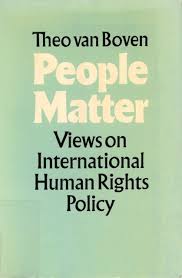
In this ‘biography’ Bertie Ramcharan tells the story of Theo van Boven’s dynamic and courageous leadership to develop UN protection. Van Boven has been a life-long scholar and practitioner of human rights. He served in the Dutch Ministry of Foreign Affairs, represented The Netherlands in the UN Commission on Human Rights, served as an expert in its Sub-Commission on Human Rights, and also on the Committee on the Elimination of Racial Discrimination. He was the Director of the UN Human Rights secretariat from 1977 to 1982, and later served as Registrar of the International Criminal Tribunal for the Former Yugoslavia and for Rwanda, and as UN Special Rapporteur against Torture.
As Director of the UN Human Rights secretariat, Professor van Boven built up the protection capacity of the United Nations piece by piece and thereby transformed the UN’s role. He initiated every protection mechanism in use at the United Nations today. He was thus ‘the father‘ of the contemporary system of United Nations protection.
This book is a study of leadership and strategy. If one is to be able to deepen the protection capacity of the UN in the future, it is crucial to understand how the foundations were laid. This book, based on the personal papers of Professor van Boven and of the author, who was his Special Assistant, tells the story of his remarkable leadership of the UN Human Rights secretariat. Published by Springer – ISBN 978-3-030-02221-1
In 1982 Meulenhoff published Theo’s speeches on the occasion of his forced departure from the UN. In the preface I tried to explain the how and why.
Now the NGO “Asian Human Rights Commission” (AHRC) published its own view in a Statement of 23 January 2019 entitled : “New imagination needed to understand global human rights situation.“.
In a ground-breakingjoint statement on 23 May 2018, the UN Special Rapporteur on human rights defenders and representatives from all of the UN human rights treaty bodies have affirmed that all forms of abuse or undue restrictions against human rights defenders constitute violations of States’ parties obligations towards the realisation of rights set out in the Treaties. The statement was adopted on the eve of the 30th annual meeting of Treaty Body chairs on the occasion of a consultation initiated by the UN Special Rapporteur on human rights defenders and ISHR in New York.
“This pronouncement constitutes a major step forward in the protection of human rights defenders and lays the ground for substantial enhancement of treaty body recommendations and jurisprudence in that area” says ISHR head of treaty body advocacy Vincent Ploton.
The statement reiterates the vital and central role played by human rights defenders to promote and support the application of the fundamental rights enshrined in the core international human rights treaties. It further contextualises the importance and relevance of the UN Declaration on human rights defenders which “reaffirms, is underpinned by, and elaborates binding human rights obligations, including rights set out in the Treaties, and is relevant to the interpretation and implementation of the Treaties”.
The Committee on economic, social and cultural rights (CESCR) was the first to adopt in 2016 a statement affirming that threats and violence against human rights defenders amount to violations of the Covenant. “We are delighted that fellow Treaty Bodies are now following suit with the adoption of this new joint statement”, says ISHR’s New York Director Madeleine Sinclair.
Marking the 20th anniversary of the UN Declaration on human rights defenders, the statement confirms that the core international human rights treaties and the Declaration prohibit discrimination against individuals and groups who champion such human rights norms and standards. It reaffirms that all individuals should be able to engage with treaty bodies free from all forms of interference, intimidation, abuse, threat, violence, reprisal, or undue restriction. It concludes with a series of practical measures that States ought to take to guarantee the protection of human rights defenders, including the adoption of specific legislation to protect and recognise defenders, and the revocation of legislation which restricts or hinders their work.
[The statement was endorsed by the Committee on Enforced Disappearances, the Special Rapporteur on Human Rights Defenders, and the following Treaty Body members in their individual capacity: Virginia Brás-Gomes, CESCR Chair; Dalia Leinarte, CEDAW Chair; Noureddine Amir, CERD Chair; Ahmadou Tall, CMW Chair; Danlami Basharu, CRPD Vice-Chair; Felice Gaer, CAT Vice-Chair; Marcia Kran, HRCttee member; Olga Khazova, CRC Vice-Chair and Satyabhooshun Gut Domah, SPT member.]
A group of 18 NGOssent a joint letter to US ambassador to the United Nations Nikki Haley in response to a letter sent by Haley to the organisations after the US withdrawal from the UN Human Rights Council. On 17 May 2018, 18 NGOs had sent private letters to Member States urging them to not support the US proposal to reopen the Council’s institutional framework at the General Assembly. Read the joint letter below.
Although the Human Rights Council is not perfect, it does play an essential role. It makes a significant contribution to strengthening human rights standards, providing protection and justice to victims, and promoting accountability for perpetrators. The Council and its mechanisms have played a key role in securing the freedom of detained human rights defenders, and investigating rights violations in Syria, Yemen, Burundi, Myanmar, South Sudan, Sri Lanka and North Korea, to name but a few. It continues to address thematic issues of global concern including non-discrimination, freedom of expression online and offline, freedom of assembly, housing, migration, counterterrorism, and the protection of the rights of women, rights of LGBTI people, and rights of people with disabilities.
As you know, we are independent organizations that do not work on behalf of any government. We focus on building support for policies we believe will better the lives of those most affected by abuse – which does mean we are sometimes opposed to proposals laid out by certain governments, or the proposed means of pursuing them, especially when we believe such an initiative could be more harmful than not. With regard to the Council, our goal continues to be strengthening and supporting reform efforts that are ongoing in Geneva to ensure that they are informed by the experience and expertise of national and regional level actors, including rights-holders, human rights defenders and other civil society actors, victims, survivors (and their representatives).
We are committed to the international system, including the Human Rights Council, and to ensuring the system is fit for the purpose of promoting and protecting human rights. We will continue to work towards those goals.
Signatories:
Amnesty International
ARTICLE 19
Asian Forum for Human Rights and Development (Forum-Asia)
Asian Legal Resource Centre (ALRC)
Cairo Institute for Human Rights Studies
Centro de Estudios Legales y Sociales (CELS)
Child Rights Connect
Conectas Direitos Humanos
DefendDefenders (the East and Horn of Africa Human Rights Defenders Project)
Human Rights Watch
International Commission of Jurists (ICJ)
International Federation for Human Rights (FIDH)
International Humanist and Ethical Union (IHEU)
International Lesbian, Gay, Bisexual, Trans and Intersex Association (ILGA)
The Geneva Academy’s new publication Optimizing the UN Treaty Body System outlines a series of recommendations related to the functioning of United Nations Treaty Bodies (UN TBs) to prepare for the upcoming review of UN TBs by the UN General Assembly in 2020. ‘While the last words will remain with states and TBs members, this report can provide a basis for negotiations and the blueprint for future changes’ underlines Felix Kirchmeier, co-coordinator of the Academic Platform on Treaty Body Review 2020.
This work is the outcome of a three-year consultative process to collect academic inputs and ideas via the creation of an academic network of independent researchers, a call for papers, a series of regional consultations, annual and expert conferences, as well as ongoing interactions with key stakeholders: states, treaty bodies, national human rights institutions, civil society organizations and the Office of the UN High Commissioner for Human Rights and other parts of the UN. ‘The issue of TBs’ reform is almost as old as the system itself: many proposals that are on the table today were already formulated before. Our academic contribution takes these proposals out of their political context by analysing them, their relevance, their likelihood to be implemented and the possible need for updates’ adds Felix Kirchmeier.
The final objective of the publication and of the entire process is to make the TB system ‘fit for purpose’ by outlining measures to optimize its functioning, effectiveness and efficiency while safeguarding its key protection role and maintaining the existing legal framework.
‘While the publication provides several detailed recommendations, it notably call for a consolidated state report and a single review, or a semi-consolidated state report and two clustered reviews; the implementation of incremental changes in the TBs working methods; and a consolidation of TBs’ structure in terms of membership, as well as financial and substantial support’ underlines Kamelia Kemileva, Executive Manager at the Geneva Academy and co-coordinator of the Academic Platform on Treaty Body Review 2020.
The 45-page study contains many interesting ideas and I copy here only one of particular interest which is to improve the system’s accessibility and visibility:
To meet its purpose, TB output must be accessible and visible. Many contributors expressed concern on this account. Modern technology offers easy solutions, some of which have been implemented but could be taken further.
Contributors unanimously welcomed the webcasting of country examinations and consider it an important improvement. However, they recommended that webcasts should be broadcast and archived in all working languages, as well as the language in which the review is held – the only one that is available at the moment. They also suggested that webcasts should be easier to access via links on the OHCHR home page in each country and via each committee’s session web page.
Many contributors also called for a readily accessible, up-to-date, comprehensive database of TB jurisprudence. It was noted that information on TB findings is currently hard to find (when available), that the database is incomplete, and that decisions are not always available in all UN official languages. Accessing and understanding TB jurisprudence remains a challenge for all stakeholders – whether they are victims of human rights violations, TB members, states, national and regional human rights mechanisms, civil society organizations, or scholars.
Contributors recommended that more user-friendly fact sheets and jurisprudence summaries should be prepared to disseminate TB findings and other important developments.
To increase visibility, contributors proposed maintaining dedicated pages on social media platforms. This would bring TBs’ work to the attention of larger audiences, assist Committees to update information on their activities, and create followers. More generally, the system’s achievements and impact on rights-holders should be better documented and publicized.
Success in passing the “win-win resolution” in the UN Human Rights Council [https://humanrightsdefenders.blog/2018/03/26/chinas-win-win-resolution-gets-the-votes-in-the-un-council/], is just the visible part of a larger and more ominous assault on the human rights system as it has been built up (however incomplete and painstaking) over the last decades. Julian Borger in the Guardian of 27 March 2018 (“China and Russia accused of waging ‘war on human rights’ at UN”) describes how the two countries lobbied to cut funding for human rights monitors and for a senior post dedicated to human rights work. This all seems to fit very well with the trend started in 2016 and which I tried to describe in early 2017 in a series of posts, of which the last one was: https://humanrightsdefenders.blog/2017/02/24/2017-10-need-to-reset-for-human-rights-movement/.
The Guardian piece makes states – inter alia- the following: According to diplomats and activists China and Russia have used the UN budget panel (5th committee) to cut funding for human rights monitors and for a senior post in the secretary general’s office in NY. The cut, first reported in Foreign Policy, means that the human rights work that was the responsibility of that official will be spread around other posts with other priorities.
Last week, Zeid was due to address the UN security council on plight of civilians in Syria but before he began, Russia called a procedural vote to stop him speaking on the grounds that the council was not the proper forum for discussing human rights. “The fifth committee has become a battleground for human rights,” Louis Charbonneau, the UN director for Human Rights Watch, was quoted in the Guardian. “Russia and China and others have launched a war on things that have human rights in their name.”
“China has real political momentum at the UN now,” Richard Gowan, a UN expert at the European Council for Foreign Relations, said. “It is now the second biggest contributor the UN budget after the US, and is increasingly confident in its efforts to roll back UN human rights activities. It is also pushing its own agenda – with an emphasis on ‘harmony’ rather than individual rights in UN forums. And a lot of countries like what they hear.”
A western diplomat at the UN conceded that human rights were losing ground at the UN, in part because China had become a more assertive voice, prepared to lead lobbying campaigns, and because Beijing is increasingly leveraging its vast and growing investments in the developing world to win votes for its agenda at the UN.
David Petrasek, Associate Professor at the Graduate School of Public and International Affairs, University of Ottawa, wrote on 8 February 2018 an interesting piece under the title: “Another one bites the dust—what future for the UN High Commissioner for Human Rights?” (Openglobalrights.org) and wondered whether the early departure—yet again—of a UN High Commissioner for Human Rights doesn’t suggests it’s time to re-think the office’s priorities and strengthen its mandate (rather than more activism).
The piece is worth reading and poses well the difficult dilemma:
Petrasek states: Zeid’s untimely departure therefore begs the question—is the job do-able? In fulfilling the mandate, must the UN’s top human rights official so annoy governments that they cut short her or his tenure? Is that a price worth paying? It would certainly strengthen the High Commissioner’s position if they were given a single six or seven-year term, getting out from under the Damoclean sword of renewal at four years.
Zeid has been a prominent and eloquent spokesperson in defense of human rights,..Clearly, this won him few friends among powerful countries, the US included. But it’s less clear that his outspokenness made much difference. It’s worth asking: should the High Commissioner prioritize speaking out even if the cost of doing so is to lose the political support necessary to fulfil her or his full mandate? The High Commissioner is not only the UN’s human rights conscience. She or he is also tasked with co-ordinating the UN’s myriad human rights activities, pursuing an active—and perhaps less public—human rights diplomacy, and leading efforts to reform often overlapping, outdated and cumbersome UN procedures.
The idea for a UN High Commissioner for Human Rights was put forward by civil society in the lead up to the Vienna World Conference on Human Rights in 1993. Many functions were suggested for inclusion in the High Commissioner’s mandate, but the non-negotiable core demand was simple—the High Commissioner must have an overarching duty to promote and protect human rights anywhere.…The High Commissioner was, therefore, a giant leap forward—personified in the post was the UN’s general human rights mandate, grounded in the UN Charter. She or he was now able to act whenever and wherever rights were at risk.
This general protection mandate has produced real results: High Commissioners have put neglected crises on the global agenda; there’s been a much-needed shift to the field of human rights staff, and the High Commissioner has amplified the voices of local human rights defenders.
Yet, today the High Commissioner’s voice is often only one amongst many. There are almost 60 independent human rights monitors (“Special Rapporteurs”) .. in 1993, there were barely a dozen. Similarly, today UN human rights inquiries are investigating crimes against humanity and war crimes in five countries, and eight investigations have concluded in the past decade. The Council regularly meets in emergency session, there is an International Criminal Court, and the UN Security Council often (if inconsistently) includes human rights concerns in its resolutions, a rare occurrence in 1993. The Security Council has also authorized the deployment of over 1,000 human rights staff to UN peacekeeping missions. They too issue reports and statements of concern, as increasingly does the UN Secretary-General.
In short, the gap identified in 1993 has narrowed considerably, at least as concerns the UN pointing a finger at human rights abusers.
But other gaps remain and widen. The growth in UN human rights mechanisms has not been accompanied by an obvious growth in their efficiency or effectiveness. Indeed, multiple and overlapping procedures are weighing down what should be a nimble and responsive system. Further, although at least since the late 1990s High Commissioners have prioritized putting staff in the field, more than half remain in Geneva and New York; in contrast, the UN Refugee Agency has 87% of its staff in the field. This imbalance seriously undermines the Office’s ability to pursue an effective human rights diplomacy. And the relative weakness and underfunding of the High Commissioner’s Office means it is hard-pressed to co-ordinate UN system-wide approaches. It has been over a decade since it has proposed any significant reforms.
The conclusion might seem obvious—the High Commissioner should spend less time speaking out and more time strengthening and reforming both his Office and the UN human rights system. A less public profile, in this view, might produce less resistance to much-needed reform—diplomacy succeeding where activism fails.
Of course, it’s not that simple. Many states are reluctant to see the UN’s human rights efforts strengthened, regardless of what the High Commissioner is saying or not. And though a more ‘diplomatic’ approach might suit some states, it will at the same time alarm civil society and activists who look to the High Commissioner for leadership. Even if states might ignore denunciations from Geneva or New York, an activist High Commissioner undoubtedly gives comfort and support to beleaguered human rights defenders.
There are no easy answers to the question posed. Perhaps it’s simply unfortunate but necessary that the High Commissioner’s mandate is a poisoned chalice—do the job well, and you’re unlikely to be re-appointed. However, given the many changes since 1993, it is worth reflecting more deeply on how this mandate might be credibly pursued so that High Commissioners depart when the job is done, not when states determine their time is up.
A single, lengthier term is one proposal, but others might be considered, including better co-ordination between the High Commissioner and the Council’s independent experts to leverage more diplomatic space. The current High Commissioner will depart in August and the key players are already politicking to appoint a successor. If she or he is not to meet a familiar fate, then now is the time to re-think priorities and strengthen the mandate.
(David Petrasek was formerly Senior Policy Director and Special Adviser to the Secretary-General of Amnesty International. David has worked on human rights and conflict resolution issues with the UN, foundations and NGOs for over 25 years.)
Each year, the United Nations Special Rapporteur on human rights defenders receives a large number of submissions regarding individual cases of concern. Only a fraction of these cases are addressed by the rapporteur’s communications procedure. Unlike outgoing communications,incoming cases are not publicly reported or even systematically registered by the UN. Furthermore, the criteria for the selection of cases (beyond basic eligibility) remain largely undefined. The consequences of case selection, whether according to explicitly stated rules or implicitly applied criteria, are quite significant. Currently, only 550 individual cases can be addressed by the mandate each year. [there are tremendous constraints in terms of staff.] Given this reality, the case selection process defines which types of defenders under pressure receive the UN’s attention and legitimization – and which do not. Nobody can determine with certainty how many cases have fallen through the cracks over the 17 years the mandate has been in existence, or who tends to benefit from the UN’s attention and who is often overlooked.
Based on extensive empirical research, this policy paper provides the first systematic analysis of all communications sent out to date. It finds credible indications that outgoingcommunications have a positive impact, but also demonstrates that there is room for improvement. In particular, a more deliberate prioritization of cases is required to ensure that the mandate can serve its protective purpose more effectively under the constraints of very limited resources.
The policy paper advocates an approach that aims to maximize the potential impact on the individual defender while systematically striving for a balanced documentation of cases. It makes an evidence-based argument for a number of adjustments and offers actionable recommendations to the mandate as well as to the Office of the High Commissioner for Human Rights, to states, and to civil society actors regarding how to enhance the effectiveness of UN efforts to protect threatened human rights defenders around the world.
Among others, the paper recommends that the use of joint special procedures communications should be the exception rather than the rule, that states’ replies to cases should be systematically monitored and the respective data publicly released, and that more concerted international action should be taken with regards to ‘softer’ forms of repression.
If you are – or know – a human rights defender keen to increase interaction with the UN system, apply now for the 2018 edition of ISHR’s Human Rights Defenders Advocacy Programme!
The training will take place in Geneva between 11 and 22 June 2018 and provides defenders with opportunities to put their advocacy skills directly into action at the 38th session of the UN Human Rights Council. Get a taste of the programme here.
ISHR’s Human Rights Defender Advocacy Programme (HRDAP) equips defenders with the knowledge and skills to make strategic use of the international human rights system. It also provides an opportunity for participants to directly engage in lobbying and advocacy activities at the UN level to effect change on the ground back home.
As well as receiving training modules on all the UN human rights mechanisms from a range of experts, participants will also have the opportunity to build networks in Geneva and around the world, carry out lobbying of UN member States and UN staff, and learn from peers from a range of regions working on a range of human rights issues.
At the end of last year’s training, 100% of participants were either “very satisfied” or “satisfied” with the overall programme, and they all also felt that they would be able to apply what they learnt to their own day-to-day work. ISHR will look to build upon this success in 2018.
Participants will take part in:
A short online learning component, prior to face-to-face training, to enable you to consolidate your existing knowledge and develop your advocacy objectives;
Intensive training in Geneva during June, to coincide with the 38th session of the Human Rights Council. The training will focus on ways to effectively use international human rights mechanisms and to influence outcomes;
Specific advocacy at Human Rights Council sessions and other relevant meetings, with regular feedback and peer education to learn from the experiences, including expert input from leading human rights advocates.
This programme is directed at experienced human rights defenders in non-governmental organisations, with existing advocacy experience at the national level and some prior knowledge of the international human rights system.
If you are interested in applying for ISHR’s training programme, please read the call for applications to check that you comply with the requirements, and apply before midnight Geneva time on 11 December 2018. The link to the online application form can be found in the call for applications. For more information, write to hrdap2018@ishr.ch.
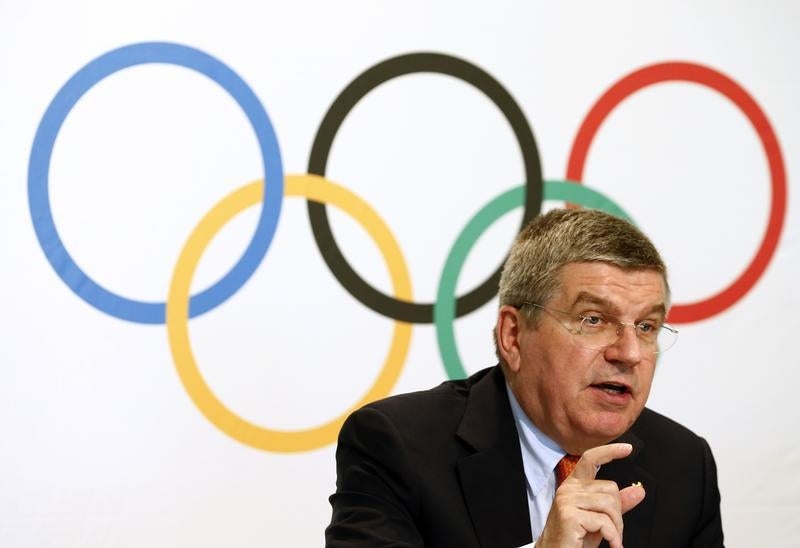
For the first time, the IOC has included explicit reference to the United Nations Guiding Principles on Business and Human Rights (UNGP), which outline the human rights responsibilities of businesses, as well as references to anti-corruption standards. The Guiding Principles explain how commercial enterprises should assess human rights risks, take effective steps to avoid human rights problems, and ensure a remedy for abuses that occur in spite of those efforts.
“This is an important step by the IOC for the future,” said Sharan Burrow, International Trade Union Confederation general secretary. “Implementing the UN Guiding Principles across all major global sporting events could help break the cycle of human rights abuses, and this example from the IOC should be applied to all such events, starting now.”
The SRA’s mission is to ensure that sports bodies and mega-sporting events respect human rights, the environment, and anti-corruption requirements at all stages of the process. “Time after time, Olympic hosts have gotten away with abusing workers building stadiums, and with crushing critics and media who try to report about abuses,” said Minky Worden, director of global initiatives at Human Rights Watch. “The right to host the Olympics needs to come with the responsibility not to abuse basic human rights.”
The revised contract requires host cities to “protect and respect human rights and ensure any violation of human rights is remedied in a manner consistent with international agreements, laws and regulations applicable in the Host Country and in a manner consistent with all internationally-recognized human rights standards and principles, including the United Nations Guiding Principles on Business and Human Rights, applicable in the Host Country.”
“If implemented, the revised Host City Contract will help ensure that Olympic hosts respect ‘human dignity’ as required by the Olympic Charter,” said Brendan Schwab, head of UNI World Athletes. “This should have a ripple effect across all mega-sporting events such as the World Cup, and wherever abuses tied to sport still occur.”
[Key provisions of the revised Olympic Host City Contract include:
13. Respect of the Olympic Charter and promotion of Olympism
13.1. The Host City, the Host NOC and the OCOG undertake to abide by the provisions of the Olympic Charter and the IOC Code of Ethics and agree to conduct their activities related to the organisation of the Games in a manner which promotes and enhances the fundamental principles and values of Olympism, as well as the development of the Olympic Movement.
13.2. Pursuant to their obligations under §13.1, the Host City, the Host NOC and the OCOG shall, in their activities related to the organisation of the Games:
a. prohibit any form of discrimination with regard to a country or a person on grounds of race, colour, sex, sexual orientation, language, religion, political or other opinion, national or social origin, property, birth or other status;
b. protect and respect human rights and ensure any violation of human rights is remedied in a manner consistent with international agreements, laws and regulations applicable in the Host Country and in a manner consistent with all internationally-recognised human rights standards and principles, including the United Nations Guiding Principles on Business and Human Rights, applicable in the Host Country; and
c. refrain from any act involving fraud or corruption, in a manner consistent with any international agreements, laws and regulations applicable in the Host Country and all internationally-recognised anti-corruption standards applicable in the Host Country, including by establishing and maintaining effective reporting and compliance.
13.3. The IOC, through its Coordination Commission referred to in §27, shall establish a reporting mechanism to address the obligations referred to in §13.1 and §13.2 in connection with the activities of the Host City, the Host NOC and the OCOG related to the organisation of the Games.
15. Sustainability and Olympic legacy
15.1. The Host City, the Host NOC and the OCOG undertake to carry out all activities foreseen under the HCC in a manner which embraces sustainable development and contributes to the United Nations’ Sustainable Development Goals.]



.jpg)


 Hans Thoolen on Human Rights Defenders and their awards