Posts Tagged ‘illegal detention’

The sad story of Nasta Loika, human rights defender behind bars in Belarus

November 7, 2023

A group of human rights organisations, including the World Organisation Against Torture (OMCT) and FIDH (see Co-signatories), called on 27 October 2023 for the release of the human rights defender Nasta Loika after more than 396 days of her detention.

Nasta Loika is a prominent human rights defender, one of the founders of Human Constanta. For years, she has been promoting human rights education, raising awareness about the repressive “anti-extremist” legislation in Belarus, and protecting foreign citizens and stateless persons in Belarus. She was named Human Rights Defender of the Year 2022 by the Belarusian human rights community. Yet, in the eyes of the repressive Belarusian authorities, she is a criminal and earlier in October, the government put her on a “terrorist” list.

Since 6 September 2022, Nasta has served a total of six 15-day consecutive administrative sentences on trumped-up “petty hooliganism” charges. On 24 December 2022, she was charged with “incitement of racial, national, religious or other social enmity or discord” under notorious Article 130 of the Criminal Code of the Republic of Belarus and on 20 June sentenced to 7 years in prison. [see also: https://humanrightsdefenders.blog/2023/08/11/nasta-anastasia-loika-in-belarus-sentenced-to-7-years-in-a-penal-colony/]

She was tasered, threatened, and featured in a forced “confession” video as a form of digital degrading treatment which was spread across pro-government channels before she was even charged. Her home was searched two times. Her mother’s home was searched too. She spent 93 days in detention, repeatedly sentenced to “administrative arrests” while the authorities looked for a reason to bring criminal charges against her. The charge was ultimately found, and Nasta was accused of inciting hatred for preparing a human rights report in 2018 on the persecution of anarchists and leftists in Belarus. According to the prosecution, the group she was allegedly inciting hatred against was the police.

Belarusian state authorities continued to ignore both the letter of allegation sent by five Special Rapporteurs and the Working Group on Arbitrary Detention following Human Constanta’s appeal to these mandates, as well as the decision on interim measures, adopted by the Human Rights Committee in Nasta’s case.

Her lawyers were repeatedly arrested, disbarred, forced out of the country, and intimidated – hardly a surprising occurrence given en masse persecution of independent lawyers and outlawing of human rights work in Belarus. Disbarment of human rights lawyers is one of the tools the authorities consistently employed to intimidate and persecute lawyers who represent human rights defenders, activists, democratic politicians, and survivors of torture and state-perpetrated human rights violations.

Any assistance to Nasta is punished as well: two people were arrested for 15 and 30 days for bringing her parcels with food and essentials. Now that she has been sentenced, she is only able to receive parcels from her 76-year-old mother, her only family member. Moreover, as she was designated a “terrorist,” it would be impossible to make monetary transfers as those would be characterized as “financing terrorism.”

Nasta also continues her human rights work from behind bars: she helped dozens of other women cellmates to file complaints related to their cases. She also drafted a concept of prison reform in Belarus. This is a powerful reminder that persecution and imprisonment cannot force human rights defenders to stop their work.

In fact, their voices can be amplified not just through letters, but through technology and social media. While the authoritarian government is set on silencing human rights defenders, the Human Constanta team used AI to create Nasta’s animated digital avatar to raise awareness about human rights violations and political persecution of human rights defenders, demand accountability, and support those in detention. The “Human Show” podcast called “Waiting for Nasta” featuring her colleagues and friends also reminds the world about her work and unjustified detention.

“A young girl came up to me [at an event in honor of a human rights award] and said: “Hello, my name is Nasta. I graduated from law school, I’ve entered law school, and I would really like to do human rights work, but I don’t know how. Maybe you could give me some advice?” […] I told her, yes, of course, come to our Committee. She came to the Committee a couple of days later and we hired her. That became her first human rights work.”

Excerpt from “Waiting for Nasta” podcast, episode 1

“And then I asked, “Do you know exactly what you’re doing? This may be the last chance [to flee Belarus].” And Nasta replied very calmly that she was aware of all the risks, that she understood the situation, and that it was not blind stubbornness. In my mind, Nasta lives her life as a person with very high values, who is ready to stand by them to the end.”

Excerpt from “Waiting for Nasta” podcast, episode 2

We call on the Belarusian authorities for Nasta Lojka’s immediate and unconditional release and condemn the physical and psychological torture Nasta was subjected to by state agents. Nasta Lojka’s arrest, torture, and imprisonment are retaliation by the Belarus government for her peaceful and legitimate human rights work.

We continue to call upon the international community to take measures to urge the Belarusian authorities to respect their obligations towards human rights defenders, by raising awareness in various fora, publicly condemning human rights violations, requesting visits to human rights defenders in detention, and inquiring with the Belarusian authorities about their health and detention conditions, demanding the release of imprisoned human rights defenders in bilateral and multilateral fora, exploring additional targeted measures against the individuals allegedly responsible for the torture, ill-treatment, arbitrary detention and harassment of human rights defenders, and keeping the situation of defenders in Belarus high on the political agenda.

We also call to utilize and explore available mechanisms for holding the Belarusian authorities account for human rights abuses against human rights defenders, inter alia, by means of extraterritorial and universal jurisdiction and inter-state complaints under relevant treaties, and through strengthening existing accountability mechanisms.
https://www.fidh.org/en/region/europe-central-asia/belarus/belarus-nasta-loika-human-rights-defense-behind-bar

Iran: One year after uprising in Iran the international community must combat impunity says Amnesty

September 15, 2023

The international community must pursue pathways for justice at the international level to address systemic impunity for Iranian officials responsible for hundreds of unlawful killings of protesters and widespread torture, Amnesty International said on 13 September 2023, as Iran marks the one-year anniversary of the “Woman Life Freedom” uprising.

Over the past year, Iranian authorities have committed a litany of crimes under international law to eradicate any challenge to their iron grip on power. These include hundreds of unlawful killings; the arbitrary execution of seven protesters; tens of thousands of arbitrary arrests; widespread torture, including rape of detainees; widespread harassment of victims’ families who call for truth and justice; and reprisals against women and girls who defy discriminatory compulsory veiling laws.

The anniversary of the ‘Woman Life Freedom’ protests offers a stark reminder for countries around the world of the need to initiate criminal investigations into the heinous crimes committed by the Iranian authorities under universal jurisdiction. Government statements calling on the Iranian authorities to halt the unlawful use of firearms against protesters, stop torturing detainees, and release all individuals detained for peacefully exercising their human rights remain as crucial as ever. These actions show victims they are not alone in their darkest hour.

The anniversary of the ‘Woman Life Freedom’ protests offers a stark reminder for countries around the world of the need to initiate criminal investigations into the heinous crimes committed by the Iranian authorities under universal jurisdiction. Diana Eltahawy, Amnesty International’s Deputy Regional Director for the Middle East and North Africa

The Iranian authorities have waged an all-out assault on the human rights of women and girls over the past year. Despite months of protests against Iran’s compulsory veiling laws, triggered by the arbitrary arrest and death in custody of Mahsa/Zhina Amini, the authorities have reinstated “morality” policing and introduced a raft of other measures that deprive women and girls who defy compulsory veiling of their rights.

These include the confiscation of cars and denial of access to employment, education, healthcare, banking services and public transport. Simultaneously, they have prosecuted and sentenced women to imprisonment, fines and degrading punishments, such as washing corpses.

This assault on women’s rights is taking place amid a spate of hateful official statements referring to unveiling as a “virus”, “social illness” or “disorder” as well as equating the choice to appear without a headscarf to “sexual depravity.”

The authorities are also working on new legislation that will introduce even more severe penalties for defying compulsory veiling.

Mass arbitrary detentions and summons

During the uprising and in the months that followed, the authorities arbitrarily arrested tens of thousands of men, women and children, including protesters, human rights defenders and minority rights activists.  Those arrested include at least 90 journalists and other media workers and 60 lawyers, including those representing families of individuals unlawfully killed. Scores of other lawyers were summoned for interrogations. [see e.g. https://humanrightsdefenders.blog/2023/05/11/now-it-is-the-turn-of-the-iranian-journalists-who-reported-on-mahsa-amini/]

Ahead of the anniversary, the authorities have intensified their campaign of arbitrary arrests targeting, among others, family members of those unlawfully killed, and forcing thousands of university students to sign undertakings not to participate in anniversary protests.

Execution of protesters

Over the past year, the authorities have increasingly used the death penalty as a tool of political repression to instil fear among the public, arbitrarily executing seven men in relation to the uprising following grossly unfair sham trials. Some were executed for alleged crimes such as damage to public property and others in relation to the deaths of security forces during the protests. All were executed after Iran’s Supreme Court rubber stamped their unjust convictions and sentences despite a lack of evidence and without carrying out investigations into their allegations of torture. Dozens remain at risk of execution or being sentenced to death in connection with the protests.

A crisis of impunity

The authorities have refused to conduct any thorough, independent and impartial investigations into the human rights violations committed during and in the aftermath of the “Woman Life Freedom” uprising and have failed to take any steps to hold those suspected of criminal responsibility to account.

Instead, authorities have applauded the security forces for suppressing the unrest and shielded officials from accountability, including two officials who admitted raping women protesters in Tehran. They have also dismissed complaints from victims and/or their families, threatening them with death or other harm if they pursued their complaints.

Amnesty International welcomed the establishment of a Fact-Finding Mission on Iran by the UN Human Rights Council in November 2022, yet much more is needed to combat the crisis of impunity for serious crimes in Iran – and to deter further cycles of bloodshed.

Amnesty International urges all states to consider exercising universal and other extraterritorial jurisdiction in relation to crimes under international law and other serious human rights violations committed by Iranian authorities, irrespective of the absence or presence of the accused in their territory. This includes initiating adequately resourced criminal investigations aimed at disclosing the truth about the crimes, identifying those suspected of responsibility, including commanders and other superiors and issuing, when there is sufficient admissible evidence, international arrest warrants. States should also contribute to achieving reparations for the victims.

https://www.amnesty.org/en/latest/news/

https://www.hrw.org/news/2023/09/15/iran-crackdown-dissent-ahead-protest-anniversary

see also:

https://www.fidh.org/en/region/asia/iran/iran-statement-on-the-un-fact-finding-mission-s-oral-upda

https://news.un.org/en/story/2023/09/1141017

https://www.ohchr.org/en/press-releases/2023/09/iran-un-experts-denounce-crackdown-public-commemoration-jina-mahsa-aminis

Call to release human rights defender Manuchehr Kholiqnazarov and others in Tajikistan

September 14, 2023

With Tajikistan marking its Independence Day on 9 September 2023, CIVICUS and the Brussels-based International Partnership for Human Rights (IPHR) called on 7 September 2023 on Tajikistan’s authorities to immediately release imprisoned human rights defender Manuchehr Kholiqnazarov, and other activists and journalists detained for their human rights activities.

Manuchehr Kholiqnazarov is a peaceful human rights lawyer and activist who has sat in jail for far too long on trumped-up charges,” said Mandeep Tiwana, CIVICUS Chief Programmes Officer. “As Tajikistan celebrates its national day, the authorities must free him and others unjustly imprisoned without hesitation.”

Authorities arrested Manuchehr on 28 May 2022 while he was a member of “Commission 44,” an official body investigating a November 2021 extrajudicial killing which sparked mass protests in Tajikistan’s Gorno-Badakhshan Autonomous Oblast (GBAO). Prosecutors falsely charged Manuchehr with participating in a criminal association and publicly calling for violent change of the constitutional order. After a closed trial which failed to meet international fairness standards, Tajikistan’s Supreme Court sentenced him to 16 years’ imprisonment in December 2022.

It is completely absurd that the government appointed someone to a commission to investigate and report on human rights violations and then charged that same person for doing the work they were commissioned to do,” said IPHR director Brigitte Dufour. “Manuchehr should be released immediately.

Manuchehr’s continued detention is symptomatic of the ongoing civic space restrictions in Tajikistan, which is one of the world’s most repressed countries. Tajikistan authorities have repeatedly levelled trumped-up charges of “extremism” and “terrorism” against journalists, bloggers and activists who criticise the government. CIVICUS Monitor, which assesses civic space worldwide, rates Tajikistan as “closed,” its worst possible ranking.

CIVICUS and IPHR recognise Manuchehr as part of the Stand As My Witness campaign, which advocates for the release of jailed activists and human rights defenders worldwide.

On 11 September 2023 the Norwegian Helsinki Committee, Human Rights Watch, Freedom for Eurasia, and Freedom Now demanded that he Tajik authorities drop trumped up charges against Nizomiddin Nasriddinov and immediately release him. Nasriddinov, a political activist, was recently extradited from Belarus at the request of the Tajik government.

https://www.civicus.org/index.php/media-resources/news/6551-civil-society-demands-tajikistan-release-jailed-human-rights-defender

https://www.hrw.org/news/2023/09/11/tajikistan-free-political-activist-and-drop-charges

NGOs protest sentencing of human rights defender Patrick George Zaki – with success

July 19, 2023

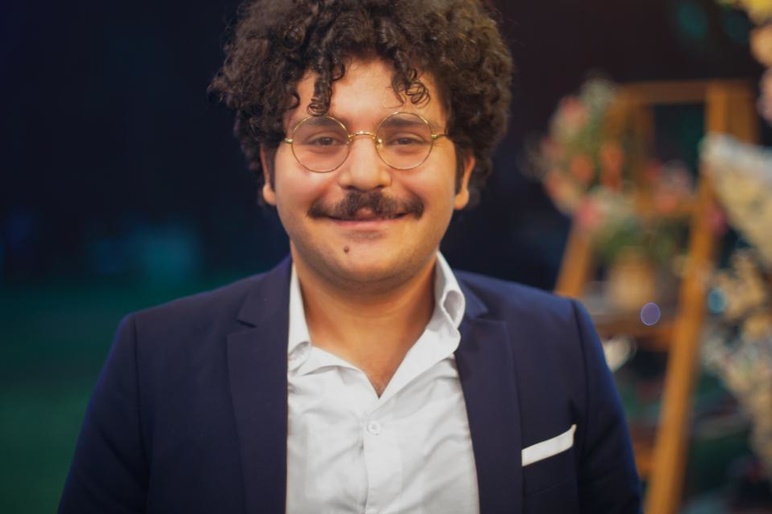
A large group of civil society organizations, condemn the three-year prison sentence handed down to human rights researcher at the Egyptian Initiative for Personal Rights (EIPR) and academic Patrick George Zaki for his writings highlighting the hardship and discrimination faced by Coptic Christians in Egypt, such as himself.

On July 18, 2023, following a trial rife with due process violations, an Egyptian emergency state security court handed down a three-year prison sentence to Patrick on trumped up charges of spreading false news. Patrick, who was a graduate student at the University of Bologna at the time, was arrested by Egyptian authorities on February 7, 2020, while at the Cairo Airport during a visit home to see his family. In custody, he was held incommunicado for a 24-hour period; he was beaten, stripped, electrocuted, verbally abused, and threatened. He was initially accused of joining a terrorist organization and spreading false news. In September 2021, lawyers learned that he had been referred to emergency state security court on false news charges for a 2019 article that he authored for independent digital media outlet Daraj on his experience as a Coptic Christian religious minority, titled, “Displacement, Killing & Harassment: A Week in the Diaries of Egypt’s Copts.” On December 7, 2021, following 22 months behind bars, he was ordered released from detention pending trial, and placed on travel ban. His trial continued until the July 2023 verdict, following which he was taken back into custody today.

Verdicts handed down by an emergency court are not subject to legal appeal, only to ratification by the President. The President also has the authority to commute the sentence or to quash the verdict. Furthermore, under Circular No. 10 of 2017 governing emergency state security courts, “If the accused is brought to trial while not in custody and sentenced to a prison penalty, he must be released immediately without executing the penalty pending the decision of the ratifying authority.” Per this provision, Patrick must legally be free while the President considers ratification; for Egyptian authorities to have taken him into custody constitutes a clear violation of this circular.

The targeting, arrest, prosecution, and sentencing of Patrick Zaki for writing about his experiences as a Coptic Christian is an egregious measure by Egyptian authorities that is indicative of a larger failure by the state to protect religious minorities. Instead, the authorities target Copts for merely expressing themselves and bringing attention to the discrimination they regularly endure. This sentence occurs in violation of Egypt’s domestic laws and international legal commitments, and sends a clear message that the Egyptian government is not serious about implementing its national human rights strategy or carrying out a meaningful national dialogue. At a time during which Egyptian authorities should be addressing the dire economic crisis, this step raises severe questions on the trajectory of the country.

The undersigned civil society organizations, call on Egyptian President Abdel Fattah El-Sisi not to ratify the verdict handed down to Patrick Zaki and instead to quash it in its entirety. We call on Egyptian authorities to immediately release Patrick Zaki from custody, to drop all charges and close all cases brought against him in their entirety, and to lift the travel ban brought against him. We urge all of Egypt’s international, multilateral, and government partners to press the Egyptian government to immediately release Patrick and cease persecuting him for his legally protected speech and vital human rights work.

For once it seems to have worked: https://www.barrons.com/news/egypt-s-sisi-pardons-researcher-a-day-after-jailing-sparked-outcry-e22a3c1a?refsec=topics_afp-news

Signatories

  • Access Now
  • Alternative Press Syndicate
  • Amnesty International
  • Arab Reform Initiative
  • Cairo Institute for Human Rights Studies (CIHRS)
  • Campaign Against Arms Trade
  • Center for International Policy
  • CNCD-11.11.11
  • Committee for Justice
  • Daraj
  • Democracy in the Arab World Now (DAWN)
  • DIGNITY Danish Institute Against Torture
  • Egyptian Commission for Rights and Freedoms
  • Egyptian Front for Human Rights (EFHR)
  • Egyptian Human Rights Forum (EHRF)
  • Egyptian Initiative for Personal Rights (EIPR)
  • EgyptWide for Human Rights
  • El Nadim Center
  • FIDH (International Federation for Human Rights), within the framework of the Observatory for the Protection of Human Rights Defenders
  • Human Rights First
  • Human Rights Watch
  • HuMENA for Human Rights and Civic Engagement
  • INSM for Digital Rights
  • International Service for Human Rights (ISHR)
  • Kawaakibi Foundation
  • Lebanese Center for Human Rights – CLDH
  • MENA Rights Group
  • PEN America
  • PEN International
  • Project on Middle East Democracy (POMED)
  • Refugees Platform in Egypt (RPE)
  • Scholars at Risk
  • Shadow World Investigations
  • Sinai Foundation for Human Rights (SFHR)
  • SMEX
  • Start Point
  • Taafi initiative
  • The Freedom Initiative
  • The Legal Agenda
  • The Syria Campaign
  • The Tahrir Institute for Middle East Policy (TIMEP)
  • World Liberty Congress
  • World Organisation Against Torture (OMCT), within the framework of the Observatory for the Protection of Human Rights Defenders

https://www.omct.org/en/resources/statements/egypt-sentencing-of-academic-and-researcher-patrick-george-zaki

https://www.hrw.org/news/2023/07/18/civil-society-organizations-condemn-sentencing-egyptian-academic-and-researcher

https://www.aljazeera.com/news/2023/7/18/egypt-jails-rights-researcher-patrick-zaki-for-3-years-ngo-says

NGOs call for the release of Mohammed al-Qahtani, detained incommunicado for six months in Saudi Arabia

May 25, 2023

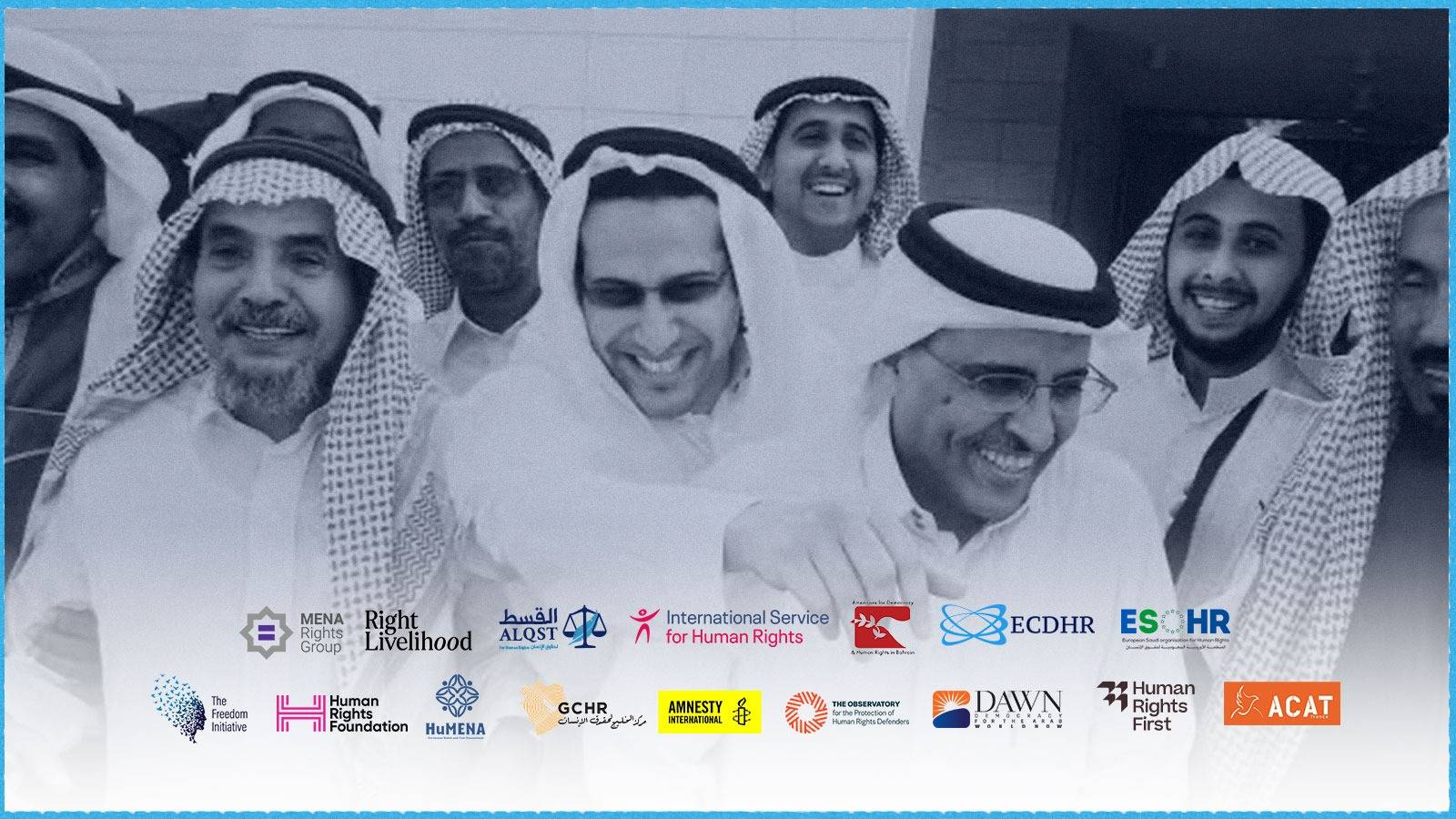
We, the undersigned human rights organisations, call on Saudi authorities to reveal the health condition  of and immediately and unconditionally release prominent Saudi human rights defender and co-founder of the now dissolved Saudi Civil and Political Rights Association (ACPRA)*, Dr. Mohammed al-Qahtani, who has been detained incommunicado for six months. We also call for the immediate and unconditional release of four ACPRA members who remain in arbitrary detention.

Today, 24 April 2023, marks six months since prominent Saudi human rights defender and co-founder of the Saudi Civil and Political Rights Association (ACPRA)* Mohammed al-Qahtani last contacted his family. Since then, the authorities have subjected him to incommunicado detention. Al-Qahtani served his full sentence in November 2022. Five ACPRA members remain imprisoned in reprisal for their peaceful human rights activism: Mohammed al-Qahtani, Essa al-Hamid, Mohammed al-Bajadi, Fawzan al-Harbi, and Abdulaziz al-Shubaili.

Mohammed al-Qahtani was arbitrarily arrested in March 2012 and interrogated regarding his work with ACPRA and his peaceful activism. On 9 March 2013, the Criminal Court in Riyadh sentenced him to 10 years in prison to be followed by a travel ban of equal length on charges including “breaking allegiance to the ruler”, “questioning the integrity of officials”, “seeking to disrupt security and inciting disorder by calling for demonstrations”, and “instigating international organizations against the Kingdom.” The authorities failed to release Al-Qahtani  on 22 November 2022, when he finished serving his prison sentence. However, since 24 October 2022, Saudi authorities have denied him any contact with his family and continue to keep him in incommunicado detention. 

Despite al-Qahtani’s wife making several inquiries about him to al-Ha’ir prison, where al-Qahtani was serving his sentence, prison officers continue to refuse to disclose any information about him. His family has reasons to believe that he has entered into a hunger strike and his health has considerably deteriorated, putting his life at imminent risk. This is not the first time Mohammed al-Qahtani was denied contact with his family. In April 2021, he was held incommunicado after testing positive for Covid-19, raising fears regarding his health and well-being for the duration of his illness. For the past 10 years of imprisonment, security forces  subjected al-Qahtani to inhumane and degrading conditions of detention, and they have also subjected him to torture and ill-treatment, including beatings.

We are all the more concerned about -al-Qahtani’s well-being considering the death of ACPRA co-founder Abdullah al-Hamid in detention on 23 April 2020. Abdullah al-Hamid suffered from hypertension, and his doctor told him three months before he passed away that he needed to undergo heart surgery. He was threatened by prison authorities that if he told his family about his health condition, they would cut his communication with his family. Dr Abdullah al-Hamid had suffered a stroke on 9 April 2020 and remained in detention, despite being in a coma in the intensive care unit at al-Shumaisi Hospital in Riyadh.

Following al-Hamid’s death, the Saudi authorities carried out a wave of arrests against several individuals who expressed sympathy over his passing.

Created in 2009 by 11 human rights defenders and academics, ACPRA was established to promote and protect fundamental rights and freedoms in Saudi Arabia, including through promoting constitutional reforms. While ACPRA was never officially registered by the government, it was formally banned as an organization and dissolved by court order in 2013. As of May 2016, all of its 11 members had been sentenced by the Specialized Criminal Court (SCC) to lengthy prison sentences ranging between seven and 15 years for their human rights activism and cooperation with the United Nations human rights mechanisms.

In light of the above, we, the undersigned organisations, reiterate our call on the Saudi authorities to immediately and unconditionally release Mohammed al-Qahtani and other imprisoned members of ACPRA who are arbitrarily detained solely for their peaceful activism. In the interim, we call on the authorities to disclose the fate and whereabouts of Mohammed al-Qahtani, ensure immediate contact with his family, and provide him with any medical care he may need. Saudi Arabia should ensure a free and enabling environment for all human rights defenders, in order for them to carry out their activities without fear of reprisals and without undue restrictions.See also: https://www.trueheroesfilms.org/thedigest/laureates/78383825-0b3f-4bca-883a-b81e1baecd09

Among the co-founding members of ACPRA, five remain imprisoned today: Dr Mohammed al-Qahtani (sentenced to 10 years in prison followed by a 10-year travel ban. He completed his sentence in November 2022, yet remains in detention incommunicado); Mohammed al-Bajadi (sentenced to four years in prison, four years of suspension followed by a 10-year travel ban, and currently detained since May 2018); Abdulaziz al-Shubaili (sentenced to eight years in prison followed by an eight-year travel ban); Fowzan al-Harbi (sentenced to 10 years in prison followed by a 10-year travel ban); Essa al-Hamid (sentenced to 11 years in prison, followed by an 11-year travel ban). Sheikh Sulaiman al-Rashudi (sentenced to 15 years in prison and a 15-year travel ban. He was released in April 2018 for medical reasons; Abdulkarim al-Khodr (sentenced to 10 years in prison, followed by a 10-year travel ban. He was released in January 2023 upon the completion of his sentence but remains subject to the travel ban);  Abdulrahman al-Hamid sentenced to 9 years in prison, followed by a 9-year travel ban. He was released in January 2023 upon the completion of his sentence but remains subject to a travel ban); Dr Abdullah al-Hamid (sentenced to 11 years in prison followed by an 11-year travel ban), passed away on 23 April 2020 in custody. Abdullah al-Hamid and Mohammed al-Qahtani, alongside Waleed Abu al-Khair, have received the Right Livelihood Award in November 2018.

Signatories:

  • MENA Rights Group
  • Right Livelihood
  • ALQST
  • International Service for Human Rights (ISHR)
  • Americans for Democracy & Human Rights in Bahrain (ADHRB)
  • European Center for Democracy and Human Rights (ECDHR)
  • European Saudi Organization for Human Rights (ESOHR)
  • Freedom Initiative
  • Human Rights Foundation (HRF)
  • HuMENA for Human Rights and Civic Engagement
  • Gulf Centre for Human Rights (GCHR)
  • Amnesty International
  • International Federation for Human Rights (FIDH), in the framework of the Observatory for the Protection of Human Rights Defenders
  • World Organisation Against Torture (OMCT), in the framework of the Observatory for the Protection of Human Rights Defenders
  • Democracy for the Arab World Now (DAWN)
  • Human Rights First
  • Action des Chrétiens pour l’abolition de la torture (ACAT France)

See the full Joint Statement here.

Now it is the turn of the Iranian journalists who reported on Mahsa Amini

May 11, 2023
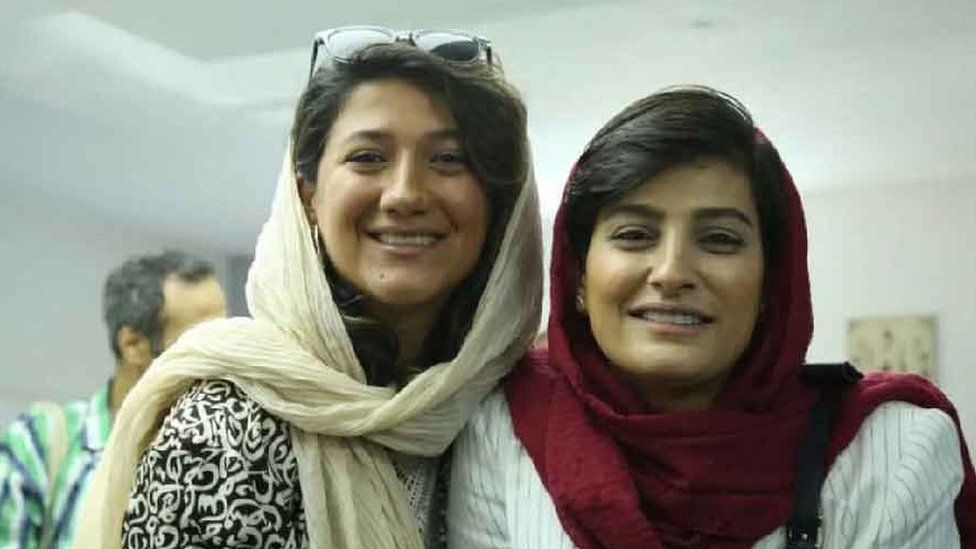
Niloufar Hamedi and Elaheh Mohammadi
Image caption, Niloufar Hamedi and Elaheh Mohammadi have been detained in Iran for more than 200 days

BBC Persian Service on 5 May 2023 drew attention to the fate of the two journalists who reported first on Mahsa Amini, whose name made headlines around the world when she died in custody last September, sparking waves of protests in Iran. But not many people have heard of Niloufar Hamedi and Elaheh Mohammadi.

The two female journalists helped break the story of Ms Amini’s death and have been detained in two of Iran’s most notorious prisons ever since. On Tuesday, they and the imprisoned Iranian human rights activist Narges Mohammadi were awarded the 2023 Guillermo Cano World Press Freedom Prize by the United Nations’ cultural agency, UNESCO.”They paid a hefty price for their commitment to report on and convey the truth. And for that, we are committed to honouring them and ensuring their voices will continue to echo worldwide until they are safe and free,” said Zainab Salbi, the jury chair. For more on Narges, see; https://www.trueheroesfilms.org/thedigest/laureates/07C20809-99E2-BDC0-FDC3-E217FF91C126

On 22 September, just six days after she tweeted a photograph of Mahsa’s grieving family, Niloufar Hamedi was arrested. Security forces also raided Elaheh Mohammadi’s home at the same time, seizing her electronic devices. On 29 September, she too was arrested.

Both Ms Hamedi and Ms Mohammadi were already known for hard-hitting news reports and coverage of human rights issues.

As well as winning UNESCO’s press freedom prize, Ms Hamedi and Ms Mohammadi have been named as two of Time Magazine’s 100 Most Influential People of 2023 and given the 2023 Louis M Lyons Award for Conscience and Integrity in Journalism, presented by Harvard University in the United States. See: https://www.trueheroesfilms.org/thedigest/awards/8809EB31-7E9C-4624-88E3-FC592D496807 and https://www.trueheroesfilms.org/thedigest/awards/1748C306-757A-49EB-8436-A9C607356112

“Journalists in Iran are risking their lives on a daily basis to report on the conditions and oppressions there,” the Harvard fellows noted.

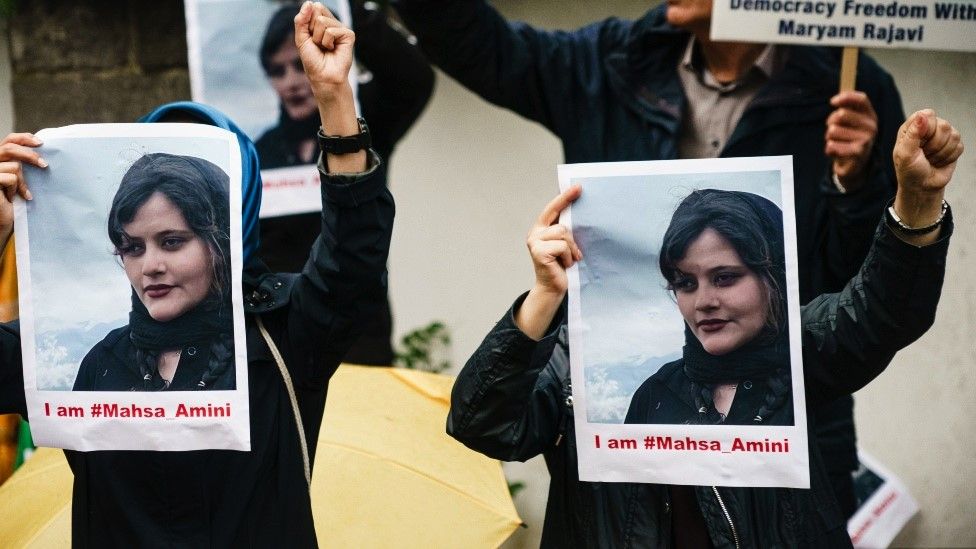
Protesters hold up pictures of Mahsa Amini in Berlin, Germany
Image caption, Mahsa Amini’s death led to a wave of protests in Iran and rallies in solidarity around the world

Ms Hamedi and Ms Mohammadi have meanwhile been kept in harsh conditions at Evin prison in Tehran and Qarchak Women’s Prison, south of the city. Reports from inside Qarchak suggest that the facilities are inhumane, with a lack of medicine, food and even safe drinking water or clean air. Ms Mohammadi lost 10kg (22lbs) in the first three months of her detention, her husband wrote on his Instagram page.

Both women have also struggled to access legal support. The first lawyer appointed to represent the pair said in October that he was unable to communicate with them or access the legal documents surrounding their arrests. Less than a month later, he was himself arrested. The journalists’ families have struggled with the pain of not knowing what is going to happen to them.

“I’m asked, ‘What do the authorities tell you?’ I’m not even sure which institution or person to contact,” Ms Hamedi’s husband, Mohammad Hossein Ajorlou, said in an interview with Sharq.

He too has found it difficult to get information about what his wife is accused of and what is likely to happen to her.

At the end of October, Iran’s ministry of intelligence and the intelligence agency of the Revolutionary Guards issued a statement accusing Ms Hamedi and Ms Mohammadi of being trained by the US Central Intelligence Agency to foment unrest in Iran.

Their newspapers denied the allegations and insisted they had just been doing their jobs.

Last week, after they had both spent more than 200 days in custody, the Iranian judiciary announced that Ms Hamedi and Ms Mohammadi had been indicted and their cases referred to a court.

On Monday, Ms Hamedi’s husband wrote on Twitter that she and Ms Mohammadi had been transferred back to Evin prison from Qarchak, apparently in preparation for their trial.

https://www.bbc.com/news/world-middle-east-65466887

see also: https://iranhumanrights.org/2023/06/iran-proposed-bill-pushes-denial-of-basic-rights-to-unveiled-women/

in August 2023, things got further out of hand: with mass arrests:

https://www.nbcnews.com/news/world/iran-arrests-women-activists-mahsa-amini-protests-anniversary-rcna100566

https://www.frontlinedefenders.org/en/statement-report/iran-alarm-over-mass-arrests-human-rights-defenders-advance-anniversary-september

https://www.hrw.org/news/2023/08/19/iran-mass-arrests-womens-rights-defenders

Detainees in the Emirates held in prison even after completing their sentence

April 13, 2023

On 12 April 2023 Human Rights Watch reported that United Arab Emirates are continuing to incarcerate at least 51 Emirati prisoners who completed their sentences between one month and nearly four years ago.

The prisoners are all part of the grossly unfair “UAE94” mass trial of 69 critics of the government, whose convictions violated their rights to free expression, association, and assembly. UAE authorities are using baseless counterterrorism justifications for continuing to hold them past their completed sentences.

Prisoners in the UAE94 case have already suffered tremendously after years in prison following a grossly unfair trail,” said Joey Shea, United Arab Emirates researcher at Human Rights Watch. “Emirati authorities should free them immediately and finally put an end to this decade-long ordeal. Prominent UAE partners, including the United States and COP28 organizers, should press UAE authorities for their immediate release.”

The prisoners were among 94 people detained beginning in March 2012 in a wave of arbitrary arrests amid an unprecedented crackdown on dissent. The case had a chilling effect on freedom of expression, assembly, and association.

In July 2013, Abu Dhabi’s Federal Supreme Court convicted 69 of the defendants, sentencing 5 to 7 years in prison, 56 to 10 years, and 8 in absentia to 15 years, with 25 acquitted. The verdict could not be appealed, in violation of international law, because it was issued by the UAE’s highest court. As of March 2023, 51 had completed their sentences but remain imprisoned with no clear legal basis, according to Emirati activists and court documents. Some prisoners completed their sentences as early as July 2019.

At least four of the 51 received a Public Prosecution letter saying that they were on Munasaha during what was supposed to be their last three months in detention, activists and family members told Human Rights Watch. After three months, these detainees were taken in front of a judge, who determined they still held “terrorist thoughts” and ruled that they needed further “rehabilitation.”

Under article 48 of the counterterrorism law, the public prosecutor may place someone convicted of a terrorist offense in a counselling or Munasaha program in the prison where they were serving their sentence, under counselling center supervision.

The counterterrorism law sets no time limit for continued incarceration and instead requires the state security public prosecution to report to the court every three months. The court may order a person’s release if it finds that “his or her condition so allows.” It is not clear if the defendant has any right to attend the hearing or see or challenge the evidence used to justify their detention.

The decade of unjust imprisonment has had devastating consequences for the prisoners’ families. A family member said that the young child of one of the prisoners still does not understand why her father was in prison. “She asks me, we love our country and our leaders, why are they are doing this to my father?” the family member said.

Many prisoners are being held in the notorious al-Razeen prison, and many are alleged to be in solitary confinement. A family member said, “All the prisoners are suffering there, they don’t have their rights and it is very hard to visit them.” Another family member said: “Throughout the years, the conditions are getting worse.”

Visits are irregular and difficult to procure, the family members said. Families often drive for hours to the prison in the middle of the desert, only to be denied a visit with no explanation. Family members also said that phone conversations are often cut off mid-call with no explanation. Some prisoners have not been able to speak with their family members by phone for years.

Other family members said there have been months-long periods in which a prisoner, as one family member said, “totally disappeared” with “no calls, no nothing,” leading the family to believe that “maybe he is dead.” Prisoners are also often denied books and pictures.

The International Covenant on Civil and Political Rights (ICCPR) in article 15 prohibits retroactive criminal punishment. The United Nations Human Rights Committee, in its general comment on article 9 of the ICCPR, said, “if, under the most exceptional circumstances, a present, direct and imperative threat is invoked to justify the detention of persons considered to present such a threat, the burden of proof lies on States parties to show that the individual poses such a threat and that it cannot be addressed by alternative measures, and that burden increases with the length of the detention.”

“By arbitrarily extending the unjust sentences of peaceful critics using bogus counterterrorism justifications without due process, the UAE again shows its total disregard for the rule of law,” Shea said.

https://www.hrw.org/news/2023/04/12/uae-detainees-held-beyond-sentences

Nigerian Mubarak Bala subject of BBC documentary

November 11, 2022

A recent BBC documentary is about the challenges faced by humanists and atheists in Nigeria. The film was released this week and focuses on Mubarak Bala, reporting on the events that took place in the run-up to his unjust and disproportionate sentencing in April 2022.Mubarak, who is the President of the Humanist Association of Nigeria, is currently serving a 24-year prison sentence, in connection with a series of Facebook posts that some deemed to be ‘blasphemous’ and ‘likely to cause a public disturbance’. See also: https://humanrightsdefenders.blog/2021/08/27/mubarak-bala-wins-humanist-international-2021-freedom-of-thought-award/

Leo Igwe, Humanists International Board Member & Founding member of the Humanist Association of Nigeria, has been spearheading the campaign for his release since he was first arrested in April 2020.: “The launch of the documentary marks more than 30 months since Mubarak was separated from his family. I’m so proud of his wife, Amina, for the strength she has shown, but you can see in her interview how hard this has been for her. Perhaps the most chilling part of the documentary is when the lawyer who brought about the complaint against Mubarak simply cannot hide his pleasure at the outcome of the sentence, despite the devastating impact on the family. He says: “I really feel bad for the wife and the little son” but the smile on his face tells a very different story.”

see also: https://humanists.international/civi/?civiwp=CiviCRM&q=civicrm%2Fmailing%2Fview&reset=1&id=1422&cid=12522&cs=4a8ba3875028250988e91d06b138a2c8_1680716745_168

Following this week’s decision, Mubarak now has one year left of his sentence to serve however our work is not over; the state still has the opportunity to appeal. We will continue to monitor the situation closely and will work to support Mubarak until his safe release.

Human rights defender Şebnem Korur Fincancı in Turkey now also jailed

October 31, 2022
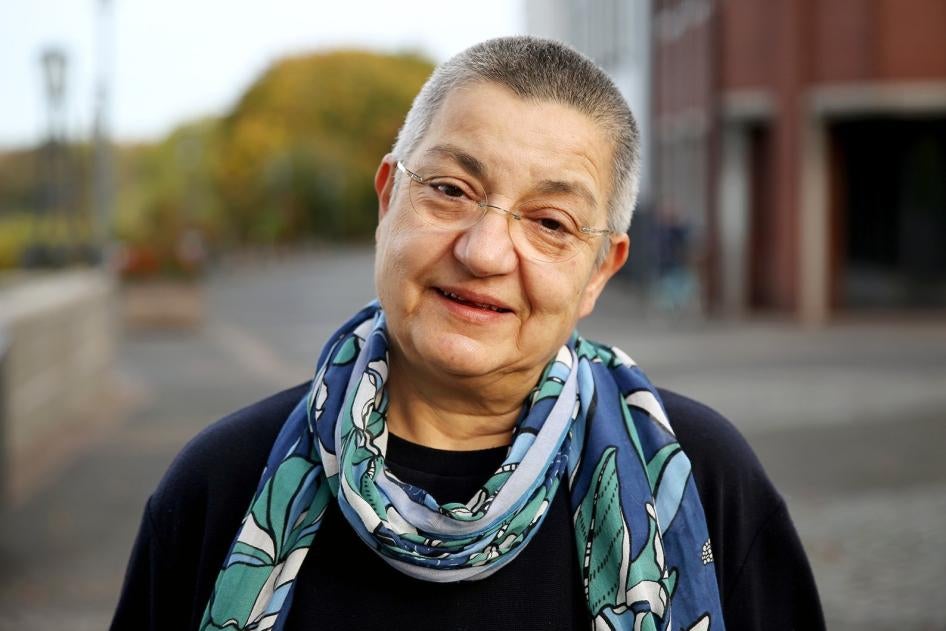
Şebnem Korur Fincancı
Şebnem Korur Fincancı © 2022 TİHV

On 28 October 2022 HRW reports on the continuing crackdown on human rights defenders in Turkey, where Şebnem Korur Fincancı is the latest human rights defender to be jailed as authorities pursue a bogus investigation against her for “spreading terrorist propaganda.” Korur Fincancı is head of the Turkish Medical Association, former head of the Human Rights Foundation of Turkey, and a retired professor of forensic pathology. Her work was central to the creation of the United Nations’ “Istanbul Protocol,” a landmark manual on how to identify and document signs of torture. She has also worked on the exhumation of mass graves and forensic documentation of war crimes in different countries. See also: https://humanrightsdefenders.blog/2018/11/05/turkish-human-rights-defender-and-forensic-doctor-sebnem-korur-fincanci-honoured/

Korur Fincancı’s arrest and pre-trial detention followed an interview she gave to pro-Kurdish TV on October 19. Responding to allegations that the Turkish military had used chemical weapons against the armed Kurdistan Workers’ Party (PKK) in the Kurdistan Region of Iraq, Korur Fincancı said the video footage she had seen suggested use of toxic gases affecting the nervous system and that there should be a full investigation. Turkish pro-government media and President Recep Tayyip Erdoğan accused Korur Fincancı and the Turkish Medical Association of slandering the Turkish military. Prosecutors and courts rapidly responded by ordering her investigation and detention.

Korur Fincancı’s arrest is the latest in a pattern of politically motivated cases as the Erdoğan government continues its crackdown on critics and opponents. Just this week, police also detained 10 Kurdish journalists on top of 16 incarcerated in June. The Turkish authorities show all the signs of being determined to silence the voices of experts like Korur Fincancı as well as the journalists who report their words.

Authorities also appear focused on a broader plan of reshaping and taking over professional bodies that have been critical of government policies. On October 27, Turkey’s justice minister announced a plan to restructure both the Turkish Medical Association, from which Korur Fincancı will be removed as head, and the Union of Chambers of Turkish Engineers and Architects. Mücella Yapıcı, a prominent member of the latter, was convicted and jailed in April along with rights defender Osman Kavala and six others for her alleged role in the 2013 Gezi Park protests.

In the run-up to the 2023 presidential and parliamentary elections, the Turkish government is likely to continue to misuse criminal charges and detention against individuals it wants to silence and attempt to seize institutions outside its control.

https://www.hrw.org/news/2022/10/28/turkey-jails-another-human-rights-defender

Kavala ruling of European Court of Human Rights – infringement procedure against Turkey

July 27, 2022
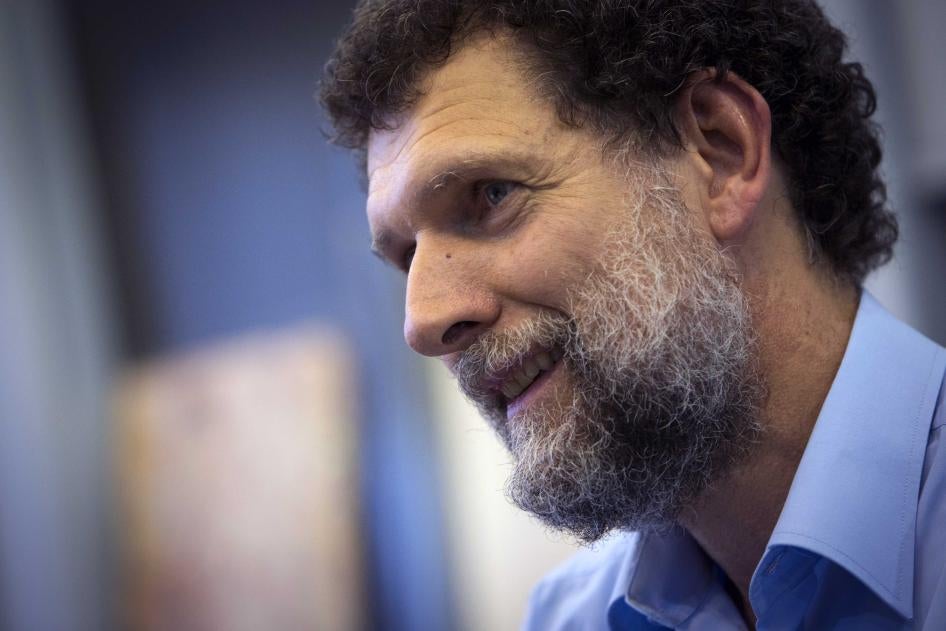
Osman Kavala © 2017 Private

Several sources (here HRW) reported on the European Court of Human Rights (ECtHR) handing down a landmark judgment (announced on July 11, 2022) against Turkey for its failure to carry out the court’s order to free the imprisoned human rights defender Osman Kavala. See: https://humanrightsdefenders.blog/2022/04/27/unexpected-in-its-harshness-kavala-gets-life-sentence-without-parole/

The court found in Kavala v. Türkiye, a case brought by the Council of Europe’s Committee of Ministers, that Turkey failed to fulfil its obligation under Article 46(1) of the European Convention on Human Rights to comply with its judgment issued on  December 10, 2019.  The judgment is an important step toward accountability for Turkey’s systemic disregard for the convention system and as recognition of the urgency of implementing the court’s order to release Kavala.

This is the only second time, after Mammadov v. Azerbaijan, that the ECtHR has ever conducted infringement proceedings and determined that a member state has not complied with a European Court judgment,” said Helen Duffy of the Turkey Litigation Support Project.

It is an acknowledgement of Turkey’s ever-deepening rule of law crisis, which has involved seriously undermining the Convention system and the escalating use of criminal law for political purposes.”

In its new judgment, the court held that “Türkiye has failed to fulfil its obligation under article 46§1 to abide by the Kavala v. Türkiye judgment of 10 December 2019.”

The European Court underlined that:

Its finding of a violation of Article 18 taken together with Article 5 in the Kavala judgment had vitiated any action resulting from the charges related to the Gezi Park events and the attempted coup. It is nonetheless clear that the domestic proceedings subsequent to the above judgment, which resulted first in an acquittal and then a conviction, have not made it possible to remedy the problems identified in the Kavala judgment (para. 172).

The Grand Chamber judgment addresses these practices of the Turkish authorities by stating that “the measures indicated by Türkiye do not permit it to conclude that the State Party acted in good faith,’ in a manner compatible with the ‘conclusions and spirit’ of the Kavala judgment, or in a way that would make practical and effective the protection of the Convention rights which the Court found to have been violated in that judgment” (para. 173).

Aisling Reidy, senior legal adviser at Human Rights Watch said: “As the European Court has now confirmed Turkey’s failure to execute the 2019 Kavala judgment, the Committee of Ministers needs urgently to take all feasible measures to ensure the judgement is respected and Kavala released“.

The Committee of Ministers is expected to resume its supervision process and take more robust steps to discharge its mandate of ensuring the necessary individual and general measures are taken by Turkey to implement the court’s ruling.

Now, it is up to the Committee of Ministers, which oversees the implementation of the ECtHR rulings, what measures to take against Turkey after the country failed to comply with the court’s ruling. This could lead to Turkey’s suspension from the Council of Europe. In anticipation, the Foreign Ministry of Turkey said they expected the Committee of Ministers “to act without bias and with common sense” in a statement.

However, see: https://stockholmcf.org/coe-fails-to-sanction-turkey-over-jailed-philanthropist-opts-for-dialogue-instead/

https://www.hrw.org/news/2022/07/12/landmark-judgment-against-turkey-ignoring-european-ruling