In a lengthy interview with ‘GenevaInternational Cooperation’ published on 13 March 2013, Andrew Clapham, the widely respected Director of the Geneva Academy of International Law and Human Rights, argues that the Human Rights Council of the UN, which replaced the Commission on Human Rights (of which, in 2005, Kofi Annan said that its “declining credibility has cast a shadow on the reputation of the United Nations system as a whole”) has in the end made important improvements. The interview is certainly worth reading in its totality but for the hard-pressed here are some quotes:
Q: Do you think the Human Rights Council has been effective in restoring the damage caused by its predecessor to the reputation of the UN? Yes. The credibility of the Human Rights Council is now much higher than that of the Commission on Human Rights in 2005. One of the major criticisms of the former Commission was the ability for states to use political pressure to focus attention on individual states. Under the four year Universal Periodic Review (UPR) cycle, it is possible to read reports about the United States, China, Russia, Haiti, Iraq and Libya, and not just the states that are out of favour at any given time. One of the crucial differences is the fact that the Human Rights Council now considers the situations in powerful states. The ability of the Human Rights Council to establish Commissions of Inquiry is another important and unexpected development. These Commissions are now highly regarded references and sources of information.
Q: Can you give some examples of concrete achievements that have resulted from the creation of the Human Rights Council?Read the rest of this entry »
(Special Rapporteur on the Situation of Human Rights in Iran Ahmed Shaheed. UN Photo/Jean-Marc Ferré)
On 11 March 2013 the Special Rapporteur on the situation of human rights in Iran, Ahmed Shaheed, voiced serious concern about the general situation of human rights in Iran, pointing to “widespread and systemic” torture, as well as the harassment, arrest and attacks against human rights defenders, lawyers and journalists. “The prevailing situation of human rights in Iran continues to warrant serious concern, and will require a wide range of solutions that are both respectful of cultural perspectives and mindful of the universality of fundamental human rights promulgated by the treaties to which Iran is a party,”.
Presenting his report to the Geneva-based Human Rights Council, Mr. Shaheed said that Iran has made some “noteworthy advances” in the area of women’s rights, including advancements in health, literacy and in enrolment rates on both the primary and secondary levels. Read the rest of this entry »
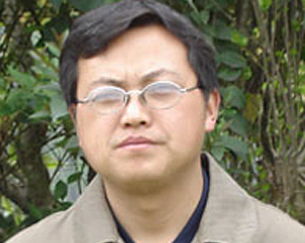
On 5 March 2013, human rights defender Liu Feiyue was taken from his home by police in Hubei Province. One week later, he remains missing with no further information available on his whereabouts. Liu Feiyue is a former teacher and founder of Civil Rights and Livelihood Watch, a human rights website based in China which documents cases of human rights violations from all over the country. He set up the website in 2005 after becoming increasingly involved in the defence of human rights in Hubei Province. As a result of his human rights work, Liu Feiyue has been harassed, placed under house arrest, detained and beaten.
Liu Feiyue had been under increased surveillance in the weeks prior to this incident, due to the convening of the Chinese People’s Political Consultative Congress and the National People’s Congress in Beijing, which began on 3 and 5 March 2013 respectively. Liu Feiyue has been repeatedly targeted in the past during politically sensitive periods and has often been brought into police custody without any legal procedures. In addition to Liu Feiyue, it is reported that dozens of other human rights defenders have been placed under house arrest or have had their freedom of movement restricted owing to the governmental meetings taking place in Beijing. Those under increased surveillance include Messrs Hu Jia, He Depu and Xu Zhiyong in Beijing, Ms Liu Ping and Mr Li Sihua in Xinyu City, Jiangxi Province and Mr Feng Zhenghu in Shanghai.
The new International Civil Society Network on Infrastructures for Peace (I4P) is launched today with its website: www.I4Pinternational.org
Many countries lack capacities and structures to deal adequately with on-going and potential violent conflict. This has emerged as a central obstacle to the attainment of equitable and sustainable development. In recent years, the number of conflicts has been increasing once again. What is needed – in the same way as for threatening natural disasters – is a comprehensive, inclusive and long-term approaches to peacebuilding, which involves the main stakeholders. Infrastructures for peace and Local Peace Committees can be important pillars to counter these dangerous developments or substantially reduce their impact. Several local peacebuilding NGOs and practitioners felt the need to exchange experiences and best practices about this approach and make I4P more recognised:the network was born and counts now some seventy members. There is an Interim Steering Committee with members from three continents.
Human rights and human rights defenders play a crucial role in this process – even if not spelled out in the main pages of the new website. The local peace groups mentioned as members however frequently refer to the need for human rights and social justice as they realise that lasting peace cannot be the ‘peace of the graveyard’. Moreover, it is the local Human Rights Defenders who suffer most from the absence of peace as this blog and many more sources regularly demonstrate.
Last Saturday, two distinguished human rights defenders in Saudi Arabia were sentenced to jail in Riyadh for establishing an unlicensed human rights organization. Mohammed Al-Qahtani and Abdullah Al-Hamad (or Hamid) established the Saudi Civil and Political Rights Association (ACPRA) in 2009. The organization’s mission is to promote human rights awareness within the Kingdom. ACPRA called for political representation of Saudi citizens and creation of laws to protect minorities. The organization also worked on documenting human rights abuses within the Kingdom. Despite multiple efforts to license ACPRA, the organization’s petitions were rejected and the group was eventually banned by Saudi authorities. The two men were sentenced to 10 and 11 years in prison on accusations including the rather illiberal sounding “breaking allegiance to the King”, “disseminating false information through foreign entities” and “forming an unlicensed organization“. This trial and the ensuing heavy sentence are clearly linked to them exercising their rights to freedom of opinion and association.
In a case that was followed closely in this blog, a Bahraini human rights defender accused of sending out twitters with ‘false information’, there is finally some good news: a Bahraini court has acquitted Said Yousif Al-Muhafdah of the Bahrain Center for Human Rights (BCHR – 2012 Final Nominee of the MEA). “It’s a great relief that Said Yousif was acquitted today, bringing an end to three months of judicial harassment. Let’s hope this means the courts are beginning to show a better understanding of what freedom of expression means,” said Human Rights First’s Brian Dooley. Al-Muhafdah was arrested in December 2012 for “spreading false information on Twitter.”
His case is one in a string cases stemming from the Kingdom’s ongoing judicial harassment of human rights defenders. It followed last year’s jailing of Nabeel Rajab, President of the BCHR, and of human rights activist Zainab Al Khawaja in February 2013. “This is a small victory, but unfortunately there are many other cases of judicial harassment that continue to wind their way through Bahrain’s judicial system,” Brian Dooley noted. On March 21, the appeal of 23 medics, each sentenced to three months in prison after treating injured protestors in 2011, will continue. A verdict is expected at a date soon after. Dooley, who has authored four reports about the ongoing crackdown in Bahrain, has been forbidden access to the nation for more than a year. “This is not how a nation that wants to trumpet its human rights record treats monitors” Dooley added.
What is apparent from this blog, which has featured many cases of environmental Human Rights Defenders, has now been clearly stated (on 7 March 2013) by the United Nations Independent Expert on human rights and environment, John Knox. In his report to the Council of Human Rights, he highlighted the urgent need to clarify the human rights obligations linked to the enjoyment of a safe, clean, healthy and sustainable environment. Such clarification, he said, “is necessary in order for States and others to better understand what those obligations require and ensure that they are fully met, at every level from the local to the global.”……………….In his report Mr. Knox also identifies rights whose implementation is vital to environmental policymaking, such as the rights to freedom of expression and association, rights to receive information and participate in decision-making processes, and rights to legal remedies. “The exercise of these rights, makes environmental policies more transparent, better informed and more responsive to those most concerned.” “States should recognize the important work carried out by human rights defenders working on land and environmental issues in trying to find a balance between economic development and environmental protection, should not tolerate their stigmatization and should ensure prompt and impartial investigations into alleged violations of their rights,” he said.
John Knox was appointed as the Independent Expert on human rights and the environment in July 2012 by the United Nations Human Rights Council.
I would also like to refer now to an article by Lauri R. Tanner in the Oxford Press Journal of Human Rights Practice on the landmark environmental defenders cases by the Inter-American Court of Human Rights: the milestone case of ‘Kawas v. Honduras‘ and the so-called ‘Mexican Ecologists case‘. In its first-ever ruling on environmental defenders, the Court found a positive obligation on the part of member states in the Hemisphere to protect environmentalists who are in serious jeopardy from human rights violations. The Kawas case is a paradigmatic example of the constant threats these activists encounter, both in the Americas and internationally, and states in the region are now on notice to ensure special protection to those most in danger of harm. The Court arrived at the remarkable juncture of ‘making visible and potentially punishable what heretofore has been invisible and unpunished’. In an epilogue Tanner addresses the subsequent ruling in the ‘Mexican Ecologists’ case, and offers recommendations to human rights and environmental defenders and practitioners both regionally and internationally.
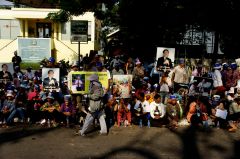
(800 people gathered in front of the Phnom Penh Court of Appeal to support Mam Sonando (c) Clothilde Le Coz)
Arrested on July 15th 2012, Beehive Radio journalist and director, Mam Sonando, was sentenced in the first instance to twenty years in prison in October 2012. He was charged with instigating villagers and peasants to protest against lands expropriation, in Kratie province. He was convicted and sentenced for “aggravating circumstances rebellion, unlawful interference in the performance of public functions, insurrection, inciting people to take arms against the state authority”. After spending already eight months in prison, his appeal started on 5 March 2013.
On 8 March 2013 – probably timed to coincide with the debate in the UN Human Rights Council – the U.S. Department of State published an overview of it support for Human Rights Defenders. It reads in part:
Protecting and supporting human rights defenders is a key priority of U.S. foreign policy. The Department’s objective is to enable human rights defenders to promote and defend human rights without hindrance or undue restriction and free from fear of retribution against them or their families. The work of these brave individuals and groups is an integral part of a vibrant civil society, and our investment in and support of them is likewise an investment in and support of the rule of law and democracy. Every day, around the world, many in civil society turn to us for assistance in emergency situations and to help them achieve longer-term goals that will make their countries more just and democratic.
After a short description of who are considered Human Rights Defenders and a quote from Hillary Rodham Clinton (as U.S. Secretary of State Krakow, Poland on July 3, 2010): “When NGOs come under threat, we should provide protection where we can, and amplify the voices of activists by meeting with them publicly at home and abroad, and citing their work in what we say and do.” The webpage sets out the way in which the State Department protects and supports human rights defenders, including:





 Hans Thoolen on Human Rights Defenders and their awards