 Bahrain’s crackdown on human rights defenders continued today with the arrest of another prominent figure, Naji Fateel. The arrest is the latest in a string of recent events calling into question the Kingdom’s claims of reform and progress. On 2 May 2013 at dawn, police arrested human rights defender Naji Fateel at his home in the village in north-west Bahrain. He is being held without formal charges at a location which is still unknown. Naji Fateel is a board member of the Bahrain Youth Society for Human Rights and a blogger who has been active in reporting human rights violations in Bahrain. The human rights defender gives daily speeches during marches in villages in which he discusses the importance of documenting violations and calls for people to form monitoring committees. Read the rest of this entry »
Posts Tagged ‘human rights’
Another prominent Bahraini Human Rights Defender, Naji Fateel, arrested
May 3, 2013Bahrain’s crackdown on human rights defenders continued today with the arrest of another prominent figure, Naji Fateel. The arrest is the latest in a string of recent events calling into question the Kingdom’s claims of reform and progress. On 2 May 2013 at dawn, police arrested human rights defender Naji Fateel at his home in the village in north-west Bahrain. He is being held without formal charges at a location which is still unknown. Naji Fateel is a board member of the Bahrain Youth Society for Human Rights and a blogger who has been active in reporting human rights violations in Bahrain. The human rights defender gives daily speeches during marches in villages in which he discusses the importance of documenting violations and calls for people to form monitoring committees. Read the rest of this entry »Yoga and Human Rights: stretching for human rights defenders
May 2, 2013Sometimes my eyes fall on more esoteric contributions to the protection of human rights defenders. Let me share with you Mark Laham’s blog post for the Huffington Times of the 1st of May 2013 which calls for a “borderless” one-hour live online yoga class in honour of Nasrin Sotoudeh, the Iranian lawyer in jail, recipient of the Sakharov Award and Nominee of the MEA 2012. Mark got inspired – through AI – by what he read about Nasrin’s struggle and other brave human rights defenders around the world. “How does Nasrin’s story make you feel?” he asks, ” Me, I…I feel the need to do something that will create positive change for this woman and countless others like her.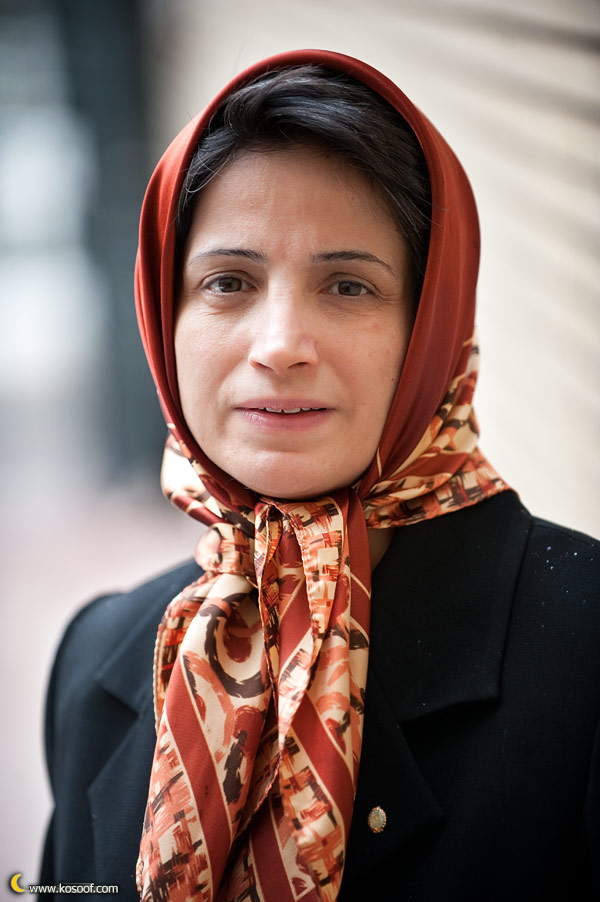 Read the rest of this entry »
Guatemala Genocide Trial Must Resume, Say Woman Human Rights Leaders
May 2, 2013A coalition of seven female Nobel Prize winners, including Dr. Rigoberta Menchú Tum of Guatemala, called April 25 for the trial of former dictator Efraín Rios Montt to proceed. Montt was indicted in January for genocide and crimes against humanity, including widespread rape. The trial in Guatemala City was suspended last week mere days before observers expected it to conclude when a lower court judge on April 18 unexpectedly issued a ruling on a legal technicality. Guatemala’s attorney general has called the ruling illegal. The trial marks the first time a head of state has been tried for genocide by his own country’s justice system. Rios Montt is accused of ordering the killings of over 1,700 Ixil Maya people in 1982 and 1983, when he was army general and de-facto president of Guatemala. Read the rest of this entry »
Russia now tries to cut CAT under ‘Foreign Agents’ Law
May 2, 2013 reports that on 22 April 2013 the Committee Against Torture (CAT) is the next NGO received a letter of warning from the local Prosecutor’s Office. The letter alleges that CAT is violating the controversial new ‘Foreign Agents’ Law, which states that any Russian NGO involved in political activity and receiving foreign funding must register as a foreign agent.
CAT processes complaints about torture and inhuman or degrading treatment, carries out public investigations, represents the victims’ interests in court and before investigative bodies, and provides assistance with obtaining compensation. The letter from the Prosecutor’s Office states that CAT receives funds from sources outside of Russia, information which is freely available on CAT’s website. The letter also states that CAT has taken part in certain public events, unidentified in the letter, which the authorities consider to be political. According to the authorities, therefore, CAT should have registered as a foreign agent. Read the rest of this entry »
UN Rapporteur on Eritrea denied access to the country – goes to neighboring countries on 30 April
April 29, 2013
The United Nations Special Rapporteur on the human rights situation in Eritrea, Sheila B. Keetharuth, will carry out an official visit to Ethiopia and Djibouti from 30 April to 9 May 2013 to collect information directly from Eritrean refugees on the human rights situation in their country. As in the case of Iran, Eritrea refuses access to the UN Rapporteur. “Due to lack of access to Eritrea, I will engage with all others concerned by human rights in Eritrea, including those who consider themselves to be victims of alleged human rights violations, human rights defenders and other civil society actors,” Ms. Keetharuth said. Another case of non-cooperation with UN mechanisms that should not be rewarded. Read the rest of this entry »
Frequently asked question: how do I become an international human rights lawyer?
April 27, 2013How do I become an international human rights lawyer? is the topic of an article by Hannah Gannagé-Stewart in the Guardian of Friday 26 April 2013. She rightly starts by stating that “the life of an international human rights lawyer is not all jet setting glamour”. Still, it is one of the most frequent questions put to me at the end of a lecture, often during the reception afterwards under 4 eyes: “I would like to work for human rights – what do you advise me?” is the usual opening line. My half-serious standard reply: “if your really want to work FOR human rights, I advise you to get very rich and donate half your wealth to the human rights movement“, is not always appreciated, but correct at the macro level as the shortage of funds is much more problematic than that of talent and devotion in the human rights movement. The question asked was of course situated at the micro level as in: “I want to work IN human rights (even if the pay is not very good)“.
The Guardian piece (although focusing on the UK) contains good, practical advice and most of it would be valid in other countries:
“Jet-setting round the globe, setting the worlds highest courts alight with spectacular oratory performances, radically changing the lives of the most vulnerable. Hell, theres probably a Nobel peace prize in there somewhere too right? Think again. There are actually very few lawyers who would describe themselves as international human rights lawyers, Read the rest of this entry »
Bahrain refuses – again – UN Rapporteur on Torture
April 26, 2013Bahrain’s state news agency reported earlier this week that Juan Méndez, the UNs special rapporteur for torture, had “put off his visit” scheduled for early May following a letter from Salah bin Ali Abdulrahman, Bahrain’s human rights affairs minister. The letter outlined “reasons for the request to postpone the visit”, the agency said. However, Mr Méndez said on Wednesday 24 April (according to the National) that there was no choice in the matter, calling the refusal to play host to his visit “a unilateral decision by the [Bahraini] authorities“. “This is the second time that my visit has been postponed, at very short notice. It is effectively a cancellation, as no alternative dates were proposed, nor is there a future road map to discuss“.
So much for the much-touted Government-commissioned report of 2011 in which the Bahrain Independent Commission of Inquiry found evidence of torture committed by the country’s security forces during a pro-reform uprising and the subsequent Government’s promise to coöperate with the UN to address the issues. Refusal to coöperate may pay again!
via Bahrain shuts out UN torture probe – The National.
Related articles
- UN ‘deep disappointment’ with Bahrain (bbc.co.uk)
- Bahrain blocks visit of UN official (bbc.co.uk)
‘Chinese Human Rights Defenders’ presents itself at Ulaanbaatar Ministerial Conference
April 26, 2013This is the way the NGO “Chinese Human Rights Defenders” (CDHR) presents itself at the Ministerial Conference of the Community of Democracies in Ulaan Bator, so close to ‘home’:
“Do the names Zhou Decai, Cao Haibo, Chen Wei, Chen Xi or Cui Fufang ring a bell to you? They are all prisoners of conscience in China. The Chinese Human Right Defenders (CHRD) are doing all they can to make the stories of prisoners of consciousness heard.

On its website, CHRD defines itself as “a network of Chinese and international activists promoting human rights and empowering rights defenders in China. A non-governmental organization, CHRD provides logistical support and capacity-building services to human rights advocates, monitors human rights developments, and assists victims of human rights abuses. CHRD advocates the peaceful realization of human rights protection through democratization and rule of law reform.”
There are many activities of the network: just to name numerous reports have been published, the last one of them being the “2012 annual report on the situation of human rights in China”; It also submits constant reports and appeals to the UN on the situation of human rights in China, urging it to act for its improvement; their website and Twitter account provide constant updates on human rights violations in China, as well as pictures and videos, with stories which do not usually reach the mainstream media.”
Human Rights Watch urges EU to stand up for human rights in China during Ashton’s visit today
April 25, 2013(EU) High Representative Catherine Ashton should publicly raise concerns over ongoing and persistent human rights violations in China when she visits Beijing, said Human Rights Watch. “As EU’s top foreign policy official, Ashton cannot ignore the deteriorating human rights environment in China,” said Lotte Leicht, European Union advocacy director. “She needs to make it a central part of her agenda in Beijing.” Ashton should also urge top Chinese officials to stop obstructing Security Council action on Syria, including humanitarian access to all civilians in need, and referring jurisdiction over war crimes and crimes against humanity to the International Criminal Court.
In recent months the EU has issued strong statements, including ones at the United Nations Human Rights Council, on China’s use of the death penalty and the crisis of self-immolations in Tibet, among other issues.
The EU also provides some support to human rights defenders in China…..Yet, the EU’s engagement on human rights in China has been extremely weak since Ashton was nominated as the EU’s first foreign policy chief. The more than thirty rounds of the official EU-China dialogue on human rights have had little discernible positive effect for those standing up for human rights in China, and at other levels of political dialogue the EU has failed to give human rights and the rule of law a degree of public attention commensurate with the importance of these issues in China…
…Although the new Chinese leadership has expressed rhetorical support for reform on some key human rights concerns, such as re-education through labor, abuses remain rampant throughout the country. The Chinese government denies people the full exercise of basic rights such as freedom of expression, association, and religion, and systematically suppresses dissidents and human rights activists…
“Ashton should be prepared to tell her Chinese government interlocutors who speak of the need for reform that a good start would be freeing Liu Xiaobo and lifting the appalling and abusive house arrest imposed on Liu Xia,” said Leicht.
Even the new leadership’s commitment to robustly grappling with rampant corruption – identified as a high priority – is already being called into question. In early April, eight activists were arrested for their involvement in a grass-roots anti-corruption campaign.
China: EU Commitments Demand Tough Response | Human Rights Watch.
Freedom House celebrates EU Human Rights Defender Award for Ugandan journalist but with some exaggeration
April 25, 2013
(Photo credit: HRNJ-Uganda website)
Freedom House got carried away a bit when it published the following:
Freedom House would like to congratulate Ugandan human rights activist Geoffrey Wokulira Ssebaggala, on being awarded the European Union Human Rights Defender Award for the year 2012. Ssebaggala is one of the founding members of the Human Rights Network for Journalists-Uganda (HRNJ-Uganda) and has been its National Coordinator since 2009. He was honored for his efforts in defending media rights, recording and highlighting restrictions on freedom of expression and access to information, as well as attacks on journalists. Ssebaggala is certainly a most deserved winner, but when Freedom House states: “The European Union established the award to raise awareness about the work of individual human rights defenders (HRDs) around the world. [emphasis added]” it exaggerates quite a bit as is made clear by the EU delegation in Kampala in 2011 when it created the purely national award http://www.deluga.ec.europa.eu/index.php/delegation-activities-in-uganda/political-press-information/press-and-info/news-releases/182-new-new-new-eu-local-hrd-awards-nominations.
IFEX at the end of its congratulatory piece at least recognises the local character of the award. http://www.ifex.org/uganda/2013/04/24/award_freedom/
Freedom House Grantee Receives the European Union Human Rights Defender Award | Freedom House.

