
The prize, which is awarded to individuals or organizations every five years was first given out 45 years ago on the 20th anniversary of the adoption of the Universal Declaration of Human Rights.
Posts Tagged ‘human rights’
145 Organizations Urge US and Meso-American Presidents to Change Course on the war on drugs which harms human rights defenders
May 13, 2013The Heads of State from Mexico, Central America and the United States met for the Summit of the Central American Integration System (SICA) in Costa Rica on May 4 and 5. The Fellowship of Reconciliation, collaborating with Just Associates, the Americas Program, the Guatemala Human Rights Commission-USA and the Latin America Working Group, presented a letter to the meeting signed by more than 145 international, regional and local organizations from ten countries in the Americas. The letter addresses inter alia civil society concerns about security issues, human rights violations, violence against men and women human rights defenders. It is time to refocus regional dialogue and resource investment to address the root causes of violence, understanding that for many citizens and communities, drug trafficking is not the principal cause of insecurity. Harmful “development” policies have similarly caused increased conflict and abuses, while forced migration and criminalization of migrants and human rights activists continues to divide families. Most importantly, the region’s challenges must be addressed without violating fundamental rights and human dignity. The groups said that “the lack of effective gun control in the U.S. has led to the massive and nearly unrestricted transfer of arms to criminal networks throughout the region” and called on the presidents to “take executive action in the United States to stop the flow of assault weapons and other firearms across the U.S.-Mexico border.” The letter also provides analysis and recommendations related to: Militarization in the name of addressing the drug war which has caused unprecedented levels of violence while failing to provide citizen security. The imposition of large-scale extractive projects on marginalized communities do not constitute “development. ”Violations of migrants’ rights and the lack of consideration of root cause of migration in policies. Read the full text of the letter in pdf. on John Lindsay-Polands blog
New complaint mechanism for Protection of social and economic rights finally comes into force
May 13, 2013
Back from a short (Orthodox) holiday I resume my efforts to keep you abreast of developments relevant to Human Rights Defenders. The first item is that the Optional Protocol to the International Covenant on Economic, Social and Cultural Rights has finally come into force. It enables people to seek justice through individual complaints when their rights to, for example, food, adequate housing, education or health are violated. “Egregious violations of economic, social and cultural rights are occurring, often unnoticed, on a daily basis, which in the area of civil and political rights would have been immediately condemned. This Protocol will help to address this imbalance,” High Commissioner Navi Pillay said. Read the rest of this entry »
UNPO General Secretary Congratulates Biram Dah Abeid of Mauritania with Front LIne Award
May 4, 2013A bit more on awards: here is an indirect way to announce the 2013 Front Line Defenders award: with the letter of congratulations published by the Unrepresented Nations and Peoples Organization (UNPO), which shows how recognizing a single individual HRD can lift a wider movement:
Brussels, 3 May 2013 – On behalf of the Unrepresented Nations and Peoples Organization, I would like to warmly congratulate Mr. Biram Dah Abeid for receiving the prestigious Human Rights Defenders at Risk Award, presented by Front Line Defenders, in Dublin. Read the rest of this entry »
Mona Seif continues her work: campaign to free Hassan Mustafa
May 4, 2013Mona Seif – on of the 2013 MEA nominees – calls on people to campaign for the liberation of Hassan Mustafa, a leading human rights defender in Alexandria, Egypt, who was sentenced 2 years in prison.
Hassan was arrested on 21 January 2013 as he was filing a complaint inside Mansheyya Courts Complex, at the prosecutor general’s office, against the random detention of protesters & children from a protest outside the same Court on the previous day. The protest was taking place during the trial of police officers accused of killing protesters in the 25 January Revolution. He was then falsely accused of attacking a prosecutor causing prosecutors cheeks to turn red (“the prosecutor actually supplied a medical report claiming so !”). Read the rest of this entry »
Another prominent Bahraini Human Rights Defender, Naji Fateel, arrested
May 3, 2013 Bahrain’s crackdown on human rights defenders continued today with the arrest of another prominent figure, Naji Fateel. The arrest is the latest in a string of recent events calling into question the Kingdom’s claims of reform and progress. On 2 May 2013 at dawn, police arrested human rights defender Naji Fateel at his home in the village in north-west Bahrain. He is being held without formal charges at a location which is still unknown. Naji Fateel is a board member of the Bahrain Youth Society for Human Rights and a blogger who has been active in reporting human rights violations in Bahrain. The human rights defender gives daily speeches during marches in villages in which he discusses the importance of documenting violations and calls for people to form monitoring committees. Read the rest of this entry »
Yoga and Human Rights: stretching for human rights defenders
May 2, 2013Sometimes my eyes fall on more esoteric contributions to the protection of human rights defenders. Let me share with you Mark Laham’s blog post for the Huffington Times of the 1st of May 2013 which calls for a “borderless” one-hour live online yoga class in honour of Nasrin Sotoudeh, the Iranian lawyer in jail, recipient of the Sakharov Award and Nominee of the MEA 2012. Mark got inspired – through AI – by what he read about Nasrin’s struggle and other brave human rights defenders around the world. “How does Nasrin’s story make you feel?” he asks, ” Me, I…I feel the need to do something that will create positive change for this woman and countless others like her.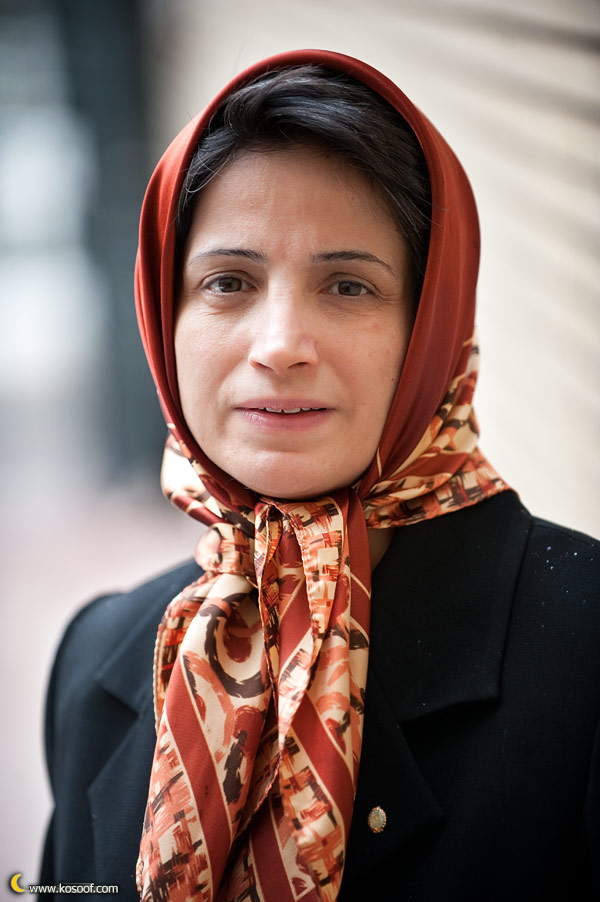 Read the rest of this entry »
Guatemala Genocide Trial Must Resume, Say Woman Human Rights Leaders
May 2, 2013A coalition of seven female Nobel Prize winners, including Dr. Rigoberta Menchú Tum of Guatemala, called April 25 for the trial of former dictator Efraín Rios Montt to proceed. Montt was indicted in January for genocide and crimes against humanity, including widespread rape. The trial in Guatemala City was suspended last week mere days before observers expected it to conclude when a lower court judge on April 18 unexpectedly issued a ruling on a legal technicality. Guatemala’s attorney general has called the ruling illegal. The trial marks the first time a head of state has been tried for genocide by his own country’s justice system. Rios Montt is accused of ordering the killings of over 1,700 Ixil Maya people in 1982 and 1983, when he was army general and de-facto president of Guatemala. Read the rest of this entry »
Russia now tries to cut CAT under ‘Foreign Agents’ Law
May 2, 2013 reports that on 22 April 2013 the Committee Against Torture (CAT) is the next NGO received a letter of warning from the local Prosecutor’s Office. The letter alleges that CAT is violating the controversial new ‘Foreign Agents’ Law, which states that any Russian NGO involved in political activity and receiving foreign funding must register as a foreign agent.
CAT processes complaints about torture and inhuman or degrading treatment, carries out public investigations, represents the victims’ interests in court and before investigative bodies, and provides assistance with obtaining compensation. The letter from the Prosecutor’s Office states that CAT receives funds from sources outside of Russia, information which is freely available on CAT’s website. The letter also states that CAT has taken part in certain public events, unidentified in the letter, which the authorities consider to be political. According to the authorities, therefore, CAT should have registered as a foreign agent. Read the rest of this entry »
UN Rapporteur on Eritrea denied access to the country – goes to neighboring countries on 30 April
April 29, 2013
The United Nations Special Rapporteur on the human rights situation in Eritrea, Sheila B. Keetharuth, will carry out an official visit to Ethiopia and Djibouti from 30 April to 9 May 2013 to collect information directly from Eritrean refugees on the human rights situation in their country. As in the case of Iran, Eritrea refuses access to the UN Rapporteur. “Due to lack of access to Eritrea, I will engage with all others concerned by human rights in Eritrea, including those who consider themselves to be victims of alleged human rights violations, human rights defenders and other civil society actors,” Ms. Keetharuth said. Another case of non-cooperation with UN mechanisms that should not be rewarded. Read the rest of this entry »
 Hans Thoolen on Human Rights Defenders and their awards