Posts Tagged ‘Human Rights Watch’
April 3, 2015
Posted in HRW, human rights, Human Rights Defenders | Leave a Comment »
Tags: Azerbaijan, Council of Europe, EU, EurasiaNet, Georgia, Giorgi Godia, Giorgi Lomsadze, Human Rights Watch, illegal detention, international commitments, Intigam Aliyev, Khadija Ismayilova, Leyla Yunus, Rasul Jafarov, trial observation
March 27, 2015
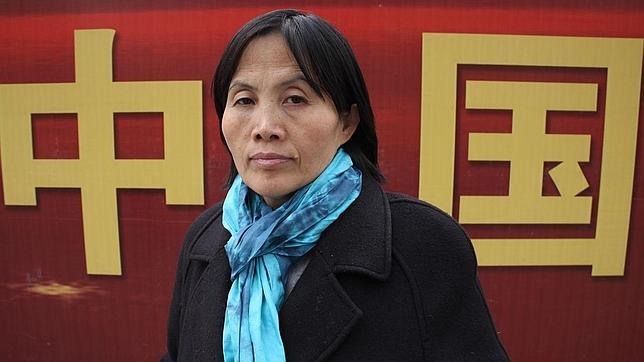
When late Chinese human rights defender Cao Shunli – as Final Nominee of he Martin Ennals Award 2014 – got a standing ovation during the ceremony in October last year, we all said, with the 10 NGOs on the Jury, that we should not forget her. On 19 March 2015 in a statement to the UN Human Rights Council that is exactly what a group of NGOs [International Service for Human Rights and supported by Human Rights Watch, CIHRS, CIVICUS, Conectas, EHARDP, Article 19, HRHF and ALRC] asked for: Ensure independent investigation into death of Cao Shunli.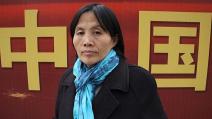
China must ensure a full, independent and impartial investigation into the death of Chinese human rights defender Cao Shunli, ..If Chinese authorities are unable or unwilling to conduct such an investigation in accordance with international standards, the Human Rights Council as the world’s top human rights body must take appropriate action, the statement said.
‘One year after her tragic death, there has been no adequate investigation or accountability in relation to the death of Chinese defender Cao Shunli,’ said Michael Ineichen, Head of Human Rights Council Advocacy at ISHR. ‘If China is let of the hook for such a blatant case of reprisals against someone wanting to cooperate with UN human rights mechanisms, the Council sends a message to rights abusers that activists can be attacked with impunity.’
The statement highlighted the negative effect of impunity for cases of intimidation and reprisals, as shown by the numerous reported cases of intimidation and reprisals occurring during the 28th session of the Human Rights Council, including against South Sudanese and Bahraini defenders.
The legal and moral obligations of States to protect those who cooperate with the UN are clear, and if a State fails to conduct stop reprisals or to properly investigate allegations, the UN has a responsibility to act, the statement said.
‘We welcome recent advances on the institutional level, such as the treaty body policies that recognise States’ primary duty to ensure accountability in the case of reprisals, and the UN’s own duty of care,’ said Eleanor Openshaw, Head of Reprisals Advocacy at ISHR. ‘However, in the absence of a more systematic approach, such as through a dedicated focal point on reprisals which could coordinate investigation of and follow-up to individual cases, these steps will remain the proverbial drop in the ocean’ The statement is available as a PDF and video.
for more on reprisals in this blog see: https://thoolen.wordpress.com/tag/reprisals/
Posted in awards, CIHRS, HRW, human rights, Human Rights Defenders, ISHR | 2 Comments »
Tags: Cao Shunli, China, Conectas, Eleanor Openshaw, HRW, Human Rights House Foundation, Human Rights Watch, International Service for Human Rights, ISHR, MEA final nominee 2014, Michael Ineichen, reprisals, statement, UN Human Rights Council
December 18, 2014
President Obama’s announcement to normalize relations with Cuba has led to a range of reactions. Most of the world (the UN General Assembly has called for an end to the US embargo for years – in October 2014, 188 of the 192 member countries voted for a resolution condemning the policy) and certainly most of the human rights movement, including in the US itself, has welcomed the long-overdue move:
E.g. Human Rights Watch and RFK Human Rights have come with positive comments:
“It’s been clear for years that US efforts to promote change in Cuba through bans on trade and travel have been a costly and misguided failure. Rather than isolating Cuba, the embargo has isolated the United States, alienating governments that might otherwise speak out about the human rights situation on the island.” said José Miguel Vivanco, Americas director of HRW on 18 December. [the statement of HRW added: Nevertheless, the Cuban government continues to repress individuals and groups who criticize the government or call for basic human rights. Arbitrary arrests and short-term detention have increased dramatically in recent years and routinely prevent human rights defenders, independent journalists, and others from gathering or moving about freely. Detention is often used pre-emptively to prevent people from participating in peaceful marches or meetings to discuss politics. Detainees are often beaten, threatened, and held incommunicado for hours or days.] “The embargo has imposed indiscriminate hardship on Cubans, but done nothing to end abuses,” Vivanco said. “The Obama administration should make human rights a focus of its Cuba policy but look for more effective ways – including working with other democracies in the region – to press the Cuban government to respect fundamental rights.”
On 17 December, Kerry Kennedy and Santiago A. Canton, on behalf of Robert F. Kennedy Human Rights, welcomed the announcement saying that the change in policy will lead to an opening of dialogue at all levels between the United States and Cuba, including on the issue of protecting and advancing human rights.
Still, some chose to disagree:
The Washington Times reports that former Florida Gov. Jeb Bush was one of many Republicans to criticize President Obama’s move on Wednesday to open up diplomatic relations with Cuba, saying the move undermines the “quest for a free and democratic Cuba“…..Mr. Bush, who announced Tuesday he was actively exploring a bid for the presidency in 2016, said he’s “delighted” that American Alan Gross was freed after five years in prison, but said it was “unfortunate” that the United States chose to released three convicted spies as part of the deal. …Earlier this month, Mr. Bush said the U.S. should consider strengthening its embargo against Cuba at the annual luncheon of the U.S.-Cuba Democracy PAC as he pledged support for the group, a strong defender of the policy.
In the Hudson Reporter (Hudson County is home to thousands of Cuban emigrants and refugees) Congressman Albio Sires stated: “What should be a joyous moment to celebrate the overdue homecoming of Alan Gross today has been marred by the actions undertaken by the administration to secure his release”.. “The president’s announcement today detailing plans for a loosening of sanctions and initiating discussions to re-establish diplomatic relations with Cuba is naïve and disrespectful to the millions of Cubans that have lived under the Castros’ repressive regime; and the thousands of human rights defenders that have fought tirelessly and at times with their lives to bring about democratic change to Cuba. Moreover, “while I may welcome the release of over 50 political prisoners, little has been said for the countless others that remain inside a Cuban prison or the fact that the same 50 plus prisoners freed today could very well be imprisoned again tomorrow for exercising the same human rights of free speech that unjustly placed them inside prison the first time.”
US/Cuba: Obama’s New Approach to Cuba | Human Rights Watch.
http://rfkcenter.org/robert-f-kennedy-human-rights-welcomes-president-obamas-announcement-of-a-change-in-united-states-policy-towards-cuba
http://www.washingtontimes.com/news/2014/dec/17/jeb-bush-obamas-cuba-move-latest-foreign-policy-mi/
http://www.hudsonreporter.com/view/full_story/26253357/article-Mixed-reactions-to-news-of-Pres–Obama-s-change-of-policy-on-Cuba?instance=top_story
Posted in HRW, human rights, Human Rights Defenders | Leave a Comment »
Tags: Cuba, diplomacy, embargo, HRW, Hudson Reporter, Human Rights Defenders, Human Rights Watch, Jef Bush, José Miguel Vivanco, Kerry Kennedy, President Obama, RFK, Robert Kennedy Human Rights, Santiago A. Canton, USA, Washington Times
October 1, 2014
In a Q&A released on 29 September, Human Rights Watch addresses some of the recurring criticisms of the Human Rights Act and the European Convention.
The Q&A responds to the criticism that human rights make it difficult to deport foreigners who have committed serious criminal offences. In fact, the UK already has legal powers to deport foreigners convicted of a serious criminal offence, but human rights law prohibits the deportation of a person in the limited cases where they would face a real risk of death, torture, or ill-treatment in the country of destination or have no prospect of a fair trial. Courts can also block a deportation if there would be a serious adverse impact on the deportee’s family, but in reaching such decisions courts must weigh the potential harm to the individual, the individual’s family (who may be British citizens), and the impact on society if he or she were allowed to remain.
The Q&A also addresses the criticism that the Human Rights Act is undemocratic. If a domestic court finds a UK law to be inconsistent with the Human Rights Act, it cannot strike down that law. It can only note that incompatibility and it is then for parliament to decide whether and how to change the law, in comparison to many other democratic countries where courts can strike down laws. As a last resort, people who invoke those rights unsuccessfully before UK judges can still seek to take their case to the court in Strasbourg, an arrangement approved by British governments for many decades.
The European Convention and the rulings of the European Court of Human Rights are binding on governments across the 47 countries that are part of the Council of Europe. The European Court has played a key role in protecting the rights of 800 million people across the Council of Europe region. Its rulings have been instrumental ending torture in police custody, ensuring victims of abuses by state authorities have access to justice and allowing people to express themselves freely. In many countries the court offers the only meaningful chance for justice for those whose rights are abused.
Reaffirming human rights at home is essential for any UK government that seeks to promote respect for human rights around the world. If the UK is to have any credibility on human rights in its foreign policy, it should strengthen, not weaken, its own human rights protections, Human Rights Watch said.
Attacks in the UK on the European Court of Human Rights undermine those efforts and provide succor to abusive governments in the Council of Europe that would prefer to ignore the European Court. The only European country currently not a member of the Council of Europe is Belarus. The only country to have withdrawn from the ECHR was Greece in 1969, while it was under a military dictatorship.
“The UK’s withdrawal from the European Convention would be welcomed by abusive governments everywhere,” Leghtas said. “But it would gravely weaken an institution that has done so much to safeguard and advance basic freedoms across Europe and it would destroy the credibility of the UK when discussing human rights internationally.”
UK: Parties Should Commit to Rights | Human Rights Watch.
Posted in HRW, human rights | 1 Comment »
Tags: anti-terrorist laws, binding international law, complaint procedure, deportation, Europe, European Convention, European Convention on Human Rights, HRW, Human Rights Act (UK), Human Rights Watch, Izza Leghtas, political debate, UK, withdrawal
September 8, 2014
During the current session of the Human Rights Council there will again many side events in Geneva. I will refer to some of them not only in the hope that you may able to attend, but also to illustrate the concerns of the NGO movement:
On Tuesday 9 September from 12.00 to 13.30 (Palais des Nations, Room XXI) there will be a side-event organised jointly by Amnesty International, CIVICUS, Human Rights Watch, FIDH, ISHR and the International Bar Association. Speakers are:
- Kenneth Roth, Executive Director, Human Rights Watch
- Souhayr Belhassen, Honourary President, International Federation for Human Rights FIDH
- Philip Luther, Middle East and North Africa Program, Amnesty International
- Phillip Tahmindjis, Director, International Bar Association Human Rights Institute
- Moderator: Yves Magat, Journalist, Télévision Suisse Romande
Posted in Amnesty international, FIDH, HRW, human rights, ISHR | Leave a Comment »
Tags: Amnesty International, Civil society, Egypt, FIDH, Geneva, Human Rights Council, Human Rights Watch, impunity, International Bar Association, International Bar Association Human Rights Institute Moderator, ISHR, Kenneth Roth, NGOs, Philip Luther, Phillip Tahmindjis, repression, side event, Souhayr Belhassen
August 29, 2014
On 21 August I reported on the travails of an Egyptian family of human rights defenders [
https://thoolen.wordpress.com/2014/08/21/an-exceptional-egyptian-family-of-human-rights-defenders/], a week later
Mona Seif’s father has died.
Ahmed Seif Al Islam was a veteran
Egyptian lawyer, activist and former political prisoner. Arrested and tortured by State Security Investigations officers in 1983 for his political activity, he served five years in prison. Founder of the Hisham Mubarak Law Centre, which since 2008 has been providing legal assistance to protesters. The Hisham Mubarak Law Centre (HMLC ) monitored state violence during the 2011 protests, and became a gathering place for human rights activists during the revolution. Ahmed Seif was arrested by Military Intelligence with his staff at the height of the protests.
Seif, a human rights lawyer, was on the legal defense team in numerous high-profile trials of human rights, labor, and more broadly political activists in the Hosni Mubarak years, but he was above all an activist himself. The was more often than not the coordinating center for planning peaceful demonstrations and then, invariably, for deploying lawyers to various detention centers in response to the usual mass arrests that followed such events.In a conversation I had with Seif several years ago, in February 2007, he told me how he became engaged in human rights activism and lawyering:
Read the rest of this entry »
Posted in HRW, human rights, Human Rights Defenders | Leave a Comment »
Tags: Ahmed Seif Al Islam, detention, Egypt, Hisham Mubarak Law Centre (HMLC), Human rights defender, Human Rights Watch, in memoriam, legal assistance, military trials, Mona Seif, Seif Al Islam
May 31, 2014
I announced the HRW film festival in an earlier post [https://thoolen.wordpress.com/2014/05/13/human-rights-watch-film-festival-celebrates-25th-anniversary-with-5-films-on-human-rights-defenders/] but now that the Huffington post of 31 May 2014 has listed the 10 films it says every human rights defender should see, I gladly share their pick:
1. Sepideh — Reaching for the Stars (Denmark/Iran/Germany/Norway/Sweden) The story of a teenage girl named Sepideh, living in a rural village outside of Tehran, who dreams of becoming a famous astronomer. The documentary tackles gender roles in Iran while showcasing one young woman’s ambition and strength in the face of her family’s discouragement, university pitfalls and societal expectations. Directed by Berit Madsen. [youtube https://www.youtube.com/watch?v=wTzbIc6oiqs?wmode=opaque]
2. Dangerous Acts Starring the Unstable Elements of Belarus (US/UK/Belarus) Made up of smuggled footage and uncensored interviews, this documentary gives audiences a glimpse into Belarus’ dissident movement as it takes the shape of stage performances and public activism. Directed by Madeleine Sackler. [youtube https://www.youtube.com/watch?v=LGALySJ3O24?wmode=opaque]
3. Lady Valor: The Kristin Beck Story (US) A veteran shares her story moving from one identity, a former U.S. Navy Seal named Chris Beck, to another, a transgender woman named Kristen Beck. Directed by Sandrine Orabona. [youtube https://www.youtube.com/watch?v=r21OdLSTfQY?wmode=opaque]
4. A Quiet Inquisition (US) Here you’ll meet OBGYN Dr. Carla Cerrato, who must navigate the perilous territory of Nicaragua’s anti-abortion policies, which prohibit abortion, even in cases of rape, incest, or when a woman’s life is at stake. Directed by Alessandra Zeka and Holen Sabrina Kahn.
5. Scheherazade’s Diary (Lebanon) This “tragicomic documentary” follows women inmates in Lebanon as they stage a theater/drama therapy project titled “Scheherazade in Baabda,” revealing personal stories of domestic violence, failed relationships and traumas associated with motherhood. Directed by Zeina Daccache. [youtube https://www.youtube.com/watch?v=5VnZGmd6EMg?wmode=opaque]
6. Siddharth (Canada/India) One father’s desperate journey to locate his son, a 12-year-old boy who was sent to work in another province to support his family, but did not return and is feared to have been kidnapped or trafficked. Directed by Richie Mehta.
7. The Supreme Price (US) The film covers the evolution of the Pro-Democracy Movement in Nigeria and efforts to increase the participation of women in leadership roles. Directed by Joanna Lipper.
8. Private Violence (US) Questioning the accepted discourse on domestic violence, the documentary introduces audiences to two women survivors who advocate for justice while exploring “the fact that the most dangerous place for a woman is her home.” Directed by Cynthia Hill.
9. The Beekeeper (Switzerland) This is the touching story of Ibrahim Gezer, a Kurdish beekeeper from southeast Turkey who, robbed of his family, possessions and 500 bee colonies, moves to Switzerland to make a new life. Directed by Mano Khalil.
10. Abounaddara Collective Shorts from Syria (Syria) The Abounaddara Collective is a group of filmmakers who came together in 2010 to help provide an alternative image of Syrian society, one not seen in mainstream media. This portion of the festival will showcase 90 minutes of their short films.
The Human Rights Watch Film Festival will run from June 12 to June 22, 2014. See a complete schedule of screenings here.
10 Films Every Human Rights Advocate Should Watch.
Posted in films, HRW, human rights, Human Rights Defenders | Leave a Comment »
Tags: awareness raising, Belarus, Documentary film, film festival, films, HRW, Huffington Post, Human Rights Defenders, human rights film festival, Human Rights Watch, images, New York, YouTube
May 27, 2014
On 27 May RIA Novosti picked up the press release by Human Rights Watch calling for four prominent human rights defenders allegedly in custody of an armed opposition group in Syria to be immediately released. HRW together with 45 co-signing organizations states that irregular armed opposition groups in Syria are threatening and harassing journalists and human rights defenders.“Abductions of human rights defenders by armed groups in Syria are an assault on the very freedoms the armed opposition groups claim to be fighting for”. Almost six months a group of armed men kidnapped human rights defenders Razan Zeitouneh [or Zaitouneh], Wael Hamada, Samira Khalil, and Nazem Hammadi in a city outside Damascus, then controlled by a number of armed opposition groups, but there has been no information on the status or whereabouts of Zeitouneh and her colleagues, and no group has claimed responsibility for their abduction.
See previous post with video message by Zaitouneh: https://thoolen.wordpress.com/2014/01/27/human-rights-defender-razan-zaitouneh-still-missing-in-syria-after-one-month/
via HRW Demands Syrian Militants Release Rights Defenders Working to Expose Rebel Abuses | World | RIA Novosti.
Posted in films, HRW, human rights, Human Rights Defenders | Leave a Comment »
Tags: disappearances, freedom of expression, HRW, Human Rights Defenders, Human Rights Watch, journalists, kidnapping, Razan Zaitouneh, Razan Zeitouneh, rebel groups, reporting, RIA Novosti, Syria
May 18, 2014
In an excellent piece written for CNN, Tanya Lokshina of Human Rights Watch, on 15 May gives an overview of the different measures that threaten human rights defenders in Russia. While attention is on Ukraine, a vicious crackdown on civil society in Russia itself also escalated with every week brings a new pernicious law or legislative proposal:
- The authorities have blocked or essentially took editorial control over a number of independent news portals and are pushing new laws to stifle freedom of expression.
- A week ago, President Vladimir Putin signed a law requiring Russian bloggers with significant followings to register with the authorities and comply with media regulations.
- The same law requires blogging services and social networks to store user activity for six months.
- Another legislative proposal would introduce administrative and criminal offenses for editors who publish “false anti-Russian” information or offer media support to “anti-Russian extremist and separatist forces.”
- Another new draft law introduces a ban on publishing negative information about the Russian government and military.
- Also, amendments presently under review by the State Duma, the lower house of parliament, would enable the authorities to throw people behind bars for up to five years for repeated participation in unauthorized public protests.
At the same time the infamous Russian law “on foreign agents”, Read the rest of this entry »
Posted in Front Line, HRW, human rights, Human Rights Defenders | Leave a Comment »
Tags: ADC Memorial, bloggers, Civil society, foreign agent law, freedom of association, freedom of expression, Front Line (NGO), Human Rights Defenders, Human Rights Watch, judicial harassment, media, nationalist group, Russia, Tanya Lokshina, Women of the Don
May 14, 2014
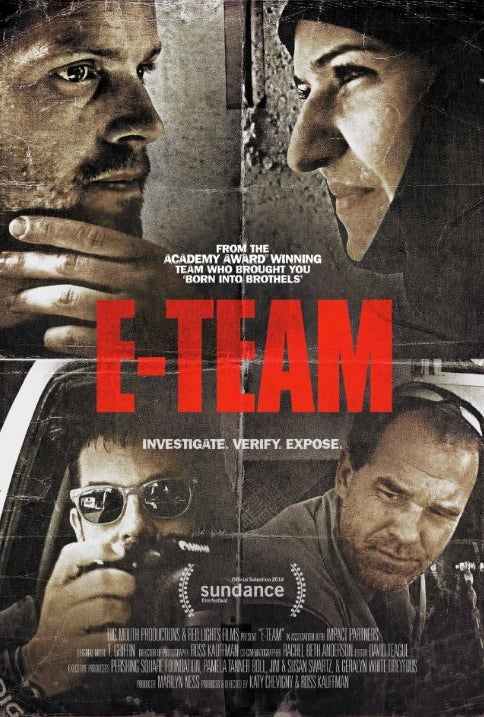
Yesterday I referred to the upcoming Human Rights Watch Film Festival in June. One of the films shown there will also appear on Netflix and therefore be able to reach a much larger audience. Interesting development for human rights films!!
Posted in films, human rights, Human Rights Defenders | Leave a Comment »
Tags: Documentary film, E-team, film, HRW, Human Rights Defenders, human rights film festival, human rights films, Human Rights Watch, images, Kosovo, Libya, monitoring, Netflix, Syria
 Hans Thoolen on Human Rights Defenders and their awards