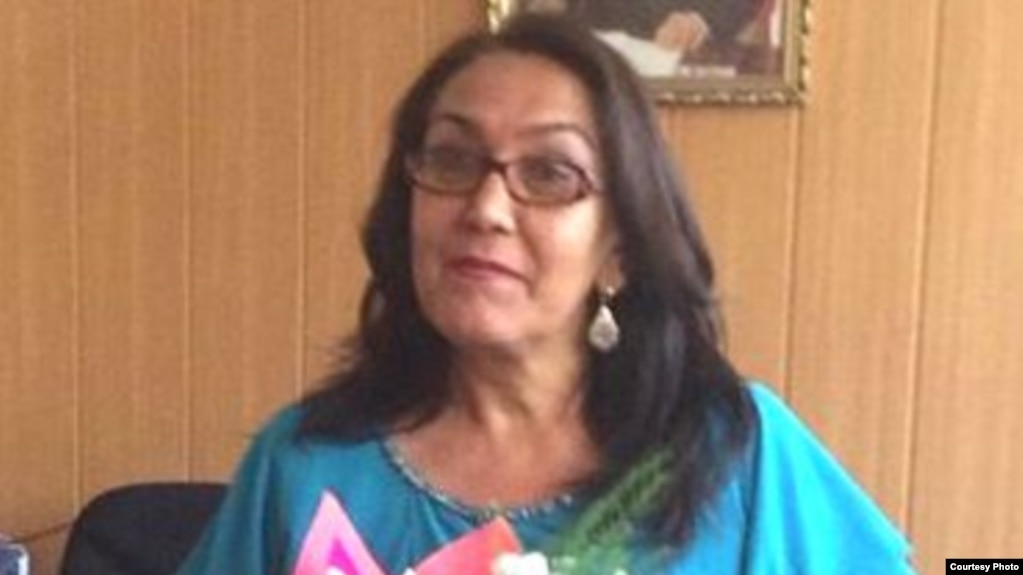
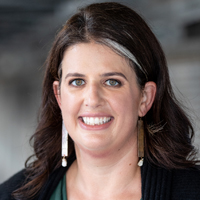
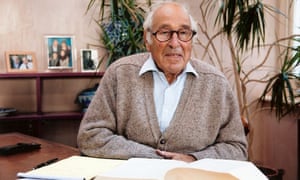
Radio Free Europe (RFE) announced on 4 January 2019 that Faiziniso Vohidova, a Tajik lawyer who defended dissidents for decades, died at the age of 55.
Faiziniso Vohidova in 2016
Faiziniso Vohidovawas a graduate of Moscow State University and started her career as a lawyer in 1995. She was one of the last lawyers in Tajikistan who provided legal assistance to opposition figures, journalists, and victims of torture. Steve Swerdlow, researcher with Human Rights Watch, called Vohidova’s death “a huge loss for Tajikistan” and described her as a brave “lawyers’ lawyer.”
“[Vohidova] was an amazing combination of fierce intellect, sharp wit [and] principle. [For] duration of Tajikistan’s independence she has been part of that small group of activists and lawyers who have sought to make it live up to the democratic pronouncements written in its Constitution,” Swerdlow wrote on Twitter, adding that she was “unafraid to take on the toughest battles, fight for justice till the end, no matter what the odds.”
Rajabi Mirz, an independent journalist and rights defender in Tajikistan, told RFE/RL that Vohidova was “the last pillar” of those challenging the authorities in Tajikistan. “She was one of the few who cared about Tajikistan’s future,” Mirzo said.
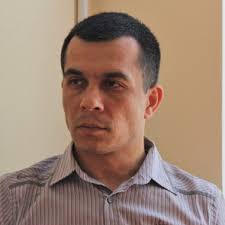
esponding to the news that Crimean lawyer Emil Kurbedinovwas detained by the de-facto authorities in Russian-occupied Crimea and is now facing charges for a Facebook post he made five years ago, Marie Struthers, Amnesty International’s Director for Eastern Europe and Central Asia said: “Following yesterday’s arrest of prominent human rights defender Lev Ponomarev in Moscow, the detention of Emil Kurbedinov is the second time in two days that a human rights defender has been thrown behind bars over a Facebook post….The similarities of these two cases are obvious, even if they are not directly related. Both men are prominent members of the human rights community and both have been deliberately targeted by Russian authorities for this very reason. See also:
Background: Emil Kurbedinov, a human rights defender and lawyer for a number of Crimean Tatar activists prosecuted by the Russian authorities, was detained on 6 December by Russian Interior Ministry officers on his way from home to his office in the Crimean capital Simferopol. He faces charges under the Russian law forbidding “propaganda or public demonstration of Nazi or other extremist attributes or symbols”, on account of his 2013 Facebook post on a Hizb ut-Tahrir event in Simferopol published a year before Russia occupied the peninsula. A number of groups and organizations which legally exist in Ukraine, including Hizb ut-Tahrir, are banned in Russia. On 5 December, a court in Moscow sentenced 77-year-old human rights activist Lev Ponomarev to 25 days in administrative detention for a Facebook post.
Prominent human rights lawyer Abdolfattah Soltani in Iran was granted conditional release after serving more than seven years, reports the Guardian on 21 November 2018.
“The authorities agreed yesterday to my client’s conditional parole and he was released today,” Soltani’s lawyer Saeed Dehghan said on Wednesday, according to IRNA.
Soltani was jailed in 2011 over charges of “spreading propaganda against the system” and “setting up an illegal opposition group”, Amnesty International said at the time. He was granted conditional release after serving more than half a 10-year term, IRNA said. A previous parole request on 8 July had been denied, according to his lawyer. Soltani was a co-founder of the now outlawed Defenders of Human Rights Centre alongside Nobel peace prize laureate Shirin Ebadi and others. The human rights lawyer’s release could not be immediately confirmed with his family. Soltani was briefly released from prison in August to attend the funeral of his 30-year-old daughter, Homa, who died of a heart attack.
Benjamin Ramos is hailed for his work as a lawyer for marginalized sectors. Photo from the National Union of Peoples’ Lawyers’ Facebook page
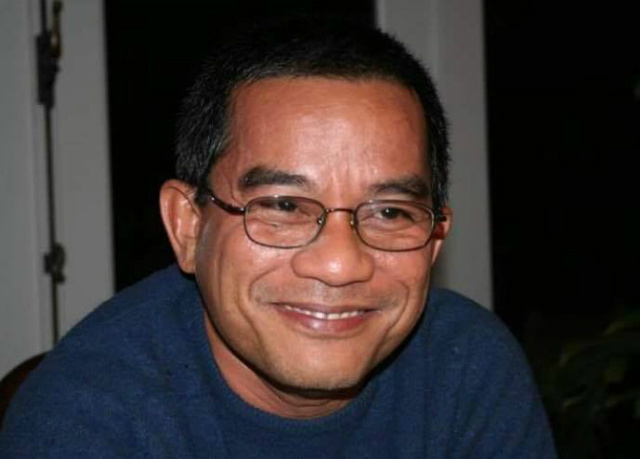
On Wednesday, 7 November many NGOs condemned the murder of human rights lawyer Benjamin Ramos, which comes amid continuous violence against human rights defenders in the Philippines. Ramos, the secretary-general of the Negros Occidental arm of the National Union of Peoples’ Lawyers (NUPL), was shot dead by riding-in-tandem assailants on Tuesday night, 6 November in Kabankalan City. A known human rights defender, Ramos represented political prisoners, farmers, and other members of marginalized sectors in his career as a pro-bono lawyer. Among those he worked with were the Mabinay 6, including youth leader and University of the Philippines Cebu alumna Myles Albasin. They were arrested in March 2017 in Mabinay, Negros Oriental, following an alleged clash with government troops.
The Commission on Human Rights (CHR) expressed concern that Ramos’ death is the latest in the “growing incidents of injustices reported.’“We call on the government to act with urgency in pinning down the perpetrators of this violence and proceed with active measures that would protect the safety of human rights defenders who continue to serve this country’s most vulnerable and marginalized,” CHR spokesperson Jacqueline de Guia said.
NUPL, in a statement, said “beastly attacks by treacherous cowards cannot go on.” “Not a few of our members have been attacked and killed before while literally practicing their profession and advocacies in the courts, in rallies, in picket lines, in urban poor communities, and in fact-finding missions,” NUPL said.
Human Rights Watch (HRW), meanwhile, tagged the incident as “a blow to the human rights movement in the country” which has suffered from threats, including from President Rodrigo Duterte himself. “We demand an impartial investigation into Ramos’ murder and the many other attacks against lawyers in the Philippines and that the authorities bring the perpetrators to justice,” said Carlos Conde of HRW Asia Division.
“I condemn the murder of a fellow member of the Bar. I am outraged at the thought that his advocacy could have caused his own murder or might justify it. His murder is inexcusable and must be investigated, and the perpetrators, brought to justice,” Chel Dioknonational chairman of the Free Legal Assistance Group (FLAG)said in a statement.
In 2017 alone, Ireland-based Front Line Defenders recorded 60 deaths in the Philippines. Since 2001, there have been at least 613 documented killings. To see some of my earlier posts on the Philippines, see: https://humanrightsdefenders.blog/tag/philippines/
Facing death threats, human rights groups have repeatedly called on the government to recognize their role in society by passing the human rights defenders’ protection bill
Since joining McCarter & English as pro bono director two years ago, Michelle Movahed has helped bring about increases in firmwide pro bono hours (by 3,000 hours annually) and in pro bono-to-billable hours ratio (even as billables increased, according to the firm). The program also has taken up a broader range of cases under Movahed, including immigration detainee asylum matters. And she recently saw through the firm’s creation of a pro bono fellowship to benefit the city of Newark, which includes a full-time attorney position. David Gialanella interviewed her on November 2018 for the New Jersey Law Journal:
What’s your single best piece of advice for handling a crisis?
Focus on what you can control, take ownership of all of it, and move forward.
Name a mentor or someone you admire, and why.
I deeply admire my clients. I’ve been very lucky to work for human rights defenders, for individuals who have stepped up to right a wrong, and, most recently, for asylum-seekers who have made harrowing journeys to escape truly horrendous trauma.
Best advice you ever got…
I’ve never been as nervous as I was the night before my first big oral argument, on our motion for a TRO to keep the doors open at the last comprehensive reproductive health clinic in Mississippi. By around 10 p.m., everyone I worked with was telling me to go to sleep and stop preparing so I’d be well-rested. I just didn’t feel like it was time yet, but I also knew I didn’t know enough to make that judgment call. So I asked for help: I wrote to the judge I’d clerked for, whose opinion I value more than almost anyone, to ask for words of wisdom. The advice he gave me was incredible, and I must have read his email a hundred times over the next 12 hours until I went in to the courthouse. He reminded me that I couldn’t lie to myself about how nervous I was, how high the stakes were, and how hard my case was. So, he said, “don’t f— it up.” If I could have that embroidered on a pillow, I would. I stayed up late, prepared until I knew I had done everything I could to avoid f-ing up, and was completely on my game at the argument. (We got the TRO, and the clinic stayed open.)
What has the #MeToo movement meant to the legal profession?
The hashtag is new, but the issues aren’t. #MeToo, #BlackLivesMatter, and #TimesUp are reminders that lawyers have a responsibility to use our privilege to challenge oppression wherever it appears. Our professional obligations include the duty to speak up when we know another lawyer has violated the rules of professional conduct; but our ability to promote justice is much broader, and we should use it.
In 50 words or less, what does the legal profession need to do to improve opportunities for women lawyers?
Every lawyer should seek out opportunities to teach, mentor, and otherwise make space for lawyers with less privilege: not only women, but also lawyers of color, who are LGBTQIA, who have disabilities, who are from other traditionally marginalized groups, and who are at the intersections of those identities.
Looking ahead to next month’s UN Forum on Business and Human Rights, ISHR featured this profile ISHR trainee and Thai lawyer Sor Rattanamanee Polkla. Sor describes her work improving access to justice for those affected by development projects in rural Thailand, and explains how she plans to use the connections she made with ISHR and others at the Forum to expand her network and support her community on the ground.
Becca Heller – a Human Rights Lawyer with the International Refugee Assistance Project in New York – became a MacArthur ‘Genius” scholar in 2018. She has been mobilizing the resources of law schools and law firms to defend the rights of refugees and improve protection outcomes for many of the world’s most at-risk populations.
ABOUT BECCA’S WORK
Becca Heller is a human rights lawyer mobilizing the resources of law schools and law firms to defend the rights of refugees and improve protection outcomes for many of the world’s most at-risk populations. She is the director and co-founder of the International (originally Iraqi) Refugee Assistance Project (IRAP), which provides legal services to individual refugees as they navigate labyrinthine application, appeal, and resettlement processes under U.S. and international law.
IRAP functions as a nimble, “virtual” public interest law firm that partners with volunteer attorneys who work pro bono on urgent refugee cases, often teamed with law students. Founded as a student organization at Yale Law School in 2008 to help Iraqis displaced by war safely resettle in the West, IRAP has since established chapters at 29 law schools and partnerships with more than 100 law firms and has expanded its reach to refugees from countries throughout the Middle East and North Africa. Cases are taken on through IRAP’s field offices in Jordan and Lebanon as well as referrals from the United Nations High Commissioner for Refugees, among numerous other organizations, with a special focus on highly vulnerable individuals, such as children with medical emergencies; Iraqi and Afghan wartime allies; those persecuted for reasons of religion, sexual orientation, or gender identity; and survivors of gender-based violence. Lessons learned through individual cases have also led IRAP to advocate for systemic reforms that benefit broader refugee populations, such as improved Special Immigrant Visa processing for Iraqis and Afghans facing threats because of their service to the U.S. military.
More recently, Heller and IRAP played a prominent role in responding to the January 27, 2017, executive order restricting people from seven majority Muslim countries from entering the United States. Anticipating the signing of the order, Heller and colleagues alerted IRAP’s vast network of volunteer lawyers to go to airports to assist those who might be detained. Hameed Darweesh, an IRAP client who served as a translator for the U.S. Army in Iraq, became the lead plaintiff in a lawsuit that resulted in a nationwide stay preventing the deportation of people with valid visas and refugee status. As the number of forcibly displaced people reaches unprecedented levels worldwide, Heller is working to expand pathways to safety for those fleeing persecution and educating a new generation of lawyers about the importance of access to counsel for those whose lives hang in the balance.
BIOGRAPHY
Becca Heller received a B.A. (2005) from Dartmouth College and a J.D. (2010) from Yale Law School. She has served as co-founder and director of the International Refugee Assistance Project since 2008 and was a visiting clinical lecturer at Yale Law School from 2010 to 2018. Heller has authored articles in Foreign Policy and the Stanford Social Innovation Review and is a frequent speaker on immigration and refugee issues.
Louis Jacques Blom-Cooper, lawyer and writer, born 27 March 1926; died 19 September 2018. Blom-Cooper was involved in the foundation of Amnesty International in 1961, supporting Peter Benenson‘s idea for an appeal for amnesty for political prisoners. He was also a Patron of Prisoners Abroad a registered charity which supports Britons who are held overseas, and was a trustee of the Howard League for Penal Reform. He was a fighter against the death penalty.
Edward Fitzgerald published an obituary on the Guardian of 20 September 2018 of this “Trailblazing lawyer who was a champion of prison reform and a fearless campaigner against the death penalty”:
….
The enduring value of Louis’s work is likely to lie in his campaigning, supported by astute legal scholarship, against the death penalty, his contribution to the foundation of Amnesty International and his lifelong championship of the cause of penal reform and prisoners’ rights. For half a century he was a courageous advocate, a controversial legal author and journalist, a deputy high court judge and a forthright and radical chairman of numerous public inquiries and bodies. A man of extraordinarily wide intellectual interests, he was generous in his encouragement of younger lawyers and his availability and accessibility to his many prisoner clients.
Louis Blom-Cooper in 2015. He was a prolific, informed and provocative legal journalist, writing for the Guardian and the Financial Times
Born in London, Louis was the son of Alfred Blom-Cooper, a fruit and vegetable trader, and his wife Ella (nee Flesseman), who lived in Mill Hill. After attending Port Regis school in Dorset and Seaford college in West Sussex, Louis joined the East Yorkshire Regiment towards the end of the second world war (1944-47). He studied law at King’s College London, Fitzwilliam College, Cambridge, and the Municipal University of Amsterdam, where he obtained his doctorate in 1954.
He retained a spirit of inquiry in writing numerous challenging books on the death penalty, penal reform and murder law, notably the imposition of a mandatory life sentence for murder. But he also argued for the abolition of the jury system, because it did not give the convicted offender any reasons for his conviction.
….He was the first to argue for the extension of the principles of natural justice or fairness to the field of immigration and asylum law in cases such as that of the American journalist Mark Hosenball, deported in 1977 as a security risk after revealing the existence of GCHQ in a magazine article. ..
Most of all, Louis was a leading proponent of a general duty to state reasons in administrative law and made a judgment to that effect in his capacity as a high court judge. Rejected at the time as too advanced a position, the duty to give reasons for executive decisions has now been widely accepted.
….
As chairman of the Press Council (1989-90), he supported the principle that there should be a requirement that newspapers accord a right of reply to those they attacked. He also called for a law against the invasion of privacy, introduced changes to give complainants a better hearing and speed up adjudications, and also introduced a code of practice for newspapers. But it proved to be too little, too late.
Polish lawyer Adam Bodnar – Defender of minority rights and judicial independence in Poland (Photo credit: Kluczek/RPO.GOV.PL )
The Rafto Prize 2018 is awarded to the Polish lawyer Adam Bodnar and the institution he leads, the Office of the Commissioner for Human Rights, for the important stance taken in the face of current political developments in Poland. A key function of the Ombudsman, or the Commissioner for Human Rights, is to ensure that the public authorities secure and respect the human rights of all members of Polish society. As lawyer and Ombudsman, Adam Bodnar (41) has highlighted the crucial role played by independent Ombudsman institutions in safeguarding human rights in Poland – and other countries – where such actors and institutions increasingly have come under attack.
Since Law and Justice (PiS) won the Polish election in October 2015, the party has used its majority in the National Parliament to adopt legislation that reduces the independence of the courts and centralizes state powers. New laws grant the government control of state media and place severe limits on freedom of information and political lobbying. The rights of vulnerable groups have been repeatedly ignored. “The award is not just an award to my work and the institution, but mostly a support from your community given to the Polish civil society, academia, judges and lawyers fighting for rule of law, juridical independence, pluralism and protection of minorities in Poland,” said Adam Bodnar.
The Rafto Prize for 2018 to Adam Bodnar and the Ombudsman for Human Rights highlights the rolling back of democracy and human rights protections in Poland. The conflict over the Polish Constitutional Tribunal and the Supreme Court are important internationally because they are symbolic of an alarming tendency where the independence of courts increasingly is under political pressure. It is crucial that the international community, the EU, Norway and other European countries take a clear stance against human rights violations and attacks on the rule of law and minority rights that take place in our own region. Adam Bodnar, being the civil servant, cannot accept the prize money awarded along with the Rafto Prize. The Rafto Foundation will identify and donate the prize money to civil society working for human rights in Poland.
One of the most admirable human rights defenders in the world, IranianNasrin Sotoudeh, has gone on hunger strike, Front Line Defenders reports on 25 August 2018. This time in protest against her judicial harassment and the continuing pressure which is being exerted on her family, relatives and friends. The defender was arrested in June and has been in the women’s ward of Evin Prison since.
On 25 August 2018, human rights defender Nasrin Sotoudeh began a hunger strike in protest against her judicial harassment and the continuing pressure which is being exerted on her family, relatives and friends. The next day, the Assistant Prosecutor and two other judicial authorities filed three new charges against her for “urging a referendum,” “assisting in the formation of house churches” and “organising protest rallies”. The human rights defender believes that these charges have been filed as a result of her failure to attend a court hearing on 15 August 2018, when she was sentenced to five years in prison in absentia for “propaganda against the state”, “assembly against national security” and “espionage”. The defender has lodged an appeal against these convictions. On 18 August 2018, at approximately 8 a.m., three agents of Iran’s Intelligence Ministry, holding a warrant from Branch 7 of the Revolutionary Court in Evin Prison, raided Nasrin Sotoudeh’s house while her children were asleep. The agents also raided the house of her sister-in-law. It is believed that the agents were searching for objects related to the defender’s human rights work, such as badges reading “I oppose the compulsory Hijab”.