Posts Tagged ‘Human Rights Defenders’

Dunja Mijatović calls on Russia to end judicial harassment of human rights defenders

October 1, 2020

Yuri Dmitriev

Yuri Dmitriev

On 30 September 2020 the Commissioner for Human Rights of the Council of Europe in Strasbourg issued the following statement:

“Yesterday’s judgment against Yuri Dmitriev, a Russian historian and human rights defender, sentenced to 13 years’ imprisonment in a high-security prison having been acquitted earlier on the same charges, raises serious doubts as to the credibility of his prosecution”, says today Dunja Mijatović, Council of Europe Commissioner for Human Rights. [see: https://humanrightsdefenders.blog/2020/07/24/gulag-historian-yury-dmitriyev-returns-to-prison/]

Mr Dmitriev is widely known in Russia and beyond for his research and his work focusing on the commemoration of victims of past political repression. The harsh verdict delivered by the Karelian Supreme Court in the absence of the legal counsel chosen by Mr Dmitriev cannot be deemed to have complied with fair trial guarantees and is a further illustration of a broader pattern of judicial harassment against human rights defenders, journalists and other independent or critical voices, which has been growing in the Russian Federation in recent years.

Once again I urge the Russian authorities to reverse this alarming trend of targeting Russian civil society. As a matter of urgency the criminal prosecution of a number of human rights defenders, journalists and civil society activists, including those of Abdulmumin Gadzhiyev, Yulia Tsvetkova, Anastasia Shevchenko [see https://humanrightsdefenders.blog/2019/01/22/in-russia-first-criminal-case-under-undesirable-organizations-law/%5Dand Semyen Simonov for engaging in legitimate civil society activities, must stop. As a Council of Europe member state, Russia should also adopt structural measures at the political, legislative and practical level which genuinely create a safe and enabling environment for the work of human rights defenders, as required by European human rights standards. Instead of intimidating and harassing civil society, the Russian authorities at all levels should effectively co-operate with them and publicly acknowledge their essential role and invaluable contribution to society’s democratic development.”


 Commissioner website

Criminalisation of human rights defenders in Europe denounced in UN

September 30, 2020


In a statement delivered on 24 September 2020 in Geneva, ISHR was joined by human rights groups and other community organisations defending the rights of migrants to draw attention to the concerning trends of criminalisation of solidarity in Europe. Responding to the opening remarks of UN High Commissioner for Human Rights Michelle Bachelet, and building on years of work by other experts in the UN system, the groups highlighted the links between protecting the rights of migrants, and the creation of a safe environment for those who seek to protect them. See also: https://humanrightsdefenders.blog/2020/07/31/absurd-prosecution-of-the-crew-of-the-ship-iuventa-continues-in-italy/

ISHR human rights advocate Sarah M Brooks, pointing to research conducted by Migration Policy Group (MPG), CEPS, PICUM and other partners within the frame of the ReSOMA project, noted that in the last five years – from 2014 to 2019 – at least 60 cases of criminalisation, concerning more than 170 individuals, had been documented across the European Union.

Carmine Conte, legal policy analyst at MPG, underlines that since the emergence of the ‘refugee crisis’, there has been an escalation of judicial prosecutions and investigations against volunteers, human rights defenders, crew members of boats involved in search and rescue operations, but also ordinary citizens, journalists, mayors and religious leaders helping migrants.

The European Fundamental Rights Agency has also spoken out on this concern. In the area of migrant search and rescue (SAR) NGOs alone, in the two years between 2018 and 2020, experienced 40 cases of criminal charges, disciplining including administrative fines, de-flagging, seizure and confiscation of ships, or their crews were otherwise were prevented from leaving or docking at port. The Council of Europe Commissioner of Human Rights has recently condemned Malta and Italy using COVID-19 as yet another excuse for non-rescue:

The rights of migrants cannot be fulfilled, Brooks said, without protection of fundamental freedoms for those engaged in the defence of migrants’ rights. ‘Whether it is through humanitarian assistance and search-and-rescue, legal aid or policy advocacy, exercising the right to protest and civil disobedience – including migrants’ own strikes,’ she said, ‘these are protected acts. ‘European governments must do more to protect the right to defend rights.

Lina Vosyliute, Research Fellow at CEPS, one of the leading think-tanks on the EU affairs, has described the increasing suspicion, harrasment, disciplining and criminalisation of those who help migrants  as ‘policing humanitarianism’. At the heart of the problem are so-called  ‘crimes of facilitation of irregular migration’, which Vosyliute deems ‘the most misused criminal provision against human rights defenders in Europe’. The EU Facilitation Directive falls short of the UN Migrant Smuggling protocol, since it does not require any evidence nor suspicion of ‘financial or other material gain’. Under this provision in the EU and Schengen states introduced laws that prosecute ‘any intentional assistance’ to migrants, leaving out the question of motive and, specifically, ‘material or financial benefit’ that are central to smuggling crimes.

Vosyliute concludes, ‘The vague definition of crime is counterproductive. While some prosecutors are investigating on human traffickers or migrant smugglers, who take thousands of euros from asylum seekers and migrants to board on unseaworthy dinghies, others keep policing humanitarians and human rights defenders.’  The prosecutions of Sea Watch 3 captain Carola Rackete in Italy, Team Humanity and Proem Aid volunteers in Greece, or farmer Cedric Herrou in France [see: https://humanrightsdefenders.blog/2019/07/18/interview-with-cedric-herrou-migrants-rights-defender-who-is-the-central-person-in-the-film-libre/], and many others, who helped migrants out of compassion, are used by governments to rather show a strong stance against irregular migration, than to fight the crime.

But far more simple acts of solidarity are also being met with administrative, civil and even criminal penalty. [see: https://humanrightsdefenders.blog/2020/03/04/new-amnesty-report-on-human-rights-defenders-helping-migrants/]

Says Marta Gionco of PICUM, a platform representing more than 160 organisations across Europe and globally that defend undocumented migrants’ human rights: ‘In recent years,  people across Europe have been put on trial for simple acts of human kindness: giving someone a ride in their car in a mountainous area so that they won’t get hypothermia; saving someone’s life who is drowning at sea; giving someone food or shelter; providing shelter and food; or lending a cell phone’.

In response to this trend, last year more than 110 organisations signed a statement asking the European Union to revise the EU Facilitation Directive and support and defend the rights of migrant rights’ defenders across the EU.

Although the majority of documented cases end in acquittal, the financial, social and psychological impact of months, and often years, of criminal proceedings has had a clear chilling effect on their work.

When courts have determined that an individual is not guilty of a crime, state prosecutors – for example, in France – have nonetheless appealed. In the case of defender Pierre Manoni, despite a court decision finding that solidarity is constitutionally protected, prosecutors have filed four separate appeals to question his acquittal on the grounds that he acted out of compassion.  Short-term detentions are also common, with police often failing to substantiate charges. These lengthy and expensive judicial proceedings put peoples’ lives on hold risk.

When these human rights defenders are migrants themselves, the consequences of criminal proceedings are often harsher, frequently resulting in loss of residence permits and threats of deportation. For instance, in 2018 asylum seekers in Moria camp protested in Sappho square after the death of an Afghan asylum seeker.  They were violently attacked by extreme right groups. However, it was not violent attackers, but the asylum seekers themselves who were prosecuted, for the ‘occupation’ of public space.

In another case, Ahmed H – a long-term resident in Cyprus – organised a protest at Hungarian border zone. He has been accused of terrorism-related crimes, for holding a megaphone, and deprived family life for four years. Time and again, asylum seekers and migrants helping each other during the journey are prosecuted as criminals. And in some cases, when they arrive in their destination country, this ‘criminal record’ alone can preclude the access to the right of asylum.

Brooks notes that the European Union, and many EU member states, have been powerful voices at the Human Rights Council and abroad in defending and supporting human rights defenders. However, when it comes to policies at home – often driven by border management mindsets and national security rationales – those same governments are engaged in judicial harassment of defenders.

As Front Line Defenders has noted, criminalisation is only one way in which migrant rights defenders are being targeted, including within Europe. They are also subjected to physical and verbal attacks, short term detention, smear campaigns and arson attacks on their property. Their experiences are largely under-reported because, the organisation notes, human rights defenders and aid workers prioritise cooperation with the authorities; even if it’s extremely fragile, it can be beneficial to the protection of migrants.

‘Judicial harassment, trumped-up charges, threats and intimidation and chilling effects are not unique to countries outside of Europe’s borders. It’s time that European governments took seriously their obligations at home’, Brooks asserts.

The right to help is especially important during the COVID-19 pandemic to ensure that, as the UN has emphasised, ’no one is left behind’.

Says CEPS’ Vosyliute: ‘Our newest study on civic space shows that the work of human rights defenders is ever more vital. Volunteers are sewing masks and distributing soap and hand sanitizer to stop the spread of the virus among various marginalized communities, like those in Moria refugee camp. At the same time, human rights defenders are even more at risk’.

Yet, COVID-19 restrictions are also disproportionately targeting refugees and other migrants and those who assist them. ‘For instance, in France, volunteers helping those stuck in Calais Jungle, received fines for violating social distancing rules. In Greece, some NGOs could not provide psychosocial counseling in camps due prolonged quarantine imposed on refugee camps, but not on the rest of the island. Italian and Maltese governments have  prevented SAR NGOs to disembark rescued migrants for weeks’.

Civil society actors have raised concerned over worsening legal environment. For instance, the Greek authorities have advanced additional registration requirements targeting NGOs working in the area of migration, asylum and integration.

According to the NGO law experts of the Council of Europe, those regulations are incompatible with the freedom of association – ‘onerous, complex, time-consuming and costly for NGOs’ – especially given the context and dire needs among asylum seekers and migrants.

European governments and the EU should be expected to uphold their human rights obligations to create and enabling environment for human rights defenders, as outlined in the UN Declaration on Human Rights Defenders. A recent legal analysis of the so-called ‘Stop Soros’ legal package in Hungary, conducted by law firm Freshfields Bruckhaus Deringer LLP on behalf of ISHR and the Slovenia-based Legal-Informational Centre for NGOs (PiC), found that such an obligation exists for European governments in view of international and EU law.

At the same time, clear expectations have been set out by the Organisation for Security and Cooperation in Europe (OSCE), whose human rights watchdog, ODIHR, has called out dangers for human rights defenders in similar situations. As early as 2014, their guidelines on protection of human rights defenders alerted European states that ‘[any] legal provisions that directly or indirectly lead to the criminalisation of such [human rights] activities should be immediately amended or repealed’. More recently, the Council of Europe’s NGO Expert Council came up with Guidelines that seek to prevent the misuse of criminal law provisions against NGOs that assist migrants and uphold their rights.

‘The framework is there’, the groups conclude, ‘but Europe needs to choose to do more’.

Watch the statement here: https://youtu.be/ZHat_xPd2z8

https://www.ishr.ch/news/hrc45-criminalisation-defenders-europe-must-end

What can funders do for Human Rights Defenders during COVID-19?

September 29, 2020

 David Mattingly in Open Global Rights asks: “What Kind of Support Do Human Rights Defenders Need During COVID-19?“. The details are worth it:


…as governments grapple to provide relief, local organizations and activists are playing a critical role in responding to the pandemic. But they continue to face increased restrictions, threats, and attacks intended to curtail activism and stifle dissent—and they urgently need sufficient resources and political support from the international philanthropic community to continue their efforts.  The Fund for Global Human Rights initiated a COVID-19 impact survey to assess the challenges and opportunities that emerged for civil society over the first three months of the pandemic. Drawing on a deep global network of frontline activists and organizations from more than twenty countries, the Fund surveyed over 200 grantee human rights organizations in late April and early May to better understand how the pandemic has impacted their work. [see: https://humanrightsdefenders.blog/2020/07/23/us1-million-fund-to-support-100-ngos-hit-by-covid-19/]

The survey offers valuable insights into how the activism landscape has changed—and what kind of support is necessary to sustain human rights work through this period of global crisis and beyond. Despite the challenging circumstances, frontline activists are demonstrating remarkable resilience and pivoting to respond differently to community needs. 

Nearly half of the survey’s respondents reported that they were still able to engage in their core work areas, like advocating for LGBTQ equality or defending Indigenous peoples’ land and resource rights. And 40% of respondents said that they were able to continue some core activities while also taking on new areas of work such as monitoring government actions in response to the pandemic, documenting the impact of COVID-19 on their constituencies, or providing community education on health and safety. Remarkably, 11% of respondents said that they had engaged entirely with these new areas of work or activities, which  they had not previously carried out, in order to address the pandemic. A minimal number of respondents—only 3%—answered that they were unable to continue working, and none expected to shut down entirely. 

Despite this largely positive outlook, the picture is likely to change over time as groups learn of more lost funding, donors shift priorities, and the public health crisis deepens across new geographies. This change is already taking place as activists working with historically marginalized groups—including Indigenous peoples and religious, ethnic, and racial minorities disproportionately impacted by COVID-19—have seen firsthand.

Around the world, botched or wanting pandemic responses have highlighted deep cracks in global and domestic systems—from massive disruptions in the transnational food supply chain to marginalized workers being excluded from government assistance programs. Human rights activists have demonstrated their capacity to redirect their resources and balance short-term—and often life-or-death—priorities with their longer-term goals. Thanks to this capacity for adaptation and responsiveness, civil society is poised to meet this moment of reckoning. 

However, human rights defenders are working under tremendous pressure. The pandemic has generated new priorities and urgencies, even as the immense challenges of frontline activism have multiplied. 

From Hungary to Brazil, governments have taken advantage of lockdowns and emergency measures to close civic spaces, curb fundamental freedoms, and stifle opposition. And in an effort to consolidate power, authoritarian or populist leaders are abusing prudent health and safety restrictions to specifically target human rights defenders. Nearly half of survey respondents reported that they had already been targeted by restrictions, curfews, or containment measures.

In Honduras, several prominent activists were arrested on trumped-up charges related to the pandemic, many of whom were attacked or jailed without access to legal recourse. Over 50% of survey respondents reported challenges to the normal functioning of protection mechanisms for human rights defenders.

In addition to these mounting dangers, survey respondents reported that infrastructure issues—including lost funding (37 respondents), sick staff (10 respondents), and reduced staff due to budget cuts (25 respondents)—were impacting their work. A quarter of respondents reported that technical difficulties, such as the lack of reliable internet or access to banks, pose a major challenge. Others mentioned dealing with impacts to their personal well-being, looking after sick family, or lacking access to critical supplies as paramount difficulties—an important reminder that human rights defenders are vulnerable to the same systemic inequalities they fight to overcome.

The imperative for human rights groups to demonstrate their relevance by addressing their community’s needs is made crystal clear by the impacts of the pandemic, which cut across areas of economic and social rights, health rights, migrants’ rights, and beyond. As they fill gaps in governments’ pandemic responses and fight for those most vulnerable to receive the resources and attention they need, frontline groups have the opportunity to continue expanding their grassroots constituencies by demonstrating their value to more people.

In recent years, the international human rights movement has been in a process of rethinking its role and strategies, and the pandemic is accelerating this reflection. This kind of crisis—and the myriad effects reported by survey respondents—begs funders to consider how they balance being nimble, adaptive, and reactive to emergencies such as COVID-19 with the values and strategy of long-term support and movement building.

These examples and data demonstrate the importance but also the effectiveness of partnering with frontline groups that are rooted in their communities and well-positioned to continue their critical, long-term work even as they adapt to shifting priorities. As funders, we must trust our frontline partners to assess their communities’ greatest needs and offer the flexibility to pivot amid a crisis. This means flexible funding, of course, but it also entails support for holistic security and wellness, and emergency funds and political support for activists that are targeted.

As different groups learn to navigate this new operating environment, it is critical that funders make space for cross-regional and intersectional exchanges, following the lead and priority of frontline activists, to compare  strategies, share learning, and foster solidarity.

More than 70% of survey respondents said they had explored or considered engaging with other groups working on similar issues and were interested in connecting with their peers. But with nearly a quarter indicating they have unreliable internet, funders must play a greater role in providing tech support and the means to collaborate. 

The Fund’s COVID-19 impact survey set out to answer the same question activists ask every day: what does our community need? The answers were a heartening reaffirmation of the resilience of civil society, as well as a pertinent reminder that, in times of crisis, our support must meet the demands of the moment.  

The pandemic is accelerating the need for adaptation and, as funders, we should take our cue from how local rights groups are nimbly pivoting to address both immediate and longer-term needs. As grassroots activists and advocates overcome mounting adversities to offer life-changing support in a historic moment of global turmoil, funders must learn, adapt, and evolve alongside them.

https://www.openglobalrights.org/what-kind-of-support-do-human-rights-activists-need-during-covid-19/

Duterte speech at General Asembly tries to divert attention from killings by discrediting NGOs

September 25, 2020

Human rights watchdog Karapatan decried what they called as vilification against human rights defenders by President Rodrigo Duterte. During his recorded speech at the 75th United Nation’s General (UNGA) Assembly on 23 September Duterte claimed, “A number of interest groups have weaponized human rights; some well-meaning, others ill-intentioned.” He claimed further that “the Philippines will continue to protect the human rights of the Filipino people, only that there are groups trying to discredit the functioning institutions and mechanisms in a democratic country.

In reaction, Cristina Palabay, secretary general of Karapatan said that Duterte, “is posturing in making desperate pleas before the international community that is growing increasingly critical of his human rights record and tyrannical rule.” “Duterte’s empty promise to ‘continue’ protecting the rights of Filipinos is betrayed when Duterte himself, just a few seconds later, continued to justify the drug war and the terror-tagging of human rights defenders, reiterating his administration’s distorted reasoning that the said campaigns are in protection of human life and the accusation that human rights groups and advocates are ‘weaponizing’ human rights,” Palabay said in a statement. [see also: https://www.frontlinedefenders.org/en/case/threats-against-cristina-palabay]

Bagong Alyansang Makabayan (Bayan) Secretary General Renato Reyes Jr. said Duterte’s accusations against human rights workers is a blanket denial of human crisis in the Philippines. “Duterte would rather discredit human rights defenders and institutions than acknowledge that there are extrajudicial killings and other violations in the Philippines. He continues to deny what the whole world has already come to recognize,” said Reyes in a statement.

Just last week, the European Parliament expressed support to the human rights defenders in the Philippines. They also condemned the recent killings of activists in the country and called for accountability of the perpetrators. The United Nations Special Procedures also expressed solidarity with Filipino human rights defenders.

Duterte also said in his speech that “To move forward, open dialogue and constructive engagement with the United Nations is the key.” However, Palabay reiterated that the Duterte government did not even allow the UN High Commissioner for Human Rights and UN Special Rapporteurs to conduct an in-country investigation on the killings under the government’s campaign against illegal drugs and other human rights violations. Palabay added, “Their (UN bodies) requests for such are met with threats of violence, wild accusations of foreign meddling, and demeaning insults. The Philippine government even rejected most of the findings and recommendations of the recent report of the Office of the High Commissioner on Human Rights and is currently finding ways to evade independent investigation at the UN Human Rights Council.”

Reyes also said that Duterte’s statement about engaging the UN is “empty rhetoric as it merely aims to blunt international criticism of his human rights record.

Meanwhile, a resolution on the Philippines is now being discussed at the UN Human Rights Council. A draft of the resolution was presented by the Iceland and the Philippines at the HRC 45th regular session according to Civicus, a global alliance of civil society organizations and activists.

Different progressive groups in the Philippines are calling to end all political killings and other rights violations under President Duterte during Martial Law commemoration last Sept. 21. (Photo by Carlo Manalansan/Bulatlat)

Human rights defenders have been calling for independent investigation on human rights violations in the Philippines. This call was reiterated during an online forum led by Civicus on Tuesday,22 September.

Laila Matar, deputy director for UN at Human Rights Watch said at the minimum, the HRC resolution “need to be stripped of all government propaganda.”It also has to make sure that the OHCHR would continue in monitoring and reporting comprehensively on the human rights situation and report also through interactive dialogues at the HRC so that the international community would have a chance to truly address human rights violations in the country,” Matar said.

See also: https://humanrightsdefenders.blog/2020/08/22/the-killing-of-randy-echanis-and-zara-alvarez-put-the-philippines-under-more-pressure/

‘Weaponizing human rights?’ | Rights group refutes Duterte’s ‘lies’ at the UN assembly

Geneva Roadmap for environmental defenders

September 25, 2020

This session aims to explore how civil society organizations can use the UN Resolution A/HRC/40/L.22/. The session also intends to discuss the “ Road Map to Geneva” which was created in April of this year to facilitate international engagement on processes that support defenders at the national and international level. Join us as we highlight the work of the new Special Rapporteur on Human Rights Defenders and her vision as well as provide a practical list of events that can move the agenda forward.

Speakers

  • Ms. Mary Lawlor, Special Rapporteur on the situation of human rights defenders
  • Peter Bille Larsen, University of Geneva
  • Enteng Bautista, National coordinator of Kalikasan People’s Network for the Environment, Philippines

https://www.wri.org/events/2020/09/implementation-human-rights-council-resolution-ahrc40

ISHR’s 2020 report on reprisals to the UN Secretary-General

August 31, 2020

In order for the international human rights system to function to its fullest potential, human rights defenders must be able to share crucial information and perspectives regarding situations on the ground. However, many defenders still face unacceptable risks and are unable to cooperate safely with the UN. Although this study by the International Service for Human Rights (ISHR) dates back to 3 may 2020 , I still want to refer to it because reprisals is one of the most importatnt topics covered regularly in this blog [see https://humanrightsdefenders.blog/tag/reprisals/ and https://humanrightsdefenders.blog/2014/03/13/zero-tolerance-for-states-that-take-reprisals-against-hrds-lets-up-the-ante/%5D

Photo: FlickR / Looking4poetry

ISHR’s new report to the UN Secretary-General demonstrates the need for the UN and States to do more to prevent and ensure accountability for intimidation and reprisals against those who cooperate or seek to cooperate with the UN. The report was prepared in response to the call for submissions to the annual report of the Secretary-General on cooperation with the UN in the field of human rights, aka the ‘Reprisals Report’. ISHR’s report outlines developments in the international and regional systems, and documents a number of cases.

ISHR’s submission presents a disturbing pattern of intimidation and reprisals. Cases of reprisals featured in the submission range from States dangerously maligning defenders to killing them. In Venezuela, increased monitoring of the situation by the UN has been met with increased risk, stigmatization and harassment of defenders working with the mechanisms. In the Philippines, human rights defenders continue to be vilified by the government and accused of being terrorists. Defenders in Honduras, India, Thailand, Cuba, and Yemen continue to be threatened and harassed. In Russia and Cameroon, defenders who engaged with the UN have been refused entry to the country. Defenders working on China continue to be smeared and discredited and there continues to be no investigation into the death of Cao Shunli, who was jailed and died in custody for trying to provide information to the UN. Defenders in Egypt, the UAE, Saudi Arabia, remain in jail because they dared engage in international advocacy.  Other countries cited in the report include The Bahamas, Brazil, Burundi, Mexico, Morocco, and the United States.

The report includes follow-up information on a large number of cases, demonstrating that incidents of reprisals and intimidation are very rarely, if ever, adequately resolved. ‘One only needs to look at the cases that remain unresolved year after year, to know that something more must be done by the UN on follow-up. Otherwise, reprisals ‘work’ to dissuade engagement, and perpetrators are emboldened’, said Madeleine Sinclair, New York Office Co-Director and Legal Counsel.

The primary duty to prevent and remedy reprisals lies with States—who must do more to prevent, investigate and ensure accountability for reprisals. ‘States must use the opportunity of the interactive dialogue on the Secretary-General’s report in September, as well as Item 5 debates, to raise specific cases and hold their peers accountable’, said Sinclair.

The submission also highlights ISHR’s new study, ‘Intimidation and its Impact on Engagement with the UN Human Rights System: Methodological challenges and opportunities’The study responds to the challenge of severe intimidation leading to ‘self-censorship’ and proposes methodological approaches to strengthen the future capacity to measure and understand how intimidation tactics – both blunt and subtle – effectively inhibit human rights reporting and action, thus reinforcing impunity for States’ abuses. Among these is the dire need for better data. ‘As a starting point, the UN needs to harness its vast data collecting power to systematically track cooperation with its diverse human rights mechanisms so as to be able to track deterioration or improvements from year to year,’ said Sinclair. The study proposes that this, combined with data on human rights abuses, would enable the identification of countries where there is high abuse and low cooperation as well as those with high abuse and high cooperation. Best practice research can then extract lessons learned from countries with high levels of abuse and high levels of cooperation that may assist countries where intimidation has been more successful in sustaining inhibition.

Links: 

Ending intimidation and reprisals against those who cooperate with the UN in the field of human rights, Submission to the UN Secretary-General on recent developments, cases and recommendations, May 2020.

Intimidation and its Impact on Engagement with the UN Human Rights System: Methodological challenges and opportunities, March 2020.

——

https://www.ishr.ch/news/reprisals-un-and-states-can-and-must-do-more-prevent-and-address-reprisals-0


Patson Dzamara, brother to missing activist Itai, died in Zimbabwe

August 29, 2020
Chenayi Mutambasere in Nehanda Radio of 28 August 2020 wrote a tribute to his friend, the human rights defender Patson Dzamara:

My dear friend Patson here is my attempt at writing a befitting tribute, it has been hard mate to say goodbye instead of come back. Even as I write it all seems extraordinarily surreal. Indeed a great lesson on the preciousness of time and relationships take nothing for granted instead make moments count .

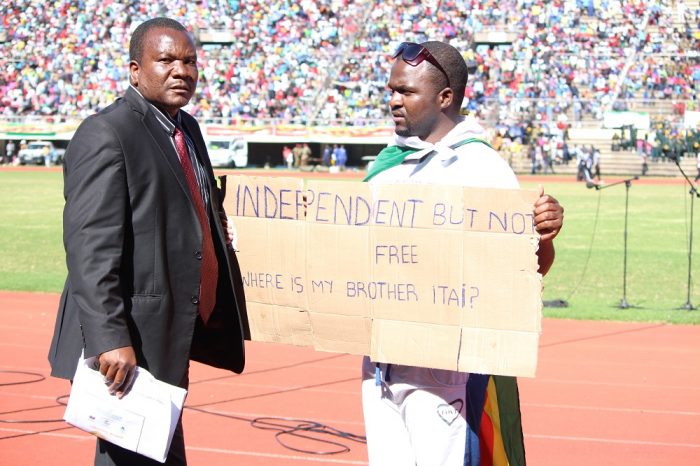
I first encountered Patson on my Facebook timeline (so those that say social media achieves nothing think again). I was at that point very much neutral/oblivious to the goings on of the mother country. I was aware but not as bothered and definitely not ‘woke’. I was easily coasting. Until this young man awoke my consciousness just through his photo stood right there in front of Mugabe with the words ‘Independent But Not free’, where is my brother Itai?

I can’t imagine the shock – horror that went through Mugabe and his ‘minions’ (if you know you know) confronted in broad daylight by this young man no armour, no shield just a strong conviction , a piece of cardboard and very neat writing. I easily put myself in his and the whole Dzamara’s family’s shoes what that must have been like to just have someone disappear without a trace in broad daylight.

See: https://humanrightsdefenders.blog/2015/05/05/itai-dzamaras-disappearance-worrying-for-all-human-rights-defenders-in-zimbabwe/

To face his young wife and kids daily without an answer of what became of their beloved dad and husband. Immediately I knew I was now at a point of no return I would stand with Itai and I would stand with Patson and all others who dared to fight for a better Zimbabwe.

Patson Dzamara, brother to missing activist Itai Dzamara, was brutally assaulted by state security agents on Monday after his one-man demonstration in front of President Robert Mugabe at the National Sports StadiumPatson Dzamara, brother to missing activist Itai Dzamara, was brutally assaulted by state security agents after his one-man demonstration in front of President Robert Mugabe at the National Sports Stadium in April 2016.

As I joined the quest for better we found each other as young activists across the world. We forged our way around spending most of 2016 strategising Evan Mawarire with #ThisFlag movement was also strongly on the scene at the time. Most of us had never met but we were united by cause. Uniquely we brought varying strengths and it kind of worked .

Patson was very insightful if the train was going to crash believe me he would be the one to have seen that coming . Not perfect by any means but strongly convicted. He was clear on whom we stood against and as he constantly reminded us ‘Leadership was his mainstay’. To be around Patson you were literally a lesson away from a leadership lecture.

He would be quick to identify leadership talent, those folks he would learn much from he did . He would openly respect and accord them the praise. From memory I remember how much he looked upto Nelson Chamisa, he respected Bishop Tudor Bismark and Bishop Magaya amongst others but them I distinctly remember.

Patson gleaned life lessons from most situations. I sometimes wondered if it was the disappearance of his brother that made him receptive to the pursuit of purpose so much that he never wanted to miss an opportunity.

Patson Dzamara: An indelible force gone but never forgotten

Kazakh human rights defenders sentenced for just remembering Dulat Aghadil

August 29, 2020
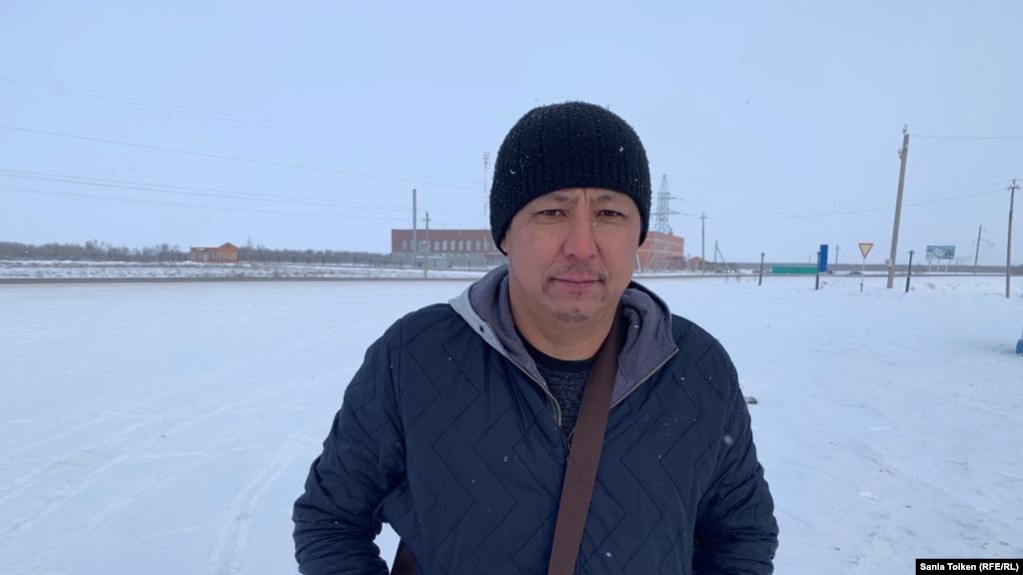
Dulat Aghadil died in mysterious circumstances in February.
According to RFE/RL’s Kazakh Service of 28 August 2020 dozens of Kazakh human rights defenders were given short jail sentences or fines for attending a commemoration of prominent civil rights campaigner Dulat Aghadil, who died in custody in February this year.

At least seven people were found guilty for attending an unsanctioned rally and sentenced to up to 15 days in detention this week, relatives and rights defenders said.

Among those jailed were activists Alma Nurysheva and Alsan Hasanonov, who were sentenced by a court in Aqmala Province on August 27. Their trials took place via a video link. The same court ordered several other activists to pay fines ranging between $200 and $400. Kazakh human rights defenders say “dozens” of activists from Nur-Sultan, Almaty, Aqtau, Oskemen, and Semei cities have gone on trial in recent days.

At least 100 people attended the commemoration on August 8 in Aghadil’s home village of Talapker in the Aqmola Province. Aghadil, 43, died under mysterious circumstances while being held in pretrial detention in the capital, Nur-Sultan, in late February, just one day after being arrested for failing to comply with a court order to report to local police. Authorities said Aghadil died from a heart attack, but his family and fellow rights defenders say he had no history of heart issues. Rallies were held in Nur-Sultan and other cities in February and March to demand a thorough investigation into his death.

https://www.rferl.org/a/kazakh-activists-punished-for-attending-commemoration-of-civil-rights-figure-who-died-in-custody/30809396.html

Second issue of Cypher Comics is out

August 25, 2020

In July 2020, Front Line Defenders launched Cypher (@cypher_comics on Instagram), a digital comics magazine that advances the organization’s storytelling and narrative framing work in collaboration with and in support of HRDs. Working with artists from around the world, including the award-winning visual storyteller, Beldan Sezen, as creative director, the ’zine is a monthly publication featuring stories of HRDs, their work and the challenges they face. [see: https://humanrightsdefenders.blog/2020/07/23/new-cypher-comics-for-human-rights-defenders/]

If you are interested in an annual subscription to receive printed editions of Cypher, please email campaigns@frontlinedefenders.org, with ‘Subscription’ in the subject line, and you will be sent more information about options.

Cypher 02 (published on 18 July 2020) features an audio interview with Palestinian HRD and artist Hafez Omar – listen to the interview by clicking on the ‘Hafez Talks’ buttons when viewing the comcis in the ‘zine viewer below (the PDF file does not support the audio files).

Download Cypher Edition 02 PDF (no audio)

The killing of “Randy” Echanis and Zara Alvarez put the Philippines under more pressure

August 22, 2020

The Philippines government’s practice of ” red tagging” – i.e.  labelling HRDs as communists or terrorists – has been repeatedy criticised by human rights defenders, NGOs, government and the UN.  “We are saddened and appalled by the ongoing violence and threats against human rights defenders in the Philippines, including the killing of two human rights defenders over the past two weeks,” said Liz Throssell, a spokesperson for the Office of the UN High Commissioner for Human Rights (OHCHR).  Randall “Randy” Echanis, an agrarian reform advocate and peace consultant, was killed in his home in Quezon City, located just outside capital Manila, on 10 August, added the OHCHR spokesperson, noting that reports indicated that he suffered brutal treatment before he died, including blunt force trauma to the head and stab wounds. On 17 August, the day that Mr. Echanis was buried, another long-standing human rights defender, Zara Alvarez, was shot dead in Bacolod City on Negros Island, some 490 kilometres south east of Manila. Investigations into both cases are underway.

According to OHCHR, both Mr. Echanis and Ms. Alvarez had been repeatedly “red-tagged” – labelled as communists or terrorists – in relation to their work. Ms. Alvarez’s name appeared, for example, on a list of 649 people that the Government sought to designate as terrorists on 28 March 2020. “While the list was later truncated, many who were removed from the list, including Ms. Alvarez, continued to report harassment and threats, as highlighted in the High Commissioner’s human rights report on the Philippines published in June this year,” added Ms. Throssell.

Ms. Alvarez’s photo also appeared in a publicly displayed poster purporting to depict terrorists. She was pictured alongside two other human rights defenders who had been killed – Benjamin Ramos Jr. and Bernardino Patigas, both of whose murder cases remain unsolved. She had also spent two years in prison on murder charges before she was acquitted in March for lack of evidence. Following the murder of Ms. Alvarez, her colleague Clarizza Singson, received a death threat on Facebook warning her that she would be next. “This is particularly worrying as Ms. Singson’s name also appeared on the abovementioned list of suspected terrorists and her photo is included in the same poster,” added Ms. Throssell.

We have raised our concerns with the Government and the Commission on Human Rights on these cases, and look forward to continuing to engage with them,” said Ms. Throssell.

Eighty-nine cases involving the deaths of human rights activists from 2017 to 2019 are now being investigated by the Commission on Human Rights (CHR), an official said Friday. “The data that we have from 2017 to 2019, we have a total of 89, not to include the ones happening now. We call them human rights defenders,” CHR commissioner Leah Armamento said over ABS-CBN News Channel when asked about the number of killings of activists and members of progressive groups being investigated by the commission.

‘The endless killings of activists in the Philippines have become systematic in Duterte’s regime, and demonstrate the continuing impunity in the country. The government should end these killings immediately and take genuine steps towards ensuring justice for victims and their family members,’ said Shamini Darshni Kaliemuthu, Executive Director at FORUM-ASIA.