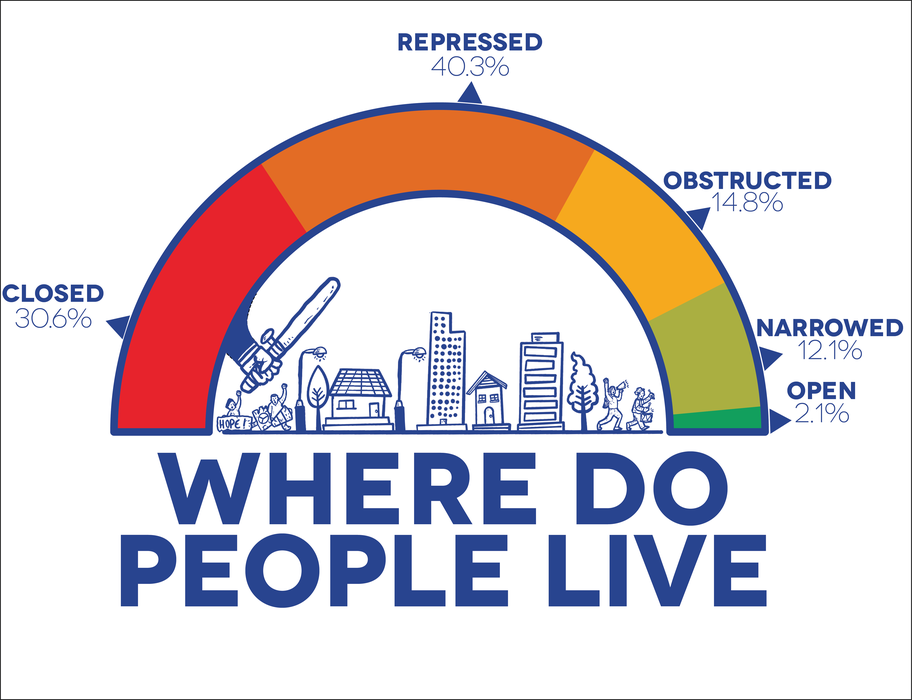
Almost a third of the world’s population now lives in countries with closed civic space. This is the highest percentage since 2018, when CIVICUS began systematically tracking civic space conditions around the world. This startling decline – from 26 per cent living in closed countries in 2018 to 30.6 per cent today – points to a major civic space crisis that requires immediate, global efforts to reverse. This year we also recorded the lowest percentage of humanity living in open countries, where civic space is both free and protected. Today, just two per cent of the world’s population enjoys the freedom to associate, demonstrate and express dissent without significant constraints, down from almost four per cent just five years ago.
Since the previous edition of this report, which covered 2022, civic space ratings have changed for 12 countries over the last year, worsening in seven countries and improving in five.
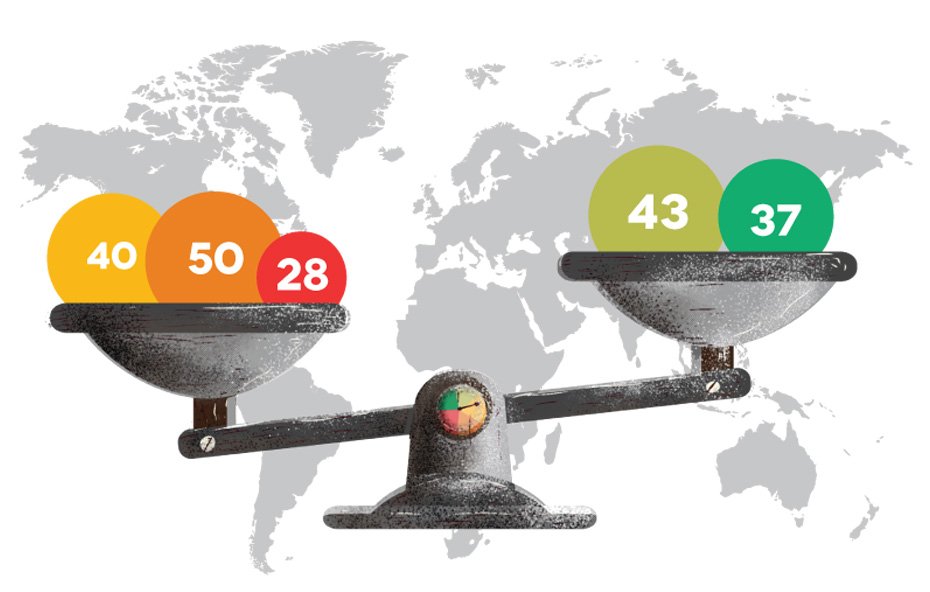
The latest CIVICUS Monitor country ratings update in December 2023 indicates that civil society faces an increasingly hostile environment. There are now 28 countries or territories with closed civic space, 50 with repressed civic space and 40 with obstructed civic space, meaning that 118 of 198 countries and territories are experiencing severe restrictions in fundamental freedoms. In comparison, 43 countries have narrowed civic space and just 37 have an open rating.
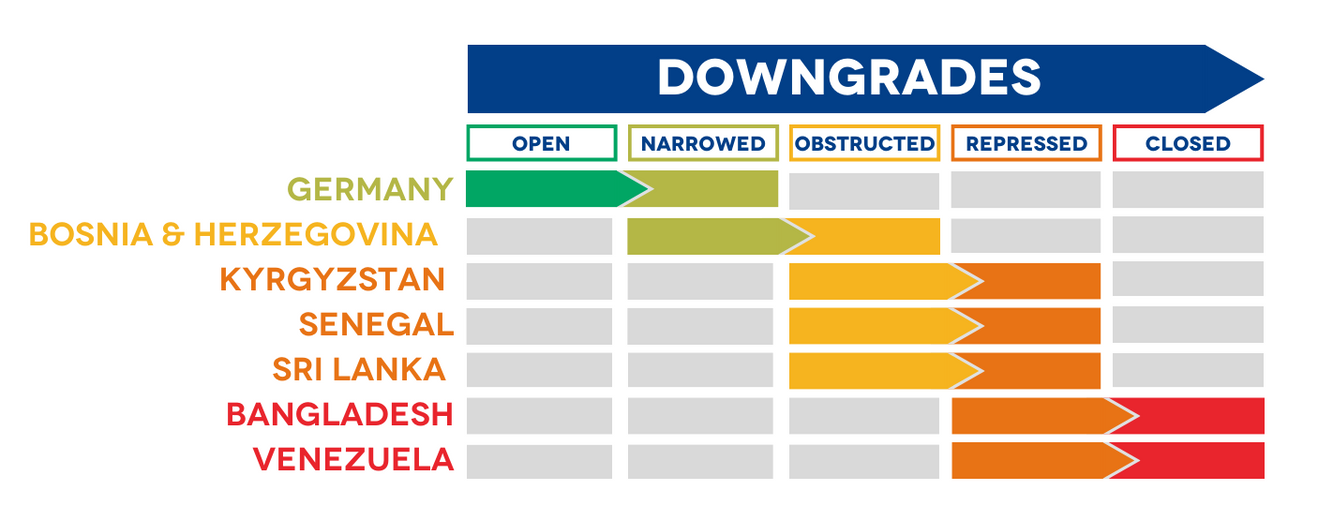
The severity of the civic space deterioration is exemplified by the number of countries moving to the repressed or closed category. Of the seven countries being downgraded, five moved to the two worst categories. Bangladesh and Venezuela are now rated as closed and Kyrgyzstan, Senegal and Sri Lanka are downgraded to the repressed rating as conditions for civil society continue to worsen.
Europe continues to add to the list of downgraded countries, with Bosnia and Herzegovina now placed in the obstructed category and Germany moving from an open to a narrowed rating. Over the past six years, 12 European countries have seen their ratings downgraded due to deteriorating civic space conditions.
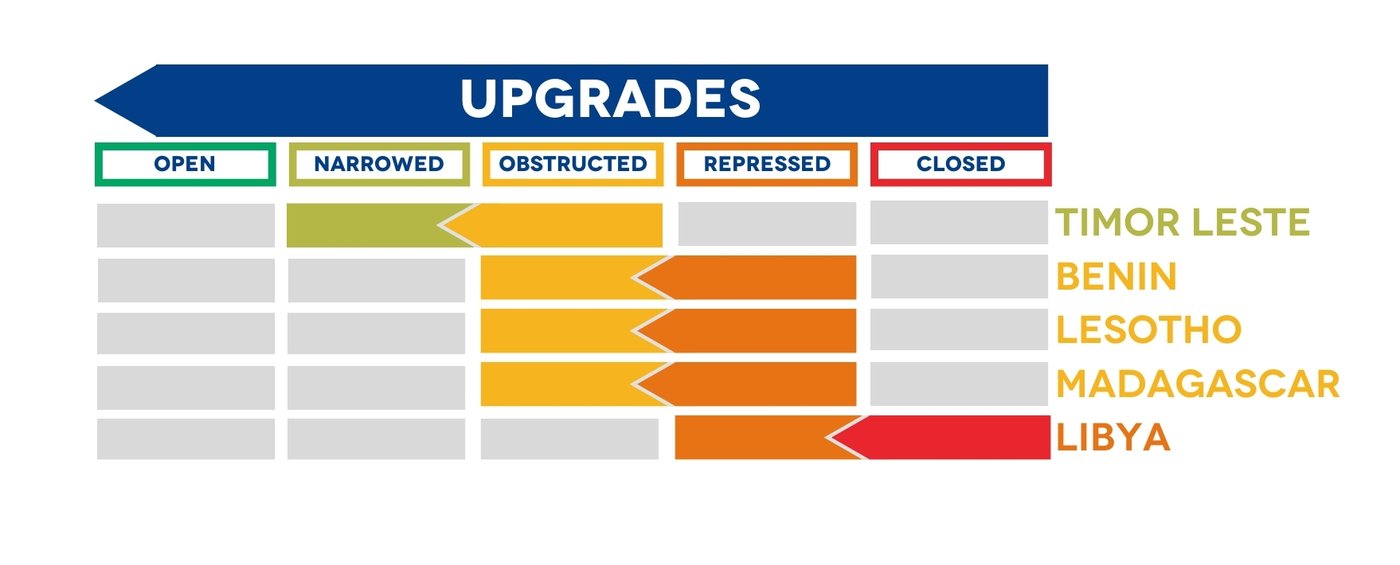
Five countries have upgraded ratings in 2023, although, as in previous years, the situation for civil society in these countries continues to be challenging. Libya moved from the closed to the repressed category. Benin, Lesotho and Madagascar have moved from the repressed to the obstructed category. Notably, Timor-Leste has joined the narrowed category. Regional sections describe the conditions that led to ratings changes.
Justice & Peace Netherlands is launching its new call for applications for human rights defenders at risk to participate in Shelter City Netherlands. The deadline for applications is 28 February 2024 . Shelter City is a global movement of cities, organizations and people who stand side by side with human rights defenders at risk. Shelter City provides temporary safe and inspiring spaces for human rights defenders at risk where they re-energize, receive tailor-made support and engage with allies. The term ‘human rights defender’ is intended to refer to the broad range of activists, journalists and independent media professionals, scholars, writers, artists, lawyers, civil and political rights defenders, civil society members, and others working to advance human rights and democracy around the world in a peaceful manner. From June and September 2024 onwards, several cities in the Netherlands will receive human rights defenders for a period of three months. At the end of their stay in the Netherlands, participants are expected to return with new tools and energy to carry out their work at home.
Application forms must be submitted by 28 February 2024. An independent commission will select the participants. Note that selected human rights defenders will not automatically participate in Shelter City as Justice & Peace is not in control of issuing the required visas to enter the Netherlands. For more information, please contact us at info[@]sheltercity.org.
Naw Hser Hser and Maggi Quadrini wrote in the Diplomat of 31 January 2024 how 3 years after the Myanmar coup, women Human Rights Defenders remain at the forefront
Three years have passed since the military coup in Myanmar. Since then, the resistance movement has flourished into an inspired example of people’s power and the defiance of authoritarian forces. In the eyes of the military, the hijacking of the 2020 general election and subsequent coup attempt was an easy conquest. They thought that violence and their long-practiced orders of “shoot to kill” would silence the civil unrest that immediately followed. It soon became clear that the generals gravely underestimated the will of the country’s people, who refused to inherit another era of military rule. The people’s rejection of the junta has been widespread and notable for the prominent role played by women in the revolution against military rule.
While the political, social, and armed aspects of the revolution have shifted, what has remained constant is the unwavering participation and leadership of women who have defied patriarchal systems, including gender stereotypes, and set an unquestionable new standard of what is possible for women and girls in Myanmar.
Women human rights defenders are resisting the military dictatorship in different ways despite the many challenges they face. They remain resilient and unwavering in their quest to see the fall of the junta. During these difficult times, women and girls, especially those from ethnic areas, including the Rohingya as well as those who identify as LGBTQ, have faced more forms of violence, including domestic assaults, sexual violence, rape, being coerced into sex work, and human trafficking.
No reliable justice mechanisms exist in Myanmar that can bring perpetrators to court and ensure accountability. Facing a myriad of barriers that prevent and undermine women’s participation, women human rights activists have defied the patriarchal systems promoted by the Myanmar military, which have been used to influence a culture that does not see women as equals.
Rather than submit to the military junta and its patriarchal dictates, women have increased their participation in various facets of the pro-democracy movement. The women’s rights movement has also become more intersectional than ever. Women from urban and rural backgrounds, different ages, ethnic groups, and religions have united in their shared goal of defeating the Myanmar armed forces, quashing the patriarchy, and ensuring gender equality.
In the immediate aftermath of the coup, many women human rights defenders were forced into exile. Many fled to border areas, their names rapidly reaching the top of the lists of those wanted by the junta. This also put a target on their family members. The threat of unlawful arrest and the possibility of torture and death has taken an immense strain on women fighting the military. Yet they have continued to resist the junta’s tactics of intimidation and terror in pursuit of a gender-equal future for Myanmar that is free from military rule.
Women human rights defenders have refused to adhere to Myanmar’s patriarchal status quo in many ways. This was evident through their strong participation in the Civil Disobedience Movement (CDM), where many female majority professions, including garment workers, health care providers, teachers, engineers, police, and even those in the military, quit their jobs following the attempted coup and refused to work for the junta. The Gender Equality Network has estimated that women comprise over 60 percent of frontline protest leaders and roughly 70 to 80 percent of the CDM’s leaders…
Women have been actively involved in resolving the many struggles of this revolution, including in the political, social, and armed arenas. However, there is still a lack of funding support and a lack of recognition within the resistance of women’s roles. There is also a lack of women’s participation in decision-making.
Findings from a new report called “Triple Resistance,” released this month by the Women’s League of Burma (WLB), a community-based organization working on the rights of the country’s women, revealed that despite the risks facing women human rights defenders, including threats to their physical and digital security, they have not been discouraged. On the contrary, they remain committed to seeing an end to military rule – something that is only possible through the participation of women. Of the women interviewed for WLB’s report, nearly 100 percent are involved in humanitarian work, and 50 percent have taken on new roles in the political arena, particularly as federalism becomes more established.
Women-led organizations are driving relief efforts on the ground, particularly in conflict-affected areas of Myanmar. These organizations provide services for victims of gender-based violence, counseling, food kits, and dignity kits, including menstrual care items and materials for expectant or new mothers. In Karenni State, where the capital city is being attacked relentlessly, the Karenni National Women’s Organization is continuing its operations to ensure displaced and vulnerable communities receive urgently needed humanitarian assistance and access to safe houses as gender-based violence rises.
Similarly, in Karen State, the Karen Women’s Organization works with its networks to ensure the swift and secure delivery of aid through cross-border channels effectively and efficiently to meet the needs of displaced groups, the majority of whom are women and children.
In addition, as local leadership across ethnic states and regions in Myanmar adopt federal bodies and institutions, women have participated in leadership capacities and have been central to forming a new federal Myanmar. For example, in Karenni State, women occupy several positions in the Karenni State Consultative Council, the Ta’ang Political Consultative Council, and other locally-driven bodies, as well as in People’s Administration Teams and village administrations.
Women leaders bring decades of experience working with armed actors and rights groups to provide security and protection for their communities. Their leadership must be recognized, encouraged, and accelerated. Without women, there is no sustainable development and consideration of gender perspectives during operations, service provision, or other political developments.
At an international level, governments and donors must understand that knowledge and expertise on locally-led challenges and solutions come from lived experiences and trust, which women and ethnic people can speak to. Global actors must recognize the efforts of women human rights defenders who continue to defy the status quo to ensure that the fall of the military junta will also lead to substantial improvements in gender equality. To do so, they must reinforce their commitment to amplify civil society organizations, including women-led initiatives. This new political space must be supported in order to hold the military junta accountable, at the International Criminal Court, if not in Myanmar itself.
In short, support of gendered programs, and for women’s participation more generally, is an integral part of the struggle against the military junta. Whether on the frontline, in political positions, or the classroom, women make up the substance of the revolution and are gradually carving out a new, progressive Myanmar. They deserve the world’s support.
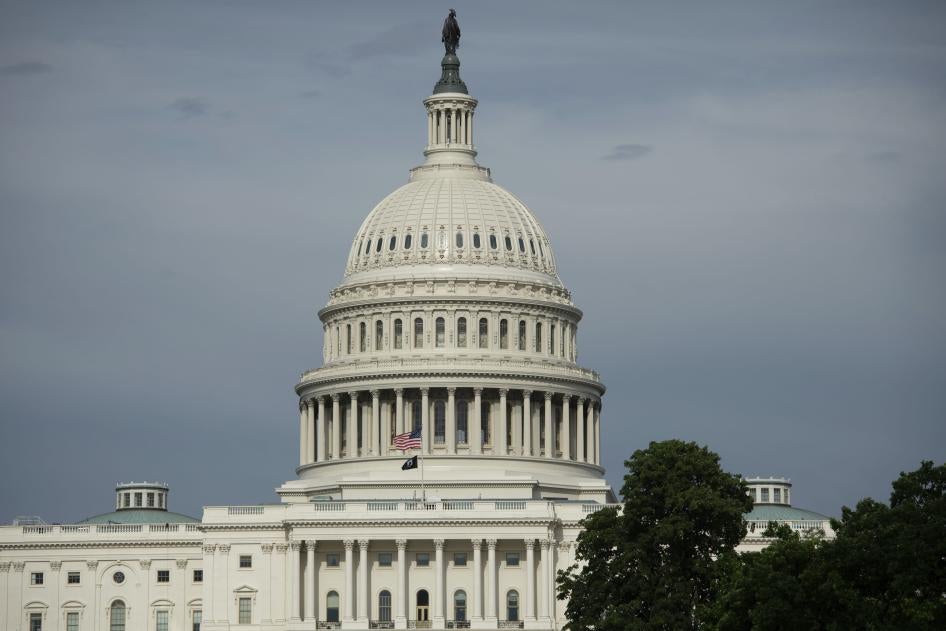
On 31 January 2024 several NGOs – including HRW and AI -came out in support of a bill in the US Senate. Senator Ben Cardin introduced the Human Rights Defenders Protection Act of 2024, which aims to protect individuals abroad “who face reprisals for defending human rights and democracy.” The law, if enacted, would strengthen the US government’s ability to “prevent, mitigate, and respond” to such cases.
Senator Cardin said this legislation “will help elevate, guide, and enhance US efforts to support these courageous individuals globally at a time when their efforts are more important than ever.”
HRW said: The bill would integrate support for rights defenders into various US policies and programs and encourage engagement with the private sector. It aims to improve assistance for rights defenders living in exile from their home countries and strengthen US tools to hold perpetrators of rights abuses accountable.Human Rights Watch has long documented the risks, threats, and attacks that rights defenders across the globe face. In Rwanda, for example, the government for many years has targeted with impunity rights defenders at home and extended its repression beyond its borders to silence Rwandan critics living abroad. Last December, the Emirati government brought new charges under its counterterrorism law against 87 activists and dissidents, including imprisoned rights defender Ahmed Mansoor.
The proposed legislation would create a new US visa for rights defenders who face a “credible fear of an urgent threat,” allowing those who qualify to reach safety before they are detained or harmed. It would also increase the number of US government personnel dedicated to democracy and human rights issues in the federal government and at embassies in countries with a high risk of rights abuses.
Andrew Fandino, Advocacy Director for the Individuals at Risk Program at Amnesty International USA. stated: “The Human Rights Defenders Protection Act of 2024 is a critical piece of legislation that will help strengthen and improve the U.S. government’s ability to support human rights defenders around the world,” ..“With over 401 human rights defenders killed globally in 2022 alone, now more than ever, human rights defenders need this additional support and protection.”
If passed, the legislation would require the US government to establish a “Global Strategy for Human Rights Defenders.” The strategy would survey current tools and resources to support human rights, identify how the government would prioritize and bolster protections for rights defenders, and establish specific goals for implementing the legislation’s policy objectives. This would link to the existing EU Guidelines on Human Rights Defenders (2008), and the OSCE Guidelines on the Protection of Human Rights Defenders (2014) and those of a small group of European countries.
AFP on 25 January, 2024 reported that UN experts urge Bangladesh to carry out major human rights reforms to reverse “repressive trends” following controversial elections that were boycotted by the opposition.
Bangladeshi Prime Minister Sheikh Hasina was sworn in for a fifth term on January 11. Her ruling Awami League party won nearly three-quarters of elected seats in parliament, with allied parties and friendly independent candidates making up nearly all the remainder.
Hasina has presided over breakneck economic growth in a country once beset by grinding poverty, but her government has been accused of rampant human rights abuses and a ruthless crackdown on dissent.
The UN experts said they were “alarmed” at reports of “widespread attacks, harassment and intimidation of civil society, human rights defenders, journalists and political activists, which marred the recent elections”. See also my earlier posts on Bangladesh: https://humanrightsdefenders.blog/tag/bangladesh/.
The experts called on the Government to:
Immediately and unconditionally release all civil society and political activists detained without charge or on charges inconsistent with international human rights law; and ensure fair public trials in accordance with international human rights standards for those charged with criminal offences.
Institute urgent and substantial reforms to guarantee the integrity and independence of the judicial system.
Guarantee the free and unobstructed exercise of freedom of expression, association and peaceful assembly, refrain from imposing undue restrictions on protests and political rallies, and ensure effective accountability for serious violations of these fundamental freedoms.
Respect the independence, freedom, diversity, and pluralism of the media, and ensure the safety of journalists from threats, physical and online violence, or judicial harassment and criminal prosecution for investigative and critical reporting.
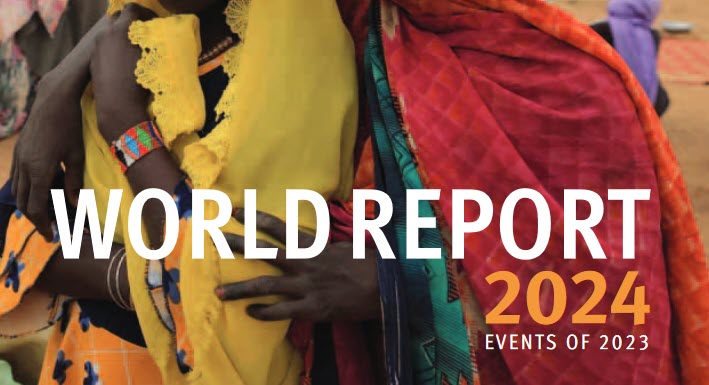
On 27 January 2024, Olivia Biliunaand Madison Whittemore in the Davis Vanguard produced a useful summary of the 2024 Human Rights Watch Report
After reflecting on the formidable human rights challenges of 2023, it has become evident that changes in how human rights are approached will be needed in 2024 to prevent the atrocious suppression and human rights crises that have been prominent in the past year, according to Human’s Rights Watch’s “World Report 2024: Our annual review of human rights around the globe.” [see: https://www.hrw.org/world-report/2024]
However, despite the human rights atrocities seen in 2023, the group added that there appears to be some hope for upholding human rights in 2024 through enforcing principles of international human rights law.
Looking back on 2023, the 2024 World Report reflects on renewed conflicts between Israel and Hamas that resulted in the abuse of many and a tragic loss of life, and other countries such as Ukraine and Myanmar that continue to struggle with their own intense conflicts.
Human Rights Watch notes that in accordance with the aforementioned conflicts, “Economic inequality rose around the world, as did anger about the policy decisions that have left many people struggling to survive.”
However, while many are quick to blame the government for being complicit in these human rights crises, the report maintains action is needed outside of just government action alone to help diminish these threats, since they “often transcend borders and cannot be solved by governments acting alone.”
In fact, the report notes the often forgotten importance of universal principles of international human rights and the rule of law which are more critical now than ever.
The 2024 World Report argues governments have the ability to help improve human rights and that they have double standards in “applying the human rights framework,” as stated in the 2024 World Report, and “chips away at trust in the institutions responsible for enforcing and protecting rights.”
The legitimate laws and universality of human rights are weakened when governments that are vocal about denouncing the Israeli government war crimes against Gaza citizens do not speak up about the crimes against humanity in Xinjiang, China, according to the 2024 World Report.
Governments have found it is easier to disregard international human rights matters because internationally there is no challenge to human rights nationally, writes Tirana Hassan, the executive director.
Hassan also noted that autocrats across regions have taken away both the independence of key institutions to protect human rights and the freedom of dissent, as stated by the 2024 World Report, “with the same endgame in mind: to exercise power without constraint.”
Hassan explains that with campaigning of civil rights groups and years of diplomatic negotiations, 83 countries were able to protect their citizens by adopting a political declaration that provided protection from explosive weapons in populated areas.
The international pledge to recognize the “long-standing practice of warring parties to use aerial bombing, artillery, rockets, and missiles in villages, towns, and cities” is the first to address this issue as the 2024 World Report states.
Some countries are addressing long-marginalized communities. With years of pressure, the Japanese government parliament has passed its first law to protect LGBT people from “unfair discrimination,” the 2024 World Report states.
With the humanitarian crises there has been questioning on the effectiveness of the human rights framework in the realm of protection, notes the 2024 World Report, adding, “especially in the face of selective government outrage, transactional diplomacy seeking short-term gain, growing transnational repression, and the willingness of autocratic leaders to sacrifice rights to consolidate their power.”
With that, the 2024 World Report also suggests the human rights framework will continue to be the plan to build “thriving, inclusive societies” and governments need to be persistent and, with urgency, defend human rights to handle the global and existential threats to humanity.
As also highlighted by Hassan in the report, the assault on Israel by Hamas-led fighters on Oct. 7 that deliberately killed hundreds of vulnerable civilians led to swift condemnation from many countries around the world.
In retaliation to the Oct. 7 attack, the Israeli government ceased all running water and electricity in the Gaza strip, “blocking the entry of all but a trickle of fuel, food, and humanitarian aid – a form of collective punishment that is a war crime,” the 2024 World Report noted.
The Israeli government and military continue frequently bombing the Gaza strip. Following these attacks, countries were outraged after they found out that Israel used a chemical called white phosphorus during the indiscriminate attacks on Gaza, with many countries even highlighting the attacks as “apparent war crimes,” stated by Human Rights Watch.
However, despite world-wide outrage after Israel’s war crimes on Gaza, countries have failed to publicly call the Israeli government out on its war crimes resulting in severe human rights abuses, the report detailed, noting even the U.S. and the European Union have acknowledged Israel’s human rights abuses on Gaza citizens, yet have continued to be complicit in the “ongoing crimes against humanity of apartheid and persecution against Palestinians.”
The report asserted the repercussions of governments failing to intervene undermine the legitimacy of the rules system designed 75 years ago to safeguard all citizen’s rights. In response to the inconsistencies, Hassan cites that governments like Russia and China aim to take advantage of the shaky legitimacy by attempting to infringe on human rights and take advantage of the system that is supposed to punish both countries.
Another example used by the 2024 World Report that displays these inconsistencies is the power battle between two influential generals in Sudan, Gen. Abdelfattah al-Burhan and Gen. Mohamed Hamdan Dagalo.
This conflict resulted in civilians facing deadly abuses and human rights infringements in the Darfur region—with numerous countries listed in the 2024 world report allegedly ignoring the horrendous abuses and abstaining from intervening.
Despite nations such as Gabon, Ghana, and Mozambique being on the Security Council, “the UN, under pressure from the Sudanese government, shuttered its political mission in Sudan.” the 2024 World Report stated, also concluding that “This marked the conclusion of the UN’s limited capacity in the country to safeguard civilians and openly address the human rights situation.”
Regardless of African governments refusing to hold the Sudanese government accountable, the report highlights that many have been strong advocates for resolving the human rights issues in other places like Palestine, even leading a full-fledged effort to investigate its human rights abuses last November and recently asserting that “Israel violated its obligations under the 1948 Genocide Convention in its military operations in Gaza.”
Domestic policies and foreign policies should hold value in human rights and their rules of laws at the forefront of governments, charged the 2024 World Report.
Even rights-respecting governments hold these principles as “optional, seeking short-term, politically expedient “solutions” at the expense of building the institutions that would be beneficial for security, trade, energy, and migration in the long term,” according to the 2024 World Report, adding transactional diplomacy carries a human cost that extends past borders, the group adds.
The 2024 Report writes that without awareness while making transactional diplomacy, risks are created. Removing human rights and the rule of law from a sensible direction creates leverage for right-violating governments too, the 2024 World Report adds, arguing, “It can also contribute to further human rights violations, including transnational repression,” which governments do when they commit human rights abuses against their nationals abroad or to those families living at home, the report continues.
According to the World Report of 2024, India, a democracy, under its Prime Minister Narenda Modi has moved toward an autocracy “with authorities targeting minorities, tightening repression, and dismantling independent institutions, including federal investigative agencies.”
Additionally, as cited in The Report, the US, Australia, the UK, and France chose trade and security over raising human rights concerns.
As reported by Executive Director Hassan, the Modi government’s repressive tactics went past borders and were empowered to do so from the Indian government’s “silence on the Indian government’s worsening rights record…including to intimidate diaspora activists and academics or restrict their entry into India.”
Rwandan’s government has had three decades of no punishment for their repression of civil and political rights at home, the 2024 World Report states, writing “to stifle dissent beyond its borders,” and noting, Rwanda, despite having risen on the international stage, has failed to recognize its problematic human rights violations.
Similarly, Chinese government abuses in Beijing escalate its repression against both Chinese and non-Chinese with failure of resistance from other countries, according to the 2024 World Report, explaining a Laos lawyer and human rights defender, Lu Siwei, received pressure from the Chinese government to return and authorities pushed out warrants.
The 2024 World Report claims nowhere is safe if repressive governments can get away with “strong approaches to silence human rights defenders, exiled politicians, journalists, and critics beyond their borders.”
As reported by the Human Rights 2024 World Report, with almost half of the global population being eligible to vote in 2024, both citizens and independent institutions need to participate in order to effectively have leaders who defend human rights, regardless of society and many institutions having “become renewed battlegrounds for autocratic leaders around the world looking to eliminate scrutiny of their decisions and actions.”
According to Hassan, the nations of Guatemala and Nicaragua are two stories of autocratic leaders consolidating power and failing to prioritize civil society.
For example, after Guatemala’s President-elect Bernardo Arévalo ran on an anti-corruption platform, a corrupt judiciary attempted to overturn Arévalo’s election triumph.
Similarly, the report refers to Nicaragua, where corrupt and authoritarian President Daniel Ortega uses “abusive legislation to shut down over 3,500 nongovernmental organizations” in order to dominate the political landscape and wield unchecked power.
The Human Rights report insists these “vital” checks and balances continue to be eroded, it poses great harm to human rights.
Judicial independence has also been drastically sabotaged in Poland, the report alleges, with the Polish government suppressing civil society groups through law enforcement and incarceration. Polish freedom and independence are extremely threatened, with the Law and Justice party most notably encroaching on women’s reproductive rights and essentially banning abortion, Hassan suggested in the report.
“In May 2023, an abortion rights activist was convicted of helping a woman to get abortion pills and was sentenced to eight months of community service – the first known prosecution of its kind in the EU,” the 2024 World Report noted.
On an environmental note, with the impending issue of global warming, the 2024 report highlights activists being shot by governments across the globe who want to “deter the climate movement.”
In another example, the report cites how one of the largest oil producers, the United Arab Emirates (UAE), continues to expand its production of fossil fuels; however, people are discouraged from exposing the UAE unless they are willing to face grave punishment.
Apart from punishing dissent, governments are using technology and social media platforms to “silence critics and censor dissent,” the 2024 World Report notes, citing a 54-year-old retired Saudi Arabian teacher named Muhammad al-Ghamdi, who received the death penalty after he expressed his opinions on X and Youtube and allegedly went against the country’s counterterrorism law.
Despite everything that occurred in 2023, there were also positive moments for human rights where institutions and movements succeeded, the 2024 World Report states, arguing, “Indeed, these successes illustrate why self-serving politicians and repressive governments work so hard to curtail them – and why all governments should recognize and support these fragile successes.”
Additionally, according to the Executive Director Hassan, the ICC issued warrants for Russia’s President Vladimir Putin and his children’s rights commissioner for war crimes related to deporting and transferring children and a court ruled that South Africa had a commitment to arrest Putin.
According to the 2024 World Report, the Xokleng Indigenous people succeeded when the Brazil Supreme Court, as noted by the 2024 World Report, “upheld all Indigenous peoples’ rights to their traditional lands,” despite efforts by the Santa Catarina state.
The 2024 World Report said, “These victories highlight the tremendous power of independent, rights-respecting, and inclusive institutions and of civil society to challenge those who wield political power to serve the public interest and chart a rights-respecting path forward” and that “all governments, in their bilateral relations and at the multilateral level, should redouble efforts to uplift key institutions and protect civic space wherever it is under threat.”
The human rights crisis highlights the importance for “mutually agreed principles of international human rights law everywhere,” the 2024 World Report notes.
It also points out that through governments centering their human rights obligations through moral governing, it will provide a diligent change to those affected.
The 2024 World Report concludes that consistently upholding human rights, “across the board, no matter who the victims are or where the rights violations are being committed, is the only way to build the world we want to live in.”
Challenges to freedom of religion and belief and abuses to the human rights of religious minorities are on the rise across the world, with increased violence, harassment, and threats often met with a lack of accountability. They occur against a backdrop of long-standing social, political, economic, and cultural marginalization and exclusion, particularly for those who face intersectional discrimination, such as religious minority women or persons with disabilities.
It is, therefore, vital to support organizations and activists representing these communities who work towards strengthening the rights of minorities of faith and belief and combatting the discrimination, prejudices and persecution these communities experience daily.
What is the course about?
The free, 7-week online course aims to build an understanding of regional and international minority rights mechanisms and ways to implement these rights frameworks at the national and local levels and build the capacity of human rights defenders (HRDs) to advocate for the rights of minorities.
The course will offer opportunities to exchange and collaborate with other HRDs to:
Monitor and report on violations against religious minorities
Raise awareness amongst key stakeholders of the human rights violations, persecution and discrimination these communities face
Campaign from local to international levels to secure commitments from key stakeholders to improve the situation of religious minorities
Train Graduates will also have the opportunity to follow up with access to a Training of Trainers that will give them the opportunity to develop their skills and share the knowledge they learned
Who can apply for this course?
Civil society organizations and activists representing religious minority and indigenous communities from two regions of the world where religious minorities are suffering from serious human rights violations, widespread discrimination and marginalization are welcome to apply.
Applicants from and/or based in the following countries will be prioritized: Bangladesh, Egypt, India, Indonesia, Iraq, Iran, Lebanon, Morocco, Myanmar, Nepal, Pakistan, Sri Lanka, Syria, Thailand, Tunisia.
Basic Concepts in Human Rights and Minority Rights
UN Declaration on the Rights of Persons Belonging to National or Ethnic, Religious and Linguistic Minorities
UN Treaties and Human Rights Mechanisms
Freedom of Religion or Belief (FoRB)
UN Mechanisms to Protect Minorities
Regional Human Rights Systems and Mechanisms
Advocacy Campaigns
To complete the course, participants must submit three written assignments: a briefer, an outline of a shadow report and an advocacy plan.
How many hours a week is the course?
The course will require approximately 3 hours per week for the duration of the course. Your participation will be facilitated by a tutor who will offer mentoring on a one-on-one basis as required. Our tutor is an expert in minority rights and community networking.
During the course we also organize a webinar, which offers a unique opportunity to learn more about the mandate of the UN Special Rapporteurs and engage in a Q&A session with them.
Nominations are open for the Martin Ennals Award 2024! The Martin Ennals Award for Human Rights Defenders honours individuals and organizations who have shown exceptional commitment to defending human rights, despite the risks involved. We are proud to celebrate the 30th anniversary of the Award in 2024, in partnership with the City of Geneva, the Jury member organizations, the extended family of Laureates around the world, and our wonderful donors. To qualify for the Award 2024, the nominees must:
Be currently active in the promotion and protection of human rights
Not employ or advocate violence
Not be self-nominated
Be in need of protection
We encourage nominations of activists under 30 years of age to reflect the growing number of young persons joining the human rights movements in their countries. Post-humous nominations are not eligible.
You can now apply for the Incident Emergency Fund, which is a rapid response mechanism for human rights defenders, journalists, activists and organisations facing digital threats and attacks.
Funding Information
The IEF provides up to €10,000 and can be used to cover costs which will directly reduce the risk or impact of a digital attack. The funding covers activities for a maximum of four months, and they aim to respond to requests within two weeks.
What does the IEF cover?
Replacement of hardware or software which has been taken, lost or stolen.
Purchase of more secure hard- and/or software and costs related to installation of the new systems.
Technical or non-technical activities to respond to urgent issues such as internet blockages.
Measures to improve physical security (related to information management and digital security).
Measures to address the psychological and psychosocial impacts of digital threats and risks.
Who can apply?
DDP target groups are women, feminist and LGTBQIA+ organisations; land and environmental rights defenders; and journalists and other actors who make information available to the public. However, each regional team defines the target groups for each call.
On January 12, 2024, Thomas Antkowiak in Just Security reflects on dangers of HRDs in Mexico and Latin america generally, motivated by the fate of his friends Ricardo and Antonio Díaz Valencia.
…Strategic use of the legal mechanisms—bolstered by the research and financial resources, political leverage, reputations, and media connections of Northern institutions—can be very effective to obtain remedies for victims of rights violations, and even to bring about legal reform and structural change. But the methods are toothless, and even misguided, without partners like Ricardo, the expert local attorneys. Truly, without such counterparts, this kind of human rights project lacks legitimacy. Without sustained connections to the affected communities, it would become just another decree handed down from the ivory tower.
In our isolated and polarized world, virtual meetings may have increased productivity in international lawyering, but they can further insulate us—cutting off deeper engagements to our clients abroad and the communities we hope to work with. In contrast, frontline defenders are fully connected and, of course, face all the risks. Authoritarian governments, criminal organizations, and complicit transnational corporations are all closing in. Can we still sense their peril?
If these human rights advocates are in more jeopardy than ever, so are the human rights themselves. Frontline defenders are the torchbearers of the international human rights movement. As such, they deserve the honors, the funding, and the protection. For the work to continue, we urgently need to do our part: the Global North’s human rights organizations, governments, universities, foundations, and businesses must coordinate to shield and support them.
Certainly, someinstitutions are already doing good work. Where to redouble our efforts? First, let’s ask the defenders themselves what they most need, recalling that their role is primary and their safety paramount. In the case of Mexico, there is almost total impunity for these types of cases. If the cartels, corrupt officials, and their accomplices cannot be held accountable, the killings will continue unabated (and thousands will keep fleeing from the violence to the southern U.S. border). When the defenders’ work becomes too hazardous, asylum must be streamlined—and the opportunity forever preserved. U.S. legislation and political pressure on Mexico play key roles here. So does divestment from colluding transnational corporations.
Every day, I wish that we could have somehow prevented the disappearance of my cherished friend and long-time collaborator. Through various channels, Global Rights Advocacy, other colleagues, and my clinic continue to push the Mexican government to find Ricardo and Antonio, and to prosecute the case. The world cannot afford the loss of another Ricardo, Berta Cáceres, Thulani Maseko. Without such guiding lights, we won’t be marking another 75 years of the international human rights movement.


 Hans Thoolen on Human Rights Defenders and their awards