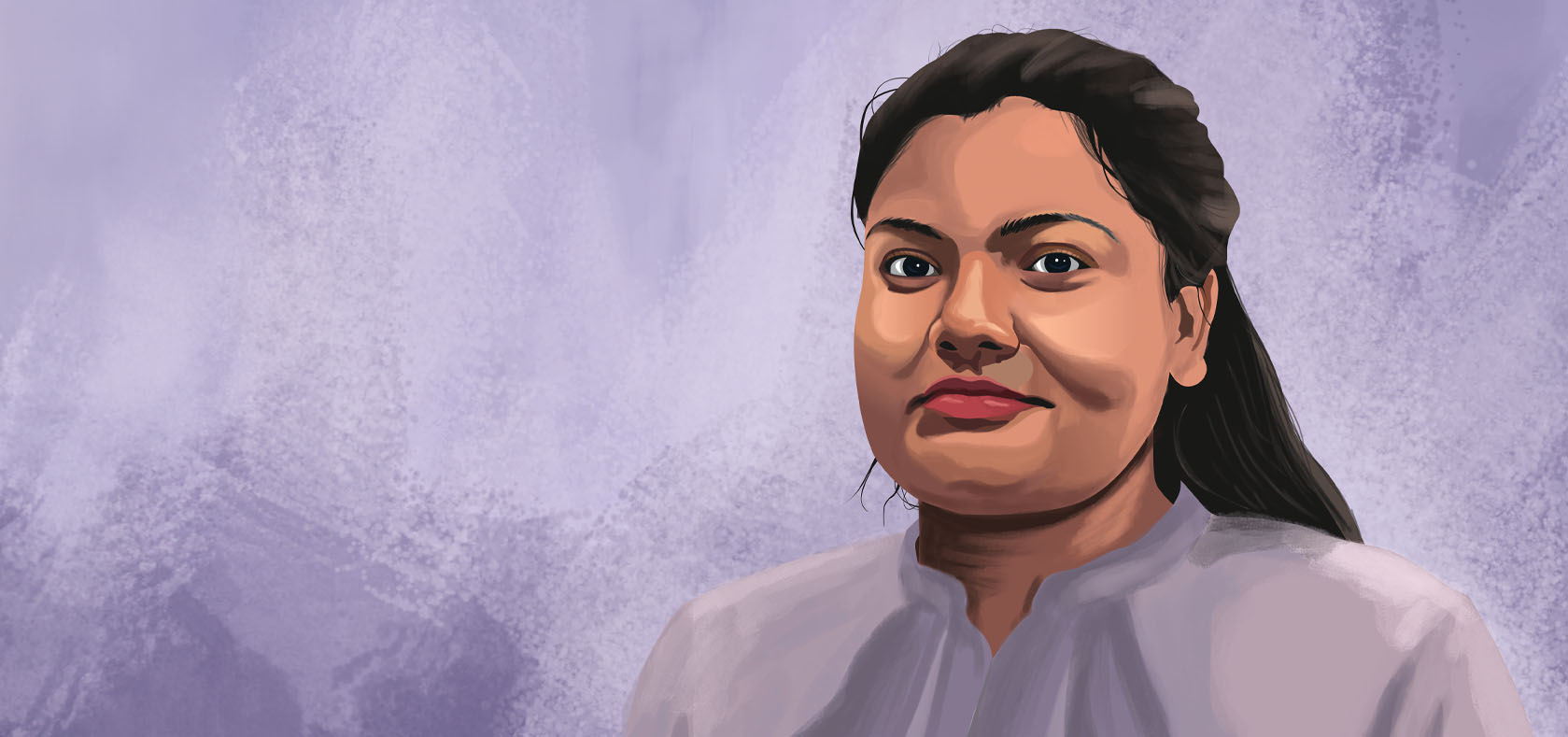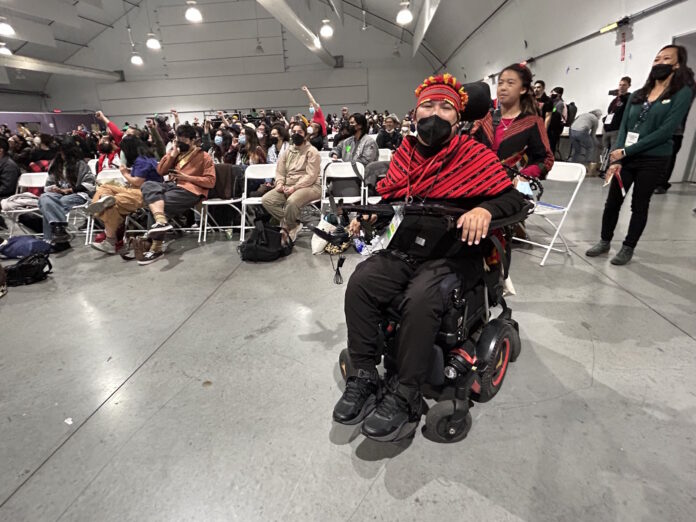
The World Press Freedom Index ranked Turkmenistan one of the five most repressive regimes globally in 2023. Martin Ennals Award Finalist Soltan Achilova is a 74 years-old photojournalist who captures the lives of ordinary people in Turkmenistan with her camera. Soltan’s pictures describing food insecurity, forced and illegal evictions, lack of adequate healthcare and the discrimination faced by people with disabilities, are an invaluable source of information on human rights violations endured by the people of Turkmenistan. In collaboration with the University of Geneva Human Rights Week this event will explore how independent journalism can push back on the denial of freedom of expression in the toughest authoritarian contexts.
A group of human rights organisations, including the World Organisation Against Torture (OMCT) and FIDH (see Co-signatories), called on 27 October 2023 for the release of the human rights defender Nasta Loika after more than 396 days of her detention.
Nasta Loika is a prominent human rights defender, one of the founders of Human Constanta. For years, she has been promoting human rights education, raising awareness about the repressive “anti-extremist” legislation in Belarus, and protecting foreign citizens and stateless persons in Belarus. She was named Human Rights Defender of the Year 2022 by the Belarusian human rights community. Yet, in the eyes of the repressive Belarusian authorities, she is a criminal and earlier in October, the government put her on a “terrorist” list.
Since 6 September 2022, Nasta has served a total of six 15-day consecutive administrative sentences on trumped-up “petty hooliganism” charges. On 24 December 2022, she was charged with “incitement of racial, national, religious or other social enmity or discord” under notorious Article 130 of the Criminal Code of the Republic of Belarus and on 20 June sentenced to 7 years in prison. [see also: https://humanrightsdefenders.blog/2023/08/11/nasta-anastasia-loika-in-belarus-sentenced-to-7-years-in-a-penal-colony/]
She was tasered, threatened, and featured in a forced “confession” video as a form of digital degrading treatment which was spread across pro-government channels before she was even charged. Her home was searched two times. Her mother’s home was searched too. She spent 93 days in detention, repeatedly sentenced to “administrative arrests” while the authorities looked for a reason to bring criminal charges against her. The charge was ultimately found, and Nasta was accused of inciting hatred for preparing a human rights report in 2018 on the persecution of anarchists and leftists in Belarus. According to the prosecution, the group she was allegedly inciting hatred against was the police.
Belarusian state authorities continued to ignore both the letter of allegation sent by five Special Rapporteurs and the Working Group on Arbitrary Detention following Human Constanta’s appeal to these mandates, as well as the decision on interim measures, adopted by the Human Rights Committee in Nasta’s case.
Her lawyers were repeatedly arrested, disbarred, forced out of the country, and intimidated – hardly a surprising occurrence given en masse persecution of independent lawyers and outlawing of human rights work in Belarus. Disbarment of human rights lawyers is one of the tools the authorities consistently employed to intimidate and persecute lawyers who represent human rights defenders, activists, democratic politicians, and survivors of torture and state-perpetrated human rights violations.
Any assistance to Nasta is punished as well: two people were arrested for 15 and 30 days for bringing her parcels with food and essentials. Now that she has been sentenced, she is only able to receive parcels from her 76-year-old mother, her only family member. Moreover, as she was designated a “terrorist,” it would be impossible to make monetary transfers as those would be characterized as “financing terrorism.”
Nasta also continues her human rights work from behind bars: she helped dozens of other women cellmates to file complaints related to their cases. She also drafted a concept of prison reform in Belarus. This is a powerful reminder that persecution and imprisonment cannot force human rights defenders to stop their work.
In fact, their voices can be amplified not just through letters, but through technology and social media. While the authoritarian government is set on silencing human rights defenders, the Human Constanta team used AI to create Nasta’s animated digital avatar to raise awareness about human rights violations and political persecution of human rights defenders, demand accountability, and support those in detention. The “Human Show” podcast called “Waiting for Nasta” featuring her colleagues and friends also reminds the world about her work and unjustified detention.
“A young girl came up to me [at an event in honor of a human rights award] and said: “Hello, my name is Nasta. I graduated from law school, I’ve entered law school, and I would really like to do human rights work, but I don’t know how. Maybe you could give me some advice?” […] I told her, yes, of course, come to our Committee. She came to the Committee a couple of days later and we hired her. That became her first human rights work.”
Excerpt from “Waiting for Nasta” podcast, episode 1
“And then I asked, “Do you know exactly what you’re doing? This may be the last chance [to flee Belarus].” And Nasta replied very calmly that she was aware of all the risks, that she understood the situation, and that it was not blind stubbornness. In my mind, Nasta lives her life as a person with very high values, who is ready to stand by them to the end.”
Excerpt from “Waiting for Nasta” podcast, episode 2
We call on the Belarusian authorities for Nasta Lojka’s immediate and unconditional release and condemn the physical and psychological torture Nasta was subjected to by state agents. Nasta Lojka’s arrest, torture, and imprisonment are retaliation by the Belarus government for her peaceful and legitimate human rights work.
We continue to call upon the international community to take measures to urge the Belarusian authorities to respect their obligations towards human rights defenders, by raising awareness in various fora, publicly condemning human rights violations, requesting visits to human rights defenders in detention, and inquiring with the Belarusian authorities about their health and detention conditions, demanding the release of imprisoned human rights defenders in bilateral and multilateral fora, exploring additional targeted measures against the individuals allegedly responsible for the torture, ill-treatment, arbitrary detention and harassment of human rights defenders, and keeping the situation of defenders in Belarus high on the political agenda.
We also call to utilize and explore available mechanisms for holding the Belarusian authorities account for human rights abuses against human rights defenders, inter alia, by means of extraterritorial and universal jurisdiction and inter-state complaints under relevant treaties, and through strengthening existing accountability mechanisms.
On 24 October 2023, human rights group Crew Against Torture reported that the Chechen Authorities had held Crew Against Torture member and Chechen human rights defender Magomed Alamov, and issued death threats. The authorities also threatened Magomed Alamov by threatening his family’s safety.
Magomed Alamov returned to the Chechen Republic after accompanying a young woman, who was a survivor of domestic, violence from Russia’s North Caucasus on 5 October 2023. Since his return, his colleagues have not been able to reach him.
Magomed Alamov is a human rights defender and lawyer of Chechen origin. Up until very recently, he has collaborated with the human rights group Crew Against Torture; an informal union of Russian lawyers who, individually, continue the work they used to do as a Russian-based human rights organisation “Committee Against Torture” (CAT). Following the listing of CAT as a foreign agent by Russian authorities on 10 June 2022, the organisation was forced to close its doors. Established in 2000, CAT was a prominent human rights organisation in Russia, investigating allegations of torture by state agents and representing victims of torture in the court system, including at the European Court of Human Rights. Human rights defenders who used to work with CAT were regularly subjected to defamation campaigns, physical attacks, detentions, and judicial persecution because of their peaceful human rights work.
On 5 October 2023, at the request of the human rights organisation ‘North Caucasus: SOS’, Magomed Alamov accompanied a survivor of domestic violence from Ingushetia to a safehouse. On 11 October 2023, the human rights defender started to receive phone calls from the General Administration for Combating Extremism (Centre E). The caller demanded that Magomed Alamov present himself for questioning in relation to his involvement in the alleged disappearance of the aforementioned survivor. In the absence of a subpoena, the human rights defender refused to present himself.
On 13 October, Chechen law enforcement officers unlawfully detained the human rights defender’s brother, at the Special Police Regiment #2, where the authorities threatened him, and demanded him to get in touch with Magomed Alamov and to convince the human rights defender to return to the Chechen Republic. Fearing for his brother’s life, Magomed Alamov travelled to the Chechen Republic; his colleagues from Crew against Torture are unsure about his current whereabouts.
On 23 October2023, the survivor of domestic violence got in touch with her relatives in the Chechen Republic, and reported that Magomed Alamov was present at their house during the call. She reported that the human rights defender addressed her and said “I am at your house, surrounded by your relatives. My life and the life of my family is in danger. They gave me a week for you to return home. If you are not home in a week – they will kill me.” On 23 October 2023 the Crew against Torture filed complaints to the Ministry of Interior and to the Office of the Prosecutor General of the Russian Federation demanding protection for the human rights defender.
Front Line Defenders condemns the harassment and death threats against the human rigths defender and lawyer Magomed Alamov. The organisation believes he is being targeted for his peaceful and legitimate human rights work. Front Line Defenders reminds the Russian authorities that the Chechen Republic is a part of the Russian Federation, and calls upon them to end systemic harassment against human rights defenders in the North Caucasus. Front Line Defenders urges the Russian authorities to confirm the whereabouts of Magomed Alamov, and ensure his safety in the Chechen Republic, as well as elsewhere in the country.
The Christian Science Monitor of 30 October 2023, tells the story of attorney Dennis Muñoz who seeks to uphold human rights in El Salvador, despite increasingly difficult and dangerous odds.
Víctor Peña/Special to The Christian Science Monitor
Mr. Muñoz found a way to channel his deep-seated desire for justice by becoming a lawyer in 2005. But he doesn’t work with just anyone – he goes for the tough cases of human rights abuses. He has defended multiple women who suffered miscarriages but were accused of murder in a nation where abortion is banned without exception. He has fought arbitrary arrests of environmentalists, activists, and average citizens. He could be called a defender of lost causes.
There’s no shortage of demand for Mr. Muñoz’s work in El Salvador, which has the highest incarceration rate in the world. And these days the risks of his work are almost as high as the demand for it.
In March 2022, a monthlong “state of exception” was enacted in response to extreme gang violence. The order suspended basic constitutional rights for those arrested under it. Securing a court warrant before searching private communications was no longer required, for example, and arrestees were barred from their right to a defense attorney and their right to see a judge within 72 hours.
But what started as an emergency measure has become ordinary practice. The state of exception has been extended every month for more than a year and a half now, with no end in sight. Violence has declined dramatically, but critics say the order’s extreme powers are seeping far beyond the gang-related arrests they were meant to address. Even those detained outside of the state-of- exception category are having their rights suspended.
That’s the group Mr. Muñoz focuses on. While he has taken a few state-of-exception cases, he primarily works on human rights violations, with the added burden now of his clients getting caught in the emergency order’s crosshairs. Despite death threats and intimidation, he’s not slowing down. Instead, fellow lawyers doing similarly risky work ask him to be on call if – or, perhaps more likely, when – they themselves are arrested.
… Despite quashing constitutional rights, the move has been overwhelmingly popular for providing a long-elusive sense of calm.
“A tired society, fed up with a lack of answers to the chronic problem of violence, is willing to accept short-term answers,” says Verónica Reyna, director of human rights for the Passionist Social Service, a nongovernmental organization focused on local violence prevention and support of human rights.
Gustavo Villatoro, minister of justice and public security, acknowledges that the state of exception is affecting more than gang members. Over 7,000 innocent people have been arrested, Mr. Villatoro said in August, noting that some degree of error is inevitable. But the consequences of those errors can be grave. Even if a case has nothing to do with gang activity, lawyers can be blocked from visiting their clients in detention, and court hearings can be suspended. Over 71,000 Salvadorans have been arrested under state-of-exception rules. With 6 million people in El Salvador, close to 2% of the adult population is currently behind bars. And many of them, even those not under the emergency order, lack access to a lawyer and may be tried en masse.
Margaret Satterthwaite, the United Nations special rapporteur on the independence of judges and lawyers, tweeted in May that in El Salvador, “public defenders reportedly have 3-4 minutes to present the cases of 400 to 500 detainees.” She warned that “fair trial rights must not be trampled in the name of public safety.”
In the last week of July, Salvadoran lawmakers eliminated a previous two-year limit on pretrial detentions and passed reforms to allow mass trials that could bring together 1,000 individuals in a single appearance before a judge.
“Maybe they won’t let us be lawyers anymore,” says Mr. Muñoz, “at least not private attorneys with independent criteria.”
“The reforms have disrupted the whole system and have turned innocence into an exception,” says Ursula Indacochea, program director at the Due Process of Law Foundation, based in Washington. “Presumption of innocence is disappearing because the roles have shifted. The state no longer has to prove I’m guilty, but now I’m guilty and have to prove I’m innocent,” Ms. Indacochea said in a Sept. 7 radio interview in El Salvador.
Of the 35,000 authorized lawyers registered in El Salvador, Mr. Muñoz stands out for almost exclusively taking cases of human rights violations.
“Things aren’t easy right now,” he says, describing the justice system as “made to convict.” The government is “criminalizing the job of lawyers,” he adds.
Yet Mr. Muñoz looked anything but cautious at a press conference in early July, where he was the only person wearing a suit at the San Salvador offices of the Christian Committee for Displaced People in El Salvador, a wartime human rights organization. He headed to the podium in the ample room, sparsely decorated with pictures of St. Óscar Romero, the archbishop of San Salvador murdered by right-wing death squads in 1980.
Mr. Muñoz discussed openly a forbidden topic. Five environmentalists were arrested in January over the alleged 1989 murder of a Salvadoran woman during the war. The case was under a court-issued gag order.
“It’s very serious that environmentalists are being unjustly accused, bending [what are considered] the rules of due process anywhere in the world,” Mr. Muñoz said, staring into the cameras.
His clients in this case are former guerrilla members, and two of the accused are part of the Association of Economic and Social Development Santa Marta, known as ADES. One of the country’s oldest environmental organizations, ADES was key in achieving the total ban on mining here in 2017. In a country where almost the entirety of war crimes remain unresolved and defendants in active cases are rarely imprisoned, the arrest of these men was an outlier, apparently due to their vocal criticism of the government. The U.N. called for the activists’ immediate release.
“Dare I say there are crimes being committed against these environmentalists,” Mr. Muñoz said before the media. “It’s nefarious that things like this happen in a country that calls itself democratic but really has a criminal injustice system in place.”
Víctor Peña/Special to The Christian Science Monitor
By late August, Mr. Muñoz had successfully convinced a judge to grant an order for his clients’ release. “It’s a crumb of justice, but we shouldn’t celebrate until there’s a dismissal of proceedings,” he said at a later press conference.
It’s hard to reconcile this image of seeming fearlessness with Mr. Muñoz’s request when the Monitor approached him for an interview: Could the piece leave out his last name? The question reflects a sense of fear that has built up over many years of doing this work.
Mr. Muñoz downplays receiving death threats, normalizing the culture of violence he’s lived under for most of his professional life. “They say they wish that I was extorted or killed because of the people I’ve defended,” he says about the social media threats. He thinks he’s been able to stay off the political radar by censoring his opinions. “I issue legal and technical opinions,” he explains. “Other colleagues have entered the political arena and expose themselves more to attacks.”
Matiullah Wesa, a girls’ education advocate, reads to students in the open area in Spin Boldak district in the southern Kandahar province of Afghanistan on May 21, 2022. Siddiqullah Khan/AP
On 26 October 2023 AP reported that the Taliban have freed an Afghan activist who campaigned for the education of girls. Matiullah Wesa was arrested seven months ago and spent 215 days in prison, according to the group, Pen Path.
The Special Rapporteur on Human Rights of the United Nations Human Rights Council, Rina Amiri,, has welcomed the release of Matiullah Wesa, the founder of the “Rah-e-Qalam” organization and an education activist, and has called for the freedom of all human rights defenders in Afghanistan. Richard Bennett, the Special Rapporteur on Human Rights of the United Nations, has requested the immediate and unconditional release of all individuals detained “arbitrarily for defending their rights and the rights of others.”
Ataullah Wesa, Matiullah’s brother, announced on his social media account that he had been released after 215 days. However, some human rights activists and well-known members of Afghan civil society remain in prison.
Amnesty International said that Wesa should never have been jailed for promoting girls’ rights to education.
“The Taliban de-facto authorities must release human rights defenders and women protesters Rasool Parsi, Neda Parwani, Zholia Parsi and Manizha Sediqi and all others who are unfairly kept behind bars for standing up for equality and denouncing repression,” the rights group tweeted.
The “Caucasian Knot” has reported that on October 11, the Golovinsky District Court of Moscow sentenced Oleg Orlov, a co-chairman of the “Memorial” Centre for Human Rights Defence, to a fine of 150,000 roubles. At the same time, the prosecutor asked the court to fine Orlov by 250,000 roubles, and his defence stated that the article of the Criminal Code about discrediting the Russian Army was contrary to the Russian Constitution and the international law.
The reason to accuse Orlov was a Russian translation of his article posted on the Facebook*; the original was published in the French outlet named “Mediapart”. The article condemns the special military operation (SMO) in Ukraine.
On October 26, Orlov and his defence filed a complaint against the court verdict, the above “Memorial” Centre reported in its Telegram channel.
“The PO has also challenged the verdict. They demand to sentence Orlov to three years of freedom deprivation – this is the maximum punishment under the article under which he is being tried,” the outlet says.
The PO has justified the change in its position by saying that Orlov experiences political and ideological hatred of the Russian Federation, and also, together with the “Memorial”, continues undermining the stability of the civil society.
Oleg Orlov has treated the PO’s appeal presentation as “an act of self-exposure.” “Now no one can doubt that this trial was and continues to be of a political nature. I am being prosecuted for my dissent,” he has noted.
On 20 October 2023 Front Line Defenders wrote that between 2 October 2023 and 16 October 2023, human rights defender Javier Medardo Feijoo Villa received several death threats via phone calls and voice messages towards both him and his family. The unidentified perpetrators claimed that they were keeping the human rights defender under surveillance, and maintained that they had access to his data and aware of all his moves within the community.l
Javier Medardo Feijoo Villa is the president of the Estero Piedras community, located in the coastal area of the Molleturo on Azuay province. This community is also part of the San Felipe de Molleturo Commune, an ancestral territory that has been of great importance to the region, given that it has fought to defend against attempts by transnational mining companies to dispossess the people in the region of their land and water sources. He is also president of the North Zone Road Committee, which represents 15 communities in the region. As a community leader, the human rights defender has sought support from the competent authorities to stop criminal acts and illicit activities, mainly assaults and robberies caused by criminal groups that threaten the area. Javier has played an important role in the defence of water, nature and the territories belonging to the communities who he represents.
Since 2 October 2023, human rights defender Javier Medardo Feijoo Villa has been the target of several death threats. Over the course of two weeks, he has received calls and voice messages threatening to kill him and his family. The callers claimed to be keeping the human rights defender under surveillance, and maintained that they had access to his data, as well as all his moves. The level of violence articulated in these threats increased over the weeks, causing the human rights defender to stop responding to messages or calls altogether, and provoking him to block the numbers of those who called him. The threats continued up until 16 October 2023. The human rights defender has been filing relevant complaints with the Prosecutor’s Office about the recent threats and has requested that the Police Commander of Zone 6 take the necessary measures protect him and his family.
Violence against human rights defenders working on indigenous, land and environmental rights has been on the rise in Ecuador; human rights defenders Andrés Durazno and Alba Bermeo were murdered in 2021 and 2022 respectively. Still to this day no one has been charged with their murder.
On 12 October 2023, Laurie Wiseberg’s son, Jesse Scoble, informed the world on her passing on 11 October 2023 in Montréal.
“It is with great sadness that I announce the passing of Dr. Laurie Sheila Wiseberg, Laurie to most, Dr. Wiseberg to a few, Libby to her family, Nama to my kids, and mom to me. How does one sum up a life, let alone one as impressive and eventful as hers?
It would take another lifetime to try to capture it. She described herself in simple terms as:
Dr. Laurie S. Wiseberg (project advisor and contributor) was a human rights scholar/advocate who taught and wrote extensively about the work of human rights for non-governmental organizations. She served as Executive Director of a human rights NGO (Human Rights Internet) for 20 years. Dr. Wiseberg spent the following 20 years doing humanitarian work “in the field”, assisting United Nations agencies in providing better protection for persons displaced as a result of conflict or environmental disasters in countries across the globe.
Jesse will write a proper obit for her in the coming days, but wanted us to know that after a year long struggle she left this world on her own terms. “A glass of red wine in her hand“.
I personally have known Laurie almost all of my ‘human rights life’, starting with the creation of HURIDOCS some 40 years ago. Here the first picture i have of her, September 1978 in Cambridge at an Amnesty meeting.
The eleventh Václav Havel Human Rights Prize has been awarded to imprisoned Turkish human rights defender, philanthropist and civil society activistOsman Kavala.
Mr Kavala, a supporter of numerous civil society organisations in Türkiye for many years, has been in prison continuously since 2017 following his arrest for his alleged links to the Gezi Park protests.
In a letter written from prison, read out by his wife Ayşe, Mr Kavala said he was honoured by the decision, and dedicated the Prize to his fellow citizens unlawfully kept in prison. He said the award reminded him of the words of Václav Havel, writing to his wife Olga from prison in 1980: “The most important thing of all is not to lose hope. This does not mean closing one’s eyes to the horrors of the world. In fact, only those who have not lost faith and hope can see the horrors of the world with genuine clarity.”
Responding to the awarding of the 2023 Václav Havel Prize to Turkish prisoner of conscience, Osman Kavala, by the Council of Europe’s Parliamentary Assembly, Amnesty International’s Deputy Regional Director for Europe, Dinushika Dissanayake, said:
“While we celebrate the fact that Osman Kavala has been recognised with this top human rights award, the fact that he cannot be in Strasbourg to collect it in person is heartbreaking. Instead, having already been in jail for almost six years, he is languishing behind bars in Türkiye on a politically-motivated life sentence without the possibility of parole.
Rather predictably: in a statement posted on X, formerly known as Twitter, Justice Minister Yılmaz Tunç said it was unacceptable for the CoE to award a “so-called” human rights prize to a convict, whose verdict of conviction was approved by one of Türkiye’s top courts.
A group of nine nongovernmental organizations including Human Rights Watch and Amnesty International said the prosecution of rights defender and businessman Osman Kavala and four codefendants in connection with mass protests a decade ago was unfair and essentially a political show trial from the beginning, calling for an urgent international response.
On 7 September 2023 Maryam Alkhawaja made this surprising and immensely courageous statement on twitter (X): “Today marks one month since the beginning of the largest mass #hungerstrike by political prisoners in #Bahrain, – and I am announcing that I will be traveling there next week to try and save my imprisoned father’s life. #FreeAlKhawaja#DKPol#Solidarity“
The trip by Maryam al-Khawaja draws renewed attention to the plight of her 62-year-old ailing father, Abdulhadi al-Khawaja, a dual Danish-Bahraini national convicted of internationally criticised terrorism charges and held in what a United Nations panel calls an “arbitrary” imprisonment ever since. He is the laureate of the 2022 Martin Ennals Award. See also: https://www.trueheroesfilms.org/thedigest/laureates/4d45e316-c636-4d02-852d-7bfc2b08b78d
It also raises the stakes of the month-long hunger strike in Bahrain just ahead of a planned visit to the United States by Crown Prince Salman bin Hamad Al Khalifa. It has become one of the longest-sustained demonstrations of dissent in the decade since Bahrain, aided by Saudi Arabia and the United Arab Emirates, violently suppressed its 2011 Arab Spring protests. [see: https://humanrightsdefenders.blog/2023/08/20/500-bahraini-prisoners-on-hunger-strike-over-conditions/]
“I am afraid, I am terrified of what it potentially means for me to travel back to Bahrain,” al-Khawaja told The Associated Press in an interview before her announcement. ”But if it means potentially saving my father’s life or for me to get to see him, if it means helping any number of political prisoners in Bahrain and bringing attention to their plight, then I’m willing to put my fear aside and do what is necessary to try and achieve that.”
Plans include her being accompanied by other human rights activists to ensure her safety. Several NGOs and personalities are considering to join. However, she faces a variety of charges still on the island, including what she described as unclear terrorism charges that could carry a life sentence. “I know that it carries very high consequences and high risks, my going back,” al-Khawaja said. ”I’ve reached a point where I can no longer sit around and wait for that phone call where I find out that my father has died in prison. … I have reached the point where I am willing to put myself and my physical safety at risk if that means that there’s any chance that I can save my father’s life.” She said her father was aware of her plans, as were other diplomats.