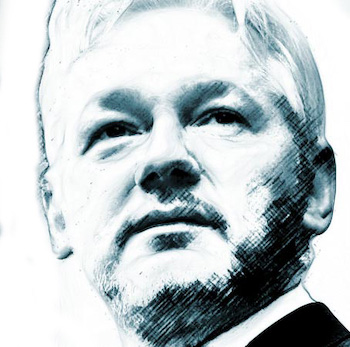
But many, such as the NGO ARTICLE 19, have a warning: However, this is not a slam-dunk win for press freedom. The US should have never brought these charges. The single remaining criminal count of conspiring to obtain and disclose classified US national defence documents puts investigative journalism at severe risk in the United States and beyond. Journalists that cover national security, the armed forces and defence do this day in and day out as part of providing transparency and accountability to hold abuses of power in check.
‘We are all at risk if the government can hold an archaic law, the Espionage Act, over the heads of journalists to silence them.’ The charge under the Espionage Act undermines the principles of media freedom, accountability, and independent journalism that Assange, his legal team, and campaigners had championed throughout his case, which began in 2012. The fact that his release from Belmarsh prison is a result of plea deal is a clear reminder of how important it is to redouble our efforts defending media freedom and pushing for accountability.
Sayed Ahmed AlWadaei is a human rights defender from Bahrain and the director of advocacy at the Bahrain Institute for Rights and Democracy (BIRD).
‘All we are asking for are the most basic rights. We hope to see Bahrain healing from over a decade of ordeal, of repression, of imprisonment, of torture, into a State where individuals can challenge their State without fear.’
He spoke to ISHR about how the 2011 Arab Spring uprising in Bahrain led him into activism and shared his hopes for a free, democratic future for his country despite the regime’s efforts to silence him and all those it perceives as opponents.
Front Line Defenders issues regularly urgent appeals on behalf of Human Rights Defenders. This case is just an example: on 29 May 2024 FLD called for action on behalf of woman human rights defender Jina Modares Gorji in Iran who was sentenced to twenty-one years in prison.
Please get your own Front Line Defenders Appeals. By subscribing to this list [https://www.frontlinedefenders.org/secure/act-now.php] you will receive information on all cases that Front Line Defenders takes up on behalf of human rights defenders at risk. You will receive an average of 4 to 8 emails per week.
On 24 May 2024, Jina Modares Gorji was notified that Branch 1 of the Sanandaj Revolutionary Court has sentenced her to a total of twenty-one years in prison. In the verdict of the revolutionary court, the woman human rights defender has been sentenced to ten years in prison on the charge of “forming groups and association with the intention of disturbing the national security,” ten years in prison for “collaboration with a hostile government,” and one year in prison on the charge of “propaganda activities against the state.”
Jina Modares Gorji is a woman human rights defender, book seller, and feminist podcaster and blogger in Sanandaj, in the Kurdistan province in Iran. Her human rights work includes advocating for women among the Kurdish community, girls’ rights, and socio-cultural rights via holding book clubs and writing blogs. She has been arrested several times since September 2022, following the death of Mahsa (Jina) Amini in the custody of the Iranian morality police …
On 9 April 2024, the last hearing occurred for the woman human rights defender. The aforementioned charges are related to her peaceful human rights activities, which includes speaking to media, participating in international conferences and organising activities to promote women’s rights in the Kurdistan province in Iran. The woman human rights defender was arrested on 10 April 2023 and was arbitrarily detained for almost three months in solitary condiment and in the public Womens Ward of Sanandaj prison. She was also denied access to a lawyer. In mid-February 2023, she was informed that “spreading disinformation” had been added to the previous charges of “forming groups and association with the intention of disturbing the national security”, and “propaganda activities against the state”. On 3 July 2023, the woman human rights defender was released on a bail of one billion IRR.
In April 2023, Branch 1 of the Sanandaj Public and Revolutionary Court dismissed the lawsuit that Jina Modares Gorji filed against the physical and verbal assault during her arbitrary arrest.
On 12 February 2023, Jina Modares Gorji appeared with her lawyer before Branch 1 of the Sanandaj Revolutionary Court, where she did not sign the pardon scheme as she stated this would constitute an acknowledgement that the charges against her human rights work were legitimate. This scheme was announced by the Iranian judiciary in February 2023 on the occasion of the 44th anniversary of the Islamic Revolution.
The woman human rights defender had previously been arrested on 21 September 2022 for her work and participation in the “Woman, Life, Freedom” protests, and charged with “gathering and collusion against the national security” and “propaganda activities against the state.” She was released on a bail of 10 billion IRR on 30 October 2022, after going on hunger strike for three days in protest against the physical assault and detention she endured in the Sanandaj Correctional Centre.
The prosecution of Jina Modares Gorji is part of a wide crackdown on human rights defenders in Iran where, hefty sentences issued against human rights defenders on the charge of “forming groups and association with the intention of disturbing the national security,” against groups of human rights rights defenders reported by Front Line Defenders in April and May 2024.
Front Line Defenders is particularly concerned with the sentencing of the woman human rights defender Jina Modares Gorji , as it believes the judicial action is in reprisal for her peaceful and legitimate human rights work.
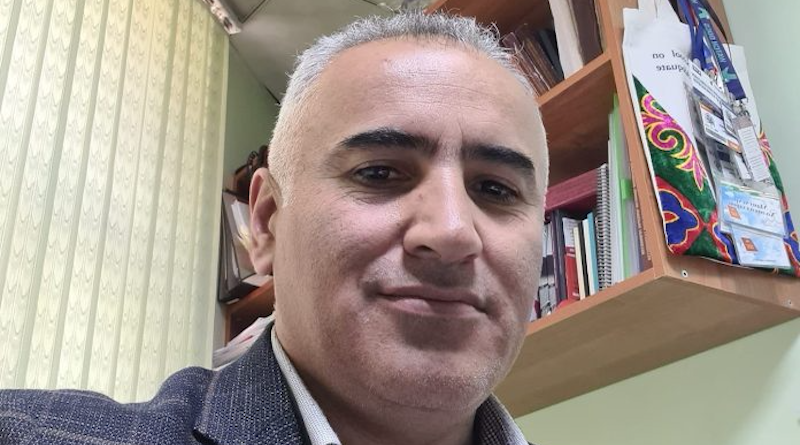
Manuchehr Kholiqnazarov. Photo from personal Facebook page
On 29 May 2024, IPHR (International Partnership for Human Rights – an independent, non-governmental organization founded in 2008 in Brussels) published an Op-ed about Human Rights Defender Manuchehr Kholiqnazarov.
Tuesday marked the sad anniversary of the arrest of lawyer and human rights defender Manuchehr Kholiqnazarov in Tajikistan. First arrested on 28 May 2022, he has now spent two years behind bars, serving a 16-year-long prison sentence in retaliation for his human rights work.
The organisations issuing this statement – International Partnership for Human Rights (IPHR), the Tajikistan Civil Society Coalition against Torture and Impunity, Helsinki Foundation for Human Rights (HFHR, Poland), Norwegian Helsinki Committee (NHC), as well as International Federation for Human Rights (FIDH) and World Organisation against Torture (OMCT) within the framework of the Observatory for the Protection of Human Rights Defenders – are increasingly worried about Manuchehr’s state of health and call again on the Tajikistani authorities to immediately and unconditionally release him.
“Manuchehr was arrested and imprisoned for no other reason than his tireless work to help the most vulnerable victims of human rights violations. We will not give up fighting against his unjust sentence until he is released and allowed to return home to his family,” said Brigitte Dufour, Director of IPHR.
On 9 December 2022 Tajikistan’s Supreme Court found Manuchehr guilty under articles 187, part 2 (participation in a criminal organisation) and 307 (3), part 2 (participating in the activities of a banned organisation due to its extremist activities) of the Criminal Code, sentencing him to 16 years’ imprisonment in a strict regime penal colony.
Manuchehr is the Director of the Lawyers Association of Pamir (LAP), one of the few civil society organisations in Tajikistan’s Gorno Badakhshan Autonomous Region (GBAO) that works to promote and protect human rights.
On 25-28 November 2021, mass protests erupted in Khorog, GBAO, over the extrajudicial killing of a young man, Gulbiddin Ziyobekov. After the protests settled, Manuchehr joined the “Commission 44”, consisting of representatives of local civil society and law enforcement agencies, to investigate the events. Given his professional experience, Manuchehr was included in the Joint Investigation Team headed by the Prosecutor General’s Office and helped secure lawyers for victims of indiscriminate violence during the November 2021 protests.
However, May 2022 saw a renewed crackdown on protests in Khorog and Rushan District of GBAO. On 28 May 2022, Manuchehr was arrested along with a dozen members of Commission 44 for alleged “participation in a criminal association” and “publicly calling for violent change of the constitutional order”. Their trial began on 20 September 2022, and was held behind closed doors at a detention facility of the State Committee for National Security (SCNS) in Dushanbe. Following his conviction, Manuchehr was transferred to a prison facility in the capital.
Manuchehr’s health has deteriorated significantly in detention. In particular, he suffers from back problems. The authorities should ensure that he has access to adequate medical assistance for these health problems and that his treatment complies fully with international standards as long as he remains behind bars.
In addition to human rights NGOs, the United Nations Special Rapporteur on Human Rights Defenders and other international human rights experts have repeatedly raised concerns about Manuchehr’s imprisonment and called for his release. The Tajikistani authorities should heed to these calls, promptly release him and allow him to reunite with his family.
‘My passion is the defence of the right to land and territory,’ says Lourdes Gómez, a land rights defender and professor working on issues affecting Indigenous women defenders and the impacts of palm oil production.
The ISHR had the chance to meet Lourdes Gómez during her Geneva visit to attend the Human Rights Council’s 55th session. Lourdes, a land right defender and professor working on issues of Indigenous women defenders and the impacts of oil palm production, delivered a powerful statement during the session. She was also one of the speakers at a side event about the human rights situation in Guatemala.
Lourdes recently participated into the ‘artivism’ project by journalist and photographer Teresa Ordás, ‘Paisojos de mujeres defensoras de derechos humanos de Guatemala‘ (‘Landscapes of women human rights defenders from Guatemala’). The project is a collection of beautiful photographs of the real reflections of the subjects’ eyes, where Teresa Ordás highlights ‘the world in people’s eyes.’ [Website: https://www.paisojos.com]
Here is how Lourdes introduces herself in the frame of ‘Paisojos’:
‘I am a Q’eqchi’ Mayan woman of African descent. I inherited my path of defending human rights from my mother Lucia Willis Paau, who since my childhood had joined the movement to defend the rights of Mayan women in the north of Guatemala. My passion is the defense of the right to land and territory. I have dedicated myself to denouncing the violence that the State of Guatemala exerts at the community level on Indigenous, rural and peasant women while they fight for access, use, control and protection of their land. These communities face racism, discrimination and machismo. I have dedicated myself to the defense of land rights, contributing through historical registry and communal research, to the restitution of land rights’.
On 20 March 2024, it was reported that Aliaksandr Vaitseshyk was arrested during a raid on his home.
Last week, human rights defender Aliaksandr Vaitseshyk was detained in Baranavičy. The police released a video of the raid on his home, which shows him lying on the floor during the arrest. The reasons for this harassment are unknown. The activist is being held in the Baranavičy temporary detention center.
Jurist of 25 February, 2024 reported that police in China have charged Chen Pin Lin, director of documentary “Not the Foreign Force,” with “picking quarrels and provoking trouble,” according to Chinese human rights news watchdogs Weiquanwang and Civil Rights and Livelihood Watch.
The Thursday charges come after Chen’s arrest in January 2024. He has been in detention for more than a month. In a letter to his family members, the authorities accused him of “picking quarrels and provoking troubles,” which is criminalized by Article 293 of the Criminal Act. Human Rights Watch previously criticized Article 293 for its elusive definition and use against human rights defenders.
The film “Not the Foreign Force,” also known as “Ürümqi Road” in Chinese, depicts the nationwide protests against COVID-19 lockdown measures in China. The demonstrations erupted in Shanghai after a fire killed 10 people in Ürümqi, where lockdown policies had slowed down fire services. During the rallies, colloquially known as the “White Paper Protests,” participants held a piece of blank paper over their heads to symbolize their speechlessness over the tragedy. The protests ultimately prompted the Chinese government to lift all COVID-19 restrictions in December 2022.
Chen published the video on China Digital Times under the pseudonym “Plato” on 27 November 2023, one year after the demonstrations started. In the caption, Chen criticized the Chinese government for shifting the blame to foreign forces. “The more the government tries to mislead, forget and conceal, the more we should speak out, remind and remember,” he wrote. “Remember the White Paper Protests.”
‘Our impact may be large, may be small, and may be nothing. But we must try. It is our duty to the dispossessed and it is the right of civil society.’ – Cao Shunli
Ten years ago, Chinese woman human rights defender Cao Shunli was a victim of deadly reprisals for engaging with the United Nations.
The International Service for Human Rights (ISHR) and partners invite you to attend a photo exhibition on 14 March 2024, at Place des Nations to honour her memory.
Cao Shunli was a brave Chinese woman human rights defender and lawyer. She campaigned for the meaningful consultation and contribution of independent civil society to the Chinese government’s national reports for its first and second Universal Periodic Reviews (UPR). On 14 September 2013, one month before this review, while on her way to Geneva to attend a human rights training organised by ISHR and CHRD, she was detained and forcibly disappeared by Chinese authorities for five weeks. When she resurfaced in custody in October 2013, she had been charged with ‘picking quarrels and provoking trouble’, and it was evident that she was experiencing serious medical issues in detention. Despite repeated international calls for her urgent release over months of being denied adequate medical treatment, Cao Shunli died of multiple organ failure on 14 March 2014, having been granted bail for medical reasons just days before her death. Cao Shunli was one of the finalists of the prestigious Martin Ennals Award for Human Rights Defenders in 2014. [see also: https://humanrightsdefenders.blog/tag/cao-shunli/ as well as https://www.martinennalsaward.org/hrd/cao-shunli/]
To this day, Chinese authorities have ignored appeals seeking accountability for Cao’s death, including repeated calls by UN Special Procedures experts in 2014 and 2019 for a full investigation into this ‘deadly reprisal’. Her case remains the longest-standing unresolved case in the UN Secretary-General’s annual reports on reprisals. March 2024 marks the 10th anniversary of Cao Shunli’s death. A decade ago, when ISHR and many other human rights groups sought to observe a moment of silence at the Human Rights Council in her memory, the Chinese delegation, together with other delegations, disrupted the session for an hour and a half. China is consistently one of the most frequent perpetrators of reprisals against individuals or groups engaging with the United Nations. Frequently mentioned alongside Saudi Arabia, it has the second highest number of reprisals cases and situations reported by the UN Secretary-General since 2010.
Cao Shunli’s story is a paradigmatic case of reprisals, not only because of her belief in the importance of civil society participation in UN mechanisms, but also due to the array of severe human rights abuses she endured because of this belief, ranging from being barred from exiting her own country, enforced disappearance, arbitrary detention, lack of due process, torture, ill-treatment, and denial of adequate medical care, to subsequent death in custody without any accountability for these abuses.
Kadar Abdi Ibrahim is a human rights defender and journalist from Djibouti. He has drawn inspiration from iconic figures in the human rights movement in the hopes of building a genuine and lasting democracy in his country.
Kadar Abdi Ibrahim has also been the subject of acts of reprisals by his government for his engagement with international bodies. In 2018, days after returning from Geneva where he carried out advocacy work ahead of Djibouti’s Universal Periodic Review, intelligence service agents raided his house and confiscated his passport.
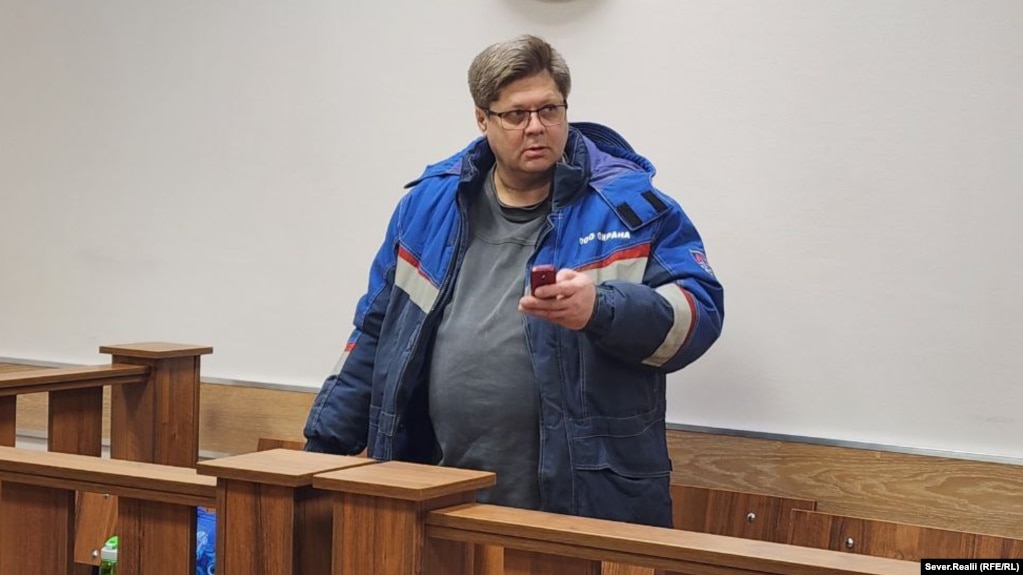
Human rights activist Gregori Vinter appears in court in Cherepovets, Russia, on January 17.
On 29 January 2024, Rafio Free Europe reported that Russian paleontologist and human rights defender Gregori Vinter, who was sentenced to three years in prison earlier this month on a charge of distributing “false” information about Russian armed forces involved in Moscow’s ongoing invasion of Ukraine, has asked President Vladimir Putin to euthanize him “to avoid an excruciating death of diabetes.”
Vinter’s lawyer, Sergei Tikhonov, on January 28 called the letter written by his client before he was handed his sentence on January 18 “a gesture of despair.”
In the letter, Vinter says prisons could not supply the insulin he needs to treat his diabetes, while getting supplies from outside the institution would be impossible because he would have to visit doctors to get prescriptions, something that wouldn’t be allowed.
“My experience tells me that without my medicine my life in custody will be very short…. I will face a process of a long and cruel death…. Knowing that as an inmate I will face a mere excruciatingly painful death among the alien, cruel, and absolutely indifferent people of the prison, I ask you to allow a voluntary medical euthanasia for me,” Vinter’s letter to Putin says.
“Imprisonment for a person like me, a person who survived a stroke, a clinical death during COVID, an attempted murder in 2018, actually means an execution, a public execution accompanied with long-term suffering through a slow and painful death. This is not just 1937 [period of Josef Stalin’s great purge] — it is perverted pathological sadism that is known to the whole world as the Russian Federation’s Federal Penitentiary Service.”
Prison officials have not commented on Vinter’s letter and whether he would have regular access to the medical assistance he needs.
The 55-year-old Vinter is the leader of the For Human Rights group branch in his native city of Cherepovets. His human rights activities in recent years helped to reveal the mass beatings of inmates at a local prison and investigations of the penitentiary’s guards. He also made headlines in 2019 after he led several rallies protesting against the local government’s deforestation activities in the region around Cherepovets.
During the pandemic in 2020, Vinter was handed a parole-like two-year sentence over an online post about the transportation of convicts without medical masks and other COVID precautions.
Before the sentence was pronounced, Vinter spent time in a detention center where, he said, investigators tortured him with electricity and broke his leg.
Vinter later told journalists about what he endured in the detention center, which led to a public outcry and investigations of the center’s administration.
The case against Vinter was initiated in August 2022 after he posted materials on the Internet about alleged atrocities committed by Russian troops against civilians in Ukraine.
The Memorial human rights group has recognized Vinter as a political prisoner.



 Hans Thoolen on Human Rights Defenders and their awards