Posts Tagged ‘human rights award’

Bangladesh Human Rights Defender Adilur accorded more awards

October 29, 2014

Adilur Rahman Khan addresses weeklong IBA annual conference in Tokyo, Japan ended on Friday. Photo: AHRC Press Centre

Adilur Rahman Khan addresses IBA annual conference in Tokyo, Japan. Photo: AHRC Press Centre

Bangladesh human rights defender Adilur Rahman Khan, of the human rights organisation Odhikar, has won the 2014 International Bar Association (IBA) Human Rights Award.

For more on these awards see: http://www.brandsaviors.com/thedigest/awards.
Adilur received the award from IBA President Michael Reynolds at the Rule of Law Symposium held at the conclusion of the IBA Annual Conference in Tokyo, which finished on 24 October. In October 1994, he founded the human rights organisation Odhikar, which has undertaken extensive fact-finding and reporting of human rights violations in Bangladesh. During the presentation of the award, Reynolds said, “Let us be reminded that lawyers play a vital role in promoting justice, human rights and upholding the rule of law, both at home and abroad.  May Mr Khan’s courage, determination and resilience be an inspiration to lawyers everywhere.”In his acceptance speech, Adilur told the 200 delegates gathered at the Symposium, ‘The Rule of Law is under serious threat in my country. Justice for all the ongoing gross human rights violations is inaccessible for victims and their families.  Their right to access to complaint mechanisms is denied, regardless of whatever is written in the laws or the Constitution of the country”. Repressive laws are in force and the independence of the judiciary is under attack in a spree of politicisation of institutions of the state, he added.

via Adilur gets IBA int’l human rights award.

Congolese gynecologist wins Europe’s Sakharov Prize in 2014

October 22, 2014

The 2014 Sakharov Prize goes to the Congolese physician Denis Mukwege for his treatment of the victims of gang rape in the Democratic Republic of Congo.

Congolese physician Denis Mukwege, will be awarded this year’s Sakharov Prize for Freedom of Thought, European Parliament President Martin Schulz announced in Strasbourg on Tuesday.

Mukwege has been treating rape victims at a clinic in Bukavu on the Rwandan border for decades. He has performed thousands of surgeries on women to heal their injuries sustained in violent attacks, often by local militias. The 59-year-old founded a gynaecology unit and maternity ward in Bukavu in 1996, the first of its kind in the area. He has since expanded the station to an entire hospital, which he runs. The Second Congo War began in August 1998, ravaging the region. Mukwege is said to have performed over 10,000 operations on rape victims ever since.

The other finalists were Ukraine’s pro-Western Euromaidan movement and Azerbaijani rights defender Leyla Yunus.[https://thoolen.wordpress.com/2014/10/16/more-on-the-sakharov-prize-and-the-arab-nominees/]

For more information on the award see: http://www.trueheroesfilms.org/thedigest/award/sakharov-prize-freedom-thought

The 2014 prize will be awarded at a ceremony in Strasbourg on 26 November.

Congolese gynecologist wins Sakharov Prize | News | DW.DE | 21.10.2014.

for our french speakers: http://www.lemonde.fr/europe/article/2014/10/21/le-docteur-mukwege-recoit-le-prix-sakharov-pour-son-soutien-aux-femmes-violees-en-rdc_4510098_3214.html


2014 Oslo Freedom Forum wants to defeat Dictators

October 20, 2014
As from tomorrow, 21 October, you can follow the 2014 Oslo Freedom Forum [OFF] in real time at www.oslofreedomforum.com. This year’s theme—“Defeating Dictators”—will explore nonviolent ways to challenge these regimes and stop other countries from falling under the rule of a strongman. Panel discussions are on “Tyrants and Technology” and “Dangerous Words”

OFF speakers include Egyptian comedian and TV host Bassem Youssef; Cuban blogger Yoani Sánchez; Ukrainian pro-democracy activist Yulia Marushevska; North Korean refugee and rights activist Hyeonseo Lee; Mexican journalist Marcela Turati Muñoz; and Jordanian comic book artist Suleiman Bakhit.  The forum will conclude on Wednesday, October 22, with the presentation of the Václav Havel International Prize for Creative Dissent to Turkish performance artist and “Standing Man” Erdem Gunduz, Tibetan filmmaker Dhondup Wangchen (represented by his wife Lhamo Tso), and Nadezdha Tolokonnikova and Maria Alyokhina, members of the Russian feminist punk rock collective Pussy Riot [https://thoolen.wordpress.com/tag/vaclav-havel-prize-for-creative-dissent/]

Interesting novelty (to get more people to follow the forum on-line) is a social media contest on how the speakers inspire the audience. One winner will join the 2015 Oslo Freedom Forum in person.

The full program can be viewed here: 2014 Oslo Freedom Forum | Events | Oslo Freedom Forum.

Letelier-Moffitt Human Rights Awards 2014 to Juan Mendez, Mesoamerican Women Human Rights Defenders and Colibri

October 17, 2014

Pamela Constable describes with passion in the Washington Post of 14 October 14 the work of the Colibri Center for Human Rights in Tucson as recipient of one of the three Letelier-Moffitt Human Rights Awards of 2014. The other awards go to veteran international human rights lawyer Juan Mendez and Mesoamerican Women Human Rights Defenders, a nonprofit based in Mexico City that assists women in Mexico and Central America who are involved in defending social and human rights. Juan E. Mendez, 69, is a well-known human rights defender and now U.N. special rapporteur on torture human rights official. He was born in Argentina, jailed for defending political prisoners and then exiled after an international campaign. He worked for many years for human rights NGOs, especially Human Rights Watch.

The regional awards, given by the Institute for Policy Studies, are named for the two victims of a 1976 car bombing in which former Chilean diplomat Orlando Letelier and his American assistant Ronni Moffitt were assassinated by agents of Chile’s military regime.

via Letelier-Moffitt Human Rights Awards go to border activists, lawyer, Latina organizers – The Washington Post.

More on the Sakharov Prize and the Arab nominees

October 16, 2014

A few days ago I published a piece about the little ceremonial dropping of Arab nominees for the European Parliament’s Sakharov Prize for Freedom of Thought [https://thoolen.wordpress.com/2014/10/11/europes-sakharov-prize-in-trouble-with-regard-to-arab-nominees/]. The main actor in this story – Alaa Abdel Fattah – has given his own views in a piece  in Jadaliyya on 7 October, entitled “On the Sakharov Prize”. To do justice I copy it in its entirety below:

[Sculpture of Soviet nuclear physicist and human rights activist Dr. Andrei Dmitievich Sakharov. Photo by David via Flickr.]
[Sculpture of Soviet nuclear physicist and human rights activist Sakharov. Photo by David via Flickr.]

It was with joy that I received the news of my nomination for the Sakharov Prize for Freedom of Thought, the same joy any act of solidarity inspires.

Since my release from prison in Egypt on bail, with my fate still bound to the Special Terrorism Courts and the draconian Protest Law, I have been facing constant harassment from official and unofficial representatives of the regime. New trumped-up criminal charges pop up every few days. A horde of political talk show hosts on supposedly independent TV stations discusses old and out-of-context tweets, twisting my words and assigning sinister implications to them. There is an insistent tarnish campaign meant to prepare the general public for my eventual return to prison. Needless to say, I am banned from appearing on local TV stations, and I am forbidden to travel outside Egypt.

So it is solidarity such as that of European United Left/Nordic Green Left (GUE/NGL) that creates the pressure to keep me out of jail and out of harm. It was also a comfort to find comrades in unexpected places; GUE/NGL’s stance against neoliberal policies and against the distortion of European democracy seemed in line with the aspirations of persecuted revolutionaries in Egypt and the broader Arab context.

I was proud to be nominated along with Tunisian rapper, Ala Yaacoubi, and Moroccan rapper, Mouad Belghouate, both imprisoned for insulting the police in their popular songs. I was relieved that the European Parliament members (MEP) who nominated us understood the point of doing symbolic/verbal violence to the image of the powerful who consistently commit systemic actual violence to the bodies, souls and livelihood of the powerless; relieved that the MEPs understood the meaning of questioning the humanity of those who derive their power from dehumanizing their opponents.

I was not surprised when a new tarnish campaign was launched in reaction against my nomination. My family has faced such campaigns before by supporters of the Israeli occupation and Israeli apartheid. The latest when my sister, Mona Seif, was shortlisted for the Martin Ennals Award. But I was surprised when the president of the GUE/NGL decided to withdraw my nomination based on a two-year-old tweet taken out of context. And I was surprised that this was done without an attempt to contact me for clarification, and without any regard for how such public condemnation affects my safety and liberty. The president of the GUE/NGL has now sent a clear message to the Egyptian authorities that whatever international solidarity and support I have is fragile—easily destroyed with a tweet.

The GUE/NGL are of course free to form their opinion based on whatever sources of information they choose—including well-known neocons writing for the Wall Street Journal about an out-of-context tweet. However, since they made the nomination and made it publicly, it was their responsibility to ascertain how the manner of retreating from it would affect my safety. Other options were available to them; they could have asked me to withdraw, or they could have quietly dropped my name from the short-list.

The GUE/NGL’s president’s statement claims that I “called for the murder of a critical number of Israelis.” For what it is worth, here is what I would have said if anyone from GUE/NGL or any other MEPs had asked me to clarify.

The tweet in question is certainly shocking if taken out of context, but even then it cannot be framed as “a call” for anything. It was a “mention” to two friends, part of a private conversation—a thread spanning multiple tweets—that took place over a public medium (limited to 140 characters) on the first night of Israel’s 2012 attack on Gaza. A conversation between friends who already knew enough about each others’ views to make it unnecessary to clarify and elaborate, for instance, the distinction between civilians and combatants—as one would if one were making a public statement. As this was not a public statement, only those who follow all three of us on Twitter would have had this tweet appear on their timeline at two a.m. on 15 November 2012. And even after the tarnish campaign, it has only been retweeted four times.

To pretend that you can interpret this tweet two years later without consulting the people involved in the conversation, and to claim that it constitutes a call to action, is simply ridiculous. That I should now feel the need to explain and clarify what was not intended for a general public in the first place, and to be condemned for my thoughts, not my actions, in such a manner is clearly an attack on my personal liberty. The chilling effect of having to adapt to such harassment and condemnation should be perfectly clear for those honoring Andrei Sakharov’s legacy.

The conversation relating to the war on Gaza started with a friend expressing her doubt that the conflict would ever be resolved by local actors. The other friend in the conversation and I replied, insisting that like most such conflicts, it would be resolved locally. The tweet stated what seems to be the basic strategy of most national liberation movements, especially those that opt for armed resistance: To make the price of occupation/colonization/apartheid too expensive for the society that supports it. The strategy of the Palestinians is exactly that—via both violent and nonviolent means (boycott, divestments and sanctions, and armed resistance, for example). Since this was during a time of war, I had armed resistance in mind. Think of Vietnam or Algeria; many would say this is exactly what happened: After a critical number of casualties in asymmetric wars, the civilian population supporting the occupier refused to continue its support—despite the fact that the casualties suffered by the society resisting colonization were massively higher.

My tweet was not a call for anything; it was not even a statement of opinion. It was a statement of one of the facts of the conflict. If GUE/NGL had asked me about my views I would have directed them to my March 2012 debate on Deutsche Welle.

It should perhaps be remembered that the first laureate of the Sakharov Prize was Nelson Mandela back in 1988, when he and the African National Congress (ANC) were considered terrorists by many democratic governments. At the time, his views on the necessity of violence for resisting apartheid must have required and inspired complex debates on appropriate tactics and strategies, the rules of engagement, the moral, political and social limitations that should be put on revolutionary violence, etc. There would have been plenty of statements attributable to him or his comrades—including the famous Rivonia Trial speech in which he admits to planning sabotage—that would have looked pretty scary out of context.

Finally, I hardly ever call for any solution or action on my own. As an individual, I have always expressed my opinions and positions in the clearest and strongest language. But as an activist, I have always worked for any given cause with and through the largest united front possible. When it comes to calls for solutions or actions, and for the sake of consensus, I would make the very compromises I refuse to make when speaking only for myself.

More importantly, I do not call for anything when it is not a cause that I am directly engaged with. I stand in solidarity with the Palestinian people, but I never presume to tell them what to do.

If my views on violence—specifically against civilians—are what is in question, the answers can be found in my actions and my published views in my local context and my own struggle in Egypt.

 [This piece is co-published with Mada Masr]

On the Sakharov Prize.

Martin Ennals Award for Human Rights Defenders 2015: nominations until 9 December

October 16, 2014
Martin Ennals Award for Human Rights Defenders

Martin Ennals Award for Human Rights Defenders

The Martin Ennals Foundation is accepting nominations for the 2015 Martin Ennals Award for Human Rights Defenders.The goal of the program is to extend recognition and protective publicity to those who are currently involved in frontline work involving the promotion and protection of human rights. Recent recipients include individuals and organizations from Bangladesh, China, Chechnya, Cambodia, Uganda, Syria, Iran, Uzbekistan, Burundi, Sri Lanka, and Zimbabwe. The award is granted annually to an individual or, in exceptional cases, an organization in recognition of their commitment and ongoing efforts in the defense and promotion of human rights. Nominees must currently be involved in work for the promotion and protection of human rights. Priority is given to those who are at risk and have demonstrated an active record of combating human rights violations by courageous and innovative means. The program aims to encourage and promote the work of individuals or organizations, particularly if they are working in conditions hostile to fundamental human rights and are in need of protection.No posthumous awards are given except when a candidate has already passed the first round [as happened this year with Cao Shunli]. The candidate should not use or advocate violence. Anybody can nominate an individual or organization. Neither individuals nor organizations may nominate themselves. The present value of the annual award is 20,000 Swiss francs, which should be used for further work in the field of human rights. All 3 Final Nominees will be invited to the award ceremony which is hosted by the City of Geneva in late 2015.

The deadline is 9 December 2014

Program guidelines in English, French, and Spanish, FAQ, online nomination form, and information about previous recipients are available at the website: www.martinennalsaward.org

via Martin Ennals Foundation Invites Nominations for Human Rights Defenders Award | RFPs | PND.

Sudan HRD Ryan Boyette to Receive Human Rights First Award

October 12, 2014

HRF logo will honor Ryan Boyette, a human rights advocate based in Sudan, with its 2014 Human Rights First Award. Boyette is recognized for his courageous work documenting and drawing international attention to the ongoing attacks against civilians by the Sudanese government in conflicts largely hidden from worldview. The organization will present the Award at its annual gala on 22 October in New York. Human Rights First’s CEO Elisa Massimino stated: “We are inspired by Ryan’s commitment to keep the eyes of the world on the human rights crisis in southern Sudan.” Read the rest of this entry »

Europe’s Sakharov Prize in trouble with regard to Arab nominees

October 11, 2014

Under provocative title “Can Arabs be Human Rights Defenders?”  the on-line newspapers Mada Masr and Jadaliyya published a piece setting out how 3 Arab nominees were suddenly dropped by their nominators in the European Parliament  over a few Israeli-bashing tweets that were indeed on the verge of acceptability (even in the context of rough twitter talk) especially when calling for or condoning killing of Zionist civilians.

I referred to the nominations in my post: https://thoolen.wordpress.com/2014/09/22/nominees-for-sakharov-prize-2014-announced/.

I consider the post’s title  provocative (or perhaps ironic) as even a cursory glance of human rights documentation – including this blog – shows that there are hundreds of human rights defenders in the Arab world whose credentials are not disputed or totally defensible.

Please read the whole piece for yourself as this is both a complicated and sensitive matter.

Read the rest of this entry »

Don’t miss the High Commissioner’s words at MEA 2014 ceremony

October 10, 2014

The ceremony of the Martin Ennals Award 2014 is over (7 October 2014). It was again very impressive to hear and see 3 courageous Human Rights Defenders being honored. Some 450 people (my estimate) gave standing ovations to the 3 nominees whose work was shown in impressive films produced for the occasion. The film portraits are already available on the website: http://www.martinennalsaward.org where there is also a short summary of the whole evening.

Martin Ennals Award for Human Rights Defenders

Martin Ennals Award for Human Rights Defenders

Especially the film on Chinese HRD Cao Shunli is a masterpiece given that the film makers had almost no images to work with due to the modesty of the human rights defender as well as her untimely death in detention only 2 days after her nomination in March 2014.

The internet has buzzed with congratulations and encouragements to the other two nominees, Adilur from Bangladesh and Alejandra Ancheita from Mexico. The latter became ultimately the Laureate [see https://thoolen.wordpress.com/2014/10/07/breaking-news-alejandra-ancheita-is-the-2014-mea-laureate/#more-5648 ].

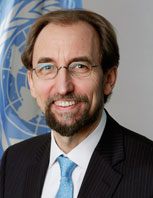
One of the nicest surprises was the address by Zeid Ra’ad Al Hussein, the United Nations High Commissioner for Human Rights at one of his first public appearances outside the UN. UN HCHR Al Hussein The High Commissioner gave a moving and almost poetic description of the sorry state of affairs left to human rights defenders to correct: He said inter alia: Read the rest of this entry »

Breaking News: Alejandra Ancheita is the 2014 MEA Laureate

October 7, 2014

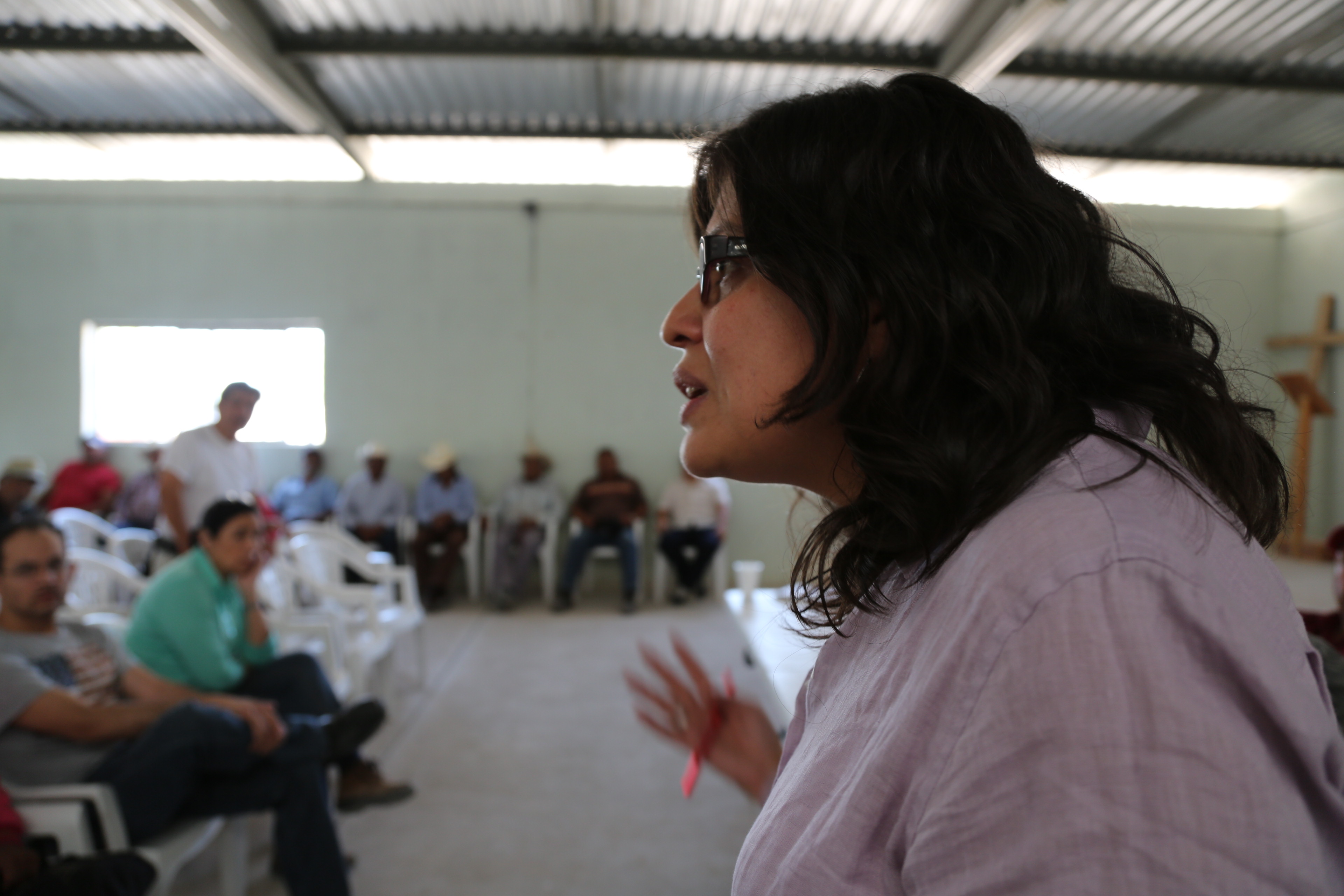
AlejandraTM4M1713The Martin Ennals Foundation just announced in Geneva – during a ceremony broadcast live on the internet – that the MEA Laureate of 2014 is  Alejandra Ancheita from Mexico. She was selected by a Jury representing the broad international Human Rights movement (see below).

Alejandra Ancheita is the founding Director of ProDESC. For over 15 years she has worked with migrants, workers, and indigenous communities to protect their land and labour rights vis-a-vis transnational mining and energy companies. These disputes have included violent attacks on those she is trying to protect. She is also one of the pioneers in seeking accountability for transnational companies in Mexican courts when local communities’ rights are not taken into account. In Mexico, there is a clear pattern of attacks, threats, criminalization, and murders of human rights defenders. Ms Ancheita and ProDESC have been subjected to surveillance, a defamation campaign in the national media, and a break in at their offices. Read the rest of this entry »