On 4 April 2025 Scoop news informed that human rights defender and author Benedict Rogers is now a Senior Director at Fortify Rights. Rogers brings more than three decades of experience advancing human rights throughout Asia, with a particular focus on China, Hong Kong, Myanmar, and North Korea.
“We’re so honored to welcome Benedict to our team of human rights defenders,” said Matthew Smith, Chief Executive Officer at Fortify Rights. “Benedict’s principled leadership, deep expertise, and unwavering commitment to human rights are invaluable assets to our work. He will significantly help our ability to strengthen community-based responses to human rights violations and to combat rising authoritarianism.”
Benedict Rogers co-founded and served as Chief Executive of Hong Kong Watch from 2020 to 2024 and remains a trustee of the organization. He is a member of the advisory group of the Inter-Parliamentary Alliance on China, an advisor to the Stop Uyghur Genocide Campaign, and a co-founder of the International Coalition to Stop Crimes Against Humanity in North Korea. Rogers previously worked for nearly 30 years with Christian Solidarity Worldwide, including as East Asia Team Leader and Senior Analyst for East Asia.
He is the author of seven books, including The China Nexus: Thirty Years In and Around the Chinese Communist Party’s Tyranny (2022) and Burma: A Nation at the Crossroads (2012), and he has written numerous articles, editorials, and reports on human rights conditions in Myanmar, China, North Korea, and elsewhere.
In line with Fortify Rights’s mandate to strengthen community-based responses to human rights violations, Rogers will work directly with frontline human rights defenders, civil society organizations, and affected communities, sharing his expertise and supporting their efforts to document abuses, advocate for justice, and build resilient movements for change. His decades of experience conducting trainings, mentoring activists, and leading international advocacy initiatives will help amplify the voices of those most affected by rights violations.
It is a great privilege to join Fortify Rights, which is an organization whose frontline investigations, in-depth research, and brave and reliable advocacy have long inspired me,” said Benedict Rogers. “Fortify Rights has built a remarkable reputation for its courage, integrity, and impact. Joining Fortify Rights feels like a natural next chapter in my journey and an important opportunity to contribute—supporting its work in Myanmar, across Asia, and in Ukraine; providing an advocacy voice in London, Europe, and beyond; expanding efforts into China and North Korea; and strengthening the capacity of brave human rights defenders throughout the region. I look forward to contributing to its mission and expanding its important work across Asia and beyond.”
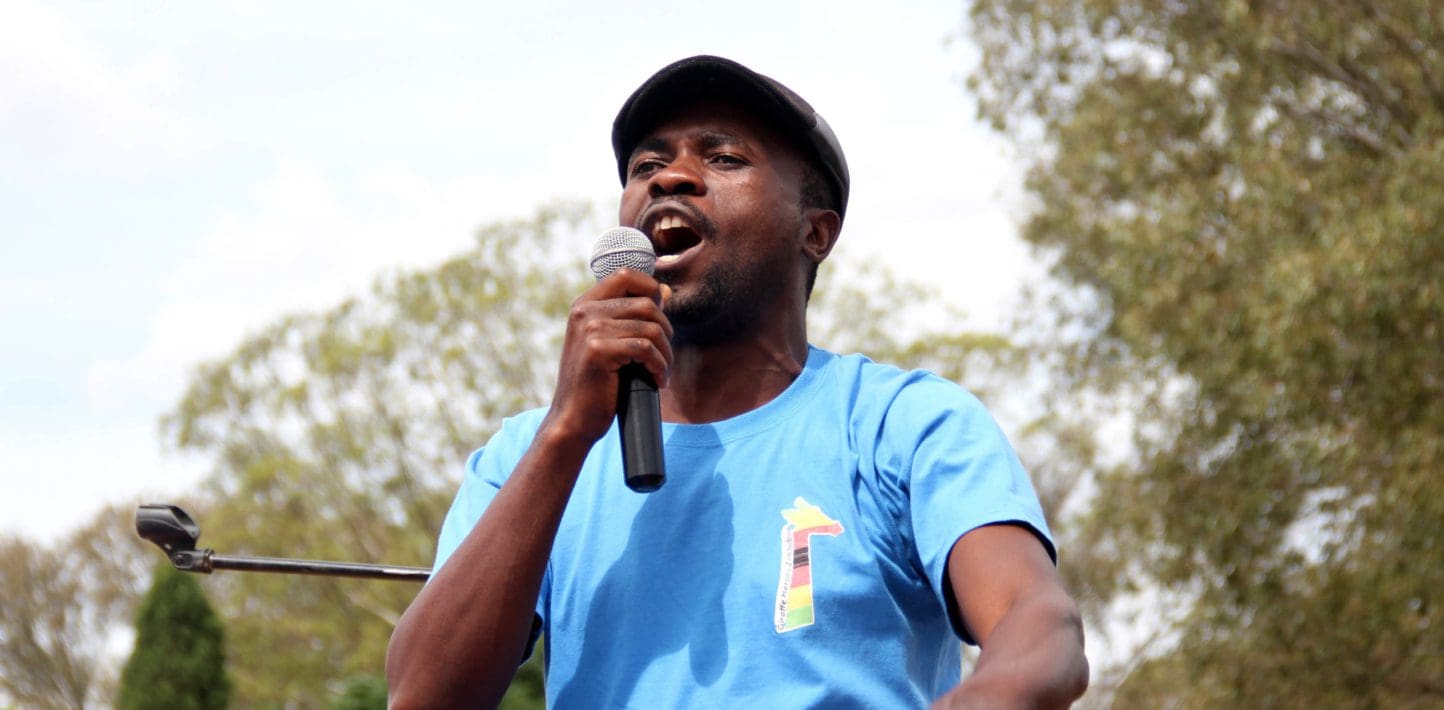
Ahead of the 10-year anniversary of the enforced disappearance of Zimbabwean journalist and pro-democracy activist Itai Peace Dzamara, Amnesty International 7 March 2025 called on authorities to urgently establish an independent, impartial and transparent investigation into his whereabouts.
Dzamara was a leader of the Occupy Africa Unity Square, a pro-democracy protest group. Two days before his enforced disappearance, Dzamara addressed an opposition rally where he called for mass action against Zimbabwe’s deteriorating economic conditions.
Immediately after Dzamara’s abduction, his wife filed a missing person report at Glen Norah Police Station in Harare. The next day, Zimbabwe Lawyers for Human Rights approached the High Court to try to force the state to expend all available resources to investigate and locate Dzamara.
The High Court of Zimbabwe ordered police and state security agents to search for Dzamara and report on their progress every two weeks. However, according to his lawyer, none of the security services have fully complied with the order. Police have reportedly not given any substantial information on the details of their supposed investigation when they submitted reports to the court, and have stopped submitting reports.
“Authorities have yet to conduct any credible inquiry into Itai Dzamara’s fate or whereabouts,” said Tigere Chagutah. “It is time for the authorities to stop pretending and get serious about finding Itai Dzamara and holding accountable whoever is suspected of responsibility for his enforced disappearance.” ..
Since Dzamara’s enforced disappearance, many other activists and human rights defenders in Zimbabwe have suffered harassment, intimidation or torture. In the last two years alone, at least ten opposition activists have been abducted.
Six people were abducted after disputed elections in 2023, including opposition activist and church leader Tapfumaneyi Masaya whose body was later found dumped on a farm. Others were allegedly tortured, some reported being injected with an unknown substance.
Last year, amid a massive crackdown on dissent opens in a new tab before a regional summit held in Harare, security agents pulled four activists off a plane and reportedly tortured them for up to eight hours.
Authorities have not conducted investigations into any of these cases.
“With the perpetrators of Itai Dzamara’s enforced disappearance enjoying complete impunity, it should be no surprise that similar human rights violations continue in Zimbabwe,” said Tigere Chagutah. “Zimbabwe’s government must protect human rights defenders, activists and opposition political parties to ensure they are able to do their work.”
Amnesty International invites applications for an 18-month part-time fellowship to explore the global phenomenon of shrinking civic space and document grassroots resistance strategies from marginalized and overlooked voices. Fellows will analyze current trends in civic space restrictions, investigate emerging resistance and human rights movements, and convene activists to co-create a practical toolkit for defending civic space worldwide. The fellowship aims to ensure that Amnesty’s work remains innovative, grounded in lived experience, and contributes to new knowledge on resistance strategies.
Deadline for all applications: 06/03/2024
Rate: Fixed Rate of USD 25,000 for the duration of the fellowship
Location: This fellowship does not include relocation. The consultant must work from their preferred location and possess the necessary work authorization.
OBJECTIVES AND DELIVERABLES
The Fellowship project aims to:
Support human rights defenders, academics, and practitioners with lived experience to document and analyze grassroots resistance strategies against authoritarianism and civic space restrictions in their regions.
Use this research to develop concrete recommendations and practical tools that can inform Amnesty’s global civic space advocacy.
Produce regular short written outputs, including blog posts and opinion pieces, to be independently published.
Convene activists and thought leaders in the region through virtual, in-person, or hybrid meetings to share ideas, incubate new strategies, and foster collective learning.
Deliver a final in-depth think-piece for Amnesty International’s internal strategy and advocacy, with external publication at Amnesty’s discretion.
ESSENTIAL REQUIREMENTS
Fluency in written and spoken English; fluency in a relevant regional language is desirable.
Demonstrated experience working on civic space resistance—either formally (academia, NGOs, journalism, law, policy) or through grassroots activism.
Strong writing and research skills, with experience producing publications related to civic space and human rights activism.
No formal academic qualifications or certifications are required to apply.
To apply, please submit:
A short bio (maximum one page) outlining your recent experience.
Relevant case studies or descriptions of past work on civic space issues.
Your proposed approach to this fellowship opportunity, including how you would structure your research and engagement.
Applications must be in PDF, Word, PowerPoint or Excel format.
‘The Egyptian authorities must open the civic space for civil society to play its role. They must stop persecuting human rights defenders, political opponents, and journalists simply for doing their jobs. The UN and the international community must maintain pressure on them to comply with human rights standards.’
Basma Mostafa is an Egyptian investigative journalist and co-founder of the Law and Democracy Support Foundation. She began her journalism career amid the Egyptian revolution, focusing on sensitive issues such as torture, enforced disappearances, and extrajudicial killings.
Basma’s commitment to exposing human rights violations in Egypt came at a high personal cost. Over the years, she faced numerous threats and severe reprisals for her work, including being detained three times, forcibly disappeared, and accused of ‘affiliation with a terrorist organisation’ and of ‘spreading false information’. Following a sustained campaign of intimidation, Basma was forced to leave Egypt in 2020.
What happened during the Egyptian revolution strengthened my commitment to the principles of human rights and to defending them.
The lawyer and independent legislator for the Maule region died at the age of 74, a victim of cancer. “She left attentive, fighting until the end, and her life leaves these marks that will not be erased,” wrote X Boric on her account, who highlighted her fight for citizen prerogatives in the country’s dark times.
Despite being pregnant, Bulnes, along with her husband Roberto Celedón, were arrested after the 1973 coup d’état and subjected to torture, after being accused of having links with the Revolutionary Left Movement. After living in exile in the Netherlands, they returned to the country and opened a law firm in the 1990s to help those who did not have access to justice due to their lack of financial resources.
“Our Mercedes Bulnes has passed away, but she leaves behind in all of us who knew her a beautiful memory of life and struggle. Always a loving and fierce defender of human rights,” said the government spokesperson, Camila Vallejo.
The Frente Amplio party expressed its sorrow for the death of its colleague, whom it described as an “example of commitment and work for justice.”
A group of Cubans, including human rights activist defenders, unfolded a large banner this Thursday under the iconic Eiffel Tower in Paris, in support of the 1,113 political prisoners in Cuba. The banner displays the faces of many of those imprisoned on the island for expressing their discontent with the Castro regime, criticizing communist policies, or demanding respect for human rights.
Meanwhile, activist Avana de la Torre joined this peaceful demonstration in the French capital, while the NGO Prisoners Defenders presented its latest report on political prisoners in Cuba. The report highlighted that all these detainees face sentences imposed without judicial oversight, which violates international standards.
During 2024, repression and human rights violations against political prisoners in Cuba have intensified. On August 4, two Cuban activists were sent to prison accused of “propaganda against the constitutional order” after being detained in Villa Marista. Subsequently, on August 29, the UN condemned the forced labor that political prisoners suffer on the island, supporting a report from the organization Prisoners Defenders on systematic human rights violations. At the beginning of September, the platform Justicia 11J reported that at least ten political prisoners attempted suicide in Cuban prisons due to the harsh conditions of confinement.
Japanese atomic bomb survivor movement Nihon Hidankyo won the Nobel Peace Prize 2024 in recognition of the organization’s efforts to achieve a world free of nuclear weapons.
The awards committee said that the grassroots movement had “worked tirelessly” to raise awareness about the catastrophic humanitarian consequences of using nuclear weapons.
A presentation of the Nobel Prizes will take place in Oslo, Norway on Dec. 10, a date which marks the anniversary of the death of Swedish inventor and philanthropist Alfred Nobel.
The Norwegian Nobel Committee said the grassroots movement, which was established in 1956 in response to the atomic bomb attacks of August 1945, had “worked tirelessly” to raise awareness about the catastrophic humanitarian consequences of using nuclear weapons.
“Gradually, a powerful international norm developed, stigmatising the use of nuclear weapons as morally unacceptable. This norm has become known as ‘the nuclear taboo’. The testimony of the Hibakusha – the survivors of Hiroshima and Nagasaki – is unique in this larger context,” it added.
Congratulations are in order for Nihon Hidankyo, the Japan Confederation of A- and H-Bomb Sufferers Organizations. The Nobel Peace Prize has for the first time in at least six years gone to a group of people who work to reduce warmaking, people who in fact seek to abolish nuclear weapons. Nihon Hidankyo has relentlessly done the work of educating the world, thanklessly, for many years. This prize should be celebrated far and wide.
In recent years, nuclear weapons have been the one strong point for the Nobel Committee, the one area of overlap between what they have treated as the purpose of the prize and the actual original purpose of the prize. In 2017, the prize was awarded to the International Campaign to Abolish Nuclear Weapons.
This year’s award is being given to Nihon Hidankyo “for its efforts to achieve a world free of nuclear weapons and for demonstrating through witness testimony that nuclear weapons must never be used again.”
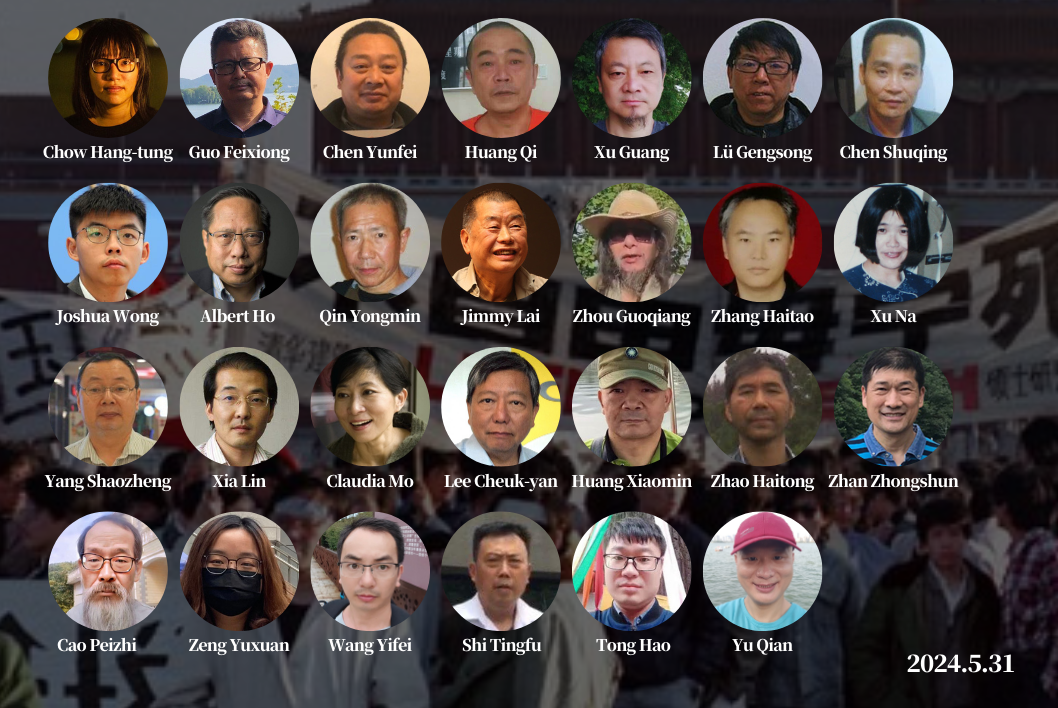
While China is systematically erasing the memory of the brutal repression of student protests on 4 June 1989, 14 prominent participants of that movement are still behind bars, rearrested for their struggle for democracy. Chinese Human Rights Defenders issued an appeal for their release.
“For 35 years, all top Chinese leaders, from Li Peng to Xi Jinping, have been fixated on erasing memories of June 4 by persecuting those who peacefully seek accountability,” reads the CHRD statement. “Everyone who cares about justice should call on Beijing to immediately and unconditionally release these and all other prisoners of conscience in China.”
The appeal includes a list of 27 people who, for various reasons, are still in prison in relation to the Tiananmen Square movement. “[F]ar from being complete, [. . .] it is a window to the severity, scale, and persistence of reprisals by the Chinese government over the past 35 years,” the statement reads. In particular, 14 names belong to people who participated directly in the events of 35 years ago and are currently in prison after they were rearrested for promoting democracy in China.
Zhou Guoqiang (周国强) was imprisoned for organising a strike in support of student protests in Beijing in 1989, and served four years in a re-education camp. He was arrested again for online comments in October 2023. His current whereabouts and charges remain unknown.
Guangdong activist Guo Feixiong (郭飞雄), who took part in the 1989 movement as a student in Shanghai, has been serving a six-year sentence since 2015 for his human rights activism.
Another university student from that time, Chen Shuqing (陈树庆) from Hangzhou, has been serving a 10-and-a-half-year sentence since 2016 for pro-democracy activism.
Lü Gengsong (吕耿松), a teacher fired in 1993 for supporting the pro-democracy movement, has been serving an 11-year sentence since 2016 for his pro-democracy work.
Beijing-based lawyer Xia Lin (夏霖) has been serving an 11-year sentence since 2016 for his professional work as a lawyer; he participated in the 1989 movement as a student at the Southwest Institute of Political Science and Law in Chongqing.
Xinjiang activist Zhao Haitong (赵海通) has been serving a 14-year sentence since 2014 for his activities as a human rights defender. He, too, had been imprisoned in the aftermath of the 1989 massacre.
Xu Na (许那), artist, poet, and a Falun Gong follower, took part in the hunger strike in Tiananmen Square. She was arrested in 2020 and sentenced to eight years in prison for “using an evil cult to disrupt law enforcement.”
Sichuan activist Chen Yunfei (陈云飞) served a four-year sentence from 2015 to 2019, in part for organising a commemoration for the victims of 4 June. He had participated in the 1989 movement as a student at the China Agricultural University in Beijing.
Another member of the student movements at the time, Xu Guang (徐光), was arrested in 2022 and is serving a four-year sentence on charges of “picking quarrels and provoking trouble” in Hangzhou, Zhejiang province.
Huang Xiaomin (黄晓敏), who was arrested in Sichuan province in 2021, suffered th same fate, and was sentenced to four years, while CaoPeizhi (曹培植) was arrested in 2022 and sentenced to 2.2 years in Henan province.
Zhang Zhongshun (张忠顺), another student who participated in the 1989 protests, was reported to police in 2007 for talking to his students about the events of 4 June. He was jailed for three years and is now in jail for continuing to support activism and faces charges of subversion in Shandong province.
Wang Yifei (王一飞) disappeared into police custody after he was detained in 2021. Before his arrest in 2018, he had been demanding justice for the victims of 1989 for several years.
Shi Tingfu (史庭福), already convicted of organiing a public vigil in Nanjing in 2017 and giving a speech in memory of the victims of Tiananmen, was rearrested in January 2024 and is awaiting trial on several charges, including “spreading false information, and inciting terrorism and extremism in the Xinjiang Uyghur Autonomous Region.”
The other 13 names belong to people who were not directly involved in the events of 1989 in Beijing, but fought in mainland China and Hong Kong to keep alive the memory of what happened.
This second list includes Tong Hao (仝浩), a young doctor born in 1987, who was jailed for 1.5 years for publishing a post on 4 June 2020. He was arrested in August 2023 and has been in police custody in Jiangsu province ever since.
Some of the jailed are dissidents in Hong Kong, like Lee Cheuk-yan, Albert Ho, and Chow Hang-tung; the latter, a lawyer, was recently issued a new arrest warrant in prison together with seven other people (including her mother) for commemorating the Tainanmen massacre online.
As Chinese Human Rights Defenders note, three witnesses to events in Tianamen Square have died in prison in the past 35 years. The most prominent is Nobel Peace Prize laureate Liu Xiaobo (刘晓波), who died in July 2017 from liver cancer in police custody while serving an 11-year sentence since 2009 for his role as a leader in the Charter 08 campaign. A university lecturer in 1989, he was jailed for 18 months for taking part in the 1989 movement.
Jiangsu writer Yang Tongyan (杨同彦) died a few months after Liu, in November 2017, from a brain tumor. He was serving a 12-year sentence imposed in 2006 for his political activism. He had already spent 10 years in prison for taking part in the 1989 movement.
Last but not least, we must remember labour activist LiWangyang (李旺阳), who died under suspicious circumstances on 6 June 2012 while in a hospital guarded by police in Shaoyang, Hunan province. Li, leader of the 1989 pro-democracy movement, was sentenced to a total of 23 years in prison. Chinese authorities claimed he committed suicide by hanging himself in his hospital room, a claim his family has disputed since Li was blind and deaf from torture and would not have been physically able to hang himself. Against the wishes of Li’s family, Hunan authorities conducted their own autopsy and then cremated the body.
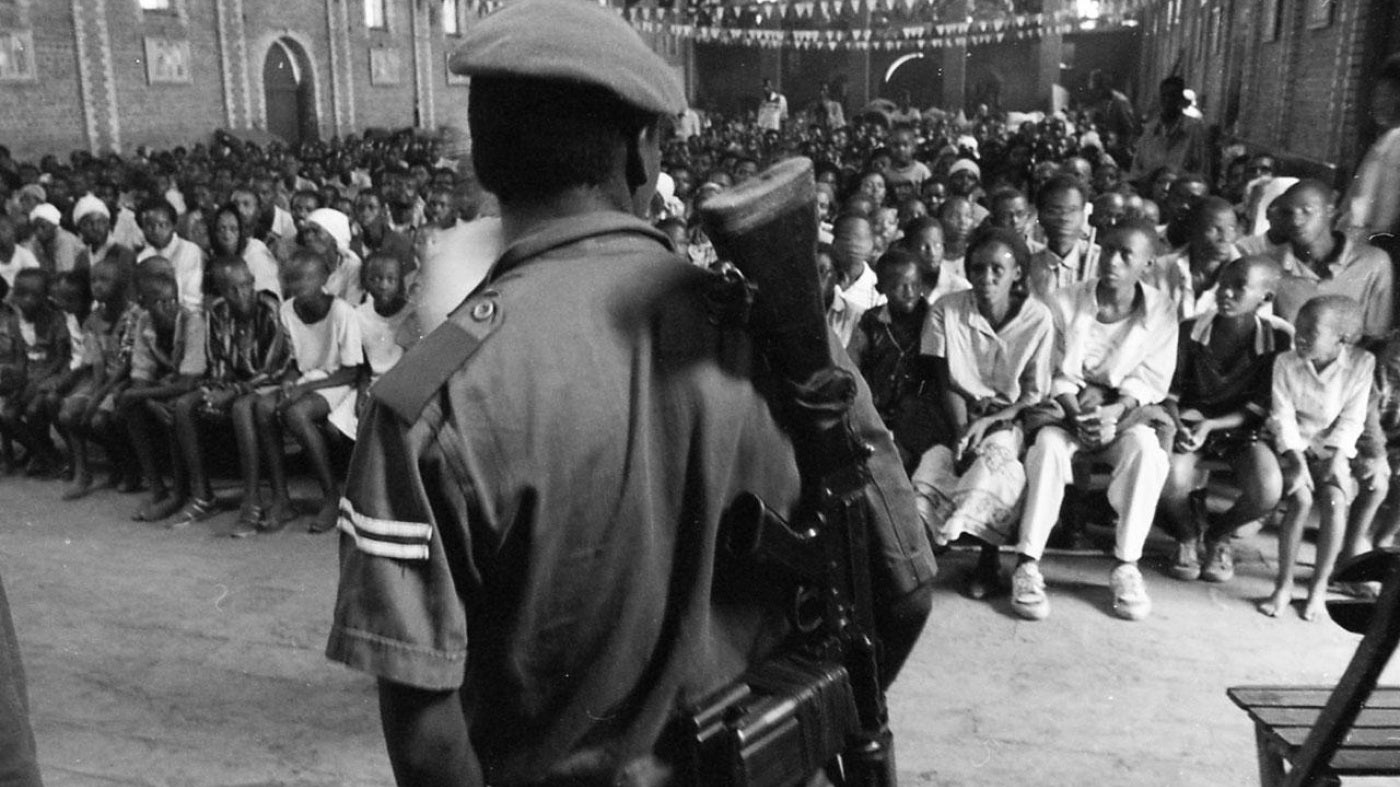
On 2 April, 2024 Human Rights Watch made part of its Rwanda Archives public in digital form.
Human Rights Watch has been documenting and exposing human rights violations in Rwanda since the early 1990s. Its senior adviser in the Africa division, Alison Des Forges, one of the world’s foremost experts on Rwanda, dedicated her career to the struggle for human rights in the Great Lakes region of Africa, and to Rwanda in particular. In the period leading up to the 1994 genocide, she worked tirelessly to alert world powers to the impending crisis in Rwanda. Few would listen. By the time the genocidal forces had unleashed their sinister program and the world had awakened to the full horror that was unfolding in Rwanda, it was too late. The killings in Rwanda increased as a civil war in Burundi waged on. The violence in Burundi, also based on ethnic divisions between Hutu and Tutsi ethnic groups, lasted from 1993 until 2005.
Des Forges’s efforts did not stop when the genocide ended. She continued to painstakingly gather information on the killings, rapes, and other horrific crimes, which she compiled into what has become one of the main reference books on the Rwandan genocide: “Leave None to Tell the Story: Genocide in Rwanda”, a 500-page account of the genocide published jointly by Human Rights Watch and the International Federation of Human Rights (FIDH) in 1999.
Des Forges testified as an expert witness in 11 trials at the United Nations International Criminal Tribunal for Rwanda (ICTR) in Arusha, Tanzania, as well as in domestic court proceedings involving Rwandan genocide suspects in several countries.
Des Forges campaigned vigorously for justice for the genocide until her tragic death in a plane crash in the US on February 12, 2009. She also documented human rights abuses by the new government of Rwanda after the genocide and advocated for accountability for all abuses, past and present.
Thirty years after the genocide, Human Rights Watch has begun the process of digitizing and making available some of Des Forges’s archives. The documents summarized below are some of those that remained in Human Rights Watch possession after Des Forges’s death and help shed light on efforts by Des Forges and others to warn about, and then attempt to stop, the genocide. These are just a selection of the many documents in the archives; others will not be published at this time for a variety of reasons. The private exchanges, letters, statements, and reports below do not purport to be a comprehensive account of the work of Human Rights Watch and others at the time, as it is likely documents are missing from the archive.
With massive new flows starting in the wake of the Russian attack on Ukraine, the new book announced on 28 February 2022 by UNHCR –People Forced to Flee: History, Change and Challenge – is most timely.
People Forced to Flee draws on the lessons of history to probe how we can improve responses to forced displacement. Tracing the roots of asylum from early history to contemporary times, the book shows how the 1951 Convention relating to the Status of Refugees turned the centuries-old ideals of safety and solutions for refugees into global practice. It highlights the major achievements in protecting people forced to flee since then, while exploring serious setbacks along the way.
Published at a time when over 84 million people in the world are forcibly displaced, it examines international responses to forced displacement within borders as well as beyond them, and the principles of protection that apply to both: reviewing where they have been used with consistency and success, and where they have not. At times, the strength and resolve of the international community seems strong, yet solutions and meaningful solidarity are often elusive.
Most forced displacement is experienced in low- and middle-income countries and persists for generations. People forced to flee face barriers to improving their lives, contributing to the communities in which they live, and realising solutions. Responding better is not only a humanitarian necessity but a development imperative.
The book shows how this work gained momentum with the international affirmation in December 2018 of the Global Compact on Refugees; and it illustrates how it is being supported by a growing group of partners encompassing forcibly displaced people, local communities and authorities, national governments, international agencies, non-governmental organisations and the private sector.
People Forced to Flee also examines how increased development investments in education, health and economic inclusion are helping to improve socio-economic opportunities both for forcibly displaced people and their hosts. Alongside this are greater investments in data, evidence and analysis pointing to what works best. And it discusses the wide array of financing mechanisms that can support sustainable responses.
As noted by Filippo Grandi, the UN High Commissioner for Refugees, in his foreword, the book highlights with great clarity the enormous challenges to preventing, mitigating, and finding solutions to forced displacement. “The drivers of displacement are unrelenting; the demands placed on humanitarian funding are growing,” Grandi notes. Yet he adds that while “the challenges are enormous, history has repeatedly demonstrated the potential for, and power of, positive change”.
People Forced to Flee: History, Change and Challenge, takes up the mantle of a series of UNHCR publications, stretching back to 1993, that were previously entitled The State of the World’s Refugees. This book was written by Ninette Kelley.





 Hans Thoolen on Human Rights Defenders and their awards