The Tiruchelvam Fellowship will provide opportunities for outstanding legal scholars and practitioners of Sri Lankan background to undertake research, writing, and scholarly engagement on themes related to human rights in Sri Lanka and South Asia for up to one academic semester at Harvard Law School. The Fellowship is named in honor of the late Neelan Tiruchelvam, a Sri Lankan peace and human rights activist, lawyer, scholar, and politician.
Applications and all supporting materials must be received by March 2, 2026. Please click here for more information and to access the online application.
‘Making a movement: The history and future of human rights“. To mark the 75th anniversary of the Universal Declaration of Human Rights, The Carr Center for Human Rights Policy asked 90 Harvard faculty and affiliates to offer thoughts on a document that changed the world.
“THE CREATION OF SUCH A DOCUMENT— its mere existence—must count among the greatest achievements in human history.” That is how Mathias Risse, the Berthold Beitz Professor in Human Rights, Global Affairs and Philosophy, and faculty director of the Carr Center for Human Rights Policy at HKS, describes the impact of the Universal Declaration of Human Rights (UDHR), which turns 75 this year. Yet Risse and other human rights defenders say the UDHR has done much more than exist—it paved the way for more than 70 enforceable human rights treaties around the globe and marked the first time the world had a documental agreement that all humans were equal and free. That global standard is vital even if the world community continues to fall short of achieving the UDHR’s promise, Risse says. “The human rights movement will always register shortfalls much more than achievements and would miss its purpose otherwise,” he says. “Regardless, the change that these decades of developments have brought is very real.”
To honor the UDHR, the Carr Center commissioned short essays from 90 scholars, fellows, and affiliates across HKS, Harvard, and beyond to explore the past, present, and future of the human rights movement it inspired. A selection of excerpts follows below. The complete collection of essays in their entirety can be found on the Carr Center website.
Rachel E. Carle, a second-year Master in Public Policy candidate at the Harvard Kennedy School, in an oped in the Crimson of 13 April 2022 (entitled Harvard Trains Human Rights Defenders and Then Abandons Them, wants to know why the Harvard Administration has not come out as fiercely to defend Steven Donziger as it has done for others. She makes a good point:
Here at Harvard, Law Professor Charles Nesson has steadfastly spoken out in Donziger’s defense. Harvard Law students joined a letter signed by peers at 55 leading law schools, calling for Donziger’s prosecution to be reviewed. In Fall 2021, with the support of the Human Rights Profession Interest Council at Harvard Kennedy School, I coordinated a petition for Harvard students and alumni to support Donziger that more than 1,600 people have signed onto. This public support is overwhelming, and continued pressure is needed in order for Donziger to achieve justice. So why hasn’t the Harvard administration spoken up?
The school is quick to parade its most controversial alumni. They have no qualms honoring alum Henry A. Kissinger ’50, who orchestrated widespread war crimes in Cambodia. They were eager to invite Harvard drop-out Mark Zuckerberg to give the College’s 2017 Commencement speech, shortly after Facebook’s incriminating role in the 2016 U.S. Presidential election. Harvard has shown that it is willing to take risks for certain kinds of alumni.
This makes their silence on human rights defenders all the more deafening. Harvard trains students to be leaders and to act courageously to create a better world. Many students in my program at the Harvard Kennedy School graduate into high-risk careers, combatting authoritarianism, fighting for indigenous rights, or working on environmental accountability. Graduates have been detained for their work, from the 1992 imprisonment of HKS alum Jeffrey G. Kitingan in Malaysia to the 2012 imprisonment of HKS alum Bakhtiyar Hajiyev in Azerbaijan.
Just last year, HKS alum Erendro Leichombam was detained in India for a Facebook post criticizing Bharatiya Janata Party members’ approach to Covid-19. While Harvard alumni launched a petition for his release, and the Harvard Graduate Student Union lent its public support, these actions could only go so far.
Harvard alumni have been targeted for their human rights work in the past and will continue to be in the future. They deserve more than one-off petitions and scrambling students. Harvard is one of the most powerful educational institutions in the world; surely we can do more.
These targeted alumni are a part of a larger story. 2020 was the deadliest year on record for environmental activists around the world, particularly for Indigenous people and the Global South. Of course, those who graduate from Harvard schools have privileges and protections not afforded to many. Donziger is a white American man with a Harvard Law degree who benefits from respectability politics, and we should critically consider why his case has received more attention than most.
But that is just it. The more we understand and leverage the connections between these cases, the more human rights defenders can receive the attention and advocacy they deserve. These are not isolated incidents. When the next HKS or HLS alum is inevitably threatened or detained, I hope we remember they are connected to a long lineage of targeted alumni and a vast community of targeted activists around the world.
Harvard has taken an important step with the Scholars at Risk program, established more than 20 years ago to offer respite to persecuted scholars, artists, and writers from around the world. Harvard should expand this commitment, devoting significant resources to the defense of human rights, with particular attention to indigenous, women, queer, poor, and otherwise marginalized activists.
It is time to support our alumni at risk, too. Harvard should develop contingency plans that allow the administration to evaluate a situation, get in touch with the detained alum’s close contacts, and consider a range of private and public support measures. At the very least, the administration should be receptive to student campaigns that request the school to make a public statement or intervene in support of a member of our community.
Harvard needs to take responsibility for the human rights defenders it trains. It needs to create a real, ongoing, accessible infrastructure of support. And it needs to start today.
Ekaterina Pesheva reported on 2 Harvard Medical School researcher received the prestigious Canada Gairdner Award for transformational work in the fields of global health. Vikram Patel, the Pershing Square Professor of Global Health in the Blavatnik Institute at HMS and professor at the Harvard, will receive the 2019 John Dirks Canada Gairdner Global Health Award. Patel is being recognized for research that has transformed understanding of and attitudes toward the importance of mental health in a global context, for his contributions to international mental health policy, and for efforts to improve access to mental health services in areas of the world where mental health resources are acutely lacking.
Patel is among seven laureates who will each receive a $100,000 cash honorarium. The recipients will be formally honored Oct. 24 at the annual Canada Gairdner Awards gala in Toronto.
Patel has been instrumental in establishing the field of global mental health. He has dedicated his research to raising the global profile of mental health through epidemiological research that has demonstrated the burden of mental disorders in low- and middle-income countries as well as their impact on poverty, child growth and development, and risk for HIV infection, among other conditions. Patel’s work has demonstrated that mental health problems are universal forms of human suffering that fuel a vicious cycle with deprivation. The central theme of Patel’s work has been democratizing access to mental health care and making it a right for everyone, everywhere. Patel championed the concept of mental health care delivery by nonspecialists and lay health workers as a way to expand access to mental health services in underserved areas. His book “Where There Is No Psychiatrist: A Mental Health Care Manual” has become the definitive text for community health workers in developing countries. Patel’s research became the foundation for the design, delivery, and evaluation of psychosocial interventions provided by lay and community health workers, including the primary care treatment of depression, anxiety, and alcohol-use disorders, the community-based care of people with schizophrenia and autism, and the prevention and treatment of adolescent mental health problems through school-based interventions.
Much of Patel’s work has been done in partnership with Sangath, an Indian nongovernmental organization that he co-founded in 1996. Sangath, one of India’s leading community-based research organizations, received a 2008 MacArthur Foundation International Prize for Creative and Effective Institutions and a 2016 World Health Organization Public Health Champion of India prize. Patel co-founded the Centre for Global Mental Health and the Mental Health Innovation Network at the London School of Hygiene and Tropical Medicine and the Movement for Global Mental Health, the largest global network of individuals and organizations advocating for promoting services and human rights for people with mental health problems. In 2018, he co-founded the GlobalMentalHealth@Harvard Initiative, which is developing a suite of innovative, interdisciplinary programs aimed at implementing and generating knowledge to transform mental health globally.
Joseph S. Nye, a professor at Harvard, in a piece of 10 May 2018 entitled “Human rights and the fate of the liberal order“, takes issue with those who despair of the current slide of the human rights system as we know it. The piece is certainly worth reading in total:
Many experts have proclaimed the death of the post‑1945 liberal international order, including the human-rights regime set forth in the 1948 Universal Declaration of Human Rights. The cover of Foreign Policy recently displayed the white dove of human rights pierced by the bloody arrows of authoritarian reaction.
According to ‘realist’ international relations theorists, one cannot sustain a liberal world order when two of the three great powers—Russia and China—are anti-liberal. Writing in Foreign Affairs, Yascha Mounk and Roberto Stefan Foa argue that the era when Western liberal democracies were the world’s top cultural and economic powers may be drawing to a close. Within the next five years, ‘the share of global income held by countries considered “not free”—such as China, Russia, and Saudi Arabia—will surpass the share held by Western liberal democracies’.
There are several problems with this argument. For starters, it relies on a measure called purchasing power parity, which is good for some purposes, but not for comparing international influence. At current exchange rates, China’s annual GDP is $12 trillion, and Russia’s is $2.5 trillion, compared to the United States’ $20 trillion economy. But the more serious flaw is lumping countries as disparate as China and Russia together as an authoritarian axis. There is nothing today like the infamous Axis of Nazi Germany and its allies in the 1930s.
While Russia and China are both authoritarian and find it useful to caucus against the US in international bodies like the United Nations Security Council, they have very different interests. China is a rising power that is highly intertwined with the international economy, including the US. In contrast, Russia is a declining country with serious demographic and public health problems, with energy rather than finished goods accounting for two-thirds of its exports.
Declining countries are often more dangerous than rising ones. Vladimir Putin has been a clever tactician, seeking to ‘make Russia great again’ through military intervention in neighbouring countries and Syria, and by using cyber-based information warfare to disrupt—with only partial success—Western democracies. A study of Russian broadcasting in Ukraine found that it was effective only with the minority that was already Russia-oriented, though it was able to produce polarising and disruptive effects in the political system. And the revival of Cold War–style information warfare has done little to create soft power for Russia. The London-based Soft Power 30 index ranks Russia 26th. Russia has had some success cultivating allies in Eastern Europe, but it is not part of a powerful authoritarian axis such as existed in the 1930s.
China is different. It has announced its willingness to spend billions to increase its soft power. At meetings in Davos in 2017 and Hainan in 2018, Xi Jinping presented China as a defender of the existing international order, but one with Chinese rather than liberal characteristics. China does not want to overturn the current international order, but rather to reshape it to increase its gains.
It has the economic tools to do so. It rations access to its huge market for political purposes. Norway was punished after the dissident Liu Xiaobo was awarded the Nobel Peace Prize. Eastern Europeans were rewarded after they watered down European Union resolutions on human rights. And Singaporean and Korean companies suffered after their governments took positions that displeased China. The Chinese government’s massive Belt and Road Initiative to build trade infrastructure throughout Eurasia provides ample opportunities to use business contracts to wield political influence. And China has increasingly restricted human rights at home. As Chinese power increases, the global human-rights regime’s problems will increase.
But no one should be tempted by exaggerated projections of Chinese power. If the US maintains its alliances with democratic Japan and Australia, and continues to develop good relations with India, it will hold the high cards in Asia. In the global military balance, China lags far behind, and in terms of demography, technology, the monetary system and energy dependence, the US is better placed than China in the coming decade. In the Soft Power 30 index, China ranks 25th, while the US is third.
Moreover, no one knows what the future will bring for China. Xi has torn up Deng Xiaoping’s institutional framework for leadership succession, but how long will Xi’s authority last? In the meantime, on issues such as climate change, pandemics, terrorism and financial stability, both an authoritarian China and the US will benefit from cooperation. The good news is that some aspects of the current international order will persist; the bad news is that it may not include the liberal element of human rights.
The human-rights regime may face a tougher environment, but that is not the same as a collapse. A future US administration can work more closely with the EU and other like-minded states to build a human-rights caucus. A G10, comprising the world’s major democracies, could coordinate on values alongside the existing G20 (which includes non-democracies such as China, Russia and Saudi Arabia), with its focus on economic issues.
Others can help. As Kathryn Sikkink points out in her new book, Evidence for hope, while US support has been important to human rights, the US was not always very liberal during the Cold War, and the origins of the regime in the 1940s owed much to Latin Americans and others. Moreover, transnational rights organisations have developed domestic support in numerous countries.
In short, we should be concerned about the multiple challenges to liberal democracy during the current setback to what Samuel P. Huntington called the ‘third wave’ of democratisation. But that is no reason to give up on human rights.
Yesterday (18 June 2015) Amnesty Internationalannounced something that is (rather will be) something new in human rights education: a series of Massive Open Online Courses (MOOCs). Who knows, the horrible acronym may one day be as normal as HRDs or AI itself. For this to come about Amnesty International is partnering with edX, a global leader in online education founded by Harvard University and MIT. The first MOOCs will be available later this year. The free online courses will be designed by human rights and education experts from across Amnesty International.


 “THE CREATION OF SUCH A DOCUMENT— its mere existence—must count among the greatest achievements in human history.” That is how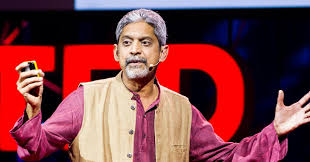

 Hans Thoolen on Human Rights Defenders and their awards