Posts Tagged ‘freedom of expression’

Happy New Year, but not for Ahmed Mansoor and Nabeel Rajab in the Gulf monarchies

January 2, 2019

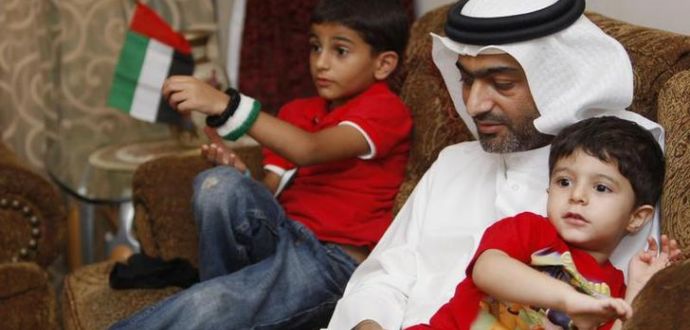
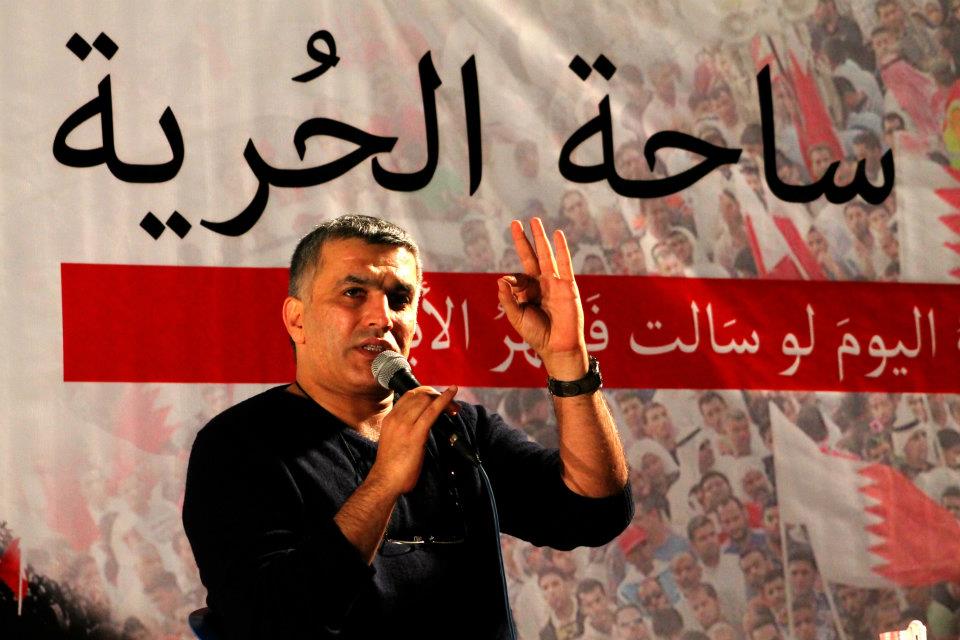
First of all I wish my readers a happy 2019. Unfortunately this year augurs badly for two human rights defenders who have figured frequently in this blog: Ahmed Mansoor [https://humanrightsdefenders.blog/tag/ahmed-mansoor/] and Nabeel Rajab [https://humanrightsdefenders.blog/2015/01/20/video-statement-of-troublemaker-nabeel-rajab-who-is-on-trial-today/]. Courts in the United Arab Emirates and Bahrain on Monday upheld the convictions of these two prominent human rights defenders serving lengthy prison terms for expressing anti-government dissent on social media. They have no right to further appeal. On 4 January 2019 there UN joined the critics of these sentences.

Nabeel Rajab, Final Nominee MEA 2012


https://www.washingtonpost.com/world/uae-and-bahrain-uphold-stiff-prison-sentences-for-human-rights-activists/2018/12/31/a31a3cf2-0d1b-11e9-8f0c-6f878a26288a_story.html?utm_term=.b3d062a3f670

http://icfuae.org.uk/news/uae-10-year-prison-sentence-upheld-ahmed-manoo

https://www.frontlinedefenders.org/en/profile/ahmed-mansoor

https://www.denverpost.com/2018/12/31/emirati-court-upholds-10-year-sentence-against-cu-boulder-grad-for-criticizing-government/

https://www.ifex.org/bahrain/2018/12/31/nabeel-condemn-sentence-upheld/

https://news.un.org/en/story/2019/01/1029832

Myanmar human rights defender Maung Saung Kha wins one of the Tulip Human Rights Awards

December 19, 2018

During the year of the 70th anniversary of the Universal Declaration of Human Rights, the Dutch Ministry of Foreign Affairs decided to give an extraordinary Tulip to the former UN High Commissioner for Human Rights [see: https://humanrightsdefenders.blog/2018/08/22/change-of-high-commissioner-for-human-rights-at-the-un-optimism-warranted/ ]. In addition the Ministry will also award several Human Rights Tulips to local human rights defenders around 10 December, International Human Rights Day. These Tulips will be awarded by a the Embassies of the Netherlands. [for more on the award: http://trueheroesfilms.org/thedigest/awards/tulip-award]

Maung Saung Kha, the founder and executive director of Yangon-based freedom of expression advocacy group Athan, will received the Human Rights Tulip Myanmar 2018 i The 25-year-old said he welcomed the award an international recognition for his group. “I was awarded not just because of me but me and Athan. Plus, were it not for the support of democracy and human rights activists, we wouldn’t have kept our freedom of expression movement alive,” he told The Irrawaddy.

Founded in January, Athan is one of only a few advocacy groups focusing on freedom of expression in Myanmar. From the beginning, the group has put a spotlight on issues challenging freedom of expression in Myanmar, such as the controversial Telecommunication Law and Peaceful Assembly and Procession Law. It also carefully documents cases posing a threat to freedom of expression in the country while lobbying lawmakers and educating the public about the importance of free speech.

Freedom of expression and assembly in Myanmar are currently perceived by many as on the decline. As of Tuesday, according to Athan, the country has two journalists in jail, 164 cases in the courts under Article 66 (d) of the Telecommunication Law, and 51 peace activists on trial. Maung Saung Kha said he used to believe that there would be more freedom of expression under a government led by the National League for Democracy. “Seeing people brought to trial for criticizing government activities shows that it hasn’t lived up to our hope,” he said. The poet-cum-activist was arrested himself under Article 66 (d) in 2015 for posting a verse on social media with a risqué rhyme about an unnamed president. “I felt very bad because I was arrested for writing a poem,” he said. “It’s partly because I am now seriously involved in promoting freedom of expression as I don’t want others to see a fate like mine.

https://www.irrawaddy.com/news/burma/myanmar-free-speech-activist-wins-dutch-human-rights-award.html

Emirates (Mansoor) and UK (Hedges): finally someone made the point

December 6, 2018

On 4 December 2018 Jonathan Emmett wrote in a post about something that I had been wondering for weeks: “Are UK authors only prepared to defend the rights of people like themselves?”. Totally correct:

Read the rest of this entry »

Scholars at Risk supports photojournalist Dr. Shahidul Alam in Bangladesh

December 5, 2018

On 5 December 2018 Scholars at Risk expressed concern about the charges against Shahidul Alam, an intellectual and acclaimed photojournalist, who was just released on bail after over one hundred days in prison in apparent retaliation for his public comments on the widespread student protests in Bangladesh.

Dr. Alam is a world-renowned photographer and visiting professor at Sunderland University who has established notable photography and media institutions in Bangladesh, including the Drik Gallery, the Pathshala South Asian Media Academy, and Majority World. He is well-known for photographing significant political moments in Bangladesh since the 1980s.
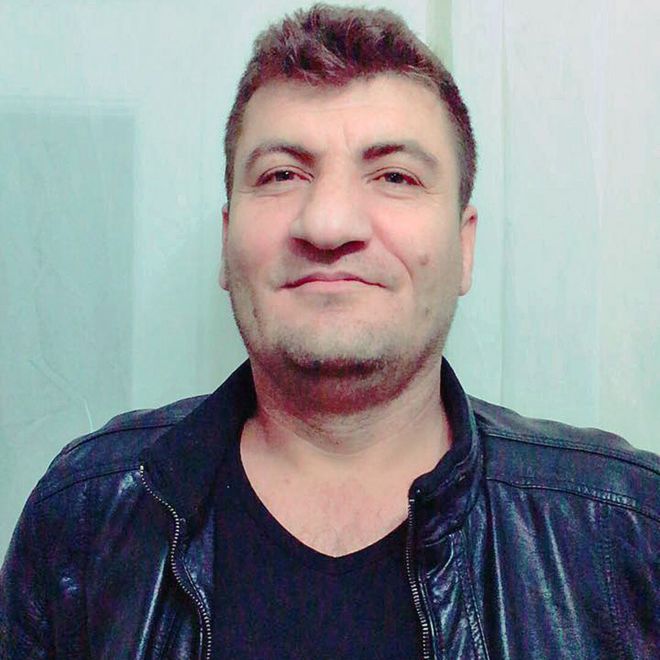

On August 5, 2018, Dr. Alam spoke on Facebook Live and Al Jazeera about the ongoing student protests in Bangladesh that sought safer roads, following an incident in which a speeding bus killed two college students. Earlier that day, Dr. Alam was covering one of the protests when youth league members reportedly attacked him and a group of journalists. Referencing this incident, while speaking with Al Jazeera, Dr. Alam alleged that police hired armed individuals to violently attack student protesters. Hours after the interview, a group of thirty police officers reportedly raided Dr. Alam’s home, took him into custody, and interrogated him. They then charged him under section 57 of the International Communication and Technology Act (ICT Act) for electronically sharing material that “tends to deprave and corrupt” the public and causes “deterioration in law and order.” No evidence has been produced by the police in their investigation of Dr. Alam to support these charges.

On August 6, while police escorted Dr. Alam out of the Dhaka Chief Metropolitan Magistrate’s court following a hearing, Dr. Alam told reporters that police had beaten him while in custody. Dr. Alam received treatment at a hospital the following day by request of a court. On August 8, Dr. Alam was returned to jail and held for over one hundred days. On November 20, Dr. Alam was released on bail; however he still faces up to 14 years in prison based on charges under the ICT Act.

SAR asks for emails, letters, and faxes respectfully urging authorities to drop all charges against Dr. Alam that stem from his peaceful exercise of the right to freedom of expression; and, pending this, to ensure immediately his case is addressed in a manner consistent with internationally recognized standards of due process, fair trial, and detention, in accordance with Bangladesh’s obligations under international law.

On how to join the campaign see: http://salsa4.salsalabs.com/o/50943/p/dia/action4/common/public/?action_KEY=25660

Raed Fares Assassinated in Syria [“What can they do? Kill me?”]

November 26, 2018
Raed Fares
Raed Fares’ radio station defied threats from jihadist groups and resisted orders to stop playing musicPresentational white space

Raed Fares, a well-known Syrian activist, was killed in the north-western town of Kafranbel, in the in the rebel-held Syrian province of Idlib. Fares and fellow activist Hamoud Jneed were attacked in their car. Jneed died immediately, while Fares was transferred to Orient Hospital, where he later died. It was not the first time the founder of Radio Fresh, an independent radio station broadcasting from inside opposition-held areas in the country, had been targeted. His activism had earned the ire of both militants and the Syrian government. Four years ago, two gunmen for the Islamic State (IS) militant group shattered several bones and punctured his lung in a failed attempt to silence Fares. More attempts on his life would follow and yet the former estate agent was determined to carry on.

It was not just Fares the militants took issue with. The radio station – with its music and female presenters – also angered the groups which overran the town and surrounding area. Four years ago, when IS had a presence in Idlib province, the station’s office was raided by militants. In 2016, Fares was detained by the Nusra Front, the former al-Qaeda affiliate in Syria.

The Hayat Tahrir al-Sham alliance, which currently controls most of Idlib province, had ordered Radio Fresh to stop broadcasting music. The station’s response was to play long sequences of other sounds, such as tweeting birds, clucking chickens and bleating goats. “They tried to force us to stop playing music on air,” Fares told the BBC in 2017. “So we started to play animals in the background as a kind of sarcastic gesture against them.”

Among the many expressions of concern is the Human Rights Foundation as Fares spoke at its 2017 Oslo Freedom Forum: “We are deeply saddened and disturbed by the assassination of Raed Fares, a dear friend and esteemed member of the Oslo Freedom Forum community. Raed worked tirelessly to counter fundamentalist narratives through journalism and to empower his fellow Syrians to build a better future. His work, bravery, and determination to succeed despite the many threats on his life make him a hero of the Syrian revolution,” HRF Chairman Garry Kasparov said. … Fares first became known outside of Syria in early 2014, when he started writing eye-catching, often sarcastic protest signs and sharing photos of them on social media. ….He quickly became one of the most trusted sources of on-the-ground footage and information on Syria’s continuing conflict. With his death, many reporters outside Syria have lost a vital and increasingly rare source, and agents of misinformation will grow that much stronger in his absence.

https://www.bbc.co.uk/news/world-middle-east-46320355

https://mailchi.mp/db20e9d559e0/off-speaker-raed-fares-assassinated-in-syria?e=f80cec329e

50 human rights NGOs address Joint Letter to Aung San Suu Kyi on Reuters Journalists

November 6, 2018

Over 50 NGOs have signed a joint letter to Aung San Suu Kyi requesting the immediate and unconditionally release of Wa Lone and Kyaw Soe Oo.

TO: Aung San Suu Kyi, State Counsellor, Myanmar

Read the rest of this entry »

Ray of hope: Lesotho court takes stand against defamation of HRDs

May 23, 2018

On Monday 21 May 2018, the Lesotho High Court (sitting as a Constitutional Court), in a unanimous judgment declared the offence of criminal defamation unconstitutional with retrospective effect. The case of Basildon Peta v Minister of Law, Constitutional Affairs and Human Rights and 2 Others. The case was brought by Basildon Peta, the owner and publisher of the Lesotho Times. He was charged with the offence of criminal defamation after the Lesotho Times in 2016 published a satirical column (the Scrutator) relating to the then-Commander of the Lesotho Defence Force, Tlali Kamoli.

Section 104 of the Penal Code provides that a person who publishes defamatory matter concerning another person commits the offence of criminal defamation. Mr Peta submitted that the offence constituted an unjustifiable limitation of the right to freedom of expression. The Court in its judgment confirmed that the onus of proving that the impairment of a right was justified rests on the government. Of concern to the Court was the over breadth of the offence, with a charge being possible even if no person other than the complainant became aware of the supposedly defamatory statement, and with the offence further extending to defamation of deceased persons. The Court further held that the defence that a defamatory publication was for the public benefit was too vague and could lead, as in this instance, to cases where satirical comments are criminalised.

The Court held that criminalising defamation has a chilling effect on journalistic freedom of expression, resulting in self-censorship by journalists and a less informed public. The Court cited with approval calls by the African Commission and United Nations Special Rapporteur on Freedom of Expression which encouraged states to repeal criminal defamation laws. The Court’s judgment follows in the footsteps of other African courts, including the ECOWAS Court, the Zimbabwe Constitutional Court and the Kenya High Court, which recently declared that the offence of criminal defamation violated the right to freedom of expression.

We commend the Lesotho Constitutional Court bench for its brave decision, which makes a significant contribution to freedom of expression jurisprudence in the region,” said Anneke Meerkotter, Litigation Director of the Southern Africa Litigation Centre. “We are concerned by the ongoing use of criminal defamation laws against journalists and human rights defenders and hope that this decision will also send a message to other governments to reform their laws.

The judgment is available online at http://www.southernafricalitigationcentre.org/2018/02/13/lesotho-challenging-the-offence-of-criminal-defamation/

http://allafrica.com/stories/201805221085.html

Human rights reporting in Asia still honors its champions

May 17, 2018

The Society of Publishers in Asia (SOPA) was established in 1982 to recognize and celebrate the highest standards of journalistic quality and integrity in Asia.  Today, the SOPA Awards for Editorial Excellence are regarded as the gold standard against which Asia’s best journalists and publishers are measured. There are several categories and one of them is: Excellence in Human Rights Reporting, honoring the work that demonstrates high standards of reporting on a human rights topic of significance

The 2018 finalists include:

Reuters, Duterte’s war falters
The Associated Press, The Rohingya Exodus
The New York Times, A Humanitarian Crisis Unfolds

Frontier Myanmar, “We eat the same rice”
The Phnom Penh Post, The sky became white’
This Week In Asia, Rohingya: nowhere like home.

[The 2017 winners were:

https://www.sopawards.com/awards/award-categories/

https://frontiermyanmar.net/en/frontier-shortlisted-for-five-regional-media-awardshttps://frontiermyanmar.net/en/frontier-shortlisted-for-five-regional-media-awards

Reporters Without Borders: 2018 World Press Freedom Index makes sobering reading

April 26, 2018

Reporters Without Borders  (better known under its French acronym RSF) published its WORLD PRESS FREEDOM INDEX 2018. The rankings you can find by clicking here READ MORE. The regional chapters below give a quick overview of the main trends, including the disturbing downward turn in the USA, the further sinking in ex-sovjet states and China’s nefarious example in Asia.

RSF INDEX 2018: JOURNALISM SORELY TESTED IN NORTH AFRICA

North Africa’s performance in the 2018 World Press Freedom Index reflects the different pressures to which journalists are exposed. Restrictive laws, reporting problems (especially at protests), and subjects that are off limits all prevent journalists from being free to provide independently reported and pluralist news and information.

READ MORE

RSF INDEX 2018: US FALLS AS CANADA RISES

Despite having strong constitutional protections to the contrary, the latest World Press Freedom Index findings on the US and Canada reveal two countries whose journalists and media workers face constant challenges to the very freedom to exercise their profession.

READ MORE

RSF INDEX 2018: MIXED PERFORMANCE IN LATIN AMERICA

The 2018 Index shows a slight overall improvement in respect for press freedom in Latin America but this should not divert attention from the continuing problems of violence, impunity, and authoritarian policies towards journalists in many Latin American countries.

READ MORE

RSF INDEX 2018: ASIA-PACIFIC DEMOCRACIES THREATENED BY CHINA’S MEDIA CONTROL MODEL

The Chinese model of state-controlled news and information is being copied in other Asian countries, especially Vietnam and Cambodia. North Asia’s democracies are struggling to establish themselves as alternative models. Violence against journalists is increasingly worrying in Afghanistan, India, Pakistan and the Philippines.

READ MORE

RSF INDEX 2018: THE DANGERS OF REPORTING IN AFRICA

SUB-SAHARAN AFRICA HAS MAINTAINED ITS THIRD PLACE IN THE RANKING BY GEOGRAPHICAL REGION, WITH A SLIGHTLY BETTER OVERALL INDICATOR THAN IN 2017. BUT THERE IS A WIDE RANGE OF SITUATIONS WITHIN THE REGION, AND JOURNALISTS ARE OFTEN THE VICTIMS OF INTIMIDATION, PHYSICAL VIOLENCE, AND ARREST.

READ MORE

RSF INDEX 2018: HISTORIC DECLINE IN PRESS FREEDOM IN EX-SOVIET STATES, TURKEY

THE FORMER SOVIET COUNTRIES AND TURKEY CONTINUE TO BE AT THE FOREFRONT OF THE WORLDWIDE DECLINE IN PRESS FREEDOM. ALMOST TWO-THIRDS OF THE REGION’S COUNTRIES ARE RANKED SOMEWHERE NEAR OR BELOW THE 150TH POSITION IN THE INDEX. THE REGION’S OVERALL INDICATOR HAS SUNK ALMOST AS LOW AS THAT OF MIDDLE EAST/NORTH AFRICA, THE REGION THAT IS LAST IN THE RANKING BY REGION.

READ MORE

RSF INDEX 2018: JOURNALISTS ARE MURDERED IN EUROPE AS WELL

The European model’s erosion, a trend visible in RSF’s most recent Indexes, has continued in the 2018 Index. The region has been shaken by two murders, as well as by threats to investigative reporters and unprecedented verbal attacks on the media. Even the countries at the top of the Index are affected by this alarming climate.

READ MORE

RSF INDEX 2018: MIDDLE EAST RIVEN BY CONFLICTS, POLITICAL CLASHES

The Middle East’s countries are yet again at the bottom of RSF’s World Press Freedom Index. Armed conflicts, terrorism charges against independent journalists and media, and growing online surveillance and censorship make reporting extremely dangerous for the region’s journalists.

READ MORE


https://rsf.org/en/rsf-index-2018-hatred-journalism-threatens-democracies

New national award to honor slain Mexican journalists

March 24, 2018
Miroslava Breach, a correspondent for Mexican daily La Jornada in the state of Chihuahua, on the US border, was a celebrated investigative journalist known for hard-hitting reports on links between politicians and organized crime (AFP Photo/HERIKA MARTINEZ)
Journalists take part in a protest outside the State Government building in Ciudad Juarez, Mexico to mark one year since the murder of journalist Miroslava Breach (AFP Photo/HERIKA MARTINEZ)

The UN and AFP launched an award Thursday 22 March 2018 to honor journalists who risk their lives to cover human rights abuses in Mexico, in tribute to two celebrated reporters murdered last year. The Breach-Valdez Prize will honor journalists who follow in the footsteps of their slain colleagues Miroslava Breach and Javier Valdez, two of the more than 100 reporters murdered since 2000 in one of the world’s most dangerous countries for the press. (see also: https://humanrightsdefenders.blog/2018/01/05/front-lines-2017-report-confirms-worst-expectation-over-300-hrds-killed/)

Its aim is “to recognize the careers of Mexican journalists who have distinguished themselves in defending human rights,” said Giancarlo Summa, director of the United Nations Information Center in Mexico.

Valdez, an award-winning journalist who covered Mexico’s powerful drug cartels, was gunned down last May in broad daylight outside the offices of Riodoce, the newspaper he co-founded in Culiacan, the capital of his native Sinaloa state. He was also a long-time AFP collaborator.

Miroslava Breach, a correspondent for Mexican daily La Jornada in the state of Chihuahua, on the US border, was a celebrated investigative journalist known for hard-hitting reports on links between politicians and organized crime. She was shot dead in broad daylight last March as she drove her son to school.

The annual prize is also co-sponsored by UNESCO, the Ibero-American University and the French embassy in Mexico. The first edition will be awarded on May 3 in Mexico City. The winner will receive a grant and a trip to France to take part in a series of events on free speech.

(Breach and Valdez were among at least 11 journalists murdered in Mexico last year, making it the deadliest country in the world for the press after Syria, according to watchdog group Reporters Without Borders. The latest murder came just Wednesday, when journalist Leobardo Vazquez was gunned down outside his house in Veracruz state — the second killed in 2018.)

“There is no indication these crimes are going to stop. Let’s hope this prize will help all the country’s brave journalists keep up the fight,” Valdez’s widow, Griselda Triana, said at the launch of the award.

This is a national award. There are many awards for journalists and for freedom of expression at the international level, see: http://trueheroesfilms.org/thedigest/

https://www.yahoo.com/news/un-afp-launch-prize-honor-slain-mexican-journalists-034757524.html