Posts Tagged ‘fair trial’

Short artistic animation give feel of what is means to be without a Fair Trial

November 30, 2016

Fair Trials, a human rights organisation, has created a new animation showing what it would feel like to live in a world without fair trials. To accompany the animation, Fair Trials have set up a website: www.withoutfairtrials.org, which explains why fair trial rights are important, what they mean and the consequences if they are not respected. For example, the right to a fair trial encompasses the right to access a lawyer, the right to be presumed innocent until proved guilty if accused of a criminal offence and the right to be told the case against you in a language you understand.

The right applies whenever there is a determination of someone’s civil rights and obligations or any criminal charge against them. The animation looks at the importance of the right to a fair trial from the police station, to the courtroom and in prison. The animation highlights that around the world, fair trial rights are being denied to many people, everyday. For example, the website accompanying the animation says that in China, imprisoned human rights defenders are being denied access to lawyers and in Spain it is common for suspects not to be given information about the case against them until shortly before the trial starts.

Coalition of NGOs call for freeing of UAE human rights defender Dr Nasser Bin Ghaith

May 18, 2016

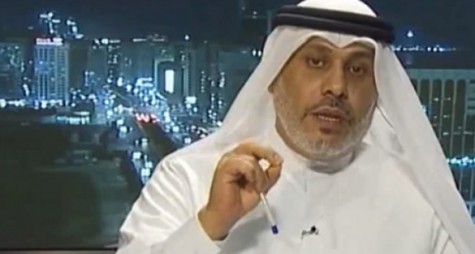
A group of 10 NGOs has called on the authorities to immediately release human rights defender and professor of economics Dr Nasser Bin Ghaith, who remains in detention in an unknown location in the United Arab Emirates (UAE) for his social media posts and human rights activities.

Nasser Bin Ghaith has been denied proper access to his lawyer or family since his arrest in August 2015, and reportedly subject to torture in custody. The continued detention and charges violate his human rights, including his right to free expression. On 18 August 2015, security officers in civilian clothes arrested Dr Bin Ghaith in Abu Dhabi and searched his home and confiscated personal items including electronic memory sticks. He was held incommunicado until finally being brought to the State Security Chamber of the Federal Supreme Court in Abu Dhabi on 4 April 2016, when he told the court he had been tortured and beaten in detention and deprived of sleep for up to a week. On 2 May 2016, a second hearing took place to examine charges against Dr Bin Ghaith relating to his online postings. He stated that he is still being held in secret detention, a fact he had previously brought to the judge’s attention during his hearing on 4 April. The judge refused to listen to his complaints for a second time. Neither his family nor his lawyer knows where he is being detained, and his lawyer’s request to visit him has been denied repeatedly.

Dr Bin Ghaith is one of a group of men known as the “UAE5” who were imprisoned in 2011 and tried for “publicly insulting” UAE officials. That trial also breached international human rights law and was widely criticised by human rights groups, including signatories of this letter.

A further charge brought against Dr Bin Ghaith of allegedly “posting false information about UAE leaders and their policies, offensively criticizing the construction of a Hindu temple in Abu Dhabi, and instigating the people of the UAE against their leaders and government” was related to a statement he made on Twitter intending to promote tolerance.

The court ordered the case to be adjourned until 23 May when the defence’s arguments will be heard.

Source: UAE: Free human rights defender Dr Nasser Bin Ghaith – Index on Censorship | Index on Censorship

for other posts on the UAE: https://thoolen.wordpress.com/tag/united-arab-emirates/

Turkey: really the place for a fair trial?

March 20, 2016

All the attention is on Turkey as the country where refugees will have to be processed. The more the question of fair trial becomes important. The following does not bode well:

In the early morning of 16 March 2016, police raided the houses of 9 lawyers in Istanbul, Turkey. After the search, lawyers Ramazan Demir, İrfan Arasan, Ayşe Acinikli, Hüseyin Boğatekin, Şefik Çelik, Adem Çalışçı, Ayşe Başar, Tamer Doğan and Mustafa Rüzgar were taken into custody. They are all members of the Libertarian Lawyers Association ÖHD). There has not been given any justification for these arrests and searches. The case file on the arrests is confidential. Allegedly the lawyers are arrested on suspicion of having ties with a terrorist organization. All the lawyers that were arrested represent the 46 lawyers who were arrested in 2011 on suspicion of “working for, or belonging to, a terrorist organization”. A hearing in the trial against these lawyers took place only one day after the arrests (!), on 17 March 2016. The arrest of their lawyers means that they are deprived from their legal defense.

Lawyers for Lawyers and Fair Trial Watch are extremely worried about the state of the rule of law in Turkey, which is quickly deteriorating. They sent a letter to the Turkish authorities in which they urge them to:
–     Immediately release lawyers and drop the criminal investigation;L4L logo
–     Abstain from identifying lawyers with their clients or their clients’ causes;
–     Put an end to all forms of harassment against lawyers in Turkey;
–     Guarantee in all circumstances that all lawyers in Turkey are able to carry out their legitimate activities without fear of reprisals, intimidation, threats and free of all restrictions.
For more information see: http://www.advocatenvooradvocaten.nl/11446/turkey-police-raid-on-and-arrest-of-9-lawyers

Meanwhile on 11 February, 2016 the Human Rights Foundation drew attention to the case of journalists Can Dündar and Erdem Gül, and urges the government of Turkey to drop the arbitrary charges imposed on them. On November 26, Dündar, the editor-in-chief of the newspaper Cumhuriyet, and Gül, the Ankara bureau chief, were arrested based on a criminal complaint filed against them by President Recep Tayyip Erdogan. The complaint stems from a report published in Cumhuriyet on May 29, 2015 with photos and video footage claiming that Turkey’s National Intelligence Organization secretly armed Islamist rebel groups in Syria. The two journalists are being held at the high-security Silivri prison west of Istanbul. They are currently awaiting trial and facing up to life in prison.

HRF to Turkey: Free Journalists Can Dündar and Erdem GülSource: Vedat Arik/AP

The rise of authoritarianism in Turkey is blatant. Erdogan’s government crackdown on independent journalists is a step towards exerting dictatorial control over Turkey’s media,” said HRF president Thor Halvorssen.

https://humanrightsfoundation.org/news/hrf-to-turkey-free-journalists-can-duendar-and-erdem-guel-00516?utm_content=&utm_source=VerticalResponse&utm_medium=Email&utm_term=here&utm_campaign=HRF%20to%20Turkey%3A%20Free%20Journalists%20Can%20Dündar%20and%20Erdem%20Gülcontent

Alkarama human rights award 2015 for Omani MP Talib Al Ma’amari

December 3, 2015

On 8 December 2015 at 18:00, Alkarama will present its 2015 Alkarama Award for Human Rights Defenders in the Arab World to Talib Al Ma’amari a Member of the Omani Parliament who stands up for human rights.  The event will be held at the Ecumenical Centre in Geneva (Switzerland). “Talib Al Mamari is a prisoner of conscience and a courageous human rights defender. By his unwavering non-violent fight against harmful environmental policies in Oman, he has become a model in the region as a dedicated militant who is genuinely close to the citizens’ concerns. Alkarama is proud to honour him,” says Mourad Dhina, Executive Director at Alkarama. The ceremony will be live-streamed on: http://www.youtube.com/AlkaramaHR/live.

Read the rest of this entry »

Front Line award winner Guo Feixiong sentenced to six years in prison

November 29, 2015

Frontline NEWlogo-2 full version - croppedOn 27 November 2015, Mr Guo Feixiong was sentenced to six years in prison by the Tianhe District People’s Court in Guangzhou, China. Two other human rights defenders, Liu Yuandong and Sun Desheng, received three and two and a half year sentences respectively. In September, Guo Feixiong (pen name of Yang Madding) was awarded the 2015 Front Line Defenders Award for Human Rights Defenders at Risk [https://thoolen.wordpress.com/2015/09/12/2015-front-line-defenders-award-to-chinese-guo-feixiong-yang-maodong/].

Guo Feixiong was sentenced to six years in prison on charges of “gathering crowds to disturb social order” and “picking quarrels and provoking trouble”. The latter charge was reportedly added by the judge at the sentencing and therefore one that Guo Feixiong’s lawyers had no opportunity to defend him against, and which resulted in two years being added to his sentence. Liu Yuandong was sentenced to three years, while Sun Desheng was sentenced to two and a half years, both on charges of “gathering crowds to disrupt public order”.

Since his detention in 2013, Guo Feixiong has reportedly been held in a 30 sq metre cell with 30 other detainees. Furthermore, he has been denied permission to go outside or exercise in the prison yard since his initial detention and has alleged ill-treatment by the prison guards. According to his lawyer, Mr Zhang Lei, Guo Feixiong’s health has suffered greatly as a result. It has also been reported that Sun Desheng had had his hands cuffed and legs shackled for long periods after his detention.


2015 Robert F. Kennedy Human Rights Award goes to Natalia Taubina from Russia

October 21, 2015

On 7 October, Robert F. Kennedy Human Rights announced that Ms. Natalia Taubina, a leading human rights defender from Russia, has been selected as the laureate of the 2015 Robert F. Kennedy Human Rights Award, now in its 32nd year.  “..I know my father would be proud of her work” said Kerry Kennedy, President of Robert F. Kennedy Human Rights. “This award is not just a recognition, it is an opportunity to work hand in hand with human rights defenders to protect the rights and freedoms of the Russian people.

Natalia is the Director of the Public Verdict Foundation in Russia and is being recognized for her work to hold law enforcement agents accountable for human rights violations and support victims of torture in Russia. The Public Verdict Foundation litigates on behalf of citizens wrongfully arrested, beaten, tortured, and illegally detained by police. In 2014, the Russian government categorized the foundation as a “foreign agent”to publicly invalidate, shame, and render inoperable organizations with international ties. Natalia’s organization has resolutely fought this label in court and is committed to protecting human rights despite the government’s attempt to shut down civil society groups.

This recognition of our work is especially important today when civil society in Russia is under unprecedented pressure. The climate in which we now operate is hostile like never before. But victims of abuse in Russia need us, and we are not going to abandon them” said Natalia Taubina.

Mrs. Robert F. Kennedy will present Natalia with the 2015 Robert F. Kennedy Human Rights Award in Washington, D.C., in a ceremony on 19 November.

About the Robert F. Kennedy Human Rights Award see their website or http://www.brandsaviors.com/thedigest/award/robert-f-kennedy-human-rights-award
For more info: cronin@rfkhumanrights.org

Source: | Robert F. Kennedy Center for Justice & Human Rights

Amal Clooney speaks about the Maldives at AI side event

October 16, 2015

In this video (published on 14 October 2015) human rights lawyer Amal Clooney tells Amnesty International why she has taken up the case of former President Mohamed Nasheed, former president of the Maldives who was jailed for 13 years on terrorism charges. This hasty trial received universal criticism and the United Nations Working Group on Arbitrary Detention has declared his imprisonment as a violation of international law. Amal Clooney gave this interview after she spoke at a side event organised by Amnesty International to highlight the human rights situation in the Maldives focusing on fair trials and access to justice. https://thoolen.wordpress.com/2015/09/07/mahfooz-saeed-lawyer-of-maldives-ex-president-stabbed/
Others in a similar situation as Nasheed include former Defence Minister Mohamed Nazim, sentenced in March to 11 years for allegedly keeping an unlicensed weapon; former Deputy Speaker of Parliament Ahmed Nazim, sentenced in March to 25 years for alleged corruption. Almost all opposition leaders are either in jail or in exile, fearing arrest and imprisonment if they return. They include Sheikh Imran Abdulla, the leader of Adhaalath Party, who has been detained since May. He is at risk of unfair trial.

Read the rest of this entry »

A woman who defends human rights: Irene Petras in Zimbabwe

May 22, 2015

Irene-Petras

Irene Petras is the Executive Director of Zimbabwe Lawyers for Human Rights (ZLHR). She told Protection International (on 14 April 2015) about the context in which human rights defenders must work in Zimbabwe.

Irene joined ZLHR in 2002 and has been its Executive Director since 2008. The organisation provides legal support services to the public through its in-house lawyers and its 200 members around the country. The organisation also engages in training and capacity building. The organisation meets with its members at least once a year to review their programmes and seeks to foster a culture of human rights in Zimbabwe and the wider African region.

Protection International: What was your personal motivation to engage in the defence of human rights?

Irene Petras: When I first started working, I was employed in private practice in Harare, the capital of Zimbabwe. In my daily interactions with the justice delivery system, I found that there were a lot of barriers for human rights defenders to access this system, in terms of high legal fees and a lack of lawyers that would actually understand the work of the defenders. That motivated me to start working for Zimbabwe Lawyers for Human Rights and really focus on this type of work.

It can be difficult at times to keep motivated. Particularly around election periods the work can be dangerous. The support and solidarity of other human rights lawyers keep me going. On the other hand, setbacks can also give me the motivation to continue and fight. At the moment, we have a new constitution (which came into effect in May 2013) with a lot of developments within the protection of accused persons and an expanded Bill of Rights. This has also renewed my energy as well as that of the organisation to focus more on protecting human rights defenders and promote social and economic rights, which were not constitutionally protected before.

PI: Can you say something about the context that Zimbabwe Lawyers for Human Rights work in?

IP: Of course, our members are lawyers who often work in the public eye due to the nature of the cases that they handle and the human rights defenders they represent. For this reason, they are subjected to surveillance, and have sometimes been assaulted or at times arrested and maliciously prosecuted whilst working on cases and interacting with people in various state institutions. There is a range of different ways that the lawyers have been targeted because of their work trying to defend human rights. For example, some have been arrested, charged with contempt of court or obstructing the course of justice, under a range of repressive laws. Of course, none of these prosecutions have been successful.

Criminalisation has become a force of habit for some of the state actors. Instead of rationalising their behaviour and seeing other people as human beings who are exercising their constitutionally protected rights and freedoms, they immediately resort to violations and use of laws and measures that criminalise the work of defenders. As they are not prosecuted or punished for such behaviour, I believe that’s why they keep using these tactics.

In fact, however, such tactics don’t really work; our cases advocating for human rights defenders have been very successful and in almost every single case we have handled since the project started in 2003, our clients have been acquitted.

Even though we’ve not had many human rights defenders convicted, they keep getting arrested and criminalised in other ways. The logical explanation for this continuation is that criminalisation is a means of retaining in power and that actors use these methods to try and stop civil society from calling for transparency and accountability for the actions state actors take as public officials.

……

PI: Do you see a difference in the way that male and female defenders are criminalised in Zimbabwe?

IP: On a general level, all human rights work can be criminalised, whether a man or a woman does the work. Having said that, there have been additional burdens for women defenders.

Zimbabwe has a very patriarchal society so there is a lot of pushback on women human rights defenders. The public opinion is that these women shouldn’t be getting out on the streets to demand their social and economic rights or becoming involved in legitimate political activity. …

PI: How are Zimbabwean WHRDs and organisations responding to criminalisation? 

IP: There have been different strategies. A lot has been linked to improving rights literacy and the importance of women participating in the society, be it at local or at national level. It is also important to have the ability to access a safety and security system that will allow the women to continue their work when an emergency has passed. In case of such an emergency, you need to be prepared with a good legal, medical, psychosocial response, as well as a welfare system. So when you’re in custody for some time, someone can take care of the children while you’re away.

…….

PI: Is it possible to prevent being criminalised in a context like that of Zimbabwe?

IP: We try to make the cost of criminalisation so high, that the perpetrators (whether at state or non-state level) reform or choose not to use these strategies. You’re increasing the cost if there’s legal defence for defenders and you’re able to be successful in these cases. You do this as well by showing a pattern of selective use of repressive legislation and publicising those trends and the identities of people that perpetrate such acts. Naming and shaming makes clear that the defender is not actually a criminal, but someone whose fundamental rights are being suppressed in a very systematic manner…

“We may not be able to change the habits of adults, who are set in their ways, but there is an opportunity to change the mind-set of how young people view human rights and they can become a real force for good.”

…..

PI: Do you want to share your hopes and dreams for the future?

IP: I wouldn’t know what I’d do if I wasn’t hopeful. There’s a joke that Zimbabweans are hopelessly hopeful. There is a very dedicated, vibrant human rights community in Zimbabwe with courageous people defending human rights. I hope that we continue to grow this network. You don’t want people to become so despondent that they give up. I think it’s important for us to continue and look for new ways of doing our work and how we can engage with people that we haven’t engaged with before….

More on her and other Women Who Defend Human Rights – Irene PetrasProtection International.

Family of human rights defender Corrie decry dismissal by Israeli Supreme Court

February 13, 2015
The family of Rachel Corrie arrive at an Israeli court before hearing the verdict in her civil suit in August 2012. (Photo: Getty Images)

The family of Rachel Corrie arrive at an Israeli court before hearing the verdict in her civil suit in August 2012. (Photo: Getty Images)

Mondoweiss Editors on 12 February 2015 disseminated the following statement by the family of Rachel Corriea 23-year-old American peace activist from Olympia, Washington, who was crushed to death by an Israeli bulldozer on 16 March 2003, while protecting the home of a Palestinian family from demolition:

Today we received word from our attorneys that the Supreme Court of Israel dismissed our appeal in the wrongful death case of our daughter and sister Rachel Corrie.  Our family is disappointed but not surprised. We had hoped for a different outcome, though we have come to see through this experience how deeply all of Israel’s institutions are implicated in the impunity enjoyed by the Israeli military.

It will take some time before we have ability to read the decision in English and to process all the court has said. Nevertheless, it is clear that this decision, affirming the August 2012 lower court finding, amounts to judicial sanction of immunity for Israeli military forces when they commit injustices and human rights violations.

The Supreme Court decision ignores international law arguments regarding the protection of civilians and human rights defenders in armed conflict and grossly violates the internationally recognized right to effective remedy.

The court has determined that our separate case against Dr. Yehuda Hiss and Abu Kabir Institute, regarding inappropriate ways in which Rachel’s autopsy was conducted, may go forward in the lower court. We continue to be appalled that it requires a lawsuit to have a truthful accounting of what occurred, and complete repatriation of Rachel’s remains. Decisions as to next steps will be made by the family in consultation with our attorneys.

Despite the verdict, our family remains convinced we were correct in bringing this case forward.  The day after Rachel was killed, Prime Minister Sharon promised President Bush a thorough, credible and transparent investigation. Clearly, that standard was not met. The U.S. government continues to call for such an investigation by Israel.  A civil lawsuit cannot substitute for an impartial investigation, but it is the only process through which a family can discover more information and move forward when governments fail to act.

Rachel’s case provides yet another example of how the Israeli justice system is failing to provide accountability. We urge the international community, and not least the U.S. government, to stand with victims of human rights violations and against impunity, and to uphold fundamental tenants of international justice.

We are immensely grateful to our attorney Hussein Abu Hussein and to his entire legal team for the decade of work they have contributed to Rachel’s case, and continue to provide.  We are grateful to all of our friends in Palestine, Israel, and elsewhere, who in so many different ways have supported our efforts.

We have taken this path for Rachel, the daughter and sister we love, lost, and miss. Her spirit lives. She has inspired all of our actions and will continue to do so.

———–

For more information about the trial visit: http://rachelcorriefoundation.org/trial

Corrie statement on Israeli Supreme Court dismissal: ‘this decision amounts to judicial sanction of immunity for Israeli military forces’.

Human Rights Defenders and Anti-Corruption campaigners should join hands

January 29, 2015
Jamil Nasir, a graduate of Columbia University, wrote on 10 December 2014 a short piece on the link between human rights and corruption: “The corruption link”. The author concludes that “Human rights defenders should not consider themselves just as activists; similarly anti-corruption champions should also not limit themselves like that. A bridge needs to be built between human rights and anti-corruption activists.” The article follows below in full:
The world celebrates ‘Anti-corruption Day’ and ‘Human Rights Day’ on December 9 and 10, respectively. Corruption and human rights are inextricably linked, but these linkages are not emphasised much in literature or discourse on corruption. The detrimental impact of corruption on economic growth and development is now well documented. It is a fact that corruption kills the incentive system, distorts technology choices, misallocates talent, promotes tax evasion and retards economic growth.And how does corruption impact human rights? First, it reduces the capacity of the state to protect, respect, and enforce its obligations with regard to the fundamental human rights enshrined in the social contract between the citizens and the state. For example, ‘access to justice’ and ‘security of life, property and honour’ are fundamental human rights. Can these rights be protected with a corruption-ridden judicial and police system? Our own current system is a pertinent example.Corruption in the judiciary and the police is not a secret in our country. When we talk of corruption in the judicial system, it does not mean prismatic decisions and judgements only. Granting adjournments to benefit one of the parties to a dispute is also corruption. When it comes to the police, corruption is not about flawed investigations but also non-submission of challans in the court on time. Consequently, the weaker party gets so disillusioned that it either does not pursue the case or enters into forced compromise.

Thus corruption affects fundamental rights as well as procedural rights like due process – the. right not to have undue delay in court proceedings and the right to a fair trial. Is it not corruption that has reduced the capacity of our state to enforce fundamental human rights? Have the court and police systems not become dysfunctional? Are these institutions not making the people poor rather than providing them quick justice?

This corruption lowers economic development and undermines poverty alleviation. The social contract obligates that the state should provide an environment where people can realise their full potential. Is such an environment possible without adequate resources with the state? Corruption reduces the level of revenues which consequently reduce the capacity of the state to fund basic social services. Again, Pakistan is a pertinent case. Due to corruption, tax evasion is rampant. Corruption also affects targeting of social programmes. If corrupt practices are pervasive, leakages in such programmes will usually be high. Anecdotal evidence suggests that the money allocated for various social spending and poverty alleviation programmes have not reached the intended targets. A substantial percentage of such funding was squandered away during the process of distribution. Further, targeting of the poor was riddled with nepotism and patronage.

Moreover, corruption enhances the operating costs of the government and reduces the resources available for social spending. The budget for the health and education sectors gets squeezed. It is an open secret now that the major chunk of the funds allocated for development of infrastructure like roads, schools and hospital buildings is eaten into by corruption in the form of commissions and kickbacks by the engineers, contractors and construction companies. And so corruption undermines development, deepens poverty and exacerbates other human rights violations.

Corruption can also violate human rights directly. If a corrupt judge takes a bribe to decide a case against an individual or a corrupt police officer takes a bribe not to properly investigate, that corruption directly violates human rights like the right to a fair trial. Corruption can manifest itself as the worst abuse of human dignity and rights.

One of the reports of Transparency International mentions a local public hospital in Zimbabwe whose nurses charged $5 every time the mother screamed while giving birth to a baby. This amount was charged as a penalty for raising alarm. Those women who were unable to pay the delivery fee were detained at the hospital until they had settled the debt. In this way, they were held hostage by the corruption prevalent in the hospital.

Corruption particularly targets the poor. For example, if a rickshaw driver or a street vendor pays a meagre amount of bribe (assume Rs100) to a policeman to avoid harassment, the impact on these poor chaps will be deep and severe since even Rs100 constitutes a major chunk of their daily income. It is not a big amount in absolute terms but it eats into their already tight budget. Compared with the daily income of the wage earners, the impact of this seemingly little amount can be well imagined on the household budget of the poor.

On the other hand, if a businessman pays – assume Rs100,000 – to a tax collector, he will get enormous personal benefit. But due to this collusion of the tax evader and the tax collector, millions of rupees will be dribbled through corruption. The taxes evaded due to this under the table deal, if properly collected, could be utilised for developing infrastructure, transfer payments or spent on poverty alleviation programmes.

This simple illustration shows that corruption adversely affects the poor. Second, it may also benefit the rich which is perhaps one explanation of the tolerance of the rich and the elite towards corruption in society. According to Professor Pranab Bardhan, corruption feeds on itself due to a variety of reasons. First, it is beneficial for the payer and the payee. Second, it is so entrenched that it becomes a self-fulfilling prophecy. Third, once corruption takes root in society, it is exceedingly difficult to eliminate.

It is time the discourse on corruption included the human rights perspective. A clear understanding between corruption and human rights can empower both human rights activists and those working against corruption. If linkages between corruption and rights become part of the narrative on corruption, attitudes will change. When people become more aware of the damage corruption causes to their fundamental rights, they are more likely to support campaigns against corruption. This new discourse can persuade key actors like judges, parliamentarians, lawyers, media and the public at large to take a strong stand against corruption. Connecting corruption to human rights violations means that acts of corruption can be challenged in a court of law as violation of fundamental human rights.

Weak human rights protection creates possibilities for corruption which also means that the promotion of human rights can be one of the tools against corruption. For example, promotion of the right to freedom of expression and information can go a long way in combating corruption in society. The right to information is critical in the fight against corruption.

Human rights defenders should not consider themselves just as activists; similarly anti-corruption champions should also not limit themselves like that. A bridge needs to be built between human rights and anti-corruption activists. This will be possible once the dots are connected and linkages between corruption and human rights are consciously explored for a joint struggle. Both human rights organisations and anti-corruption agencies should make a resolve to work together. The fight against corruption and the promotion of human rights are too important to be left to disjointed endeavours.”

The corruption link – Jamil Nasir.