Posts Tagged ‘EU Guidelines on Human Rights Defenders’

Not the moment for Switzerland to Suspend Funding for Human Rights Defenders in Israel and Palestine

November 2, 2023

On 1 November 2023 Erin Kilbride for Human Rights Watch wrote critically about a rather weird decision by the Swiss Government namely to suspend funding to 11 respected human rights organizations in Israel and Palestine.

The Swiss government says it plans to “carry out a fresh, in-depth analysis of all financial flows” and assess the “relevance and feasibility of programmes.” Earlier this month, European governments suspended more than $150 million in development aid, as Israel cut access to food, water, electricity, fuel, and medicines to more than 2.2 million people in Gaza, an act of collective punishment, which is a war crime under international humanitarian law.

The affected groups are: Adalah; Al-Shabaka; Gisha; 7amleh; Hamoked; Jerusalem Legal Aid and Human Rights Centre; MIFTAH: The Palestinian Initiative for the Promotion of Global Dialogue and Democracy; Palestinian Center for Human Rights; the Palestinian NGO Network; Physicians for Human Rights, and Women’s Center for Legal Aid and Counselling.

The West Bank, home to several organizations whose funding has been suspended, has seen a significant spike in Palestinians killed or held in administrative detention without charge or trial.

International support for local human rights defenders is a clear way to support protecting rights, documenting atrocities, and securing justice.

Switzerland made unequivocal commitments to stand with defenders in the Swiss Guidelines on the Protection of Human Rights Defenders (2014, revised 2019), the EU Guidelines on Human Rights Defenders (2008), and the OSCE Guidelines on the Protection of Human Rights Defenders (2014). This decision is hard to reconcile with those commitments.

The Swiss guidelines instruct representatives to support defenders’ security through media work, emergency protection programs, and pushing for investigations into attacks. The EU Guidelines provide, “the EU’s objective is to influence third countries to carry out their obligations to respect the rights of human rights defenders and to protect them from attacks and threats.”

Today, the work of Israeli and Palestinian human rights defenders is more critical than ever. Instead of leaving them in limbo, the Swiss government should maintain its funding of defenders while it conducts its review.

https://www.hrw.org/news/2023/11/01/switzerland-decides-suspend-funding-rights-defenders-israel-palestine

see also: https://www.nytimes.com/2023/11/02/opinion/israel-free-speech-hamas-palestine.html

New EU Toolkit on Women Human Rights Defenders

July 8, 2020

On 7 July 2020 Front Line Defenders made public the toolkit on woman HRDs, a companion to the EU Guidelines of Human Rights Defenders (2004) which provide practical actions for EU staff in Brussels and in human rights defenders’ (HRDs) home countries to support and protect HRDs.

While useful, the Guidelines do not contain recommendations or actions that consider the varied experiences of women human rights defenders (WHRDs) with regard to gender, sexuality, race, class, family life, etc. This EU Toolkit on WHRDs provides practical steps for the EU to better meet the needs of WHRDs, from a gendered, intersectional perspective.

You can Download the EU Toolkit on WHRDs here.

As outlined in the UN Resolution on Women Human Rights Defenders, WHRDs experience violence in differentiated ways because of the work they do and who they are, as women. The UN Special Rapporteur on HRDs reports that “women defenders often face additional and different risks and obstacles that are gendered, intersectional and shaped by entrenched gender stereotypes and deeply held ideas and norms about who women are and how women should be.” In addition, there are many economic, social, cultural and geographical factors that affect how WHRDs experience violations. These factors include class, religion, age, language, sexual orientation, location, race and ethnicity. The UN calls all actors to develop specific gendered protection measures, and the inclusion of WHRDs in their design and implementation. The need for the toolkit has arisen because many protection measures are difficult to access for WHRDs as they face not only societal barriers to their work, but also in accessing the international community. The toolkit will help bridge that divide.

Following consultations with international WHRD networks, the EU Office of Front Line Defenders drafted a Toolkit for diplomats on how to address the specific protection needs of women human rights defenders at risk. It was presented to the EU Council Working Group on Human Rights, bringing together the EU institutions and diplomats from the 28 Member States, in Helsinki in October 2019, and shared again on occasion of the preparation of the Guidance Note for Delegations and Embassies by the EU Council Working Group on Human Rights. There are plans to have it tested in collaboration with WHRDs and diplomats in one or two countries per continent; the goal is to have this Toolkit adopted as an annex to the EU Guidelines on HRDs.

https://www.frontlinedefenders.org/en/resource-publication/eu-toolkit-whrds

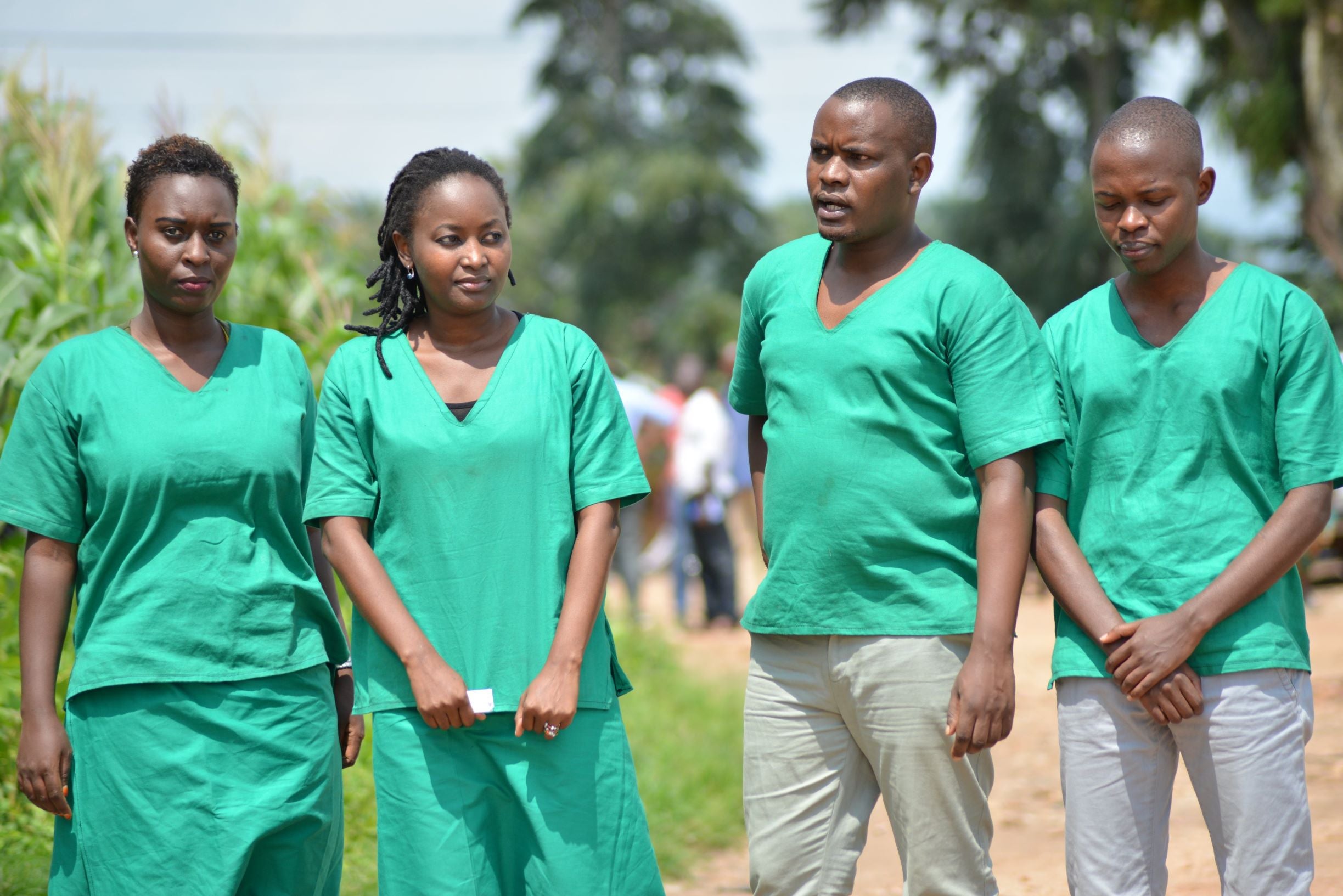
Burundi elections start with convicting 4 journalists

February 5, 2020

Short report by EEAS on the 17th EU-NGO Human Rights Forum, 3-4 December 2015

December 5, 2015

The 17th EU-NGO Human Rights Forum took place in Brussels on 3 and 4 December 2015, bringing together hundreds of civil society organisations from across the globe, representatives from international and regional human rights mechanisms and from the EU institutions and Member States. The Forum is a joint venture between the European External Action Service (EEAS), the European Commission, and the Human Rights & Democracy Network [http://www.hrdn.eu/index.php?menu_selected=122&language=US&sub_menu_selected=768].

The overarching theme for this year’s Forum is Protecting and Promoting Civil society Space. In her address to the Forum, High Representative of the Union for Foreign Affairs and Security Policy, Federica Mogherini, stated: I believe that the civil society has a crucial role to play in any policy and in our foreign policy. It is not only a key player, but a main driver for change in all societies, in terms of democracy, good governance, resilience, cohesion, promotion of fundamental human rights.   Freedom of expression is one of the most powerful weapons against radicalisation and terrorism. To better protect our citizens we need above all to build strong democratic institutions and a healthy democratic dialogue. I am very often asked whether security should not be the main focus, more than human rights. But there is no security without human rights”.

She also called for renewed efforts to fight attempts to control the work of civil society in many countries around the world: “During the last years, the space for civil society has shrunk in many countries”. “These trends demand a redoubling of our efforts in the human rights sphere. The European Union, the institutions and myself personally, will do all we can to protect civil society organisations fighting for human rights and protect human rights defender on an individual basis.”

The theme of this year’s NGO Forum – Protecting and Promoting Civil Society Space – reflects the EU’s strong commitment to put Freedom of Association and Freedom of Expression at the heart of the EU’s human rights policy as essential foundations for democracy, rule of law, peace, stability, sustainable inclusive development and participation in public affairs.

This year’s event saw contributions from the current UN Special Rapporteur on Freedom of Association, Maina Kiai; the UN Special Rapporteur for Human Rights Defenders, Michel Forst; Vice-Chair of the European Parliament Subcommittee on Human Rights, MEP Barbara Lochbihler; the Secretary General of the Community of Democracies, Amb. Maria Leissner; Sakharov Prize recipient Memorial, represented by Oleg Orlov; alongside many representatives from civil society, Human Rights Defenders, NGOs, the EU Institutions and many representatives from EU member states.

The forum looked at the recent EU Guidelines on Human Rights Defenders and the EU Guidelines on Freedom of Expression, as key tools enabling the EU to promote and protect freedom of opinion and expression and to counter the clear and disturbing trend over the last few years towards an increasingly restricted space for independent civil society as well as outright threats, intimidation and violence that civil society organisations and representatives, journalists, media actors and other individuals face in many countries across the world because of the exercise of their rights.

Given the scale of the problem and its constantly changing manifestations, urgent action is required not just to understand the scale and evolving nature of the threats, but particularly to identify ways to achieve effective and concerted policy responses and counter actions.

The EU is committed, as indicated in the EU strategy on human rights and democracy and its Action Plan (2015-2019), to address threats to civil society space, through actions that support laws and policies to protect human rights defenders; report on and counter threats to civil society space; and oppose unjustified restrictions to freedoms of assembly and association.

Engagement with civil society is essential for the ongoing work the EU is undertaking to help realise human rights, indivisible and universal for all people. The Forum discussions provided a significant opportunity for an interactive dialogue among representatives from the EU member states, the European Institutions (European Parliament, Council, European External Action Service, European Commission) and global civil society and human rights defenders from all over the world, working on the promotion and protection of human rights. The outcome of the Forum will be an important stepping stone for ensuring effective EU action and future policy developments in this field.

see also: https://thoolen.wordpress.com/2015/12/04/international-cooperative-consortium-protect-the-defenders-launched-on-2-december/


Source: European Union – EEAS (European External Action Service) | PRESS RELEASE: PROTECTING & PROMOTING CIVIL SOCIETY SPACE: 17th EU-NGO Human Rights Forum, 2015

International cooperative consortium ‘Protect the Defenders’ launched on 2 December

December 4, 2015


On 2 December 2015 a Consortium of organizations was launched in Brussels dedicated to coordinating support for the security and protection of human rights defenders under threat. The Consortium, called “Protect the Defenders,” is comprised of 12 organizations that work collectively to implement the EU Mechanism for Human Right Defenders.

The partners include Frontline Defenders (leader of the Consortium), FIDH, OMCT, Forum-ASIA, the East and Horn of Africa Human Rights Defenders Project (EHAHRDP), ESCR-net, Euro-Mediterranean Foundation of Support to Human Rights Defenders (EMHRF), International Lesbian, Gay, Bisexual, Trans and Intersex Association (ILGA), Peace Brigades International, Protection International, Reporters without Borders and the Urgent Action Fund for Women.

Source: Protecting the Defenders through enhanced international collaboration | ESCR-Net

What Human Rights Day means in Bahrain and how the EU made it worse

December 11, 2014

On 9 December, on the eve of Human Rights Day, Zainab Al-Khawaja was sentenced to 4 years and 4 months in two separate court hearings in Bahrain. Front Line, Human Rights First and others have reported extensively on this courageous human rights defenders [see also: https://thoolen.wordpress.com/tag/zainab-al-khawaja/] .

She was sentenced to 16 months’ imprisonment for “sabotaging properties belonging to the Ministry of Interior” and “insulting a public official” to three months’ imprisonment and fined 3,000 Bahraini Dinar (approx. 6,400 Euro) for “tearing up a photograph of the King”.

Frontline NEWlogos-1 condensed version - cropped also shockingly reports that on the same day as her sentencing, the European Union presented a human rights award to Bahrain’s National Institution for Human Rights and the Ombudsman of the Ministry of the Interior! Although this concerns a relatively unknown regional award (the Chaillot Prize is presented annually by the Delegation of the European Union in Riyadh http://www.ambafrance-bh.org/Press-release-Delegation-of-the.) the state press has been making the best of it [http://www.gulf-daily-news.com/NewsDetails.aspx?storyid=391213] and it is hard to see this as in line with the EU policy on Human Rights Defenders.

‘Unsung Heroes’ – EU Tribute to Human Rights Defenders on 2 December in Geneva

November 28, 2014

Under the title “Unsung Heroes” the EU Delegation to the UN in  Geneva is organizing a Tribute to Human Rights Defenders on 2 December 2014 at 13h00 in the Palais des Nations in Geneva.

In light of the 10th anniversary of the EU Guidelines on Human Rights Defenders and ahead of the Human Rights Day, Stavros Lambrinidis, EU Special Representative for Human Rights, will discuss interactively with NGOs, Human Rights Defenders and International Organisations the challenges of speaking up for human rights. The event will also include the Geneva launch of a study conducted by the Kvinna till Kvinna Foundation on Women Human Right Defenders’ exposure to threats and violence.

The debate on questions such as “What does it take to stand up for human rights?”, “What risks do human rights defenders face, in particular if they are women?” and “What can we do to provide better support?” will be followed by the screening of the film documentary “Six Days”, portraying three women in three different countries, fighting for change in the wake of war and conflict.

I should add that the choice of the title ‘Unsung Heroes’ leaves to be desired as it has been used a lot by different organisations, including the US State Department, the Carter Foundation, the Martin Ennals Foundation for its 2001 study, the OHCHR, PBI, Freedom etc.

See also my post from two days ago: https://thoolen.wordpress.com/2014/11/26/tribute-remembering-women-human-rights-defenders/


NGO recommendations on torture for the EU Action Plan on Human Rights and Democracy

November 24, 2014

Five international NGOs with strong credentials in the area of the fight against torture have written to the EU with sensible recommendations to be incorporated into the next Action Plan on Human Rights and Democracy. The main recommendations submitted on 19 November 2014 are:   Read the rest of this entry »

Swiss Guidelines on Human Rights Defenders analyzed by civil society

November 2, 2014

In December 2013, the Swiss Government became one of the few countries to issue specific Guidelines on the Protection of Human Rights Defenders (http://www.humanrights.ch/en/switzerland/foreign-affairs/human-rights-foreign-policy/multilateral-policy/switzerland-guidelines-protection-human-rights-defenders). As in the case of all guidelines, the real test is in the implementation and on 12 June 2014, the Centre for Peacebuilding (KOFF) at Swisspeace organized a conference on the protection of HRDs, which brought together HRDs from Guatemala, Honduras, Serbia, Russia and Sri Lanka, Swiss government officials and representatives of Swiss civil society in order to give consideration to the different challenges that exist when it comes to HRD protection and, in particular, implementation of the Swiss guidelines.

Read the rest of this entry »

Austrian Ministry of Foreign Affairs states position on Human Rights Defenders

August 29, 2014

While the statement does not contain any really new position I recommend to read it because it is a good indication of how Austria has moved to join the small group of countries that makes Human Rights Defenders a central piece in their approach: Read the rest of this entry »