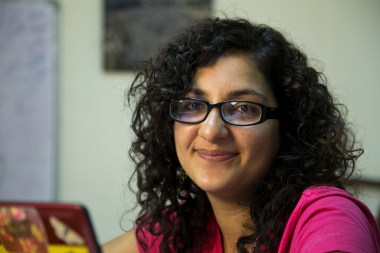
This is an open letter from MONA SEIF asking for your solidarity and support. It is long, but contains crucial details: My name is Mona Seif, I am an Egyptian HRD. Over the past few weeks the Egyptian regime has been escalating violent targeting of my family. If you are following the news from this art of the world then you know how most of the media platforms have been blocked and many journalists detained, harassed, or pushed into exile. So I am writing to you, hoping you will carry my voice and that of everyone facing injustice here.
Mona Seif, Egypt – Final Nominee MEA 2013
My brother Alaa Abdel Fattah has been in jail since last September. He was rearrested only 6 months after he got out of prison after completing a full five-years sentence. He has been in maximum security prison for 10 months in horrific conditions and daily violations of his rights, Egyptian laws and prison regulations. For the past months we have filed numerous official complaints, appealed to all sorts of entities here that have jurisdiction over the prison authorities, but none of them made any move to stop the violations or start a serious investigation. None of them made any attempt to bring us just a small bit of our rights.
On the night of Alaa’s arrival to Tora Maximum security prison 2 he was stripped of his clothes, blind folded, beaten and threatened that “He will never get out of here“, we have submitted an official report to the general prosecutor, we have repeatedly met with the head of his Human Rights adminstration, Alaa went on record in state security prosecution while reviewing his pretrial detention and testified in details on the torture he endured. Until now, not one serious move was taken regarding this horrific incident, and it was an intro to the kind of prison he will be locked in.
Since the crisis of Covid19 started, the Egyptian MOI has used it as an excuse to tighten the isolation of all prisoners, increase intimidation of prisoners and their families, and escalate in their deprivation of their basic rights. Since March 9th all visits have been completely banned in all prisons all over Egypt, however the families were not offered any alternative form of communication. We were not allowed phone calls with the prisoners, and most prisons are not allowing letters, even though both are explicit rights by the law, not to mention worrying times like these. Some prisoners were trying to get the word out about the deterioration of their health, about fear of Corona in prisons, the lack of proper information to help them understand the toll of the crisis and lack of sanitary measures indifferent Egypt, the only response the MOI had was clamping down even harder on those prisoners, punishing those who voiced out their concerns, all this while the arrests of more activists is ongoing and the arrest of doctors who talk publicly about their needs, problems and the reality of managing Covid19 within our health system.
With Alaa in particular, state security seems intent on preventing any sort of communication between us and him, even at times when they are allowing letters from other prisoners. Alaa went on a hunger strike on April12th and they did not even inform us. For a whole month during the covid19 emergency, my brother was on full hunger strike, my mother spent every morning at the prison’s gate and they did not allow us one letter to assure us of his well being. For every letter received we as a family paid a heavy price. We received a letter after Alaa ended his hunger strike on May 18th, and another on June 6th after my mother camped daily by Tora prison. Then the last one we got was on June 25th after we were violently assaulted and robbed right infront of Tora prison on the watch of their guards, and only after my younger sister Sanaa was abducted by plainclothed officers while entering the general prosecutor’s office- with her lawyer- to report the violent assault and officially document her injuries. Sanaa is now detained, and we haven’t been allowed any letters from her as well.
I think I’ve seen alot, I’ve witnessed so many violations committed by the current and previous regimes, but somehow I would have never imagined that a victim of a violent assault would be kidnapped by state security from the gates of the general prosecutor’s office as they are trying to seek his protection and file an official complaint regarding a very public incident like the one we were part of. And it definitely wouldn’t have occured to me that not only the general prosecutor would turn a blind eye on such a grave crime committed at his doorstep, but actually enable them to “legalize” her detention afterwards.
Both Sanaa and Alaa are in prison They, and thousands of prisoners, are at risk facing the combined danger of an epidemic and a brutal senseless regime. Please speak up on their behalf.. write about them, share their stories, add your name to the petition, or you can directly write a letter to Judge Hany Georgy the Head of Human rights administration at the general prosecutor’s office hanyfathy70@yahoo.com
Hong Kong’s chief executive Carrie Lam on giant screens remotely addressing the opening of the UN Human Rights Council’s 44th session on in Geneva, Switzerland, 30 June 2020, FABRICE COFFRINI/AFP via Getty Images
The 44th session of the UN Human Rights Council began with China’s imposition of legislation severely undermining rights and freedoms in Hong Kong. Within days, there were reports of hundreds of arrests, some for crimes that didn’t even exist previously. We welcome efforts during this session by a growing number of States to collectively address China’s sweeping rights abuses, but more is needed. An unprecedented 50 Special Procedures recently expressed concerns at China’s mass violations in Xinjiang, Hong Kong and Tibet, suppression of information in the context of COVID-19, and the targeting of human rights defenders across the country. The Council should heed the call of these UN experts to hold a Special Session and create a mechanism to monitor and document rights violations in the country. No state is beyond international scrutiny. China’s turn has come.
The 44th session also marked an important opportunity to enable those affected directly by human rights violations to speak to the Council through NGO video statements.
Amnesty’s Laith Abu Zeyad addressed the Council remotely from the occupied West Bank where he has been trapped by a punitive travel ban imposed by Israel since October 2019. We call on the Israeli authorities to end all punitive or arbitrary travel bans.
During the interactive dialogue with the Commission of Inquiry on Syria, victims’ associations and families of victims highlighted the human rights violations occurring in detention centers in Syria. We welcome the efforts by some States to underline their demands and welcome the adoption of the Syria resolution on detainees and urge the Syrian government to take all feasible measures to release detainees and provide truth to the families, noting the important pressure needed by Member States to further call for accountability measures for crimes committed in Syria.
Collette Flanagan, Founder of Mothers against Police Brutality, also delivered a powerful video statement at the Council explaining the reality of racist policing in the United States of America. We fully support victims’ families’ appeals to the Council for accountability.
We hope that the High Commissioner’s report on systemic racism, police violence and government responses to antiracism peaceful protests will be the first step in a series of meaningful international accountability measures to fully and independently investigate police killings, to protect and facilitate Black Lives Matter and other protests, and to provide effective remedy and compensation to victims and their families in the United States of America and around the world.
We appreciate the efforts made by the Council Presidency and OHCHR to overcome the challenges of resuming the Council’s work while taking seriously health risks associated with COVID-19, including by increasing remote and online participation. We recommend that remote civil society participation continue and be strengthened for all future sessions of the Council.
Despite these efforts, delays in finalising the session dates and modalities, and subsequent changes in the programme of work, reduced the time CSOs had to prepare and engage meaningfully. This has a disproportionate impact on CSOs not based in Geneva, those based in different time zones and those with less capacity to monitor the live proceedings. Other barriers to civil society participation this session included difficulties to meet the strict technical requirements for uploading video statements, to access resolution drafts and follow informal negotiations remotely, especially from other time zones, as well as a decrease in the overall number of speaking slots available for NGO statements due to the cancellation of general debates this session as an ‘efficiency measure.’
We welcome the joint statement led by the core group on civil society space and endorsed by cross regional States and civil society, which calls on the High Commissioner to ensure that the essential role of civil society, and States’ efforts to protect and promote civil society space, are reflected in the report on impact of the COVID-19 pandemic presented to the 46th Session of the HRC. We urge all States at this Council to recognise and protect the key role that those who defend human rights play.
We therefore welcome that the resolution “the promotion and protection of human rights in the context of peaceful protests” was adopted by consensus, and that the Council stood strongly against some proposed amendments which would have weakened it. We also welcome the inclusion in the resolution of a panel during the 48th session to discuss such events and how States can strengthen protections. We urge States to ensure full accountability for such human rights violations as an essential element of the protection of human rights in the context of protests. The current context has accelerated the urgency of protecting online assembly, and we welcome that the resolution reaffirms that peaceful assembly rights guaranteed offline are also guaranteed online. In particular, we also commend the resolution for calling on States to refrain from internet shutdowns and website blocking during protests, while incorporating language on the effects of new and emerging technologies, particularly tools such as facial recognition, international mobile subscriber identity-catchers (“stingrays”) and closed-circuit television.
We welcome that the resolution on “freedom of opinion and expression” contains positive language including on obligations surrounding the right to information, emphasising the importance of measures for encryption and anonymity, and strongly condemning the use of internet shutdowns.. Following the High Commissioner’s statement raising alarm at the abuse of ‘false news’ laws to crackdown on free expression during the COVID-19 pandemic, we also welcome that the resolution stresses that responses to the spread of disinformation and misinformation must be grounded in international human rights law, including the principles of lawfulness, legitimacy, necessity and proportionality. At the same time, we are concerned by the last minute addition of language which focuses on restrictions to freedom of expression, detracting from the purpose of the resolution to promote and protect the right. As we look to the future, it is important that the core group builds on commitments contained in the resolution and elaborate on pressing freedom of expression concerns of the day, particularly for the digital age, such as the issue of surveillance or internet intermediary liability, while refocusing elements of the text.
The current context has not only accelerated the urgency of protecting assembly and access to information, but also the global recognition of the right to a safe, clean, healthy and sustainable environment. We welcome the timely discussions on ”realizing children’s right to a healthy environment” and the concrete suggestions for action from panelists, States, and civil society. The COVID-19 crisis, brought about by animal-to-human viral transmission, has clarified the interlinkages between the health of the planet and the health of all people. We therefore support the UN Secretary General’s call to action on human rights, as well as the High Commissioner’s statement advocating for the global recognition of the human right to a safe, clean, healthy and sustainable environment – already widely reflected at national and regional levels – and ask that the Council adopts a resolution in that sense. We also support the calls made by the Marshall Islands, Climate Vulnerable Forum, and other States of the Pacific particularly affected and threatened by climate change. We now urge the Council to strengthen its role in tackling the climate crisis and its adverse impacts on the realization of human rights by establishing a Special Rapporteur on Human Rights and Climate Change, which will help address the urgency of the situation and amplify the voices of affected communities.
The COVID crisis has also exacerbated discrimination against women and girls. We welcome the adoption by the Council of a strong resolution on multiple and intersecting forms of discrimination against women and girls, which are exacerbated in times of a global pandemic. The text, inter alia, reaffirms the rights to sexual and reproductive health and to bodily autonomy, and emphasizes legal obligations of States to review their legislative frameworks through an intersectional approach. We regret that such a timely topic has been questioned by certain States and that several amendments were put forward on previously agreed language.
The Council discussed several country-specific situations, and renewed the mandates in some situations.
We welcome the renewal of the Special Rapporteur’s mandate and ongoing scrutiny on Belarus. The unprecedented crackdown on human rights defenders, journalists, bloggers and members of the political opposition in recent weeks ahead of the Presidential election in August provide a clear justification for the continued focus, and the need to ensure accountability for Belarus’ actions. With concerns that the violations may increase further over the next few weeks, it is essential that the Council members and observers maintain scrutiny and pressure even after the session has finished.
We welcome the extension of the mandate of the Special Rapporteur on Eritrea. We urge the government to engage, in line with its Council membership obligations, as the Special Rapporteur’s ‘benchmarks for progress’ form a road map for human rights reform in the country.
We welcome the High Commissioner report on the human rights situation in the Philippines which concluded, among other things, that the ongoing killings appear to be widespread and systematic and that “the practical obstacles to accessing justice in the country are almost insurmountable.” We regret that even during this Council session, President Duterte signed an Anti Terrorism Law with broad and vague definition of terrorism and terrorists and other problematic provisions for human rights and rule of law, which we fear will be used to stifle and curtail the rights to freedom of opinion and expression, to freedom of peaceful assembly and of association. Also during this session, in a further attack on press freedom, Philippine Congress rejected the franchise renewal of independent media network ABS-CBN, while prominent journalist Maria Ressa and her news website Rappler continue to face court proceedings and attacks from President Duterte after Ressa’s cyber libel conviction in mid-June. We support the call from a group of Special Procedures to the Council to establish an independent, impartial investigation into human rights violations in the Philippines and urge the Council to establish it at the next session.
The two reports presented to the Council on Venezuela this session further document how lack of judicial independence and other factors perpetuate impunity and prevent access to justice for a wide range of violations of civil, cultural, economic, political, and social rights in the country. We also urge the Council to stand ready to extend, enhance and expand the mandate of the Independent International Fact-Finding Mission when it reports in September.
We also welcome the report of the Special rapporteur on the human rights situation in the Palestinian Territory occupied since 1967 and reiterate his call for States to ensure Israel puts an end to all forms of collective punishment. We also reiterate his call to ensure that the UN database of businesses involved with Israeli settlements becomes a living tool, through sufficient resourcing and annual updating.
We regret, however, that several States have escaped collective scrutiny this session.
We reiterate the UN Special Rapporteur Agnes Callamard’s call to pressure Saudi Arabia to release prisoners of conscience and women human rights defenders and call on all States to sustain the Council’s scrutiny over the situation at the September session.
As highlighted in a joint statement of Special Procedures, we call on the Indian authorities to immediately release HRDs, who include students, activists and protest leaders, arrested for protesting against changes to India’s citizenship laws. Also eleven prominent HRDs continue to be imprisoned under false charges in the Bhima Koregaon case. These activists face unfounded terror charges under draconian laws such as sedition and under the Unlawful Activities (Prevention) Act. While we welcome that Safoora Zargar was granted bail on humanitarian grounds, the others remain at high risk during a COVID-19 pandemic in prisons with not only inadequate sanitary conditions but also limited to no access to legal counsel and family members. A number of activists have tested positive in prison, including Akhil Gogoi and 80-year-old activist Varavara Rao amid a larger wave of infections that have affected many more prisoners across the country. Such charges against protestors, who were exercising their rights to freedom of peaceful assembly must be dropped. We call on this Council to strengthen their demands to the government of India for accountability over the excessive use of force by the police and other State authorities against the demonstrators.
In Algeria, between 30 March and 16 April 2020, the Special rapporteur on freedom of opinion and expression, freedom of peaceful assembly and of association, human rights defenders, issued three urgent appeals in relation to cases involving arbitrary and violent arrests, unfair trials and reprisals against human rights defenders and peaceful activists Olaya Saadi, Karim Tabbou and Slimane Hamitouche. Yet, the Council has been silent with no mention of the crackdown on Algerian civil society, including journalists.
To conclude on a positive note, we welcome the progress in the establishment of the OHCHR country office in Sudan, and call on the international community to continue to provide support where needed to the transitional authorities. While also welcoming their latest reform announcements, we urge the transitional authorities to speed up the transitional process, including reforms within the judiciary and security sectors, in order to answer the renewed calls from protesters for the enjoyment of “freedom, peace and justice” of all in Sudan. We call on the Council to ensure continued monitoring and reporting on Sudan.
The ISHR published on 24 June its usual and irreplacable “HRC44 – Key issues on agenda of June 2020 session”
As usual I have lifted out of this the issues that would seem to affect most directly Human Rights Defenders. To stay up-to-date on all issues: follow @ISHRglobal and #HRC44 on Twitter, and look out for its Human Rights Council Monitor.
The UN Human Rights Council (the Council) will hold its 44th regular session at Palais des Nations in Geneva from 30 June to 21 July 2020.
Modalities for participation in HRC44
State delegations not wishing to enter the plenary room physically will be able to deliver their statements by pre-recorded video-message, as provided for under HRC decision 19/119. Similarly, NGOs in consultative status with ECOSOC will be given the opportunity to do the same insofar as interactive dialogues, panels and UPR adoptions are concerned. It won’t be possible to hold “official” side events during the 44th session (online or in-person). Any events happening on the sidelines of the session will be considered independent events and won’t be publicised in the Bulletin of Informal meetings by the Secretariat. Read here the information note by the Secretariat which is updated according to the latest information, and an additional explainer by HRC-net.
Human Rights implications of COVID-19
The High Commissioner will present an oral update on the human rights impact of COVID-19 at the 44th session, as mandated by the presidential statement adopted by the Council in May 2020. The presidential statement also calls on the High Commissioner to produce a report on the impact of the COVID-19 pandemic on the enjoyment of human rights around the world to be presented at the 46th session in March 2021. In addition to their previously mandated reports, some mandateholders will present additional reports to address the impact of COVID-19 as related to their mandate, including the Special rapporteur on freedom of opinion and expression, David Kaye. [for some of my earlier posts on covid and human rights see: https://humanrightsdefenders.blog/tag/covid-19/]
Here are some highlights of the session’s thematic discussions:
Business and human rights
At this session, the Working Group on Business and Human Rights is expected to present reports on their activities over 2019, including a country visit to Honduras and on the theme of anti-corruption and the UN Guiding Principles (UNGPs). They are also meant to present groundbreaking guidance on human rights defenders and the role of business. ISHR expects that such guidance should provide companies with concrete suggestions for how to engage human rights defenders in the development and implementation of their human rights policies. It is important that the guidance explains why this is not simply good practice, but is also aligned with the Guiding Principles’ word and spirit – and thus should be widely mainstreamed for any company committed to the UNGPs. There will tentatively be a resolution presented to renew the mandate of the UN Working Group on Business and Human Rights, as well as to welcome the thematic reporting.
Reports of cases of intimidation and reprisal against those cooperating or seeking to cooperate with the UN not only continue, but grow. Intimidation and reprisals violate the rights of the individuals concerned, they constitute violations of international human rights law, and undermine the UN human rights system. [agains for earlier posts see: https://humanrightsdefenders.blog/tag/reprisals/]
During the 42nd session, the Council adopted a resolution which listed key trends such as the patterns of reprisals, increasing self-censorship, as well as the use of national security arguments and counter-terrorism strategies by States as justification for blocking access to the UN. The resolution acknowledged the specific risks to individuals in vulnerable situations or belonging to marginalised groups, and called on the UN to implement gender-responsive policies to end reprisals. The Council called on States to combat impunity and to report back to it on how they are preventing reprisals, both online and offline.
Item 5 of the Human Rights Council’s agenda provides a key opportunity for States to raise concerns about reprisals, and for governments involved in existing cases to provide an update to the Council on any investigation or action taken toward accountability to be carried out.
Other thematic reports :
At this 44th session, the Council will discuss a range of civil, political, economic, social and cultural rights through dedicated debates with the mandate holders, including interactive dialogues with:
The Working Group on the issue of human rights and transnational corporations and other business enterprises (includes recommendations from 2019 visit to Peru)
The Special Rapporteur on contemporary forms of racism, racial discrimination, xenophobia and related intolerance
The Special Rapporteur on extrajudicial, summary or arbitrary executions
The Special Rapporteur on the rights to freedom of peaceful assembly and of association
The Special Rapporteur on the promotion and protection of the right to freedom of opinion and expression
In addition, the Council will hold dedicated debates on the rights of specific groups including:
The Special Rapporteur on trafficking in persons, especially women and children
The Special Rapporteur on the independence of judges and lawyers
The Special Rapporteur on the human rights of migrants
The Working Group on discrimination against women and girls
The Special Rapporteur on the human rights of internally displaced persons
The Special Rapporteur on violence against women, its causes and consequences
The Independent Expert on protection against violence and discrimination based on sexual orientation and gender identity
#HRC44 | Country-specific developments
China (Hong Kong and Uyghur regions)
Violations in China, especially those linked to freedom of association, were made even more clear during the government’s efforts to respond to the COVID-19 epidemic. …..States should ensure continued calls for access to UN human rights experts, in line with last year’s joint letter condemning China’s suppression of minorities. Finally, following nearly a year of protests – largely of peaceful civilians – the central government in Beijing launched an initiative to draft and pass National Security Legislation in Hong Kong. This alarming development was foreshadowed by increasing police violence and use of chemical weapons; the arrest and political prosecution of more than a dozen pro-democracy leaders; and further restrictions on the free press. Many activists, and the European Parliament, are calling for UN Secretary-General António Guterres to appoint an envoy, rightly recognising that China’s actions violate international agreements aimed at ensuring peace and security.
United States of America
Last week, the Council held an urgent debate and adopted a resolution in reaction to systemic racism and police violence in the US and elsewhere. The UN Special Rapporteur on contemporary forms of racism and the UN Working Group on Experts on People of African Descent had also voiced their support for an international commission of inquiry. They have urged the Human Rights Council to ensure the following outcomes from the debate: (1) the creation of an international commission of inquiry to investigate systemic racism in law enforcement in the United States; and (2) the creation of a thematic international commission of inquiry to investigate systemic racism in law enforcement globally, with a focus on systemic racism rooted in legacies of colonialism and transatlantic slavery. They stressed that “both measures described above are necessary and cannot be substituted for one another”.
Saudi Arabia
Women human rights defenders (WHRDs) have been in prison for over two years, only because they demanded that women be treated equally as men, and no one has been held accountable for their torture. While the Council has sustained pressure on Saudi Arabia in 2019, it is essential that this scrutiny continues as the situation on the ground has not improved. ISHR calls on all States to jointly call on Saudi Arabia to immediately and unconditionally release the WHRDs and drop the charges against them; and implement the bench-marks set out in the two joint statements delivered by Iceland and Australia in 2019, underlining that should these benchmarks not be met, more formal Council action would follow.
Saudi Arabia is running for Human Rights Council election in October 2020 and hosting the G20 in November 2020. These all provide windows of opportunity to push for the immediate and unconditional release of the women human rights defenders and all those detained for exercising their rights.
Nicaragua
The COVID-19 crisis has not prevented the Nicaraguan government from making further use of repressive methods to continue targeting released political prisoners, human rights defenders, as well as indigenous people and other social groups, and their relatives. In a rapidly-deteriorating human rights situation, the authorities’ dangerous denial and inaction in the face of the pandemic have additionally fueled an alarming health crisis.
It is in this context that Council Members renewed a resolution on Nicaragua this week at the resumed 43rd session of the Human Rights Council. ISHR joined Race and Equality and a number of national and international organisations in urging the Council to ensure strong support for the resolution on the human rights situation in Nicaragua. To ensure the international community is fully informed of the worsening national situation, the resolution requests the High Commissioner to prepare a report and two oral updates, the first of which should be presented at the Council’s 44th session.
Honduras
The Working Group on Business and Human Rights will present the report on its official visit to Honduras (carried out between the 19 and 28 August 2019). …According to the end of mission statement, a significant number of human rights defenders who work for the respect and protection of human rights in the context of business activity have been arbitrarily arrested, intimidated, stigmatised, criminalised, threatened and some killed.
This was particularly evident in reference to those working in the field of extractive and hydro-electric industries. The murder of leading land,environment and indigenous peoples´ rights defender Berta Cáceres, who had been campaigning against the construction of the Agua Zarca dam, is one case cited where impunity is ongoing. Individuals responsible for the killing have been tried and jailed. However, those suspected of planning the crime, including senior management from the company building the dam (DESA) according to the independent mission of experts GAIPE, have not been investigated or prosecuted. [see also: https://humanrightsdefenders.blog/2020/06/10/nina-lakhanis-who-killed-berta-caceres-reviewed/]. Another Special Procedure expert – the Special Rapporteur on the independence of judges and lawyers – will also be presenting a report on its official visit to Honduras in August 2019. After completion of the visit, he called on Honduras to take urgent action to end corruption and guarantee an independent judiciary, stressing that ‘the justice system, as well as the political class’ are being ‘called strongly into question by the citizens’.
Burundi
The Commission of Inquiry on Burundi will present its oral briefing during the 44th session of the HRC. ISHR continues to remain highly concerned about the human rights situation in Burundi and its refusal to cooperate with the Council’s mechanisms.
Egypt
Seven UN experts have expressed concern about the collective and corrosive effects of Egypt’s counter-terrorism laws and practices on the promotion and protection of human rights. They stated that “Despite repeated communications by UN experts over arbitrary detention of individuals, human rights defenders and activists, the Egyptian Government has not changed its laws of practice”. The ‘Terrorism Circuit courts’ in Egypt, are enabling pre-trial detention as a form of punishment including against human rights defenders and journalists, such as Ibrahim Metwally, Mohamed El-Baqer and Esraa Abdel Fattah, Ramy Kamel, Alaa Abdel-Fattah, Patrick Zaky, Ramy Shaat, Eman Al-Helw, Solafa Magdy and Hossam El-Sayed. All of the individuals that the Special Procedures and the High Commissioner have written about since September 2019 are still in pre-trial detention by these courts. Once the terrorism courts resumed after they were suspended due to COVID-19, they renewed their detention retroactively.
The government’s response to the UPR in March 2020 demonstrated its lack of political will to address key concerns raised by States and to engage constructively with the Council. For example, the government refused to acknowledge the systematic and widespread attacks against defenders, the practice of torture and ill-treatment in detention centres, and to receive visits by Special Rapporteurs on torture and human rights defenders. The government claimed that no one is detained for exercising their rights, despite the fact that the UN Working Group on Arbitrary Detention found that arbitrary detention is a systematic problem in Egypt and could constitute a crime against humanity.
ISHR urges States to call on Egypt to immediately and unconditionally release all those detained for exercising their human rights, to stop using pre-trial detention as a punishment, and to take immediate measures to guarantee their rights to contact their families on a regular and continuous basis and to ease sending and receiving letters, food and medical supplies to them.
Philippines
The OHCHR issued its report (A/HRC/44/22) on the human rights situation in the Philippines, drawing on extensive engagement with and information provided by civil society in the country, the region and globally. The report refers to the killing of 208 human rights defenders, journalists and trade unionists, including 30 women, between January 2015 and December 2019. Confirming practices of vilification, criminalisation, restrictions of fundamental rights, as well as the continuing attacks including ‘red-tagging,’ the report notes existing impunity and the failure of domestic mechanisms to ensure accountability. The presentation of this report provides an important opportunity for debate on the key findings, and to consider options for how to advance recommendations to address the government’s violations of human rights overall, and restrictions on human rights defenders in particular.
The Council will hold an interactive dialogue on the High Commissioner’s annual report on 2 July 2020. The Council will consider reports on and is expected to consider resolutions addressing a range of country situations, in some instances involving the renewal of the relevant expert mandates. These include:
Interactive Dialogue with the High Commissioner on the human rights situation of Rohingya people
Enhanced Interactive Dialogue with the High Commissioner on the situation of human rights in the Philippines
Interactive Dialogue with the SR on the situation of human rights in Eritrea
Oral update by the High Commissioner on the situation of human rights in Nicaragua
Interactive Dialogue with the SR on the situation of human rights in Belarus
Interactive Dialogue with the High Commissioner on the situation of human rights in the Bolivarian Republic of Venezuela
Interactive Dialogue with the Commission of Inquiry on Burundi
Interactive Dialogue with the SR on the situation of human rights in Myanmar
Interactive Dialogue with the Commission of Inquiry on the Syrian Arab Republic
Interactive Dialogue with the SR on the situation of human rights in the Palestinian Territories occupied since 1967
Enhanced ID on the oral reports of the Government of the Sudan and OHCHR on progress towards the opening of a country office
Oral update of the High Commissioner on cooperation with Georgia
Adoption of Universal Periodic Review (UPR) reports
During this session, the Council will adopt the UPR working group reports on Armenia, Grenada, Guinea, Guinea-Bissau, Guyana, Kenya, Kiribati, Kuwait, Kyrgyzstan, Lao People’s Democratic Republic, Lesotho, Spain, Sweden, and Turkey.
ISHR supports human rights defenders in their interaction with the UPR. We publish and submit briefing papers regarding the situation facing human rights defenders in some States under review and advocate for the UPR to be used as a mechanism to support and protect human rights defenders on the ground. This session of the Council will provide an opportunity for Turkey, Kuwait and Guinea to accept recommendations made in relation to human rights defenders, as proposed in ISHR’s briefing papers.
#HRC44 | Council programme, appointments and resolutions
During the organisational meeting for the 44th session held on 12 and 15 June 2020, the President of the Human Rights Council presented the programme of work. It includes five panels of discussion and 81 reports. States also announced at least 17 resolutions.
Appointment of mandate holders
The President of the Human Rights Council has proposed candidates for inter alia the Special Rapporteur on freedom of opinion and expression and the Special Rapporteur on trafficking.
Resolutions to be presented to the Council’s 44th session
At the organisational meeting the following resolutions were announced (States leading the resolution in brackets) especially relevant:
Elimination of discrimination against women (Colombia, Mexico)
Human rights situation in Eritrea (Australia, Austria, Belgium, France, Germany, Netherlands) mandate renewal
Business and human rights (Norway, Russian Federation, Ghana, Argentina) Working Group + Accountability and Remedy project mandate renewals
Extrajudicial, summary or arbitrary executions (Sweden) mandate renewal
Human rights and climate change (Bangladesh, Philippines, Viet Nam)
Independence and impartiality of the judiciary, jurors and assessors, and the independence of lawyers (Hungary, Australia, Botswana, Maldives, Mexico, Thailand) + mandate renewal
Trafficking in persons, especially women and children (Germany, Argentina, Philippines) + mandate renewal
Freedom of opinion and expression: access to information (Canada, Namibia, Brazil, Fiji, Netherlands, Sweden)
Rights of persons with disabilities (Mexico, New Zealand) mandate renewal
The human rights situation in Belarus (EU)
The right to peaceful protest (Switzerland, Costa Rica)
Panel discussions
During each Council session, panel discussions are held to provide member States and NGOs with opportunities to hear from subject-matter experts and raise questions. All panel discussions are broadcast live and archived on http://webtv.un.org. Five panel discussions are scheduled for this upcoming session:
Annual full-day meeting on the rights of the child (two panels, theme: “Realizing the rights of the child through a healthy environment”)
Annual full-day discussion on the human rights of women
Panel discussion on the impacts, opportunities and challenges of new and emerging digital technologies with regard to the promotion and protection of human rights; including an oral update of the Advisory Committee on its report on new and emerging digital technologies
Panel discussion on promoting and protecting the rights of persons with disabilities in the context of climate change
Annual thematic panel discussion on technical cooperation in the promotion and protection of human rights (theme: “Upholding the human rights of prisoners, including women prisoners and offenders: enhancing technical cooperation and capacity-building in the implementation of the Nelson Mandela Rules and the Bangkok Rules”)
ISHR’s report documents a disturbing pattern of intimidation and reprisals that must be addressed. Cases of intimidation and reprisals featured in the submission range from States maligning and stigmatising defenders to banning them from travel and detaining them. ‘Such reprisals violate human rights and fundamental freedoms that regional and international systems are obliged to promote and protect. Moreover, they also seriously impede bodies and mechanisms’ abilities to discharge their mandates effectively, threaten their integrity, and undermine the credibility of their work in the field of human rights’, said Adelaïde Etong Kame, ISHR Africa Programme Manager.
In Malawi and Cameroon, defenders engaging with the ACHPR are threatened, stigmatised, harassed and attacked. In Burundi, increased monitoring by regional and international human rights mechanisms has been met with increased risk, stigmatisation and harassment of defenders working with the mechanisms. In Mauritania, human rights defenders continue to be vilified by the government and accused of being terrorists. In Egypt, defenders engaging with the African human rights system have been maligned, intimidated, and detained.
The report also documents how recent hosts of ACHPR sessions, in particular Mauritania and Egypt, have hindered and restricted access to the sessions, through visa denials, intimidation, harassment, and undue restrictions at the sessions themselves. ..
ISHR’s submission also documents undue restrictions on accreditation, namely the case of the Coalition of African Lesbians (CAL), who have had their observer status to the ACHPR withdrawn, in violation of the rights of freedom of expression, association, and unhindered access to and communication with international bodies of CAL and its members, on discriminatory bases.
The primary duty to prevent and remedy reprisals lies with States—who must do more to prevent, investigate and ensure accountability for reprisals. ‘In that regard, the task for the Focal Point and the ACHPR is now to take up these cases and ensure they are addressed with the perpetrating governments. Otherwise, reprisals ‘work’ to dissuade engagement, and perpetrators will be emboldened’, said Etong Kame.
Defending the right to housing for vulnerable communities, exposing corruption and torture, speaking up against injustice, raising their voices for the rights of indigenous peoples or of minorities, upholding miners’ rights, peacefully demonstrating against discrimination or for access to clean water. All are legitimate ways to affirm our common rights. And yet, such activities have led many human rights defenders around the world to prison. During the COVID-19 pandemic, detention may come with serious risks. Like other inmates, defenders face overcrowding and poor sanitary conditions, with basic protective measures a distant dream. Worse, they may be denied access to health care as a form of punishment. These brave people are among the most exposed to contracting the virus, and among the least likely to receive proper treatment.
Following UN High Commissioner for Human Rights Michelle Bachelet’s call to governments to “release every person detained without sufficient legal basis, including political prisoners, and those detained for critical, dissenting views” to prevent catastrophic rates of COVID-19 infection, OMCT launched in May 2020 a global campaign calling for the release of all human rights defenders detained worldwide, including those in pre-trial detention.
Human Rights Defenders work to ensure journalists are free to keep us informed about how our governments are responding to the pandemic and about the effects of quarantine measures; they denounce the abuse of power and police violence that can result from the state of emergency; they champion the needs of discriminated communities; they call on States to protect our housing and labour rights as jobs disappear; they demand that women’s sexual and reproductive rights not be neglected as healthcare systems focus on the virus. In short, human rights defenders make sure no one is left behind.
…..Let’s bring this solidarity to all the arbitrarily detained human rights defenders whose lives are at risk. Join our campaign and ask for their release using #FacesOfHope. They need us. And we need them too.
There is a list – updated monthly – by the One Free Press Coalition of nearly 40 news organizations, which identifies the 10 most urgent cases threatening press freedom around the world. Understanding the COVID-19 requires unbiased journalists, whose work requires protection. Not only does the act of informing the public carry risk to one’s own health but, in many countries, risk of retaliation. In China, freelance video journalist Chen Quishi disappeared on February 6 after informing family of plans to report on a temporary hospital in Wuhan, where the virus originated. Beijing has since expelled journalists from outlets including The Wall Street Journal, The New York Times and The Washington Post and demanded personnel information from Voice of America and TIME. Mohammad Mosaed, a reporter in Iran who criticized the government’s response to the pandemic, has been barred from practicing journalism and suspended from social media. Family members of imprisoned Egyptian journalist Alaa Abdelfattah were detained for protesting on behalf of prisoners who are vulnerable to the spread of the virus. An Azerbaijani journalist freed in mid-March described detention conditions allowing one shower per week, without soap, he told CPJ
Journalist, who warned about pandemic, banned from work and social media.
Freelance economic reporter Mohammad Mosaed awaits a court date, after intelligence agents of the Islamic Revolutionary Guard Corps (IRGC) arrested and interrogated him in February regarding social media accounts critical of government. The criticism included lack of preparedness to tackle the coronavirus outbreak. Until trial, authorities bar him from practicing journalism and suspended his social media accounts. Last year he endured 16 days in Evin prison for his tweets and was released on bail.
Editor facing potential detention, arrested again March 28.
Rappler editor Maria Ressa is scheduled for trial April 24, expecting a verdict on a cyber-libel charge brought by local businessman Wilfredo Keng regarding a May 2012 story. The relevant law took effect four months after the story in question was published. Depending how judges interpret the 2012 Cybercrime Prevention Act, Ressa could face six years in prison.
Family of jailed journalist protests prisons’ inaction to prevent COVID-19 threat.
While blogger Alaa Abdelfattah is held in Cairo’s Tora Prison, three of his family members face charges of unlawful protest, illegal assembly and obstructing traffic in their call to protect prisoners from the spread of coronavirus. They were released on bail exceeding $300 apiece. After reporting about politics and human rights violations, Abdelfattah has endured threats and been told he will never go free if he speaks of guards’ abuse.
Journalist covering coronavirus disappeared more than six weeks ago.
Freelance video journalist Chen Quishi has not been seen since February 6, when he informed family of plans to report on a temporary hospital. In late January, he had traveled from Beijing to the city of Wuhan in Hubei province and began filming and reporting on the coronavirus health crisis, according to his posts on YouTube. Friends running his Twitter account believe he is likely held in residential surveillance.
Journalist fears for her life, amid government-orchestrated threats.
After 19 years of persecution and legal censorship, award-winning journalist Claudia Julieta Duque told IWMF that she learned on February 29 about an ongoing criminal threat against her life. According to Duque, agents of the state institution in charge of protecting human rights defenders and at-risk journalists, called the National Protection Unit (UNP), were reportedly ordered to carry out intelligence activities to infiltrate Duque’s security scheme and threaten her welfare.
Imprisoned publisher undertook hunger strike while awaiting appeal.
No date has been set, following postponement of a March 12 appeal in the case of Martin Inoua Doulguet, publisher of Salam Info. He was found guilty on criminal charges of defamation and conspiracy in September, and sentenced to three years in prison. The privately owned quarterly newspaper reports on crime and politics in Chad, and Doulguet’s penalty includes a $1,675 fine and paying part of $33,514 in plaintiff damages.
Journalist serving life sentence prepares for final appeal.
On April 6, a Kyrgyz court is scheduled to hear the final appeal in the case of award-winning journalist Azimjon Askarov. The ethnic Uzbek, who reported on human rights, has spent more than nine years imprisoned on trumped-up charges that included incitement to ethnic hatred and complicity in the murder of a police officer. The decade-long case has drawn persistent international condemnation, and Kyrgyzstan’s only imprisoned journalist’s health deteriorates.
Cuban journalist Roberto Jesús Quiñones has spent more than six months behind bars, experiencing worsening treatment. Staff listen to all of his phone calls, have served him food containing worms, and upon learning of his secretly publishing from prison, suspended family visits and put him in solitary confinement. A municipal court in Guantánamo sentenced him to serve one year as a result of “resistance” and “disobedience” when police beat and detained him for covering a trial as a CubaNet contributor last April and his refusal to pay a fine imposed on him following this incident.
Reporter experiences repeated retaliation for his work.
On two different occasions last year, Benin courts delivered prison sentences to Ignace Sossou, a reporter for privately owned site Web TV. First was a one-month imprisonment and fine of $850 for publishing “false information” about local business dealings. Then an 18-month sentence and fine of $337 for defamation and disinformation in his reporting public statements made by Public Prosecutor Mario Mètonou.
Turkish and U.S. leaders continue pressuring for murdered journalist’s justice.
On March 25 Turkish officials indicted 20 Saudi nationals in the ongoing pursuit for answers surrounding Jamal Khashoggi’s brazen killing in Istanbul in 2018 and the Saudi crown prince’s role. That follows a March 3 news conference with U.S. Senator Ron Wyden, Representative Tom Malinowsk, and The Washington Post columnist’s fiancé, Hatice Cengiz, announcing that they are invoking procedures within the Senate Intelligence Committee to provide a congressional release of information from intelligence agencies.
Human rights defenders are often kept in detention and that is bad enough, but with the Covid-19 pandemic this risks killing many of them. Overcrowded prison conditions are such that infection is bound to occur. Following a request from the UN Special Rapporteur on Human Rights in Iran, Tehran released 85,000 prisoners, including many political prisoners, in an attempt to help stop the spread of the virus. China, Italy and Bahrain also have released prisoners over coronavirus concerns.
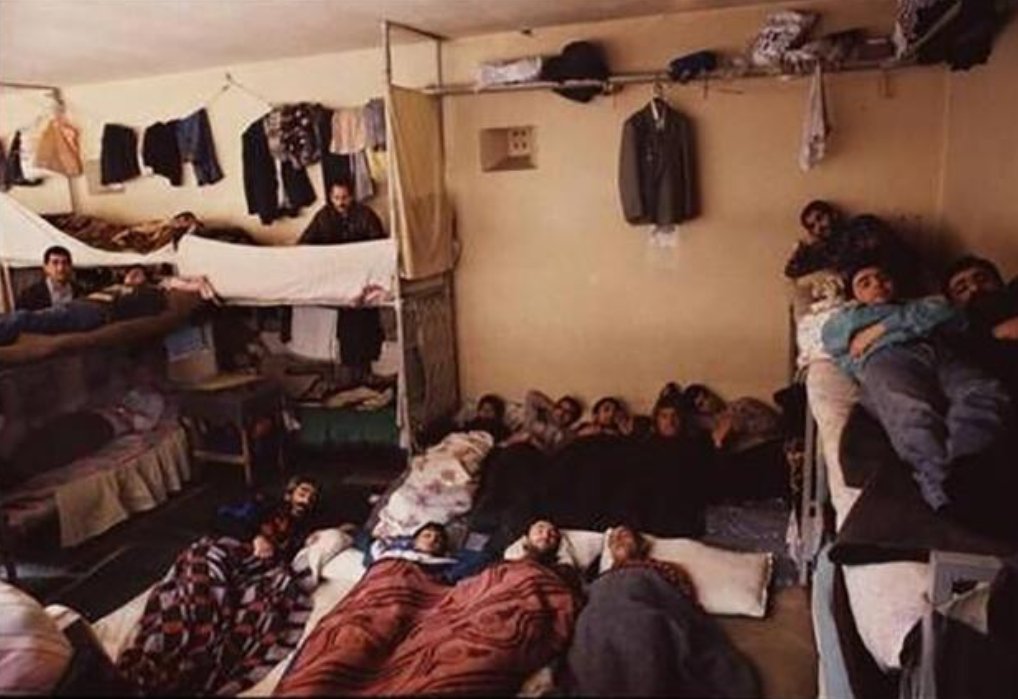
Now a coalition of human rights groups, activists, and politicians, including former Tunisian President Moncef Marzuki, sent a letter to UN Secretary and the UN High Commissioner for Human Rights urging the prisoner releases after the first case among prisoners was confirmed in Egypt. …..”Even more worrying in this time of pandemic, prisoners are crammed in cells that are so small that they have to wait for their turns to lay down and sleep,” the letter read.
Coronavirus: Egypt detains novelist Ahdaf Soueif for demanding prisoners’ release
On Wednesday the Egyptian government’s reaction was – surprise, surprise – to detain four activists who staged a protest calling for the release of prisoners in the country. The writer Ahdaf Soueif protested in front of the cabinet building in Cairo, alongside academic Rabab al-Mahdi, Soueif’s sister and academic Leila Soueif, and her niece, activist Mona Seif. Mona Seif live streamed the protest on Facebook, recording a confrontation with police officers who reportedly asked them to stop and “discuss the matter” at a police station…..On 19 March the Middle East Eye reported that Laila Soueif remained in custody late on Wednesday but the three others were freed. This comes as Egyptian prosecutors on Thursday ordered the release of 15 political dissidents, including a prominent academic arrested as part of a crackdown on nationwide protests in September. Mona Seif, Laila Soueif’s daughter, is the sister of Alaa Abdel Fattah, a left-wing activist currently in pre-trial detention.
On 19 March 2020, the Nordic Monitor reports that President Erdoğan’s government in Turkey has rejected calls from human rights organizations to release inmates from two overcrowded prisons despite detection in those facilities of the coronavirus, which has caused the death of more than 8,000 people around the world. A purge of thousands of dissidents in the aftermath of a coup attempt in July 2016 has filled Turkey’s prisons, which today are overcrowded with tens of thousands of political prisoners…On Wednesday Erdoğan announced a number of measures to battle the spread of the coronavirus following an emergency meeting convened to coordinate the fight. Yet the release of prisoners was not among the measures disclosed by the Turkish president.
Ömer Faruk Gergerlioğlu, a member of parliament and one of Turkey’s most prominent human rights defenders, revealed how he received news from Edirne Prison that three prison guards tested positive there for COVID-19, as a result of which the prison was put under quarantine. A day later, Balıkesir’s Kepsut Prision was also quarantined, Turkish media reported. “A short while ago my husband called and informed me that contamination in a cell had been detected and that they had put everyone in quarantine,” the wife of an inmate told reporters. On March 16 Gergerlioğlu launched a campaign for the release of all prisoners starting with those at greatest risk and submitted a parliamentary question directed to the Ministry of Justice about health conditions in the country’s prisons.
Egyptian novelist Ahdaf Soueif brought up the cases of Egyptian and Emirati political prisoners during her talk at the Hay festival in Abu Dhabi on 26 February (Facebook/@AhdafSoueif)
Middel Eastern Eye reported on 28 February 2020 that the well-known Egyptian novelist Ahdaf Soueif has used her appearance at the inaugural Hay festival in Abu Dhabi to speak out against human rights abuses in Egypt and the United Arab Emir During a conversation with Peter Florence on Wednesday, Soueif told attendees that two Emirati human rights activists could have been in attendance had they not been unjustly jailed. The novelist, who founded the Palestinian Festival of Literature in 2008, said she wanted to speak about those “who have lost their liberty simply because of their insistence on their right to freedom of expression and their support for the principles of human rights”. Among those jailed in the UAE for exercising their right to free speech is poet and activist Ahmed Mansoor, and jurist Mohammed al-Rukun.
On 17 February 2020 the International Service for Human Rights (ISHR) published – as usual – its excellent “HRC43 | Key issues on agenda of March 2020 session”. Here some excerpts that relate directly to human rights defenders in the 43rd session of the UN Human Rights Council, which runs from 24 February to 20 March 2020. If you want to stay up-to-date: with all issues follow @ISHRglobal and #HRC43 on Twitter.
Here are some highlights of the session’s thematic discussions
Protection of human rights defenders including women human rights defenders. The Council will consider a resolution, presented by Norway, to renew the mandate of the Special Rapporteur on the situation of human rights defenders. The mandate gathers and responds to information on the situation of defenders around the world, engages constructively with governments and non-State actors and provides recommendations to promote the effective implementation of the Declaration on human rights defenders. In 2019, the Council and the General Assembly unanimously affirmed the vital work defenders play. The Council recognised the critical role of environmental human rights defenders in protecting vital ecosystems, addressing climate change, attaining the sustainable development goals (SDGs). The General Assembly passed by consensus a resolution focusing on implementation of the Declaration and some key elements of protection policy; the resolution also attracted a record number of co-sponsors. The Special Rapporteur on the situation of human rights defenders will present his report on human rights defenders operating in conflict and post-conflict situations on 4 March, and country visits to Colombia and Mongolia.
Reports of cases of intimidation and reprisal against those cooperating or seeking to cooperate with the UN not only continue, but grow. Intimidation and reprisals violate the rights of the individuals concerned, they constitute violations of international human rights law and undermine the UN human rights system. [for some of my ealrier posts on reprisals, see: https://humanrightsdefenders.blog/tag/reprisals/]. During the 42nd session, the Council adopted a resolution which listed key trends such as the patterns of reprisals, increasing self-censorship, the use of national security arguments and counter-terrorism strategies by States as justification for blocking access to the UN. The resolution also acknowledged the specific risks to individuals in vulnerable situations or belonging to marginalised groups, and called on the UN to implement gender-responsive policies to end reprisals. The Council called on States to combat impunity and to report back to it on how they are preventing reprisals, both online and offline. [see also: https://humanrightsdefenders.blog/2019/11/08/michel-forst-in-last-address-to-general-assembly-pleads-to-fight-reprisals/]. Item 5 of the Human Rights Council’s agenda provides a key opportunity for States to raise concerns about reprisals, and for governments involved in existing cases to provide an update to the Council on any investigation or action taken toward accountability to be carried out.
At this 43rd session, the Council will discuss a range of economic, social and cultural rights in depth through dedicated debates with mandate holders alongside the annual report of the Secretary-General on the realisation of economic, social and cultural rights globally. These include interactive dialogues with the following:
The Special Rapporteur on the right to adequate housing on her annual report and country visits reports to Nigeria and France.
The Special Rapporteur in the field of cultural rights on her annual report on cultural rights defenders and country visit report to the Maldives and Poland.
The Special Rapporteur on human rights and the environment on his annual report and country visits to Fiji and Norway.
The Council will discuss a range of civil and political rights through dedicated debates with the mandate holders, including interactive dialogues with:
The Special Rapporteur on torture on his annual report and visit to Comoros.
The Special Rapporteur on freedom of religion or belief on his annual report and visits to the Netherlands and Sri Lanka.
The Special Rapporteur on the promotion and protection of human rights while countering terrorism on her annual report and visit to Kazakhstan.
The Special Rapporteur on the right to privacy on his annual report.
Country-specific developments
China Confronted with mounting evidence of serious human rights violations in China, specifically the mass internment, ‘re-education’, surveillance and harassment of Turkic Muslims in the western province of Xinjiang, the view of many parts of the UN is incontrovertible. Beginning with a major UN review in August 2018, the UN High Commissioner has pressed for access, while the Special Procedures have expressed serious concerns about protection of freedom of religious belief, the impacts of counter-terrorism and counter-extremism measures, and the imposition of the death penalty in at least one case, that of university president Tashpolat Tiyip. In light of these concerns and the continued deterioration of the situation for human rights lawyers and defenders; the attacks on cultural rights and other freedoms in Tibet; and criminalisation of peaceful assembly and excessive use of police force in Hong Kong, it is high time for the Council to act. Member States should take concrete steps to call for independent, expert monitoring and reporting on the situation in Xinjiang, including access to the region, and urge accountability for actions by public authorities. [see also: https://humanrightsdefenders.blog/2019/07/12/joint-letter-by-22-states-to-human-rights-council-re-chinas-uighurs/ and https://humanrightsdefenders.blog/2019/07/20/china-coalition-anti-human-rights-un/]
Saudi Arabia The Council’s action on Saudi Arabia has contributed to the provisional release of at least seven women’s rights activists from detention. However, they are still facing trial and many remain in detention. Recent revelations of phone hacking, surveillance and possible blackmail and extortion of the owner of the Washington Post demonstrate the measures that the State is prepared to take to silence any form of criticism or dissent. The joint statement delivered by Australia in September sets out benchmarks for the Saudi government to take to demonstrate its willingness to improve the human rights situation. These benchmarks have not been met. States should ensure that Council scrutiny is maintained and in particular establish a monitoring and reporting mechanism over the situation. [for other posts on Saudi Arabia, see: https://humanrightsdefenders.blog/tag/saudi-arabia/]
Egypt The lack of action by the international community has emboldened the Egyptian government to continue to violate fundamental rights of its citizens. Special Procedures have rung the alarm bell regarding the pattern of reprisals against individuals and groups who sought to or engaged with the UN. In the last quarter of 2019 alone, more than 3,000 people were arbitrarily arrested and prosecuted under counter-terrorism laws in a nationwide crackdown against all forms of peaceful expression. The Committee against Torture has found that torture in Egypt is widespread and systematic and the situation meets all of the objective criteria for situations requiring the Council’s attention. States should initiate Council action on the situation before it further deteriorates. [see also: https://humanrightsdefenders.blog/tag/egypt/ ]
India The High Commissioner expressed concern over India’s Citizenship (Amendment) Act 2019 (CAA) for being ‘fundamentally discriminatory’ as it fails to extend protections to Muslim asylum seekers. Nationwide demonstrations and protests have been met with police brutality and arbitrary detentions. Vigilante groups allegedly affiliated with right-wing Hindu nationalist groups close to the government have physically attacked student protestors. Human rights defenders involved in organising peaceful assemblies have been detained and faced online harassment. ISHR calls on States to raise these concerns in their national statements including during the high level segment. [See also: https://humanrightsdefenders.blog/2019/06/27/ngos-come-out-in-support-of-indias-lawyers-collective/]
Burundi. At the last Council session, the Council renewed the mandate of the Commission of Inquiry on Burundi, which will present its oral briefing on 10 March at 10:00. ISHR remains highly concerned about the human rights situation in Burundi and its refusal to cooperate with the Council’s mechanisms. For more information on the situation of human rights defenders in Burundi, check ISHR Briefing Paper for the UPR here. See also: https://humanrightsdefenders.blog/2019/03/29/ngo-statement-condemns-new-irregularities-in-the-case-of-germain-rukuki-burundi/
Sri Lanka. Civil society groups are concerned over the backsliding on the commitments made by Sri Lanka in Human Rights Council Resolution 30/1. The recently elected president, Gotabaya Rajapaksa, along with his brother Mahinda Rajapaksa, who has been appointed prime minister, have been implicated in war crimes and numerous human rights violations when they were defence secretary and president respectively from 2005 to 2015. The new Government has made clear its intention to walk away from the Council process on Sri Lanka, a process that is currently the only hope for victims of human rights violations that truth, justice, reparations, and guarantees of non-recurrence are possible. [see https://www.nwaonline.com/news/2020/feb/23/sri-lanka-details-un-case-pullout/] Meanwhile, the relatively open climate for human rights defenders and journalists of the past few years seems to be rapidly closing. More than a dozen human rights and media organisations have received intimidating visits by members of law enforcement and intelligence agencies, while death threats against journalists have resumed. ISHR calls on States to urge for continued cooperation of the Government of Sri Lanka with OHCHR and the Special Procedures. The Council should reiterate the reference in Resolution 40/1 to “the adoption of a time-bound implementation strategy” for implementation of all elements of Resolution 30/1. [see also: https://humanrightsdefenders.blog/2020/01/22/sri-lankan-government-accused-of-embarking-on-process-to-silence-critics/]
Other country situations:
Interactive dialogue with the High Commissioner on the Occupied Palestinian Territories
Interactive dialogue with the Special Rapporteur on Eritrea
Interactive dialogue with the Special Rapporteur on Myanmar
Interactive dialogue with the Special Rapporteur on the Democratic People’s Republic of Korea
Interactive dialogue with the High Commissioner on Libya
High-level interactive dialogue on the Central African Republic
Interactive dialogue with the Commission on human rights on South Sudan
Interactive dialogue with the Special Rapporteur on Iran
Interactive dialogue with the Commission of Inquiry on Syria
Enhanced interactive dialogue on the High Commissioner’s report on the Democratic Republic of Congo
Interactive dialogue with the Independent Expert on Mali
Interactive dialogue on the High Commissioner’s oral report on Ukraine
High Commissioner briefings on the following countries: Guatemala, Honduras, Colombia, Nicaragua, Yemen, Venezuela, Myanmar, Cyprus, Sri Lanka, Iran, Eritrea, Afghanistan
During this session, the Council will adopt the UPR working group reports on Italy, El Salvador, the Gambia, Bolivia, Fiji, San Marino, Kazakhstan, Angola, Iran, Madagascar, Iraq, Slovenia, Egypt and Bosnia and Herzegovina. This session of the Council will provide an opportunity for Angola, Egypt and Fiji to to accept recommendations made in relation to human rights defenders, as proposed in ISHR’s briefing papers.
Council programme, appointments and resolutions
The President of the Human Rights Council will propose candidates for the following mandates:
Two members of the Expert Mechanism on the Rights of Indigenous Peoples (one from Asia and one from the Arctic);
Independent Expert on the situation of human rights in Somalia;
Special Rapporteur on adequate housing as a component of the right to an adequate standard of living, and on the right to non-discrimination in this context;
Special Rapporteur on contemporary forms of slavery, including its causes and its consequences;
Special Rapporteur on the rights of indigenous peoples;
Special Rapporteur on the sale and sexual exploitation of children, including child prostitution, child pornography and other child sexual abuse material;
Special Rapporteur on the situation of human rights defenders;
Special Rapporteur on the situation of human rights in Myanmar.
Some resolutions werealready announced (States leading the resolution in brackets):
Prevention of genocide (Armenia)
Special Rapporteur on Torture, mandate renewal (Denmark)
Freedom of religion or belief (EU)
Situation of human rights in Myanmar (EU)
Situation of human rights in the Democratic People’s Republic of Korea, mandate renewal (EU)
Mandate renewal of the Special Rapporteur on the human rights of migrants (Mexico)
Protecting the rights of human rights defenders, mandate renewal (Norway)
Technical assistance and capacity-building to improve human rights in Libya (African Group)
Combating intolerance, negative stereotyping and stigmatization of and discrimination, incitement to violence and violence against persons based on religion or belief (Pakistan on behalf of the OIC)
The human rights situation in the Syrian Arab Republic (France, Germany, Italy, Jordan, Kuwait, Morocco, Netherlands, Qatar, Turkey, United Kingdom of Great Britain and Northern Ireland)
Situation of human rights in South Sudan, mandate renewal (Albania, Norway, United Kingdom of Great Britain and Northern Ireland)
Situation of human rights in the Islamic Republic of Iran, mandate renewal (North Macedonia, Republic of Moldova, Sweden, United Kingdom of Great Britain and Northern Ireland)
Freedom of Expression, mandate renewal (Netherlands, Canada)
Officers of the Human Rights Council
Newly appointed members of the Bureau for the 14th cycle comprises of the following Ambassadors:
Ms. Elisabeth Tichy-Fisslberger (Austria), President of the Human Rights Council
Mr. Yackoley Kokou Johnson (Togo), Vice-President and Rapporteur
Mr. Nasir Ahmad Andisha (Afghanistan), Vice-President
Ms. Socorro Flores Liera (Mexico), Vice-President
Mr. Juraj Podhorský (Slovakia), Vice-President
Panel discussions
During each Council session, panel discussions are held to provide member States and NGOs with opportunities to hear from subject-matter experts and raise questions. All panel discussions will be broadcast live and archived on http://webtv.un.org. Four panel discussions are scheduled for this upcoming session:
Annual high-level panel discussion on human rights mainstreaming titled “Thirty years of implementation of the Convention on the Rights of the Child: challenges and opportunities” will take place on 24 February at 16:00
High-level panel discussion commemorating the twenty-fifth anniversary of the Beijing Declaration and Platform for Action with a particular focus on their implementation will take place on 25 February at 09:00
Annual interactive debate on the rights of persons with disabilities, titled “Article 8 of the Convention on the Rights of Persons with Disabilities, on awareness-raising”, will take place on 6 March at 16:00
Debate on the midterm review of the International Decade for People of African Descent will take place on 13 March at 16:00.
NOTE: The UN’s liquidity crisis is having a serious impact on this session and the next one (44th in June) and ISHR – jointly with 26 other NGOs – have expressed their concerns to the UNSG that in light of the special emergency measures and ongoing budget constraints, further measures may be imposed to restrict civil society participation at the Council. Despite the adoption of a number of measures by the Council over the years to address the budgetary constraints faced by the United Nations Office at Geneva (UNOG), the Director General of UNOG informed the Council’s President that the Council may not be able to carry out all its mandated activities in 2020. This is due to the special emergency measures instituted by the UNSG to respond to the UN’s liquidity crisis which prohibit all lunch-time meetings, thus making it impossible for UNOG to provide conference services to all the Council’s required meetings. The President of the Council requested the UNSG to issue an exemption of these measures to ensure that the Council can hold all its meetings. The UNSG issued an exemption for meetings during the High-level Segment and voting on resolutions, but not for other meetings in the March session. [see also: https://humanrightsdefenders.blog/2019/05/20/lack-of-funds-forces-lack-of-oversight-by-un/]
The Middle East Eye correspondent reported on 4 February 2020 that an annual awards ceremony at the Semper Opera House in Germany’s Dresden has been cancelled after the decision to grant Egyptian President Abdel-Fattah el-Sisi a presitigious prize created a public relations crisis.
Sisi, the general-turned-president who is a chief architect of serious human rights violations [for just a few examples, see: https://humanrightsdefenders.blog/tag/egypt/], was set to receive the Order of St George at the Semper Opera Ball on Friday. It is awarded to “those who have, like St. George, been a force for good in the world, despite all opposition – those who swim against the current.”
Though the Semper Opera Ball will go ahead, hosting 2,500 guests, its PR agency Zastrow + Zastrow told Middle East Eye that the award ceremony traditionally accompanying it has been scrapped. Sisi, however, has already been handed the prize. A delegation from the Opera Ball Association, led by its director Hans-Joachim Frey, visited Cairo on 26 January and presented the award to Sisi at the presidential palace. News about the award quickly sparked a backlash against the event and its organisers.
At the time, Frey defended the award as a token of appreciation for what he described as Sisi’s role in restoring stability and peace to Egypt and Africa. But that characterisation has been denounced by human rights defenders. On Tuesday, Vanessa Ullrich, an expert at Amnesty International Germany, told MEE that those granting Sisi an award have a “responsibility to carefully consider who is the right person to honour in public and who is being called an outstanding bridge-builder and peacemaker”.
MDR, the main broadcaster of the event, condemned the award as “wrong”, saying the media organisation had no influence on the decision. The network’s entertainment chief, Peter Dreckmann, promised his team would not broadcast any part of the event that features Sisi’s award.
Multiple celebrities who had been invited to the ball have also distanced themselves from the event, in the aftermath of what German media described as a “scandal”. The latest were German billionaire Dietmar Hopp and former Bayern FC president Uli Hoeness.
Hopp, who was due to be awarded the same medal as Sisi, said on Tuesday he has turned down the award. Hoeness, who had been chosen to present the award to Hopp, has also followed suit, according to the German press agency DPA. The gala’s main host, prominent TV anchor Judith Rakers, announced on Wednesday she was pulling out altogether, complaining the Semper Opera Ball had been turned into a political event. Following Rakers’ withdrawal, her nominated replacement Mareile Hoppner also announced her rejection of the role. She cited the “very justified criticism of the selection of a prize winner”.
In response to the outcry, Frey apologised for the award. “We are aware of the irritation that has arisen and we sincerely regret it,” he said in a statement. “We would like to apologise for the award ceremony and distance ourselves from it. The award ceremony was a mistake.” Frey also said the award will not be part of the Semper Opera Ball programme, “in word or picture”.
Despite Frey’s apology, public figures have continued to pull out of the event. Dresden’s mayor was among those who denounced the honour. “It is inconceivable for me how this honour has come about and which criteria were followed,” Mayor Dirk Hilbert said. “I am reserving the right to decide whether I will appear officially in the programme as I have done before, and whether I will take part in the ball with my guests.”
Still, It was not immediately clear whether the award will be reversed. Sisi is not attending the gala.
[ The Award Committee seems to have problems in slecting winners anyway: In 2009, the Order of St George was controversially awarded to Russian President Vladimir Putin. Three years ago it was handed to Saudi Arabia’s Prince Salman bin Abdulaziz bin Salman].