Mirage news of 14 June 2025 comes with an interesting assessment of eyeWitness to Atrocities (eyeWitness) which marks its tenth anniversary. The International Bar Association (IBA) applauds the work of the pioneering initiative it founded in 2015. The launch of the eyeWitness to Atrocities app for Android phones has harnessed the power of technology in the global fight for justice. The tamper-proof photo, video and audio footage captured using the eyeWitness app, and securely stored by IBA partner LexisNexis , meets the strict evidentiary criteria required to be admissible as evidence in legal proceedings.
Jaime Carey, President of the International Bar Association, stated: ‘As we mark a decade of eyeWitness to Atrocities, we celebrate ten years at the intersection of technology, law, and human rights. .. As President of the IBA, I am proud of our member organisations that have dedicated vast amounts of pro bono work analysing footage captured using the app and I reaffirm IBA support for this vital work and its enduring impact on the global pursuit of justice.’
Mark Ellis, Executive Director of the IBA, added: ‘Footage captured with the eyeWitness to Atrocities app is invaluable in securing justice and bridging the gap between activists and the law. By ensuring that visual evidence is authenticated, the app transforms raw documentation into legally admissible proof. In a world where impunity often thrives in the absence of credible evidence, eyeWitness plays a critical role in bringing truth to light and ensuring that justice is not just a distant ideal, but a real possibility.’
Over the past decade, the eyeWitness app has become an essential tool for human rights defenders, journalists and civil society organisations documenting grave human rights violations and atrocity crimes around the world. Key achievements include:
more than 85,000 photos, videos and audio recordings captured using the app;
more than 900 training sessions delivered globally, including in active conflict zones;
more than 55,000 hours spent reviewing visual evidence;
The impact of eyeWitness has been extensive. The content captured has contributed to numerous cases and reports globally, including:
in 2018, when two commanders in the Democratic Republic of Congo were convicted of historical crimes against humanity including murder and torture;
in Ukraine, where the Kharkiv Commercial and District Administrative Courts heard four cases in 2022 relating to compensation claims for damage to non-residential property and the destruction of vital financial documents;
a case in the UK involving UK National Contact Point , where the construction company JCB’s equipment was used in the demolition of Palestinian communities and construction of Israeli settlements in the West Bank;
Carrie Bowker, Director of eyeWitness to Atrocities, commented: ‘The path from documentation to justice is not always straightforward, and as we mark this milestone, we are deeply grateful to the courageous documenters capturing critical evidence of atrocity crimes, to the law firms that provide invaluable pro bono support and to LexisNexis for securely storing footage captured with the app. We aim to continue connecting frontline documenters with legal and investigative bodies that can act on the evidence they collect.’
In a 2023 outcome report the eyeWitness organisation highlighted areas of work including significant footage collection; increased and strengthened partnerships with global human rights organisations dedicated to active documentation for accountability; and expanded pro bono assistance in reviewing and analysing collected footage.
On 20 June 2024 Swissinfo spoke with human rights defenders from Ukraine and Israel about how they operate in tough contexts. The main tasks of human rights defenders include investigating, collecting information about, and reporting rights violations. They raise public awareness to ensure that human rights are respected. But how do they work in a war zone or in an environment where a large part of public opinion is against them? SWI swissinfo met activists from Ukraine and Israel in Geneva’s Palais des Nations, where they had come to meet delegations and attend side-events during a session of the Human Rights CouncilExternal link .
“We are documenting testimonies from victims of the war in Ukraine,” says Lyubov Smachylo, an analyst with the Ukrainian organisation Media Initiative for Human Rights (MIHR).
MIHR’s main office is in Kyiv. It has direct access to victims and witnesses of rights violations, such as Ukrainians living in the north of the country – formerly under Russian occupation and now back under Ukrainian rule – or former prisoners in Russian jails. Smachylo, who lives between Kyiv and Paris, analyses documented testimonies of human rights violations committed by Russia. These include Russian armed forces acting with generalised impunity, the arbitrary detention of civilians – often accompanied by torture and ill-treatment – and in some cases enforced disappearances. Lyubov Smachylo from the Ukrainian Media Initiative for Human Rights. Courtesy of Lyubov Smachlyo
MIHR is one of the few NGOs able to gather information on the ground. Virtually no international organisation can go into the occupied Ukrainian regions, not even the Office of the UN High Commissioner for Human Rights (OHCHR). The International Committee of the Red Cross (ICRC), for example, has only limited access to Ukrainian prisoners of war. This absence of accountability and the underreporting of abuses mean there is an increased risk of mistreatment and of perpetrators going unpunished.
Among other things, the MIHR deals with prisoners of war and civilians who have been arrested in the Russian-occupied regions of Ukraine or who are being detained in unknown places. Beatings and torture are rife, and some have died because of the poor detention conditions, says Smachylo.
“We know of 55 places of detention in the occupied regions of Ukraine and 40 in Russia, where a total of at least 1,550 Ukrainian civilians are being held,” says Smachylo. Contacted by SWI, the ICRC did not comment on whether it has access to the occupied regions. More More Human Rights Council: Fundamental or fundamentally flawed?
This content was published on Jun 30, 2021 The Human Rights Council, convening in Geneva, is mired in US-China rivalry, while the Council also faces criticism from developing countries. Read more: Human Rights Council: Fundamental or fundamentally flawed Increasingly hostile environment
Tal Steiner is meanwhile a human rights lawyer and director of the Public Committee Against Torture in Israel (PCATI). The NGO holds Israel accountable on its use of torture, which is not illegal in the country, although there is an absolute prohibition on torture enshrined in international human rights instruments such as the Universal Declaration of Human Rights. Steiner says her NGO’s work has become particularly difficult since the Hamas attacks of October 7 and the Israeli-Palestinian war. Israel has restricted access to political prisoners, while rights defenders find themselves in an increasingly hostile environment where they are regularly branded as“defending terrorists”.
The political prisoners to which Steiner has access include Palestinians living in Israel and in the West Bank as well as Jewish Israeli citizens.
“Working on the issue of torture – or on any issue in Israel that affects human rights in terms of security – has never been easy,” she says. Tal Steiner, right, pictured with Miriam Azem, advocacy associate at the Legal Center for Arab Minority Rights in Israel (ADALAH). Keystone/AFP/Coffrini
Compassion for Palestinian prisoners and the view that human rights apply to everyone have been greatly diminished since the war, Steiner explains.“This means that the circle that supports our work has become smaller.”
According to her, many Israelis have opted for security above human rights. Many also harbour feelings of vengeance towards Palestinians.“We saw this, for example, at the Israeli Prison Service (IPS),” Steiner says. There, extreme overcrowding since October 7 has led to a severe deterioration in conditions, including limited access to basic needs like water, electricity, food, and medical care. Human rights groups have also noted cases of severe beating of detainees and prisoners, sexual harassment and intimidation.
Miriam Azem also took part in the SWI interview with Steiner. The international advocacy expert works for Palestinian organisation Adalah, which defends Palestinians living in Israel and the occupied territories in Israeli courts. “Since October 7, the attitude towards our lawyers has changed a lot,” she says. This has become apparent in disciplinary committees, which handle disputes in universities.“Since the beginning of the war, over 120 disciplinary proceedings have been initiated against Palestinian students – citizens of Israel – for statements made on their private social media accounts” she says.
She cites the example of Palestinian students with Israeli citizenship who have been accused of inciting terrorism on the basis of unfounded arguments. Adalah attorneys, who have represented 95 Palestinian students facing this charge,“were questioned regarding their loyalty to Israel”, Azem says.
According to Azem, there has been an increase in arrests and interrogations due to posts on social media. “The vast majority of these posts do not meet any criminal threshold. Nevertheless, the accusations against activists were grounded in Israel’s Counter-Terror Law, which carries severe imprisonment penalties,” she says. More More Is Geneva still the capital of peace?
In February, PCATI and Adalah, together with two other Israeli organisations, sent an urgent appeal to the UN Special Rapporteur on Torture, Alice Jill Edwards. They called on Edwards to intervene immediately to stop torture and the systematic mistreatment of Palestinian prisoners in Israeli detention facilities. Apart from private lawyers, these are the only four organisations that can currently visit Israeli prisons – Israel has denied the ICRC access.
“We are therefore the only ones who can report what we have seen there,” says Steiner. Around 10,000 Palestinian prisoners are currently in Israeli custody, many of them detained without trial. However, no one is allowed to visit the Israeli military camps for prisoners from the Gaza Strip. PCATI fears a“new Guantanamo” is being established there, in reference to the US facility in Cuba where prisoners were held indefinitely without trial in the aftermath of the terrorist attacks on September 11, 2001.
In their appeal to the UN rapporteur, the four organisations also expressed concern about the dehumanising rhetoric being used by some members of the Israeli government. The Minister of National Security, Itamar Ben-Gvir, in charge of the IPS, has repeatedly spoken out in favour of subjecting Palestinians to degrading and inhumane treatment.
In the meantime, UN rapporteur Edwards has called on Israel to investigate the numerous allegations of torture against detained Palestinians. Since the attacks of October 7, it is estimated that thousands of Palestinians including children have been detained, she has written. Edwards says she received allegations of individuals being beaten, kept blindfolded in cells, handcuffed for excessive periods, deprived of sleep, and threatened with physical and sexual violence. Burnouts and death threats
Burnout and death threats are also part of the job. Smachylo says the war which stretches through the whole of Ukraine is an added strain on a very stressful job. Activists and staff members of her organisation spend hours writing reports detailing torture and mistreatment of Ukrainian citizens by the Russian authorities. She particularly highlights the risk of burnout for those who regularly carry out missions in the field.
The Geneva-based World Organization against Torture (OMCT), which cooperates with the NGO, provides financial support for their psychological and therapeutic retreats.
Steiner, for her part, draws particular attention to the huge amount of work involved.“In view of the grief over the tragedies of October 7 and the war in the Gaza Strip, cooperation between Israelis and Palestinians is proving to be a challenge right now,” she says. For her, it is fundamental that every detainee has the right to defense.
Smear campaigns have also targeted her work. For example, the Israeli TV station Channel14, the equivalent of the rightwing US station Fox News, made a derogatory programme about PCATI and other organisations campaigning for Palestinian rights. The title:“Disgrace: the Israeli activists who take care of the treatment of Hamas terrorists”. The program led to harassment and threatening phone calls. Some of the emails Steiner received were about rape and death threats, others targeted her family.
“We are aware that we are operating in an environment that is very hostile to our work,” says Azem.“As an NGO registered in Israel, we are extremely cautious.” Steiner adds that the persecution of NGOs in Israel and Palestine has a long history. Six Palestinian human rights organisations have been classified as terrorist by Israel. And several bills currently envisage a higher taxation rate for Israeli NGOs in order to block their work.
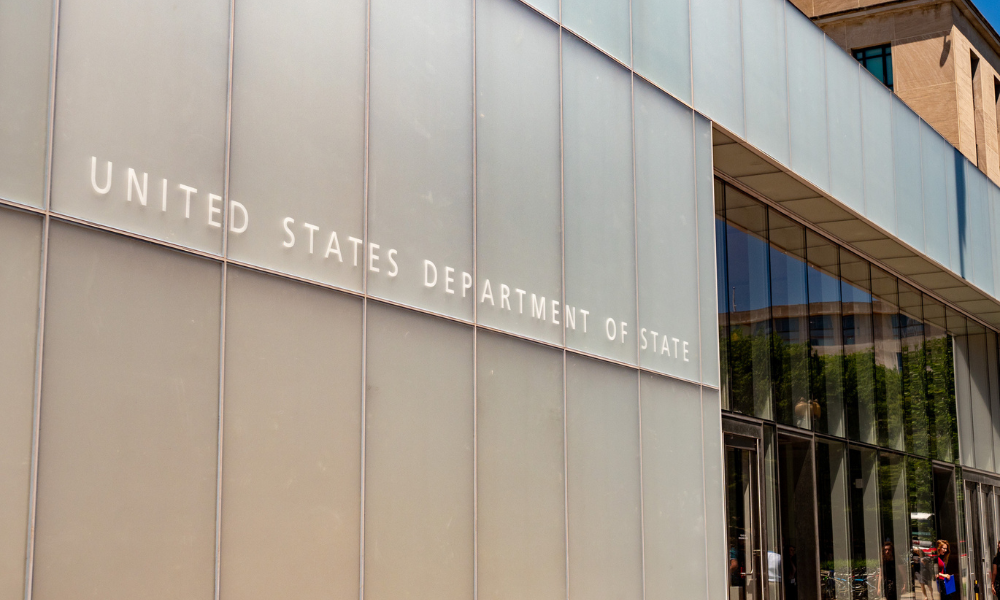
On 2 May 2023 Angelica Dino in the Canadian Lawyer summarizes the latest annual Country Reports on Human Rights Practices, released by the U.S. Department of State on the 75th anniversary of the UN Universal Declaration of Human Rights (UDHR).
The Human Rights Report evaluated the status of internationally recognized individual, civil, political, and worker rights in nearly 200 countries and territories, leveraging insights from various sources, including government agencies, NGOs, and media. According to the State Department, this documentation serves as a critical tool in connecting U.S. diplomatic and foreign aid efforts to the foundational American values of human rights protection and promotion.
The release coincides with the third Summit for Democracy, led this year by the Republic of Korea. The summit emphasizes a collective international effort to strengthen democratic governance and address human rights abuses. Its goals include expanding media freedom, enhancing women’s rights, combating corruption, and ensuring that technology supports democratic processes rather than acting as a tool of repression.
This year’s report detailed significant human rights violations across several countries, with stark abuses noted in Russia’s ongoing conflict in Ukraine. Russian military actions have been characterized by violent assaults on civilians, with extensive documentation of crimes potentially amounting to crimes against humanity. The report also highlighted the forced transfer and assimilation of Ukrainian children into Russian territories, marking a severe violation of international law.
In Iran, the regime’s crackdown on dissent extended beyond its borders, posing grave risks to its citizens both domestically and internationally. Similarly, the report condemned the Taliban’s discriminatory actions against women and girls in Afghanistan, which starkly undermined their societal roles and freedoms.
Conversely, the report identified positive strides in several nations. Notably, Kenya has upheld freedom of expression for LGBTQI+ individuals, and Estonia and Slovenia have recognized marriage equality. Additionally, labour reforms in Mexico have empowered workers to improve conditions and assert their rights more effectively.
Secretary of State Anthony Blinken emphasized the report’s role and expressed hope that the findings will support and inspire human rights defenders globally. “I hope that the honest and public assessments of human rights abuses, as well as the reports of progress, reflected in these pages give strength to these brave individuals across the globe who often put their lives at risk to improve conditions in their own countries, and, ultimately, make the world a freer, safer place for us all,” Blinken said.
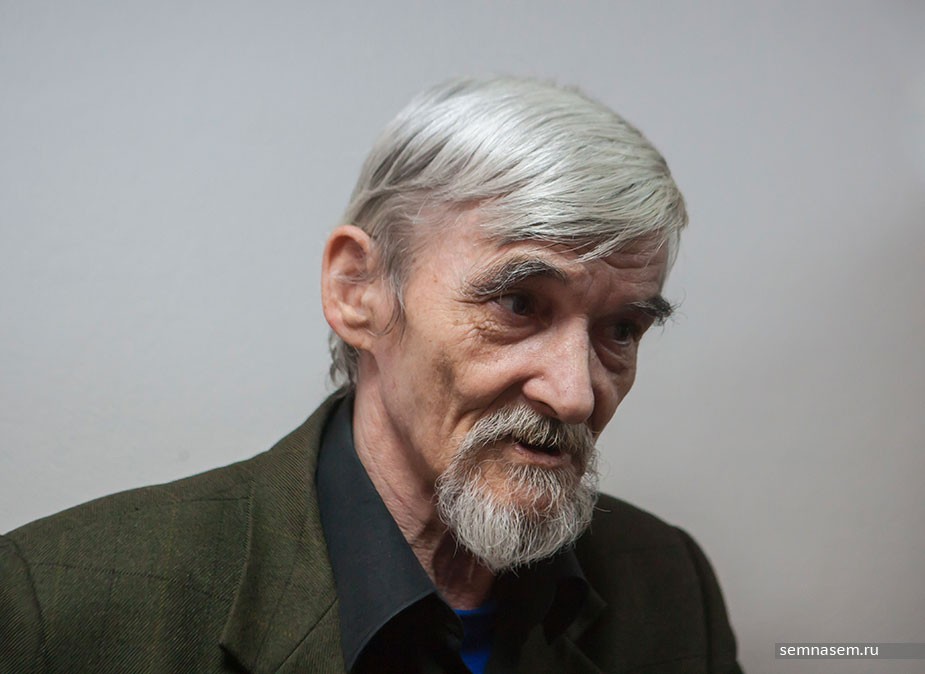
Expert on Stalin atrocities Yury Dmitriyev. Photo: Igor Podgorny, 7×7-journal.ru
The Moscow Times of 22 July 2020 carries a detailed report by Evan Gershkovich on Gulag historian Yury Dmitriyev who has spent decades calling attention to one of the darkest chapters in Russia’s history. He now faces up to 15 years in prison on sexual assault charges in a case his allies say has been trumped up to silence him. Acquitted of child pornography, Yury Dmitriyev now faces charges of sexual assault.
The Moscow Times profiled Dmitriyev in 2018:
Yury Dmitriyev normally hates Moscow. The concrete, the commotion, the pollution. As much as he can, he stays in Karelia, where he was born, raised and has spent his 62 years. In the northwestern region bordering Finland and the Baltic and White Seas, he can usually be found in the woods or in his study, writing.
Yet on a pleasant evening in mid-May, Dmitriyev, a prominent researcher of Soviet crimes, was happy to be in the metropolis. Accompanied by his elder daughter, Yekaterina Klodt, and his lawyer, Viktor Anufriyev, old friends greeted him with grins and tight hugs in a courtyard outside Teatr.doc, a progressive theater, ahead of a human rights awards ceremony.
One month earlier, Dmitriyev had been cleared of child pornography charges. Authorities had detained him in December 2016 after investigators found nude photos of his 11-year old adopted daughter; Dmitriyev said he took the photos to monitor her physical changes as she was prone to illness. From the outset, human rights defenders claimed that the case was fabricated to silence an outspoken activist.
If the arrest came as a shock to those who knew him, so too did his acquittal: Fewer than one percent of criminal defendants in Russia are cleared.
But authorities, human rights defenders now say, weren’t done with the historian just yet. Only a month after the awards night, a judge annulled the April decision, starting the trial anew.
Then, two weeks later, prosecutors brought additional charges to the table: This time they claimed that Dmitriyev had sexually assaulted his daughter. As of late June, the historian was back in jail facing another uphill legal battle, his freedom having been fleeting.
“The new charges are a chance for the prosecution to get it right,” Anufriyev said. “They failed the first time, so officials are giving them another chance to get the job done.”
Digging and documenting
Two decades ago, Dmitriyev discovered a set of mass graves in a Karelian forest containing the bodies of more than 9,500 victims of Josef Stalin’s Great Terror. Poring over KGB documents, the head — and sole employee — of Memorial’s Karelia branch spent the next 20 years documenting each victim’s story.
“What makes Yury unique is that he combines both the digging and the documenting,” said Sergei Krivenko, a colleague of Dmitriyev’s at Memorial and a member of the Presidential Human Rights Council. “Some people work on compiling books of names, some people search for the exact locations of the killings. No one has dedicated themselves to both the way Yury has.”
No one has dedicated themselves to both digging and documenting the way Yuri has.
Those who know Dmitriyev say he toiled everyday. “He’s been doing this work for the past 30 years, and I’m 33,” said Klodt, his elder daughter. “I’m so used to it that, for me, his work is no different than a dentist’s.”
Since the fall of the Soviet Union in 1991, historians say, the state has supported them in locating and memorializing the burial sites of the estimated 15 to 30 million victims of Stalin’s rule. At the location Dmitriyev discovered — Sandarmokh — local authorities helped build roads and erect monuments and aided with an annual gathering at the site.
But in recent years, human rights defenders say, the climate has become less hospitable. Those who spoke with The Moscow Times pointed to a resurgence in Stalin’s popularity as a significant reason: In June last year, Russians voted him the “most outstanding” person in history. In second place was President Vladimir Putin, who has accused the West of “excessive demonization” of the Soviet leader.
Others pointed to a surge in nationalism since 2014, when Russia annexed Crimea and got involved in Ukraine. “There were many foreigners killed at Sandarmokh — Norwegians, Poles, Finns and Ukrainians, including around 200 intellectuals,” Krivenko said. “This is a very important place for Ukrainians especially, and a delegation would visit the site annually.”
Dmitriyev organized the memorial visit every year on Aug. 5. He invited foreign delegations and led discussions, Krivenko said. After the events in Crimea and Ukraine, the discussions often turned to politics.
“I think this is why they went after him,” Krivenko said. He also pointed to an October 2016 decision to add Memorial to a register of “foreign agent” organizations that receive foreign funding. “I think this gave the local siloviki” — officials with ties to law enforcement — “a signal that they could go after us.”
Two months later, in December, Dmitriyev was first arrested.
Prison as a work trip
The day after the awards night, Dmitriyev was invited to speak with human rights students at the Sakharov Center, named after the Nobel Prize-winning human rights activist.
Klodt had come with him and complained that she wasn’t feeling well. “Maybe they should put you in prison for a year too so they can toughen you up,” her father joked.
Quick to laugh, thin and slightly disheveled, Dmitriyev presented an unimposing figure. But when the subject of his work came up, he turned deadly serious.
“I don’t fight the system. That’s a dead end, and I’m already old now,” he told The Moscow Times before the event. “I fight for memory. I fight so anyone who wants to can learn about their relatives, regardless of whether the government wants it or not. These people existed at some point. They worked and loved and had children. I’m for protecting the freedom of private life and of those memories.”
Without those memories, Dmitriyev continued, today’s generation cannot judge whether their government is laudable or acting improperly.
The people I dig up were in the same prison, walked the same halls and were behind the same bars.
“When a person knows the history of their family for multiple generations, they can understand what our state is doing right and what it’s doing wrong,” he said. “Called upon by the state to do this or that, they’ll say, ‘No, my great-grandfather was summoned in the same way and it ended badly for him. So maybe it’ll end badly for me as well.’”
Dmitriyev shrugged at the subject of his time in prison. “I don’t make a great tragedy out of that year,” he said. “I just think of it as a work trip. I’ve gained a better understanding of what my heroes — the people I dig up and write about — were thinking. They were in the same prison, walked the same halls and were behind the same bars.”
More difficult, he said, was being separated from his younger daughter. Dmitriyev himself was adopted, and at some point he decided he wanted to care for an orphaned child too. He hoped he’d be able to talk to her again by the end of the year. “It’s a humane policy by the prosecutor’s office,” he joked. Then he turned serious again: “I can handle it, I’m a tough person. But what about the child? She thinks everyone has abandoned her.”
Into the forest
After Dmitriyev was first arrested, the girl was taken in by her biological grandmother. Klodt said the family and the grandmother maintained regular communication. But when Dmitriyev was acquitted, Klodt said, the grandmother cut off all communication with the family. Then she sent a letter to the prosecution demanding the acquittal be overturned.
Anufriyev, Dmitriyev’s lawyer, believes that local authorities pressured her into writing the letter. He also says that the new charges of sexual assault are founded solely on a June 6 meeting between investigators and the girl during which, Anufriyev says, they coerced her into saying what they wanted. “They say they’re helping the child, but really they’re making her suffer,” he said.
Reached by phone, Tatyana Kordyukova, a spokesperson for the prosecutor’s office, said she couldn’t comment on the case and referred The Moscow Times to the Investigative Committee. The Investigative Committee, in turn, did not respond to requests for comment.
On July 25, the retrial of the first case will begin. The Investigative Committee is currently researching the new charges, a process which could take months. The original charges carry up to 15 years in prison; the new charges up to 20.
This time, though, Anufriyev says Dmitriyev is better prepared. “After his last stint in prison, he now knows that we can fight and win this thing,” he said.
Klodt, too, is ready for the fight. “I’m not constantly hysterical like last time,” she said. “I understand that something needs to be done. I’m not giving up.”
His colleagues say they won’t give up either. When Dmitriyev was first arrested, human rights defenders, artists and writers across the country spoke out for him and wrote letters to Putin. Still, they are sober about the possible outcome.
“This is the atmosphere for us right now,” Krivenko said. He pointed to the case of Oleg Sentsov, a Ukrainian filmmaker accused of terrorism after he had refused to accept the annexation of Crimea, and Memorial colleague Oyub Titiyev, who is also in prison on charges widely believed to be fabricated.
“The only good thing from all this is that the president is showing us how it all happened in the 1930s — how people were blamed, how siloviki read signals from the top,” Krivenko said. “We used to study this in archives, now we see it in real life.”
During his short stint out of prison, Dmitriyev returned to work. Anatoly Razumov, a historian and one of Dmitriyev’s closest friends, stayed at his house from the night before the acquittal was overturned until June 19. The entire time, he says, Dmitriyev worked on a book he had to put off when he was first arrested.
In May, asked if he would return to his work or if he feared doing so would anger certain parties, Dmitriyev was unmoved. “If you’re afraid of wolves, you shouldn’t go into the forest,” he replied.
This article first appeared in The Moscow Times and is republished in a sharing partnership with the Barents Observer.
At considerable risk to their own lives, a Syrian photographer and his supporters smuggled dramatic proof of torture out of the country. His photographs portray torture, suffering and death. They document “industrial-scale killing”, as a former chief prosecutor from the United Nations put it. Codenamed “Caesar”, a former Syrian military photographer smuggled more than 50,000 photographs out of Syria. More than half of the images show people who died in Syrian prisons as a result of torture, execution, disease, malnutrition or other abuse. In recognition of their courageous efforts,
“’Caesar’ and his colleagues were driven by a desire to ensure that the documented crimes against humanity would not go unpunished. To this end they took great risks upon themselves”, explains the jury statement. “In bestowing the International Nuremberg Human Rights Award on the ‘Caesar’ group, the jury also wishes to highlight the history of Nuremberg as the cradle of modern international criminal law.”
When the civil war broke out in Syria in 2011, it was “Caesar’s” job to photograph the corpses of Syrian soldiers and opposition forces and to systematically archive the images. He found the work increasingly difficult to bear. “I had never seen anything like it”, he later said in an interview with the French journalist Garance Le Caisne, whose persistence played a major part in ensuring that “Caesar’s” images found their way into the public domain.
“Caesar” decided to act rather than continue documenting in silence: over a period of roughly two years, he secretly copied his photographs onto USB sticks and smuggled them out of the country with the help of friends. His life was constantly at risk as a result.
In January 2014, “Caesar’s” photographs were published on the Internet and found to be “reliable” by an investigative commission of former chief prosecutors of international criminal courts. “Caesar” fled from Syria and by his own account is now living in Europe.
Because his life is still in danger, the photographer was not able to attend the award ceremony at Nuremberg Opera House. Garance Le Caisne accepted the award on his behalf.
Witness’ Asia-Pacific team adapted this video from WITNESS’ tip sheet on Filming Hate – a primer for using video to document human rights abuses. “Filming Hate” guides activists through documenting abuses safely, providing context, verifying footage, and sharing that footage responsibly. It may help millions of bystanders become witnesses, and hence human rights defenders, spurred to combat hatred by wielding a powerful weapon: their smartphone. Published on 6 August 2017. Full tipsheet available on our Library at: https://library.witness.org/product/f… Music credit: ‘India’ — http://www.bensound.com Creative Commons Attribution licence (reuse allowed)
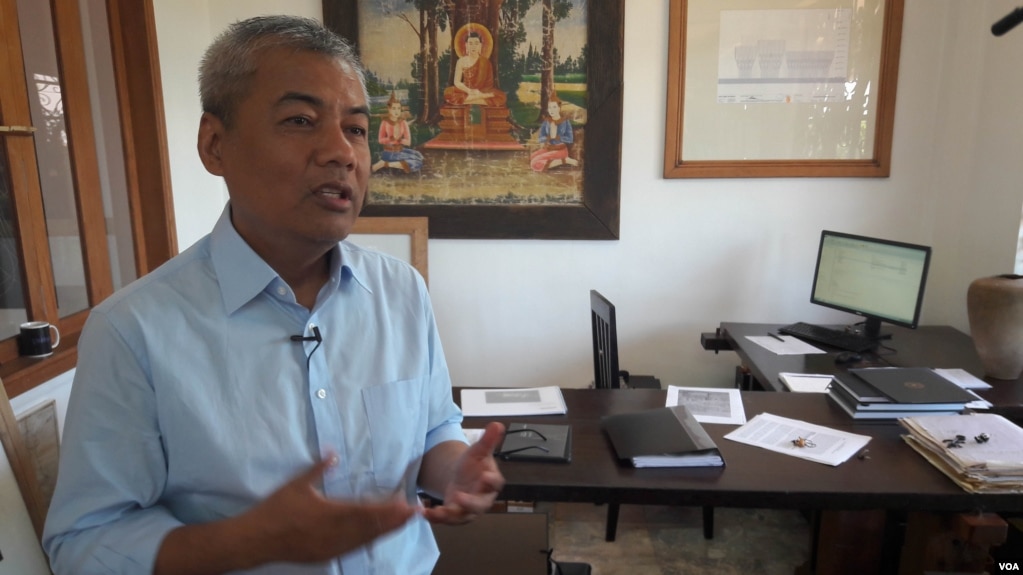
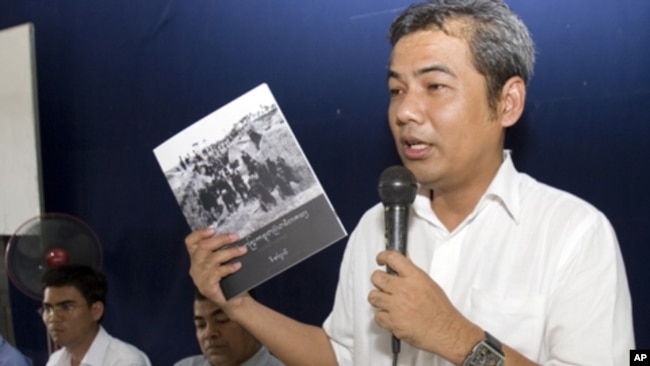
Chhang Youk, director of DC-Cam, talks to VOA Khmer about national reconciliation at his office in Phnom Penh, Cambodia, August 08th, 2016. (Neou Vannarin/VOA Khmer)
Chhang was a survivor of the Khmer Rouge regime. He fled to the United States as a refugee, but memories of the suffering he endured brought him back to his homeland in the early 1990s. He founded DC-Cam and has led the organization since 1995, creating a national genocide education program. Nushin Sarkarati, a senior attorney at CJA, said that without Chhang’s dedication there would be little justice for the victims and survivors.
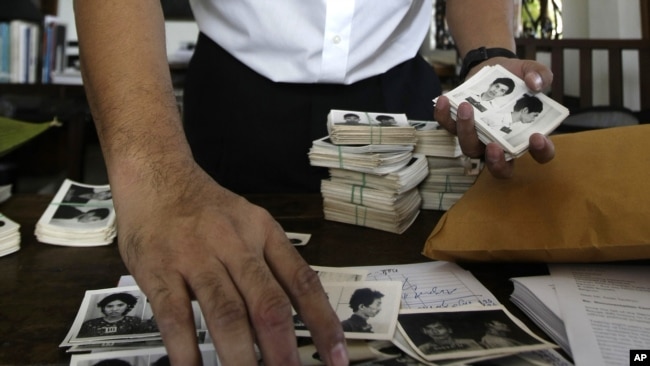
In this photo taken on Aug. 20, 2012, Director of Documentation Center of Cambodia, Youk Chhang arranges photos, a part of about a thousand of newly-discovered photo collection of detainees at the former Khmer Rouge main prison S-21, in his office in Phnom Penh, Cambodia.
Beth Van Schaack, a Stanford law professor who advises DC-Cam, said the group’s orientation towards victims made Chhang a natural choice for the award. “What CJA really admires about DC-Cam is it also has a very victim centered approach, working-hard to help Cambodian victims, experience justice before the ECCC [Extraordinary Chambers in the Courts of Cambodia] and DC-Cam has become in many ways a model for other documentation centers around the world that are collecting information that can be submitted to justice processes where human rights are concerned,” she said.
Nate Thayer, a journalist who has reported on Cambodia for some three decades, said without Chhang’s work, the Khmer Rouge perpetrators would have gotten away with their crimes. “Youk Chhang was a one-man army fighting for justice for those who suffered in Cambodia and his personal passion and devotion bringing those who responsible for mass murder to justice, to face the music, to answer for their crime.”
Peter Maguire, a law professor and an author of “Facing Death in Cambodia,” called Chhang a “Cambodian national treasure” whose efforts bring more truth and reconciliation to the Cambodian people than the combined efforts of the United Nations and ECCC.
Youk Chhang, a leading Cambodian genocide researcher, shows a copy of the Cambodian version of a Khmer Rouge history textbook to teachers in Takeo province, July 3, 2012.
Neth Pheaktra, ECCC spokesman, told VOA Khmer that DC-Cam deserved the award as it had uncovered valuable evidence that could be used at the court. “The work that DC-Cam has done helps the ECCC save time in finding evidence by ourselves, and it shows us the way, brings us information as well as some historical documents we needed for the trials.”
Chhang is currently working on developing the Sleuk Rith Institute, a permanent hub for genocide studies in Asia based in Phnom Penh.
The NGOTRIALcame into being on 6 June 2002. That day, its members met for their first General Assembly, laying out the organization’s mission which still constitute its cornerstones today: fighting impunity, supporting victims in their quest for justice and redress, building an international network of committed lawyers, advocating for fairer laws and policies.
Since then, TRIAL has never stopped expanding: it is now present on three continents and recognized as a key actor in the worldwide fight against impunity. It was therefore time for TRIAL’s identity to evolve and reflect this broader scope of action. For the past three years the staff has worked on an important makeover.
TRIAL’s new identity includes a new name, a new visual identity and a new website:
TRIAL International will from now on be the organization’s official name. [“We have outgrown the names ‘Swiss association against impunity’ and ‘Track Impunity Always’, which will no longer be used”, explained Director Philip Grant. “We believe that TRIAL International will better reflect our international scope, while remaining faithful to who we are”]
The new logo combines a spunky orange with a powerful black & white doors symbol.
The main facelift is TRIAL International’s new website. [“We wanted the navigation to be very intuitive, hence the simplified sitemap, the shorter texts and the refined search function. We also wished to bring to light the human aspect of our work, with victims’ stories at the forefront”, said Kevin Karlen, the organization’s Web Project Officer.]
Videre Est Credere founder, Oren Yakobovich, holds a miniature camera with which he equips human rights defenders to expose abuses on the ground. Videre Photo
Astrid Zweynert of the Thomson Reuters Foundation published a very interesting interview on 15 April 2016 with Oren Yakobovich, founder of Videre Est Cruder:
Videre Est Credere, founded by Yakobovich, equips human rights defenders with cameras – some of them almost as small as a shirt button – and training to expose violence and human rights abuses around the world. “Our vision is that no human rights violation anywhere should go unnoticed, no matter how remote and dangerous a place is,” Yakobovich, a former Israeli army officer, told the Thomson Reuters Foundation before being awarded the $1.25 million Skoll Award for Social Entrepreneurship at a conference in Oxford this week.
Videre’s mission is to reveal abuses of armies, security forces, militia groups or officials through a network of activists who film and record abuses and violations of human rights, often at enormous personal risk. Since Videre was founded in 2008 it has distributed more than 500 videos to more than 140 media outlets, including major broadcasters such as the BBC and CNN. “It’s great to get something broadcast by a big TV channel but it’s most effective when it goes out on local stations – it makes it very clear to the perpetrators that they are being watched – and that’s powerful,” Yakobovich said. Footage has also been used in court cases to prosecute corruption and incitement to political violence.Yakobovich said his own journey to becoming a human rights activist started after he joined the Israeli Defense Forces at the age of 18.
“I spent a lot of the time in the West Bank and it shocked me what we were doing there – checkpoints in crowded areas in the city, raids on Palestinian homes in the middle of the night, scaring small children,” the 45-year-old said. Eventually, he refused to serve in the West Bank, a decision that landed him in jail. “It gave me time to think and it struck me how powerful information is, but also how little voice those have who are suffering – and how little accurate information we are getting from those places.”
He became a documentary filmmaker but said he was not happy spending more time at film festivals than helping people. “I realised that people who are suffering need to tell their own stories, not the journalists or the filmmakers.” In 2005 Yakobovich joined the Israeli human rights group B’Tselem and set up a video unit. Three years later he co-founded Videre Est Credere – which means “to see is to believe” – with Israeli filmmaker Uri Fruchtmann.
Videre has deployed some 600 people across Africa, the Middle East and Asia and has partnered with organisations such as Human Rights Watch and Amnesty International. In-depth research, solid on-the-ground contacts and thorough verification are key for Videre, which is highly secretive about its work to avoid putting human rights activists at risk. No one has been killed as a result of its work but some activists have been arrested. “The safety of the people we work with is paramount,” Yakobovich said, adding that Videre applies a “military-style” precision and security to its operations. “I’m still a soldier, just not in the army anymore,” he said.
(Photo credit: WITNESS, used under Creative Commons)
Kelly Matheson of WITNESS and the New Tactics community organise an online conversation on the Using Video for Documentation and Evidence from 21 to 25 July, 2014. User-generated content can be instrumental in drawing attention to human rights abuses. But many filmers and activists want their videos to do more. They have the underlying expectation that footage exposing abuse can help bring about justice. Unfortunately, the quality of citizen video and other content rarely passes the higher bar needed to function as evidence in a court of law. This online discussion is an opportunity for practitioners of law, technology and human rights to share their experiences, challenges, tools and ideas to help increase the chances that the footage citizens and activists often risk their lives to capture can do more than expose injustice – it can also serve as evidence in the criminal and civil justice processes.


 The NGO

 Hans Thoolen on Human Rights Defenders and their awards