Posts Tagged ‘digital security’

ICJ and human rights defenders from Southeast Asia urge a Rights-Based Approach to Countering Harmful Online Content

September 24, 2025
International Commission of Jurists

photo_2568-08-27 13.14.39

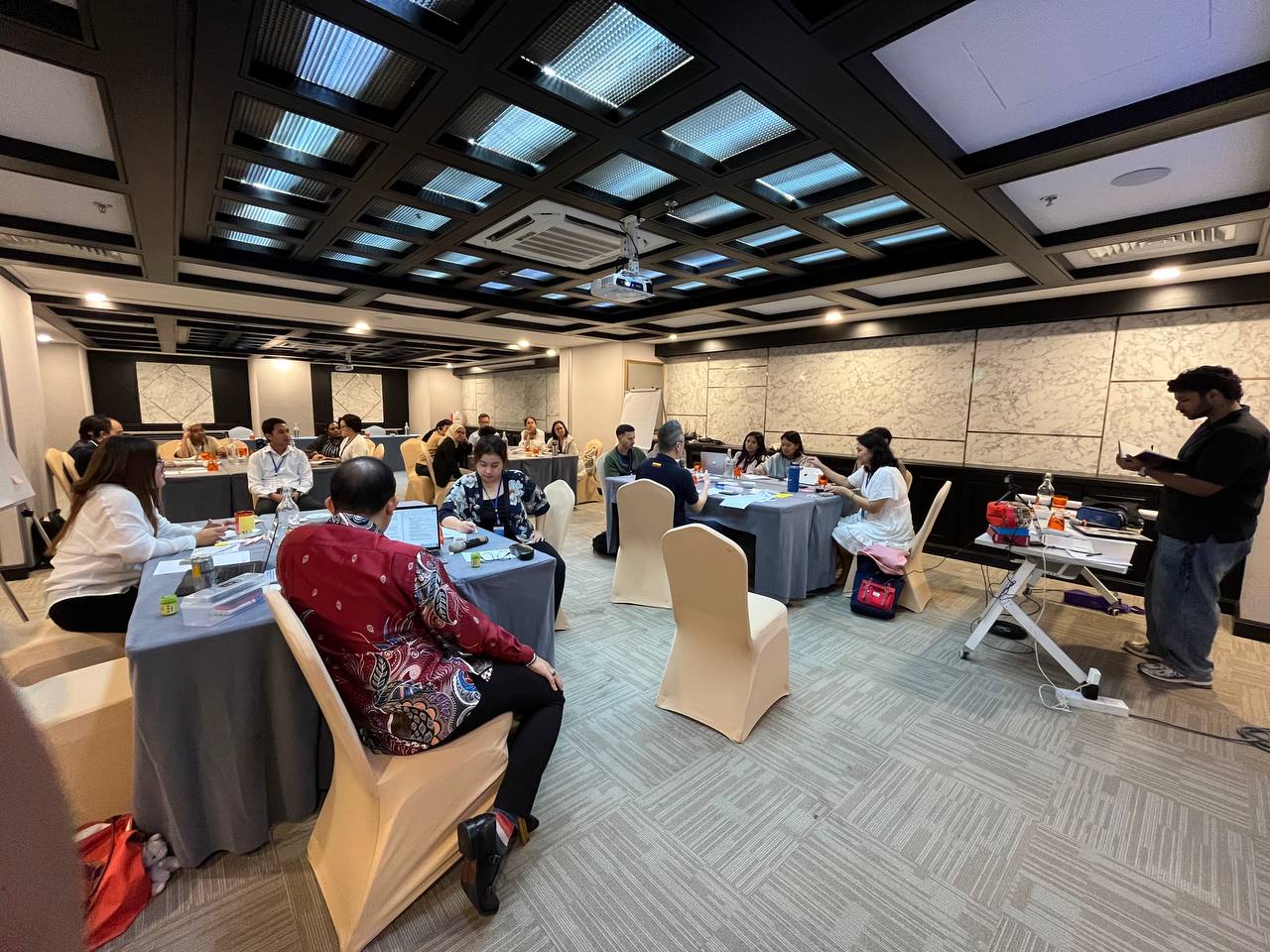
On 24–26 August 2025, the International Commission of Jurists (ICJ), together with the Centre for Independent Journalism, Malaysia (CIJ), and the Numun Fund, gathered human rights defenders and experts to discuss the need for Southeast Asian States to adopt and implement a human rights-based approach in efforts to tackle the growing spread of harmful content in digital spaces.

The workshop in Kuala Lumpur, Malaysia, focusing on leveraging ASEAN platforms, brought together 24 representatives from organizations across the ASEAN region, including Cambodia, Indonesia, Lao PDR, Malaysia, Myanmar, the Philippines, Thailand, and Viet Nam, all States that are members of the Association of Southeast Asian Nations (ASEAN).

Participants underlined that the surge in hate speech, disinformation, and other harmful online content had elicited responses from ASEAN States which often relied on heavy-handed and repressive measures. These include application of criminal laws that are vague and prone to abuse, restrictive content takedown and licensing regimes; and even State-sponsored disinformation campaigns.

Participants heard that ASEAN regional mechanisms currently lack robust mandates and coordination capable of effectively addressing disinformation, harmful content, and other digital challenges. Participants considered means of ensuring platform accountability, in the context of advertisement-driven business models of technology companies with ineffective content moderation practices. The online platforms typically employ algorithms that amplify sensationalist or extreme content, fueling the viral spread of disinformation and other human rights abuses.

Workshop participants worked to develop joint next steps and produced a set of recommendations for ASEAN Member States, technology companies, and ASEAN human rights bodies, particularly the ASEAN Intergovernmental Commission on Human Rights (AICHR). The recommendations included strengthening ASEAN human rights institutions and mechanisms in responding to and addressing human rights complaints submitted to them, enhancing their independence, and embedding human rights–centered advocacy into ASEAN work plans and instruments….

On 25 August, additional discussions were held with a representative from the Big Tech company Meta, focusing on the need to improve accountability and remedies through effective, accessible, and confidential grievance mechanisms. Participants also proposed multi-stakeholder co-regulation frameworks to ensure CSO participation through ongoing dialogue and collaboration on digital platform services, human oversight—not AI alone—in guiding content moderation standards, and the strengthening of independent third-party fact-checking across the region.

The series concluded with a panel discussion on 26 August 2025, co-hosted by the ICJ during the Digital Rights Asia-Pacific Assembly 2025. The panel, titled “The Role of ASEAN Human Rights Mechanisms in Institutionalizing Human Rights in the Digital Space: Towards Accountability and Collective Advocacy,” was also attended by AICHR representatives from Indonesia, Malaysia, and Thailand. It focused on how AICHR can better safeguard human rights online and identified concrete pathways for institutionalizing monitoring and accountability mechanisms related to human rights in the digital space.

https://www.icj.org/asean-icj-and-human-rights-defenders-from-southeast-asia-urge-a-rights-based-approach-to-countering-harmful-online-content/

About Access Now’s Digital Security Helpline

April 30, 2024

On 25 April 2024 Access Now published a piece about “Visualizing the Digital Security Helpline’s recent impact”

Access Now’s Digital Security Helpline works to support civil society members at risk, so they can safely and securely continue their work to uphold democracy and human rights. Here are a few highlights of the Helpline’s work in 2023. [see also: https://humanrightsdefenders.blog/2021/06/29/joint-statement-by-u-n-rapporteurs-emphasizes-digital-rights-as-top-priority-to-rebuild-civic-space/]

Last year, the Helpline received a total of 3,709 requests for digital security assistance. 

To put this in perspective, the Helpline received 10,000 requests in total between 2014 and 2021, but more than double that number in the three years that followed. 

Helpline Cases

Most (82%) of the cases we dealt with in 2023 were reactive in nature, meaning they related to unfolding incidents or emergencies that required beneficiaries to take rapid measures to strengthen their digital security. The remaining 18% were preventative, whereby beneficiaries preemptively sought out digital security advice, tools, and solutions.

In recent years, the Helpline has been investing in our ability to operate 24/7, 365 days a year, and to deliver more substantial and engaged forms of support. For instance, we’ve been conducting analysis of advanced threats and producing collaborative research in places such as Armenia, Serbia, and Jordan

In 2023, the regional distribution of cases was as follows:

Helpline Case distribution by region

Our work supports a wide spectrum of civil society stakeholders; from individual activists, human rights defenders, and members of marginalized communities, to journalists and media workers. For it to be as impactful as possible, we work closely with the wider digital security community, through networks like CiviCERT. This allows us to deliver adequate support to each of our beneficiary groups, which were distributed as follows in 2023:

Helpline Beneficiaries by category

In 2024, the Helpline will continue improving and increasing how we collaborate with activist groups around the world, as well as working to meet the evolving needs of the global rapid response community. If you are a member of civil society in need of digital security assistance, you can find details about how to get in touch on our website page

Incident Emergency Fund supports human rights defenders facing digital threats and attacks

January 21, 2024

You can now apply for the Incident Emergency Fund, which is a rapid response mechanism for human rights defenders, journalists, activists and organisations facing digital threats and attacks.

Funding Information
  • The IEF provides up to €10,000 and can be used to cover costs which will directly reduce the risk or impact of a digital attack. The funding covers activities for a maximum of four months, and they aim to respond to requests within two weeks.
What does the IEF cover?
  • Replacement of hardware or software which has been taken, lost or stolen.
  • Purchase of more secure hard- and/or software and costs related to installation of the new systems.
  • Technical or non-technical activities to respond to urgent issues such as internet blockages.
  • Measures to improve physical security (related to information management and digital security).
  • Measures to address the psychological and psychosocial impacts of digital threats and risks.
Who can apply?
  • DDP target groups are women, feminist and LGTBQIA+ organisations; land and environmental rights defenders; and journalists and other actors who make information available to the public. However, each regional team defines the target groups for each call.

For more information, visit Digital Defenders Partnership.

The Unfreedom Monitor: Global Voices adds to the monitoring toolbox

April 5, 2022

On 5 April 2022 Nanjala Nyabola, Advox Director at Global Voices introduced The Unfreedom Monitor, a methodology for tracking digital authoritarianism worldwide

The Unfreedom Monitor is an Advox research initiative that examines the growing phenomenon of networked authoritarianism or digital authoritarianism. “Digital authoritarianism” describes the use of technology to advance repressive political interests. It is not purely confined to authoritarian regimes. Democratic states also use and sell advanced technology to track and/or surveil citizens, spread mis-/disinformation, and disempower citizens’ civic and political participation. Nor is it only states that perpetrate digital authoritarianism—corporations located in democratic countries are key suppliers of the technology that is used. 

The Unfreedom Monitor

Authoritarian regimes have long had a complicated relationship with media and communications technologies. The Unfreedom Monitor is a Global Voices Advox research initiative examining the growing phenomenon of networked authoritarianism or digital authoritarianism.

Download a PDF of the briefing document.

..One major aim of this project is to provide richer context that transcends unique national or thematic situations. It would be an omission to focus solely on the internet and ignore, for example, the effects of the mechanisms of growing repression on press freedom and human rights. In the countries we studied, we found a strong correlation between declining press freedom and growing digital authoritarianism. Information, after all, is the raw material of governance, and both online spaces and traditional media serve the important function of making information available to people and communities to enable them to make independent evaluations of their governments. The impetus to control information on the internet is directly connected to the impetus to control information shared by the press. 

The briefing document provides an overview of key developments in digital authoritarianism in 11 countries and explains the theoretical framework and methodology behind The Unfreedom Monitor project. The document also provides a basis for expanding this research to other countries to deepen our understanding of digital authoritarianism globally, as well as its crucial implications for the future. The preliminary sample of 11 countries was chosen to reflect a range of factors: system of government, approach to human rights (including rankings in indexes), and corporate relations. The countries are: Brazil, Ecuador, Egypt, India, Morocco, Myanmar, Russia, Sudan, Tanzania, Turkey, and Zimbabwe.  

Desk research supplemented qualitative study of a dataset comprising media items exploring issues, events, actors, narrative frames, and responses, to identify trends and patterns of digital authoritarianism. We also conducted weekly seminars with the research team to gain a sense of any cross-cutting themes and commonalities that emerged. One interesting outcome was finding that while clients and their interests may be varied, only a handful of companies—many based in nominally democratic countries—were selling the technology that makes some digital authoritarian practices possible.

Another four researchers also worked with four cross-cutting themes concerning digital authoritarianism to develop an approach that can be used across contexts. These themes were: data governance, speech, access, and information. The tendency with internet research is to think about ideas or development in thematic isolation, and we encouraged this cohort of researchers to think both broadly and deeply about what unites all these separate ideas. 

The report finds that digital authoritarianism is not confined to authoritarian states. Rather, it is a culture—of increasing executive power, legislation, and global capital flows—that allows the state to interfere in citizens’ lives and to stifle or frustrate civic engagement. There is no single predictive factor, but digital authoritarianism is closely related to the contraction of press freedom, and resistance to political transitions. Moreover, it is a transnational process, and the availability of technology in one part of the world will eventually have political consequences in another.

This adds to existing efforts such as: https://humanrightsdefenders.blog/2021/10/12/report-freedom-on-the-net-2021/

https://humanrightsdefenders.blog/2021/04/24/world-press-freedom-index-2021-is-out/

https://humanrightsdefenders.blog/2021/12/26/to-counter-domestic-extremism-human-rights-first-launches-pyrra/

https://globalvoices.org/2022/04/05/introducing-the-unfreedom-monitor-a-new-project-of-global-voices-advox/

Joint statement by U.N. rapporteurs emphasizes digital rights as “top priority” to rebuild civic space

June 29, 2021

A bit belatedly, I refer to the statement made by Access Now welcoming on Tuesday, 8 June 2021, the timely new statement from U.N. Special Procedures emphasizing that digital rights are “a top priority” to rebuild civic space amid recovery from the COVID-19 pandemic. The nine experts are taking part in RightsCon 2021 (June 7-11), marking the third consecutive year that Special Rapporteurs have issued a statement in light of thematic discussions to be held at the global summit on human rights in the digital age.

The experts pointed to recent instances of digital repression including non-transparent content takedowns and manipulation — as the world is witnessing in Palestine, India, and Colombia — and called upon businesses to uphold their responsibility to respect human rights. They stressed that “the opacity that prevails in the ways content is moderated by Governments and companies reinforces global perceptions of discrimination, inefficiency and censorship. There is an urgent need for transparency.”

The diversity and scope of issues addressed within the mandates of the nine U.N. experts speaks to the heightened role of technology — and the need to center digital rights — in the pandemic recovery. We are thrilled to have such a robust presence of U.N. Special Rapporteurs and members of the Working Group on Business and Human Rights in this year’s RightsCon program,” said Peter Micek, U.N. Policy Manager at Access Now. “The statement decries patterns of abuse accelerating digital inequalities and discrimination against users most at risk, reminding states and the tech sector to undertake systemic efforts to reach those most affected.”

“We look forward to continuing to engage with the U.N. experts at RightsCon and beyond to address the intersection of technology within their mandates through a human rights-centered and intersectional lens,” said Laura O’Brien, U.N. Advocacy Officer at Access Now. “As we recover from the pandemic, we cannot understate the value of civil society engagement with U.N. experts.”

The experts warned particularly “against using the pandemic as an excuse to rush forward ‘digital transformation,’ as exemplified in digital vaccine certificates, without prioritising foundational digital rights safeguards” — a call that Access Now emphasizes.

The nine Special Procedures and their mandates include: Fionnuala Ní Aoláin, fundamental freedoms while countering terrorism; Clément Voule, the right to peaceful assembly and association; Olivier De Schutter, extreme poverty and human rights; David R. Boyd, human rights and environment; Gerard Quinn, the rights of persons with disabilities; Tlaleng Mofokeng, the right to physical and mental health; Irene Khan, freedom of expression; Mary Lawlor, the situation of human rights defenders; and the Working Group on Business and Human Rights — Dante Pesce, Surya Deva, Elżbieta Karska, Githu Muigai, and Anita Ramasastry.

https://www.scoop.co.nz/stories/WO2106/S00090/un-joint-statement-experts-call-for-centering-digital-rights-in-pandemic-recovery-on-eve-of-rightscon-2021.htm

https://www.manilatimes.net/2021/06/20/business/sunday-business-it/access-nows-digital-security-helpline/1803849

30 NGOs call on Google to drop plan for a Cloud region in Saudi Arabia

May 27, 2021
Groups call on Google to drop out of Saudi project over human rights concerns

© Getty Images

The Hill of 26 May 2021 reports that a coalition of more than 30 human rights and digital privacy rights groups called on Google to abandon its plans to establish a Google Cloud region in Saudi Arabia over concerns about human rights violations.

The groups, which include Amnesty International, Human Rights Watch and PEN America, wrote in their letter that Saudi Arabia’s record of tamping down on public dissent and its justice system that “flagrantly violates due process” made it unsafe for Google to set up a “cloud region” in the kingdom.

While Google publishes how it handles government requests for customer information and reports when requests are made through formal channels, there are numerous potential human rights risks of establishing a Google Cloud region in Saudi Arabia that include violations of the rights to privacy, freedom of expression and association, non-discrimination, and due process,” the groups said. See also: https://humanrightsdefenders.blog/2019/03/08/saudi-arabia-for-first-time-openly-criticized-in-un-human-rights-council/

The letter also pointed to Saudi authorities who have routinely sought to identify anonymous online dissenters and spy on Saudi citizens through digital surveillance. The groups also pointed to how they themselves are believed to have been put under surveillance by the Saudi government.

“Google has a responsibility to respect human rights, regardless of any state’s willingness to fulfill its own human rights obligations,” the letter continued, pointing to Google’s statement in which it expressed its commitment to human rights and to “improve the lives of as many people as possible.”

In order to address these concerns, the groups called on Google to conduct a “robust, thorough human rights due diligence process” and to “draw red lines around what types of government requests concerning Cloud regions it will not comply with” due to human rights concerns.

“The Saudi government has demonstrated time and again a flagrant disregard for human rights, both through its own direct actions against human rights defenders and its spying on corporate digital platforms to do the same,” the letter read. “We fear that in partnering with the Saudi government, Google will become complicit in future human rights violations affecting people in Saudi Arabia and the Middle East region.”

https://thehill.com/policy/technology/555597-groups-call-on-google-to-drop-out-of-saudi-project-over-human-rights

Call for Nominations Martin Ennals Award 2022 with a focus on digital rights

April 15, 2021

On 13 April 2021 the Martin Ennals Foundation opened it call for nominations for the 2020 award. For more on the award see: https://www.trueheroesfilms.org/thedigest/awards/043F9D13-640A-412C-90E8-99952CA56DCE

More than 60 defenders from 34 countries have been recognized by the Martin Ennals Award to this day.  For last year see: https://humanrightsdefenders.blog/2021/01/18/%E2%80%8B%E2%80%8Bmartin-ennals-award-finalists-2021-announced/

Focus on Digital rights in 2022

A human rights lens is urgently needed so that the opportunities of digital technology reach all of humanity and solutions can be found for risks online. Human rights Defenders are at the forefront of ensuring digital technology is inclusive, respectful of human rights and employed for human betterment. To offer our support to them and keep the spotlight on these issues, the Martin Ennals Award 2022 will reserve one of its three prizes for defenders working at the intersection of human rights and digital technology.  

The deadline for nominations is: 30 May 2021. The independent Jury composed of 10 major NGOs will select three Finalists to the Award, who will be announced publicly in early 2022. The Laureate of the Award will be announced in the first semester of 2022. 

Read the Nominations FAQ here to learn more about the nominations process. 

Possible grants for Protection of Human Rights Defenders and the Right to Defend Rights in India, Indonesia, Pakistan, Sri Lanka, Thailand and Myanmar.

March 22, 2021

The NHRF is opening a specialised and limited call for concept notes for projects contributing to building resilience, adaptability and increased safety and security for human rights defenders and human rights movements. Projects focusing on digital security and new technological threats used against human rights defenders and projects that seek to give psychosocial and multifaceted support to human rights defenders will be prioritized. The applicant should explain how the initiative will lead to a positive change for human rights defenders in their local communities.

Geographical location: India, Indonesia, Pakistan, Sri Lanka, Thailand and Myanmar. Regional initiatives that include human rights defenders from one or more of the listed countries are also welcome to apply.

Thematic area and target groups: Protection of human rights defenders at risk, the right to defend rights, digital security, psychosocial support, pressure on and repression of civil society. Initiatives with a strong gender focus will be prioritized.

Amount: 15-25,000 USD. Please note that the proposed project budget must be proportionate to the applicant’s current annual budget and must not exceed an amount that is more than double the current annual budget.

Project timeline: One year (12 months)

Project start date: End of 2021/beginning of 2022*.

Deadline for registration and concept note: 18 April 2021

(NB: This call is part of the NHRF’s resource mobilisation, and grantmaking is dependent upon positive response from the NHRF’s network.)

Priority will be given to:

  • Organisations that are led by the target group or that have a strong link to the community and have special competence in the thematic area of focus
  • Organisations that adapt an inclusive approach, for example for gender, minorities and persons with disabilities
  • Organisations that work with women human rights defenders, LGBTIQ- defenders, environmental defenders and trade union activists
  • Organisations that have proven experience from working in networks, both nationally and regionally
  • Organisations focusing on digital security and psychosocial support

How to apply

Organisations working within the thematic area are invited to complete the eligibility quiz and concept note form in the NHRF application portal. You will also be asked to upload an overview of a one-year budget of the proposed project. Applicants must adhere to the word limits within the submission form.

The NHRF will review submissions and then make a shortlist of applicants that will be invited to submit a full application. This process could take time – up to 6 months – so we ask applicants to please be patient with our processes.

Please visit the NHRF’s page for grantseekers for more information.

How can the human rights defenders use new information technologies better?

November 28, 2019

(twitter: @mads_gottlieb) wrote in Impakter about Human Rights, Technology and Partnerships and stated that these technologies have the potential to tremendously facilitate human rights defenders in their work, whether they are used to document facts about investigations, or as preventive measures to avoid violations. His main message in this short article is an appeal to the human rights sector at large, to use technology more creatively, to make technology upgrades a top priority, and to engage with the technology sector in this difficult endeavor. The human rights sector will never be able to develop the newest technologies, but the opportunities that technology provides is something they need to make use of now and in collaboration with the technology sector

…Several cases show that human rights are under threat, and that it is difficult to investigate and gather the necessary facts in time to protect them. Duterte in the Philippines, ordered the police to shoot activists who demonstrated against extra-judicial killings. He later tried to reduce the funding of the Philippines National Human Rights Commission to 1 USD a year. This threat followed a period of 15 months of investigating the killings, and Duterte responded with the claim that they were “useless and defended criminal’s rights.” 

Zimbabwe is another country with a difficult environment for human rights defenders. It is not surprising that few people speak out, since the few that dare to demonstrate or voice opposing political views disappear. A famous example is the activist and journalist,  from Occupy Africa Unity Square. He was allegedly beaten in 2014, and in 2015 he went missing and was never found. His disappearance occurred after a period of public demonstrations against Mugabe’s regime. To add to the challenging conditions that call for better tools to defend human rights, is the fact that many European countries digitalise their public services. The newly introduced data platforms store and process sensitive information about the population, such as gender, ethnicity, sexual orientation, past health records, etc. Information that can easily be used for discriminative purposes, whether intentionally or not.

Human rights defenders typically struggle to find adequate resources for their daily operations and as a result, investments in technology often come second. It is rare for human rights defenders to have anything beyond the minimum requirements, such as the internally-facing maintenance of an operational and secure internet connection, a case system, or a website. At the same time, global technology companies develop new technologies such as blockchain, artificial intelligence, and advanced data and surveillance techniques. These technologies have the potential to tremendously facilitate human rights defenders in their work, whether they are used to document facts about investigations, or as preventive measures to avoid violations. It is also important to facilitate and empower rights-holders in setting up and using networks and platforms that can help notify and verify violations quickly. 

Collaboration is an excellent problem-solving approach and human rights organizations are well aware of it. They engage in multiple partnerships with important actors. The concern is therefore not the lack of collaboration, but whether they adequately prioritize what is now the world’s leading sector — technology (the top 5 on Forbes list of most valuable brands are all technology companies; Apple, Google, Microsoft, Amazon, and Facebook). It is not up to the technology sector to engage with the human rights sector (whether they want to or not), but it should be a top priority for the human rights sector to try to reduce their technology gap, in the interest of human rights.

There are several partnership opportunities, and many are easy to get started with and do not require monetary investments. One opportunity is to partner up with tech universities, that have the expertise to develop new types of secure, rapid monitoring systems. Blockchain embraces most of the principles that human rights embraces, such as transparency, equality and accountability, and rapid response times are possible. So why not collaborate with universities? Another opportunity is collaborating with institutions that manage satellite images. Images provide very solid proof regarding changes in landscape, examples include deforestation that threatens indigenous people, and the removal or burning of villages over a short period of time. A third opportunity is to get in dialogue with the technology giants that develop these new technologies, and, rather than asking for monetary donations, ask for input regarding how the human rights sector can effectively leverage technology. 


Speech by Commissioner Dunja Mijatović at RightsCon 2019, Tunis, about digital security

June 17, 2019

Council of Europe Commissioner for human rights, Dunja Mijatović, gave a speech at the world’s leading summit on human rights in the digital age, RightsCon 2019, in Tunis, on 11 June 2019:

…A recent article of the New York Times from the city of Kashgar showed the extent to which the Chinese authorities are using facial recognition and snooping technologies to keep a tight control of the Muslim community.  If you think that this does not concern you because it is happening far away, you would be terribly wrong. The Chinese experiment bears a great significance for all of us. It shows to what extent the cozy relations between technology companies and state security agencies can harm us. This has become particularly acute as part of states response to terrorist threats and attacks. States around the world have increased their surveillance arsenal, not always to the benefit of our safety. On the contrary, in several occasions they used it to silence criticism, restrict free assembly, snoop into our private life, or control individuals or minorities.

An illustration of this comes from human rights defenders. If in the past human rights defenders have been ahead of states in using technological progress to expose human rights abuses, now they are facing a backlash. As we speak, states and non-state actors are intercepting their communications, intrude their personal data, trace their digital footprint. States are using technologies to learn about human rights defenders’ plans or upcoming campaigns; to find or fabricate information that can help intimidate, incriminate or destroy their reputation; or to learn about their networks and sources.

This concerns us all. At stake here is the society we want to live in and bequeath to the next generations. Technology should maximise our freedoms and rights – and keep those in power accountable.

To get there we need to strengthen the connections among us and crowdsource human rights protection, promotion and engagement. An important step in that direction would be to provide more support, funding and digital literacy training to human rights defenders. It is also crucial that the private sector and state authorities uphold human rights standards in the designing and implementation of all technological tools.

Living in an increasingly digital world does not mean living artificial lives with artificial liberties. Our rights must be real, all the time.

We all must resist the current backlash and persist in demanding more human rights protection, more transparency and more accountability in the digital world.

https://www.coe.int/en/web/commissioner/-/2019-speech-by-dunja-mijatovic-council-of-europe-commissioner-for-human-rights-at-the-world-s-leading-summit-on-human-rights-in-the-digital-age-rights