Posts Tagged ‘detention’

I owe Alaa Abd el-Fattah my life, which is why I am going on a hunger strike to help free him

January 19, 2025

If anybody represents the very British values of democracy, respect for human rights, justice and due process, it is the Egyptian activist, says Peter Greste in the Guardian of 15 January 2025. The piece is so rich in detail that I give here in full:

I first encountered Alaa Abd el-Fattah 11 years ago, as a disembodied whisper of reassurance from outside the bars of my grubby prison cell in Cairo. I had just been tossed in the box by Egypt’s El Mukhabarat– the malevolent general intelligence service responsible for internal security – and I was facing an indeterminate run in solitary confinement after being arrested on bogus terrorism charges for my work as a journalist.

Alaa knew the drill. Then just 32, he’d been imprisoned by each of the four previous regimes, and he understood both the institutional meat grinder we were confronting and the psychological stresses I’d have to grapple with.

“Welcome to Ward A, Political, in Tora prison,” he told me in a hushed voice through the door. “Here, you are surrounded by people who have been fighting for justice and democracy. We are a collection of activists, trade unionists, judges, writers and now you – a journalist. This is a very prestigious place, and you are with friends.”

A significant part of the prestige came from Alaa himself. He was – and remains – Egypt’s most prominent political prisoner. That also makes him the one the government fears the most. I owe him my life, which is why I am helping step up the campaign to free him.

When the country erupted in its chapter of the Arab spring revolution in January 2011, it was driven by a loose collection of young, middle-class, secular activists – including Alaa – who understood the power of social media.

He was already well known in Egypt as a software developer, online publisher and prolific writer from a long line of campaigners. His late father was a human rights lawyer, and his mother is a mathematics professor and pro-democracy activist. His aunt is a novelist and political activist. One sister helped set up a group fighting against military trials for civilians, and another is a film editor who co-founded a newspaper. Before the 2011 revolution, Alaa learned coding and built his own award-winning blog publishing site where he wrote about national politics and social justice.

In short, activism is in his DNA.

At the time we met, Egypt was still convulsing with revolutionary turmoil. The military had installed an interim administration after ousting the elected Muslim Brotherhood government. The streets were filled with police rounding up protesters who were fighting to stop the country sliding back into autocracy, and Alaa found himself in prison on charges of rallying, inciting violence, resisting authorities and violating an anti-protest law.

After my period in solitary ended, we would use the precious hours of exercise to stride up and down a dusty walled yard discussing Egyptian history and society, political theory, and his ideas of resistance and reform. I found him to be an extraordinarily intelligent political thinker and humanitarian dedicated to turning his country into a functioning, pluralist democracy, and whose powerful writing from prison inspired millions. But more than that, I found a good friend.

In our conversations, he helped me understand the politics of my own imprisonment. I and two Al Jazeera colleagues had been charged with broadcasting terrorist ideology, conspiring with a terrorist organisation, and broadcasting false news to undermine national security. I struggled to reconcile those very serious allegations with the relatively straight reporting we had actually been doing. But as we talked, I came to see that our arrest had nothing to do with what we had done, and everything to do with what we represented – a press freely reporting on the unfolding political crisis. Inspired by his writing, I wrote two letters of my own that we smuggled out and that helped frame the campaign that ultimately got me free.

In March 2019, Alaa was released from prison but ordered to spend 12 hours each night in a police cell, “not free … even in the sense of imperfect freedom common in our country,” he wrote at the time.

Six months later, he was once again arrested, this time for spreading “false news to undermine security”, and sentenced to five years.

By rights, his prison ordeal should have ended on 29 September last year, including the time he spent in pre-trial detention. But in an act of extraordinary cynicism and callousness, the authorities decreed that they’d count his stretch from the day he was sentenced, violating their own laws and adding another two years to his time behind bars.

In protest, his 68-year-old mother, Laila Soueif, began a hunger strike on the day he was supposed to walk free. She has vowed not to eat until he is once again out of prison, and she is now 108 days into the fast. That is an extraordinarily risky undertaking for anybody, let alone someone her age, and although she is showing remarkable resilience she is in serious danger.[see https://humanrightsfirst.org/library/dr-laila-souiefs-downing-street-hunger-strike-continues-as-her-son-alaa-remains-in-egyptian-prison/]

Laila is a British national now living in London, and through her, Alaa also has British citizenship. That gives the British government consular responsibility, and powerful diplomatic leverage to get him released.

If anybody represents the very British values of democracy, respect for human rights, justice, rule of law and due process, it is Alaa Abd el-Fattah.

That is why I feel compelled to join Laila, in London and in solidarity, also on a hunger strike for the next 21 days. It may not work – at least in the short term – and Alaa might not walk free. But I don’t think that matters.

While we were in prison together, Alaa’s father passed away. At a later memorial service, here is what he told the audience: “All that’s asked of us is that we fight for what’s right. We don’t have to be winning while we fight for what’s right, we don’t have to be strong while we fight for what’s right, we don’t have to be prepared while we fight for what’s right, or to have a good plan, or be well organised. All that’s asked of us is that we don’t stop fighting for what’s right.”

This injustice has gone on far too long. Alaa Abd el-Fattah is one of the most remarkable people I know, and he deserves to be free. I am determined to do whatever I can to help.

see also: https://humanrightsdefenders.blog/2024/11/28/ngos-appeal-to-un-working-group-on-arbitrary-detention-for-egyptian-alaa-abd-el-fattah/

  • Peter Greste is a professor of journalism at Macquarie University and the executive director for the Alliance for Journalists’ Freedom. In December 2013, he was arrested on terrorism charges while working for Al Jazeera and he was eventually convicted and sentenced to seven years. Under intense international pressure, the Egyptian president ordered his release after 400 days. He is undertaking this protest in his personal capacity

https://www.theguardian.com/commentisfree/2025/jan/16/i-owe-alaa-abd-el-fattah-my-life-which-is-why-i-am-going-on-a-hunger-strike-to-help-free-him

https://www.jurist.org/news/2025/05/un-panel-finds-detention-of-british-egyptian-activist-alaa-abd-el-fattah-illegal/

Egypt: Special Rapporteur concerned about use of anti-terrorism legislation HRDs

January 17, 2025

An independent human rights expert expressed on 15 January 2025 concern about the continued application of anti-terrorism legislation in Egypt to imprison human rights defenders.

Although there has been some progress with the release of some detainees and the development of a national human rights strategy, Egypt persists in routinely misusing counter-terrorism legislation and recycling criminal charges against human rights defenders,” said Mary Lawlor, Special Rapporteur on the situation of human rights defenders.

“What is particularly striking is the continued detention of human rights defenders past their release date by repeatedly charging them with similar, if not identical, terrorism-related accusations, in a practice commonly known as “rotation” or “recycling”,” Lawlor said.

The Special Rapporteur previously raised concerns in this regard in 22 communications sent to the Government of Egypt since May 2020. The practice of “rotation” was also highlighted by the UN Human Rights Committee in its concluding observations on Egypt’s last review in March 2023.

In particular, the Special Rapporteur expressed concern over the use of this practice to detain three human rights defenders for lengthy periods of time.

“It is shocking that instead of being released at the end of her five-year sentence on 1 November 2023, human rights lawyer Ms. Hoda Abdel Moneim was detained again under new charges. And one year later, a third set of charges was brought against her. She is now facing two new trials, with one of the new charges – ‘joining an unnamed terrorist organisation’ – being identical to that for which she had completed her sentence in 2023, in violation of the principle of double jeopardy”, Lawlor said.

In November 2024, the same terrorism-related charge was brought against another woman human rights defender, Aisha al-Shater, who was tried in the same case with Abdel Moneim. This charge is also identical to that for which she is currently serving a 10-year prison sentence.

In a third case, human rights defender and lawyer Ibrahim Metwally has been arbitrarily detained without trial for over four years. He was arrested in 2017 at Cairo Airport, while he was on his way to Geneva to meet with the UN Working Group on Enforced or Involuntary Disappearances. Although the Cairo Criminal Court has ordered his conditional release twice, he was repeatedly charged with new terrorism-related offences, one of which he supposedly committed in prison. The UN Working Group on Arbitrary Detention previously found Metwally’s detention to be arbitrary and noted that it amounts to an act of retaliation for cooperation with the UN.

“It is outrageous that Mr Metwally is facing trial in three cases, including that of ‘conspiring with foreign entities’, which appear to be in relation to his cooperation with the UN and his peaceful human rights work in Egypt prior to his detention,” Lawlor said.

The Special Rapporteur noted that the poor prison conditions in which the three human rights defenders are held were equally alarming. The human rights defenders have had health problems from the start of their arrest and have reportedly been denied adequate medical treatment despite the severity of their conditions, which may amount to physical and psychological ill-treatment.

“It is unacceptable for prison authorities to deny recommended surgery, bar the transfer of a detainee to a hospital, or withhold medical records from the detainee’s family and lawyer,” Lawlor said.

The Special Rapporteur is in contact with the authorities of Egypt on this issue and has urged them to meet their international human rights obligations, by which they must abide.

see also: https://humanrightsdefenders.blog/tag/egypt/

https://www.ohchr.org/en/press-releases/2025/01/egypt-special-rapporteur-concerned-about-use-anti-terrorism-legislation

https://african.business/2025/01/apo-newsfeed/egypt-special-rapporteur-concerned-about-use-of-anti-terrorism-legislation-against-human-rights-defenders

https://www.hrw.org/world-report/2025/country-chapters/egypt

Human rights defender Rufat Safarov detained in Azerbaijan on way to award ceremony

December 5, 2024
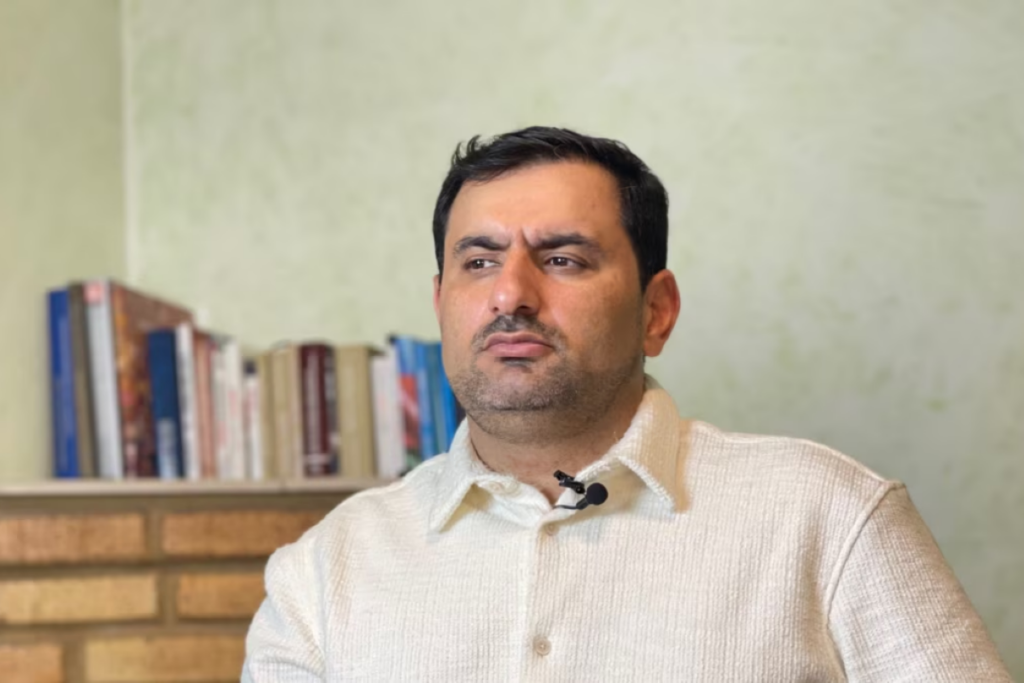
Rufat Safarov. Via Voice of America.

On 4 December 2024, Aytan Farhadova in OC media reported that human rights defender Rufat Safarov was detained in Azerbaijan a week before he was set to be awarded the Human Rights Defender of the Year award by US State Secretary Antony Blinken. That day, Safarov’s lawyer, Elchin Sadigov, posted on Facebook that Safarov was accused of hooliganism and fraud resulting in major damage.

Sadigov later posted a message written by Safarov, in which he explained that he was planning to visit the US two days after receiving his visa in order to accept the Global Human Rights Defender Award from Blinken. [not totally clear which award is referred to – ed]

So I was awarded as a strong human rights defender of the year. Because the United States initially nominated me, I express my deep gratitude to [Mark] Libby, the US Ambassador in Azerbaijan, and Mr Blinken, US Secretary of State, who supported my candidacy.’

https://www.trueheroesfilms.org/thedigest/laureates/327debe6-fca9-40c4-b972-db855616566b

State Department’s Deputy Spokesperson, Vedant Patel, during a press briefing on Tuesday, said: We’re deeply concerned by reports that human rights defender Rufat Safarov has been detained in Azerbaijan’, Patel said, adding that they were ‘closely monitoring the case.’

Frank Schwabe, the head of the German delegation of the Parliamentary Assembly of the Council of Europe (PACE), criticised Safaravo’s arrest, saying that PACE will ‘respond to this in January’.

Safarov, a former prosecutor’s office official who spoke out against human rights abuses by the government, was sentenced to nine years in prison on charges of bribery, fraud, and human rights violations in 2016. He was released from prison alongside almost 400 others  after Azerbaijani President Ilham Aliyev issued an amnesty to mark Novruz in 2019.

https://oc-media.org/azerbaijan-detains-us-human-rights-defender-awardee

https://www.streetinsider.com/Reuters/Azerbaijan+denounces+diplomatic+criticism+of+human+rights/24067963.html

https://www.eng.kavkaz-uzel.eu/articles/76079

Chinese filmmaker charged with ‘picking quarrels and provoking troubles’

February 26, 2024

Jurist of 25 February, 2024 reported that police in China have charged Chen Pin Lin, director of documentary “Not the Foreign Force,” with “picking quarrels and provoking trouble,” according to Chinese human rights news watchdogs Weiquanwang and Civil Rights and Livelihood Watch.

The Thursday charges come after Chen’s arrest in January 2024. He has been in detention for more than a month. In a letter to his family members, the authorities accused him of “picking quarrels and provoking troubles,” which is criminalized by Article 293 of the Criminal Act. Human Rights Watch previously criticized Article 293 for its elusive definition and use against human rights defenders.

The film “Not the Foreign Force,” also known as “Ürümqi Road” in Chinese, depicts the nationwide protests against COVID-19 lockdown measures in China. The demonstrations erupted in Shanghai after a fire killed 10 people in Ürümqi, where lockdown policies had slowed down fire services. During the rallies, colloquially known as the “White Paper Protests,” participants held a piece of blank paper over their heads to symbolize their speechlessness over the tragedy. The protests ultimately prompted the Chinese government to lift all COVID-19 restrictions in December 2022.

Chen published the video on China Digital Times under the pseudonym “Plato” on 27 November 2023, one year after the demonstrations started. In the caption, Chen criticized the Chinese government for shifting the blame to foreign forces. “The more the government tries to mislead, forget and conceal, the more we should speak out, remind and remember,” he wrote. “Remember the White Paper Protests.”

https://www.jurist.org/news/2024/02/china-activist-filmmaker-charged-with-picking-quarrels-and-provoking-troubles

Mary Lawlor urges India to release HRD Saibaba

August 29, 2023
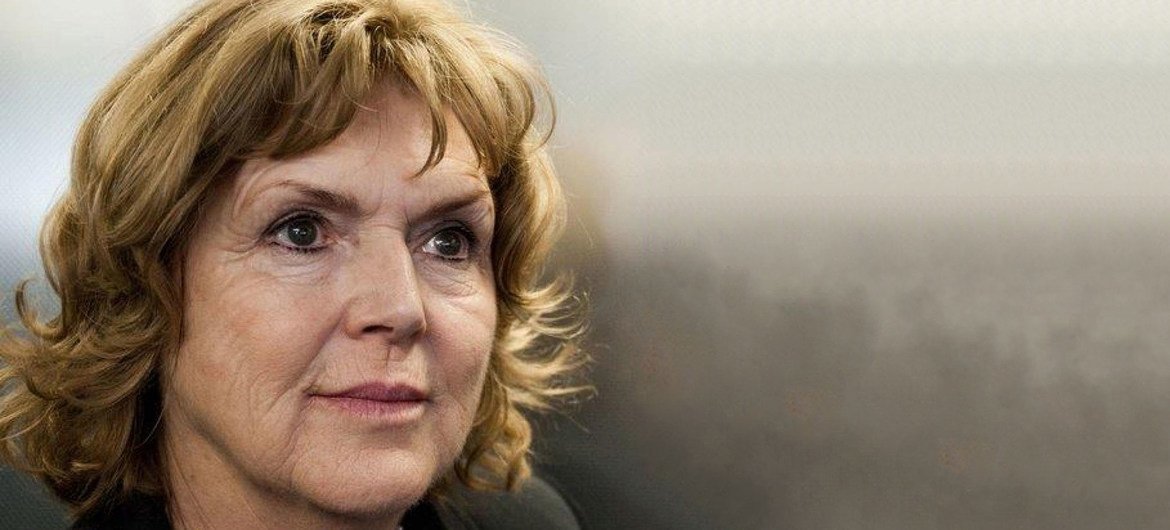
Mary Lawlor, UN Special Rapporteur on the situation of human rights defenders.

Mary Lawlor, UN Special Rapporteur on the situation of human rights defenders.

An independent UN human rights expert has called for India to release an activist imprisoned since 2017, expressing concern over his persistent detention and deteriorating health. GN Saibaba, a former English professor at Delhi University, was arrested in 2014 and accused of links to banned Maoist groups, according to media reports. See: https://humanrightsdefenders.blog/2023/07/07/g-n-saibaba-in-india-continues-from-his-cell/

He was sentenced to life imprisonment three years later for multiple offences under the country’s Unlawful Activities Prevention Act.

GN Saibaba is a long-standing defender of the rights of minorities in India, including the Dalit and Adivasi people,said Mary Lawlor, UN Special Rapporteur on the situation of human rights defenders on 21 August “His continued detention is shameful. It bears all the hallmarks of a State seeking to silence a critical voice,” she added.

UN human rights experts have repeatedly raised grave concerns about the prosecution of Mr. Saibaba, who has suffered from a spinal disorder and polio since childhood and uses a wheelchair. 

His detention was declared arbitrary by the UN Working Group on Arbitrary Detention in an opinion issued in 2021.

In March 2024 came the good news: The Nagpur bench of Bombay High Court set aside the conviction, Read more at:
http://timesofindia.indiatimes.com/articleshow/108246679.cms?utm_source=contentofinterest&utm_medium=text&utm_campaign=cppst

https://news.un.org/en/story/2023/08/1139932

https://english.mathrubhumi.com/news/world/un-expert-pitches-for-ex-delhi-university-professor-g-n-saibaba-s-release-1.8840381

Mongolian human rights defender Munkhbayar Chuluundorj gets support from over 100 NGOs

January 18, 2023

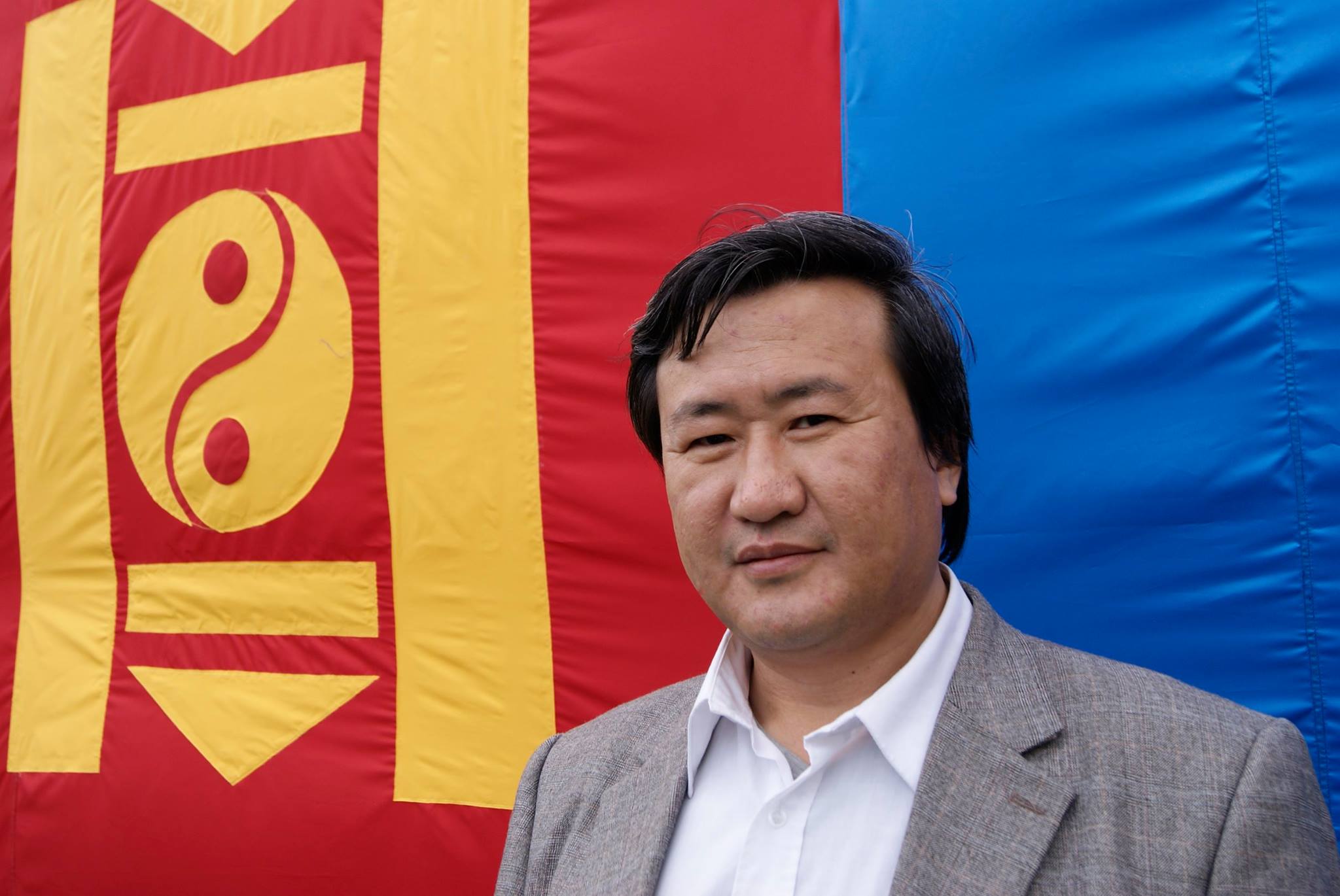
On 12 January 2023, over 100 Groups urged world leaders to jointly press for all charges against Mongolian writer and activist Munkhbayar Chuluundorj to be dropped and for him to be freed.

We urge the Mongolian government to immediately release Mr. Munkhbayar Chuluundorj who was arbitrarily arrested in Ulaanbaatar, Mongolia, by the General Intelligence Agency (GIA) of Mongolia on February 17, 2022.

Mr. Munkhbayar Chuluundorj is an award-winning Mongolian journalist, poet, and human rights activist known for defending the linguistic, cultural, and historical identities of Southern Mongolians.

Mr. Munkhbayar Chuluundorj was detained in Ulaanbaatar on politically motivated charges related to his public criticism of the Mongolian government’s close ties with China and the shrinking rights in Southern Mongolia. His arrest and sentencing took place amid China’s increasingly severe policies in Southern Mongolia that aim to remove learning in the Mongolian language for several key subjects. …

Mr. Munkhbayar Chuluundorj was sentenced to 10 years in prison on June 28, 2022, for “collaborating with a foreign intelligence agency” against the People’s Republic of China. On December 21, 2022, the Supreme Court of Mongolia heard his appeal and upheld the lower court’s original decision. There is no evidence linking Mr. Munkhbayar Chuluundorj to the charge and his lawyer, Ms. Baasan Geleg, has dismissed the national security charge against him as entirely baseless.

In September 2022 two handwritten letters from Mr. Munkhbayar Chuluundorj – penned in the detention center in June 2022 – were received by the Southern Mongolian Human Rights Information Center. In the letters, he pleaded his innocence and detailed how he believed the evidence against him had been fabricated in relation to his work to better the conditions of Mongolians.

Land-locked Mongolia is highly dependent on China for imports and there has been an increase in economic influence, including vast loans via Xi Jinping’s ‘Belt and Road Initiative’, in recent years that have pushed Mongolia into major indebtedness to China. These debts are further exacerbated by a program of cultural propaganda such as the establishment of Confucius Institutes, television and radio broadcasts, and cultural centers.

Growing concern about the Mongolian state’s harassment, intimidation, and reprisals against human rights defenders is growing. In October 2022, the UN Committee on Economic, Social, and Cultural Rights raised the issue of human rights defenders and recommended Mongolia put in place protection safeguards and ‘urgently investigate cases in which human rights defenders are criminalized’. Later in the same month, the Japanese “Parliamentary Support Group for Southern Mongolia” published a statement regarding the sentence of Mr. Munkhbayar Chuluundorj.

Rights groups are calling on like-minded governments – both jointly and bi-laterally – and the UN Human Rights Council to call for the immediate release of Mr. Munkhbayar Chuluundorj.

https://www.nchrd.org/

Many NGOs join to demand release of human rights defenders in Algeria

May 23, 2022

38 NGOs, including HRW and AI, ask Algeria to end the repression of human rights and the “immediate” release of detainees. They have launched a campaign calling on Algeria to end the repression of Human Rights and demand the immediate release of people detained in the country for exercising their freedom of expression. “The campaign calls on all relevant individuals, organizations and parties to contribute to collectively demanding an end to the criminalization of the exercise of fundamental freedoms in Algeria using the label At least 300 people have been arrested since the beginning of 2022, and until April 17, in the country for exercising their right to free expression, peaceful assembly or association, according to human rights defender Zaki Hannache. “The arrests and sentences of peaceful activists, independent trade unionists, journalists and human rights defenders have not decreased, even after the protest movement was closed,” they said in a statement. The organizations have given the example of the hunger strike of the Algerian activist, Hadi Lassouli, to protest against his arbitrary imprisonment, as well as the case of Hakim Debazi, who died in custody on April 24 after being placed in preventive detention on April 22. February for social media posts. “Those suspected of criminal responsibility for serious human rights violations must be brought to justice in trials with due guarantees, and the authorities must provide victims with access to justice and effective reparations,” they have requested. This awareness campaign will be carried out until the anniversary of the death of Kamel Eddine Fejar, a human rights defender who died in custody on May 28, 2019 after a 50-day hunger strike. The United Nations High Commissioner for Human Rights, Michelle Bachelet, was “concerned” last March at the increase in fundamental restrictions in the country, including an increase in arrests and detentions of human rights defenders, as well as members of civil society and political opponents. “I call on the government to change course and take all necessary measures to guarantee the rights of its people to freedom of expression, association and peaceful assembly,” she said in a statement from the UN High Commissioner for Human Rights.

https://www.indonewyork.com/breaking/38-ngos-including-hrw-and-ai-ask-algeria-to-end-the-repression-of-human-h30616.html

BIG question: what to do with long-term detention of Human Rights defenders?

May 21, 2022

Event on 1 June 2022, 12:00-14:00: “Don’t forget about us: Strategies for resisting long-term detention of Human Rights Defenders”. Location: Cassese Room,  Villa Moynier, 120B Rue de Lausanne, Geneva (and online)

Figure of a person in a prison hallway

Logo Ennals

In 2021, the UN Special Rapporteur on Human Rights Defenders published a report on cases of long-term detention of activists, which were estimated to number hundreds or thousands worldwide. This report confirms the terrible treatment and conditions many defenders bear in prison. However, while an objective of long-term detention may be to discourage defenders, many cases result in perennial campaigns and increased publicity for the defenders themselves.

How can governments, civil society and international mechanisms work together to keep the pressure on long-term detention cases? What strategies have proven successful in improving respect for defenders’ rights and physical integrity while imprisoned?

This event is co-organized by Geneva Human Rights Platform and the Martin Ennals Awards, which has a long experience with its laureates being detained. This year, two of its three winners are in prison! See: https://humanrightsdefenders.blog/2022/04/20/save-the-date-and-come-to-the-mea-ceremony-2022-or-watch-online/

Opening

  • Gloria Gaggioli, Director, Geneva Academy of International Humanitarian Law and Human Rights

Moderation

  • Brian Dooley, Senior advisor on human rights, Human Rights First

Panelists

  • Maryam Al-Khawaja, Human Rights defender and daughter of Abdul-Hadi Al-Khawaja, detained in Bahrain since 2011
  • Quynh Vi Tran, Journalist and colleague of Pham Doan Trang, detained in Vietnam since 2020
  • Fr. Xavier Soreng SJ, Lecturer, Ranchi Social Sciences Institute, on behalf of Father Stan Swamy (1937-2021), India
  • Gerald Staberock, Secretary-General, World Organisation Against Torture
  • Tor Hodefield, Vuka! Coalition Coordinator, CIVICUS

Registration

This event will take place in a hybrid format:

  • Register here to attend the event at Villa Moynier (places are limited and will be allocated on a first-come-first-served basis) until 26 May 2022
  • Register here to join online via Zoom.

https://www.geneva-academy.ch/event/all-events/detail/336-don-t-forget-about-us-strategies-for-resisting-long-term-detention-of-human-rights-defenders

20 Years later, Guantanamo’s legacy still there

March 16, 2022

On the 20th anniversary of Guantanamo Bay Kasmira Jefford of Geneva Solutions looks at the legacy of the so-called “war on terror”. She does so in conversation with UN special rapporteur Fionnuala Ní Aoláin on the promotion and protection of human rights and fundamental freedoms while countering terrorism. From camps in north-eastern Syria, where thousands are detained without legal processes, to China where detention camps are posing under the guise of “education facilities” – secret detentions and enforced disappearances are still happening every day under the banner countering terrorism. Here some lengthy extracts:

In 2010, UN experts from four different working groups and special procedures joined forces to produce one of the most comprehensive studies to date on widespread systematic torture, enforced disappearances, arbitrary detention and secret detentions taking place across the world and condemning the wide range of human rights violations committed by countries.

In a follow-up report presented on Wednesday at the Human Rights Council 49th session, the special rapporteur said 10 years on, these practices are still rife and deplored the “abject failure” by states to implement the recommendations of the 2010 study.

GS News: In 2010, UN experts published a milestone study on secret detentions. What does your follow-up report show?

Fionnuala Ni Aolain: The 2010 report was unusual because it involved… four special procedure mechanisms coming together and identifying each in their collective way the scale of the problem of systematic torture and rendition of persons across borders, and systematic disappearances, arbitrary detention, and secret detentions. The [follow-up] report we’ve just published does a stock-taking and assesses whether or not the recommendations of the special experts were implemented. And possibly the single most depressing thing about that review is that the annex lists every single person who was named in the 2010 report – hundreds of names who were rendered, tortured, or both – and not a single individual received an adequate remedy [for the violation of human rights they experiend]. There was no accountability, no person was ever charged with crime for any of those acts.

The second part of the follow up report focuses on what that culture of impunity enabled. And what I find is that the culture of impunity, fostered and enabled by the “war on terror” as it was called essentially has created and enabled the conditions in which other places of mass detention have emerged. The report focuses on two of them : Xinjiang, China, and the situation in [in detention camps] in northeast Syria.

One of the observations you make is that ‘secret’ detention has evolved in the past two decades to encompass more complex forms of “formally lawful” or legalised transfer. Can you explain?

In the evolution that we’ve seen…dark-of-night arrivals into places like Poland and Lithuania and other countries that were accepting these rendition flights stopped because the global heat, if you want, on that kind of rendition was simply too high. It just became intolerable and unacceptable for states who were cooperating in enabling torture and rendition to continue to do it. But there’s been this transition into this ‘lawful transfer’. These are diplomatic assurances, [for example], where one state offers an assurance to another state that they will not torture the person who’s transferred into their custody.

But as the report makes clear, if you have to provide an assurance that you’re not going to do that, it tells you that there’s something fundamentally dysfunctional about the legal system that’s producing the assurance  – and there’s a fundamental question about the trustworthiness of the assurance if it happens. And what we know in practice is that so many of those assurances are not worth the paper they are written on. People have had the worst kinds of practices meted out to them under the cover of diplomatic assurance. And there have been no consequences for states in breaking those assurances.

One of the issues you raise in the report is the lack of a globally agreed definition on terrorism or acts of terrorism. Why has it been so complex to agree upon a definition?

Part of what happened is that 9/11 spawned this culture where everybody agree that terrorism was a bad thing but nobody ever defined it. …What we see in practice is the systemic abuse of counterterrorism across the globe. We see it in multiple countries. Over 67 per cent of all the communications the mandate has sent since 2005 have involved the use of a counterterrorism measure against a civil society actor. So this tells you that actually, they’re doing really bad counterterrorism.

We have to understand that, in fact, there’s a structural endemic problem. And in many countries, states’ security is governed by counterterrorism. The example I often use is the Kingdom of Saudi Arabia, when women’s rights activist Loujain al-Hathloul was jailed on terrorism charges and processed through a Special Criminal Court. So this shows terrorism being everything and nothing.

…….

In your annual report presented to the General Assembly in October last year, you said that efforts to improve counter terrorism measures are in fact damaging human rights. Would you say that counterterrorism is incompatible with the respect of human rights?

Security is a human right. It’s found in the Universal Declaration on Human Rights. Our most fundamental right that enables us to have other rights is the right to be secure. So I don’t think they’re incompatible and I don’t think the drafters of the Universal Declaration thought they were incompatible. I grew up in Northern Ireland in a society which was, in many ways, defined for decades by counterterrorism law. The problem is that expansive counterterrorism law, which is what we have, is imprecise – and vague counterterrorism law is fundamentally incompatible with the rule of law.

The fundamental idea contained in the rule of law is that if you are to be charged with an offence by the state, that you know precisely what acts you engaged in that are likely to make you subject to the course of power of the state. And the fundamental problem with terrorism is that it really, in so many countries, kind of injures that the concept of the rule of law, because it’s not precise. A reasonable individual could not know what kind of actions they would engage in would implicate the use of a state or measure against them. So I don’t think it’s incompatible but unfortunately, we have very few examples of good practice.

One of the key examples you highlight in your report are the camps in northeast Syria where thousands of people – the majority women and children – are being detained. You describe this as “a human rights black hole”. What can or should be done immediately for these people who are living in desperate situations?

You have thousands, almost over 60,000 men and  women being held in detention centres, prisons, who have never been through any legal process; the idea that we would hold people in these conditions is simply abhorrent. And then we turn to look at the conditions in those camps. The special rapporteur on torture and I have found that the conditions in the camps reach the threshold of torture, inhumane, and degrading treatment under international law. So the fact that they are there is also unacceptable. But the bottom line is that we have states, mostly western states, who simply will not take back their nationals including children, who refuse.

So, there’s a large-scale political solution that’s required to fix the challenge in northeast Syria, which involves all of the significant parties to the conflict. However, in the short run, the only international law compliance solution to the situation in these camps is the return of women and children to their countries of nationality. We have some states who have made active and ongoing efforts to do so and some who have made no effort.

https://genevasolutions.news/global-news/twenty-years-after-guantanamo-mass-detention-a-worrying-legacy-of-war-on-terror

NGOs express great worries about human rights situation in Russia at UN Human Rights Council

March 5, 2022

UN Human Rights Council should take urgent action to address the dire human rights situation in Russia say NGOs in a Joint Letter to the United Nations Human Rights Council. See also: https://humanrightsdefenders.blog/2022/02/27/anti-war-human-rights-defenders-in-russia/

To Permanent Representatives of Member and Observer States of the United Nations (UN) Human Rights Council:

Excellency,

As the 49th session of the UN Human Rights Council gets underway, and Russia continues its invasion of Ukraine, we, the undersigned civil society organisations, would like to draw your attention to the dire human rights situation within the Russian Federation, and urge all states to bring this neglected country situation onto the agenda of the Human Rights Council.

A year after last year’s joint statement on the situation in Russia, authorities there have further intensified the already unprecedented crackdown on human rights. A fully-fledged witch hunt against independent groups, human rights defenders, media outlets and journalists, and political opposition, is decimating civil society and forcing many into exile.

The gravity of this human rights crisis has been demonstrated in the last few days by the forcible dispersal of anti-war rallies and pickets across Russia with over 6,800 arrested (as of 2 March  2022), attempts to impose censorship on the reporting of the conflict in Ukraine and to silence those media and individuals who speak out against Russia’s invasion of Ukraine, including through blocking media websites, threats of criminal prosecution under “fake news” and “high treason” charges and other means.

In a shocking development, the authorities moved to shut down “Memorial,” one of the country’s most authoritative human rights organizations. At the end of December, courts ruled to “liquidate” the group’s key legal entities, International Memorial Society and Human Rights Center Memorial, over alleged persistent noncompliance with the repressive legislation on “foreign agents.” On 28 February, the Supreme Court upheld this decision, despite an article 39 ruling from the European Court of Human Rights ordering the Russian authorities to halt liquidation proceedings.

The December rulings came at the end of a particularly terrible year for human rights in the country, during which authorities threw top opposition figure Alexei Navalny in prison, banned three organizations affiliated with him as “extremist,” launched criminal proceedings against several of his close associates, doubled down on Internet censorship, and designated more than 100 journalists and activists as “media-foreign agents”.

Recent months also saw a dramatic escalation of repression in Chechnya, where Russian law and international human rights obligations have been emptied of meaning. With the Kremlin’s tolerance or acquiescence, the local governor, Ramzan Kadyrov has been eviscerating all forms of dissent in Chechnya, often using collective punishment. In December 2021, Kadyrov opened a brutal offensive against his critics in the Chechen diaspora, by having the police arbitrarily detain dozens of their Chechnya-based relatives. It continued in January with the abduction and arbitrary detention on fabricated charges of Zarema Musaeva, mother of human rights lawyer Abubakar Yangulbaev, and death threats issued against the Yangulbaev family and some prominent human rights defenders and journalists. 

This is a country situation urgently requiring the Council’s attention. We urge the Human Rights Council to adopt a resolution expressing serious concern about the human rights violations and abuses occurring in Russia, requesting the High Commissioner to monitor and report on the situation, and appointing a dedicated Special Rapporteur to address the human rights situation in Russia.

Yours sincerely,

Signed:

  1. Human Rights Watch
  2. Amnesty International
  3. Human Rights House Foundation
  4. International Federation for Human Rights
  5. International Service for Human Rights
  6. Human Rights Centre Memorial (Russia)
  7. Civic Assistance Committee (Russia)

There was also a statement was delivered by Yulian Kondur and the International Charitable Organization Roma Women Fund ‘Chiricli’ in the name of Minority Rights Group (MRG) and other organizations at the Human Rights Council’s Urgent Debate, held on Friday 4 March 2022, on the situation of human rights in Ukraine stemming from the Russian Aggression. They called on authorities and aid actors to ensure that Roma, minorities and marginalised peoples are granted equal access to protection and safety when seeking refuge, including those without identity documentation.

https://www.hrw.org/news/2022/03/04/joint-letter-united-nations-human-rights-council-human-rights-situation-russia