Posts Tagged ‘Covid-19’

CIVICUS publishes “CIVIC FREEDOMS AND THE COVID-19 PANDEMIC: A SNAPSHOT OF RESTRICTIONS AND ATTACKS”

October 6, 2020

The CIVICUS Monitor has produced on Monday 5 October 2020 a new research brief on the state of civic freedoms amid the global pandemic. The brief provides a snapshot of restrictions facing activists, journalists and civil society organisations. There are over 35 country case studies and it is broken into five parts:

  • Protests in the time of COVID-19
  • Freedom of expression under threat
  • Restrictive laws under the pandemic
  • Excluded groups left further at risk
  • Bright spots during the pandemic.

Also worth flagging, is that at the end of November, the CIVICUS Monitor will be releasing its annual global index on the state of civic freedoms (see last version. This is the flagship data report which rates and measures the state of freedom of association, peaceful assembly, and free speech across 196 countries. The report will provide global statistics on areas such as, excessive force against protesters, the detention of protesters, the detention of journalists, acts of censorship, etc. This data will also be disaggregated at the regional level.

  • Civic activism continues during the COVID-19 pandemic and people have continued to mobilise to demand their rights.
  • Violations of protest rights have been documented: protesters are being detained, protests are being disrupted and excessive force is being used by states.
  • Restrictions on the freedom of expression and access to information continue.
  • States are enacting overly broad emergency legislation and legislation that limits human rights.

In April 2020, just one month after the World Health Organization (WHO) declared the COVID-19 outbreak a pandemic, we highlighted a series of alarming civic space violations by states. As noted in our previous brief, in many countries the emergency measures introduced to tackle the pandemic have had troubling impacts on human rights and the space for civil society. After more than six months of the pandemic, violations and restrictions on civic space continue.

Since 2016, the CIVICUS Monitor has documented and analysed the state of civic space in 196 countries. Civic space is the bedrock of any open and democratic society and is rooted in the fundamental freedoms of people to associate, peacefully assemble and freely express their views and opinions. This brief covers civic space developments in relation to COVID-19 between 11 April 2020 and 31 August 2020. It is compiled from data from our civic space updates by activists and partners on the ground.

International human rights law recognises that in the context of officially proclaimed public emergencies, including in public health, which threaten the life of a country, restrictions on some rights can be justified. As explained in our previous brief, those limitations need to comply with international standards. But while international law is clear, some states have gone beyond justifiable restrictions, with negative consequences on civic space and human rights while also creating additional barriers for already excluded groups.

Although states placed restrictions on large public gatherings during the pandemic, people have continued to mobilise through various forms of protest. However, a number of violations were documented during protests, including the detention of protesters, protest disruptions and the use of excessive force by law enforcement agencies. In addition, violations on the freedom of expression, which featured prominently in our first COVID-19 brief, have continued. These violations include censorship of free speech, targeting of media outlets and detentions of journalists. States have also continued to pass restrictive laws, such as overly broad emergency laws, under the guise of fighting the pandemic. Citizens, journalists and human rights defenders (HRDs) have experienced harassment and intimidation. During the pandemic, many excluded groups have faced additional risks and violations.

See also:

https://humanrightsdefenders.blog/2020/04/23/civicus-and-600-ngos-dont-violate-human-rights-while-responding-to-covid-19/

and

https://humanrightsdefenders.blog/2019/12/27/annual-reports-2019-civicus-global-report/

https://monitor.civicus.org/COVID19Oct2020/

UN SG Antonio Guterres rebukes Polisario for human rights violations

October 5, 2020

In a strong worded report, Guterres recalled that the Office of the High Commissioner for Human Rights (OHCHR) has pointed out in multiple reports this year to the surge of “harassment, arrests and ill-treatment of bloggers, doctors and nurses” by the Polisario militias.

The Polisario used the Covid-19 pandemic to crackdown on dissent in a new wave of repression to silence critical bloggers, journalists, activists and anyone who challenges the authoritarian status quo in the camps.

Repression did not spare the medical staff and human rights activists in the Camps who exposed the cover up by the Polisario of the real scale of Covid-19 outbreak.

Last May, the UN Working Group on Arbitrary Detention said in a response to a complaint submitted by polisario opponent El Fadel Breica against the Algerian State, following his abduction by the polisario, that Algeria is responsible for the violations committed in its territory.

Similarly, the Human Rights Committee reaffirmed in its findings, in March 2020, the full responsibility of Algeria in the abduction and enforced disappearance of the Polisario dissident, Khalil Ahmed, whose case was raised in the Secretary-General’s report of 2019.

International rights watchdogs, including Human Rights Watch and Amnesty International, have on multiple reports drew attention to the plight of the population held against their will in Tindouf where the Algerian state has relegated the destiny of thousands of Sahraouis to the mercy of a separatist militia that trades in their suffering.

From humanitarian aid embezzlement by the Polisario officials to slavery and forced disappearances in the Tindouf camps, Algeria has abdicated its responsibilities and forsaken a civilian population to the mercy of a separatist militia.

The UN Security Council has repeatedly called on Algeria to uphold its responsibility and allow a census of the population held in the camps to enable them to enjoy full refugee rights including having the choice to return to their homeland Morocco.

https://northafricapost.com/44289-antonio-guterres-rebukes-polisario-for-human-rights-violations.html

What can funders do for Human Rights Defenders during COVID-19?

September 29, 2020

 David Mattingly in Open Global Rights asks: “What Kind of Support Do Human Rights Defenders Need During COVID-19?“. The details are worth it:


…as governments grapple to provide relief, local organizations and activists are playing a critical role in responding to the pandemic. But they continue to face increased restrictions, threats, and attacks intended to curtail activism and stifle dissent—and they urgently need sufficient resources and political support from the international philanthropic community to continue their efforts.  The Fund for Global Human Rights initiated a COVID-19 impact survey to assess the challenges and opportunities that emerged for civil society over the first three months of the pandemic. Drawing on a deep global network of frontline activists and organizations from more than twenty countries, the Fund surveyed over 200 grantee human rights organizations in late April and early May to better understand how the pandemic has impacted their work. [see: https://humanrightsdefenders.blog/2020/07/23/us1-million-fund-to-support-100-ngos-hit-by-covid-19/]

The survey offers valuable insights into how the activism landscape has changed—and what kind of support is necessary to sustain human rights work through this period of global crisis and beyond. Despite the challenging circumstances, frontline activists are demonstrating remarkable resilience and pivoting to respond differently to community needs. 

Nearly half of the survey’s respondents reported that they were still able to engage in their core work areas, like advocating for LGBTQ equality or defending Indigenous peoples’ land and resource rights. And 40% of respondents said that they were able to continue some core activities while also taking on new areas of work such as monitoring government actions in response to the pandemic, documenting the impact of COVID-19 on their constituencies, or providing community education on health and safety. Remarkably, 11% of respondents said that they had engaged entirely with these new areas of work or activities, which  they had not previously carried out, in order to address the pandemic. A minimal number of respondents—only 3%—answered that they were unable to continue working, and none expected to shut down entirely. 

Despite this largely positive outlook, the picture is likely to change over time as groups learn of more lost funding, donors shift priorities, and the public health crisis deepens across new geographies. This change is already taking place as activists working with historically marginalized groups—including Indigenous peoples and religious, ethnic, and racial minorities disproportionately impacted by COVID-19—have seen firsthand.

Around the world, botched or wanting pandemic responses have highlighted deep cracks in global and domestic systems—from massive disruptions in the transnational food supply chain to marginalized workers being excluded from government assistance programs. Human rights activists have demonstrated their capacity to redirect their resources and balance short-term—and often life-or-death—priorities with their longer-term goals. Thanks to this capacity for adaptation and responsiveness, civil society is poised to meet this moment of reckoning. 

However, human rights defenders are working under tremendous pressure. The pandemic has generated new priorities and urgencies, even as the immense challenges of frontline activism have multiplied. 

From Hungary to Brazil, governments have taken advantage of lockdowns and emergency measures to close civic spaces, curb fundamental freedoms, and stifle opposition. And in an effort to consolidate power, authoritarian or populist leaders are abusing prudent health and safety restrictions to specifically target human rights defenders. Nearly half of survey respondents reported that they had already been targeted by restrictions, curfews, or containment measures.

In Honduras, several prominent activists were arrested on trumped-up charges related to the pandemic, many of whom were attacked or jailed without access to legal recourse. Over 50% of survey respondents reported challenges to the normal functioning of protection mechanisms for human rights defenders.

In addition to these mounting dangers, survey respondents reported that infrastructure issues—including lost funding (37 respondents), sick staff (10 respondents), and reduced staff due to budget cuts (25 respondents)—were impacting their work. A quarter of respondents reported that technical difficulties, such as the lack of reliable internet or access to banks, pose a major challenge. Others mentioned dealing with impacts to their personal well-being, looking after sick family, or lacking access to critical supplies as paramount difficulties—an important reminder that human rights defenders are vulnerable to the same systemic inequalities they fight to overcome.

The imperative for human rights groups to demonstrate their relevance by addressing their community’s needs is made crystal clear by the impacts of the pandemic, which cut across areas of economic and social rights, health rights, migrants’ rights, and beyond. As they fill gaps in governments’ pandemic responses and fight for those most vulnerable to receive the resources and attention they need, frontline groups have the opportunity to continue expanding their grassroots constituencies by demonstrating their value to more people.

In recent years, the international human rights movement has been in a process of rethinking its role and strategies, and the pandemic is accelerating this reflection. This kind of crisis—and the myriad effects reported by survey respondents—begs funders to consider how they balance being nimble, adaptive, and reactive to emergencies such as COVID-19 with the values and strategy of long-term support and movement building.

These examples and data demonstrate the importance but also the effectiveness of partnering with frontline groups that are rooted in their communities and well-positioned to continue their critical, long-term work even as they adapt to shifting priorities. As funders, we must trust our frontline partners to assess their communities’ greatest needs and offer the flexibility to pivot amid a crisis. This means flexible funding, of course, but it also entails support for holistic security and wellness, and emergency funds and political support for activists that are targeted.

As different groups learn to navigate this new operating environment, it is critical that funders make space for cross-regional and intersectional exchanges, following the lead and priority of frontline activists, to compare  strategies, share learning, and foster solidarity.

More than 70% of survey respondents said they had explored or considered engaging with other groups working on similar issues and were interested in connecting with their peers. But with nearly a quarter indicating they have unreliable internet, funders must play a greater role in providing tech support and the means to collaborate. 

The Fund’s COVID-19 impact survey set out to answer the same question activists ask every day: what does our community need? The answers were a heartening reaffirmation of the resilience of civil society, as well as a pertinent reminder that, in times of crisis, our support must meet the demands of the moment.  

The pandemic is accelerating the need for adaptation and, as funders, we should take our cue from how local rights groups are nimbly pivoting to address both immediate and longer-term needs. As grassroots activists and advocates overcome mounting adversities to offer life-changing support in a historic moment of global turmoil, funders must learn, adapt, and evolve alongside them.

https://www.openglobalrights.org/what-kind-of-support-do-human-rights-activists-need-during-covid-19/

Nasrin Sotoudeh ends her hunger strike as UN experts write joint letter

September 27, 2020
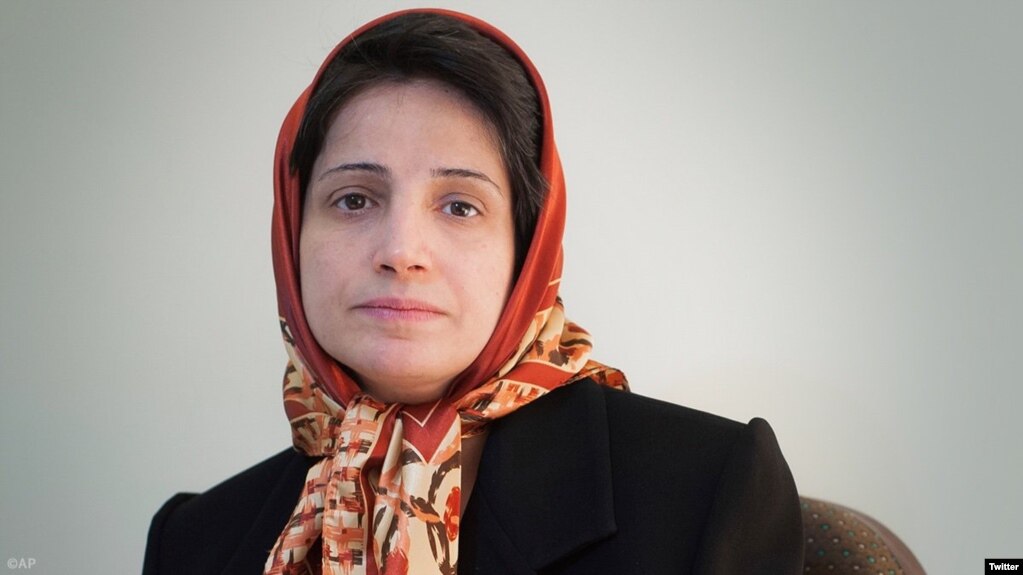
Iranian human rights lawyer Nasrin Sotoudeh

Sotoudeh had been on a hunger strike in Tehran’s Evin prison since August 11 to protest the risk that political prisoners in Iran face amid the coronavirus pandemic. [see also: https://humanrightsdefenders.blog/2020/09/06/german-judges-give-their-human-rights-award-to-iranian-human-rights-lawyer-nasrin-sotoudeh/%5D

On September 19, she was taken to hospital for a serious heart condition. But four days later, she was taken back to Evin prison, triggering disbelief from UN independent experts among others.

“It is unfathomable that the Iranian authorities would return Ms. Sotoudeh to prison where she is at heightened risk to COVID-19, as well as with her serious heart condition,” the experts said.

We urge the authorities to immediately reverse this decision, accept her requests to recuperate at home before undergoing a heart procedure, and allow her to freely choose her own medical treatment,” they added in a statement.

The experts echoed Sotoudeh’s call for the Iranian authorities to grant temporary release to human rights defenders, lawyers, dual and foreign nationals, prisoners of conscience, political prisoners, and all other individuals detained without sufficient legal basis during the COVID-19 pandemic.

47 countries called on Iran to “protect the human rights of all its citizens and release all political prisoners and arbitrarily detained” in a Friday session of the UN Human Rights Council, according to a German diplomat, Susanne Baumann:

Susanne Baumann
@GERMANYonUN
Joint Statement on the dire human rights situation in Iran today in the Human Rights Council #HRC45, presented by Germany on behalf of 47 countries. We call on Iran to protect the human rights of all its citizens and release all political prisoners & arbitrarily detained.
———

https://www.rferl.org/a/jailed-iranian-human-rights-defender-ends-hunger-strike-as-health-deteriorates/30859117.html

https://www.rudaw.net/english/middleeast/iran/26092020

https://www.scoop.co.nz/stories/WO2009/S00203/iran-human-rights-lawyer-nasrin-sotoudeh-must-be-freed-for-treatment-say-un-experts.htm

Medical negligence in Egypt’s prisons alarming: another victim

September 4, 2020
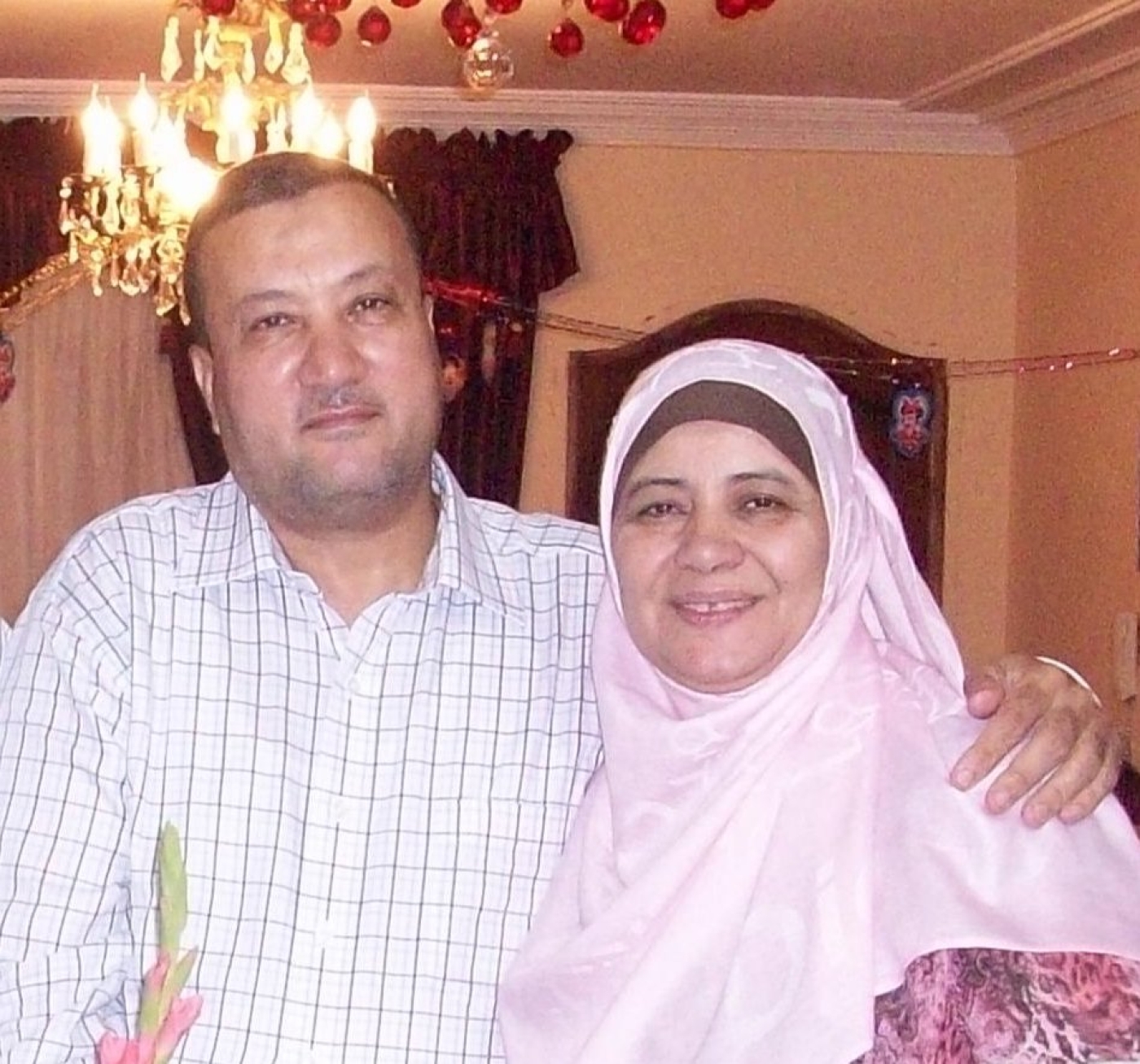
Ahmed Abdrabbu (L) and his wife
Ahmed Abdrabbu, left, and wife were arrested at Cairo International Airport on 23 December 2018 (Twitter/@nosaybaahmed)
On 2 September 2020 the Middle East Eye reported that – according to the Committee for Justice (CFJ )- Egyptian human rights defender Ahmed Abdrabbu became the latest of some 1,000 prisoners to die amid medical negligence since Abdel Fattah el-Sisi assumed presidency.

The Tora prison, also known as “the Scorpion“, has been repeatedly denounced by rights groups and described as “degrading” by Human Rights Watch. “Authorities there have denied inmates contact with their families or lawyers for months at a time, held them in degrading conditions without beds, mattresses or basic hygienic items, humiliated, beaten, and confined them for weeks in cramped ‘discipline’ cells – treatment that probably amounted to torture in some cases,” HRW said in a report in 2016.

According to Abdrabbu’s family, the publisher was arrested on 23 December 2018 at Cairo International Airport and was later charged with “membership in a terrorist organisation” and working to “undermine the constitution”, accusations commonly used by Egyptian authorities against opponents of the government of President Abdel Fattah el-Sisi. His wife, who was with him at the time, was released in June 2019 and is currently serving parole, his daughter Nusaiba wrote on Twitter.

According to Mehreh’s CFJ, which tracks deaths in Egyptian prisons, including those as a result of Covid-19, almost 1,000 prisoners have died in custody since July 2013. The majority of those deaths were because of medical negligence, Mefreh told MEE. In its biannual report, CFJ documented the deaths of 51 prisoners as a result of denial of medical care in detention facilities during the first half of 2020, including 17 people who died of Covid-19. Those whose deaths were attributed to medical negligence in recent years include former President Mohamed Morsi, Egyptian-American prisoner Mustafa Kassem, film director Shadi Habash, and former Muslim Brotherhood MP Essam El-Erian. [see also: https://humanrightsdefenders.blog/2020/05/02/filmmaker-and-human-rights-defender-shady-habash-dies-in-egyptian-pre-trial-detention/]

See also: https://humanrightsdefenders.blog/2020/08/07/update-to-monas-campaign-for-her-sister/

https://www.middleeasteye.net/news/egypt-political-prisoner-father-american-citizen-dies-jail

European MPs want EU to become serious about linking Corona virus payments to human rights

August 27, 2020
Political leaders in the European Parliament will insist that the EU’s massive budget payouts be dependent on countries meeting human rights and media freedom standards, they said on Wednesday.26 August 2020.  Targeted, but not named, were Hungary and Poland, countries that receive massive subsidies from the EU budget, but flout calls by Brussels to meet commitments on fundamental freedoms.

The time has come to accelerate the fight against the erosion of democracy, the rule of law and fundamental rights in the very heart of the EU,” said the letter, signed by leaders from the centre-right, centre-left, centrist and green parties.

The letter was addressed to Chancellor Angela Merkel of Germany, which currently holds the EU’s rotating presidency, as well as Ursula von der Leyen, the head of the commission, the EU’s executive arm that hands out the cash. Unless there are changes, the European Parliament has already vowed to veto the multi-year, one-trillion-euro budget — along with a massive pandemic recovery fund — that was thrashed out between heads of government at a summit in July.

Parliament members are due to sit down with representatives from the member states on Thursday to seek a compromise, with MEPs insisting on stricter conditions around civil rights.  The summit deal in July was seen by some as not putting enough pressure on countries to respect core EU values, especially after Hungarian Prime Minister Viktor Orban hailed a “huge victory” against conditionality after the talks.

In their letter on Wednesday, the MEPs insisted that EU member states approve a parliament proposal from April 2019 which would firmly link EU spending to the rule of law, which they vetoed at the time. Without its formal approval, “it will be impossible for us to move forward” on the EU budget, the group leaders said.

The EU budget is deeply intertwined with the 750 billion euro post-virus recovery fund, that parliament does not have a say over.  But given the historic recession afflicting Europe, member states are under huge pressure to implement the plan and the budget as soon as possible, hopefully by the end of the year.

Recent events in Hungary and Poland suggest the countries have little intention of addressing EU concerns over attacks on media freedom, LGBTI rights and the independence of the courts. A day after the summit in July, the editor of Hungary’s top independent news site was fired, seen as another sign of the Orban government’s attacks on opposition media. In Poland, the UN’s AIDS programme this month voiced deep concern about the “intensifying persecution” of LGBTI people, as well as crackdowns on human rights defenders.

https://www.macaubusiness.com/top-euro-mps-to-merkel-no-eu-budget-without-rule-of-law/

Exclusion of human rights defenders from COVID-release measures is the norm

August 6, 2020
Governments who were lauded for releasing prisoners in response to COVID-19 outbreaks have in fact excluded human rights defenders from the measures and continue to make new arrests of activists, journalists and critics.

In a new briefing, “Daring to Stand up for Human Rights in a Pandemic”, which documents attacks on human rights defenders during the pandemic, the organization highlights the hypocrisy of governments including Egypt, India, Iran and Turkey, who have left prisoners of conscience to languish in appalling conditions despite widely publicized prisoner release programmes.

“COVID-19 has been an added punishment for human rights defenders who are unjustly imprisoned, and has also been used as a pretext for further harassment, prosecution and even killings,” said Lisa Maracani, Amnesty International’s Researcher on Human Rights Defenders. “The exclusion of human rights defenders from release measures underscores the political nature of their imprisonment. In Turkey for example, journalists, lawyers, activists and opposition politicians held in pre-trial detention on baseless charges remain behind bars despite government measures that have seen over 100,000 people released since April. It is plain to see that the Turkish government still fears criticism more than the pandemic.”

The new briefing documents attacks on human rights defenders during the COVID-19 period in 46 countries, and shows how “fake news” laws, movement restrictions, reduced police protection and heightened intolerance to criticism have led to new crackdowns around the world, including against whistle-blowers in the health sector and those highlighting inadequate responses to the pandemic.

Amnesty International has identified 131 people who speak up for human rights globally who have been harassed, prosecuted, killed or imprisoned on COVID-19-related pretexts – this figure is likely to be the tip of the iceberg.

On 25 March 2020, the UN High Commissioner for Human Rights urged all states to release “every person detained without sufficient legal basis, including political prisoners, and those detained for critical, dissenting views” in response to the COVID-19 pandemic. However, several countries excluded human rights defenders from decongestion measures in prisons and other places of detention. [see also: https://humanrightsdefenders.blog/2020/05/30/virutal-human-rights-council-adopts-presidents-statement-on-implications-of-covid-19/]

In India, for example, many students and activists who had participated in peaceful protests against India’s discriminatory citizenship law continue to be unjustly detained.

In Egypt, the government failed to release human rights defenders detained solely for expressing their views, as well as thousands of other pre-trial detainees, many of whom are facing overly vague “terrorism”- related charges amid concerns over breaches of due process.

In Turkey, decongestion measures have explicitly excluded those who are held in pre-trial detention, and those who are on remand for or have been convicted of offences under Turkey’s overly broad anti-terrorism laws. They include political and human rights activists, journalists, academics, and others who have spoken out against the government.

In Iran, authorities announced that they had temporarily released 85,000 prisoners but many human rights defenders continue to be held on politically motivated charges in appalling conditions.

They include Narges Mohammadi, a human rights defender who suffers from serious pre-existing health conditions and is showing suspected COVID-19 symptoms. The authorities continue to deny Narges Mohammadi health care in prison, and refuse to inform her of the results of a COVID-19 test taken on 8 July. Note that today (6 Augusrt 2020) th Voice of America reported: “in a written message sent to VOA Persian on Tuesday, Mohammadi’s husband, Taghi Rahmani, living in exile in Paris, said the dangerous phase of his wife’s illness had passed. Rahmani said his wife had been at risk of serious health complications if the illness had spread to her lungs, which already had been hobbled by a preexisting disease.”[https://www.voanews.com/middle-east/voa-news-iran/jailed-iranian-journalist-mohammadi-out-danger-coronavirus-husband-says]

Amid the crisis, Iranian authorities have also continued to arbitrarily arrest and imprison human rights defenders. In other countries where prisons are already severely overcrowded, governments have continued to arrest human rights defenders on trumped-up charges, exacerbating the problem and putting more people at risk.  In Azerbaijan for example, the government has mounted a new wave of arrests and prosecutions of dozens of political activists, journalists and human rights defenders, often in response to their criticism of the government’s handling of the pandemic. Among those arrested are opposition activist Tofig Yagublu on bogus charges of hooliganism, and human rights defender Elchin Mammad, who was arrested on theft charges days after he published a report on the human rights situation in the country.

New arrests of human rights defenders have also been reported in Tunisia, Morocco, Niger, Zimbabwe and Angola, among others.

“International cooperation must also include pressuring governments to release people who are in prison simply for peacefully exercising their human rights, and who are now at serious risk of contracting COVID-19.” said AI/

In Honduras, the most serious recent incident includes the possible forced disappearance of five young men, four of whom are activists with the Black Fraternal Organisation of Honduras (OFRANEH). They were taken from their homes on 18 July by men wearing police uniforms and have not been seen since.

In Colombia, civil society organization INDEPAZ has reported 166 killings during the first six months of 2020. Among them was Carlota Isabel Salinas Pérez, a women’s rights activist killed outside her home in March. Carlota was a community leader and had been collecting foodstuffs for families in need on the day she was killed.

Now more than ever, the work of human rights defenders is essential in fighting for equal access to healthcare, food and shelter, and informing the public about the virus and ways to protect themselves. Governments who exploit this crisis to attack human rights defenders should know they are being closely watched,” said Lisa Maracani. “It is vital that governments provide effective protection to human rights defenders and ensure they are safe from those attempting to exploit the pandemic and silence them.”

https://www.amnesty.org/en/latest/news/2020/08/attacks-on-hrds-during-pandemic-report/

Troubling Trends in Southern Africa: Tanzania and Zimbabwe

August 5, 2020
Tanzania's President John Magufuli addresses members of the ruling Chama Cha Mapinduzi Party (CCM) at the party's sub-head office on Lumumba road in Dar es Salaam, October 30, 2015
Tanzania’s President John Magufuli addresses members of the ruling Chama Cha Mapinduzi Party (CCM) at the party’s sub-head office on Lumumba road in Dar es Salaam, October 30, 2015 Emmanuel Herman / REUTERS

Michelle Gavin – In a blog post of 29 July, 2020 – draws attention to the deterioriation in Tanzania where President John Magufuli claims that Tanzania is free from the virus and tourists should feel confident about visiting the country. To ensure that the public will take his word for it, official data on the number of positive cases has not been released since the end of April, part of a pattern of hiding, or tightly controlling information that in most countries can be accessed and interrogated without incident. Since his election in 2015 on an anti-corruption platform, Magufuli’s penchant for eliminating or suppressing discordant narratives has proven toxic to his country’s democracy.

Brave Tanzanians continue finding ways to speak out about the shrinking space for discourse and dissent in their country [see e.g.: https://humanrightsdefenders.blog/2019/12/31/annual-reports-2019-tanzania-mostly-a-bad-year/]. Outsiders, including UN human rights experts, have spoken out about the persecution of journalists, civil society leaders, and opposition politicians [see e.g.: https://humanrightsdefenders.blog/2020/04/06/tanzania-shows-great-power-sensitivity-to-un-human-rights-criticism/. ….

In this climate, it’s difficult to be optimistic about the upcoming October elections. The legal context in which opposition parties operate has changed, limiting their capacity to mobilize voters, and major civil society organizations have been disqualified from observing the polling. In Zanzibar, where citizens’ civil and political rights have been denied multiple times in the context of elections, the voter registration system has only added to citizens’ mistrust of the process. The stage increasingly looks to be set for an election that serves the interests of the current leader, but erodes popular trust in democracy itself.

in the meantime in neighbouring Zimbabwe dozens of people have been arrested and detained in the past few weeks over protests against government officials and corruption. Speaking on Tuesday 5 August 2020, President Emmerson Mnangagwa accused who he referred to as “rogue Zimbabweans” of working together with foreign detractors to destabilise Zimbabwe. “We will overcome attempts at destabilisation of our society by a few rogue Zimbabweans acting in league with foreign detractors,” Mnangagwa said.

Inflation in Zimbabwe is more than 700 per cent and last month the World Food Programme projected that by the end of the year 60 per cent of the country’s population will lack reliable access to sufficient food.

Footage of violence carried out by security forces and the detaining of opposition politicians and government critics has drawn international condemnation. Inspired by the Black Lives Matter call to action, Zimbabweans have expressed their thoughts and demands for actions on social media using the hashtag #ZimbabweanLivesMatter.

The UN Human Rights Council is among those expressing concern about claims the authorities in Zimbabwe are using the COVID-19 outbreak to crackdown on freedom of expression and peaceful protest.

“While recognising the government’s efforts to contain the pandemic”, the OHCHR spokesperson said, “it is important to remind the authorities that any lockdown measures and restrictions should be necessary, proportionate and time-limited, and enforced humanely without resorting to unnecessary or excessive force”.

Amnesty International said in a statement released last week that a number of activists had gone into hiding after police published a list of names of those wanted for questioning in connection with the planned protests. 

Muleya Mwananyanda, Amnesty International’s deputy director for Southern Africa, said: “The brutal assault on political activists and human rights defenders who have had the courage to call out alleged corruption and demand accountability from their government is intensifying. The persecution of these activists is a blatant abuse of the criminal justice system and mockery of justice.

Shannon Ebrahim – Independent Media’s foreign editor – on 5 August 2020 wrote from Pretoria that a week ago she was a speaker at a webinar on Zimbabwe organised by the South African Liaison Office, and sh spoke after the spokesperson of the MDC Alliance, Fadzayi Mahere. I was impressed by her eloquence, professionalism and commitment to human rights and the rule of law.It never occurred to me, looking at this immaculately-dressed young lawyer, that in three days she would find herself in a filthy police holding cell overnight with other women, no water, no sanitiser, only an overflowing pit latrine and a few filthy blankets.

,,Mahere saw her colleagues, Terrence and Loveridge, in the other holding cells. They had been abducted, beaten and tortured, and had bleeding head injuries. They had been blindfolded, told they were at Lake Chivero and were going to be fed to the crocodiles.

…It is a great tragedy that 40 years after liberation, Zimbabweans are asking themselves how there is no rule of law or political freedom.

See also: https://humanrightsdefenders.blog/2020/01/16/human-rights-in-africa-in-2019-rage/

—-

https://www.cfr.org/blog/troubling-trends-threaten-what-little-trust-remains-tanzanias-democracy

https://www.voice-online.co.uk/news/world-news/2020/08/04/zimbabwe-president-mnangagwa-issues-warning-to-critics/

https://www.bignewsnetwork.com/news/265993300/explainer–what-you-need-to-know-about-whats-happening-in-zimbabwe

https://www.iol.co.za/news/opinion/zimbabweans-are-relying-on-us-to-speak-for-them-when-they-are-silenced-9c650bdc-66b9-4cdf-9be8-900b5a13d0c6

Former Botswana president Ian Khama throws weight behind #ZimbabweanLivesMatter


US$1 million fund? to support 100 NGOs hit by COVID-19

July 23, 2020

Global leaders and civil society groups are to launch a COVID-19 Grassroots Justice Fund to help marginalised and oppressed communities protect their rights during the pandemic and ensure equitable recovery.

Mary Robinson, Chair of The Elders and former UN High Commissioner for Human Rights, said on 22 July 2020: “COVID-19 has exacerbated the problems of inequality and injustice and made it harder for grassroots organisations to provide much needed support. The COVID-19 Grassroots Justice Fund is a lifeline to these organisations as they adapt to the challenges created by this unprecedented pandemic, and I am proud that The Elders are supporting it with our partners.

Mary Robinson: Profile

The Elders, the Legal Empowerment Network, Namati, Justice For All, Pathfinders and the Fund for Global Human Rights have come together as non-funding partners to assemble the COVID-19 Grassroots Justice Fund, which aims to raise US$1 million to support 100 grassroots justice groups within 12-18 months.

The Legal Empowerment Network will ensure that grantee selection is led by and for grassroots justice leaders. The Fund for Global Human Rights will administer funds, bringing to bear its deep experience channelling resources to grassroots groups around the world. The Pathfinders develop evidence-based strategies for justice for all in a pandemic and will make the case for investing in grassroots justice organisations as part of the pandemic response. The Elders will use their powerful global platform to highlight the vital work of grassroots justice in the pandemic.

A one-time grant will be provided to qualified grassroots justice defenders and aims to help save lives and address the intertwined health, economic and justice crisis. Applications will initially be limited to groups who have already participated in the Legal Empowerment Network’s COVID-19 Justice Challenge and other COVID-19 activities. An open call will be announced in the future to wider groups, depending on availability of funds…

https://www.looktothestars.org/news/19835-new-covid-19-justice-fund-targets-1-million-for-grassroots-groups

Hannah Foster decries Human Rights Violations amid COVID-19 in Africa

July 16, 2020

On 14 July 2020 the FOROYAA Newspaper carried a summary of remarks made by Hannah Foster, who is the spokesperson of the NGOs Forum at the opening ceremony of the 66th Ordinary Session of the African Commission on Human and Peoples’ Rights (ACHPR) which started on Monday July 13th 2020 (via Zoom)

Gambian human rights defender, Mrs. Hannah Foster, has raised concern about human rights violations in Africa, in particular amid the spread of Covid-19

We all have seen that from all parts of the world human rights violations have remained a major concern in most countries. Since late December 2019, the Coronavirus which causes Covid-19 has held the world captive with uncertainties, fear and insecurity. In most countries, we’ve seen the freedom of association and assembly remains a major cause for concern in most of the countries reviewed,” she said

Madam Foster said it is also a cause for concern that with Covid-19, there has been an increase of gender based violence registered in most of the countries that have been reviewed by the Forum.

She added that it was reported at the Forum that systematic harassment and targeting of human rights defenders in many countries persist and or have intensified the closing of civic space due to the existence of restrictive legislations.

“It was ascertained that a lot more needs to be done as many African countries continue to face challenges of insecurity, violence, terror attacks and the volatile situation brought about by Covid-19,” she said.

Speaking further, Madam Foster said they had raised the issue of overcrowding in prisons especially during Covid-19. “The overcrowding of prisons due to non-observance of judicial guarantees in respect of remand detainees as well as standard minimum rules, also have created challenges. And the Forum calls on the African Commission to urge States to respect and implement all laws governing the treatment of prisoners especially in this time of Covid-19, which has brought about an extension of restricting laws that are being implemented,” Foster informed the participants.

Foster said the Forum urged more States and NGOs to use and popularize the African Commission processes and decisions and to encourage States to comply with decisions as well as consider signing the Protocol on the right to individul complaint

We have challenges of Benin and Cote d’Ivoire withdrawing their signatures of Article 346. And we will like to urge the Commission to enter into dialogue with them to ensure that they encourage them to review the decision,” she said.

Foster said the forum also observed that freedom of expressions, the criminalization of bloggers and internet restrictions continue to hinder the independent and freedom of journalists and like-minded groups.

Humanitarian access has also become very problematic. The Forum took this opportunity to call on the African Commission and all States that have not ratified pertinent treaties to speedily do so in order to enable their implementation as the enjoyment of those rights by all citizens,” she added.

Read the original article on Foroyaa.

https://allafrica.com/stories/202007150349.html