The Hong Kong Free Press comes on 17 December 2020 with the AFP story that the UN Special Raporteur Mary Lawlor slammed a years-long crackdown on rights defenders and lawyers in China, highlighting the case of one attorney who disappeared after revealing he was tortured in detention.
Mary Lawlor, the UN Special Rapporteur on the situation of human rights defenders, warned in a statement endorsed by seven other UN rights experts, that a clampdown that began more than five years ago aimed at courtroom critics of Communist authorities was continuing unabated.
In her statement, Lawlor pointed to the recent arrest and “enforced disappearance” of activist and attorney Chang Weiping as emblematic of Beijing’s efforts to silence lawyers who speak out about the deterioration of human rights in the country.
He was held on suspicion of “subversion of state power” and his licence was annulled, she said. Just days after he posted a video online in October describing the torture and ill-treatment he was allegedly subjected to during his detention, he was detained again and returned to RSDL in retaliation for his video. “Since then, the defender’s whereabouts remain unknown, his lawyers have been unable to contact him and no charges have been brought against him,” Wednesday’s statement said.
“Fundamental human rights are not a threat to any government or society, and neither are the individuals who defend those rights,” she added. “I urge the Chinese authorities to release at once Chang Weiping and all other detained and disappeared human rights defenders.”
Not surprisingly The reaction by China was swift and tough: “By using misinformation, relevant (UN) mandate holders blatantly smear China,” Liu Yuyin, a spokesman at the Chinese mission in Geneva, said in a statement issued 16 December. As for Chang’s case, Liu insisted his “legitimate rights were fully protected.” Chang “was subject to criminal coercive measures by the public security organ in Shanxi Province on October 22, 2020, on suspicion of criminal offences.”
The remarks by Lawlor and other UN experts about the lawyer’s case, Liu warned, “seriously (violate) the spirit of the rule of law and fully exposes their bias against China.”
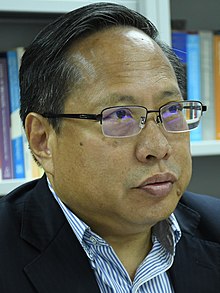
Human Rights First announced today that it will award the 2020 Roger N. Baldwin Medal of Liberty to Hong Kong human rights defender Albert Ho. The award will be presented today 10 December in a virtual event that will include a conversation between Ho and Human Rights First Senior Advisor Brian Dooley.
Albert Ho is a veteran Hong Kong lawyer and advocate whose career in human rights and political activism stretches back almost four decades. A leading figure in the pro-democracy movement for many years, he remains prominent in the protest movement that energized Hong Kong in 2019 and 2020.
“No dictatorship is too big or too strong to take on,” said Vladimir Vladimir Kara-Murza, Senior Advisor for Human Rights Accountability at Human Rights First and 2020 Baldwin Award jury member. “This decision shows who is right and wrong, and Albert Ho is in the right. There are no lost causes, and the cause of democracy in China is not lost.”
Ho is now facing a dozen charges related to those peaceful protests and his law firm continues to represent many others who have protest-related charges.
“I’m honored to accept this award,” said Ho, “but I do it on behalf of many colleagues who have shared the case of human rights in Hong Kong with me for so many years.”
Ho is the co-founder and senior partner of Ho, Tse, Wai and Partners (HTW), a Hong Kong law firm renown for advocacy on landmark human rights cases. Ho and HTW have represented many arrested pro-democracy protestors and challenged many of the Hong Kong government’s dubious actions, such as the banning of face masks under a colonial-era law and the disqualification of numerous pro-democracy lawmakers.
Ho has also done extensive advocacy for human rights lawyers in mainland China. He founded the China Human Rights Lawyers Concern Group in 2007 to provide humanitarian assistance to detained human rights lawyers and their families, advocate on behalf of detained lawyers, and share knowledge and experience with Chinese lawyers.
Despite surveillance and threats by Chinese authorities, Ho has maintained his steadfast support for his peers in mainland China in the face of the government’s crackdown on human rights lawyers, the “709 crackdown” known for the day it began – July 9, 2015. Placing the pursuit of justice before his own safety, Ho continues to raise awareness of the plight of human rights lawyers in China to see that the world holds the Chinese Communist Party accountable for human rights abuses.
On the occasion of International Women Human Rights Defenders Day (29 November) and marking this year’s 16 Days Campaign to combat gender based violence, Front Line Defenders presents a new edition of Cypher: https://www.frontlinedefenders.org/sites/default/files/cypher05.pdf , the digital monthly comic magazine featuring stories of human rights defenders from around the world. This edition features stories of WHRDs working for accountability in the context of the rights of women and girls, with a focus on GBV, from Zimbabwe, Transnistria/Moldova, Tonga and Argentina. [see also: https://humanrightsdefenders.blog/2020/07/23/new-cypher-comics-for-human-rights-defenders/]
Also in celebration of International Women Human Rights Defenders Day the International Service for Human Rights (ISHR) in Geneva organises an on-line ‘exhibition “The Gaze that Subverts” of pieces by the painter Z.
Each painting tells a story of a woman or women who, in defiance of patriarchal structures and authoritarian repression, occupy public space in China in their fight for justice.
Z’s paintings are both prompted by, and provide – in their embodiment, the bent torso, the flexed muscle – a response to, a central question of rights defence: ‘How do we change unjust power relationships with the all-too-scarce resources we have at our disposal?’
On 10 November 2020 Scholars at Risk (SAR) announced that Dr. Rahile Dawut is the recipient of its Courage to Think Award for 2020. Dr. Dawut is being recognized for her own work, as well as that of all the scholars and students of the Xinjiang Uyghur Autonomous Region, who together struggle for academic freedom and freedom of opinion, expression, belief, association, and movement.
Dr. Dawut is an Associate Professor in the Human Science Institute of Xinjiang University and founder of the Minorities Folklore Research Center in Xinjiang University. In December 2017, Dr. Dawut told a relative of her plans to travel from Urumqi to Beijing. Shortly thereafter, her family and friends lost contact with her. Professor Dawut’s disappearance was made public in August 2018. It is suspected that she is held by state authorities at an undisclosed location.
“My mother is a scholar, not a criminal,” said Akeda Pulati. “She studies the folklore and cultural traditions of minority populations. That is not a threat to the government, other institutions, or the people of China.”
“The imprisonment of Dr. Dawut, an internationally recognized scholar of Uyghur culture, reveals the Chinese government’s blatant repression of voices and ideas it finds displeasing,” said Rob Quinn, executive director of SAR. “This constricts academic activity and public expression, threatening minority traditions, histories, and languages. The disappearance of Dr. Dawut, along with many thousands of others, is an atrocity we should all strive to end.”
Over the last several years, the world has seen China taking on more responsibility and power in international institutions. China’s growing ‘activism’ has provided a glimpse into its ambitions to assert a greater role for itself on matters of global governance. China’s growing activism also has raised key questions about the scale of Beijing’s ambitions and the tools it would be willing to use to advance them. On September 21, Foreign Policyat Brookings hosted a webinar to address these and other questions concerning China’s evolving approach to international institutions, rules, and norms. The event launched the next tranche of Brookings papers released as part of its series “Global China: Assessing China’s Growing Role in the World.” From human rights to energy to trade, these papers present a range of arguments for observers of China and policymakers to consider as they evaluate China’s role on the international stage.
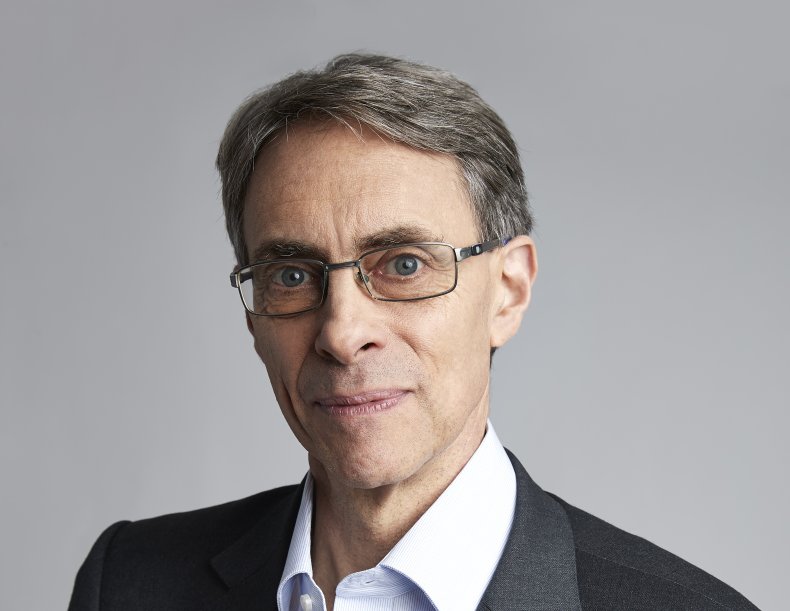
In Newsweek of 21 September 2020 Basit Mahmood did an interview with Kenneth Roth who has spent 27 years as the executive director of Human Rights Watch (HRW) in which he warns that China poses a threat to the global human rights system, that U.S. is no longer to be relied on as a supporter of human rights and how this has left a void, emboldening autocrats who have used the pandemic to undermine democratic societies.
“China and the threat it poses to human rights both at home and around the world is a huge issue,” he says, identifying the current period as the darkest in China’s history when it comes to human rights since the Tiananmen Square massacre in 1989. More than a million Uighur Muslims have been put in internment camps in the country’s Xinjiang province, According to the United Nations (U.N.). China says the camps serve as “re-education” centers designed to combat extremism, but those who have managed to escape share stories of forced labor, torture, medical experiments and rape. Roth says: “The Uighurs are the most severe example of worsening repression under Xi Jinping (China’s prime minister). It’s quite clear that this is the darkest moment in China in human rights terms since the massacre of Tiananmen Square protesters in 1989, the Uyghurs have been the most grievous sufferers of that where a million or more have been detained essentially to force them to abandon Islam and their culture.” The worsening repression doesn’t just extend to minorities, it’s something Roth says we can see also occurring in Hong Kong and Tibet as well as against China’s own population more widely.
“There is no independent civil society,” he says. “There is no independent media, human rights defenders are routinely imprisoned. There is a complete lockdown on any organized public dissent and that is just across the board, not just minority population areas. China’s also building this so-called social credit system which is designed to condition access to various governmental benefits on one’s social reliability. So it’s using high-tech tools to control the population.“…
….
On the human rights challenges facing Europe, Roth expresses particular concern about the situation in Belarus, where the man dubbed “Europe’s last dictator“, Alexander Lukashenko, is facing widespread protests over a disputed election. Lukashenko has been in power since 1994, with the government frequently accused of repressing the opposition….
Kenneth Roth, executive director of Human Rights Watch
He also thinks India‘s Prime Minister Modi has got away with what he calls his systematic discrimination against the country’s 172 million Muslims because of the West’s desire to tap into Indian markets and use it as a counterweight against China, which Newsweek will be reporting on in the coming days.
Roth is highly critical of the Trump administration, accusing the president’s foreign policy of being driven by the guiding principle of “self-glorification” and only speaking out in defense of human rights when the offending country is a perceived adversary.
“Trump is utterly uninterested in calling out any human rights violation by anybody other than a handful of perceived adversaries, China, Venezuela, Iran, Nicaragua and Cuba and that’s about it, which is a completely unprincipled approach to human rights which does not attract any adherence and greatly weakens the force of US intervention,” he says. “Human Rights Watch has been living with Trump for four years now and we have already stopped relying on the U.S. as anything like a principled supporter of human rights.”
With the U.S. increasingly withdrawing from the world stage and with the European Union not really filling the void, as he says, is there a new approach to the defense of human rights emerging?
On 17 September 2020 the Human Rights Foundation announced the three recipients of the 2020 Václav Havel International Prize for Creative Dissent.
The 2020 Havel laureates are Chinese visual artist Badiucao, Saudi political satirist Omar Abdulaziz, and the late Rwandan gospel musician and peace and reconciliation activist Kizito Mihigo, who is the first posthumous recipient since the inception of the prize in 2012. This year’s laureates will receive their awards at 11:45 a.m. EDT on Friday, 25 September, during the 2020 Oslo Freedom Forum.
Badiucao is an exiled Chinese dissident artist based in Australia. His political artwork has unmasked the lies of the Chinese regime, raised awareness for pro-democracy protests in Hong Kong, and exposed the Chinese Communist Party’s censorship of the coronavirus pandemic. Badiucao is the creator of the Lennon Flag, which became a powerful protest symbol that inspired and mobilized the global community to stand in solidarity with Hong Kong’s pro-democracy movement. The Chinese regime has tried to silence Badiucao by intimidating his family in China.
Omar Abdulaziz is an exiled Saudi political satirist and activist based in Canada. His satirical news show on YouTube has uncovered the lies of the Saudi regime. His activism has raised awareness about ongoing repression and human rights abuses in the kingdom, where freedom of expression is nonexistent and political satire is a crime. The Saudi regime has tried to silence his activism by intimidating his family, offering bribes, and making him a target of surveillance.
Kizito Mihigo was a Rwandan catholic gospel singer, songwriter, organist, and the founder of the Kizito Mihigo Peace Foundation, which promoted peace, reconciliation, and nonviolence in schools and prisons through concerts, plays, and poetry. An ethnic Tutsi, he showed tremendous courage in a 2014 song in which he called for compassion for all civilians killed by Paul Kagame’s Tutsi-dominated ruling Rwandan Patriotric Front forces after Rwanda’s 1994 genocide. The regime quickly banned the song as it contradicted its official narrative, which presents ethnic Tutsis as the sole victims of Rwanda’s tragedy. Mihigo released the song with full knowledge that it would lead to terrible consequences. “The message is sometimes more important than the messenger,” he said. He was detained in order to be paraded as a conspirator in a violent anti-government plot and sentenced to 10 years in prison. He was released on pardon after serving three years, but he was arrested again while attempting to leave the country and died in police custody in February 2020. The regime claimed it was a suicide, but Mihigo told friends weeks before his death that he had been under government harassment and pressure to provide false testimony against political opponents.
In an open letter published Wednesday 9 September 2020 the groups say they are seeking greater scrutiny of and response to violations in places like Hong Kong, Tibet and Xinjiang, as well as beyond — such as through censorship, development that hurts the environment and the targeting of rights defenders.
The call for the creation of an “independent international mechanism” to focus on China’s rights violations adds to recent international pressure on Beijing over its handling of issues like protests in Hong Kong and detention centers — what the government calls vocational or training centers — for Uighur Muslims and others in western Xinjiang region.
“China has systematically persecuted rights defenders in reprisal for their cooperation with U.N. human rights operations — torture, enforced disappearance, imprisonment, and stripping licenses from lawyers,” said Renee Xia, director of Chinese Human Rights Defenders, in a statement. “The U.N. system should no longer tolerate such treatment.”
The move follows a call by independent experts who work with the United Nations for a special session of the Human Rights Council focusing on the array of issues around China’s rights record. Advocates insist that no country — no matter how large or powerful — should escape extra scrutiny of their rights records when warranted. [see also https://humanrightsdefenders.blog/2020/06/27/un-experts-address-3-big-ones-usa-china-and-india/]
The groups also want U.N. Secretary-General Antonio Guterres and the U.N. High Commissioner for Human Rights, Michelle Bachelet, to “take responsibility for publicly addressing China’s sweeping rights violations,” Human Rights Watch said in a statement.
At a news conference Wednesday in Beijing, Chinese Foreign Ministry spokesman Zhao Lijian sought to brush off the groups’ appeal, saying: “I think the statements made by these organizations are groundless and not worth refuting.”
The appeal comes before the start of the 47-member-state Human Rights Council’s fall session on Monday. In its summer session, the council held an urgent debate on a rise of police violence against Black people and repression of protests in the United States.
Kunal Gaurav in Republic World of 29 August 2020 illustrates again how extremely sensitive China remains with regard to human rights awards, unwittingly underlining the strong symbolic value they can have.
China has warned Norway against awarding Nobel Peace Prize to pro-democracy activists of Hong Kong, saying it doesn’t want to see the politicisation of the award. Chinese Foreign Minister Wang Yi was on a rare visit to Norway as the country prepares to take up the rotational seat of United Nations Security Council, of which China is a permanent member, for 2021-22.
“I would only say one thing: In the past, today, and in future, China will firmly reject any attempt by anyone to use the Nobel Peace Prize to interfere in China’s internal affairs,” Wang told reporters when asked about the possibility.
The decision to award the Nobel Peace Prize to Dalai Lama, head monk of Tibetan Buddhism, for his willingness to compromise and seek reconciliation despite brutal violations had irked China. Later, the Nobel Foundation awarded the prize to Lui Xiaobo for his long and non-violent struggle for fundamental human rights in China. The decision immediately froze diplomatic relations between Norway and China, which resumed in December 2016.
Hong Kong has been the epicentre of pro-democracy protests and China enforced a controversial security law which has allegedly undermined the autonomy of the region. Several countries have revoked the extradition treaty with the semi-autonomous region, calling the draconian law as a flagrant violation of Sino-British agreement after which the city returned to Chinese rule.
According to a Hong Kong daily, the foreign minister said that the Chinese government doesn’t want to see anyone politicise the Nobel Peace Prize. Calling on Norway to cherish the current relationship, Wang said that the bilateral relationship can continue to develop in a sustained and sound manner if both parties can “continue to respect each other and treat each other as equals.”
At a press briefing on August 28, Norwegian Foreign Minister Ine Eriksen Søreide said that the leaders had an extensive discussion ranging from COVID-19 response to international trade and the free-trade agreement. She said that they also had extensive discussions on human rights, an issue of international concern given China’s history and ongoing crackdown in Xinjiang.
Hong Kong’s chief executive Carrie Lam on giant screens remotely addressing the opening of the UN Human Rights Council’s 44th session on in Geneva, Switzerland, 30 June 2020, FABRICE COFFRINI/AFP via Getty Images
The 44th session of the UN Human Rights Council began with China’s imposition of legislation severely undermining rights and freedoms in Hong Kong. Within days, there were reports of hundreds of arrests, some for crimes that didn’t even exist previously. We welcome efforts during this session by a growing number of States to collectively address China’s sweeping rights abuses, but more is needed. An unprecedented 50 Special Procedures recently expressed concerns at China’s mass violations in Xinjiang, Hong Kong and Tibet, suppression of information in the context of COVID-19, and the targeting of human rights defenders across the country. The Council should heed the call of these UN experts to hold a Special Session and create a mechanism to monitor and document rights violations in the country. No state is beyond international scrutiny. China’s turn has come.
The 44th session also marked an important opportunity to enable those affected directly by human rights violations to speak to the Council through NGO video statements.
Amnesty’s Laith Abu Zeyad addressed the Council remotely from the occupied West Bank where he has been trapped by a punitive travel ban imposed by Israel since October 2019. We call on the Israeli authorities to end all punitive or arbitrary travel bans.
During the interactive dialogue with the Commission of Inquiry on Syria, victims’ associations and families of victims highlighted the human rights violations occurring in detention centers in Syria. We welcome the efforts by some States to underline their demands and welcome the adoption of the Syria resolution on detainees and urge the Syrian government to take all feasible measures to release detainees and provide truth to the families, noting the important pressure needed by Member States to further call for accountability measures for crimes committed in Syria.
Collette Flanagan, Founder of Mothers against Police Brutality, also delivered a powerful video statement at the Council explaining the reality of racist policing in the United States of America. We fully support victims’ families’ appeals to the Council for accountability.
We hope that the High Commissioner’s report on systemic racism, police violence and government responses to antiracism peaceful protests will be the first step in a series of meaningful international accountability measures to fully and independently investigate police killings, to protect and facilitate Black Lives Matter and other protests, and to provide effective remedy and compensation to victims and their families in the United States of America and around the world.
We appreciate the efforts made by the Council Presidency and OHCHR to overcome the challenges of resuming the Council’s work while taking seriously health risks associated with COVID-19, including by increasing remote and online participation. We recommend that remote civil society participation continue and be strengthened for all future sessions of the Council.
Despite these efforts, delays in finalising the session dates and modalities, and subsequent changes in the programme of work, reduced the time CSOs had to prepare and engage meaningfully. This has a disproportionate impact on CSOs not based in Geneva, those based in different time zones and those with less capacity to monitor the live proceedings. Other barriers to civil society participation this session included difficulties to meet the strict technical requirements for uploading video statements, to access resolution drafts and follow informal negotiations remotely, especially from other time zones, as well as a decrease in the overall number of speaking slots available for NGO statements due to the cancellation of general debates this session as an ‘efficiency measure.’
We welcome the joint statement led by the core group on civil society space and endorsed by cross regional States and civil society, which calls on the High Commissioner to ensure that the essential role of civil society, and States’ efforts to protect and promote civil society space, are reflected in the report on impact of the COVID-19 pandemic presented to the 46th Session of the HRC. We urge all States at this Council to recognise and protect the key role that those who defend human rights play.
We therefore welcome that the resolution “the promotion and protection of human rights in the context of peaceful protests” was adopted by consensus, and that the Council stood strongly against some proposed amendments which would have weakened it. We also welcome the inclusion in the resolution of a panel during the 48th session to discuss such events and how States can strengthen protections. We urge States to ensure full accountability for such human rights violations as an essential element of the protection of human rights in the context of protests. The current context has accelerated the urgency of protecting online assembly, and we welcome that the resolution reaffirms that peaceful assembly rights guaranteed offline are also guaranteed online. In particular, we also commend the resolution for calling on States to refrain from internet shutdowns and website blocking during protests, while incorporating language on the effects of new and emerging technologies, particularly tools such as facial recognition, international mobile subscriber identity-catchers (“stingrays”) and closed-circuit television.
We welcome that the resolution on “freedom of opinion and expression” contains positive language including on obligations surrounding the right to information, emphasising the importance of measures for encryption and anonymity, and strongly condemning the use of internet shutdowns.. Following the High Commissioner’s statement raising alarm at the abuse of ‘false news’ laws to crackdown on free expression during the COVID-19 pandemic, we also welcome that the resolution stresses that responses to the spread of disinformation and misinformation must be grounded in international human rights law, including the principles of lawfulness, legitimacy, necessity and proportionality. At the same time, we are concerned by the last minute addition of language which focuses on restrictions to freedom of expression, detracting from the purpose of the resolution to promote and protect the right. As we look to the future, it is important that the core group builds on commitments contained in the resolution and elaborate on pressing freedom of expression concerns of the day, particularly for the digital age, such as the issue of surveillance or internet intermediary liability, while refocusing elements of the text.
The current context has not only accelerated the urgency of protecting assembly and access to information, but also the global recognition of the right to a safe, clean, healthy and sustainable environment. We welcome the timely discussions on ”realizing children’s right to a healthy environment” and the concrete suggestions for action from panelists, States, and civil society. The COVID-19 crisis, brought about by animal-to-human viral transmission, has clarified the interlinkages between the health of the planet and the health of all people. We therefore support the UN Secretary General’s call to action on human rights, as well as the High Commissioner’s statement advocating for the global recognition of the human right to a safe, clean, healthy and sustainable environment – already widely reflected at national and regional levels – and ask that the Council adopts a resolution in that sense. We also support the calls made by the Marshall Islands, Climate Vulnerable Forum, and other States of the Pacific particularly affected and threatened by climate change. We now urge the Council to strengthen its role in tackling the climate crisis and its adverse impacts on the realization of human rights by establishing a Special Rapporteur on Human Rights and Climate Change, which will help address the urgency of the situation and amplify the voices of affected communities.
The COVID crisis has also exacerbated discrimination against women and girls. We welcome the adoption by the Council of a strong resolution on multiple and intersecting forms of discrimination against women and girls, which are exacerbated in times of a global pandemic. The text, inter alia, reaffirms the rights to sexual and reproductive health and to bodily autonomy, and emphasizes legal obligations of States to review their legislative frameworks through an intersectional approach. We regret that such a timely topic has been questioned by certain States and that several amendments were put forward on previously agreed language.
The Council discussed several country-specific situations, and renewed the mandates in some situations.
We welcome the renewal of the Special Rapporteur’s mandate and ongoing scrutiny on Belarus. The unprecedented crackdown on human rights defenders, journalists, bloggers and members of the political opposition in recent weeks ahead of the Presidential election in August provide a clear justification for the continued focus, and the need to ensure accountability for Belarus’ actions. With concerns that the violations may increase further over the next few weeks, it is essential that the Council members and observers maintain scrutiny and pressure even after the session has finished.
We welcome the extension of the mandate of the Special Rapporteur on Eritrea. We urge the government to engage, in line with its Council membership obligations, as the Special Rapporteur’s ‘benchmarks for progress’ form a road map for human rights reform in the country.
We welcome the High Commissioner report on the human rights situation in the Philippines which concluded, among other things, that the ongoing killings appear to be widespread and systematic and that “the practical obstacles to accessing justice in the country are almost insurmountable.” We regret that even during this Council session, President Duterte signed an Anti Terrorism Law with broad and vague definition of terrorism and terrorists and other problematic provisions for human rights and rule of law, which we fear will be used to stifle and curtail the rights to freedom of opinion and expression, to freedom of peaceful assembly and of association. Also during this session, in a further attack on press freedom, Philippine Congress rejected the franchise renewal of independent media network ABS-CBN, while prominent journalist Maria Ressa and her news website Rappler continue to face court proceedings and attacks from President Duterte after Ressa’s cyber libel conviction in mid-June. We support the call from a group of Special Procedures to the Council to establish an independent, impartial investigation into human rights violations in the Philippines and urge the Council to establish it at the next session.
The two reports presented to the Council on Venezuela this session further document how lack of judicial independence and other factors perpetuate impunity and prevent access to justice for a wide range of violations of civil, cultural, economic, political, and social rights in the country. We also urge the Council to stand ready to extend, enhance and expand the mandate of the Independent International Fact-Finding Mission when it reports in September.
We also welcome the report of the Special rapporteur on the human rights situation in the Palestinian Territory occupied since 1967 and reiterate his call for States to ensure Israel puts an end to all forms of collective punishment. We also reiterate his call to ensure that the UN database of businesses involved with Israeli settlements becomes a living tool, through sufficient resourcing and annual updating.
We regret, however, that several States have escaped collective scrutiny this session.
We reiterate the UN Special Rapporteur Agnes Callamard’s call to pressure Saudi Arabia to release prisoners of conscience and women human rights defenders and call on all States to sustain the Council’s scrutiny over the situation at the September session.
As highlighted in a joint statement of Special Procedures, we call on the Indian authorities to immediately release HRDs, who include students, activists and protest leaders, arrested for protesting against changes to India’s citizenship laws. Also eleven prominent HRDs continue to be imprisoned under false charges in the Bhima Koregaon case. These activists face unfounded terror charges under draconian laws such as sedition and under the Unlawful Activities (Prevention) Act. While we welcome that Safoora Zargar was granted bail on humanitarian grounds, the others remain at high risk during a COVID-19 pandemic in prisons with not only inadequate sanitary conditions but also limited to no access to legal counsel and family members. A number of activists have tested positive in prison, including Akhil Gogoi and 80-year-old activist Varavara Rao amid a larger wave of infections that have affected many more prisoners across the country. Such charges against protestors, who were exercising their rights to freedom of peaceful assembly must be dropped. We call on this Council to strengthen their demands to the government of India for accountability over the excessive use of force by the police and other State authorities against the demonstrators.
In Algeria, between 30 March and 16 April 2020, the Special rapporteur on freedom of opinion and expression, freedom of peaceful assembly and of association, human rights defenders, issued three urgent appeals in relation to cases involving arbitrary and violent arrests, unfair trials and reprisals against human rights defenders and peaceful activists Olaya Saadi, Karim Tabbou and Slimane Hamitouche. Yet, the Council has been silent with no mention of the crackdown on Algerian civil society, including journalists.
To conclude on a positive note, we welcome the progress in the establishment of the OHCHR country office in Sudan, and call on the international community to continue to provide support where needed to the transitional authorities. While also welcoming their latest reform announcements, we urge the transitional authorities to speed up the transitional process, including reforms within the judiciary and security sectors, in order to answer the renewed calls from protesters for the enjoyment of “freedom, peace and justice” of all in Sudan. We call on the Council to ensure continued monitoring and reporting on Sudan.