Posts Tagged ‘Business and human rights’

Business & Human Rights Resource Centre seeks Executive Director

May 25, 2025

The Business & Human Rights Resource Centre (the Resource Centre) seeks a creative, strategic and inspiring leader ready to drive the next generation of progress in strengthening human rights in business. For more than two decades the Resource Centre has sought to amplify the voices of rightsholders and work collaboratively with allies and partners to strengthen corporate practices and support smart regulation to deliver a just economy, address the climate crisis and counter abuse. The ideal candidate will bring energy and insights to the Resource Centre’s vision of transformational change, which is built on community-led action and enhanced by global partnership. The Executive Director will have a strong understanding of international human rights, labour, environmental and climate frameworks as they relate to business–and how to make change happen through those frameworks. They will be able to work effectively with people and organisations at many levels, including grassroots leaders, government representatives, funders, corporate executives and investors.

The Executive Director will lead our global team of 80 across 30 locations, operating with a budget of US$6 million and working in diverse alliances and partnerships worldwide.

KEY RESPONSIBILITIES

Strategic Leadership

Management and Organisational Culture

Thought and Field Leadership

Resource Mobilization, Budget Oversight and Finance:

LOCATION AND COMPENSATION

The successful candidate can work in our offices in London, New York, Berlin, or Bogota, or remotely (home-based) anywhere there is strong and continuous internet access. Our team members are based all over the world, and most of our meetings take place during GMT hours to cover Asia and Latin America. The candidate must be committed to working across time zones, be flexible with respect to participating in early and late calls as needed, and able to work at least four hours that overlap with 09:00 – 17:00 Greenwich Mean Time (GMT).

The role requires frequent travel to all regions of the world (~35%) in order to connect in-person with Global Team members, partners, local communities, board members and funders, and to represent the Resource Centre at global events.

HOW TO APPLY

This search is being led by consultant Jenna Capeci, in partnership with the board and staff of the Business and Human Rights Resource Centre.

Timeline

Applications are due by Friday, June 13th, 2025. Selected applicants will begin to be contacted for interviews by July 2025. Interviews will be conducted from July through early September. Tentative timing for rounds of interviews are: July 14 – 18, August 13 – 22 and September 3 – 16. Finalists will be asked to create and make a brief presentation.
Anticipated start date is October/November 2025. Applications may be reviewed over time, so please be patient if you do not hear from us immediately. Applicants not invited for interviews will be notified by the end of August.

How to apply

Please apply through this portal. Only applications received in this portal will be considered.

https://reliefweb.int/job/4153128/executive-director

UN High Commissioner on National Human Rights Institutions

May 16, 2024

On 08 May 2024 the OHCHR published the address by Volker Türk, UN High Commissioner for Human Rights, to the 2024 Global Alliance of National Human Rights Institutions Annual Conference:

…The role that National Human Rights Institutions (NHRIs) can play in this era of global crises is more crucial than ever. An era of deepening divisions between our human family, where inequalities are widening, where poverty is at levels not witnessed in a generation.

…It implies that everyone can – and must – be a partner in the human rights movement. Including the private sector. This conference will address some of the big questions on the impacts – both negative and positive – that business can have on human rights.

On climate change, how can business avoid and avert harm, and instead innovate and adapt to be part of the solution?

On civic space, particularly in the online world, how can business live up to their responsibilities to enable and nourish freedom of expression and at the same time protect the human rights defenders bravely demanding change? More broadly, how can regulatory and policy measures on human rights work best for business, and how can we guarantee the necessary protection and support for affected individuals and communities?

And of course, ultimately, how can NHRIs leverage their unique mandate to guide and support businesses in addressing these issues?

The private sector is a key piece of the architecture needed to rebuild trust, and to restore faith in the unifying power of human rights. The landmark Edinburgh Declaration provides a robust framework to help NHRIs in these efforts.

And NHRIs are also playing a crucial role in ensuring governments live up to their responsibilities to implement effective remedies for the individuals and communities harmed by business-related activities.

As you well know, the United Nations Guiding Principles on Business and Human Rights were developed to protect against human rights abuse by business activity. The gold standard to ensure that business is held accountable. That business keeps on enhancing and adapting their practices to put human rights front and centre. And that victims of abuse have access to remedy.

Over the past thirty years, my Office has worked closely with Member States and their NHRIs to better promote and protect all human rights at the national level. A growing interest from countries in not only establishing NHRIs, but ensuring that they are independent, and that they are effective…

To date, 120 NHRIs have been accredited by the Global Alliance in an internationally legitimate process serviced by my Office. Eighty-eight of those have received ‘A’ status for their full compliance with the Paris Principles, the standards which all NHRIs must meet.

At the international level, too, my Office has supported NHRIs and their regional and global networks to engage with the UN human rights mechanisms, including the treaty bodies and the Human Rights Council, its Universal Periodic Review and the Special Procedures…

https://www.ohchr.org/en/statements/2024/05/high-commissioner-addresses-global-alliance-national-human-rights-institutions

see also: https://www.thehindu.com/news/national/why-nhrc-international-accreditation-is-under-review-explainer/article68141899.ece

Indicators on how to track businesses’ respect for human rights defenders

March 11, 2024

According to the Business and Human Rights Resource Center (BHRRC), since January 2015, there have been nearly 5,000 attacks on human rights defenders working on business and human rights issues. Defenders and UN experts have long worked to hold businesses accountable for meeting their responsibilities to defend civic freedoms and protect human rights defenders. Part of this work has included articulating what these responsibilities are and practical steps to meet them.

Inspired by and building from the United Nations Guiding Principles on Business and Human Rights, the BHRRC and ISHR 2018 report, ‘Shared Space Under Pressure: Business Support for Civic Freedoms and Human Rights Defenders, Guidance for Companies,’ lays out the normative framework that clarifies the corporate responsibility to act and to do no harm against HRDs. The UN Working Group on Business and Human Rights reaffirmed this in their 2021 Guidance on ensuring respect for human rights defenders. This guidance develops the implications of the Guiding Principles for engaging with and safeguarding the rights of human rights defenders– providing both States and businesses with a set of recommendations to follow.

Over the last few years, there has been an increasing articulation of the responsibility of businesses to respect and promote civic freedoms and the rights of Human Rights Defenders.  Some recent examples of these efforts include the 2023 Unilever human rights policy and implementation guide and the BHRRC Human Rights Defender Policy Tracker.

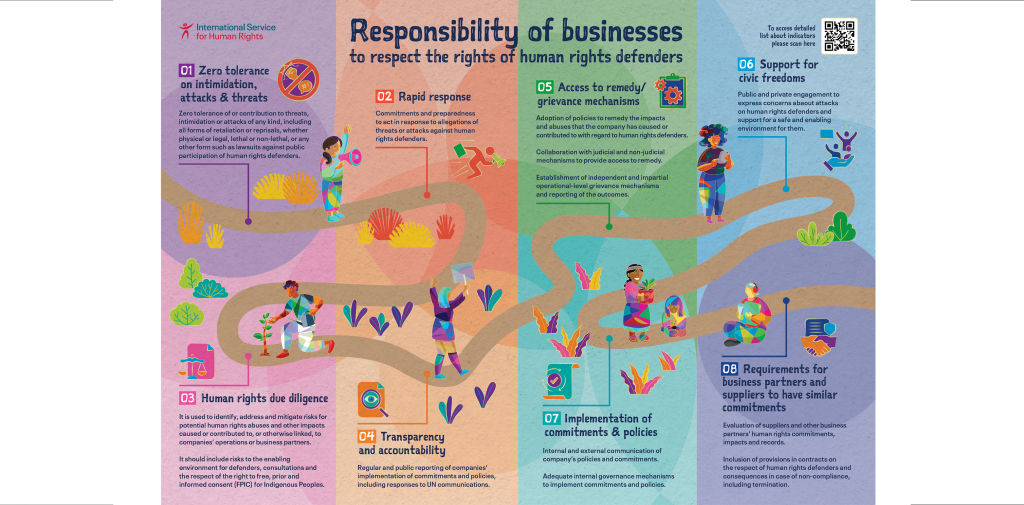
In this same spirit, ISHR is launching a set of Indicators on Business and Human Rights that cover the following areas:

  • Zero tolerance on intimidation, attacks and threats against HRDs
  • Human rights due diligence
  • Transparency and accountability
  • Access to remedy/grievance mechanisms
  • Support for civic freedoms
  • Requirements for business partners and suppliers to have similar commitments

The indicators come in list and poster form. ISHR has also produced a ‘snapshot’ of the UN Working Group’s Guidance on ensuring respect for human rights defenders, in the form of an explainer, available in multiple languages. 

We created a wonderful “Responsibility of businesses” roadmap poster for you. It shows the important steps to take on the journey to a responsible business, respecting the rights of human rights defenders amongst all people. You can download it in poster size print quality in the download section and print it yourself to go on your office wall, to remind everyone about the little steps and big responsibility to take everyday.

https://ishr.ch/defenders-toolbox/resources/business-and-human-rights-indicators

UN High Commissioner for Human Rights Volker Türk urges EU to approve key business and human rights legislation

February 24, 2024

On 13 February 2024, UN High Commissioner for Human Rights Volker Türk urged EU leaders to approve a ground-breaking agreement on business and human rights, amid reports that support for the measure may now be in question in the European Council.

The adoption of the Corporate Sustainability Due Diligence Directive would show historic leadership by the EU at a time when global leadership in support of human rights is needed more than ever,” said Türk.

For the past four years, work on the Directive has seen unprecedented involvement by many stakeholders, including business and my Office, as well as political commitment from EU institutions and Member States to push it forward. This process has truly raised hopes of ensuring more effective management of human rights risks by large companies.

For the Directive to fail now would be a massive blow,” he said.

The EU-wide Directive would require certain large EU and non-EU companies to take reasonable steps to identify and address adverse human rights risks.

“Human rights due diligence is feasible and supports sustainable business processes that deliver long-term value to society at large. And for those reasons it also makes eminent business sense,” said Türk.

Many of the companies that would fall within the Directive’s scope have backed its adoption. It would create a level playing field by harmonizing disparate rules across jurisdictions.

“The agreement on the Directive is reported to be substantially aligned with the UN Guiding Principles on Business and Human Rights and other relevant international human rights standards. I am convinced the Directive can make a positive contribution to respect for human rights, and its adoption would send an important message of solidarity to those at risk from business activities,” the UN Human Rights Chief said.

A vote on the Directive is possibly due later this week.

See also:

Statements Statement of the Working Group on the issue of human rights and transnational corporations and other business enterprises to the 26th Session of the Human Rights Council

Statements Working Group on Business and Human Rights introductory remarks at HRC26 side event on “the role of human rights defenders in promoting corporate responsibility.”

Statements Working Group introductory remarks at HRC26 side event on “how to effectively integrate a gender perspective in implementing the Guiding Principles on Business and Human Rights”

https://www.ohchr.org/en/press-releases/2024/02/un-human-rights-chief-urges-eu-leaders-approve-key-business-and-human-rights

UNDP report says Thai human rights defenders are targeted by businesses

February 23, 2024

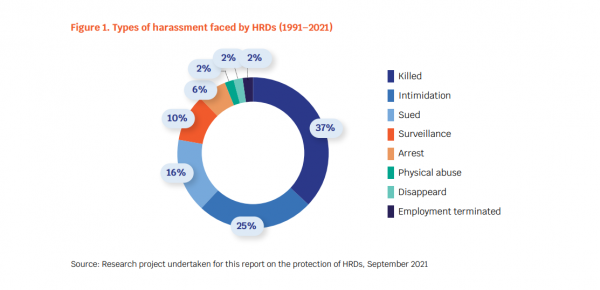
A new UN report claims that, between 2001 and 2021, 30% of outspoken Thai activists experienced violence resulting in a loss of life, by the businesses against which they had campaigned. Released by the United Nations Development Programme (UNDP), on 11 February 2024, the report says that businesses have used legal action, intimidation and violence to silence human rights defenders.

The categories of abuse faced by human rights defenders, per the report.

Activists, affected villagers and attorneys are among the groups considered to be human rights defenders in the report. Over the last 25 years, businesses filed 109 lawsuits against human rights defenders. 68.9% of these were by those with stakes in the mining, livestock and energy industries.

One anonymous interviewee said the lawsuits are used as strategic roadblocks and that they found themselves “going to court approximately once a month, incurring expenses and losing time.” Outside of the judicial system, human rights defenders were reportedly spied upon, or threatened with violence and job loss.

“After making a turn in my car, someone fired shots at me,” claims another anonymous interviewee, adding “I was in the orchard, a single home in the orchard. It was dark. Five shots were fired. I did not report the case, thinking it was an act of intimidation.”

4% of human rights defenders have died or been forcibly disappeared in the 25 years covered by the report, published on February 12th, the International Day for the Prevention of Violent Extremism.

In 2015, Thailand pledged to work towards the fulfilment of the UN’s 17 Sustainable Development Goals (SDGs), alongside other members of the organisation. SDG 16, one of the goals, asks countries to “uphold peace, justice and strong institutions,” and another, SDG 10, aims for “reduced inequalities”.

The report recommends that government and relevant agencies recognize the status and importance of human rights defenders and develop measures that protect them from violence and harassment.

https://www.undp.org/thailand/blog/human-rights-defenders-reports

https://www.thaipbsworld.com/undp-report-says-human-rights-defenders-are-targeted-by-businesses-30-are-victims-of-violence-resulting-in-loss-of-life

UDHR@75: how UNDP sees itself ensuring rights for all

December 11, 2023
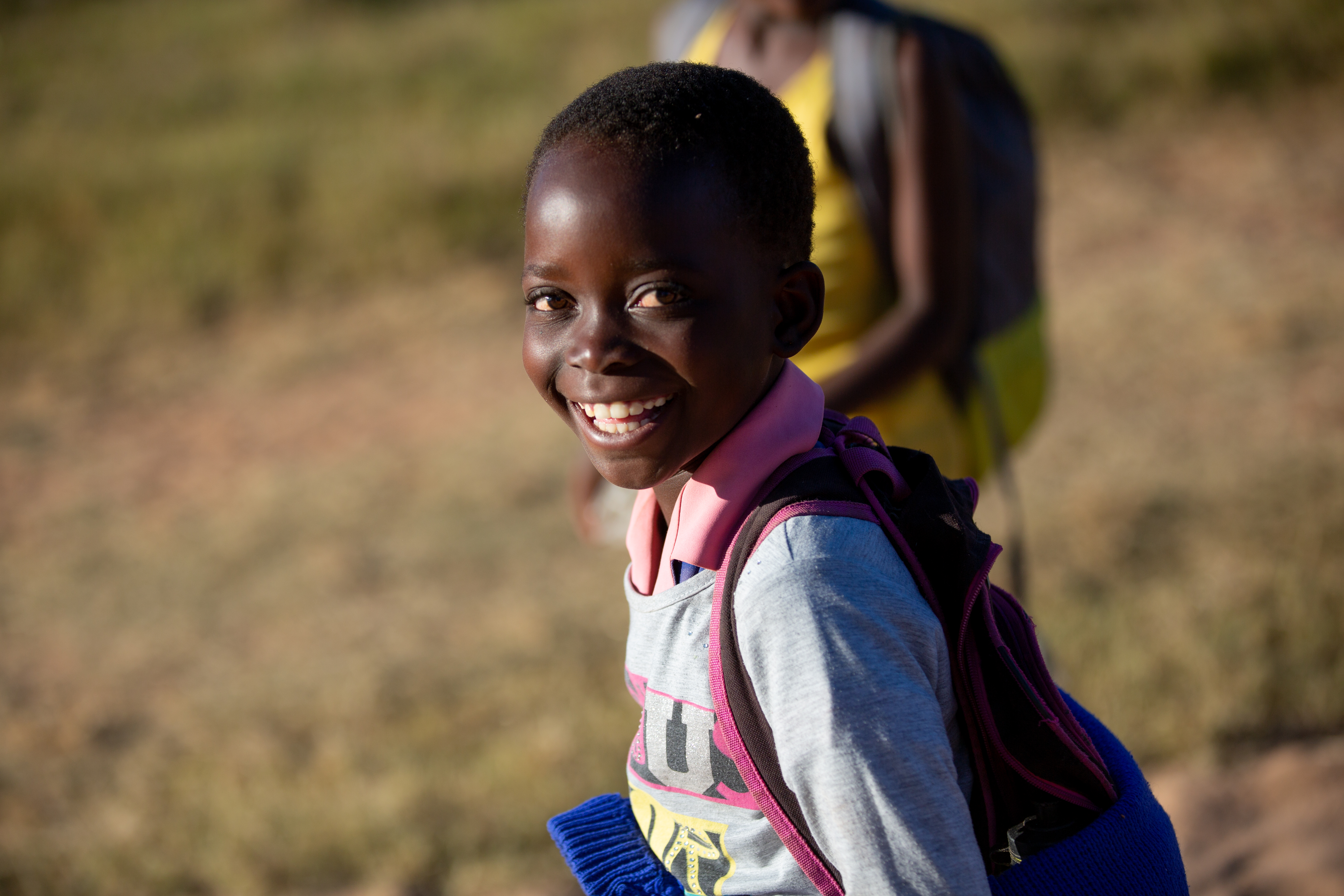
Children smiling
Photo: UNDP Zimbabwe

On 8 December, 2023 the United Nations lead agency on international development, UNDP, posted its commitment to human rights:

..Protecting our rights to do so was enshrined in the Universal Declaration of Human Rights 75 years ago, and it has been our North Star for human rights ever since.  The past three years have been defined by crises on a global scale. Conflict is at its highest since the Second World War. From Gaza to Ukraine, Sudan and Myanmar, people’s right to live without fear is being undermined. Climate change, brought about by humanity’s own actions, is stripping away the right of our children to a healthy and prosperous future. The COVID-19 pandemic brought to stark light the value of the right to health for all.  

Three-quarters of a century on, we are at an important inflection point, where we must recalibrate and reconnect with the principles of the Universal Declaration of Human Rights if we want to shape a future that lives up to its vision.  Doing so will not be easy. It will require action across many different spheres of life. Recognizing this, UNDP is prioritizing seven key areas where it is working to strengthen human rights. 

Dignity and equality of rights is needed for all people and the rights of people living in crisis and conflict must be assured 

If we don’t invest in human rights, we won’t achieve the Sustainable Development Goals 

Ninety percent of Sustainable Development Goals (SDGs) targets align with the obligations outlined in international human rights frameworks.  However, halfway to the 2030 deadline, development progress and the realization of Agenda 2030 is under threat due to the combined impacts of climate change, conflict, overlapping energy, food and economic shocks, and lingering COVID-19 effects. Human rights can be part of proactive solutions helping to address contemporary development challenges and pushing progress towards Agenda 2030.  By adopting a human rights-based approach, UNDP is working to ensure that no one is left behind as we strive for sustainable development. For example, UNDP has worked to promote synergies between human rights and SDG systems in eight countries, including Sierra Leone, Uruguay and Pakistan, boosting both the efficiency and effectiveness of national efforts to advance human rights and sustainable development. 

Human rights defenders must be able to speak out without fear 

Human rights defenders face alarming threats, including intimidation and reprisals, in the pursuit of a goal that should be a shared aspiration for all – the creation of fair and peaceful societies.  In 2022, there was a 40 percent increase in the killings of human rights defenders, journalists, and trade unionists compared to 2021.  UNDP works with civil society, human rights defenders and national human rights institutions around the world to ensure those that want to speak out have the freedom to do so. In Thailand, UNDP conducted a study looking into the protection of human rights defenders at the request of the Ministry of Justice.  

Young people must be included in efforts to protect the rights of future generations 

There are 1.2 billion young people in the world today, and UNDP recognizes the important role they play as positive agents of change. 

Private sector has an important role to play 

Business can be a powerful driver of sustainable development, offering access to social and economic opportunities and a pathway to prosperity for many.  

Human rights and the environment are interconnected 

In the next 25 years, building resilience to biodiversity loss and climate change will be key to the realization of all human rights – including the right to a clean, healthy and sustainable environment.  

Digital technology must unite, not divide 

Technology can be a great enabler of equality and development by improving connectivity, financial inclusion, and public services, positively impacting the realization of human rights.  But it can also have a dangerous downside, exacerbating existing inequalities and vulnerabilities. While over 80 percent of developed countries have access to the internet, only 36 percent of individuals in least-developed countries are online.  UNDP puts human rights at the centre of its Digital Strategy, and supports countries to harness digital technology as a means to advocate for, protect, access, report on, and exercise human rights…

https://www.undp.org/stories/ensuring-rights-all-rapidly-changing-world

HRW asks to drop charges against Human Rights Defenders in Thailand

March 20, 2023
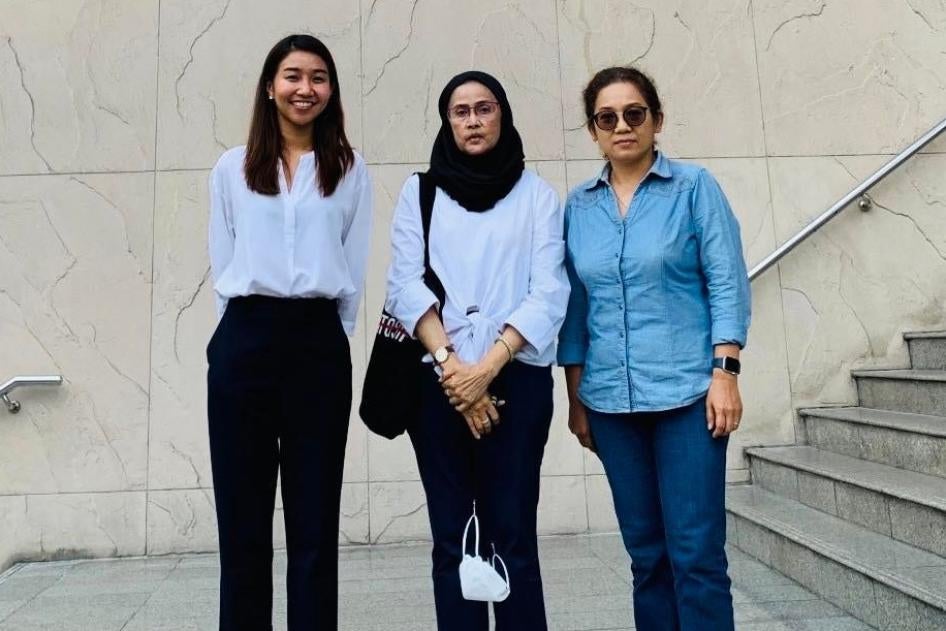
Three Thai human rights defenders—Angkhana Neelapaijit, Puttanee Kangkun, and Thanaporn Saleephol—face criminal defamation charges for reporting abuses.
Three Thai human rights defenders—Angkhana Neelapaijit, Puttanee Kangkun, and Thanaporn Saleephol—face criminal defamation charges for reporting abuses. © 2022 Prachatai

Prosecutors in Thailand should immediately withdraw the criminal defamation cases brought by Thammakaset Company Ltd. against three prominent human rights defenders for their support of other activists facing criminal charges, Human Rights Watch said on 16 March 2023. The Thai government should act to repeal criminal defamation provisions and introduce strong safeguards to prevent the use of frivolous, vexatious, or malicious legal actions that would have chilling effects on free speech.

On March 14, 2023, the Bangkok South Criminal Court began the trial that involves 28 counts of alleged criminal defamation under Thailand’s Criminal Code sections 326 and 328. The charges stem from posts or re-posts on social media by Angkhana Neelapaijit, Puttanee Kangkun, and Thanaporn Saleephol expressing solidarity with other human rights defenders already facing lawsuits brought by Thammakaset for alleging labor rights abuses at the company’s chicken farm in Lopburi Province. The company has filed at least 37 civil and criminal cases against rights defenders, journalists, and workers since 2016.

See also: https://humanrightsdefenders.blog/2022/03/03/fortify-rights-calls-on-thailand-to-drop-charges-against-human-rights-defender-angkhana-neelapaijit/

The Thai authorities should not help companies use criminal defamation or other legal avenues to silence workers from filing complaints about their working conditions or human rights defenders or journalists for reporting about alleged abuses at the company,” said Elaine Pearson, Asia director at Human Rights Watch. “The charges against Angkhana, Puttanee, and Thanaporn should be immediately dropped, and Thai authorities should act to prevent similar cases from being filed in the future.”

The United Nations Human Rights Committee has stated in its General Comment No. 34 on freedom of expression that governments “should put in place effective measures to protect against attacks aimed at silencing those exercising their right to freedom of expression, including persons who engage in the gathering and analysis of information on the human rights situation who publish human rights-related reports.”

On December 16, 2022, the UN Working Group on Business and Human Rights urged Thai authorities to take action to stop the Strategic Litigation Against Public Participation (SLAPP) lawsuits increasingly used by Thai companies to intimidate reporters and human rights advocates.

The Working Group specifically mentioned Thammakaset, stating that: “The cases filed by companies, such as Thammakaset Company Limited, against human rights defenders are a clear example of businesses abusing the legal system in order to censor, intimidate, and silence criticism through SLAPPs as a method of judicial harassment.” See also: https://humanrightsdefenders.blog/2022/04/28/eu-finally-moves-on-law-to-protect-media-from-legal-abuse-slapps/

Thai Prime Minister Prayut Chan-ocha has repeatedly emphasized the importance of companies respecting human rights in their operations and upholding the UN Guiding Principles on Business and Human Rights. In October 2019, Thailand was the first country in Asia to announce a National Action Plan on Business and Human Rights, committing to protect human rights defenders and prevent judicial harassment. But the charges against Angkhana, Puttanee, and Thanaporn, as well as the failure to assist those still facing many of the other civil and criminal cases filed by Thammakaset, stand in stark contradiction to the Thai government’s pledges to take action to protect rights, Human Rights Watch said.

In 2018, the National Assembly amended the Criminal Procedure Code to prevent the misuse of criminal cases. While that is a useful step, the Thai government should repeal all criminal defamation provisions. Neither prosecutors nor courts in Thailand have actually carried out, much less considered, amended section 161/1, which allows judges to dismiss and forbid the refiling of a criminal complaint by a private individual if the complaint is filed “in bad faith or with misrepresentation of facts to harass or take advantage of a defendant.” Furthermore, section 165/2 allows the presentation of evidence to show that the complaint “lacks merit.”

These reform provisions of the Criminal Procedure Code remain unused and untested, though. It is also crucial to provide prosecutors with adequate resources and support to exercise their powers under section 21 of the 2010 Public Prosecutor Organ and Public Prosecutors Act to screen out frivolous cases.

Human Rights Watch, along with an increasing number of governments and international agencies, has consistently called for the repeal of criminal defamation laws because they are an inherently disproportionate punishment for expressions of speech judged to damage reputations. Civil defamation laws, when supplemented by strong anti-SLAPP safeguards, balance the need for fair reporting in the public interest with concerns about reputational harm to private actors. In addition, as the charges against Angkhana, Puttanee, and Thanaporn show, criminal defamation laws in Thailand are easily abused and can have adverse impacts on free expression in the public interest.

Thailand should enact comprehensive anti-SLAPP legislation to strengthen safeguards to protect freedom of speech and expression and prevent retaliation against workers, human rights defenders, and journalists, Human Rights Watch said.

The UN special rapporteur on rights of freedom of peaceful assembly and association recommended that “States should protect and facilitate the rights to freedom of expression, assembly and association to ensure that these rights are enjoyed by everyone” including by “enacting anti-SLAPPs legislation, allowing an early dismissal (with an award of costs) of such suits and the use of measures to penalize abuse.”See also: https://humanrightsdefenders.blog/tag/strategic-lawsuits-against-public-participation-slapps/

“The UN and governments from around the world should share with Thailand their reform efforts to strengthen anti-SLAPP protections and point out that criminal defamation laws coupled with the absence of strong anti-SLAPP protections impede the ability of businesses to conduct essential human rights and environmental due diligence,” Pearson said. “Unless the Thai government moves now to protect Angkhana, Puttanee, and Thanaporn from retaliation, the promises that Thai officials made on business and human rights will ring hollow.”

https://www.hrw.org/news/2023/03/16/thailand-drop-charges-against-rights-defenders

Vacancy: Legal Advisor in Business and Human Rights

November 11, 2022

The European Center for Constitutional and Human Rights (ECCHR) is an independent, non-profit organization dedicated to enforcing civil and human rights worldwide. They initiate, lead and support legal interventions to hold state and non-state actors accountable for human rights abuses.

ECCHR is looking for a candidate with an interdisciplinary profile and at least two years of relevant work experience. A deep understanding of the Business and Human Rights field and the political and legal debates around the German supply chain law is essential.

A deep understanding of Business and Human Rights discussions, especially possible
interventions and legal mechanisms under human rights due diligence and supply chain laws,
in particular the German supply chain law. Excellent written and spoken German and English skills are required, Spanish or French are a plusThe position is ideally to be filled by January 2023 and is limited to May 31st 2024.

Please send your written application in German or English until by email only in one attachment by 15, November 2022 to:

European Center for Constitutional and Human Rights, E-Mail: info@ecchr.eu
European Center for Constitutional and Human Rights
Zossener Str. 55-58, Aufgang D
10961 Berlin
http://www.ecchr.eu
E-Mail: info@ecchr.eu

AFD: How to link human rights and development

July 13, 2022

The French Development Agency (AFD) organised an international conference to consider new ideas and approaches to linking human rights and development

Report by Marc Limon, Executive Director of the Universal Rights Group on July 8, 2022

Against a background of the retreat of human rights worldwide, growing doubts about the ability of the international community to achieve the Sustainable Development Goals (SDGs) by 2030, growing inequalities, and the ecological and climate crises, on Human Rights Day 2021 (10 December) the French Development Agency (AFD) organised an international conference on ‘Human Rights and Development.’ It brought together 500 actors from the development community, covering both the global North and South, and considered how development actors can play a key role in securing improvements in the enjoyment of human rights while at the same time recharging progress towards the achievement of the SDGs ‘leaving no one behind.’

Key conclusions

Warning of the risk of failure of the 2030 Agenda if development actors do not promote a development model based on human rights, participants unanimously recommended moving away from both a solely economic vision of development and a purely normative approach to human rights. In that regard, they called for more concerted action to enhance development actors’ contribution to the realisation of human rights on the ground, and to develop more robust indicators for measuring the impact of the human rights based approaches (HRBA).

Notwithstanding, several recalled the challenges involved in convincing partners of the value-added of integrating human rights with the development agenda, and recommended undertaking research actions to provide evidence.

Panellists further emphasised that human rights constitute a universal framework that goes beyond the North/South divide and is applicable to all. They noted a strong demand for improvements in the enjoyment of human rights in the global South as evidenced by growing social movements often led by young people. The universal nature of human rights makes it possible to fight against arbitrariness by guaranteeing a minimum essential base for everyone without discrimination. The international corpus of human rights contributes, in this sense, to reducing inequalities, so that everyone can lead a decent and dignified life. This must be reflected in the fiscal resource mobilisation policies of States, but also in their budgetary policies for social investment in health, education and social protection. States and development actors must also address the structural causes of inequality, which include discrimination based on gender, sexual orientation, economic status, and minority status, all of which are prohibited under international human rights law. For this reason, development actors are invited to contribute to the collection of reliable data on vulnerable population groups, in order to design projects with a non-discriminatory and inclusive approach.

Speakers also agreed on the need to support civil society and preserve its space. Its role in observing, documenting, and monitoring the implementation of States’ human rights obligations is essential. It is therefore crucial to establish a culture of dialogue between a State/government and civil society when elaborating public policies, and to strengthen the capacity of CSOs to participate effectively. ‘Power should be fluid, distributed throughout society, shared and exercised collectively,’ argued one speaker.

In terms of business and human rights, participants recalled companies’ duty of care to prevent and remedy human rights violations in the course of their activities. At the international level, this duty is based on a voluntary approach which, it was argued, showing signs of strain – few companies actually mobilise vigilance mechanisms in their value chains. Nevertheless, there is a progressive movement towards the adoption of national legislation in countries where multinational companies are headquartered to make it compulsory to draw up and implement vigilance plans that cover the impact of their activities, and those of the actors integrated into their supply or value chains, and covering both human rights and the environment. In this way, the objective is to spread human rights throughout the value chain, starting ‘from the top,’ and to contribute to guaranteeing the enjoyment of human rights of those affected by business activities. However, this raises the challenge of the cost and capacity to implement the principles of the duty of care by all actors in the value chain, in particular those in the Global South. Development actors have a role to play in supporting them. A need was also identified to strengthen the dialogue between legislators in the countries where companies are headquartered and those in which they operate in order to build coherent and complementary legislative frameworks.

Beyond companies’ duty of care, the private sector also plays a key role in contributing to development. Speakers called for multinational companies to be held accountable so that, in addition to respecting human rights, they contribute more directly to reducing inequalities and poverty.

Throughout the conference, the discussions have also highlighted the inseparable links between the realisation of human rights and the protection of the environment. These two goals are not mutually exclusive, as the rights of nature guarantee the enjoyment of human rights. It is thus crucial to promote an approach to development that is not based solely on human rights, but include the rights of all living things. This is especially important, it was noted, for young people and future generations.

In this context, the panellists made several recommendations, including the need to develop and disseminate knowledge about human mobility due to climate change. They recommended supporting climate change mitigation and adaptation projects, and called for investment in social protection and parametric insurance mechanisms to mitigate shocks from loss and damage that are already unavoidable. Development actors were also called upon to finance restoration and rehabilitation mechanisms to remedy non-economic damages such as the loss of cultural heritage or biodiversity.

Finally, participants unanimously agreed that indigenous peoples are key actors in sustainable development. They represent 5% of the world’s population but are the custodians of 80% of the world’s biodiversity. They play a vital role on all continents – in the Amazon alone, they directly influence 48% of the land surface. The protection of the environment cannot and must not be done without them. They should be treated as true co-decision-makers in the management of these spaces and resources, in order to fully respect their free, prior and informed consent, as required under international law. Development actors should therefore seek to empower indigenous peoples by supporting the full enjoyment of their rights.


Synthesis: Conference: “Human Rights and Development” | AFD – Agence Française de Développement

The conference proceedings from the meeting were recently released in both French and English

50th session Human Rights Council: issues directly affecting Human Rights Defenders

June 22, 2022

A bit belatedly this overview for the 50th session:

The 50th session of the UN Human Rights Council, from 13 June to 8 July 2022, will consider issues including sexual orientation and gender identity, violence and discrimination against women and girls, poverty, peaceful assembly and association, and freedom of expression, among others. It will also present an opportunity to address grave human rights situations including in Afghanistan, Belarus, China, Eritrea, Israel and OPT, Russia, Sudan, Syria and Venezuela, among many others. With “HRC50 | Key issues on agenda of June 2022 session” the ISHR provided again its indispensable guide. Here’s an overview of some of the key issues on the agenda that are the most relevant to HRDs [see also: https://humanrightsdefenders.blog/2022/02/21/guide-to-49th-session-of-human-rights-council-with-human-rights-defenders-focus/ and https://humanrightsdefenders.blog/2022/04/15/results-49th-session-human-rights-council-as-seen-by-ngos/

Thematic areas of interest

Here are some highlights of the session’s thematic discussions

Business and human rights

Despite their vital work to protect the environment and combat climate change, Indigenous peoples as well as land and environmental defenders continue to be attacked. New data shows an alarming pattern of violence and harassment as a precursor to lethal attacks against defenders. 

In 2020, Global Witness registered the killings of 137 land and environmental defenders in just five of the most dangerous countries for them: Colombia, Guatemala, Kenya, Mexico and the Philippines. However, a new dataset from the ALLIED Data Working Group, a coalition in which ISHR takes part, focused on these countries has for the first time documented what is often hidden – the non-lethal attacks, including threats, harassment, smear campaigns and stigmatisation that are a precursor to the shocking number of deaths we see each year.

The findings highlight the urgent need for States to monitor, collect data, report on the situation of these defenders, and address the root causes of attacks against them. ISHR urges all States to make a commitment to the systematic monitoring of attacks on indigenous, land and environmental defenders in their countries, and to take stronger action, together with civil society and relevant UN Special Procedures, to address the root causes of attacks in the debate with the Working Group due to take place on 21 June 2022. 

Reprisals

Reports of cases of intimidation and reprisal against those cooperating or seeking to cooperate with the UN not only continue, but grow. Intimidation and reprisals violate the rights of the individuals concerned, they constitute violations of international human rights law, and they undermine the UN human rights system.

The UN has taken action towards addressing this critical issue, including:

  • Requesting that the Secretary General prepare an annual report on cases and trends of reprisals;
  • Establishing a dedicated dialogue under item 5 to take place every September;
  • Affirmation by the Council of the particular responsibilities of its Members, President and Vice-Presidents to investigate and promote accountability for reprisals and intimidation; and
  • The appointment of the UN Assistant Secretary General on Human Rights as the Senior Official on addressing reprisals.

Despite this, ISHR remains deeply concerned about reprisals against civil society actors who try to engage with UN mechanisms, and consistent in its calls for all States and the Council to do more to address the situation.

During the 48th session, the Council adopted a resolution on reprisals. The text was adopted by consensus for the first time since 2009 and invites the UN Secretary General to submit his annual report on reprisals and intimidation to the UN General Assembly. Once again the resolution listed key trends, including that acts of intimidation and reprisals can signal patterns, increasing self-censorship, and the use of national security arguments and counter-terrorism strategies by States as justification for blocking access to the UN. The resolution also acknowledged the specific risks to individuals in vulnerable situations or belonging to marginalised groups, and called on the UN to implement gender-responsive policies to end reprisals. The Council called on States to combat impunity by conducting prompt, impartial and independent investigations and ensuring accountability for all acts of intimidation or reprisal, both online and offline, by condemning all such acts publicly, providing access to effective remedies for victims, and preventing any recurrence.

Item 5 of the Human Rights Council’s agenda provides a key opportunity for States to raise concerns about specific cases of reprisals, and for governments involved in existing cases to provide an update to the Council on any investigation or action taken toward accountability. The President should also update the Council on actions taken by the President and Bureau to follow up on cases and promote accountability under this item.

Due to the lack of a general debate under item 5 at HRC 50, ISHR encourages States to raise concerns about specific cases of reprisals during the interactive dialogues on the relevant countries on the agenda at this session or in the context of thematic interactive dialogues where relevant.

During the organisational meeting held on 30 May, the President of the Council stressed the importance of ensuring the safety of those participating in the Council’s work, and the obligation of States to prevent intimidation or reprisals.

In line with previous calls, ISHR expects the President of the Human Rights Council to publicly identify and denounce specific instances of reprisals by issuing formal statements, conducting press-briefings, corresponding directly with the State concerned, publicly releasing such correspondence with States involved, and insisting on undertakings from the State concerned to investigate, hold perpetrators accountable and report back to the Council on action taken.

Sexual orientation and gender identity

The mandate of the Independent Expert on violence and discrimination on the basis of sexual orientation and gender identity is up for renewal for the second time at this session. We will be following this closely and call on all States to support the mandate and contribute to the Council’s efforts to combat violence and discrimination on the basis of sexual orientation and gender identity.

Other thematic reports

At this 50th session, the Council will discuss a range of civil, political, economic, social and cultural rights through dedicated debates with the mandate holders and the High Commissioner, including interactive dialogues with:

  • The Special rapporteur on the rights to freedom of peaceful assembly and of association
  • The Independent Expert on protection against violence and discrimination based on sexual orientation and gender identity
  • The Special Rapporteur on the right of everyone to the enjoyment of the highest attainable standard of physical and mental health
  • The Special Rapporteur on the promotion and protection of the right to freedom of opinion and expression
  • The Special Rapporteur on the right to education
  • The Independent Expert on human rights and international solidarity
  • The Special Rapporteur on extrajudicial, summary of arbitrary executions
  • The Special Rapporteur on extreme poverty and human rights
  • The Special Rapporteur on promotion and protection of human rights in the context of climate change
  • The Working Group on the issue of human rights and transnational corporations and other business enterprises
  • The Special Rapporteur on contemporary forms of racism, racial discrimination, xenophobia and related intolerance
  • The High Commissioner on State responses to pandemics 

In addition, the Council will hold dedicated debates on the rights of specific groups including;

  • The Special Rapporteur on the rights of internally displaced persons
  • The Working Group on discrimination against women and girls
  • The Special Rapporteur on violence against women and girls, its causes and consequences
  • The Special Rapporteur on the human rights of migrants
  • The Special Rapporteur on trafficking in persons, especially women and children
  • The Special Rapporteur on the elimination of discrimination against persons affected by leprosy and their family members
  • The Special Rapporteur on independence of judges and lawyers

Country-specific developments

Afghanistan

Together with WHRDs from the country and civil society organisations from all regions, ISHR calls on States to lead and support an Urgent Debate at HRC50 on women’s rights in Afghanistan.

Since August 2021, when the Taliban took control of the country, there has been an enormous deterioration in the recognition and protection of the rights of women and girls in Afghanistan, including with respect to the rights to non-discrimination, education, work, public participation, health, and sexual and reproductive health. The Taliban has also imposed sweeping restrictions on the rights to freedom of expression, association, assembly and movement for women and girls. Afghanistan is now the only country in the world to expressly prohibit girls’ education.

The world’s worst women’s rights crisis demands a response and it would be unacceptable for the June session of the HRC, traditionally the session focused on gender-related issues, to pass without some meaningful action on the issue. I

The Council will hold an interactive dialogue with the High Commissioner on the update on Afghanistan on 15 June 2022. 

China 

The High Commissioner’s visit to China failed to adequately address widespread and systematic violations in the country, express solidarity with victims and defenders, or pave the way for meaningful monitoring of China’s human rights crisis across the Uyghur and Tibetan regions, Hong Kong and mainland China. The High Commissioner’s end of mission statement failed to address strong, specific concerns or make substantive, concrete recommendations to the governmen. The broad concerns issued in a light language do not match the scope and gravity of human rights violations across the country that have been thoroughly documented by UN experts and civil society and that could amount to crimes against humanity and genocide.

States should call on the High Commissioner to immediately publish her OHCHR report on the Uyghur region, with clear, compelling recommendations to the government, and present her findings in a briefing to the Human Rights Council. The High Commissioner should also ensure that the established annual meeting and working group for dialogue with the authorities are of public nature, include specific substantive recommendations to the government, and involve substantial consultation with a diverse set of independent civil society groups. China should also follow suit on promises for subsequent visits by the OHCHR by granting prompt unfettered access to Hong Kong and the Tibetan region. See also: https://humanrightsdefenders.blog/2022/06/09/disappointment-with-un-high-commissioners-visit-to-xinjiang-boils-over/

Burundi

The Commission of Inquiry on Burundi (CoI) concluded its work at the 48th HRC session in October 2021 while a new resolution establishing a mandate of UN Special Rapporteur on Burundi was adopted, resolution 48/16. The resolution tasks the mandate with monitoring the human rights situation in the country, making recommendations for its imp­ro­ve­ment, and re­por­ting to the Human Rights Council. During the 50th HRC session, the newly nominated Special Rapporteur on Burundi will present their first oral update on 29 June 2022.

Egypt

Notwithstanding the launch of a national human rights strategy, the fundamental purpose of which is to deflect international scrutiny rather than advance human rights, there has been no significant improvement in the human rights situation in Egypt since the joint statement delivered by States in March 2021 at HRC46. Emblematic recent examples include: Ayman Hadhoud’s death in the custody of Egyptian security forces following his enforced disappearance over two months ago and the execution of seven people in Egypt on 8 and 10 March 2022 following trials in which the defendants were forcibly disappeared, tortured, and denied their right to a lawyer.

In response to the Egyptian President’s announcement of “reactivating the work of the Presidential Pardon Committee” on 26 April 2022, Egyptian human rights organisations submitted a proposal for a fair and transparent process to release political prisoners in Egypt. Yet, recent harsh sentences in unfair trials against peaceful critics demonstrate further the lack of political will of the Egyptian authorities to address the crisis of arbitrary detention in Egypt. ISHR joined more than 100 NGOs from around the world in urging the HRC to create a monitoring and reporting mechanism on the ever-deteriorating human rights situation in Egypt. 

Israel and oPT

This session, the COI on the oPt and Israel established in 2021 will present its first report to the HRC. Civil society from around the world had welcomed the historic resolution establishing the standing Commission of Inquiry to address Israel’s latest and ongoing violations against the Palestinian people on both sides of the Green Line, while also addressing the root causes of Israel’s settler colonialism and apartheid. The interactive dialogue with the CoI comes in the context of mounting recognition of Israel’s establishment and maintenance of an apartheid regime by Israel over the Palestinian people as a whole. During HRC49, the SR on the oPT called on the international community to accept and adopt his findings as well as the “findings by Palestinian, Israeli and international human rights organisations that apartheid is being practised by Israel in the occupied Palestinian territory and beyond.” In its 2019 concluding observations, the Committee on the Elimination of Racial Discrimination found that Israel’s policies violated Article 3 of ICERD pertaining to segregation and apartheid on both sides of the Green Line. In 2022, the Human Rights Committee concluding observations on Israel emphasized the “pre-existing systematic and structural discrimination against non-Jews”.

While some States continue to seek to undermine the mandate of the CoI and effective accountability mechanisms to put an end to Israel’s apartheid regime, CSOs support the CoI’s methodological approach to fulfill its vital mandate. We call on States to engage with the substance of the mandate of the CoI during the interactive dialogue, express support for this important accountability mechanism and ensure it has sufficient resources to discharge its mandate.

Russia 

Together with a coalition of international and regional NGOs, as well as numerous Russian civil society organisations, ISHR urges the Council to establish an independent international monitoring and reporting mechanism on Russia. In the context of the systematic repression of civil society organisations, severe restrictions on press freedoms and independent media, severe restrictions and criminalisation of many forms of free expression, association, assembly and peaceful protest, and the propagation of huge volumes of misinformation, a Special Rapporteur is necessary to ensure that the international community receives vital information about the human rights situation on the ground. 

Sudan

The Council will hold a debate with the High Commissioner and Expert on Sudan on 15 June 2022.

The Sudanese Women Rights Action documented from March to April 2022 the violations against women protesters, including arrests, injuries, and sexual violence. Their report also highlighted the economic and humanitarian situation in conflict areas and in the country in general. The report shows that “the coup leaders are using increasing violence against women protesters, including arrests, fabricated charges, direct lethal violence in protests, and sexual violence. The civic space is shrinking across Sudan, where human rights groups and WHRDs are not able to work freely and safely. Surveillance on internet, communication, movement, and offices of many groups led them to work from underground. The economic conditions and the fragile political situation is increasing women insecurity, as the peace process failed to end violence conflict areas. Women in Sudan are living in constant fear of violence with growing threats of the collapse of the state.”

In light of this context, ISHR urges all States to support the adoption of a resolution that ensures continued attention to Sudan’s human rights situation through enhanced interactive dia­logues at the Council’s 52nd and 53rd regular sessions. While the Expert’s mandate is ongoing, a resolution is required for the Council to hold public de­bates and continue to formally discuss the situation. A resolution at the Council’s 50th session would ope­ra­tio­nalise resolution S-32/1, which in its operative paragraph 19 called upon “the High Commis­sioner and the designated Expert to monitor human rights violations and abu­ses and to continue to bring information thereon to the attention of the Human Rights Council, and to advise on the further steps that may be needed if the situation continues to deteriorate.”

Venezuela

On 29 June, the Council will hold an interactive dialogue with the High Commissioner on her report on the situation of human rights in Venezuela. The Council requested her to provide in this report a detailed assessment of the implementation of the recommendations made in her previous reports. Implementation of recommendations and improvements in the human rights situation on the ground remains a critical question as HRC mandates for OHCHR and the international investigative body for Venezuela expire in September. Venezuelan civil society groups continue to show evidence of a lack of any substantive human rights reform in the country, of a lack of meaningful cooperation by the State and – in fact – of regression in key areas such as judicial independence and civic space. ISHR urges States at the upcoming session to express support for the work of OHCHR in the country, and encourage the Office to speak clearly to realities on the ground. In addition, States should signal their support for the continuance of the work of the HRC’s fact-finding mission to the country through an extension of the Mission’s mandate at HRC51. 

The adoption of the report of the third cycle UPR on Venezuela will also take place on the 29 June or 1 July.  

Other country situations

The Council will hold an interactive dialogue on the High Commissioner’s annual report on 14 June 2022. The Council will hold debates on and is expected to consider resolutions addressing a range of country situations, in some instances involving the renewal of the relevant expert mandates. These include:

  • Interactive Dialogue with the Special Rapporteur on Eritrea
  • Interactive Dialogues with the High Commissioner and Special Rapporteur on Myanmar
  • Interactive Dialogue with the High Commissioner on Nicaragua
  • Interactive Dialogues with the High Commissioner on Ukraine
  • Interactive Dialogue with the Commission of Inquiry on Syria
  • Interactive Dialogue with the International commission of Human Rights Experts on Ethiopia 
  • Interactive Dialogue with the Special Rapporteur on Belarus
  • Interactive Dialogue with the Independent Fact-Finding Mission on Libya
  • Interactive Dialogue with the Independent Expert on Central African Republic 

Council programme, appointments and resolutions

The President of the Human Rights Council will propose candidates for the following mandates: 

  1. Special Rapporteur on freedom of religion or belief
  2. Special Rapporteur on the right to education
  3. Special Rapporteur on the situation of human rights in the Democratic People’s Republic of Korea
  4. Working Group on the issue of human rights and transnational corporations and other business enterprises, member from African States
  5. Expert Mechanism on the Right to Development, member from Latin American and Caribbean States
  6. Special Rapporteur on torture and other cruel, inhuman or degrading treatment or punishment
  7. Working Group on Enforced or Involuntary Disappearances, member from Eastern European States
  8. Working Group on the issue of human rights and transnational corporations and other business enterprises, member from Western European and other States

Resolutions to be presented to the Council’s 50th session

At the organizational meeting on 30 May the following resolutions were announced (States leading the resolution in brackets):

  1. Elimination of discrimination against women (Mexico), mandate renewal 
  2. Freedom of expression (Brazil, Canada, Fiji, Sweden, Namibia, Netherlands) 
  3. Elimination of female genital mutilation (Africa Group)
  4. Rights to freedom of peaceful assembly and of association (Czech Republic, Indonesia, Lithuania, Maldives, Mexico), mandate renewal 
  5. Human rights situation in Sudan (United Kingdom, Germany, Norway, United States)
  6. Human rights situation in Syria (Germany, France, Italy, Jordan, Kuwait, Netherlands, Qatar, Turkey, United States, United Kingdom)
  7. Mandate of the Independent Expert on protection against violence and discrimination based on sexual orientation and gender identity  (Argentina, Brazil, Chile, Colombia, Costa Rica, Mexico, Uruguay), mandate renewal 
  8. Casualty recording and the promotion and protection of human rights (Liechtenstein, Croatia, Costa Rica, Sierra Leone) 
  9. Human rights and climate change (Bangladesh, Philippines, Viet Nam)
  10. Access to medicines and vaccines in the context of the right of everyone to the enjoyment of the highest attainable standard of physical and mental health (Brazil, China, Egypt, India, Indonesia, Senegal, South Africa, Thailand)
  11. Enhancement of international cooperation in the field of human rights (NAM)
  12. Independence and impartiality of the judiciary, jurors and assessors, and the independence of lawyers (Hungary, Australia, Botswana, Maldives, Mexico, Thailand)
  13. Human rights and the regulation of civilian acquisition, possession and use of firearms (Ecuador, Peru)
  14. Human rights in Belarus, mandate renewal (European Union)
  15. Human rights in Eritrea, mandate renewal (European Union) 
  16. The promotion and protection of human rights in the context of peaceful protest (Switzerland, Costa Rica)
  17. Situation of human rights of Rohingya Muslims and other minorities in Myanmar (OIC) 
  18. Accelerating efforts to eliminate all forms of violence against women (Canada), mandate renewal 
  19. Mandate of the Special Rapporteur on the human rights of internally displaced persons (Austria, Honduras, Uganda), mandate renewal
  20. Human rights and international solidarity (Cuba)
  21. Social Forum (Cuba)

Read the calendar here

Adoption of Universal Periodic Review (UPR) reports

During this session, the Council will adopt the UPR working group reports on Myanmar, Togo, Syrian Arab Republic, Iceland, Venezuela, Zimbabwe, Lithuania, Uganda, Timor-Leste, Republic of Moldova, South Sudan, Haiti and Sudan.

Panel discussions

During each Council session, panel discussions are held to provide member States and NGOs with opportunities to hear from subject-matter experts and raise questions. Seven panel discussions are scheduled for this upcoming session:

  1. Panel discussion on the root causes of human rights violations and abuses against Rohingya Muslims and other minorities in Myanmar 
  2. Panel discussion on menstrual hygiene management, human rights and gender equality
  3. Panel discussion on good governance in the promotion and protection of human rights during and after the COVID-19 pandemic
  4. Annual full-day discussion on the human rights of women
  5. Panel discussion on the adverse impact of climate change on the full and effective enjoyment of human rights by people in vulnerable situations
  6. High-level panel discussion on countering the negative impact of disinformation on the enjoyment and realization of human rights
  7. Annual thematic panel discussion on technical cooperation and capacity-building

Stay up-to-date: Follow @ISHRglobal and #HRC50 on Twitter, and look out for its Human Rights Council Monitor. During the session, follow the live-updated programme of work on Sched. 

https://ishr.ch/latest-updates/hrc50-key-issues-on-agenda-of-june-2022-session/