Posts Tagged ‘Belarus’

Four well-known human rights defenders are the 2020 Right Livelihood Laureates

October 1, 2020

On 1 October 2020 the Right Livelihood Foundation announced its 2020 Laureates.

The Right Livelihood Award has been honouring courageous changemakers since 1980. [For more on this award see: https://www.trueheroesfilms.org/thedigest/award/97238E26-A05A-4A7C-8A98-0D267FDDAD59]

The 2020 Laureates are receiving the Awards for the following:

“This year’s Laureates are united in their fight for equality, democracy, justice and freedom,” said Ole von Uexkull, Executive Director of the Right Livelihood Foundation. “Defying unjust legal systems and dictatorial political regimes, they successfully strengthen human rights, empower civil societies and denounce institutional abuses. This year’s selection of recipients highlights the increasing threats to democracy globally. It is high time that all of us in favour of democracy around the world stand up and support each other.”

The four Laureates, selected by an international Jury, will each receive a prize money of 1 million SEK. As in previous years, the Laureates were nominated in an open process where anyone could submit individuals and organisations for consideration. The Laureates will be honoured during a virtual Award Presentation on December 3, 2020.

For last year see: https://humanrightsdefenders.blog/2019/09/26/right-livelihood-award-2019-lauds-practical-visionaries/

https://www.rightlivelihoodaward.org/

Kenneth Roth speaks plainly on international human rights: China a violator and US “unprincipled”

September 29, 2020
In Newsweek of 21 September 2020 did an interview with Kenneth Roth who has spent 27 years as the executive director of Human Rights Watch (HRW) in which he warns that China poses a threat to the global human rights system, that U.S. is no longer to be relied on as a supporter of human rights and how this has left a void, emboldening autocrats who have used the pandemic to undermine democratic societies.

“China and the threat it poses to human rights both at home and around the world is a huge issue,” he says, identifying the current period as the darkest in China’s history when it comes to human rights since the Tiananmen Square massacre in 1989. More than a million Uighur Muslims have been put in internment camps in the country’s Xinjiang province, According to the United Nations (U.N.). China says the camps serve as “re-education” centers designed to combat extremism, but those who have managed to escape share stories of forced labor, torture, medical experiments and rape. Roth says: “The Uighurs are the most severe example of worsening repression under Xi Jinping (China’s prime minister). It’s quite clear that this is the darkest moment in China in human rights terms since the massacre of Tiananmen Square protesters in 1989, the Uyghurs have been the most grievous sufferers of that where a million or more have been detained essentially to force them to abandon Islam and their culture.” The worsening repression doesn’t just extend to minorities, it’s something Roth says we can see also occurring in Hong Kong and Tibet as well as against China’s own population more widely.

“There is no independent civil society,” he says. “There is no independent media, human rights defenders are routinely imprisoned. There is a complete lockdown on any organized public dissent and that is just across the board, not just minority population areas. China’s also building this so-called social credit system which is designed to condition access to various governmental benefits on one’s social reliability. So it’s using high-tech tools to control the population.“…

….

On the human rights challenges facing Europe, Roth expresses particular concern about the situation in Belarus, where the man dubbed “Europe’s last dictator“, Alexander Lukashenko, is facing widespread protests over a disputed election. Lukashenko has been in power since 1994, with the government frequently accused of repressing the opposition….

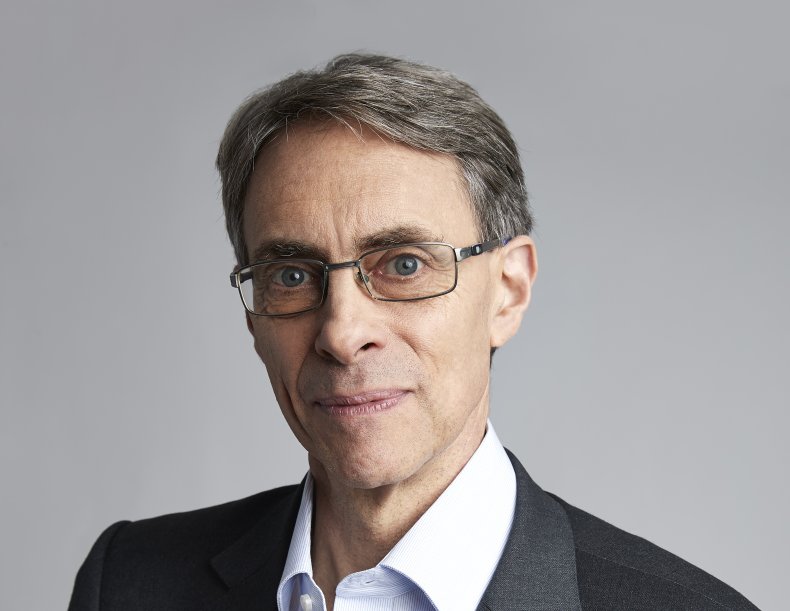
Kenneth Roth
Kenneth Roth, executive director of Human Rights Watch

He also thinks India‘s Prime Minister Modi has got away with what he calls his systematic discrimination against the country’s 172 million Muslims because of the West’s desire to tap into Indian markets and use it as a counterweight against China, which Newsweek will be reporting on in the coming days.

Roth is highly critical of the Trump administration, accusing the president’s foreign policy of being driven by the guiding principle of “self-glorification” and only speaking out in defense of human rights when the offending country is a perceived adversary.

“Trump is utterly uninterested in calling out any human rights violation by anybody other than a handful of perceived adversaries, China, Venezuela, Iran, Nicaragua and Cuba and that’s about it, which is a completely unprincipled approach to human rights which does not attract any adherence and greatly weakens the force of US intervention,” he says. “Human Rights Watch has been living with Trump for four years now and we have already stopped relying on the U.S. as anything like a principled supporter of human rights.”

With the U.S. increasingly withdrawing from the world stage and with the European Union not really filling the void, as he says, is there a new approach to the defense of human rights emerging?

See also: https://humanrightsdefenders.blog/2019/01/19/are-human-rights-defenders-making-a-comeback-kenneth-roth-thinks-so/

https://www.newsweek.com/human-rights-china-u-s-foreign-policy-trump-democracy-europe-human-rights-watch-1533239

Procedural wrangling by dicatorships does not stop Human Rights Council adopting resolution in Belarus

September 19, 2020
Belarus opposition leader Svetlana Tikhanovskaya speaks via video message to an urgent debate of the UN Human Rights Council / © AFP
AFP reports from Geneva on 19 September how Belarus and several allies tried Friday to block a video message from opposition leader Svetlana Tikhanovskaya at the UN Human Rights Council, where she urged “the strongest” international response to Minsk’s abuses. Her short video message, in a rare urgent debate at the council, had barely begun before Belarus Ambassador Yuri Ambrazevich demanded it be switched off. He repeatedly interrupted the screening, raising procedural objections and insisting her words had “no relevance on the substance… on the events that are taking place today.”

He was overruled by council president Elisabeth Tichy-Fisslberger. The debate on the rights situation in Belarus, requested by the European Union, focused on violations and the crackdown on the unprecedented demonstrations which broke out after disputed August 9 elections. [see also: https://humanrightsdefenders.blog/2020/08/27/16-ngos-call-on-un-to-convene-special-session-on-crackdown-in-belarus/]

Lukashenko, who has ruled the ex-Soviet state for 26 years and on Thursday warned of a possible “war” with some neighbouring countries, has turned to Russia for support.

Tikhanovskaya’s message was repeatedly interrupted by objections from Belarus Ambassador Yuri Ambrazevich / © AFP

“We have witnessed a brutal crackdown on peaceful protests,” said German ambassador Michael Freiherr von Ungern-Sternberg on behalf of the EU. He raised concerns at “reports of attacks on — and torture and cruel, inhumane or degrading treatment of — peaceful protesters as well as harassment, intimidation and detentions of opposition leaders.”

Minsk’s envoy Ambrazevich meanwhile slammed the “lopsided picture of reality presented by the losers in the election,” rejecting allegations of abuse by authorities. He insisted that protesters had been violent and had injured numerous police officers. Ambrazevich and his counterparts from Russia, Venezuela and China also voiced multiple objections to statements by the UN deputy rights chief Nada Al-Nashif and Anais Marin, the UN special rapporteur on the rights situation in Belarus, saying they had no place in the debate.

Marin told the council that more than 10,000 people had been “abusively arrested for taking part in peaceful protests”, and lamented that “over 500 cases of torture, committed by state agents, have been reported to us.” “I have been informed of allegations of rape, electrocution, and other forms of physical and psychological torture,” she told the council via video link, adding that the perpetrators appeared to be acting with “impunity“.

Friday’s debate ended with a vote approving a resolution submitted by the EU insisting that the vast array of serious abuses urgently require “independent investigation.”

The voting process was slowed down by Russia, which proposed 17 amendments to the text, all of which were rejected, and in the end the resolution was adopted unchanged by the 47-member council, with 23 in favour, 22 abstentions and only Venezuela and Eritrea voting against. The text calls on Belarusian authorities to “enable independent, transparent and impartial investigations into all allegations of human rights violations in the context of the election.” It also calls on Minsk to “guarantee access to justice and redress for victims as well as full accountability of the perpetrators.” And it calls on the office of UN rights chief Michelle Bachelet to closely monitor the situation in the country and to present her conclusions in a report during the next council session in March 2021.

The discussions mark only the sixth time in the council’s 14-year history that it has agreed to hold an “urgent debate” — a special debate within a regular session of the council.

https://today.rtl.lu/news/world/a/1582022.html

16 NGOs call on UN to convene special session on crackdown in Belarus

August 27, 2020
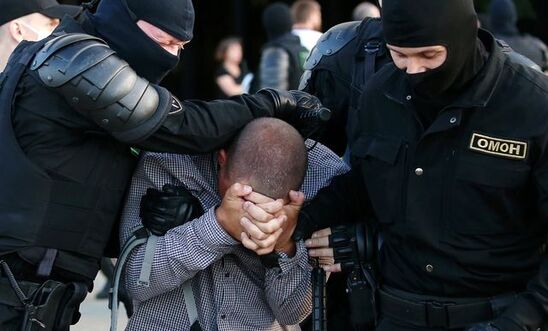
Police officers detaining a protester in Minsk on 10 August © Natalia Fedosenko/TASS

An open letter has been signed by: Article 19, Assembly of Pro-Democratic NGOs of Belarus, Barys Zvozskau Belarusian Human Rights House, Belarusian Association of Journalists, Belarusian Helsinki Committee, Civil Rights Defenders, Human Constanta, Human Rights House Foundation, Human Rights Watch, International Federation for Human Rights (FIDH), La Strada International, Legal Initiative, Legal Transformation center (Lawtrend), Viasna Human Rights Center and World Organisation Against Torture (OMCT).

The UN Human Rights Council must urgently convene a special session to address the human rights crisis in Belarus. The joint letter expresses the organisations’ “utmost concern” over “widespread violations of human rights, including arbitrary arrests, prosecutions under trumped-up charges, and torture and other ill-treatment”.

The letter calls on the council to adopt a resolution requesting the UN High Commissioner for Human Rights to monitor and report on human rights abuses in Belarus with “a view to ensuring full accountability”.

See also: https://humanrightsdefenders.blog/2020/08/13/what-can-we-do-about-the-result-of-the-belarussian-election-on-line-discussion-today-at-14h00/

[In the three days after the 9 August presidential election, the authorities in Belarus confirmed the arrest of at least 6,700 protesters. According to Viasna Human Rights Center, at least 450 of the detainees reported being tortured or otherwise ill-treated – including through severe beatings, being forced to perform humiliating acts, being threatened with rape and other forms of violence – while held in incommunicado detention for up to ten days.

Since 12 August, the authorities have taken steps to de-escalate the situation, refraining from mass arrests and releasing those detained. However, the threats against peaceful protesters recently made by President Alyaksandr Lukashenka and his subordinates together with the recent deployment of the armed forces in the country’s capital Minsk and elsewhere, signal a possible new spiral of violence and accompanying human rights violations.]

Here the Letter in full:

Click to access civil-society-organizations-call-on-the-united-nations-human-rights-council-to-convene-a-special-session-on-belarus.pdf

What can we do about the result of the Belarussian “election”? On line discussion

August 13, 2020
The Human Rights House Foundation, in partnership with Barys Zvozskau Belarusian Human Rights House, will host on THURSDAY, AUGUST 13, 2020 AT 14 PM an on -line  panel discussion with individuals closely following events on the ground. It will investigate what the European Union, United Nations, and individual states must do immediately to prevent further violence and seek a political solution to this growing crisis and how the international community should continue to occupy this space once this crisis moves off of the front pages.
On August 9, Belarusian President Alyasandr Lukashenka claimed a landslide re-election victory. This claim was widely anticipated, condemned by the political opposition, and met with large-scale peaceful protests across the country. Belarusian authorities responded with what international organisations label disproportionate violence against protesters. Since Monday, local human rights organisations report thousands detained, many of them arbitrarily, and facing further violence and abuse while in detention. More than 60 journalists – both domestic and foreign – have been arrested with the whereabouts of several unknown. In many ways, these early days of the post-election environment point towards a more violent crackdown than the country faced following the last presidential elections in 2010.
What can and should the international community do to pressure Belarusian authorities to cease their violent attacks on protesters and human rights defenders?
Speakers:
Anaïs Marin
UN Special Rapporteur on the human rights situation in Belarus

Oleg Kozlovsky

Amnesty International
Franak Viačorka
Vice President of the Digital Communication Network
Hanna Liubakova
Journalist, Outriders

Valiantsin Stefanovic

Viasna. Human rights in Belarus

and

Tanya Lokshina
Associate director, Europe and Central Asia, Human Rights Watch
Moderation by Dave Elseroad, Human Rights House Foundation.
Also today, 13 August 2020, 5 UN human rights experts strongly criticised Belarus for police violence against peaceful protesters and journalists and large scale detention following a controversial presidential election, and called on the international community to put pressure on Belarus to stop attacking its own citizens: https://yubanet.com/world/belarus-must-stop-attacking-peaceful-protesters-un-human-rights-experts-say/

Belarus elections : will Tyga front for dictator Lukashenko?

August 7, 2020
The New-York-based Human Rights Foundation has a track record when it comes to pressurising celebrities for endorsing human rights violators [e.g.: https://humanrightsdefenders.blog/2019/07/18/will-janet-jackson-50-cent-and-tyga-perform-tomorrow-in-jeddah-and-what-will-they-say/]. This time it urges hip-hop artist Tyga to cancela his peformance at a government-sponsored concert in Belarus on August 8.

In 6 August, 2020 HRF’s President sent a letter to the American hip hop artist Tyga pointing  out that his performance is part of a plan to distract from the electoral fraud in the imminent election and prevent protesters from gathering at opposition rallies. The concert is organized and funded by the Belarusian dictatorship, led by Alexander Lukashenko. Under this regime, there is no freedom of speech, no freedom of assembly, and no freedom of association.

“This performance, scheduled for the day before Belarus’ elections, is no coincidence. It is an excuse to cancel the opposition’s final electoral rally, and prevent ordinary Belarusians from showing their support for freedom and democracy,” said HRF president Thor Halvorssen. “It is also a deliberate attempt to turn attention away from the massive electoral fraud that is already taking place across the country.” Belarus’ elections, which haven’t been free or fair since 1994, have been met with extreme repression. As HRF recounted in its letter to the performer: “Protestors are grabbed off the street at random, and many are beaten bloody. The two most popular candidates in the upcoming presidential election, Viktor Babryka and Sergei Tikhanouvsky, were both arrested on trumped up charges. Many opposition activists have had to flee the country, along with their children, after receiving threats from the government.” “Tyga has been an outspoken advocate of the Black Lives Matter movement. He has urged followers to vote in local elections and take to the streets in protest. His support for Lukashenko’s regime will greatly undermine the activism he has encouraged in the United States, and provide the Belarusian dictator a useful propaganda stunt,” said Halvorssen. “We hope he will stand on the side of the people of Belarus as opposed to their oppressor. He must decline the invitation to perform for the dictator.” HRF requested that Tyga cancel his concert and use this media opportunity to send an urgent and categorical message of encouraging support to protestors in Belarus.

Latest: https://belsat.eu/en/news/head-of-presidential-candidate-cherachan-s-campaign-office-detained/

Read the letter in full: https://hrf.us14.list-manage.com/track/click?u=c5e3037cd362a8e29147b750c&id=d46741b1d8&e=f80cec329e> 

For some of my older posts on celebrities see: https://humanrightsdefenders.blog/tag/star-power/

30 “information heroes” honored by Reporters Without Borders

June 16, 2020

Coronavirus “information heroes” – journalism that saves lives

On 15 June t2020 he NGO Reporters Without Borders (RSF) published a list of 30 coronavirus “information heroes” – 30 journalists, whistleblowers and media outlets whose courage, perseverance or capacity to innovate has helped to circulate reliable and vital information during the Covid-19 pandemic. See the list

Every crisis produces its heroes. Around the world there are journalists, whistleblowers and media outlets that have managed to overcome the barriers to information created since the start of the pandemic. Through their reporting or by means of initiatives that have needed courage, audacity and determination, they have provided access to trustworthy and quality information, helped to resist censorship, and combatted the runaway disinformation that threatens public health.

“Some people have taken such big risks to report the reality of the pandemic that they have died as a result, while others have disappeared or have been jailed,” RSF secretary-general Christophe Deloire said. “Prosecuted, attacked, insulted – many have paid a high price for defending the right to information and for combatting the rumours and disinformation that aggravate the consequences of this public health crisis. These new heroes remind us that journalism can save lives. They deserve our attention and admiration.”…

The list compiled by RSF, which is not intended to be exhaustive, includes both well-known media figures and people the public have not heard of. Although they come from all five main continents, nearly a third of these 30 heroes are from Asia, where the pandemic originated. Six are from Europe and Central Asia, and the others are from Africa, the Americas and the Middle East.

What most of these heroes have in common is the fact that they revealed information highlighting the pandemic’s gravity or their government’s mismanagement of the crisis. Some are veteran reporters like Ana Lalić in Serbia or combative investigators like Blaž Zgaga in Slovenia, Andjouza Abouheir in Comoros and Sergei Satsukin Belarus. However, others are ordinary citizens who, in response to the urgency and gravity of the public health crisis, decided to blow the whistle with the aim of saving as many lives a possible. It was an eye doctor, Li Wenliang, who first alerted the world to the existence of a fast-spreading disease in December 2019. And it was a lawyer, Chen Qiushi, who posted videos on his blog revealing the chaos in the hospitals in Wuhan, the site of the initial Covid-19 outbreak. Li died of the virus while Chen was forcibly quarantined and never reappeared.

You often pay dearly for the truth. In Venezuela, freelance journalist Darvinson Rojas spent 12 days in prison for a tweet questioning official pandemic figures. In India, newspaper reporter Vijay Vineet is facing a possible six-month jail sentence for reporting that lockdown restrictions forced hungry kids to eat cattle fodder. In Bangladesh, the well-known cartoonist Ahmed Kabir Kishore is facing a possible life sentence for posting cartoons on Facebook about politics during the Covid-19 crisis that alluded, inter alia, to corruption.

Others have avoided prison but can no longer work. After a lengthy and violent police interrogation over an article questioning the Kingdom of Eswatini’s handling of the Covid-19 crisis, Swati Newsweek website editor Eugene Dube had to flee to neighbouring South Africa. Chris Buckley, a Beijing-based reporter for the New York Times, was forced to leave China after spending 76 days in Wuhan at the height of the outbreak. For the first time in 24 years, his visa was not renewed.

Many of these heroes displayed courage in resisting pressure and censorship. They include Caixin, an independent English and Chinese-language media outlet in Beijing whose reporting has questioned the Chinese government’s narrative. For some, such as Afghan reporter Anisseh Shahid, it took courage to simply keep reporting in the field with the threat of infection compounding the threat of a Taliban attack. In the United States, several White House correspondents have distinguished themselves by their perseverance in adversity. Despite constant attacks by President Trump and his aides, they continue week after week to question his handling of the pandemic.

This exceptional crisis has also produced innovative initiatives that have helped to get the facts out and combat disinformation. In Africa, the Ivorian web radio WA FM and the Togolese news site TogoCheck were created to combat rumours and fake news and disseminate trustworthy information that the public can use to protect themselves and their health. In Brazil, alternative media outlets pooled resources to form a “Gabinete de crise” to inform the abandoned inhabitants of Rio de Janeiro’s favelas, while the Wayuri Network’s journalists have risen to the challenge of informing more than 750 indigenous communities in the Amazon. In Russia, 25 media outlets formed Syndicate-100 to make it easier for medical personnel, who have been hit hard by the epidemic, to report problems and alert the public.

Finally, RSF pays a special tribute to journalists in Guayaquil, Ecuador’s business capital and the site of Latin America’s biggest Covid-19 outbreak. The photos of bodies in Guayaquil’s streets have gone around the world. Despite being unprepared and lacking personal protective equipment, the city’s journalists have continued to work and to report in locations with a high infection rate. And this has taken a heavy toll. Thirteen of them have died of the virus.

https://rsf.org/en/news/coronavirus-information-heroes-journalism-saves-lives

see also: https://humanrightsdefenders.blog/2020/04/21/2020-world-press-freedom-index-is-out/

Viasna, Belarusian human rights defenders group, wins OSCE’s 2020 Democracy Defender Award

March 24, 2020


Belarussian Human Rights CentreViasna (‘Spring’) has received the 2020 Democracy Defender Award of the OSCE. The award honours a person or group for exceptional contributions to the promotion of democracy and the defense of human rights in the spirit of Helsinki Final Act principles and other OSCE commitments. It was established in 2016 to recognize the contribution civil society makes to defending and promoting democracy. Earlier, the award was received by the Russian movement “Golos”, the Serbian non-governmental organization CRTA, and the Ukrainian activist Oleksandra Matviychuk. “Human Rights Centre Viasna receives the award this year for its mission of defending human rights in Belarus and building a just, free and democratic society for all its citizens,” the OSCE statement reads.

According to Viasna Chairman Ales Bialiatski [https://humanrightsdefenders.blog/2014/06/22/good-news-ales-bialiatski-belarus-best-known-human-rights-defender-freed-from-prison/], the award is a clear signal to the Belarusian authorities as an incentive to serious reforms in the field of human rights and a substantial improvement of the situation with the rights and freedoms of Belarusian citizens. “..The repressions against the Belarusian human rights defenders will not stop our work in support of democracy and human rights in our country. We are grateful to the OSCE member countries that nominated HRC Viasna. We believe that the courageous and persistent efforts by human rights defenders in the OSCE region, in spite of the obstacles, will help make our world a better place,” he stressed.

Active from 1996, the organisation was founded on the principle of respect for human rights, and its main goal is to contribute to the development of civil society in Belarus. HRC Viasna conducts research on the state of civil society and rule of law in Belarus, with the aim of improving implementation of human rights obligations and commitments, the OSCE notes.

http://spring96.org/en/news/96213

https://belsat.eu/en/news/viasna-as-democracy-defender-belarusian-human-rights-watchdog-wins-osce-award/

https://spring96.org/en/news/120140

Interview with Olga Karach of International Center for civil initiative in Belarus.

December 20, 2019

On 21  October 2019 ISHR published this filmed interview with Olga Karach, Chief of International Center for civil initiative OUR HOUSE from Belarus.


41st UN Human Rights Council: what the NGOs see as its result

July 16, 2019

On 12 july 2019, ISHR published what key civil society organisations thought of the just finished 41st session of the UN Human Rights Council.

Civil society organisations welcomed significant outcomes of the Human Rights Council’s 41st session, including the extension of the SOGI mandate, adopting the first resolution on the Philippines and extending its scrutiny over Eritrea, the Democratic Republic of Congo, Belarus and Ukraine. This session witnessed heightened scrutiny of Council members by shedding light on the situations in Saudi Arabia and China. It missed an opportunity, however, to ensure that human rights are not sidelined in Sudan.

16 leading human rights organisations (see below) expressed regrets that Council members seek to use their seats to shield themselves and others from scrutiny. They called on States to stand with victims of human rights violations. They welcomed the renewal of the mandate of the Special Rapporteur on freedom of peaceful assembly association, that the Council stood up to the global backlash against the rights of women and girls, and that it continued to address the threat posed by climate change to human rights. They also welcomed the reports on Venezuela, called on the High Commissioner to immediately release the UN database of businesses engaged with Israeli settlements, and on all States to pursue accountability for victims of intimidation and reprisals.

Full statement below:

By renewing the mandate of the Independent Expert on sexual orientation and gender identity (SOGI), the Council has sent a clear message that violence and discrimination against people of diverse sexual orientations and gender identities cannot be tolerated. It reaffirmed that specific, sustained and systematic attention is needed to address these human rights violations and ensure that LGBT people can live a life of dignity. We welcome the Core Group’s commitment to engage in dialogue with all States, resulting in over 50 original co-sponsors across all regions. However, we regret that some States have again attempted to prevent the Council from addressing discrimination and violence on the basis of SOGI.

This Council session also sent a clear message that Council membership comes with scrutiny by addressing the situations of Eritrea, the Philippines, China, Saudi Arabia and the Democratic Republic of Congo. This shows the potential the Council has to leverage its membership to become more effective and responsive to rights holders and victims.

The Council did the right thing by extending its monitoring of the situation in Eritrea. The onus is on the Eritrean Government to cooperate with Council mechanisms, including the Special Rapporteur, in line with its membership obligations.

We welcome the first Council resolution on the Philippines as an important first step towards justice and accountability. We urge the Council to closely follow this situation and be ready to follow up with additional action, if the situation does not improve or deteriorates further. We deeply regret that such a resolution was necessary, due to the continuation of serious violations and repeated refusal of the Philippines – despite its membership of the Council– to cooperate with existing mechanisms.

We deplore that the Philippines and Eritrea sought to use their seats in this Council to seek to shield themselves from scrutiny, and those States [1] who stood with the authorities and perpetrators who continue to commit grave violations with impunity, rather than with the victims.

We welcome the written statement by 22 States on China expressing collective concern over widespread surveillance, restrictions to freedoms of religion and movement, and large-scale arbitrary detention of Uyghurs and other minorities in Xinjiang. We consider it as a first step towards sustained Council attention and in the absence of progress look to those governments that have signed this letter to follow up at the September session with a resolution calling for China to allow access to the region to independent human rights experts and to end country-wide the arbitrary detention of individuals based on their religious beliefs or political opinions.

We welcome the progress made in resolutions on the rights of women and girls: violence against women and girls in the world of work, on discrimination against women and girls and on the consequences of child, early and forced marriage. We particularly welcome the renewal of the mandate of the Working Group on Discrimination Against Women and Girls under its new name and mandate to focus on the intersections of gender and age and their impact on girls. The Council showed that it was willing to stand up to the global backlash against the rights of women and girls by ensuring that these resolutions reflect the current international legal framework and resisted cultural relativism, despite several amendments put forward to try and weaken the strong content of these resolutions.

However, in the text on the contribution of development to the enjoyment of all human rights, long standing consensus language from the Vienna Declaration for Programme of Action (VDPA) recognising that, at the same time, “the lack of development may not be invoked to justify the abridgment of internationally recognized human rights” has again been deliberately excluded, disturbing the careful balance established and maintained for several decades on this issue.

We welcome the continuous engagement of the Council in addressing the threat posed by climate change to human rights, through its annual resolution and the panel discussion on women’s rights and climate change at this session. We call on the Council to continue to strengthen its work on this issue, given its increasing urgency for the protection of all human rights.

The Council has missed an opportunity on Sudan where it could have supported regional efforts and ensured that human rights are not sidelined in the process. We now look to African leadership to ensure that human rights are upheld in the transition. The Council should stand ready to act, including through setting up a full-fledged inquiry into all instances of violence against peaceful protesters and civilians across the country.

During the interactive dialogue with the Special Rapporteur on extrajudicial and summary executions, States heard loud and clear that the time to hold Saudi Arabia accountable is now  for the extrajudicial killing of journalist Jamal Khashoggi. We recall that women human rights defenders continue to be arbitrarily detained despite the calls by 36 States at the March session. We urge States to adopt a resolution at the September session to establish a monitoring mechanism over the human rights situation in the country.

We welcome the landmark report of the High Commissioner on the situation for human rights in Venezuela; in response to the grave findings in the report and the absence of any fundamental improvement of the situation in the meantime, we urge the Council to adopt a Commission of Inquiry or similar mechanism in September, to reinforce the ongoing efforts of the High Commissioner and other actors to address the situation.

We welcome the renewal of the mandate on freedom of peaceful assembly and association. This mandate is at the core of our work as civil society and we trust that the mandate will continue to protect and promote these fundamental freedoms towards a more open civic space.

We welcome the renewal of the mandate of the Special Rapporteur on Belarus. We acknowledge some positive signs of re-engagement in dialogue by Belarus, and an attempted negotiation process with the EU on a potential Item 10 resolution. However, in the absence of systemic human rights reforms in Belarus, the mandate and resolution process remains an essential tool for Belarusian civil society. In addition, there are fears of a spike in violations around upcoming elections and we are pleased that the resolution highlights the need for Belarus to provide safeguards against such an increase.

We welcome the renewal of the quarterly reporting process on the human rights situation in Ukraine. However, we also urge States to think creatively about how best to use this regular mechanism on Ukraine to make better progress on the human rights situation.

The continued delay in the release of the UN database of businesses engaged with Israeli settlements established pursuant to Council resolution 31/36 in March 2016 is of deep concern.  We join others including Tunisia speaking on behalf of 65 states and Peru speaking on behalf of 26 States in calling on the High Commissioner to urgently and fully fulfill this mandate as a matter of urgency and on all States to  cooperate with all Council mandates, including this one, and without political interference.

Numerous States and stakeholders highlighted the importance of the OHCHR report on Kashmir; while its release only a few days ago meant it did not receive substantive consideration at the present session, we look forward to discussing it in depth at the September session.

Finally, we welcome the principled leadership shown by Belgium, Luxembourg and the Netherlands, in pursuing accountability for individual victims of acts of intimidation and reprisals under General Debate Item 5, contrasting with other States which tend to make only general statements of concern. We call on States to raise all individual cases at the interactive dialogue on reprisals and intimidation in the September session.

[1]States who voted against the resolution on the Eritrea: Bahrain, Burkina Faso, Cameroon, China, Cuba, Egypt, Eritrea, Iraq, India, Saudi Arabia, Somalia, the Philippines and Pakistan.
States who voted against the resolution on the Philippines: Angola, Bahrain, Cameroon, China, Cuba, Egypt, Eritrea, Hungary, Iraq, India, Qatar, Saudi Arabia, Somalia, and the Philippines.

*Statement delivered by the International Service for Human Rights (ISHR) on behalf of: DefendDefenders (the East and Horn of Africa Human Rights Defenders Project); Global Initiative for Economic, Social and Cultural Rights; Asian Forum for Human Rights and Development (FORUM-ASIA); International Federation for Human Rights (FIDH); International Commission of Jurists (ICJ); Center for Reproductive Rights; ARTICLE 19; Cairo Institute for Human Rights Studies; Human Rights House Foundation; CIVICUS: World Alliance for Citizen Participation; Franciscans International; Association for Progressive Communications (APC); Amnesty International; Human Rights Watch; International Lesbian and Gay Association (ILGA).

For the preview of the the 41st session, see: https://humanrightsdefenders.blog/2019/06/14/guide-to-human-rights-defenders-issues-at-the-41st-human-rights-council-starting-on-24-june/

http://www.ishr.ch/news/hrc41-civil-society-presents-key-takeaways-human-rights-council