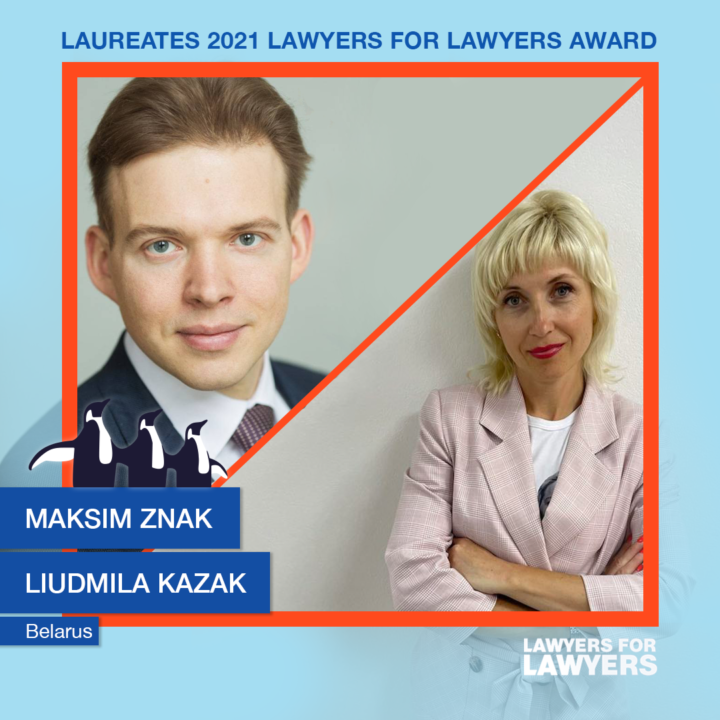
Belarusian lawyers Maksim Znak and Liudmila Kazak will receive the Lawyers for Lawyers Award 2021. The Award will be presented at a ceremony co-hosted by Lawyers for Lawyers and the Amsterdam Bar Association in the Rode Hoed in Amsterdam on 18 November 2021. For more on this award and its laureates, see: https://www.trueheroesfilms.org/thedigest/awards/B40861B3-0BE3-4CAF-A417-BC4F976E9CB0
“By awarding Maksim Znak and Liudmila Kazak the Lawyers for Lawyers Award, the jury wants to highlight the important work of both lawyers who bravely represented Belarusian human rights defenders and opposition leaders and are paying a high price for their work. With this Award, the jury also wants to raise awareness of other Belarusian lawyers who have been subjected to pressure, harassment and intimidation in connection to their professional activities especially in the aftermath of the 2020 presidential elections”.
Maksim Znak
Maksim Znak represented Viktor Babaryko, a potential candidate in the presidential elections who was not allowed to formally register. He also provided legal assistance to Svetlana Tikhanovskaya, a former candidate for the presidency who is now in exile, and Maria Kolesnikova, Coordination Council co-leader. On 9 September 2020, Mr. Znak was arrested for allegedly having committed the offence of “calls to actions seeking to undermine national security” in violation of Article 361(3) of the Criminal Code of Belarus. In February 2021, additional charges were added, including “conspiracy to seize state power” and “organising extremism”. On 6 September 2021, Mr. Znak was sentenced to 10 years in prison during a closed-door-trial. His sentencing is another indication of the challenging working environment in which Belarusian lawyers must operate.
Liudmila Kazak
Liudmila Kazak is a human rights lawyer who has defended political prisoners, human rights defenders, and journalists, including the opposition leader Maria Kolesnikova. On 24 September 2020, she was detained. The next day, the court held Kazak administratively liable for disobeying police officers based on testimony given by anonymous masked witnesses who appeared via Skype and claimed to be the arresting officers. She was sentenced to a fine under article 23.4 of the Belarusian Administrative Code and released on 26 September 2020. On 11 February 2021, she was notified of a pending disciplinary proceeding against her before the Qualification Commission for legal practice in the Republic of Belarus. On 19 February 2021, the Qualification Commission disbarred Ms. Kazak. Ms. Kazak appealed the decision, but, on 15 April 2021, a district court upheld Ms. Kazak’s disbarment. On 17 June 2021, an appellate court upheld the district court decision.
We deplore the systemic underfunding of the UN human rights system and the drive for so-called efficiency, including the cancellation of general debates in June, which are a vital part of the agenda by which NGOs can address the Council without restrictions. We call for the reinstatement of general debates at all sessions, with the option of civil society participation through video statements. We welcome the focus of the civil society space resolution on the critical role played by civil society in the COVID-19 response, and the existential threats to civil society engendered or exacerbated by the pandemic. For the resolution to fulfil its goal, States must now take action to address these threats; while we welcome the broad support indicated by a consensus text, this cannot come at the cost of initiatives that will protect and support civil society.
HUMAN RIGHTS ONLINE
We welcome a resolution on the promotion, protection and enjoyment of human rights on the Internet and its thematic focus on bridging digital divides, an issue which has become ever-important during the COVID-19 pandemic. We urge all States to implement the resolution by taking concrete measures to enhance Internet accessibility and affordability and by ceasing Internet shutdowns and other disruptions, such as website blocking and filtering and network throttling. In future iterations of the text, we encourage the core group to go further in mentioning concrete examples that could be explored by States in adopting alternative models for expanding accessibility, such as the sharing of infrastructure and community networks. We welcome the resolution on new and emerging digital technologies and human rights, which aims to promote a greater role for human rights in technical standard-setting processes for new and emerging digital technologies, and in the policies of States and businesses. While aspects of the resolution risk perpetuating “technology solutionism”, we welcome that it places a stronger focus on the human rights impacts of new and emerging digital technologies since the previous version of the resolution, such as introducing new language reiterating the importance of respecting and promoting human rights in the conception, design, use, development, further deployment and impact assessments of such technologies.
GENDER EQUALITY AND NON-DISCRIMINATION
We are concerned by the increasing number of amendments and attempts to weaken the texts. We are particularly concerned by the continued resistance of many States to previously adopted texts and States’ willful misinterpretation of key concepts related in resolutions on human rights in the context of HIV and AIDS, accelerating efforts to eliminate all forms of violence against women and girls: preventing and responding to all forms of violence against women and girls with disabilities and preventable maternal mortality and morbidity and human rights on maternal morbidities. We deplore the instrumentalising of women’s rights and sexual and reproductive health and rights. We encourage States to center the rights of people most affected and adopt strong texts on these resolutions. We welcome the resolution on menstrual hygiene management, human rights and gender equality as the first step in addressing deep-rooted stigma and discrimination. We urge all States to address the root causes for the discrimination and stigma on menstruation and its impact.
RACIAL JUSTICE AND EQUALITY
The High Commissioner’s report highlighted the long-overdue need to confront legacies of slavery, the transatlantic trade in enslaved Africans and colonialism and to seek reparatory justice. We welcome the historic consensus decision, led by the Africa Group, to adopt a resolution mandating an independent international expert mechanism to address systemic racism and promote racial justice and equality for Africans and people of African descent. The adoption of this resolution is testament to the resilience, bravery and commitment of victims, their families, their representatives and anti-racism defenders globally. We deplore efforts by some Western States, particularly former colonial powers, to weaken the text and urge them to now cooperate fully with the mechanism to dismantle systemic racism, ensure accountability and reparations for past and present gross human rights violations against Black people, end impunity for racialized State violence and address the root causes, especially the legacies of enslavement, colonialism, and the transatlantic trade in enslaved Africans.
MIGRANTS RIGHTS
Whilst we welcome the return of a resolution on human rights of migrants, we deplore the continued failure of the Council to respond meaningfully to the severity and global scale of human rights violations at international borders including connected to pushbacks. International borders are not and must not be treated as places outside of international human rights law. Migrants are not and must not be treated as people outside of international human rights law. Expressions of deep concern in interactive dialogues must be translated into action on independent monitoring and accountability.
ARMS TRANSFERS AND HUMAN RIGHTS
We welcome the resolution on the impact of arms transfers on human rights and its focus on children and youth. However, we note with concern the resistance of the Council to meaningfully focus on legal arms transfers beyond those diverted, unregulated or illicitly transferred. The Council should be concerned with all negative human rights impacts of arms transfers, without focusing only on those stemming from diversion and unregulated or illicit trade.
CLIMATE CHANGE
We are disappointed that the resolution on human rights and climate change fails to establish a new Special Rapporteur. However, we welcome the increasing cross regional support for a new mandate. It is a matter of urgent priority for the Council to establish it this year.
COUNTRY SPECIFIC SITUATIONS
ALGERIA
While special procedures, the OHCHR and multiple States have recognized the intensifying Algerian authorities’ crackdown on freedom of association and expression, the Council failed to act to protect Algerians striving to advance human rights and democracy.
BELARUS
We welcome the renewal of the mandate of the UN Special Rapporteur on Belarus. Given the ongoing human rights crisis in Belarus, the mandate complements the OHCHR Examination in ensuring continuous monitoring of the situation, and the mandate remains an accessible and safe channel for Belarusian civil society to deliver diverse and up-to-date information from within the country.
CHINA
The Council has once again failed to respond meaningfully to grave human rights violations committed by Chinese authorities. We reiterate our call on the High Commissioner and member States to take decisive action toward accountability.
COLOMBIA
We are disappointed that few States made mention of the use of excessive force against protestors in a context of serious human rights violations, including systemic racism, and urge greater resolve in support of the right to freedom of peaceful assembly in the country and globally
ETHIOPIA
The resolution on Ethiopia’s Tigray region, albeit modest in its scope and language, ensures much-needed international scrutiny and public discussions on one of Africa’s worst human rights crises. We urge the Ethiopian government to engage ahead of HRC48.
ERITREA
We welcome the extension of the mandate of the Special Rapporteur on Eritrea, as scrutiny for violations committed at home and in Tigray is vital.
NICARAGUA
We warmly welcome the joint statement delivered by Canada on behalf of 59 States, on harassment and detention of journalists, human rights defenders, and presidential pre-candidates, urging Nicaragua to engage with the international community and take meaningful steps for free and fair elections. States should closely monitor the implementation of resolution 46/2, and send a strong collective message to Nicaragua at the 48th session of the Council, as the Council should ‘urgently consider all measures within its power’ to strengthen human rights protection in the country.
PALESTINE
We welcome the Special Rapporteur’s report that “Israeli settlements are the engine of this forever occupation, and amount to a war crime,” emphasizing that settler colonialism infringes on “the right of the indigenous population […] to be free from racial and ethnic discrimination and apartheid.” We also reiterate his recommendation to the High Commissioner “to regularly update the database of businesses involved in settlements, in accordance with Human Rights Council resolution 31/36.”
THE PHILIPPINES
While acknowledging the signing of the Joint Human Rights Programme with the UN OHCHR, the Government of the Philippines fails to address the long-standing issues on law enforcement and accountability institutions, including in the context of war on drugs. We continue to urge the Council to launch the long-overdue independent and transparent investigation on the on-going human rights violations.
SYRIA
We welcome mounting recognition for the need to establish a mechanism to reveal the fate and whereabouts of the missing in Syria, including by UN member states during the interactive dialogue on Syria, and the adoption of the resolution on Syria addressing the issue of the missing and emphasizing the centrality of victim participation, building on the momentum created by the Syrian Charter for Truth and Justice.
VENEZUELA
In the context of the recent arbitrary detention of 3 defenders from NGO Fundaredes, we welcome the denunciation by several States of persistent restrictions on civil society and again for visits of Special Rapporteurs to be accepted and accelerated.
*American Civil Liberties Union, Association for Progressive Communications, Cairo Institute for Human Rights Studies, Centro de Estudios Legales y Sociales (CELS), Center for Reproductive Rights, Child Rights Connect, CIVICUS: World Alliance for Citizen Participation, Commonwealth Human Rights Initiative, Conectas Direitos Humanos, Egyptian Initiative for Personal Rights, FIDH, Franciscans International, Human Rights House Foundation, International Bar Association’s Human Rights Institute, International Commission of Jurists, International Lesbian and Gay Association, International Service for Human Rights, US Human Rights Network
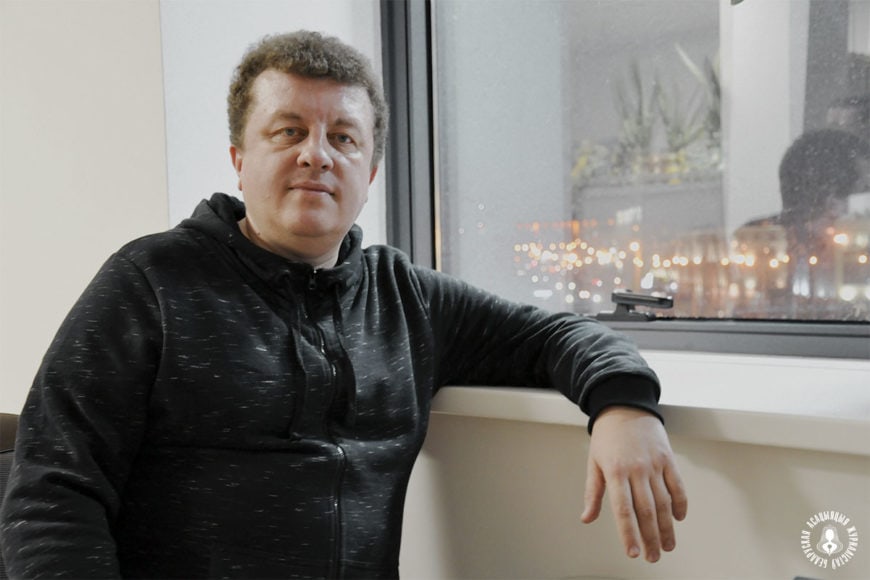
Aliaksandrau has long been a defender of freedom of expression in Belarus and beyond, having previously held positions at the Belarusian Association of Journalists, Index on Censorship, and Article 19 among other media and free speech organisations.
Aliaksandrau was detained in January 2021. The Investigative Committee, Belarus’s criminal investigation service, indicted him on public order offences, for which he was facing up to three years in prison. The charges stem from allegations that Aliaksandrau paid the fines of journalists and protesters whom authorities detained during last year’s pro-democracy protests, triggered by the highly disputed August 2020 presidential election. The Belarusian Investigative Committee and other law enforcement agencies wrongly equated this with financing unlawful protests.
On 30 June, Belapan reported that Aliaksandrau has now been charged with “treason to the state” based on the same set of allegations.
“More than €530,000 worth of fines were imposed on protesters between 9 August and the end of 2020. It is absurd to conflate efforts to help pay those fines with a public order offense, let alone treason,” the organisations said.
“Belarusian authorities created a new mark of tyranny by laying treason charges against Aliaksandrou. While we urge the release of all 529 political prisoners currently detained in Belarus, which include at least 15 journalists, we are at this point in time expressing special concern for Aliaksandrau. To date, he is the only detainee facing the fabricated charge of treason.”
“Aliaksandrau has already spent 172 days in prison for his alleged “crime”. We call for his immediate and unconditional release,” the organisations said.
Lawyers from Myanmar and Belarus, and a lawyers’ collective from Algeria are shortlisted as finalists for the 2021 Lawyers for Lawyers Award. The 2021 Award will be presented to the laureate during a seminar hosted by Lawyers for Lawyers and the Amsterdam Bar Association in Amsterdam on 18 November 2021. The ceremony will also be live-streamed.
The expert jury selected U Khing Maung Zaw from Myanmar, the Collective for the Defence of Hirak Detainees from Algeria and Maksim Znak and Liudmila Kazak from Belarus as finalists for the Award. The laureate of the Award will be announced later this year.
About the finalists
In Myanmar, U Khing Maung Zawhas courageously upheld the rule of law for more than five decades. He is currently representing leaders of the recently deposed Myanmar government and a number of other persons who have been arbitrarily detained on politically motivated criminal charges associated with the military coup in Myanmar beginning 1 February 2021. In this context of repression and danger, U Khin Maung Zaw remains committed to representing his clients.
Since February 2019, grassroots peaceful protests (the “Hirak”) have called for genuine democratic reform and rule of law in Algeria. In response, the government launched a campaign of arrests and judicial harassment against all those associated with this movement. The Collective for the Defence of Hirak Detainees, formed in July 2019 after the first wave of arrests, voluntarily and tirelessly defends those arbitrarily prosecuted, especially from marginalised backgrounds who cannot afford legal support.
In the aftermath of the 2020 presidential elections in Belarus, lawyers working on politically sensitive cases or cases of human rights violations were subjected to pressure, harassment and intimidation in connection to their professional activities. Maksim Znak and Liudmila Kazakrepresented human rights defenders and opposition leaders, and are paying a high price for their work. On 9 September 2020, Maksim Znak was taken into custody and is still being detained. On 19 February 2021, Liudmila Kazak was disbarred.
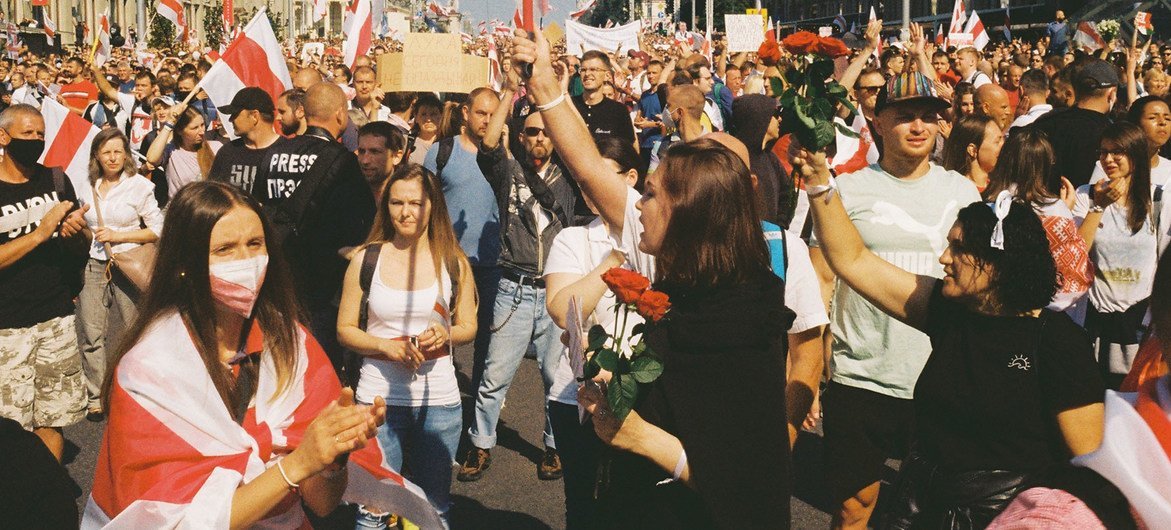
Unsplash/Andrew KeymasterProtestors at the March of Peace and Independence in Minsk, Belarus (file photo). 5 July 2021
Belarus has witnessed an unprecedented human rights crisis over the past year, the independent expert appointed to monitor the country said on Monday 5 July 2021, calling on authorities to immediately end their policy of repression and fully respect the legitimate aspirations of their people.
Belarus has witnessed an unprecedented human rights crisis over the past year, the independent expert appointed to monitor the country said on Monday, calling on authorities to immediately end their policy of repression and fully respect the legitimate aspirations of their people.
In her annual report to the Human Rights Council, Anaïs Marin said she had received reports of massive police violence used against protesters – since last August’s disputed presidential election brought millions onto the streets to contest the result – cases of enforced disappearance, allegations of torture and ill-treatment and the continuous intimidation and harassment of civil society actors.
Broad spectrum of abuses
“The Belarusian authorities have launched a full-scale assault against civil society, curtailing a broad spectrum of rights and freedoms, targeting people from all walks of life, while systematically persecuting human rights defenders, journalists, media workers and lawyers in particular,” Ms. Marin told the Council.
“The crackdown is such that thousands of Belarusians have been forced or otherwise compelled to leave their homeland and seek safety abroad; yet the downing of a civilian plane in Minsk on 23 May, for the apparent sole purpose of arresting a dissident who was on board, signaled that no opponent to the current Government is safe anywhere”, the expert added.
She noted that the significant deterioration of the human rights situation in Belarus started in late spring 2020 and climaxed in the aftermath of the presidential election of 9 August, the results of which were widely contested.
Malpractices were reported during the election campaign, as most opposition candidates were forced out of the race, while the vote count was marred by allegations of fraud.
Unjustified and disproportionate
“Distrust in the legitimacy of the electoral outcome triggered spontaneous and largely peaceful popular protests to which the authorities responded with unjustified, disproportionate and often arbitrary force”, said the Special Rapporteur, who reminded that over 35,000 people have been detained since then for trying to exert their right to freedom of peaceful assembly, including women and children arrested for peacefully demonstrating solidarity with victims of police violence.
“Since August 2020 I received innumerable allegations of beatings and ill-treatment, including torture in detention, but also allegations of rapes, enforced disappearances and even killings – all remain to be investigated.”
She said she was also alarmed by the hundreds of cases of criminal prosecution of human rights defenders and lawyers, journalists and medical staff, which have taken place, simply for doing their job.
Abusers protected
“As the legal and judicial systems in Belarus protect the perpetrators of grave human rights violations, continuing impunity means that there is no guarantee of non-reoccurrence,” Ms. Marin said. “Hence the international community should keep on demanding the release and rehabilitation of all those still detained on political grounds, and support initiatives aiming at bringing perpetrators of the most serious crimes to account”.
The UN expert also expressed concerns about the impact the ongoing crackdown has had on the right to education, pointing to discriminatory measures that persist in Belarus against people with disabilities, ethno-linguistic minorities, people living in rural areas and those deprived of liberty.
‘Disastrous consequences’
“I call on the Belarusian authorities to put an end to their policy of repression, to immediately and unconditionally release those arbitrarily detained, and to ensure full respect for the human rights and legitimate democratic aspirations of people in Belarus”, the UN expert said, warning that a further aggravation of the human rights crisis and international self-isolation could have disastrous consequences for the whole country.
On 25 June 2021 the FIDH issued a press release announcing a new website on Belarus. Since May 2020, the administration of Aliaksandr Lukashenka, the de facto president of Belarus, has intensified repression, aiming to crush the country’s democratic movement. A new website launched by the International Federation for Human Rights (FIDH) tracks, compiles, and presents detailed information on the human rights situation in the country, including on political prisoners, violations against vulnerable groups, and efforts to advance accountability for the regime’s crimes.
FIDH and its member organisation in Belarus, Viasna Human Rights Center, have been closely monitoring and documenting the human rights situation in Belarus over the past year. The website launched today is intended as a comprehensive resource compiling up-to-date data and statistics, and offering analysis and insight into violations, including from our local partners such as Viasna. The website tracks and provides detailed information on political prisoners—particularly human rights activists, lawyers, journalists, and other human rights defenders, describes violations against vulnerable groups currently imprisoned by the regime—and details ongoing efforts to further accountability for the regime’s crimes.
The website has four main sections, updated daily, reflecting the most recent developments in four key areas: monitoring events and reactions, exposing crimes and furthering justice, defending human rights activists, and supporting vulnerable groups.
Monitoring events and reactions
On Monday, the EU approved new sanctions against 78 individuals and eight companies believed to support the crackdowns on the democratic movement and the forced landing of Ryanair flight with Raman Pratasevich on board late last month. The same day, the UK, Canada, and the US joined this initiative and introduced new sanctions. At the European Council yesterday, the EU also approved economic sanctions against parts of Belarus’ potash, oil, and tobacco exports, as well as telecommunication and banking sectors. We are monitoring this situation and will publish updates as soon as further information is available.
Exposing crimes and furthering justice
On 19 June, the law “On Amendments to the Laws on Ensuring the National Security of the Republic of Belarus” came into force. Among other provisions, it grants law enforcement the right to use military and special equipment to suppress riots and stipulates that officers not be liable for harm caused as a result of the use of force and weapons. This is one of a series of recent laws—including one that expands the definition of extremism—that threaten protesters’ lives and liberties, under the guise of ensuring public order and national security, and that violate the International Covenant on Civil and Political Rights. FIDH, which is on the Advisory Council of the International Accountability Platform for Belarus, regularly issues statements analysing such laws, as well as communications to the UN Special Procedures, in order to further justice in the country.
Defending human rights activists
Many human rights defenders (HRDs) in Belarus face persecution due to their professional activity. To date, at least 21 of them have been charged with supposed crimes in an attempt to thwart their human rights activities. Most recently, on 18 June, lawyer Andrei Machalau, who was a defense attorney in many criminal cases against protests activists and HRDs, including TUT.by journalist Katsiaryna Barysevich, was disbarred for alleged violation of professional ethics. Machalau is one of at least 17 lawyers whose licenses have been revoked since May 2020. We endeavour to defend each and every one of them and gather the available information in a dedicated section of our website.
Supporting vulnerable groups
The current regime demonstrates a blatant disregard for human rights of children, women, pensioners, persons with disabilities, and other vulnerable groups. Despite the overwhelmingly peaceful nature of the protest movement, hundreds of representatives of these groups have been detained, and sometimes beaten, for simply displaying the white-red-white flag: the main symbol of the democratic movement. On Monday, the Belarusian Ministry of Interior proposed that the KGB add the white-red-white flag and slogan Zhyve Belarus (Long live Belarus) to the list of banned Nazi symbols. Should this initiative be approved, public use of such symbols could lead to administrative or even criminal liability—potentially devastating news for many minors, women, and other Belarusians who have galvanised the protest movement using these symbols. We will be following the situation and supporting those who may suffer restrictions on freedom of speech due to this and other legislation.
On 11 May 2021 Czech Radio announced that the annual One World festival of human rights documentary films got underway on Monday evening under the motto Connection Lost. The festival, which has moved entirely online due to Covid-19 restrictions, started by presenting its annual Homo Homini prize for human rights advocacy.
During the virtual opening ceremony on Monday evening, the People in Need foundation presented this year’s Homo Homini prize to four members of the Belarusian human rights organization Viasna, who have been persecuted for tracking detained protestors, documenting human rights violations and helping victims of police violence.
For the first time in the 25-year history of Homo Homini Award, it was presented to the same organization. People in Need director Šimon Pánek explained the decision to Czech Television: “15 years ago Ales Bialatski, founder of Viasna, received the Homo Homini Award. He saw what was happening at the time and put together a group of people to defend the rights of detainees. In the end, he himself ended up in prison.
“He was presented the award by Václav Havel, who said he hoped Belarus would live to see its 1989, but unfortunately, it hasn’t happened yet.
“For a while it looked as if Belarus has resigned, but the new generation of young people have not accepted the situation and despite the brutality of the regime, they have repeatedly taken to the streets.”
The festival, which runs until May 19, will present over a hundred films in 15 thematic categories, the main one focusing on technology and its impact both on the society and individuals. Some of the screenings will also be accompanied by live discussions as part of the One World Live Programme.
Tatsiana Hatsura-Yavorska Watch Docs Film Festival
Tom Grater in Deadline.com of 14 April 2021 reports how an unusual collective of human rights organizations, film festivals and industry have called for the release of Tatsiana (Tanya) Hatsura-Yavorska, the director of the Watch Docs Festival in Belarus, who was arrested on April 5 for her role in organizing an underground photo exhibition celebrating health workers.
The Human Rights Film Network and the International Coalition for Filmmakers at Risk have put out a joint open letter calling on authorities to release Hatsura-Yavorska, who is regarded as a political prisoner, as well as others who have been incarcerated in the country. The letter has been signed by a broad selection of film festivals and organizations including Sundance and Berlin.
“We urge the Belarusian authorities to immediately and unconditionally release our colleague Tatsiana Hatsura-Yavorska and other human rights defenders, and to end acts of judicial harassment against them,” the letter reads. You can see it in full here.
Following the event that she jointly organized, which was titled Machine Is Breathing, and I Am Not and was dedicated to the country’s medics and their battle during the pandemic, Hatsura-Yavorska was initially fined 700 Belarusian rubles for “protesting against police” and placed in a detention facility. She has not been released and is now facing trial on charges of ‘raising money for protests’, with her court hearing set to take place 16 April according to those close to her. It is thought she could face several years in prison.
Maciej Nowicki, Director of Poland’s Watch Docs Film Festival, told Deadline that “it is still unclear on what grounds” Hatsura-Yavorska is being prosecuted.
“Numerous reports by the UN, other international organizations and NGOs, unfortunately, have documented various types of violations of law and human rights in Belarus, including the rights of persons deprived of their liberty. This is why we are truly concerned about Tanya,” he continued. “Tanya is an amazing and beautiful person, as well as a very strong one. But now she needs our solidarity.”
A collection of Belarusian organizations and associations also released a statement this weekend, which read: “We consider the persecution of Tatsiana Hatsura-Yavorska by the authorities to be politically motivated, aimed at stopping her public and non-violent activities aimed at protecting human rights and fundamental freedoms.”
Elsewhere, Filmmaker Mark Cousins penned an article for The Guardian expressing his support for Hatsura-Yavorska, detailing how he interacted with the festival exec though his work with the Belfast Film Festival. “Nonfiction cinema is our lingua franca. Those who speak it to governments should be defended,” Cousins wrote.
Workers taking part in solidarity rallies. Minsk, 14 August 2020. Photo: АВ / Vot Tak TV / Belsat
Belsat.eu of 9 April 2021 reports thatthe 2021 Arthur Svensson International Prize for Trade Union Rights has been awarded to the independent trade union movement in Belarus, represented by the Belarusian Congress of Democratic Trade Unions (BKDP) and its affiliates. for ‘their fearless struggle for democracy and fundamental trade union rights in Europe’s last dictatorship’.
“Belarus is considered one of the worst countries in the world for violating workers’ rights. Human rights organizations have for many years expressed deep concern about the human rights violations in the country; «disappearances», police violence and lack of freedom of expression and association. Despite the Lukashenka regime’s attempts to take control of the independent unions and complicate recruitment, organizing and regular trade union activity, they have never given up and have continued to work for its members,” the awarding committee says.
According to them,the independent trade union movement became central early in the fight against the falsification of the election result and the fight for democracy when the situation in the country significantly deteriorated in the wake of the 2020 presidential election.
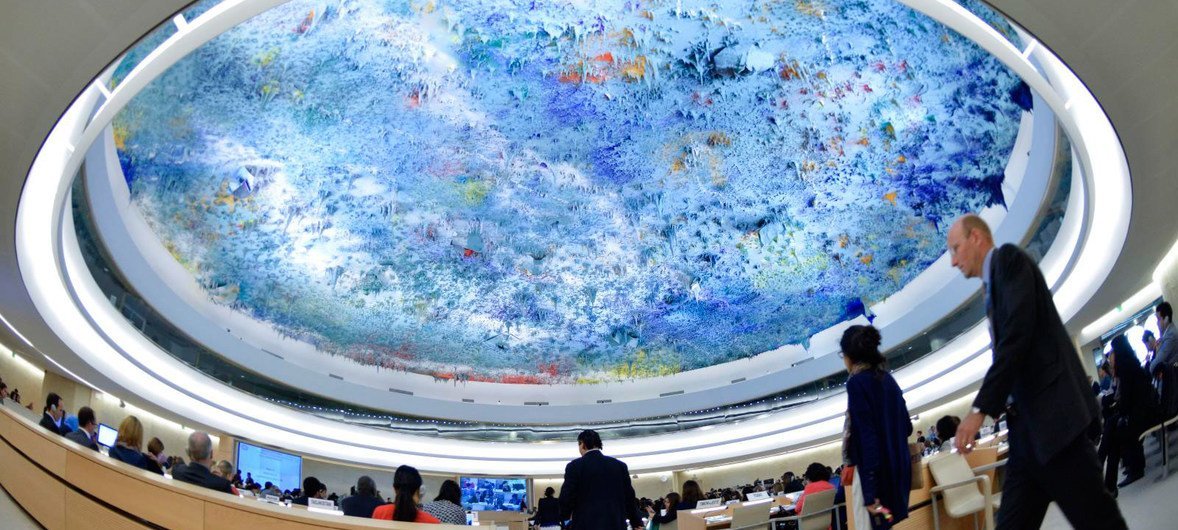
UN Photo/Jean-Marc FerréA general view of the Geneva-based UN Human Rights Council in session. 24 March 2021
The UN’s top rights forum passed resolutions condemning abuses of fundamental freedoms in Belarus and Myanmar on Wednesday, in response to ongoing concerns over the human rights situation in both countries.
The ISHR and another 15 organisations (see below) produced as usual their reflections on the key outcomes of the 46th session of the UN Human Rights Council, as well as the missed opportunities to address key issues and situations including pushbacks and other human rights violations faced by migrants and refugees, and the human rights situations in Algeria, Cameroon, China, India, Kashmir and the Philippines.
They welcome some important procedural advances such as the possibility for NGOs to make video statements, which should be maintained and expanded after the pandemic for all discussions, including in general debates. …They are concerned by the renewal for another year of the ‘efficiency’ measures piloted in 2020, despite their negative impact on civil society participation in a year also impacted by the COVID-19 pandemic. We urge States to reinstate general debates in the June sessions, to preserve their open-ended nature, and maintain the option of video intervention also in general debates.
Environmental justice:
They welcome the joint statement calling for the recognition of the right of all to a safe, clean, healthy and sustainable environment that was delivered by the Maldives, on behalf of Costa Rica, Morocco, Slovenia and Switzerland and supported by 55 States. We call on all States to seize this historic opportunity to support the core-group as they continue to work towards UN recognition so that everyone in the world, wherever they live, and without discrimination, has the right to live in a safe, clean and sustainable environment.
We welcome the joint statement that was delivered by Bangladesh, on behalf of 55 States, calling the Council to create a new Special Rapporteur on human rights and climate change. We believe this new mandate would be essential to supporting a stronger human rights-based approach to climate change, engaging in country visits, normative work and capacity-building, and further addressing the human rights impacts of climate responses, in order to support the most vulnerable. This mandate should be established without further delay.
Racial Justice: Over 150 States jointly welcomed that the implementation of HRC Resolution43/1 will center victims and their families. They urge the Council to respond to the High Commissioner’s call to address root causes of racism including the “legacies of enslavement, the transatlantic trade in enslaved Africans, and its context of colonialism”. The Council must answer to the demands of victims’ families and civil society’s, and establish – at its next session – an independent inquiry to investigate systemic racism in law enforcement in the United States and a thematic commission of inquiry to investigate systemic racism in law enforcement globally, especially where it is related to legacies of colonialism and transatlantic slavery.
Right to health: The resolution on ensuring equitable, affordable, timely, and universal access by all countries to vaccines in response to the COVID-19 pandemic is a welcome move in highlighting the need for States not to have export and other restrictions on access to safe diagnostics, therapeutics, medicines, and vaccines, and essential health technologies, and their components, as well as equipment and encouraged States to use all flexibilities within TRIPs. However, a revised version of the resolution tabled was further weakened by the deletion of one paragraph on stockpiling of vaccines and the reference to ‘unequal allocation and distribution among countries”. The specific deletion highlights the collusion between rich States and big pharmaceuticals, their investment in furthering monopolistic intellectual property regimes resulting in grave human rights violations. The reluctance of States, predominantly WEOG States who continue to defend intellectual property regimes and States’ refusal to hold business enterprises accountable to human rights standards is very concerning during this Global crisis.
Attempts to undermine HRC mandate: They regret that once again this Council has adopted a resolution, purportedly advancing ‘mutual beneficial cooperation’ which seeks to undermine and reinterpret both the principle of universality and its mandate. Technical assistance, dialogue and cooperation must be pursued with the goal of promoting and protecting human rights, not as an end in itself or as a means of facilitating inter-State relations. We reiterate our call on all States, and especially Council members, to consider country situations in an independent manner, based on objective human rights criteria supported by credible UN and civil society information. This is an essential part of the Council’s work; reliance on cooperation alone hobbles the Council’s ability to act to support the defenders and communities that look to it for justice.
Country-specific resolutions: They welcome the new mandate for the High Commissioner focused on the human rights situation in Belarus in the context of the 2020 Presidential election. It is now essential for States to support the High Commissioner’s office, ensuring the resources and expertise are made available so that the mandate can be operationalised as quickly as possible. Immediately afterwards, on 24 March, 2021 the Human Rights House Foundation published a call by 64 Belarusian and international human rights organisations, welcoming the resolution passed by the UN Human Rights Council mandating the High Commissioner to create a new robust monitoring and reporting mandate focused on accountability for human rights violations in Belarus that have taken place since 1 May 2020. In so doing, the Council demonstrated its determination to hold Belarusian authorities to account. This mandate needs immediate action. We urge the international community to support this critical next step. The mandate should provide a complementary and expert international mechanism to regional accountability processes already under way. Furthermore, it should assist in the identification of those responsible for the most serious violations for future prosecution. [https://humanrightshouse.org/statements/civil-society-organisations-call-for-the-immediate-operationalisation-of-hrcs-new-mandate-on-belarus/]
They welcome the renewal of the mandate of the Special Rapporteur on Iran, and urge Council to consider further action to hold Iranian authorities accountable, in view of the systematic impunity and lack of transparency surrounding violations of human rights in the country.
They welcome the call for additional resources for the Special Rapporteur on Myanmar, increased reporting by OHCHR as well as the work of the IIMM. Lack of international monitoring on, the imposition of martial law in Myanmar to prosecute civilians, including protesters, before military courts, the dangerous escalation of violence by the Tatmadaw and the widespread human rights violations amounting to crimes against humanity demand more efforts to ensure accountability.
They welcome the renewal and strengthening of the OHCHR’s monitoring and reporting mandate on Nicaragua, in a context of steady human rights deterioration marked by the Government’s refusal to cooperate constructively with the Office, over two years after its expulsion from the country. The adopted resolution lays out steps that Nicaragua should take to resume good faith cooperation and improve the situation ahead of this year’s national elections. It is also vital that this Council and its members continue to closely follow the situation in Nicaragua, and live up to the resolution’s commitments, by considering all available measures should the situation deteriorate by next year.
They welcome the increased monitoring and reporting on the situation of human rights in Sri Lanka. However, in light of the High Commissioner’s report on the rapidly deteriorating human rights situation and Sri Lanka’s incapacity and unwillingness to pursue accountability for crimes under international law, the Council should have urged States to seek other avenues to advance accountability, including through extraterritorial or universal jurisdiction.
While they welcome the extension of the mandate of the Commission on Human Rights in South Sudan (CHRSS), they regret the adoption of a competing resolution under the inadequate agenda item 10. This resolution sends a wrong signal as myriads of local-level conflicts and ongoing SGBV and other violations of fundamental rights continue to threaten the country’s stability. We urge South Sudan to continue cooperating with the CHRSS and to demonstrate concrete progress on key benchmarks and indicators.
They welcome the report by the Commission of Inquiry on Syria on arbitrary imprisonment and detention and reiterate the recommendation to establish an independent mechanism “to locate the missing or their remains”, and call on States to ensure the meaningful participation of victims and adopt a victim-centered approach, including by taking into consideration the Truth and Justice Charter of Syrian associations of survivors and families of disappeared when addressing arbitrary detention and enforced disappearance.
Country-specific State statements: They welcome States’ leadership and statements on human rights situations that merit the HRC’s attention.
They welcome the joint statement on the situation in Ethiopia’s Tigray region and urge all actors, including the Ethiopian Federal Government, to protect civilians and ensure unhindered humanitarian access. Those responsible for crimes under international law, including Ethiopian soldiers, members of armed militias and non-State groups, and Eritrean soldiers involved in Tigray, must be held criminally accountable. The HRC should mandate an independent investigation and reporting by the High Commissioner.
For the first time in seven years, States at the HRC have united to condemn the widespread human rights violations by Egypt and its misuse of counter-terrorism measures to imprison human rights defenders, LGBTI persons, journalists, politicians and lawyers and peaceful critics. They welcome the cross-regional joint statement by 32 States and we reiterate our call supported by over 100 NGOs from across the world on the HRC to establish a monitoring and reporting mechanism on the situation.
They welcome the joint statement by 45 States focused on the human rights situation in Russia, including the imprisonment of Alexi Navalny and the large number of arbitrary arrests of protestors across Russia. The statement rightly expresses concern for shrinking civil society space in Russia through recent legislative amendments and Russia using its “tools of State” to attack independent media and civil society.
The next session will receive a report on pushbacks from the Special Rapporteur on human rights of migrants. The Council must respond to the severity and scale of pushbacks and other human rights violations faced by migrants and refugees in transit and at borders and the ongoing suppression of solidarity, including by answering the High Commissioner’s call for independent monitoring. The Council’s silence feeds impunity, it must build on the momentum of the joint statement of over 90 States reaffirming their commitment to protection of the human rights of all migrants regardless of status.
While the OHCHR expressed deep concern about the deteriorating human rights situation and the ongoing crackdown on civil society in Algeria, and called for the immediate and unconditional release of arbitrarily detained individuals, the Council has remained largely silent. As authorities are increasingly arbitrarily and violently arresting protesters – at least 1,500 since the resumption of the Hirak pro-democracy movement on 13 February, they call on the Council to address the criminalisation of public freedoms, to protect peaceful protesters, activists and the media.
Cameroon is one of the human rights crises the Council has failed to address for too long. They condemn the acts of intimidation and reprisal exercised by the Cameroonian government in response to NGOs raising concerns, including DefendDefenders. This is unacceptable behavior by a Council member. The Council should consider collective action to address the gross human rights violations and abuses occurring in the country.
They echo the calls of many governments for the Council to step up its meaningful action to ensure that concerns raised by civil society, the UN Special Procedures and the OHCHR about the human rights situation in China be properly addressed, including through an independent international investigation. We also regret that a number of States have taken an unprincipled approach of voicing support to actions, such as those by the Chinese government, including in Xinjiang and Hong Kong, through their national and other joint statements.
They call for the Council’s attention on the rapid deterioration of human rights in India. Violent crackdowns on recent farmers’ protests, internet shutdowns in protest areas, sedition and criminal charges against journalists reporting on these protests, and criminalisation of human rights defenders signal an ongoing dangerous trend in restrictions of fundamental freedoms in India. We call on India to ensure fundamental freedoms and allow journalists, HRDs and civil society to continue their legitimate work without intimidation and fear of reprisals. [see also: https://humanrightsdefenders.blog/2020/10/29/also-un-calls-on-india-to-protect-human-rights-defenders/]
We once again regret the lack of Council’s attention on the human rights crisis in Kashmir. Fundamental freedoms in the Indian-administered Kashmir remains severely curtailed since the revocation of the constitutional autonomy in August 2019. Raids in October and November 2020 on residences and offices of human rights defenders and civil society organisations by India’s anti-terrorism authorities in a clear attempt at intimidation have further exacerbated the ongoing crisis. We call on the OHCHR to continue to monitor and regularly report to the Council on the situation in both Indian and Pakistani administered Kashmir, and on Indian and Pakistani authorities to give the OHCHR and independent observers unfettered access to the region. [See also; https://humanrightsdefenders.blog/2020/02/09/forgotten-kashmir-something-has-to-be-done/]
Nearly six months since its adoption, the Council Resolution 45/33 on technical assistance to the Philippines has proven utterly insufficient to address the widespread human rights violations and persistent impunity. Killings in the war on drugs continue, and attacks on human rights defenders and activists have escalated. The killing of nine unarmed activists on 7 March 2021 clearly demonstrates that no amount of technical assistance will end the killings as long as the President and senior officials continue to incite violence and killings as official State policy. It is imperative that the Council sets up an international accountability mechanism to end the cycle of violence and impunity in the Philippines. [see also: https://humanrightsdefenders.blog/2021/03/09/philippines-killings-continue-and-de-lima-stays-in-jail/]
Watch the statement:
*The statement was also endorsed by: Franciscans International; Egyptian Initiative for Personal Rights (EIPR); International Commission of Jurists (ICJ); International Movement Against All Forms of Discrimination and Racism (IMADR); Asian Forum for Human Rights and Development (FORUM-ASIA); African Centre For Democracy And Human Rights Studies; International Federation for Human Rights Leagues (FIDH); MENA Rights Group; International Lesbian and Gay Association; Impact Iran; Ensemble contre la Peine de Mort (ECPM); Siamak Pourzand Foundation; Cairo Institute for Human Rights Studies (CIHRS); ARTICLE 19; CIVICUS: World Alliance for Citizen Participation.
NOTE: The 47th regular session of the Human Rights Council is scheduled from 21 June 2021 to 9 July 2021.
 SIARHEI LESKIEC / AFP


 Hans Thoolen on Human Rights Defenders and their awards
