On Monday 27 January 2020, Football365.comcarried the story about Amnesty International calling the take-over of footbal club Newcastle by Saudi Arabia a case of ‘sportswashing’. Two days later the BBC reported on the conflicting feelings within the supporters group.
A Saudi takeover of Newcastle United would be “sportswashing, plain and simple” according to human rights body Amnesty International.The Premier League club are in talks with two potential buyers, including a consortium which features the Saudi Arabian Sovereign Wealth Fund, controlled by Crown Prince Mohammed bin Salman. Saudi Arabia has recently engaged on a large scale in buying a positive image with events such as Anthony Joshua’s heavyweight boxing match against Andy Ruiz, Spain’s Super Cup and the Dakar ralley.[see also: https://humanrightsdefenders.blog/2020/01/13/saudi-arabia-finds-that-celebrities-are-easier-to-buy-than-human-rights-ngos/ ]
Amnesty sees this as an attempt to use sport to clean up its image, describing the country’s human rights record as “abysmal”.“ It’s not for us to say who should own Newcastle, but players, back-room staff and fans alike ought to see this for what it is – sportswashing, plain and simple,” Amnesty’s UK head of campaigns Felix Jakens said.
The Wall Street Journal has reported that Newcastle owner Mike Ashley is considering a £340million bid by the consortium, which is led by Amanda Staveley a businesswoman and financier, who failed to buy the club two years ago.
Alistair Magowan of BBC Sport spoke to some of the people involbed and concluded that ‘Saudi Arabian takeover could leave fans ‘conflicted’. A poll in the Newcastle Chronicle suggested that 80% of fans would back the bid, but Riley, who is also a member of the 9,000-strong Newcastle United Supporters Trust, told BBC Sport he was very conflicted by the idea of the club being owned by a country which has committed and commits human-rights abuses. “A lot of Saudi government policy, I find abhorrent, so if the deal goes through I will have to re-assess my relationship with the club, absolutely no doubt about it. “I wouldn’t take the poll as a reflection of how people feel. I think there will be a lot of people feeling conflicted. A lot of people will still support the club, I will still support the club, but the level of support might be the difficult part. “If it goes through, I think there will be a lot of soul searching. In general, people care about human rights. There is a desperation to get rid of Mike Ashley, it’s just how far people are willing to go in that desperation.” A statement from a collection of Newcastle fans groups said: “Ashley should not stand in the way of this once in a lifetime opportunity for our club, our communities and our proud city.”
An illuminated Google logo can be seen in an office building in Switzerland on December 5, 2018. (Arnd Wiegmann / Reuters)
Several newspapers (here the BBC) wrote on 2 January 2020 about ex-Google executive Ross LaJeunesse revelations concerning the firm’s human rights policy. This matters more than usual in view of Google’s self-professed commitment to human rights, e.g. in the context of the Global Network Initiative (GNI) which brings information technology companies together with NGOs, investors and academics. Founding companies are: Google, Microsoft, and Yahoo!. GNI’s principles and guidelines provide companies with a framework for responding to government requests in a manner that protects and advances freedom of expression and privacy. Companies that join GNI agree to independent assessments of their record in implementing these principles and guidelines [see https://humanrightsdefenders.blog/2013/05/23/facebook-joins-the-global-network-initiative-for-human-rights/. Or by providing funding [see e.g. https://humanrightsdefenders.blog/2019/05/08/excellent-news-huridocs-to-receive-1-million-from-google-for-ai-work/].
A former Google executive has raised concerns about the tech giant’s human rights policies as it eyes expansion in China and elsewhere. Ross LaJeunesse, the firm’s former head of global international relations (until May last year), said he was “sidelined” after he pushed the company to take a stronger stance. Google defended its record in a statement, saying it has an “unwavering commitment” to human rights.
Mr LaJeunesse is now campaigning for a seat in the US senate. He said his experience at Google convinced him of the need for tougher tech regulations. “No longer can massive tech companies like Google be permitted to operate relatively free from government oversight,” he wrote in a post on Medium.
Google’s main search business quit China in 2010 in protest of the country’s censorship laws and alleged government hacks. But it has since explored ways to return to the country, a major market, stirring controversy.bLaJeunesse said Google rebuffed his efforts to formalise a company-wide programme for human rights review, even as it worked to expand in countries such as China and Saudi Arabia. “Each time I recommended a Human Rights Program, senior executives came up with an excuse to say no,” he wrote. “I then realized that the company had never intended to incorporate human rights principles into its business and product decisions. Just when Google needed to double down on a commitment to human rights, it decided to instead chase bigger profits and an even higher stock price.”
Google said it conducts human rights assessments for its services and does not believe the more centralised approach recommended by Mr LeJeunesse was best, given its different products.
A court in Saudi Arabia has sentenced five people to death and jailed three others over the murder of the journalist Jamal Khashoggi last year. The Saudi authorities said it was the result of a “rogue operation” and put 11 unnamed individuals on trial. A UN expert said the trial represented “the antithesis of justice”. “Bottom line: the hit-men are guilty, sentenced to death. The masterminds not only walk free. They have barely been touched by the investigation and the trial,” Special Rapporteur Agnes Callamard wrote on Twitter. (A report released by Ms Callamard concluded in June that Khashoggi’s death was an “extrajudicial execution” for which the Saudi state was responsible, and that there was credible evidence warranting further investigation that high-level officials, including Crown Prince Mohammed bin Salman, were individually liable.)
The shadow cast by the grisly murder of Jamal Khashoggi has hung over Saudi Arabia’s international reputation for more than a year now. The ruling princes, especially the all-powerful Crown Prince Mohammed bin Salman, will be hoping Monday’s verdicts draw a line under the whole affair. That may be wishful thinking. The two most senior suspects – dubbed “the masterminds” – have walked free after a trial shrouded in secrecy.
At a news conference in Riyadh on Monday, Mr Shaalan said the public prosecution’s investigations had shown that “there was no premeditation to kill at the beginning of the mission”…Ms Callamard dismissed as “utterly ridiculous” the assertion that the killing was not premeditated, noting that in one of the purported audio recordings from the consulate two Saudi officials were heard discussing how to cut up and transport Khashoggi’s body just minutes before he entered the consulate.
A statement by the Saudi public prosecution said a total of 31 individuals were investigated over the killing and that 21 of them were arrested. Eleven were eventually referred to trial at the Riyadh Criminal Court and the public prosecutor sought the death penalty for five of them. Human Rights Watch said the trial, which took place behind closed doors, did not meet international standards and that the Saudi authorities had “obstructed meaningful accountability”.
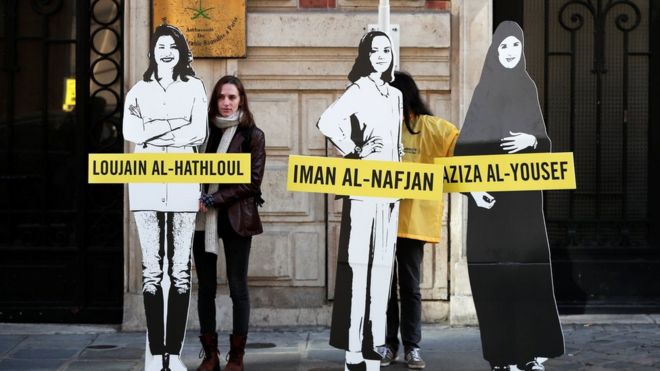
Amnesty International and UK-based Saudi rights organisation, ALQST, named the women as Eman al-Nafjan, Aziza al-Yousef and Roqaya al-Mohareb. Saudi state media said the releases were only provisional. Lynn Maalouf from Amnesty welcomed the releases but said it should not be on a temporary basis. “They have been locked up, separated from their loved ones, subjected to torture and threats for simply peacefully calling for women’s rights and expressing their views,” she said.
Raed Fares’ radio station defied threats from jihadist groups and resisted orders to stop playing music
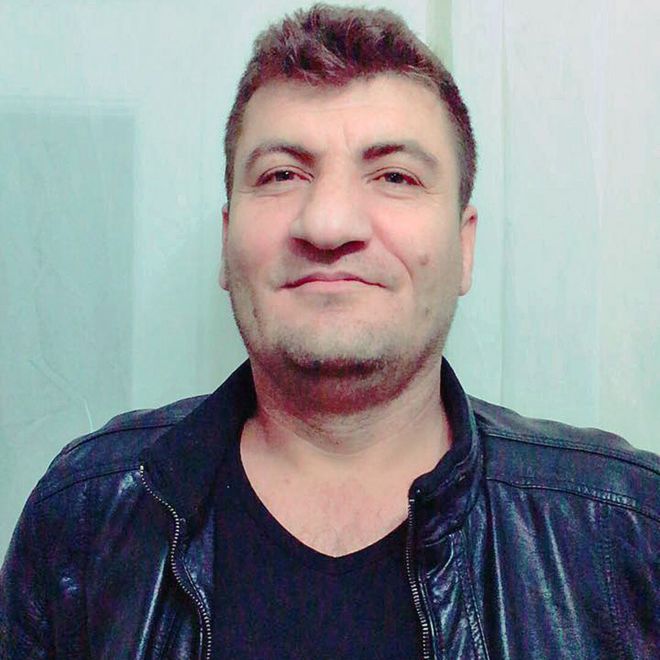
Raed Fares, a well-known Syrian activist, was killed in the north-western town of Kafranbel, in the in the rebel-held Syrian province of Idlib. Fares and fellow activist Hamoud Jneed were attacked in their car. Jneed died immediately, while Fares was transferred to Orient Hospital, where he later died. It was not the first time the founder of Radio Fresh, an independent radio station broadcasting from inside opposition-held areas in the country, had been targeted. His activism had earned the ire of both militants and the Syrian government. Four years ago, two gunmen for the Islamic State (IS) militant group shattered several bones and punctured his lung in a failed attempt to silence Fares. More attempts on his life would follow and yet the former estate agent was determined to carry on.
It was not just Fares the militants took issue with. The radio station – with its music and female presenters – also angered the groups which overran the town and surrounding area. Four years ago, when IS had a presence in Idlib province, the station’s office was raided by militants. In 2016, Fares was detained by the Nusra Front, the former al-Qaeda affiliate in Syria.
The Hayat Tahrir al-Sham alliance, which currently controls most of Idlib province, had ordered Radio Fresh to stop broadcasting music. The station’s response was to play long sequences of other sounds, such as tweeting birds, clucking chickens and bleating goats. “They tried to force us to stop playing music on air,” Fares told the BBC in 2017. “So we started to play animals in the background as a kind of sarcastic gesture against them.”
Another group, the now-dissolved Jabhat Fateh al-Sham, once instructed the radio station to take women off the air. Instead of complying, Fares told the BBC’s Mike Thomson about his creative solution to get round the issue. “We simply put their voices through a computer software programme which makes them sound like men,” he said… To those who encouraged him to leave Fares, replied “What can they do? Kill me?” he asked. “Well let them kill me. I’m not going to leave and leave them the country.”
Among the many expressions of concern is the Human Rights Foundation as Fares spoke at its 2017 Oslo Freedom Forum: “We are deeply saddened and disturbed by the assassination of Raed Fares, a dear friend and esteemed member of the Oslo Freedom Forum community. Raed worked tirelessly to counter fundamentalist narratives through journalism and to empower his fellow Syrians to build a better future. His work, bravery, and determination to succeed despite the many threats on his life make him a hero of the Syrian revolution,” HRF Chairman Garry Kasparov said. … Fares first became known outside of Syria in early 2014, when he started writing eye-catching, often sarcastic protest signs and sharing photos of them on social media. ….He quickly became one of the most trusted sources of on-the-ground footage and information on Syria’s continuing conflict. With his death, many reporters outside Syria have lost a vital and increasingly rare source, and agents of misinformation will grow that much stronger in his absence.
On 15 August 2017, Jatupat Boonpattararaksa received a two and a half years jail sentence after pleading guilty to violating the lèse majesté law. The human rights defender – also known as Pai Dao Din – has been detained since 3 December 2016 in connection with his sharing of a BBC article on the life of King Vajiralongkorn on social media. Pai Dao Din, is leader of a student activist group called Dao Din based in Khon Kaen University. (https://www.frontlinedefenders.org/en/profile/jatupat-boonpattararaksa). The group advocates for community rights, social justice and democracy. He is also a member of New Democracy Movement (NDM), which opposes the military dictatorship in Thailand, a regime in place since the coup d’etat in May 2014. In May 2017, Jatupat Boonpattararaksa was awarded the Gwangju Prize for Human Rights [https://humanrightsdefenders.blog/2017/05/10/gwangju-award-for-human-rights-defender-pai-dao-din-upsets-thai-government/]The defender was originally sentenced to five years in jail, however this sentence was reduced after he pleaded guilty to sharing material deemed insulting towards the country’s monarchy.
{While authorities did not file charges or even a complaint against the London-based BBC for publishing the article, only Jatupat was arrested. His bail requests were consistently rejected as authorities regarded lèse majesté as a serious charge possibly entailing severe punishment. Domestic and international campaigns over recent months have failed to free him on bail. Prior to the court judgment, Jatupat, who had maintained his innocence for months, agreed to plead guilty after consulting with his family and legal team to get a more lenient sentence.}
“It appears that Jatupat was singled out, from thousands of people who shared the BBC article, and prosecuted for his strong opposition to military rule rather than any harm incurred by the monarchy,” said Brad Adams, Asia Director at Human Rights Watch. “His guilty verdict and jail sentence show yet again how Thailand’s draconian ‘insulting the monarchy’ law has been misused to punish dissenters.”
On 7 November 2016, the BBC, Reuters and other media reported that labour rights defender Andy Hall has left Thailand after a three-and-a-half year legal battle with a pineapple processing company accused, in a report he contributed to, of abusing its workforce. The dismissal of one set of charges against the British activist was confirmed by Thailand’s Supreme Court last week. But he was convicted in September on two other counts under sweeping criminal defamation and computer crimes laws and was given a three-year suspended prison sentence. He also faces civil complaints by the pineapple company, Natural Fruit, which is demanding around $12m in damages.
But it was mostly the prospect of further criminal charges over another group of workers he is supporting that persuaded Mr Hall that he should leave Thailand and not returner the time being. He and the 14 migrant workers from Myanmar – who have alleged abusive treatment at the hands of a farm which supplied the big Thai poultry processor, Betagro, with chickens – recently had defamation lawsuits filed against them. [see also: https://thoolen.wordpress.com/tag/andy-hall/]
Before he left Thailand Mr Hall told the BBC that he felt that the prospect of having to contest continuous lawsuits filed against him would make it impossible for him to defend migrant workers’ rights effectively. The situation for human rights defenders, he said in a statement made as he prepared to depart, has rapidly deteriorated in Thailand, with significantly increased risks.
The challenge confronting Mr Hall is one faced by many Thai activists as well. Defamation is a criminal charge that can carry a two-year prison sentence, often used alongside the even tougher Computer Crimes Act, which mandates a sentence of up to five years in prison.
Two years ago, the editors of a small newsletter, Phuketwan, were prosecuted by the Thai navy for an article in which they quoted a Reuters news agency report alleging Thai military involvement in human trafficking. They were finally acquitted last year, but the effort of defending themselves contributed to the newsletter being shut down.
In June this year three prominent human rights defenders were prosecuted under the same two laws by a unit of the Thai military over a report they took part in which alleged the use of torture against military detainees in southern Thailand.
On Thursday 3 November, the U.N. Human Rights office in Bangkok issued a statement praising the Supreme Court’s decision. But it also called on the Thai government “to drop charges against all human rights defenders who have been charged with criminal offenses for reporting human rights violations in accordance with its obligations under international human rights law.“
On 6 October EU Trade Commissioner Cecilie Malmström had strongly backed the British labour rights activist who helped expose labour abuses in Thailand, for which he received a three-year suspended jail sentence. Andy Hall met Malmström in Strasbourg, where MEPs also passed a strong resolution condemning Hall’s treatment under the military junta now running the country.
Ahmed Mansoor, the Laureate of the Martin Ennals Award 2015, was the target of a major hacking attempt. Fortunately it received global coverage on 26 and 27 August 2016 and Apple has immediately issued a security update to address the vulnerabilities. [For those with Iphones/Ipads, you may want to update your IOS software to 9.3.5!]
Image copyrightAP – human rights defender Ahmed Mansoor
The flaws in Apple’s iOS operating system were discovered by Mansoor who alerted security researchers to unsolicited text messages he had received on 10 and 11 August. They discovered three previously unknown flaws within Apple’s code that meant spyware could be installed with a single tap. Apple has since released a software update that addresses the problem. The two security firms involved, Citizen Lab and Lookout, said they had held back details of the discovery until the fix had been issued.
The texts promised to reveal “secrets” about people allegedly being tortured in the United Arab Emirates (UAE)’s jails if he tapped the links. Had he done so, Citizen Lab says, his iPhone 6 would have been “jailbroken”, meaning unauthorised software could have been installed. “Once infected, Mansoor’s phone would have become a digital spy in his pocket, capable of employing his iPhone’s camera and microphone to snoop on activity in the vicinity of the device, recording his WhatsApp and Viber calls, logging messages sent in mobile chat apps, and tracking his movements,” said Citizen Lab. The researchers say they believe the spyware involved was created by NSO Group, an Israeli “cyber-war” company.
The spyware would have been installed if Mansoor had tapped on the links. Image copyright CITIZENLAB
Wirathu:”Just because you hold a position in the United Nations doesn’t make you an honourable woman. In our country, you are just a whore,”
For those who think that hate speech has no place in peace-loving Buddhism, this is sobering item:
A radical Myanmar Buddhist monk, Wirathu, called the U.N. human rights envoy – Ms Yanghee Lee – a “whore”, and accused Lee of bias towards Rohingya Muslims, a stateless minority in the western Myanmar state of Rakhine. Wirathu denounced Yanghee Lee, the U.N. special rapporteur on human rights in Myanmar before a cheering crowd of several hundred people, in a speech in Yangon on Friday, after she questioned draft laws that critics say discriminate against women and non-Buddhists. “You can offer your arse to the kalars if you so wish but you are not selling off our Rakhine State,” he said. Kalars is a derogatory word for people of South Asian descent.
His speech was condemned by Thawbita, a leading member of the progressive Saffron Revolution Buddhist Monks Network in Mandalay, where Wirathu is also based. “The words used that day are very sad and disappointing. It is an act that could hurt Buddhism very badly,” Thawbita told Reuters. But he is unlikely to face censure. A senior official at the Ministry of Religious Affairs told Reuters there were no plans to act against Wirathu. This is the more remarkable as in December a New Zealander and two Burmese were charged with insulting Buddhism. The arrest was triggered by a complaint by an official from the country’s religious department. [see: http://news/world-asia-30527443]
Rapporteur Lee in a statement released by her office on Monday said: “During my visit I was personally subjected to the kind of sexist intimidation that female human rights defenders experience when advocating on controversial issues“.





 Hans Thoolen on Human Rights Defenders and their awards