Posts Tagged ‘art’

Burkina Faso artist Fasky uses photography to promote engagement

December 12, 2024

On 8 December 2024 Global Voices tells this story:

One of Fasky’s photographs at sn exhibition showcasing his work during the Récréâtrales festival. In this photo, a young woman is weaving a traditional Burkinabe loincloth. Photo by Joel Hevi, used with permission.

Across Africa, art events serve as powerful platforms for activists seeking to raise awareness about social issues and human rights.

Zerbo Siaka, also known as Fasky, is a photographic artist from Burkina Faso operating at the intersection of artistic expression and activist movements. The artist is also the director of the association Photo’age. Through this association, he is dedicated to passing on his photographic expertise to the next generation. His exhibition at the 13th edition of the cultural festival ‘Les Récréâtrales’ — a pan-African space for writing, creation, research, and theatrical dissemination — exemplifies the positive impact art can have on society.

A long-time participant in this significant gathering, Fasky shared his perspectives with Global Voices during Les Récréâtrales, explaining how he uses his photography as a tool to foster resilience and encourage social engagement.

Fasky. Photo by Joel Hevi, used with permission.

Joel Hevi (JH): Could you tell us about what inspired your journey into photography and your role within the Photo’Age association?

Fasky (F): I am Zerbo Siaka, also known as Fasky, a photographer from Bobo-Dioulasso in Burkina Faso. My journey into photography happened by chance. Initially, I aspired to be a rapper, but my path changed when I discovered photography while accompanying some French friends who were part of an association in Burkina Faso. They gifted me a camera, and that’s when photography became my passion. Today, through Photo’Age, I share this art with the younger generation, including internally displaced children, helping them to express themselves and showcase their realities.

JH: You presented a series of portraits of women at Les Récréâtrales. What message are you hoping to share through these woman-centric pieces?

F: For four years now, I have taken part in Les Récréâtrales. During this time, I have been fortunate to build strong connections with the women I photograph, most of whom are internally displaced [due to the widespread violence caused by terrorist attacks]. The theme of my exhibition, ‘We Shall Overcome,’ reflects their resilience in the face of crisis. These are women who, despite everything, hold on to hope and fight for their dignity. Through their portraits, I invite visitors to witness their strength and vulnerability. My hope is that beyond their faces, one can see a moving and inspiring humanity.

JH: Do you hope to initiate a dialogue about gender equality? What potential impacts could arise beyond the aesthetic appeal of your work?

F: Definitely, photography is for me a political and social act. These portraits are a statement advocating for gender equality and a tribute to these strong women and their struggles. I hope to raise awareness, to showcase their strength, and to emphasize the urgency of achieving equality. If my photographs can spark a debate and motivate others to stand up for these women’s rights, they will have achieved their goal.

JH: Your photographic style conveys an intimate connection with your subjects. How do you manage to establish this trust, especially in often challenging situations?

F: Trust is at the heart of my work. The women I photograph know me; we have built relationships over time. The Terre Ceinte project allowed me to understand their lives and earn their trust. Before taking their pictures, I listen and respect their stories. This bond is reflected in their expressions in my photos — a sincerity that only patience and attentive listening can bring to life.

The Rafto Prize 2024 to Cuban ‘artivist’ Luis Manuel Otero Alcántara

September 19, 2024

Luis Manuel Otero Alcántara. Foto: María Matienzo

The Rafto Prize 2024 is awarded to Cuban artist and activist Luis Manuel Otero Alcántara for his fearless opposition to authoritarianism through art.

https://www.trueheroesfilms.org/thedigest/laureates/05024dea-3b59-42d7-8509-bd0c7f4f6e87

36-year-old Luis Manuel Otero Alcántara is a Afro-Cuban self-taught artist. He comes from a poor and marginalized neighbourhood in Havana and uses sculptural and performance art to protest violations against freedom of expression. He has been arrested multiple times for his art and activism and is currently in prison.

Otero Alcántara is the general coordinator of the San Isidro Movement – a constellation of artists, journalists and academics promoting freedom of expression. It was established in 2018 as a reaction to Decree 349. The decree requires artists to obtain advance permission for public and private exhibitions and performances. Decree 349 is one of the legal instruments used to silence artists, musicians and performers who are critical to the Cuban government.

Otero Alcántara’s artivism has come at a high personal cost. Since 2016 he has been the subject of interrogations, political persecution and arrests, and his art has been confiscated and destroyed by state security officers.

Luis Manuel Otero Alcántara creates sculptures, drawings, and performative art. He is currently serving a five-year sentence in the high-security prison Guanajay outside of Havana.

Expressing oneself through art: A basic human right

Despite this, he continued his artivism through performance pieces to raise awareness of Cuba’s ongoing repression of independent artists and activists. Otero Alcántara was detained on July 11, 2021, after posting a video online of his planned participation in the protests. In 2022, he was convicted for “contempt, public disorder and insults to national symbols”. He is currently serving a five-year sentence in Guanajay maximum security prison outside Havana.

The Rafto prize 2024 aims to highlight the importance of the work of Luis Manuel Otero Alcántara and the basic human right to expressing oneself through art. We call upon the Cuban government to stop the persecution of artists and human rights defenders. We also urge them to free Otero Alcántara and all political prisoners in Cuba.

https://www.rafto.no/en/news/the-rafto-prize-2024-to-artivist-luis-manuel-otero-alcantara

Kofi Annan Courage in Cartooning Award 2024

May 10, 2024

On World Press Freedom Day, May 3, the Freedom Cartoonists Foundation recognized the talent and
courage of cartoonists working under difficult circumstances. The Kofi Annan Courage in Cartooning Award 2024 was presented by Nobel Peace Prize laureate Dr. Shirin Ebadi of Iran, during a public ceremony at the Geneva Graduate Institute, in presence of CNN’s international chief anchor Christiane Amanpour. For more on this award see: https://www.trueheroesfilms.org/thedigest/awards/f60cb3d4-c79a-43aa-9b5c-351c56c02ae1. This award is presented every two years in alternance with a prize presented by the allied organization Cartoonists Rights in the United States.
The accompanying international exhibition Cartooning for Freedom, visible on the shores of Lake Geneva until June 2, 2024, features nearly 60 press cartoons selected by Freedom Cartoonists, in partnership with Cartooning for Peace in Paris.
Chaired by Kenneth Roth, former Executive Director of Human Rights Watch, the international jury shares the 2024 Prize between two winners: Rachita Taneja (India) and Zunzi (Hong Kong).

see also: https://humanrightsdefenders.blog/2022/05/10/new-kofi-annan-courage-in-cartooning-award-to-ukrainian-and-hungarian-press-cartoonists/

For Chappatte, president of the Foundation, “Both brilliantly embody the fundamental values of editorial cartooning: talent, freedom of spirit, and courage. With a bit of mischief.

https://www.barrons.com/news/indian-hong-kong-satirists-win-press-cartoon-award-8db6c9b8

Willie Oeba, Kenyan artivist

April 3, 2024

“The idea is not to change the world, but to spark the mind that will change the world, because leadership is in delegation.

Willie Oeba is an African poet who empowers young people to fight inequality and foster social justice through spoken word. He currently leads a team of 24 young “artivists” in his community who use their creativity to create social change. Through his own poems, he has also reached millions of people worldwide.

As CEO of ISM Academy, an organization that trains young leaders to create art that combats inequality, Willie develops the tools for marginalized artists to champion social justice, economic equity, and democracy. In 2021, he was awarded the Upcoming Human Rights Defender award by the Defenders Coalition, a national human rights organization in Kenya. He also won the East Africa Spoken Word Battle in 2018.

Willie works to bridge the poverty gap within the arts by empowering artists from marginalized communities and by championing economic structures that allow artists from every background to achieve financial independence. He believes that activism through art requires people to stand in the gap between what is real and what is possible, and to respond to challenges by expanding whose stories get told.

https://www.fordfoundation.org/fellows/willie-oeba

Winners of the Václav Havel International Prize for Creative Dissent 2023

June 12, 2023

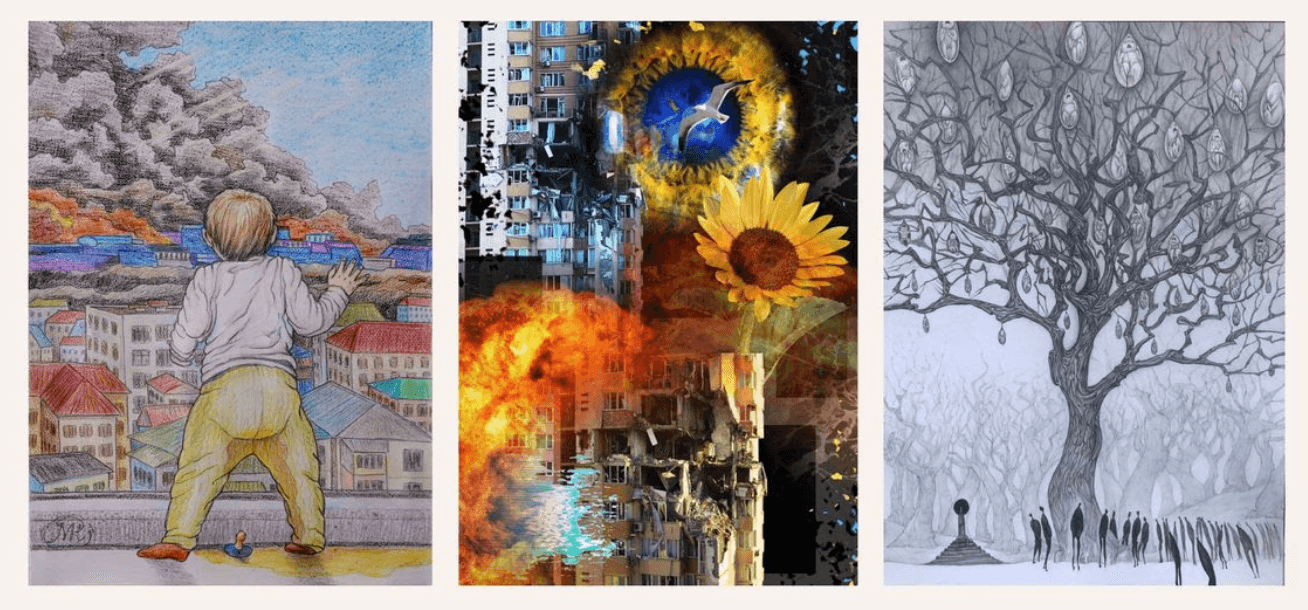
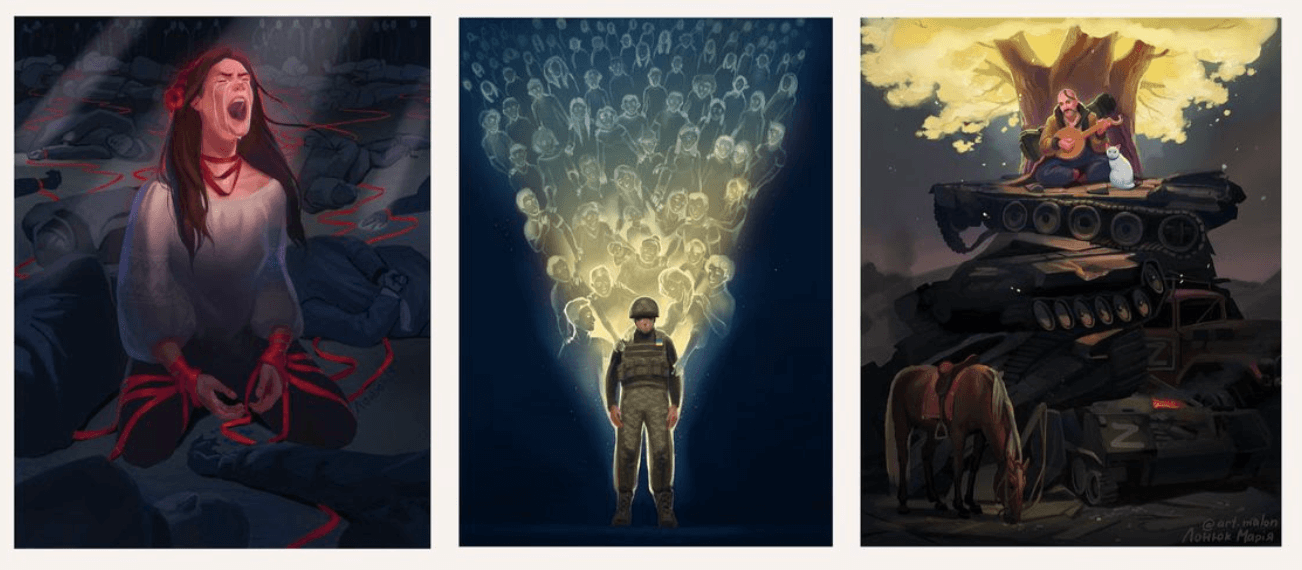
The Human Rights Foundation announced as recipients of the 2023 Václav Havel International Prize for Creative Dissent: Nicaraguan political cartoonist Pedro X. Molina; Ugandan novelist Kakwenza Rukirabashaija; and the third prize to be shared by four Ukrainian artists: the late conductor Yuriy Kerpatenko; the “Art Residency in Occupation” project; the illustrator Mariia Loniuk; and the “Stand Up for Ukraine” performance project.

In the face of oppression and stifling silence, this year’s laureates have chosen to speak the unspoken, echoing Václav Havel’s creativity and courageous spirit,” said HRF Chief Executive Officer Thor Halvorssen.

This year’s laureates will be recognized during a ceremony on Wednesday, June 14, at the 2023 Oslo Freedom Forum (OFF) in Oslo, Norway. The Havel Prize ceremony will also be broadcast live at oslofreedomforum.com.

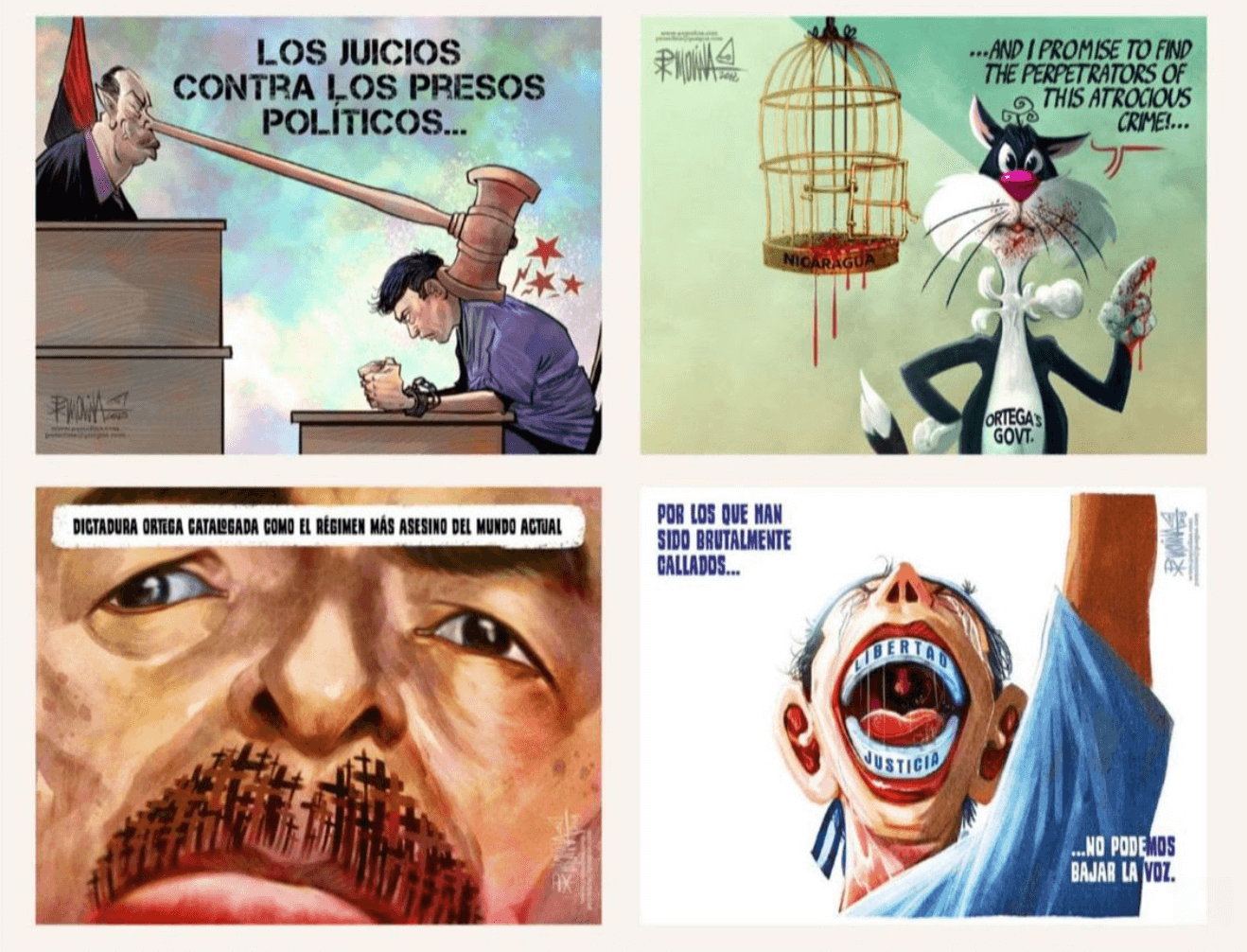
Pedro X Molina is a Nicaraguan political cartoonist who was forced into exile on Christmas Day 2018 after Nicaraguan dictator Daniel Ortega’s political police killed a journalist, jailed two others, and ransacked the offices of El Confidencial — the digital newspaper that featured Molina’s biting caricatures of Ortega and his tyranny. Molina published his first two cartoons in Barricada in 1995, later becoming a cartoonist for the digital outlet El Confidencial. In 2019, he received the Maria Moors Cabot Prize, awarded by Columbia University. The same year he was recognized by Americas Quarterly as one of its Top 5 Latin American political humorists.

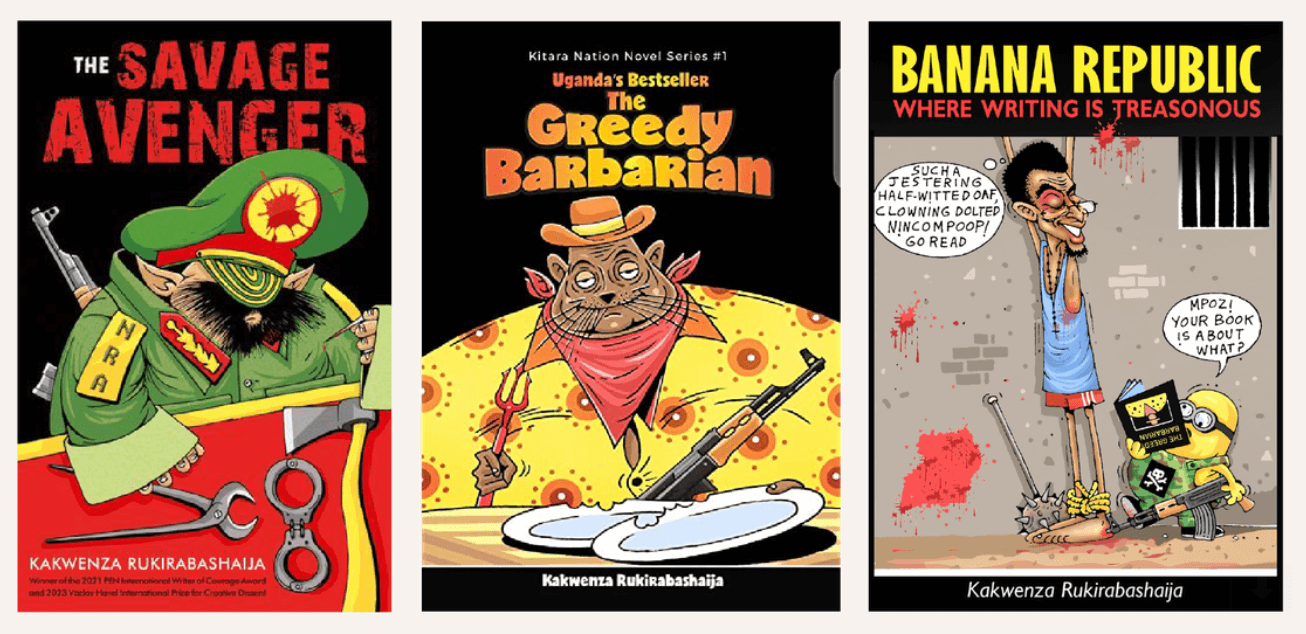
Kakwenza Rukirabashaija is a prominent Ugandan novelist recognized by English PEN in 2021 as a Writer of Courage and a fierce critic of the dictatorship of Yoweri Museveni. He has shown exceptional courage and defiance despite being imprisoned and tortured three times since 2020 for his irreverent writing and books, including “The Greedy Barbarian,” a satirical political fiction novel about corruption and dictatorship in a fictitious African country, and “Banana Republic: Where Writing is Treasonous,” an account of the torture he was subjected to while in detention in 2020 for the publication of his first book. In late December 2021, Rukirabashaija was kidnapped from his home and taken to an army base, where he was illegally detained for one month because of his tweets criticizing Museveni and his son.  Rukirabashaija was so severely tortured that he was released only on medical grounds. He was charged with “offensive communication” under Uganda’s repressive Computer Misuse Act. In February 2022, Rukirabashaija managed to flee to Germany for medical treatment, and he vowed to return to Uganda to face trial after his medical treatment.

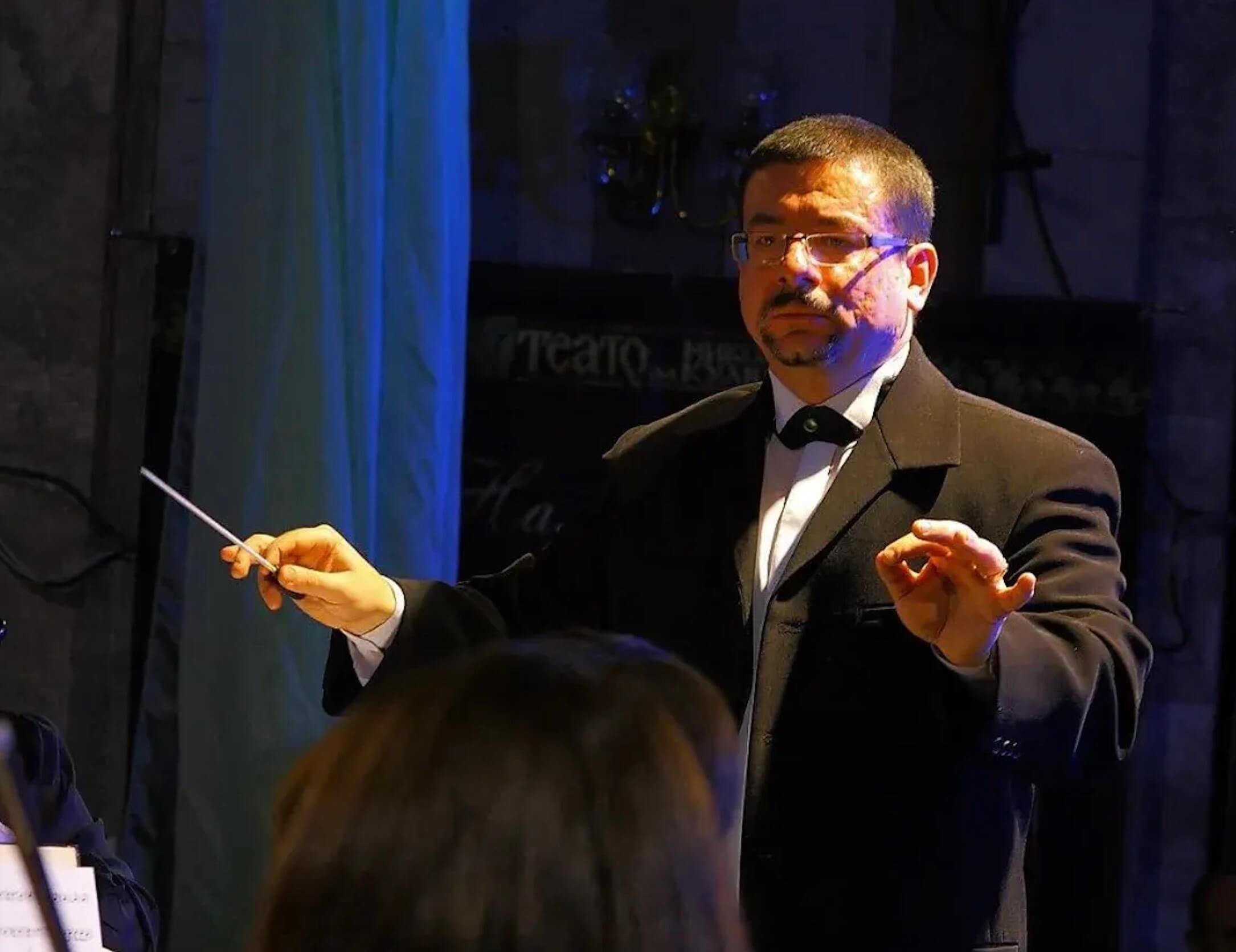
Kerpatenko was a renowned Ukrainian musician and principal conductor of the Kherson Regional Philharmonic. In October 2022, Russian troops assassinated Kerpatenko in his home at point-blank range after he refused to conduct a concert under the rule of Russian invading forces in Kherson, Ukraine. The concert was meant to portray an “improvement of peaceful life” in the occupied city, but Kerpatenko “categorically refused to cooperate with the occupants,” the Ukrainian Ministry of Culture and Information Policy later confirmed. Kerpatenko led his hometown’s orchestra for more than  20 years before he was murdered. The Havel Prize will be presented posthumously to Kerpatenko for his courageous stance against the Russian forces’ repeated attempts at “artwashing” their illegal occupation of Ukraine.

Art Residency in Occupation is an underground art society created by curator Yuliia Manukian. During the occupation of Kherson, Ukraine, six resident artists secretly met in a basement studio at the initiative of Manukian to produce works that showcase the death and destruction in the southern city of Kherson, offering viewers an opportunity to understand the scope of the war. Through this residency, Manukian sought to provide shelter for artists and gave them the opportunity to tell stories of war through the language of art. While written journalism can distance an outsider from the reality of current life in Ukraine, Manukian believes that the group’s collection of drawings, paintings, photographs, diary entries, and videos convey the raw truth.

The Havel Prize will be presented to Manukian on behalf of the collective of artists who bravely united in wartime to create dozens of works that creatively document the horrors endured by millions of Ukrainians living under the Russian invasion.

Manukian is a curator, art critic, and journalist based in Odessa, Ukraine. She was shortlisted in the British Journalism Awards’ foreign affairs category for her vital, courageous, and deeply moving Kherson diaries for The Observer.

Mariia Loniuk is a Ukrainian freelance artist specializing in digital art. Since Vladimir Putin’s 2022 invasion of Ukraine, Loniuk has created vivid and touching illustrations about the war, conveying the feelings and images Ukrainians face. Her drawings capture the devastation of cities, homes, and human lives, the ubiquity of death and suffering, and the war’s destruction. Despite this, her illustrations also highlight the tremendous bravery and determination of the Ukrainian army and the courage and solidarity of the Ukrainian people as they defend their freedom.

Stand Up for Ukraine is a project that brings people together through the universal language of music, reminding us that art has the ability to transcend boundaries, challenge oppressive ideologies, and ignite a collective spirit of solidarity. The performance project, curated by Neringa Rekašiūtė, Eglė Plytnikaitė, and Elvina Nevardauskaitė, seeks to spark hope and empowerment and encourage people to stand united against a totalitarian regime that undermines human dignity. It consists of a live performance where the 22-year-old Ukrainian singer, Elizaveta Izmalkova, is joined by passersby singing along to the folk song, “Chervona Kalyna” — a symbol of Ukrainian resilience and freedom. Stand Up For Ukraine took the internet by storm, capturing the attention of more than five million viewers worldwide. The project serves as a call to action, urging people to set aside differences and come together in support of Ukraine.

Izmalkova is a 22-year-old Ukrainian singer based in Vilnius, Lithuania. She was born in the city of Pervomaisk in the Luhansk region. In her lifetime, Izmalkova’s family home in Ukraine was destroyed twice by Russian forces, first when Russia invaded Ukraine in 2014 and once again in early 2023.

For more on the Havel Prize and its many laureates, see: https://www.trueheroesfilms.org/thedigest/awards/438F3F5D-2CC8-914C-E104-CE20A25F0726

Poetry Challenge for Human Rights Defenders

November 16, 2021

Protection International, ProtectDefenders.eu and the Centre for Applied Human Rights of the University of York have been promoting a Human Rights Defenders Poetry Challenge:

This poetry challenge is for all activists and artists irrespective of previous experience with this form of art. As the global pandemic continues, we’d like to encourage those that work in support of human rights to take a moment to reflect on the past year, take a break from the current context in which we are situated and ponder about where we should be go from here.

We are accepting poetry of all styles (haiku, slam poems, free verse, limericks, etc.) and multimedia submissions are also welcome. Poems can be submitted in English, Spanish, French, Portuguese, Swahili and Thai, and the top poems in each language will be published in a digital booklet. The top three poems overall will win a cash prize, the authors be granted free access to our e-learning course on preventative protection and security and they will also be invited to a virtual poetry reading with key stakeholders and celebrity guests. The Poetry Challenge is completely free to participate, with no submission or entry fees.

More detailed information about the poetry challenge can be found on Protection International’s website or within our sharable explainer document (available in all Poetry Challenge languages).

We have also prepared a social media kit including draft posts and graphics in multiple languages.

Contact Meredith Veit (meredith.veit@protectioninternational.org) or Tommaso Ripani (tommaso.ripani@protectioninternational.org) if you have any questions!

Deadline for submissions: 30 November 2021

For the first results see: https://www.protectioninternational.org/en/news/human-rights-defenders-poetry-challenge-finalists

Memorial to Human Rights Defenders in Dublin

June 22, 2021
Memorial to Human Rights Defenders Dublin

Image by Daiana Andreea Nagy Deac

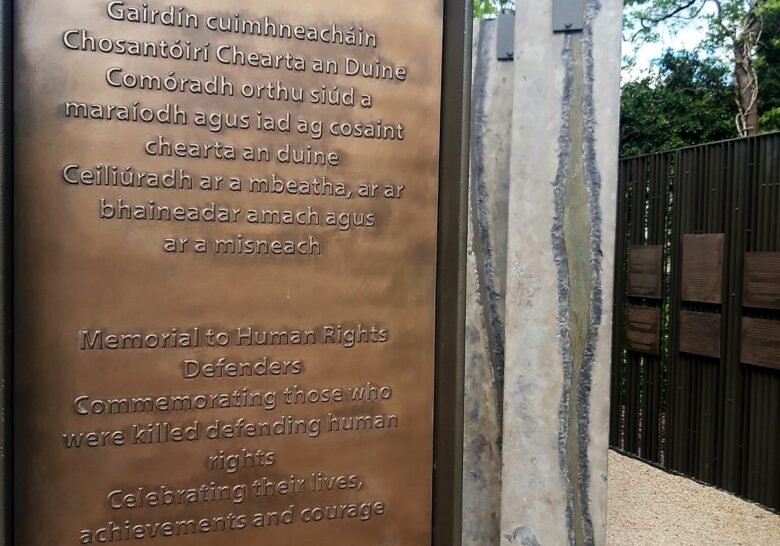
On 13 June 2021 Daiana Andreea Nagy Deac wrote about Memorial to Human Rights Defenders which is an art piece situated in The Iveagh Gardens. This monument was inaugurated by the Minister for Foreign Affairs, Simon Coveney, to commemorate the lives of those people whose voices have been silenced for defending human rights.

Shwe writes that it “is a hidden gem in Dublin and a must-see for art lovers, ..was designed by the international architecture studio Grafton Architects. The Memorial to Human Rights Defenders can impact the viewer not only for the strength of its message but also for the level of detail and hidden symbolism in its artistic execution. This work is built in the shape of a walk-in room surrounded by a metal screen, which I think has an enveloping effect because the viewer not only admires the art piece from the outside but has to enter it to observe it in its entirety. On the metal screen, different plaques treasure the last words of some heroes and heroines who lost their lives fighting for human rights.

Another curious detail of this monument is that in the middle we find five upright stones engraved with Ogham script, which is the written interpretation of primitive Irish, the oldest form of the Irish language. The plates containing the words of the human rights defenders are also written in Irish as well as English, so I think that in addition to offering an important message, The Memorial to Human Rights Defenders also celebrates Irish culture.

https://www.spottedbylocals.com/dublin/memorial-to-human-rights-defenders/

Free Visual content for human rights campaigns: a marvellous initiative

March 4, 2021
Illustration: Cachetejack for Fine Acts

The future of human rights must be hopeful.When we only show the abuses, people start to believe that we live in a world of crisis with no alternative. We believe that the image of human rights needs to be reimagined so we can bring more people on board.

Reimagining Human Rights is a project by Fine Acts, in partnership with hope-based comms. We are building the largest collection of free, evergreen, hopeful visual content around human rights, for activists and nonprofits around the world to use in their campaigns.

We commissioned a selection of amazing artists from around the world. We also opened a call for existing works to creatives everywhere. We received close to 1000 illustrations (THANK YOU) from the global creative community, and selected to feature over 100 (and counting). See all the powerful and uplifting illustrations below and enjoy new works every week until January 2021. Below a few examples of the many beautiful illustrations.

All featured works are published under a Creative Commons-Attribution-NonCommercial-ShareAlike 4.0 International license on TheGreats.co – Fine Acts’ new platform for free socially engaged visuals, and made available for free non-commercial use and adaptation to activists and orgs worldwide, given the appropriate credit.

To see how to use the artworks, please read this brief info.


hope-based comms.png
GOODTYPE.png
Into Action TaskForce.png

Safwat Saleem for Fine Acts    DOWNLOAD
Safwat Saleem for Fine Acts
DOWNLOAD
Safwat Saleem for Fine Acts    DOWNLOAD
Safwat Saleem for Fine Acts
DOWNLOAD
Safwat Saleem for Fine Acts    DOWNLOAD
Safwat Saleem for Fine Acts
DOWNLOAD

https://fineacts.co/reimagining-human-rights

Arpilleras making a come back as’ blankets that protect’

February 22, 2020
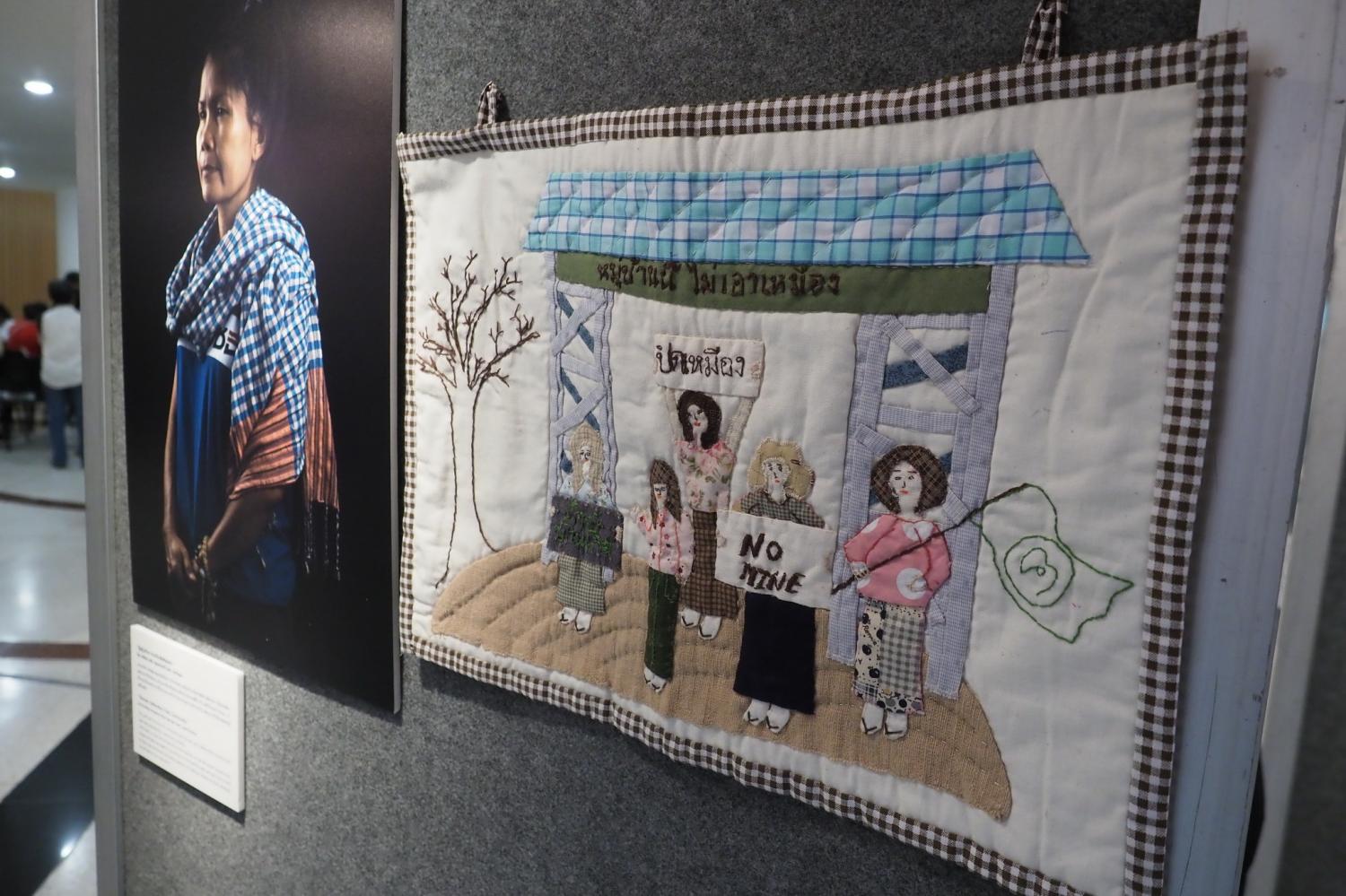
The success of ‘Art For Resistance: Quilts Of Women Human Rights Defenders’ was a wake up call to do everything in our power to protect the human rights of women. (Photos courtesy of Protection International)

Under the title “The blanket that protects Yvonne Bohwongprasert in the Bangkok Post of 19 February 2020 writes about these quilts as an art form to address human rights and encourage society to stand up and collectively fight for a social cause that impacts people from all walks of life.

Art For Resistance: Quilts Of Women Human Rights Defenders” was one such event with a powerful social message: “Have I done anything today to protect the rights of women?” The social-awareness event, which was launched in 2018, had a record 54 participants — two of whom happened to be men — sharing their personal stories of fighting for human rights in various sectors of society on colourful quilts they stitched together on their own. Besides the exhibition, there was a panel discussion on the situation of women human-rights defenders in a pseudo-democratic Thailand.

The idea of quilts to raise awareness on the issue came from the colourful quilt squares Chilean women used to tell their stories of life under the Pinochet dictatorship, which routinely violated human rights. Despite the lives of these women having been darkened by poverty and oppression, their vibrant and visually captivating denouncements were a strong tool of resistance. See: https://en.wikipedia.org/wiki/Arpilleras/

Protection International (PI) Thailand and the Canadian embassy in Thailand, played a vital role in staging this year’s event. PI representative Pranom Somwong said: “Each quilt tells a story of injustice and the fire in each woman to overcome her struggles by acquiring a relentless spirit to seek justice for their families and communities“.


A quilt inspired by Buku FC, a Deep South female football club made largely of Muslim women and a few men and LGBT individuals. Rumman Waeteh, left, and Suhaida Kutha, right, created the work. YVONNE BOHWONGPRASERT

Lebanon: human rights defenders use graffiti to express hope

January 24, 2020

The blue graffiti reads: “Oh, my wonderful country.” Photo by Nohad Elhajj.

Since the 17th of October 2019, Lebanon has been in the grips of widespread public protests against the social, economic, and political conditions of the country. The protesters are holding the government accountable for degrading living conditions and demanding serious and drastic changes. ….. But something, equally alive, captivates the place: graffiti. Building walls, stone barriers, wooden panels, even the asphalt ground are all covered with graffiti. With their diverse slogans, creative motifs, and direct, uncensored political and social messages, the graffiti artists collectively illustrate the people’s discourse demanding a full-fledged social and political reform.

On 23 January 2020 Nohad Elhajj – a development practitioner and independent researcher – wrote an interesting piece on this aspect in Global Rights, with rich illustrations:

….. reflecting on the present status of human rights and the human rights movement is of utmost need. More importantly, we need to consider questions about the future of those rights and this movement. In his 2019 article, Thomas Coombes offers a new way to address the future of Human Rights with “hope-based communication” [see: https://humanrightsdefenders.blog/2019/05/30/positive-communication-is-the-only-way-forward-for-effective-human-rights-work/]….

Graffiti is defined as “a form of visual communication, usually illegal, involving the unauthorized marking of public space by an individual or group”. The definition by itself poses a duality; would unauthorized marking of public space become positive communication? Would it possibly shift perspectives? Maybe not all, but some graffiti certainly does convey political messages. The question here is not about authority per se but the disruption of this authority. The act itself is intrinsically disruptive and political whether graffiti is acceptable or not. Starting from this understanding, graffiti, as a visual act, then can be leveraged as a participatory and accessible medium to shift public perspectives on human rights issues. Yet, the human rights movement does not only need to shift the public opinion but also to shift the current governance structures, which is beyond the impact of graffiti. The graffiti in Riyad El Soloh Square is a good illustration of this.

Graffiti is not new to the Lebanese society, but revolution graffiti is particular and powerful because of its relevance, the messages it conveys, and the places it occupies to convey these messages. The graffiti artists practiced their right to freedom of expression, of peaceful assembly and association, while communicating, directly and clearly, human rights demands from women rights, LGBTQ rights, economic and social rights to civil and political rights. (Shown in Pictures below).

……
The Lebanese graffiti artists have pushed and merged both boundaries of political participation and art. The graffiti imposes itself on the observer and on the spaces it occupies with wit and audacity. It overwhelms the observer with emotions of anger, despair, longing and revolt but also with hope. Much of this street art offers a thought-provoking mosaic of entangled messages and images. The graffiti above shows a white pigeon (a recurring image) combined with a strong slogan about workers’ rights; this combination conveys that those rights, and other demands, will be achieved in the future.

Similar to that, the graffiti at the beginning of this article offers another perplexing combination. The whole piece can be read as: “Oh my wonderful country, sectarianism burned us”. As much as it articulates a cry of despair with hurt and agony, it also retains the image of a wonderful country before civil war and a political system that has crippled it for the past 45 years. The generation who lived the war is still lamenting it and the following generations were still living in the resulting divisions and sectarianism—up until the 17th of October 2019. Akin to the protests, the graffiti captured a future hope of a country that will regain its glory after necessary social and political change.

The artists’ urge to mark every visible surface around Riad El Soloh square with spray paint and brushes placed them right in the middle of an already contested political and social scene, and it placed the rights discourse in the middle and around this scene. This graffiti proved to be a strong visual expression of all the protesters’ demands and a way to engage the public with it, both inside and outside Lebanon. Through their paint, these graffiti artists created a distinctive, unprecedented, and positive narrative about human rights in Lebanon: a narrative that more and more organizations and activists are now hanging onto.

https://www.openglobalrights.org/graffiti-creates-positive-human-rights-narratives-in-lebanon/