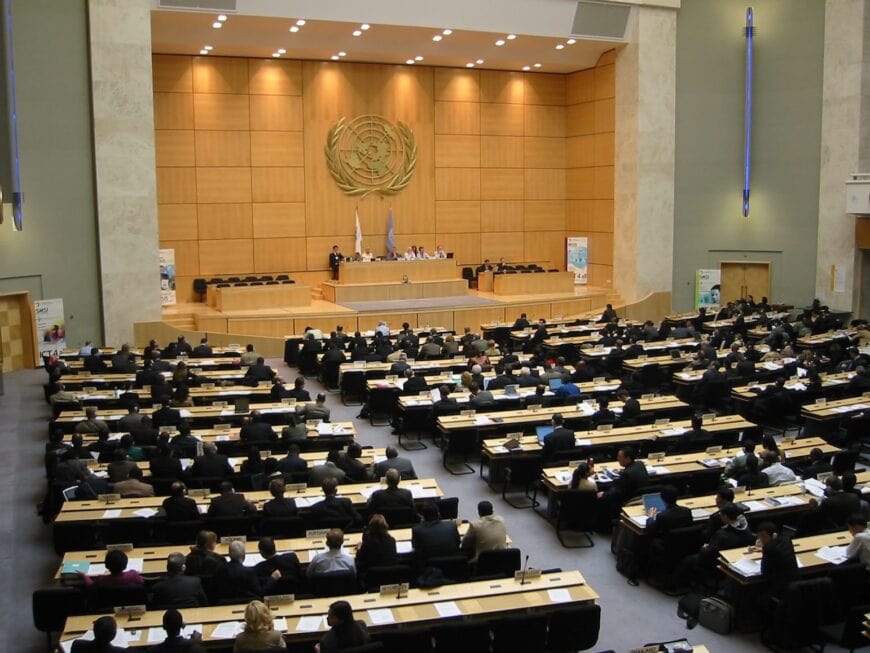
In June 2026, the President of the UN Human Rights Council (the Council) will appoint a new UN Special Rapporteur on the promotion and protection of the right to freedom of opinion and expression.
Candidates must have the required expertise and experience in the field of the mandate, be independent and impartial, and show a high level of personal integrity and objectivity.
Alongside partners, we have developed a document including a checklist with criteria for candidates for the position. Its intention is to support all stakeholders in the identification of, and outreach to, highly qualified and independent candidates. It is also intended as a checklist that can be used by the President and Consultative Group of the Human Rights Council to ensure that only highly qualified and independent candidates are considered and appointed as the mandate holder.
It is part of a series of documents developed for vacant positions of Special Procedures mandate holders.
The signatory organisations call on governments, civil society, and other stakeholders, including relevant professional networks, to use this checklist to identify eligible candidates for the upcoming vacancy for the UN Special Rapporteur on the promotion and protection of the right to freedom of opinion and expression.
Freedom House announced the appointment of Jamie Fly as its Chief Executive Officer, effective 2 February, 2026.
“Jamie Fly is a transformational leader ready to advance Freedom House’s vision of a world where all are free. He has stepped forward at a consequential moment as Freedom House pivots toward a private- and public-sector funding model, while growing existing and attracting new investors in freedom and democracy. This is particularly important as our flagship Freedom in the World report has documented nearly 20 years of democratic decline and as authoritarian leaders threaten fundamental freedoms and security around the world. Jamie brings deep global experience, bipartisan credibility, and a demonstrated ability to lead complex organizations under pressure. His leadership marks the start of a new chapter in Freedom House’s fight to expand and defend freedom around the world and to champion democratic values,” said Norman Willox, chair of the Freedom House Board of Trustees.
Fly has decades of experience in government, civil society, and the private sector. He has served as President and CEO of Radio Free Europe/Radio Liberty (RFE/RL) and held senior positions on the US National Security Council staff, at the Department of Defense, on Capitol Hill, and at the German Marshall Fund of the United States. Most recently, he served as Senior Counselor at Palantir Technologies, where he supported efforts to defend Ukrainian democracy from Moscow’s illegal, full-scale military invasion. He is a recipient of the Office of the Secretary of Defense Medal for Exceptional Public Service and the Czech Foreign Ministry’s Medal for Distinguished Contribution to Diplomacy.
“I am excited and honored to join Freedom House at this critical moment for democracy and global freedom as the organization celebrates its 85th anniversary this year in the midst of significant change. Additionally, I would like to thank Norm Willox, Freedom House’s board, and its talented leadership team and staff for their tremendous efforts, resilience, and accomplishments in the face of great challenges and opportunities,” said Fly.
Freedom House is the oldest American organization devoted to the support and defense of democracy and freedom around the world. It was formally established in 1941 to promote American involvement in World War II and the fight against fascism. Lauded for its nonpartisan approach, it has grown into the world’s premier institution for supporting the democratic aspirations of societies around the world through its globally recognized convening power, coalition building, advocacy, independent research, and emergency support to human rights defenders.
The Board of Civil Rights Defenders has appointed Sofia Walan as the new Executive Director. She will lead the organisation’s work to protect democracy and support human rights defenders worldwide. Sofia Walan will assume her new role on 8 May.
“I am proud and grateful for the trust placed in me to help lead such an innovative and influential human rights organisation as Civil Rights Defenders. We are living in a time when democracy and the rights that so many have fought for—often at great personal risk—are being pushed back. That makes the work of Civil Rights Defenders more crucial than ever, with a unique team of leading experts working every day to protect democracy and support human rights defenders,” says Sofia Walan.
She continues:
“As Executive Director, my ambition is to create the best possible conditions for our work and to build a strong and sustainable organisation for the future.”
Extensive Experience in Civil Society Leadership
Sofia Walan brings broad and extensive experience in leadership and management, with a strong focus on building high-performing teams and results-driven operations in complex, globally dispersed organisations. She joins Civil Rights Defenders from Bris, where she is currently part of the leadership team, and from her role as Chair of Fairtrade Sweden.
Previously, she served as Secretary General of the Swedish Fellowship of Reconciliation (SweFOR), working to support human rights defenders in Colombia, Guatemala, and Mexico. She has also worked on issues related to the International Monetary Fund (IMF) and the World Bank’s role in democracy-building.
On 28 November, 2024 the International Commission of Jurists announced Carlos Ayala as its new President
Ayala brings decades of experience defending the rule of law, advocating for constitutional justice, and championing the rights of marginalized groups
The International Commission of Jurists (ICJ) proudly welcomes Carlos Ayala as its new President, taking over from Robert Goldman after seven years in the role. A distinguished legal scholar and human rights advocate, Ayala brings decades of experience defending the rule of law, advocating for constitutional justice, and championing the rights of marginalized groups.
Ayala, born in Caracas in 1957, has dedicated his career to advancing human rights. From his early days as a law student at Universidad Católica Andrés Bello, Ayala developed a profound sense of defending rights and social justice, which he carried through his graduate legal studies at Georgetown University and later in his legal practice. He is tenured professor and chair of Constitutional Law and a member of the board of the Ibero-American Institute of Constitutional Law. His commitment has spanned defending indigenous land rights in Venezuela to addressing transitional justice issues across Latin America. Notably, Ayala was instrumental in the landmark decision against blanket amnesty laws for human rights violators in Peru, a victory that set critical international legal precedents.
He has been President of the Inter-American Commission on Human Rights, as well as Rapporteur on the Rights of Indigenous Peoples of the Americas, and President of the Andean Commission of Jurists, giving him a vision of the human rights landscape that takes in the whole hemisphere of Americas from Alaska to Tierra Del Fuego.
Ayala has worked extensively on issues relating to the independence of the judiciary and he became involved with the OHCHR in monitoring the appointment of judges of several high courts. He states that one of the cases that impacted him most has been that of Venezuelan Judge Maria Lourdes Afiuni, who was arrested and detained after making a ruling that implemented a decision of the UN Working Group on Arbitrary Detentions which was not in the political interest of the government. She was immediately arrested and her trial lasted 10 years, was a flawed process throughout and ended in a flawed decision to convict.
As President, Ayala envisions the ICJ working as a unified community with other partners and allies committed to reinforcing the rule of law and international justice. Under his guidance, he will support the ICJ to advance human rights standards globally, counter setbacks, and provide critical support to governments, civil society, and multilateral institutions.
“We are facing new threats to reverse the advancement of human rights that we have achieved in the past 70 years – we need to defend against unilateralism and authoritarianism. The ICJ has been actively contributing to stop any setback in international standards, and we will continue this essential work.”
On 17 April 2024 Front Line Defenders announced that Alan Glasgow will take up the role of Executive Director of the organisation in late May 2024.
The appointment follows a competitive, international recruitment process led by Front Line Defenders’ Board and an external recruitment agency.
“As a longtime admirer of Front Line Defenders, I am delighted to have this opportunity to progress its work in supporting and protecting human rights defenders at risk,” said Alan Glasgow, incoming Executive Director of Front Line Defenders. “I feel privileged to work with human rights defenders from all around the world, in addition to our partners in civil society and government, and our supporters and donors.”
“There is no doubt that human rights defenders in many parts of the world face an increasing danger and a stark reality. I hope to draw on decades of work on some of the world’s most challenging contexts – as well as the strength of Front Line Defenders’ existing skills, its remarkable global team, and knowledge base built over two decades – to help bring positive change for defenders and their crucial work.”
Alan has worked for 25 years in development, humanitarian, and human rights contexts. He joins Front Line Defenders from the position of Regional Director for Asia and Europe with the international aid agency, Mercy Corps. Prior to this, he served as Mercy Corps’ European Migration Director. He has also worked with International Rescue Committee in New York and West Africa and with GOAL as Country Director and Director of Global Business Development.
Alan’s leadership experience has focused on work at the frontlines of the world’s most challenging human rights environments, including Afghanistan, Gaza, Liberia, Myanmar, Sierra Leone, South Sudan, Sudan, Syria, Ukraine and Yemen.His career has demonstrated a profound commitment to the rights of the marginalised and his work has been underpinned by a belief in human rights principles.
Alan will be Front Line Defenders’ third Executive Director since the organisation was founded in 2001. He follows in the footsteps of Front Line Defenders’ founder Mary Lawlor who served from 2001 until 2016, and former Executive Director Andrew Anderson, who held the role from 2016 to 2023. Olive Moore, who held the role of Interim Director for the last year, will resume her role as Deputy Director.
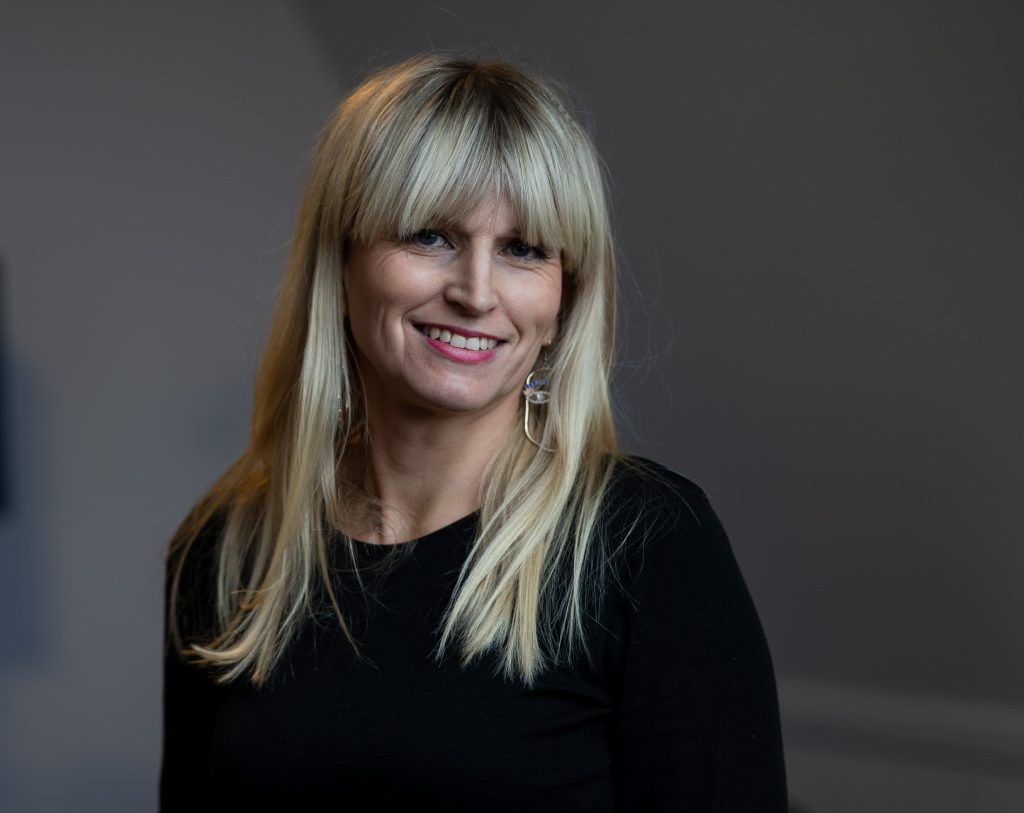
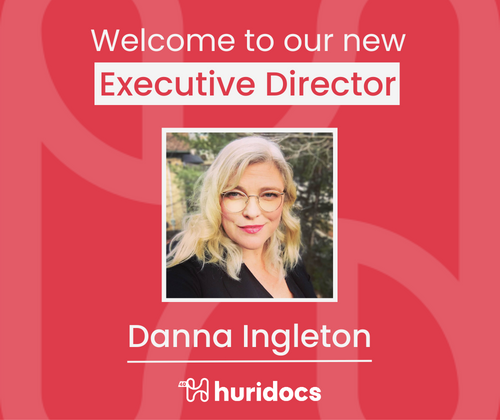
Danna joins HURIDOCS from the Amnesty Tech management team, where she played an integral role in growing globally distributed teams, securing and managing large grants, and providing strategic and operational leadership. She combines perceptive and empathetic leadership with a bright, organised, fearless approach to building organisational strength and resilience. See: https://humanrightsdefenders.blog/tag/danna-ingleton/
“At a time when the power of accurate, accessible and secure information has never been more important to those seeking justice and the fulfilment of their human rights, I am thrilled to be starting as the new Executive Director of HURIDOCS.”
It is exciting to be joining an organisation with such a rich history of harnessing the power of information to facilitate change. Together with my new colleagues and our diverse, valiant partners we will build on this history to ensure HURIDOCS is consistently at the sharp-edge of information management and technological developments, and always strategically growing.
As an activist myself who has been working in human rights for more than a decade I have seen how the battle for justice can take its toll on the people behind the movements. I am therefore also committed to ensuring HURIDOCS is an effective and accountable workplace that values health and the well-being of us all. – Danna Ingleton
Danna will officially assume her responsibilities on 1 July 2023
Santiago Cantón, secretary general of the International Commission of Jurists. (Geneva Solutions/Michelle Langrand)
On 11 May 2023 Geneva Solutions carried an interview with the incoming Secretary General of the International Commission of Jurists:
The new head of the International Commission of Jurists warns of the challenges human rights face as democracies across the world falter and calls on human rights groups to rally behind a new purpose. After spending the last few years in the United States, Santiago Cantón, the Argentinian jurist who recently became the new secretary general of the International Commission of Jurists (ICJ), will call Geneva his home for the next five years.
The discreet organisation of well-respected judges and lawyers, located in the Paquis neighbourhood and now celebrating its 70th anniversary, is almost as old as the 1948 Universal Declaration of Human Rights. Born from the ashes of World War II initially to investigate abuses committed in the Soviet part of post-war Germany, the group has made vital contributions over the decades to the human rights architecture. Most notably, they helped push for the creation of an international criminal court and several UN human rights instruments, including the Convention on Enforced Disappearances, first proposed by its then-president Niall MacDermot.
Cantón, 60, also brings with him some heavy baggage of experience in human rights. He was the executive secretary from 2001 to 2012 of the Inter-American Commission of Human Rights, one of the arms of the Organization of American States tasked with reviewing rights abuses. Before that, Cantón served as the commission’s first special rapporteur on freedom of expression from 1998 to 2001. More recently, Cantón was part of the UN Human Rights Council’s commission of inquiry on abuses committed in the occupied Palestinian territories during the 2018 protests.
As a young student, Cantón saw his country fall into the clutches of a military junta that would rule ruthlessly for ten years. While initially drawn to diplomacy and foreign relations, Cantón knew it wasn’t an option to place his skills at the service of a dictatorship. He opted instead to study international law and human rights.
One of his first experiences, and the one to inspire him the most, was advising former US president Jimmy Carter in his democracy programmes in Latin America, most notably supporting elections in Nicaragua and the Dominican Republic in 1990 at a time when the two countries were emerging from bloody conflicts and transitioning into democracies. He saw the region break away from the chains of military regimes and usher in a new era of democracy and rule of law. “1948, with the universal declaration of human rights, was the big bang of human rights,” he told Geneva Solutions. “Since then, the architecture of human rights created throughout the world has been extraordinary.”
But the tides have turned. “Human rights are in decline and have been since the beginning of the century,” he regretted.
For Cantón, part of it is due to a lack of leadership. “We don’t have the same leaders in the world, and the governments that support human rights today, do not have the leadership they need to have for political reasons.” He said long gone are the Raúl Alfonsín of Argentina, Fernando Henrique Cardoso of Brazil and Patricio Aylwin of Chile, leaders who stood up for democratic values following their countries’ exit from military rule.
“You do have leadership on the wrong side. And they’re winning,” he added. He cited the leaders of El Salvador and Mexico, as well as Brazil’s Jair Bolsonaro and the US’s Donald Trump, as examples of how populist leaders have successfully appealed to disillusioned populations.
“Take El Salvador. Here we have someone that has 70 to 80 per cent of popularity. People (feel) that democracy did not deliver. They are tired and want to change everything completely,” he said. President Nayib Bukele’s recent sweeping crackdown that saw over 60,000 suspected gang members arrested has been praised by many Salvadorians fed up with the violence and insecurity that has gangrened the country for years. And despite the harsh criticism his methods have drawn from human rights campaigners, political figures across the region are flaunting it as a successful model that can be replicated in their own countries.
Cantón cautions against the temptation of wanting to scrap everything. “We cannot just change everything! There are things we need to keep, and human rights is one of those,” he said.
On Cuba, Nicaragua and Venezuela, the usual trio singled out for their authoritarian regimes, Cantón prefers to avoid tired narratives. “it’s not a question of left and right, it’s a question of the strength of the rule of law, and the rule of law is declining,” he observed.
Beyond that, human rights that touch upon issues associated with deeply entrenched cultural values have also been met by a wall of resistance. Cantón hasn’t finished unpacking he has already faced a first crisis. A report published by the ICJ in early March on how to apply human rights standards to criminal law was falsely accused across the internet of condoning sex between adults and minors. For Cantón, the world is increasingly polarised, and he views social media as a significant contributing factor. “It’s hard to find the middle ground, and when things are so polarised, they keep getting pushed harder towards two crazy extremes.”
But governments are not the only ones that need to do some soul-searching. Civil society is also struggling to maintain morale, according to Cantón. “It’s very frustrating when you take one step forward, and you have to go back like ten steps,” he said. For the past years, human rights groups have been on the defence, trying to protect hard-won advances. “We need to mobilise the human rights community again, strongly behind something,” he said.
One of the initiatives the ICJ is working on is the creation of a standing independent mechanism to investigate rights violations. UN-backed probe mechanisms are usually set up on a case-by-case basis and have been accused of being selective and politically motivated. The group of lawyers suggests that such a permanent expert body, created through the Human Rights Council or the General Assembly, could help by making it easier to trigger investigations.
On 4 April 2023 WITNESS announced that Sam Gregory will be stepping into the role of Executive Director after two decades of service to the organization. Sam is a highly respected human rights leader and award-winning technologist who brings over 25 years of global experience innovating and leading interventions at the intersections of video, technology and human rights.
If Sam’s name sounds familiar – it should! [Also from this blog, see: https://humanrightsdefenders.blog/tag/sam-gregory/] He has dedicated over two decades to WITNESS, most recently directing programs and strategy. In that capacity, Sam has supported WITNESS’ global teams and partners in more than 100 countries addressing urgent issues such as land rights, state violence, and war crimes – as well as spearheading our pioneering work on emerging technologies such as deepfakes and AI. Sam brings both the history and an ambitious vision for the future of WITNESS.
Sam steps into this role at an exceptional moment for those concerned with information technology and human rights. This era of omnipresent video, growing misinformation, synthetic media, and declining trust in a shared reality presents a serious threat to the idea of truth itself. Sam has led a global effort to ‘prepare, not panic’ for the new digital landscape, fighting for preservation of truth, trust in critical voices, and media integrity efforts. He is also a fierce advocate for centering the voices of those most removed from decision-making centers yet most profoundly impacted by the proliferation of new technologies.
Tirana Hassan, a lawyer and veteran human rights investigator who has documented human rights abuses throughout crises and conflicts globally, has been named the next executive director of Human Rights Watch, the organization announced. Hassan was previously the Human Rights Watch chief programs officer and had been serving as acting executive director since September 2022, following the departure of its long-time leader, Kenneth Roth.
“As new executive director of Human Rights Watch, Tirana Hassan brings impeccable credentials as a human rights practitioner and an ambitious vision for human rights solutions to the challenges the world is facing,” said Zeid Ra’ad Al Hussein, CEO and president of the International Peace Institute and the former United Nations High Commissioner for Human Rights. “A hugely experienced activist, Tirana will be a formidable leader and very much a force to be reckoned with!”
With decades of experience in the human rights and humanitarian fields, Hassan, who began her career as a social worker and spent many years working with women and children in conflict and crisis situations, first joined Human Rights Watch in 2010, covering emergencies across Africa, Asia, and the Middle East. She went on to become Amnesty International’s director of crisis response before returning to Human Rights Watch as its chief programs officer in 2020, leading the organization’s research, advocacy, legal, and communications departments.
“Tirana has the rare combination of wide-ranging investigative experience, strategic creativity, and a deep commitment to human rights principle that Human Rights Watch needs to tackle the complex human rights challenges the world is facing,” said Kenneth Roth, former executive director at Human Rights Watch, who stepped down in August 2022. “I am thrilled that she will lead Human Rights Watch into the future.”
When she headed Amnesty International’s crisis team, Hassan oversaw the development of innovative uses of technology to advance human rights investigations in Myanmar, Syria, and other crisis areas. She brings a proven track record of developing ambitious programs to address critical human rights issues and will lead the Human Rights Watch’s work with activists, survivors, and civil society to head off the rising threats to human rights around the world.
One of Hassan’s priorities will be to call out government selective applications of human rights obligations. The swift and bold response to the crisis in Ukraine including a UN Human Rights Council commission of inquiry and multiple condemnations by the UN General Assembly – has shown what is possible when governments work together, while the International Criminal Court’s arrest warrant for Russian President Vladimir Putin shows that no one is beyond the reach of justice. However, the same governments have often at best responded in a lukewarm fashion or at worst turned a blind eye to the plight of other victims. Hassan will focus on using all possible levers to push governments to realize their legal obligations to victims everywhere, including in Afghanistan, Israel and Palestine, Ethiopia, and Iran.
Hassan was born in Singapore to a Pakistani father whose family left India during partition and a Malaysian-born Sri Lankan and Chinese mother. Her family resettled in Australia in the 1970s after her father’s academic research on Singapore’s housing policies triggered the ire of the government, which was cracking down on dissent. She has said family stories of racism, prejudice, and repression helped shape her world view and contributed to her decision to work on behalf of rights for dispossessed people.
After receiving a bachelor’s degree in social work from the University of South Australia, Hassan worked as a social worker in Los Angeles, London, and Adelaide, counseling homeless young people before obtaining a law degree from the University of Adelaide. During her last year of law school, she co-founded the Woomera Lawyers Group, a refugee advocacy organization that provided legal services to asylum seekers detained in Australia’s notorious desert detention center. She represented refugees and asylum seekers from Afghanistan, Iraq, and Iran who were detained in the remote facility and later went on to work in the humanitarian sector. Hassan also holds a master’s degree in international human rights law from Oxford University.
“I’m honored and humbled to lead this exceptional organization at a moment when the defense of human rights feels more urgent than ever,” Hassan said. “I look forward to building on Human Rights Watch’s formidable foundation to uplift the human rights defenders we work with and the communities we serve to put pressure on those in power to realize a rights-respecting future for us all.”
On 23 June 2022 Marc Limon, Executive Director of the Universal Rights Group posted a Blog: “Time to ask again: is being the UN High Commissioner for Human Rights an impossible job?”
In February 2018, he published a blog on the early departure of the previous High Commissioner for Human Rights, Zeid Ra’ad Al Hussein. The blog responded to David Petrasek’s article in OpenGlobaRights, entitled ‘Another one bites the dust’ (8 February 2018).
Limon argues that the High Commissioner position is, in fact, several jobs rolled into one. The mandate of the High Commissioner and his/her Office comprises inter alia:
Monitoring and speaking out about human rights violations around the world – ‘preventing the continuation of human rights violations throughout the world,’ (OP4f of GA resolution 48/141 of 7 January 1994).
Acting as the Secretariat to the ‘competent bodies of the United Nations system in the field of human rights and [making] recommendations to them,’ (OP4b of GA res. 48/141).
Providing capacity building, advisory services and technical assistance, at the request of the State concerned, ‘with a view to supporting actions and programs in the field of human rights,’ (OP4d, GA res. 48/141).
Engaging in human rights diplomacy (‘dialogue’) with governments and ‘enhanc[ing] international cooperation,’ in order to promote the implementation of international human rights obligations and commitments, and respect for human rights, (OP4g, OP5h, GA res. 48/141).
Coordinating human rights mainstreaming across the UN system, (OP4i, GA res. 48/141).
Making recommendations and driving efforts to ‘rationalize, adapt, strengthen and streamline the United Nations machinery in the field of human rights with a view to improving its efficiency and effectiveness,’ (OP4j, GA res. 48/141).
It is clear that, when held in the hands of a single human being, these different parts of the High Commissioner’s overall mandate operate in tension and are, perhaps, even mutually incompatible…
Is it possible for one person to wear all these hats at the same time? Can a single person publicly criticise States in one breath, then in the next reach out to them to forge agreement on reform of the UN human rights system or to provide human rights technical assistance?
Petrasek has made no secret of his belief (apparently shared by the UN Secretary-General, Antonio Guterres) that Zeid over-prioritised human rights monitoring and public advocacy, to the detriment of almost all other parts of his mandate. Yet for many other civil society representatives in Geneva and for many Western diplomats, this singlemindedness (together with Zeid’s natural eloquence) made the former High Commissioner something of a cult hero and the perfect High Commissioner,
Fast forward four and a half years and Zeid replacement as High Commissioner, the former President of Chile Michelle Bachelet, has also fallen on her sword – yet for precisely the opposite reasons as Zeid.
Bachelet was handpicked by Guterres to mark a clear break from Zeid by pursuing a more holistic and balanced approach to the role and mandate of the High Commissioner. In addition to public advocacy Bachelet tried to emphasise human rights diplomacy, international cooperation, support for the international human rights machinery, a focus on emerging thematic human rights concerns (e.g., climate change, the right to a healthy environment, prevention, digital technology), and the on-the-ground delivery of technical assistance and capacity-building support.
In truth, the world needs a High Commissioner Zeid and a High Commissioner Bachelet. The question is: is that possible? Maybe other solutions might be considered? Might, perhaps, the High Commissioner focus on public advocacy, and the Deputy High Commissioner on the more cooperation-orientated aspects of the mandate? Maybe different Deputies could be appointed for each of the main ‘baskets’ of the High Commissioner’s overall mandate? Or maybe the parts of the mandate related to the human rights machinery could be ‘spun off’ – for example, into a new position of secretary-general of the Human Rights Council and its mechanisms, and of the Treaty Bodies?
These are difficult and sensitive questions, and yet it is surely important that they be asked and considered now rather than later. Perhaps today, as the Secretary-General ponders the appointment of the next High Commissioner, is an opportune moment to do so?
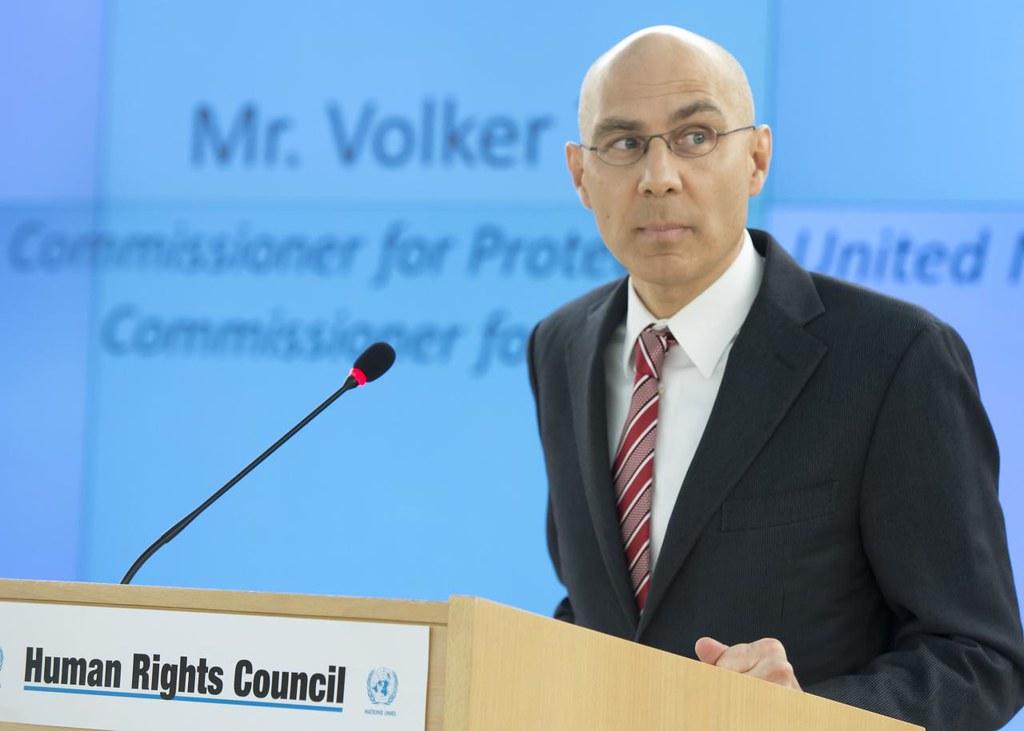
On September 7, 2022, the UN announced Secretary-General António Guterres’ decision to appoint Volker Türk, an Austrian national, to replace Michelle Bachelet.
Reactions were swift, most of them expressing the need for action, e.g. “The new UN high commissioner for human rights should neither seek nor expect a honeymoon period from UN member states,” said Tirana Hassan, interim executive director of Human Rights Watch on 8 September “What’s needed by the millions of people around the world whose rights are being violated every day is an advocate in their corner who will take on abusive governments large and small without fear and without hesitation.”
Yoni Ish-Hurwitz, Executive Director of Human Rights Likeminded Office was invited by the Universal Human Rights Group on 12 September, 2022, to contribute a Blog `’Who is Volker Türk?’:
Opinions have already begun forming about Volker Türk in the short time since the announcement of his appointment last week as the new UN High Commissioner for Human Rights. However, in the absence of a public competition, there was little opportunity to learn about Türk. He is also not well-known outside of the UN (and had few followers on twitter until last week). Therefore, in the absence of personal familiarity, it may be useful to focus on his biography, body of work and statements. This would lead to a better understanding of why he was selected for this role. [DISCLAIMER; I happen to know him personally from my days in UNHCR. He has always struck me as an honest and dedicated person with a pronounced interest in the human rights side of refugee work.]
Central to Türk’s biography is his long professional relationship with the Secretary-General Antonio Guterres. They worked together at UNHCR when Guterres led the agency as High Commissioner for Refugees. When Guterres became UN Secretary-General, Türk joined him in New York, to serve as Assistant Secretary-General for Strategic Coordination in the Executive Office. Guterres promoted him in January, to the rank of Under-Secretary-General for Policy, also in the Executive Office, perhaps setting him up to take the role of the High Commissioner for Human Rights.
Having a close confidant as the High Commissioner may be especially important for the Secretary-General at present, considering the significant current political challenges he faces. This is especially the case in the aftermath of the release of the long-awaited report on Xinjiang by the former High Commissioner, Michelle Bachelet. She spared Türk the need to continue holding this hot potato. However, China won’t let Türk off the hook, and will likely exert pressure on him, as it has done with Bachelet, to carefully weigh his words and the way he manages his Office’s work on China. In the meantime, Chen Xu, the Permanent Representative of China in Geneva, announced that ‘the Office closed the door of cooperation by releasing the so-called assessment.’ This means that this is one political crisis that will not end with Bachelet’s departure.
One key question is whether the new High Commissioner will prioritise engagement over speaking truth to power. Bachelet was criticised of doing just that following her recent statements on China, until she released her report at the 11th hour on the job. .. On the face of it, it may appear that Guterres selected a diplomat, rather than an advocate. Türk is a UN career officer through and through, and as such he is in a better position to offer ‘good offices,’ as the UN does, compared to any former Head of State that could have taken the High Commissioner’s post. Among his predecessors were two presidents, two supreme court judges, one foreign minister and one permanent representative to the UN headquarters. However, every day before walking into his new office, the face that Türk will see first is that of his predecessor Sérgio Vieira de Mello, who also spent most of his career in UNHCR. He was commemorated in a bust at the entrance to Palais Wilson, four years after his death in a bombing at UN headquarters in Iraq.
Türk worked in the UN refugee agency for over 30 years, including in the field. Coming from within the UN system is an asset for navigating organisational politics, fostering collaboration with other parts of the UN, enhancing the contribution of OHCHR to all relevant UN fora, and understanding how to engage with Member States to address the situation of the most vulnerable people. His intimate understanding of the UN system is manifested in two major initiatives he stewarded – the Secretary-General’s flagship report, Our Common Agenda, as well as the Secretary-General’s Call to Action for Human Rights. This may not be the place to analyse their successes or shortcomings, but it can be said that they were both well-received. Our Common Agenda offered a vision for mobilising the UN to address global challenges. OHCHR needs a manager with this kind of foresight to grasp the organisation’s structure, programmes and needs. The second initiative, the Call to Action for Human Rights, identified areas for action to advance human rights. As High Commissioner, perhaps Türk will be in a better position to support the implementation of the Call to Action.
This work demonstrates deep engagement on human rights. His legal background, holding a doctorate in international law, will support his role as an advocate. He can substantively articulate concerns and uphold norms based in international human rights law, humanitarian law and refugee law. He certainly appears as an advocate on twitter (@volker_turk). His tweets show his compassion, as he mostly addresses human rights concerns, with people at the centre.
Civil society was concerned about the selection process. Phil Lynch, Executive Director of the International Service for Human Rights (ISHR), said: ‘The lack of transparency and meaningful consultation with independent civil society in the selection process meant that the Secretary-General missed a key opportunity to build the legitimacy and authority of the next High Commissioner.’ The appointment of the Secretary-General’s confidant may have reaffirmed worries that the High Commissioner would prioritise diplomacy and engagement over advocacy for human rights. However, Türk appears to have the appropriate biography and a heart in the right place to fulfil both of the High Commissioner’s roles as an advocate and a diplomat. Hopefully he will be attentive to civil society and rights-holders, in line with his advice during his time as Assistant High Commissioner for Protection at UNHCR: ‘Listen to what refugees are telling us.’
After being appointed at the last minute as the next UN high commissioner for human rights, Volker Turk is not expected to be at the 51st session of the UN Human Rights Council, held from 12 September to 7 October. When he does, Turk will have to grapple among other challenges with his predecessor’s report on Xinjiang, but for the moment deputy high commissioner Nada Al Nashif is in charge of the UN rights office and will have to answer any questions about China that might come up during the first days of debate..



 Hans Thoolen on Human Rights Defenders and their awards