Posts Tagged ‘Amnesty International’

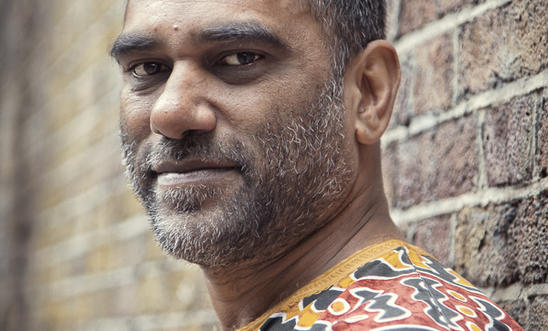
Ibrahim Halawa – after 4 years in detention in Egypt – is able to speak out

February 27, 2018

Amnesty International published on 26 February 2018 an insightful interview with an Egyptian youth arrested in the august 2013 protests.
Weeks after his release Ibrahim Halawa spoke to AIu about his time in an Egyptian prison. Now walking the streets of Dublin his freedom has changed his life forever. Ibrahim Halawa was arrested aged just 17 along with hundreds of others during protests on 16 and 17 August 2013 around al-Fath Mosque in downtown Cairo. The protests descended into violence which the security forces responded to by using excessive lethal force that left at least 97 people killed, but according to Amnesty International’s research there is no evidence to indicate he was involved in any of the violence. The organization believes he was jailed for peacefully protesting. He was eventually acquitted on 18 September 2017, but 442 others were sentenced after a deeply unfair mass trial. Amnesty International is calling for all others who have been sentenced for peacefully exercising their rights to be immediately released.


Amnesty’s Annual report 2017 is out: depressing but rays of hope

February 22, 2018

Amnesty International´s annual report, The State of the World’s Human Rights 2017, assesses the human rights situation in 159 countries and delivers a most comprehensive analysis of the state of human rights in the world today. Here follow some summaries form the media:

AI itself highlights in the launch on 22 February 2018, the deepening human rights crisis in the Americas.  “People across the Americas faced a deepening human rights crisis fuelled by growing government intolerance of dissent and increasing demonization in political rhetoric that cemented its status as one of the most violent and unequal regions in the world“, Amnesty International warned. Nevertheless, the organization found that a growing resistance movement of both first-time and seasoned activists provides real hope of reversing the slide towards oppression and fear.

The report highlights alarming trends for the state of human rights in the Americas, including:

  • High levels of violence that continued to ravage the region, with waves of unlawful killings, enforced disappearances and arbitrary detentions. In Mexico, more than 34,000 people remained missing, and extrajudicial executions were rife. A year on from Colombia’s historic peace agreement, violence was still a daily part of life, and an estimated 60,000 people were forcibly displaced due to armed conflict in 2017 alone, according to official numbers.
  • Venezuela continues to face a serious human rights crisis, fuelled by the escalation of government-sponsored violence to respond to the increasing social discontent created by rising inflation and a humanitarian crisis. Thousands of people were arbitrarily detained and there were many reports of torture and other ill-treatment.
  • Latin America and the Caribbean remained as the most violent regions in the world for women and girls, despite strict laws aimed at addressing the crisis. The region has the world’s highest rate of non-intimate partner violence against women, and the second highest rate of intimate partner violence.
  • Ongoing intimidation and attacks against community leaders, journalists and activists who stood up for human rights. Environmental defenders were among the most at risk. Of the 188 environmental defenders killed in 2017, 110 took place in the Americas, according to the NGO Front Line Defenders.
  • Deepening discrimination and neglect of the rights of rural communities and Indigenous Peoples, including their rights to their ancestral territory and to free, prior and informed consent on projects affecting them. From Peru to Nicaragua, national and transnational corporations sought to take control of land away from Indigenous Peoples and peasant farmers, affecting their livelihoods and contaminating their basic resources.
  • A rapidly out of control yet largely invisible refugee crisis as hundreds of thousands of people from some of the world’s most violent countries, including El Salvador and Honduras, were denied urgent asylum.

Yet these injustices have also inspired many more people to join long-standing struggles, and the report details many important achievements that human rights activists helped to secure. These include lifting the total ban on abortion in Chile and the approval of a law to help victims of enforced disappearances in Mexico find their missing loved ones. [see also my: https://humanrightsdefenders.blog/2017/12/31/2017-a-year-to-forget-for-human-rights-defenders-but-dont-forget-the-human-rights-defenders/]

Last year proved that however disenfranchised people were, they refused to resign themselves to a future without human rights. Emerging social discontent inspired people to take to the streets, stand up for their rights and demand an end to repression, marginalization and injustice,” said Erika Guevara Rosas, Americas Director at Amnesty International The Americas was at the hub of this new wave of activism. The “Ni Una Menos” (“Not one woman less”) movement denounced violence against women and girls across the region, while survivors of gender-based and sexual violence in Argentina, Mexico, Jamaica, Peru, and many other countries took to the streets to protest against impunity for such crimes.

Protesters and refugees bear the brunt of ‘normalized’ violence: Hundreds of activists were killed last year as authorities sought to repress civil society and muzzle the media, the report says. Human rights defenders faced threats, harassment and attacks in most countries in the region, while states failed to protect them and acknowledge the importance of their work.

The injustice of President Trump’s cruel pledge to build a wall along the USA-Mexico border was emphasized by Central America’s ongoing refugee crisis. More than 50,000 people from Honduras, Guatemala and El Salvador sought asylum in other countries, thousands of whom were then apprehended at the US border. Mexico received a record number of asylum applications but repeatedly failed to provide protection to those who needed it – instead pushing people back to highly dangerous situations.

The numbers of people fleeing Venezuela rocketed as it faced one of the worst human rights crises in its recent history, fuelled by an escalation of government-sponsored violence. When the country’s crippling shortage of food and medical supplies sparked protests, the security forces’ heavy-handed response lead to more than 120 deaths.

Instead of trying to suppress people when they speak out, governments should address their concerns, said Amnesty International.

We are witnessing history in the making as people rise up and demand justice in greater numbers. If leaders fail to discern what is driving their people to protest, then this ultimately will be their own undoing. People have made it abundantly clear that they want human rights: the onus now is on governments to show that they are listening,” said Salil Shetty, Secretary General of Amnesty International.

[for last year see: https://humanrightsdefenders.blog/2017/02/24/2017-10-need-to-reset-for-human-rights-movement/]

Interesting to note the different emphasis placed on the report such as in the Al-Jazeera article: “World leaders abandoning human rights: Amnesty

World leaders are undermining human rights for millions of people with regressive policies and hate-filled rhetoric, but their actions have ignited global protest movements in response, a rights group said. US President Donald Trump, Russian leader Vladimir Putin, and China’s President Xi Jinping were among a number of politicians who rolled out regressive policies in 2017, according to Amnesty International’s annual human rights report published on Thursday. The human rights body also mentioned the leaders of Egypt, the Philippines and Venezuela. “The spectres of hatred and fear now loom large in world affairs, and we have few governments standing up for human rights in these disturbing times,” Salil Shetty, Amnesty’s secretary-general, said. “Instead, leaders such as el-Sisi, Duterte, Maduro, Putin, Trump and Xi are callously undermining the rights of millions.”  [see also my https://humanrightsdefenders.blog/2018/01/19/ai-welcomes-resistance-to-trumps-human-rights-policies/]

Radio Free Europe/Radio Liberty also focuses on the US angle: Amnesty International has taken aim at U.S. President Donald Trump and other world leaders the global watchdog says are abandoning human rights, accusing them of setting a “dangerous precedent” for other governments to follow. And then gives a useful summaries of countries in its region:

Central Asia

Afghanistan

Armenia

Azerbaijan

Belarus

Bosnia-Herzegovina

Georgia

Moldova

Russia

Ukraine

Adding  Iran and Pakistan.


Euronews obviously also focus on Europe:  Between eastern Europe’s “hostile discourse to human rights” and the rights of freedom of association and assembly put at risk in the entire continent, this year’s Amnesty International World Report warned that “space for civil society continued to shrink in Europe” and gives then a thematic overview of the key takeaways for Europe from the report.

https://www.amnesty.org/en/latest/news/2018/02/deepening-human-rights-crisis-spurs-new-era-of-activism-in-the-americas/
http://www.aljazeera.com/news/2018/02/world-leaders-abandoning-human-rights-amnesty-180221174518140.html
https://www.rferl.org/a/amnesty-international-trump-other-leaders-setting-dangerous-precedent-abandoning-human-rights/29055935.html
http://www.euronews.com/2018/02/21/-space-for-civil-society-continued-to-shrink-across-europe-report-says

250 NGOs address letter to Hungarian parliament regarding restriction on the work of human rights defenders

February 20, 2018
Bulgaria: 200 European Human Rights Organizations Protest in Hungary

More than 250 (!) human rights organizations protested today against the new laws proposed by the Hungarian Parliament aimed at limiting the work of NGOs helping refugees in the country. “We express our solidarity with civil society and all human rights defenders in Hungary – the brave people who are fighting for a more honest society,” reads part of the open letter  published by Amnesty International [the list can be consulted via the link below]. Today, parliament is going to discuss legislative changes that will impose new restrictions on non-governmental organizations in the country. It is expected that many of them will even be banned. According to the bills published last week on Parliament’s website, these organizations will be required to pay a 25% tax on all their foreign funding, and their workers will be banned from accessing refugee centers near the country’s borders.

The affected NGOs will also have to register with the Ministry of the Interior, which in turn will have the right to impose fines or deny them the right to work legally in Hungary. But to approve the changes, Prime Minister Viktor Orban’s government needs a two-thirds majority, which is not currently in parliament.

On 15 February 2018 the High Commissioner of Human Rights of the Council of Europe had already addressed the issue in a tough statement :

I am seriously concerned at the legislative package recently announced by the Hungarian government under the name “Stop Soros”. If adopted by Parliament, it will introduce further arbitrary restrictions to the indispensable work of human rights NGOs and defenders in Hungary. In a letter I sent to the Hungarian Parliament in May 2017, I set out my concerns regarding the then draft law on the Transparency of Organisations Supported from Abroad, which stigmatised a large number of organisations pursuing lawful activities in the field of human rights and introduced far-reaching restrictions on freedom of association in contravention of international human rights standards. I regret that instead of addressing those pressing human rights concerns, the Hungarian government appears now intent on intensifying stigmatisation and restrictions against NGOs working specifically on migration-related issues.

While I have not yet seen the final text of the proposed legislative package – changes to an earlier version I had examined were announced only the day before yesterday to make it “significantly stricter” – I am alarmed that it will aggravate the situation of freedom of association in Hungary even further. I understand that the changes made this week introduce mandatory licences for NGOs with a goal “to ensure that it is only possible to organise, support or finance migration in Hungary while in possession of a licence, which would be issued by the Minister of Interior following an assessment of the related national security aspects”. NGOs failing to abide by this requirement could be subject to sanctions, including a fine and ultimately dissolution. In addition, any such NGO that receives any amount of funding from abroad would be required to pay a 25% tax on such foreign funding.

The package also foresees the creation of “immigration restraining orders” that can be used to prevent any person deemed to “support the unlawful entry and residence of a third-country national” from accessing an 8-km zone from external borders – or even the entire Hungarian territory for non-nationals. Considering the context in which the proposed measures were conceived, there is an obvious risk that arbitrary restrictions may be applied on the freedom of movement of persons involved in refugee assistance at the border.

These proposed measures raise particular concerns because of the likelihood that they will be applied to organisations and individuals who carry out activities in the field of protecting the human rights of immigrants, asylum seekers and refugees that should be fully legitimate in a democratic society. Unfortunately recent public declarations of the Hungarian government referring to organisations which may come under the effect of the package only reinforce these concerns. In particular, the proposed package (which the government itself has named “Stop Soros”) follows a series of legal measures and stigmatising government rhetoric targeting entities funded or otherwise linked to Hungarian-American philanthropist George Soros, which carry out professional and important work in Hungary, including in the field of human rights.

Finally, I am alarmed at the escalating rhetoric used by the Hungarian government to portray NGOs and immigrants as a threat to national security. This discourse is stirring up among the population fears and intolerance towards foreigners and mistrust towards civil society organisations.

The proposed package of laws introduces administrative and financial burdens that constitute restrictions on freedom of association which cannot be regarded as necessary in a democratic society and are therefore at variance with international human rights standards. The package as a whole is stigmatising and is bound to have a chilling effect on NGOs but also their donors and individuals who work for or with them. I call once more on Hungary to refrain from penalising, stigmatising or putting at any disadvantage whatsoever NGOs, including those working in the field of migration, and to restore an enabling environment conducive to the work of human rights defenders.

The next day the UN High Commissioner for Human Rights labeled the law an “assault on human rights” and urged its government to uphold the right of freedom of association. It appeared to mark a further tightening of controls on groups “working on issues the government regards as against state interests, such as migration and asylum”, U.N. human rights spokesman Rupert Colville said. It represented “an unjustified restriction on the right to freedom of association and is a worrying continuation of the government’s assault on human rights and civic space,” he told a Geneva news briefing…

See also my earlier post: https://humanrightsdefenders.blog/2014/06/13/human-rights-defenders-in-hungary-not-yet-foreign-agents-but-getting-close/

https://www.amnesty.org/en/latest/campaigns/2018/02/in-solidarity-with-civil-society-in-hungary/

http://www.novinite.com/articles/188074/200+European+Human+Rights+Organizations+Protest+in+Hungary

https://www.coe.int/en/web/commissioner/-/commissioner-concerned-about-proposed-additional-restrictions-to-the-work-of-ngos-in-hungary

https://www.reuters.com/article/us-hungary-soros-law-un/hungary-anti-immigration-bill-an-assault-on-human-rights-u-n-idUSKCN1G0102


Amnesty UK’s Suffragette Spirit campaign deserve replicating in other countries

February 7, 2018

In then clip above Juliet Stevenson (one of many) makes her nomination for A’ UK’s Suffragette Spirit campaign. People who know women human rights defenders today in the UK. can nominate. Visit https://www.amnesty.org.uk/suffragett…


2017: a year to forget for human rights defenders – but don’t forget the human rights defenders

December 31, 2017

A bad year for human rights defenders comes to an end and it is fitting to so with drawing your attention (again) to Amnesty International‘s BRAVE campaign which has branded 2017 as a “bad year to be brave”. Since the adoption of the UN Declaration on Human Rights Defenders in December 1998, at least 3,500 activists have been killed – an average of 180 deaths a year – and the annual death toll shows no sign of diminishing. [e.g. in 2014, Front Line Defenders recorded 136 killings of human rights defenders; in 2016 that number had risen to 281 – and this year is set to be the deadliest year yet – see also my post: https://humanrightsdefenders.blog/2017/07/13/stop-the-killings-you-can-help-front-line/].

In the Brave campaign Amnesty highlighted a number of high profile deaths in 2017:

Amnesty warned of a wider “open season” on activists – which has seen alarming numbers of people imprisoned, threatened, beaten and abused in attempts to silence them. [ see also: https://humanrightsdefenders.blog/2017/12/06/amnesty-just-published-major-report-on-human-rights-defenders/]

Better forget this year and put our hope in 2018, but do not forget the human rights defenders themselves who are willing to pay the price as long as we pay attention…

have a good New Year…

Amnesty announces Kumi Naidoo as next Secretary General, effective August 2018

December 22, 2017

Amnesty International has appointed Kumi Naidoo as its next Secretary General. As from August 2018, Kumi will succeed Salil Shetty, who served two terms as Secretary General from 2010.

Mr Naidoo is an activist and civil society leader. His previous leadership roles include Executive Director of Greenpeace International, Chair of the Global Call for Climate Action, Founding Chair of the Global Call to Action against Poverty and Secretary General and CEO of CIVICUS, the World Alliance for Citizen Participation. [see also: https://en.wikipedia.org/wiki/Kumi_Naidoo]. Mr Naidoo currently chairs three start-up organisations in his home country South Africa: Africans Rising for Justice, Peace and Dignity; the Campaign for a Just Energy Future; and the Global Climate Finance Campaign.

Mwikali Muthiani, Chair of the Board of Amnesty, said: “We are delighted to be welcoming Kumi as our new Secretary General. His vision and passion for a just and peaceful world make him an outstanding leader for our global movement, as we strengthen our resolve for a world where human rights are enjoyed by all.

Mr Naidoo himself stated: “I have been an activist and campaigner all my life, so I am excited to be joining the world’s largest people movement for human rights at a time when we need to counter increasing attacks on basic freedoms and on civil society around the globe. This means adapting to a fluid fast-changing global environment with urgency, passion and with courage. ..Amnesty International’s campaigns for justice and equality today are more urgent than ever, and I am humbled and honoured to be leading the organisation in these challenging times.

Amnesty has a global presence including offices in more than 70 countries, 2,600 staff and seven million members, volunteers and supporters worldwide.

Salil Shetty will remain in office until July 2018. [see also: https://humanrightsdefenders.blog/tag/salil-shetty/]

https://www.amnesty.org/en/latest/news/2017/12/kumi-naidoo-next-amnesty-international-secretary-general/

Amnesty just published major report on human rights defenders

December 6, 2017

This report – published on 5 December – is part of Brave, Amnesty International’s campaign launched in May 2017 calling on states to recognize the work of human rights defenders, and to ensure they are able to carry out their work in a safe and enabling environment. States around the world are failing in their duty to effectively protect people who defend human rights, leading to an escalation in preventable killings and enforced disappearances, Amnesty International said.

The organization’s new report, Deadly but Preventable Attacks: Killings and Enforced Disappearances of Those who Defend Human Rights, highlights the growing risks faced by human rights defenders.
The report includes testimonies from friends, relatives and colleagues of human rights defenders, including environmentalists, LGBTIQ and women’s rights activists, journalists and lawyers, who have been killed or disappeared. Many described how victims’ pleas for protection had been repeatedly ignored by the authorities and how the attackers had evaded justice, fuelling a deadly cycle of impunity. “We spoke to families of killed and forcibly disappeared human rights defenders all over the world, and kept hearing the same thing: these people knew their lives were at risk,” said Guadalupe Marengo, Head of Amnesty International’s Global Human Rights Defenders Programme. “Their deaths or disappearances had been preceded by a string of previous attacks, which authorities turned a blind eye to or even encouraged. If states had taken their human rights obligations seriously and acted diligently on reports of threats and other abuses, lives could have been saved.”

Cases include:
Berta Cáceres, a Honduran environmental and Indigenous activist who was shot dead in 2016 after years of threats and attacks. [https://humanrightsdefenders.blog/2016/03/07/exceptional-response-from-ngo-world-on-killing-of-berta-caceres/]
Xulhaz Mannan, an LGBTIQ activist who was hacked to death in Bangladesh, along with his colleague, in 2016. Over 18 months later, justice is yet to take place.
Pierre Claver Mbonimpa, founder of a human rights organization in Burundi, who was shot in the face and neck in 2015. Months later, while he was recovering abroad, his son and son-in-law were killed. [https://humanrightsdefenders.blog/2017/10/17/mbonimpa-wins-also-the-2017-civil-courage-prize/]
The “Douma 4”, four Syrian activists who were abducted from their office by armed men in December 2013 and have not been seen since.

When the UN General Assembly adopted the Declaration on Human Rights Defenders in 1998, the international community committed to protecting them and recognizing their crucial work. But Amnesty International’s report shows that championing human rights continues to be highly dangerous work, with thousands of human rights defenders killed or forcibly disappeared by state and non-state actors in the two decades since. [https://humanrightsdefenders.blog/2017/11/21/breaking-news-un-adopts-key-resolution-on-human-rights-defenders/]
Amnesty International’s report reveals the motives behind these attacks are multiple and layered. Some people are attacked because of their occupations (for example, journalists, law professionals, trade unionists), for standing up to powerful actors violating human rights, for sharing information or raising awareness. Others are at heightened risk of attack both for what they do and who they are, facing discrimination and violence. These people include those defending the rights of women; sex workers; lesbian, gay, bisexual, transgender and intersex people; Indigenous peoples and other minority groups. Others are attacked in context-specific situations, for example during conflict or where communities are in the grip of organized crime and violent crackdown.

  • Amnesty International is urging all states to prioritize the recognition and protection of human rights defenders.
  • Authorities must publicly support their work, and acknowledge their contribution to the advancement of human rights.
  • They must take all necessary measures to prevent further attacks on them, and bring to justice those responsible for attacks by effectively investigating and prosecuting killings and enforced disappearances.


View Original

Write for Rights again in December 2017

December 4, 2017

Every December, Amnesty International supporters across the globe write millions of letters and take actions for people whose human rights are under attack, in what has become the world’s biggest human rights campaign. Last year at least 4.6 million actions were taken. “For 15 years Write for Rights has given people hope in their darkest moments. Imagine being ill in jail and receiving thousands of letters of support and solidarity; or finding out that people all over the world are behind you in your quest for justice for a murdered relative. Writing letters really can change lives,” said Salil Shetty, Amnesty International’s Secretary General. For last year’s see: https://humanrightsdefenders.blog/2016/11/04/time-for-the-annual-write-for-rights-campaign/

This year Amnesty International is writing to, among others:

  • The Bangladeshi Home Minister, calling on him to bring the killers of Xulhaz Mannan to justice, without recourse to the death penalty. Xulhaz, a founder of Bangladesh’s only LGBTI magazine, was in his apartment with a colleague when men wielding machetes burst in and hacked them to death in April 2016. Despite ample evidence, the killers have yet to be charged.
  • The Prime Minister of Jamaica, telling him to protect Shackelia Jackson, who has been fighting for justice for her brother Nakiea since he was killed by police in 2014, and has refused to be silenced by police intimidation.  In the past decade around 2,000 men, usually young and poor, have been killed by police in Jamaica.
  • The Prime Minister of Israel, telling him to drop all charges against Farid al Atrash and Issa Amro, Palestinian human rights defenders, who want an end to illegal Israeli settlements on Palestinian land. They brave constant attacks by soldiers and settlers, and are facing ludicrous charges after they joined a peaceful protest march.


This year, these 10 people and groups urgently need your support:

Xulhaz Mannan

Xulhaz was a founder of Bangladesh’s only LGBTI magazine, a daring venture in a country where same-sex relations are illegal. He was in his apartment with a colleague when men wielding machetes burst in and hacked them to death. Despite ample evidence, including CCTV footage and eyewitness testimony, one year on the killers have yet to be charged for this brutal murder.

Mahadine

Tadjadine Mahamat Babouri, commonly known as Mahadine, is an online activist from Chad. In September 2016 he posted videos on Facebook criticizing the Chadian government. Within days, he was snatched off the streets, and beaten and chained up for several weeks. He faces a life sentence and is also gravely ill, having caught tuberculosis in prison.

Ni Yulan

A former lawyer, Ni Yulan has supported scores of people forced from their homes by lucrative construction projects. She has braved almost 20 years of violent harassment for defending housing rights, and has been monitored, arrested and repeatedly evicted by the authorities. She was once beaten so badly in detention that she now uses a wheelchair. Ni Yulan continues to help people stand up for their rights

Hanan Badr el-Din

Hanan Badr el Din’s life changed forever when her husband disappeared in July 2013. She last saw him on television, wounded and at a hospital after attending a protest. Hanan’s relentless search for him led her to others whose loved ones were taken by the Egyptian security forces. Now a leading voice exposing Egypt’s hundreds of disappeared, her latest search for information about her husband has seen her arrested on false charges which could result in five years in prison.

Sakris Kupila

Sakris Kupila, a 21-year-old medical student from Finland, has never identified as a woman. Yet he has to endure daily discrimination because his identity documents say he is female – the gender he was assigned at birth. To legally reassign your gender in Finland, you must be diagnosed with a “mental disorder” and sterilised. Sakris opposes this humiliating treatment. And despite threats and open hostility, he continues to demand a change to the law.

MILPAH Indigenous Movement

For the Indigenous Lenca people in Honduras, the land is their life. But huge hydroelectric, mining and other interests are out to exploit that land. MILPAH, the Independent Lenca Indigenous Movement of La Paz, is at the forefront of the struggle against them. They brave smear campaigns, death threats and physical assault to protect their environment, yet their attackers are rarely brought to justice.

Farid and Issa

Farid al-Atrash and Issa Amro are two Palestinian activists who demand an end to Israeli settlements – a war crime stemming from Israel’s 50-year occupation of Palestinian land. Dedicated to non-violence, the two activists brave constant threats and attacks by soldiers and settlers. In February 2016, Issa and Farid marched peacefully against settlements and the Israeli occupation. As a result, they face ludicrous charges apparently designed to obstruct their human rights work.

Shackelia Jackson

Shackelia Jackson will not give up. When her brother, Nakiea, was gunned down by police, she took on Jamaica’s sluggish court system to lead a bold fight for justice for his murder. In doing so, she rallied dozens of families whose loved ones were similarly killed. In response, the police have repeatedly raided and harassed her community. But Shackelia will not be silenced.

Clovis Razafimalala

Clovis is doing everything he can to protect Madagascar’s vanishing rainforest. Its rosewood trees are a precious resource under threat from a network of smugglers, bent on selling them off in what has become a billion dollar illegal trade. Clovis’ efforts to save this rare ruby-coloured tree have brought him unwanted attention. He has been convicted on false charges and could be jailed at any moment

Turkey

Right now, 11 people who have dedicated their lives to defending the human rights of journalists, activists and other dissenting voices in Turkey are themselves in danger. Among them are Amnesty International’s Director, İdil Eser, and its chair, Taner Kılıç, who remains in prison after five months. All are on trial for ‘terrorism’-related crimes, an absurd charge and face a jail sentence of up to 15 years.

Amnesty International’s Brave campaign calls on governments around the world to protect human rights defenders.

https://www.amnesty.org/en/latest/news/2017/11/amnesty-launches-worlds-biggest-human-rights-campaign/

Many birthday parties for jailed human rights defender in Turkey

October 12, 2017
human rights defenders in Turkey, still in jail after 100 days

Ten activists, including İdil Eser, the Director of Amnesty International Turkey, were arrested on 5 July. İdil’s 54th birthday is on 14 October, which she will spend imprisoned on baseless and trumped-up charges. [https://humanrightsdefenders.blog/2017/07/12/turkey-detention-of-human-rights-defenders-further-extended/] (Amnesty International Turkey’s Chair, Taner Kılıç, was also arrested a month earlier. On 4 October a prosecutor filed an indictment calling for jail terms of up to 15 years for all 11 human rights defenders on absurd terrorism charges.)

After three months the investigation has unsurprisingly failed to provide any incriminating evidence to substantiate the prosecutor’s fantastical charges. .. The activists are accused of assisting a variety of “armed terrorist organisations” with diametrically opposing ideologies. They face maximum sentences of 15 years. The charges against them include outlandish claims that standard human rights activities – such as appealing to stop the sale of tear gas, making a grant application or campaigning for the release of hunger striking teachers – were carried out on behalf of terrorist organizations. Some of the claims against İdil are based on Amnesty International documents and public communications that predate her appointment at the organisation.

To mark İdil’s 54th birthday, Amnesty International will hold more than 200 parties and actions globally, starting with a public, pop-up, Turkish-themed birthday party on 13 October in Auckland. Elsewhere around the world there will be a birthday party in the European Parliament and a press conference in a makeshift prison in Madrid. The parties will feature full-size paper cutouts of Idil to highlight her absence, along with Turkish food, music, decorations and more.

I am ready to pay the price for my choice to work on human rights and I am not scared. My time in jail has made me even more committed to standing up for my values. I will not compromise them.” Idil Eser (8/19/17).


Amnesty report big rise in number of human rights defenders killed in 2016

May 16, 2017

Amnesty International said there an 80% rise in the number of human rights activists killed around the world in 2016. https://www.amnesty.org/en/get-involved/brave/

Amnesty International said 281 people were killed in 2016 while working to defend human rights. The organisation said it is part of a growing trend of intimidation and persecution of activists. Amnesty also pointed out that oppressive measures are not just happening far afield – with abuses reported in countries like Hungary and Turkey. This is how the Executive Director of Amnesty International, Ireland Colm O’Gorman described it: “We’re seeing an unparallelled global assault on the work of human rights defenders, so laws that are brought in to inhibit human rights work, whether it be the foreign agent laws we’ve seen in Russia, bans of foreign funding for NGOs in Hungary and other countries or indeed mass surveillance techniques being used against human rights defenders.”

Colm O’Gorman.

see also: https://humanrightsdefenders.blog/2017/01/09/front-line-launches-its-2016-report-on-human-rights-defenders-at-risk/

Source: Amnesty report huge rise in number of human rights activists killed in 2016 | BreakingNews.ie