In a statement delivered before the United Nations Human Rights Council on 2 October 2025 , Euro-Med Human Rights Monitor called to protect human rights defenders in Gaza and to grant international investigators unrestricted access to examine violations committed amid Israel’s ongoing war on the Gaza Strip.
The statement was delivered remotely from Gaza by Maha Hussaini, Head of Media at Euro-Med Monitor, during the Council’s 60th session under Item 8. Hussaini stressed that the continued silence of states and civil society representatives severely undermines international law and enables further violations.
Addressing the Council, Hussaini said: “I speak to you from my last refuge after I was forcibly expelled from my home in Gaza City under relentless Israeli bombardment, though I do not know if by the time you hear these words I will still be alive or buried beneath the rubble.”
She continued: “Gaza is under unprecedented Israeli attacks, and I have been forcibly displaced along with my colleagues at Euro-Med Human Rights Monitor several times now. I’m meant to present this statement as a human rights defender, to document and to advocate. But today I can no longer count the Israeli crimes I witness, because they surround me in every breath and every hour.”
Hussaini further noted: “It is a shame that I had to tear up my business card identifying me as a human rights worker at some point during this genocide to avoid being killed or detained by the Israeli military.”
She concluded: “We demand, not plead, we demand protection for those documenting genocide in Gaza, we demand unhindered access for international investigators, and we demand that perpetrators face justice. Every silence from you, representatives of states and civil society, is another strike of the hammer driving the coffin of international law.”
On 4 October 2025, in its response to a call for input by UN Special Rapporteur on human rights defenders, Mary Lawlor, Al-Haq drew urgent attention to the escalating and systematic efforts to silence Palestinian voices and dismantle the infrastructure of Palestinian civil society. The submission highlights how Israel’s settler-colonial apartheid regime has intensified its campaign to suppress resistance, criminalise advocacy and quash any pursuit of accountability as it pursues Palestinian erasure.
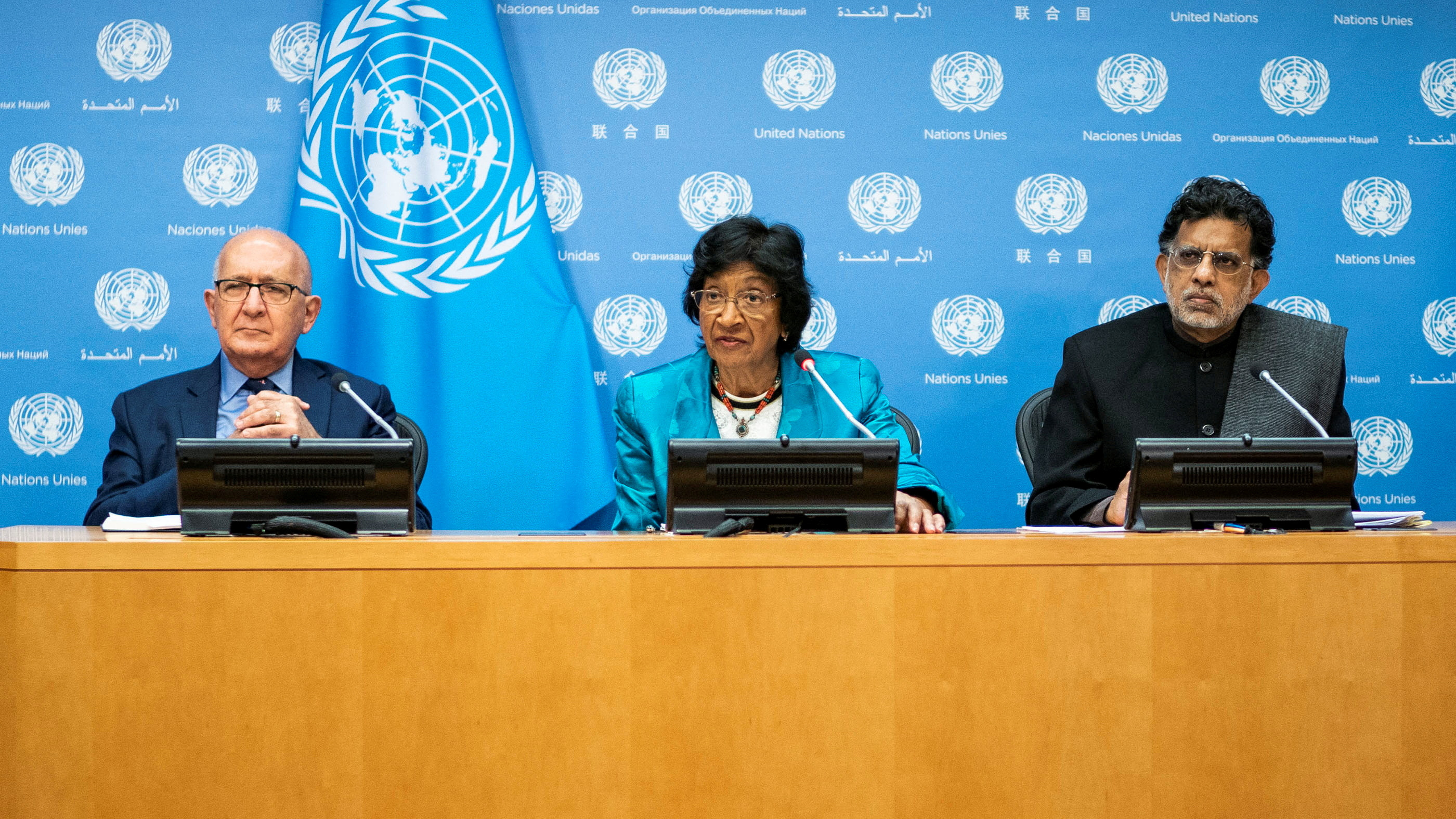
Members of the United Nations Independent International Commission of Inquiry on the Occupied Palestinian Territory and in Israel, Navanethem Pillay, Miloon Kothari and Chris Sidoti attend a press briefing at the United Nations headquarters in New York, U.S., October 27, 2022. REUTERS/Eduardo Munoz/File Photo
On 7 November 2022 Emma Farge reported for Reuters how a Palestinian human rights group told a U.N. panel on Monday 7 November it had been subject to threats and “mafia methods” during a campaign of harassment organised by Israel to silence groups documenting alleged Israeli rights violations.
The independent Commission of Inquiry, established by the Human Rights Council, the U.N. top human rights body, last year, plans five days of hearings which it says will be impartial and examine the allegations of both Israelis and Palestinians. Israel dismissed the process overseen by the panel as a sham while it declined comment on the specific allegations.
“They used all means, I can say. They used financial means; they used a smear campaign; they used threats,” he said, saying his office was sealed with a metal door on Aug. 18.
Asked to detail the threats mentioned to the panel, Jabarin told Reuters after the hearing that he had received a phone call from somebody he identified as being from “Shabak”, or the Israel Security Agency, two days after the raid. They threatened him with detention, interrogation or “other means” if he continued his work, he added.
As if the fight against terrorists is not already complex enough, Israel has muddied the water more by accusing six prominent Palestinian human rights groups of being terrorist organisations, saying they have undercover links to a militant movement. Not surprisingly. most of the groups document alleged human rights violations by Israel and the Palestinian Authority.
The six are Al-Haq, a human rights group founded in 1979, [and the winner of 5 human rights awards, see: https://www.trueheroesfilms.org/thedigest/laureates/0F74BF45-72C4-9FDD-F96D-2B87BF6C7728] Addameer, Defence for Children International – Palestine, the Bisan Center for Research and Development, the Union of Palestinian Women’s Committees and the Union of Agricultural Work Committees.
The Israeli defence ministry said they were linked to the Popular Front for the Liberation of Palestine (PFLP), a secular political movement with an armed wing that in the past carried out attacks against Israel. The groups “were active under the cover of civil society organisations, but in practice belong and constitute an arm of the [PFLP] leadership, the main activity of which is the liberation of Palestine and destruction of Israel”, the defence ministry said. It claimed they were “controlled by senior leaders” of the PFLP and employed its members, including some who had “participated in terror activity”. The groups serve as a “central source” of financing for the PFLP and had received “large sums of money from European countries and international organisations”, the defence ministry said.
The groups, well known for their human rights work, have indeed quite openly received funding from EU member states, the United Nations and other donors.
Shawan Jabarin, the director of Al-Haq, said the move was an attempt to stifle criticism. “They may be able to close us down. They can seize our funding. They can arrest us. But they cannot stop our firm and unshakeable belief that this occupation must be held accountable for its crimes,” he told the Times of Israel.
The Israeli human rights group B’Tselem called the government’s declaration “an act characteristic of totalitarian regimes, with the clear purpose of shutting down these organisations”. It added: “B’Tselem stands in solidarity with our Palestinian colleagues, is proud of our joint work over the years and is steadfast to continue so.”
Human Rights Watch and Amnesty International, who work closely with many of these groups, said in a joint statement:
“This appalling and unjust decision is an attack by the Israeli government on the international human rights movement. For decades, Israeli authorities have systematically sought to muzzle human rights monitoring and punish those who criticize its repressive rule over Palestinians. While staff members of our organizations have faced deportation and travel bans, Palestinian human rights defenders have always borne the brunt of the repression. This decision is an alarming escalation that threatens to shut down the work of Palestine’s most prominent civil society organizations. The decades-long failure of the international community to challenge grave Israeli human rights abuses and impose meaningful consequences for them has emboldened Israeli authorities to act in this brazen manner.
How the international community responds will be a true test of its resolve to protect human rights defenders. We are proud to work with our Palestinian partners and have been doing so for decades. They represent the best of global civil society. We stand with them in challenging this outrageous decision.”
The US Department of State spokesperson Ned Price said his office had not been given advance warning of the designation. “We will be engaging our Israeli partners for more information regarding the basis for the designation,” Price said on a telephone briefing with reporters in Washington.
The move by the Israeli government represents a challenge for the many European countries that provide financing to the six organizations, European governments, .. now risk being accused of funding terrorism if they continue financing the six groups. One senior European official working in the region admitted the move was likely aimed at putting pressure on donors’ decision-making but said there needed to be an analysis of any evidence put forward by Israel, said CNN Europe.
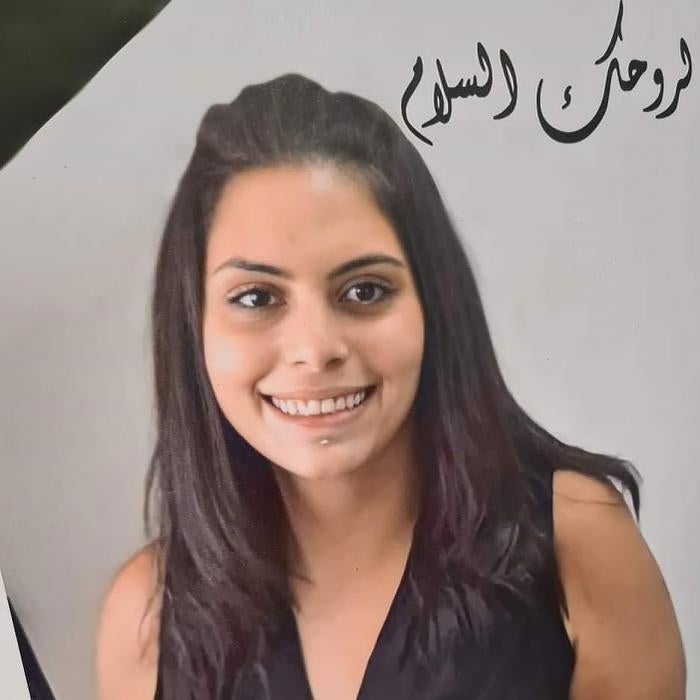
Omar Shakir wrote an obituary for Suha Jarrar, research and advocacy officer at Palestinian human rights organization al-Haq, who died at her home in Ramallah in the Israeli-occupied West Bank. Over her 31 years, Suha made an indelible impact on human rights advocacy in Palestine. He added that the Israeli Authorities should allow the detained mother, Parliamentarian Khalida Jarrar, to attend the funeral
Suha conducted innovative research on the environmental impacts of the Israeli occupation, including a 2019 report arguing that discriminatory Israeli policies and practices impede the ability of Palestinians in the occupied West Bank to adapt to climate change. As point person on gender issues for al-Haq, she represented the organization when the United Nations Committee on the Elimination of Discrimination against Women deliberated on the situation of women in Palestine. She researched, advocated, and fearlessly pushed to mainstream within Palestinian civil society the full range of rights issues related to gender and sexuality, even where perilous and proscribed.
Suha died without her mother nearby, since Khalida Jarrar sits in an Israeli jail. For most of the last six years, Israeli authorities have detained Khalida, a 58-year-old elected member of the Palestine Legislative Council, over her political activism with the Popular Front for the Liberation of Palestine (PFLP). One of the more than 400 organizations that Israeli authorities have outlawed, the PFLP includes both a political party and an armed wing. The armed wing has attacked Israeli soldiers and civilians. Israeli authorities have never charged Khalida with involvement in armed activities.
Khalida spent long stretches, including between July 2017 and February 2019, in administrative detention without trial and charge. In March 2021, an Israeli military court sentenced her to two years in prison for “membership in an unlawful association,” based on a plea deal, with Israeli military authorities acknowledging that she “did not deal with the organizational or military aspects of the organization.” Detaining Khalida over her political activism violates her freedom of association, as Human Rights Watch has documented. The suspension of civil rights to the millions of Palestinians living in the Occupied Palestinian Territory is a central part of the Israeli government’s crimes against humanity of apartheid and persecution.
Suha’s infectious smile never faded, even though for much of her adult life, her mother was unjustly behind bars. Israeli authorities have reportedly denied a request for Khalida to attend Suha’s funeral. Having repeatedly detained Khalida in violation of her rights, Israeli authorities should at minimum allow her to say goodbye to her daughter.
On 26 November 2019 in Geneva, at the annual United Nations Forum on Business and Human Rights, the Human Rights and Business Award Foundation named Al-Haqas recipient of the 2019 Human Rights and Business Award. An independent Palestinian organization based in Ramallah (West Bank), Al-Haq “Law in the Service of Man” was founded in 1979 “to protect and promote human rights and the rule of law in the Occupied Palestinian Territory”. Al-Haq documents and monitors violations of international humanitarian law and international human rights law in Occupied Palestinian Territory and works to stop violations against Palestinians whether by Israel, by the Palestinian Authority, or by others including companies.
In recent years Al-Haq has done ground-breaking work drawing attention to how certain companies operating in Occupied Palestinian Territory, including firms doing business with or in Israeli settlements, are involved in human rights abuses and breaches of international humanitarian law, notably the Hague Regulations and the Fourth Geneva Convention. The Board members of the Human Rights and Business Award Foundation – Christopher Avery, Regan Ralph and Valeria Scorza – said in a joint statement today: “Al-Haq does exceptional work in difficult circumstances, using international law as the basis of its research and advocacy. It is encouraging that an increasing number of human rights defenders in the Middle East are giving attention to the behavior of companies – Al-Haq is a recognized leader in this development.”
The foundation’s Advisory Network members who nominated Al-Haq for the award praised the organization for:
its professionalism, meticulous research and resolute advocacy;
its wide network of field researchers in communities across Occupied Palestinian Territory who closely monitor business activities and their impact on people;
its contributions to the treaty on business and human rights being drafted at the UN; and
its capacity-building activities – helping other NGOs in the Middle East develop their work on human rights concerns relating to business.
Al-Haq has previously received awards for its work, including:
1989 Carter-Menil Human Rights Prize
1990 Reebok Human Rights Award
2009 Geuzenpenning
2011 PL Foundation Prize (Poul Lauritzen Award)
2018 Prix des droits de l’homme de la Republique Francaise
Al-Haq and its staff have been targeted for their human rights work. The Observatory for the Protection of Human Rights Defenders [Observatory] has repeatedly raised concerns about attacks and threats against Al-Haq, including multiple death threats against Al-Haq’s General Director Shawan Jabarin and against its representative before the International Criminal Court. In July 2019 the Observatory issued an urgent appeal after 4IL – the official site of Israel’s Ministry of Strategic Affairs – published an article accusing Shawan Jabarin of “terrorism”, which led to death threats against him on its public platforms. “4IL platform’s online visitors launched into an incitement to violence and hate speech against Al-Haq, including calling for Mr. Shawan Jabarin’s killing. These comments were not filtered nor regulated by 4IL moderators.” The Observatory has also called attention to cyber-attacks against Al-Haq; the hacking of Al-Haq staff e-mail, land-line phones and mobile phones; and a smear campaign sending to Al-Haq’s European donors false allegations against the organization, allegations purported to have been from Ernst & Young and an alleged official of the Palestinian Authority (PA) – the firm and the PA confirmed that these allegations were false and unfounded. It should be noted that Shawan Jabarin was banned from international travel by Israel between 2006 and 2012. [see also: https://humanrightsdefenders.blog/2011/11/30/israel-refuses-to-let-hrd-shawan-jabarin-travel-to-receive-award-in-denmark/]
Al-Haq’s research and advocacy on concerns about business involvement in abuses of human rights and breaches of humanitarian law, listed on its website particularly in this section, has included:
Al-Haq has called on companies to pull out of the Jerusalem Light Rail project insofar as it runs through Occupied Palestinian Territory, connects Israeli settlements built on Palestinian land, fragments Palestinian land, and restricts free movement of Palestinians. For example, see Al-Haq’s Feb 2019 and May 2019 statements about Canadian company Bombardier. Companies that withdrew from bidding for the Light Rail project include Bombardier, French firms Alstom and Systra, German firm Siemens, and Australian firm Macquarie. In 2012, the UN Human Rights Council had expressed its “grave concern” at “The Israeli decision to establish and operate a tramway between West Jerusalem and the Israeli settlement of Pisgat Zeev, which is in clear violation of international law and relevant United Nations resolutions” (Resolution 19/17, paragraph 4e).
A 2019 submission to the UN working group developing a draft treaty on business and human rights, and continued advocacy and analysis in that regard.
A 2019 submission to the UN Human Rights Council Advisory Committee in support of a treaty on the right to development.
Raising concerns in a 2019 statement about Airbnb and a 2019 letter to Booking.com, that by listing properties in Israeli settlements in Occupied Palestinian Territory, these firms are transgressing international law.
2018 advocacy and research on Ireland’s Control of Economic Activities (Occupied Territories) Bill 2018, to prohibit the import of settlement products and services to Ireland.
Al-Haq’s advocacy, including a 2018 joint briefing paper, calling for corporate accountability in situations of armed conflict to be included in the International Law Commission’s (ILC’s) draft principles on the protection of the environment. The principles adopted by the ILC in 2019 did include such a principle.
A 2018 joint communication to the International Criminal Court about the alleged pillage of Palestinian natural resources by private actors including Israeli and multinational corporations.
A 2018 letter to Honda Motor Co., highlighting Honda’s complicity (through its Israeli affiliate Mayer) in violations of international humanitarian law perpetrated in Israeli settlements in Occupied Palestinian Territory. Honda failed to respond to these concerns when invited to do so by Business & Human Rights Resource Centre.
Responding to German multinational HeidelbergCement in 2017 about its quarries in Occupied Palestinian Territory, expropriating natural resources in contravention of international law. In June 2015 Norway’s largest pension fund KLP had excluded HeidelbergCement from its investment portfolio, due to its operations in the occupied West Bank.
A 2015 letter calling on the Dutch Government to prevent the export of dogs by Dutch firms to the Israeli security forces, given their use to attack and intimidate Palestinian civilians. The letter includes links to videos of dogs attacking a 53-year old woman and a 20-year-old boy.
An impressive list of 20 human rights organizations have signed a statement regarding Omani human rights defenders who are currently in detention, especially those undertaking hunger strikes. 24 defenders and activists including Basma Al-Kiyumi, Bassima Al-Rajhi, Saeed Al-Hashemi, Hamad Al-Kharusi, and Bassam Abu Qasida undertook a hunger strike on 9 February 2013 in Samail Central Prison, protesting the delayed ruling on the appeals that they brought to the Supreme Court against the judgments that were passed against them. Confirmed reports reveal that the conditions of some of the hunger strikers have deteriorated seriously to the point that some are currently at risk of death. Saeed
Al-Hashemi was transferred to the Royal Hospital in Muscat, where a neurologist examined him and confirmed that he is in urgent need of physiotherapy or surgery as a result of an injury on his right side sustained when he was beaten by unknown assailants during peaceful protests in Oman in 2011. The same reports reveal that Hamad Al-Kharusi and Bassam Abu Qasida were transferred to the jail’s clinic due to exhaustion caused by their hunger strike.These human rights defenders were incarcerated following the decisions of the Appeals Court on 5, 12, and 19 December 2012 which upheld sentences of between 6 months and 1 year in prison issued against them by the Muscat Court of First Instance in July and August 2012.
On 29 November 29, 2011 Israeli authorities turned West Bank resident Shawan Jabarin, the director of the Palestinian human rights group Al-Haq, back at the Allenby Bridge crossing with Jordan, citing a travel ban. Several NGOs, such as Amnesty International, Human Rights Watch, and B’Tselem, said that the Israeli authorities violated Jabarin’s rights in imposing the ban and have not produced any evidence that would justify continuing to restrict him from travel.
The travel ban would seem to be clearly linked to his human rights work as Jabarin was stopped since 2006, when he became director of Al-Haq, a leading human rights organization in the West Bank, while Israel had allowed him to travel abroad eight times in the previous seven years. The Israeli military previously claimed in court that Jabarin was an activist in the Popular Front for the Liberation of Palestine, which Israel considers a terrorist organization, and that his travel abroad for even a limited period would endanger Israel’s security. However, Israeli authorities have not charged Jabarin with any crime or given him an opportunity to confront the allegations against him. The Israeli High Court of Justice has upheld Jabarin’s travel ban on security grounds, but did so based on secret information that Jabarin and his lawyer were not allowed to see or challenge. “It is hard to believe any claim that Jabarin’s travel to Denmark to receive a human rights award would harm Israeli security, the more so when any evidence is kept secret,” said Sarah Leah Whitson, Middle East director at Human Rights Watch. “While civil society groups recognize Jabarin’s courageous work, Israel is punishing him with a travel ban.”
The ban has prevented Jabarin from leaving the West Bank to receive a human rights prize from the Danish PL Foundation (Poul Lauritzen), participate in a European Union forum on human rights, and attend a Human Rights Watch meeting in New York City. “The ban preventing Shawan Jabarin from traveling abroad to receive an award is emblematic of the arbitrary restrictions placed on Palestinian human rights defenders and civil society activists,” said Philip Luther, Amnesty International’s MENA Programme Director. “It must be lifted, and the Israeli authorities must stop using unspecified security concerns to obstruct the work of Palestinian human rights activists.” Nina Atallah, the head of Al-Haq’s monitoring and documentation department, will try to travel to the prize ceremony.
It is a pity that Israel,in this respect, is emulating Iran, which is the only country until now to prevent the MEA Laureate Emad Baghi to travel to his ceremony in 2009.
Related articles


 Hans Thoolen on Human Rights Defenders and their awards