have successfully co-hosted for the third time an event where candidate countries for the UN Human Rights Council have voluntarily shown up to set out their views and commitments in case they would be elected. ‘We are delighted to see more and more States prepared to participate in what is becoming an annual event, said Eleanor Openshaw of the ISHR. We would encourage all State candidates to see this as an opportunity to speak about their vision and commitments as members of the Council and, through their participation, to demonstrate the kind of transparency and accountability that should be expected of all Council members. Ahead of elections to the UN Human Rights Council in November by the GA, seven candidate States have subjected themselves to public questioning, at the event hosted at UN Headquarters by the 2 NGOs and the missions of Tunisia and Uruguay.
Albania, Bolivia, Botswana, Costa Rica, Latvia, The Netherlands and Portugal elaborated on their pledges and were questioned on how they would work as members of the Council to challenge human rights violations and uphold the credibility of the Council. It is a pity that the other 10 candidates did not (yet) have the courage to join.
The protection of human rights defenders featured prominently in the discussion, with the Netherlands Human Rights Ambassador, Lionel Veer, describing human rights defenders as agents of change and calling for stronger recognition and protection of their work under both national and international law. Building on this, all speakers affirmed their State’s commitment to the protection of defenders, with Albania and Bolivia committing to support and strengthen civil society engagement with the UN and Costa Rica pledging to support the right of peaceful protest. Botswana was explicit about its commitment to prevent and ensure accountability for reprisals and to work for the endorsement of Human Rights Council Resolution 24/24, adoption of which by the General Assembly would provide for the appointment of a high-level UN focal point to combat reprisals. We welcome the statements and commitments made by States to protect the work of human rights defenders and support robust civil society engagement with the UN, said Ms Openshaw. This is a recognition of the crucial role played by defenders in holding States to account for their human rights obligations at both the national and international levels.
Today, 23 June 2014, Amnesty International launches its open source ‘Panic Button’ app to help human rights defenders facing imminent danger. The aim is to increase protection for those who face the threat of arrest, attack, kidnap and torture. In short:
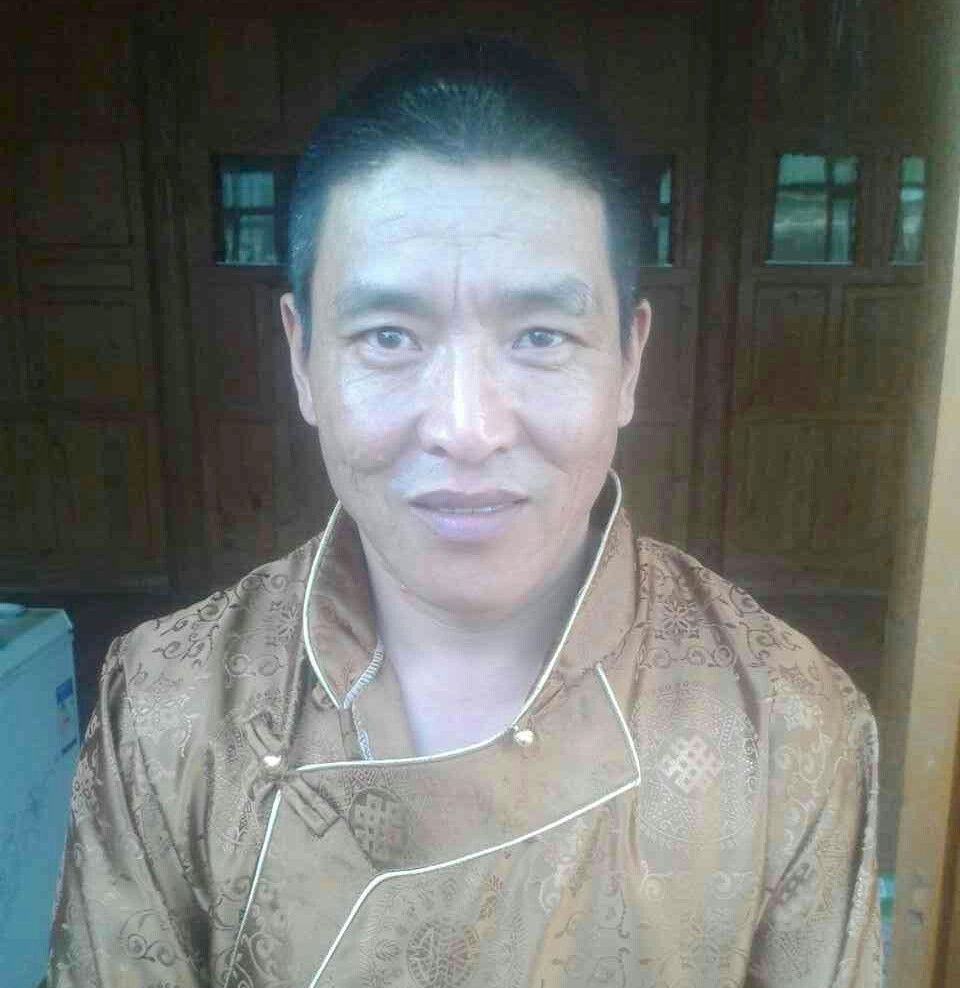
On 5 June 2014 Dhondup Wangchen, the imprisoned Tibetan video-activist, was released from prison in Qinghai’s provincial capital Xining, China, after serving a six-year sentence. In a phone call to Gyaljong Tsetrin, cousin and president of Filming For Tibet, living in Switzerland, a very emotional Dhondup Wangchen said: “At this moment, I feel that everything inside me is in a sea of tears. I hope to recover my health soon. I would like to express my feeling of deepest gratitude for all the support I received while in prison and I want to be reunited with my family.”
Lhamo Tso, wife of the imprisoned filmmaker who was granted US asylum in 2012 and now lives in San Francisco, is overjoyed: “Six years of injustice and painful counting the days ended today. It is a day of unbelievable joy for his parents in Dharamsala, our children and myself. We look forward to be reunited as a family.”
Gyaljong Tsetrin, his cousin and co-producer of “Leaving Fear Behind”, said after talking him to: “Though Dhondup is still under the control of the Chinese authorities I am very relieved that he finally could leave prison and has now the possibility to consult a doctor.” The self-taught cameraman and video-activist travelled across Tibet with his assistant Golog Jigme in 2007/2008. His film “Leaving Fear Behind” (28 min.) has been translated into a dozen languages and has been screened in more than 30 countries worldwide. Golog Jigme recently just arrived in India after a spectacular escape from Tibet. Dhondup Wangchen has been given awards by various NGOs, such as Committee to Protect Journalists, for his courageous work making the documentary “Leaving Fear Behind” and his case was the focal point of many campaigns of international human rights groups such as Amnesty International and Reporters without Borders. Government representatives around the world have brought up his case in their talks with their Chinese counterparts.
On14 May 2014 Amnesty International published a new campaign video on torture.It is specially interesting as a very short summary – in images – of the history of the anti-torture campaigns started by AI under the leadership of Martin Ennals more than 40 years ago. Read the rest of this entry »
On Tuesday 27 May 2014, will take place a Conference on the human rights situation in Belarus, from 14h00 –17h00 in the International Conference Centre in Geneva (room 3)
Speakers include:
Florian Irminger, Human Rights House Foundation
Tatsiana Reviaka, Human Rights Centre “Viasna” and Belarusian Human Rights House
Aleh Hulak, Belarusian Helsinki Committee
Anna Gerasimova, Belarusian Human Rights House
Volodymyr Yavorskyy, Working group on the development of the Guidelines on Definition of Political Prisoner
Andrzej Poczobut, journalist
Nicolas Agostini, International Federation for Human Rights (FIDH)
Andrei Paluda, Human Rights Centre “Viasna”
Pavel Levinau, Belarusian Helsinki Committee
Natallia Pinchuk, wife of Belarus political prisoner Ales Bialaitski
Marina Adamovich, wife of Belarus political prisoner Mikola Statkevich
For more information contact: anna.innocenti[at]humanrightshouse.org
The meeting is cosponsored by Amnesty International, Human Rights Watch, FIDH, Civicus, Belarusian Human Rights House and the Human Rights House Foundation.
A few days ago Erykah Badu on Twitter remained obstinate over her scheduled performance in The Gambia. Other bloggers (e.g. http://yafri.ca/erykah-badu-faces-criticism-over-her-performance-for-gambian-president/) are adding to the noise by pointing out that President Jammeh’s regime consistently cracks down on the opposition and the media. In its submission to the Universal Periodic Review (UPR) of Gambia, the human rights organisation, Amnesty International, stated “Since Gambia’s first Universal Periodic Review (UPR) in 2010, the human rights situation in the country has deteriorated. The government continues to stifle freedom of expression and commit other human rights violations with impunity.” An online campaign has been put in place by web users to enlighten the singer about the Gambian dictator. See Facebook and twitter campaign of disapproval [@fatbellybella]. HOWEVER in the meantime it seems that Erykah Badu has decided NOT to attend Gambia’s much publicized Roots Homecoming Festival. Especially Gambian dissidents based in the United States have repeatedly prevailed on the Grammy winning artist not to attend the festival. ..Interestingly the singer’s likely absence has angered Gambian artist Gibou Balla Gaye, who goes with the street name Gee. Perhaps good to note here that Gee is the son of Balla Gaye, Gambia’s former Finance Minister.
Anyway it is nice to be able to point to better examples, such as Celina Jaitly in India who tackled the taboo of gay relations. The United Nations Free & Equal Campaign published on 29 April 2014 this first-ever Bollywood music video for gay rights, featuring Bollywood star Celina Jaitly: https://www.youtube.com/watch?v=lihVCIFamb0 [sorry you have CONTR/click as the embedding does not work – but worth a view!!].
As this blog testifies, across the globe, individuals suspected of posing a threat to state authority are routinely kidnapped, arrested and forcibly disappeared, often without any warning.Amnesty international launches today the easy-to-use app launched by Amnesty International. “Panic Button”, a mobile app for Android, transforms a user’s smart phone into a secret alarm which can be activated rapidly in the event of an emergency, alerting fellow activists and enabling them to respond faster.
“Defending human rights is an incredibly dangerous job in large parts of the world, with activists facing anything from threats to imprisonment and even torture as punishment for their legitimate work,” said Tanya O’Carroll, Technology and Human Rights Officer for Amnesty International. “By introducing technology to the fight for human rights ‘Panic Button’ is bringing them a new tool to alert others about the danger they may be facing with a simple click.”
AI is are currently working with HRDs in 16 countries on how to use the tool and on the growing and omnipresent threat of surveillance so they are clear on the risks they take when using a mobile phone in their work,but the official website for the “Panic Button” app is up and running.
[Amnesty International hopes that activists and members of the public will help to improve the tool by downloading and testing Panic Button in their country as part of the beta – or testing – phase. Authorities know that campaigners coordinate meetings, protests and other activities using mobile phones and have ramped up their surveillance capabilities to monitor and track activists, journalists and campaigners. In a bid to mitigate some of these dangers, the “Panic Button” tool uses a screen disguise feature and requires users to enter a pin number before accessing the application. The alarm itself is triggered by rapidly pressing the phone’s power button, after which an SMS message is sent to three pre-entered contacts chosen by the user, alerting them of the distress call. When a GPS function is enabled, this message includes a map link showing the user’s coordinates and the user can pre-set regular location updates so their network is updated every few minutes when active.]
Former US intelligence contractor and whistleblower Edward Snowden’s latest allegations point to a very real risk that human rights defenders have been the targets of mass surveillance by the US and British spy agencies. Snowden, who is living in exile in Moscow, made the remarks this afternoon, 8 April 2014, via a videoconference link to the Parliamentary Assembly of the Council of Europe (PACE) in Strasbourg, France. When asked if the US National Security Agency (NSA) or its British counterpart Government Communications Headquarters (GCHQ) were actively spying on human rights organizations such as Amnesty International, Human Rights Watch and others, he said: “Without question, yes, absolutely …The NSA has in fact specifically targeted the communications of either leaders or staff members in a number of purely civil or human rights organizations of the kind described”.
While the whole of the Syrian population suffers terribly, it is important to recognize that human rights defenders, activists, media and humanitarian workers have been particularly targeted for their work since the beginning of the Syrian uprising three years ago. Many have been arrested or abducted by either government forces and pro-government militias or by non-state armed groups. The channels for obtaining reliable information are drying up and that is certainly not a coincidence.
Now several international NGOs such as Amnesty International, the Euro-Mediterranean Human Rights Network, FIDH, Frontline Defenders, Human Rights Watch and Reporters Without Borders have come together to work jointly, with other international, regional and Syrian organizations, to campaign for the release of these Silenced Voices of Syria. The campaign is starting with the documentation of 37 emblematic cases.
This campaign will use a three-pronged strategy of 1. Research and Documentation, 2. Information/Sensitisation and 3/ Mobilization.
Today, 14 March, Amnesty International brought out a statement severely criticizing China‘s treatment of human rights defenders in need of medical care. Cao Shunli, 52, died from organ failure on Friday at a hospital in Beijing, after five months in detention. Repeated requests by Cao’s family for her to receive medical treatment for serious health problems were denied.[ https://thoolen.wordpress.com/2014/02/25/serious-concern-for-health-of-detained-human-rights-defender-cao-shunli/]
“Cao Shunli’s death exposes just how callous and calculating the Chinese authorities are prepared to be to silence critics. The authorities today have blood on their hands.” said Anu Kultalahti, China Researcher at Amnesty International. “Cao Shunli was a courageous woman who paid the ultimate price for the fight for human rights in China. She should have never been detained in the first place; but to then deny her the medical treatment she desperately needed is a most barbaric act.”
Cao had led attempts to allow activists to contribute to China’s national human rights report, ahead of a UPR review at the UN Human Rights Council in 2013 and was arrested in September as she attempted to travel to Geneva to attend a human rights training course. Her detention was seen by many as a reprisal for her wanting to contribute to a public discussion on violations in China – the charges against her concerned “picking quarrels and making trouble” . The full Council is expected to hear the result of the UPR session on Wednesday 19 March. It will be interesting to see how the States and in particular China is going to react to this tragic event.




 Hans Thoolen on Human Rights Defenders and their awards