On Human Rights Day, HURIDOCS hosted a webinar to showcase the critical role of documentation and technology in protecting defenders, advocating for the rights of those who are wrongfully detained and supporting those who are detained to claim their rights. This webinar featured four initiatives that recently collaborated with HURIDOCS to safeguard those who champion human rights:
The Observatory for Human Rights Defenders in Chiapas
SOS-Defenders
Detention Landscapes
Papuans Behind Bars
Welcoming remarks: Danna Ingleton, Executive Director, HURIDOCS Speakers:
Karla Jiménez Montoya, Movilidades Libres y Elegidas (CoLibres)
Giuseppe Scirocco, World Organisation Against Torture (OMCT)
On International Human Rights Day, the Open Society Foundations reaffirmed their vision for a shared humanity where everyone can thrive, continuing the philanthropy’s role as the world’s largest private funder promoting rights, equity, and justice.
Under the leadership of Chair Alex Soros, the philanthropy is streamlining its programming to support new voices and approaches that align with today’s emerging forms of organizing and leadership. The Foundations will pursue targeted time-bound efforts, provide long-term institutional support, and retain the flexibility to respond to crises through rapid response funds.
Binaifer Nowrojee, president of the Open Society Foundations, said:
Across the world, we are seeing inspiring and powerful movements working to shape a future framed by human rights. Standing with them as allies, we will deepen, broaden, reimagine, and catalyze efforts to advance a new vision of human rights that is not bounded by historic double standards, exclusions, and inequities.
We are crafting and implementing thoughtful, future-focused strategies for change that will leverage gains made through key openings and convert them into wins. Our investments will aim to work with groups to build on and sustain these wins over time. We are committed to listening and to being informed by the needs of allies leading the fights for rights, equity, and justice.
The commitments include multiyear investments across a broad range of issues and geographies, including:
Rights protection: Supporting human rights advocacy as well as protection of rights defenders at risk, particularly environmental and women’s groups
Inclusion: Ensuring marginalized and vulnerable groups can fully exercise their rights without fear of violence or discrimination
Public safety: Promoting communities-centered approaches to tackling repressive or militarized responses to violence and public safety
Accountability: Supporting human rights–based litigation in national, regional, and international courts
Political participation: Supporting new champions and nonpartisan movements of inclusive and accountable democratic practice in specific countries and globally
Economic rights: Developing and promoting new state-led economic models for a green transformation to advance economic and social rights
In 2025, Open Society will be approving further programming to promote rights, equity, and justice.
Open Society has also approved funding across other areas, including ideas, impact investing, advocacy, and higher education.
The “Life is hanging on by a thread” campaign will shine a light on the countless stories of human rights defenders and environmentalists who risk their lives for their causes.
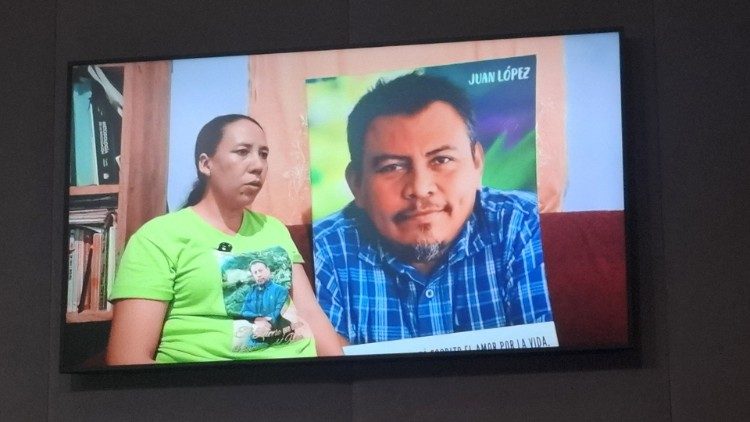
On September 14, Juan Antonio López, a city council member and environmental activist was murdered in Honduras. He was a member of the Mesoamerican Ecclesial Network and international organizations recognized his work. His assassination underscored the vulnerable situation of human rights defenders and leaders throughout Latin America.
In response, the Latin American Bishops’ Conference, together with the Platform for Peace, Democracy, and Human Rights and the Latin American Protection Community, is launching the campaign “Life is hanging on by a thread.”
The official launch of the campaign is scheduled for December 10, which will be held virtually to bring representatives from all over Latin America. It will coincide with events being held in Honduras to honour López.
The goal of the “Life is hanging on by a thread” campaign is to shine a light on symbolic cases of human rights and environmental defenders in Latin America and the Caribbean. Various testimonies of people defending human rights and indigenous peoples will come to light.
Promoters of the campaign stress its importance because “situations like the murder of Juan Antonio López are not isolated events, but part of a systematic pattern in Latin America, one of the deadliest regions for environmental and human rights defenders.” Global Witness, an international NGO, reports that 85% of environmental defenders who were killed in 2023 took place in Latin America. Specifically, in Honduras, 18 environmentalists were murdered last year. [see: https://humanrightsdefenders.blog/2024/09/18/global-witness-2023-2024-annual-report-violent-erasure-of-land-and-environmental-defenders/]
Juan Antonio López was an environmentalist killed on September 14, 2024
The campaign will end on December 10, 2025, coinciding with the Jubilee of Hope.
Here a few highlights for this year from UN and NGOs sources:
While commemorating the 76th anniversary of the Universal Declaration of Human Rights, the United Nations Secretary-General Antonio Guterres said that “human rights are under assault”. “Whether economic, social, civic, cultural or political, when one right is undermined, all rights are undermined,” Guterres said in a post on X. “Let’s protect, defend and uphold all human rights for all people,” he added. In a video message, The UN secretary-general said “we must stand up for all rights — always.”
..As we mark Human Rights Day 2024, we are reminded that human rights are not abstract ideals. They are vital tools for addressing these pressing challenges and advancing dignity and justice for all.
… the United Nations Development Programme (UNDP) works to support human rights solutions that strengthen accountability, protect communities and foster peace, recovery, and stability. This includes partnering with National Human Rights Institutions, which often represent the frontline defenders of human rights. … Local initiatives also remain key. That includes women in Somalia who are being supported to lead peace efforts including assisting those facing violence, discrimination, and injustice. “I have resolved numerous local disputes…I feel motivated when I see I have been able to change people’s lives positively,” says Fatuma who led a local Peace Working Group.
As the accelerating climate emergency threatens the ability of current and future generations to enjoy their right to a clean, healthy, and sustainable environment, UNDP is focusing on access to justice, working with the United Nations Environment Programme (UNEP) and OHCHR to help communities claim their rights. …The private sector also has a pivotal role to play. UNDP supports the implementation of the UN Guiding Principles on Business and Human Rights including to advance sustainable practices that protect the environment. Indeed, technology offers both risks and opportunities to advance human rights. The Global Digital Compact aims to create an inclusive, open, safe, and secure digital space that respects, protects and promotes human rights. Tech-enabled UNDP tools like iVerify and eMonitor+ deployed in over 25 countries to monitor and address false narratives and hate speech show the potential. It is now crucial to adopt a rights-based approach to technologies like A.I., addressing ethical challenges, protecting data, and tackling biases to mitigate risks today and unlock immense benefits for the generations to come. [https://humanrightsdefenders.blog/2024/09/27/united-nations-adopts-ground-breaking-pact-for-the-future-to-transform-global-governance/]
——
The NGO Index on Censorship spotlights four people standing up for human rights around the world:
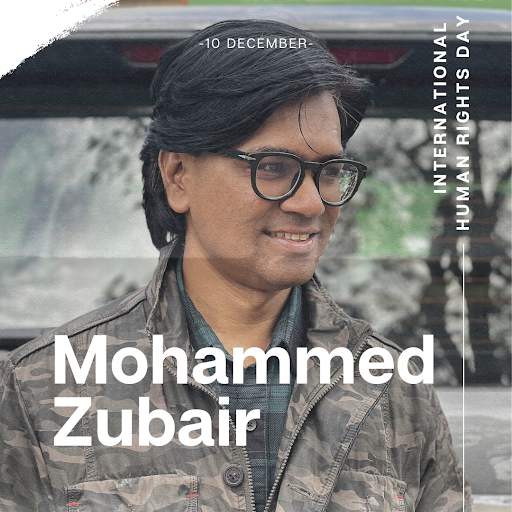
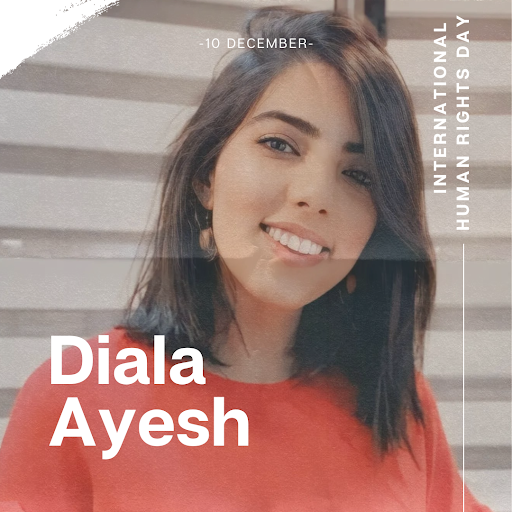
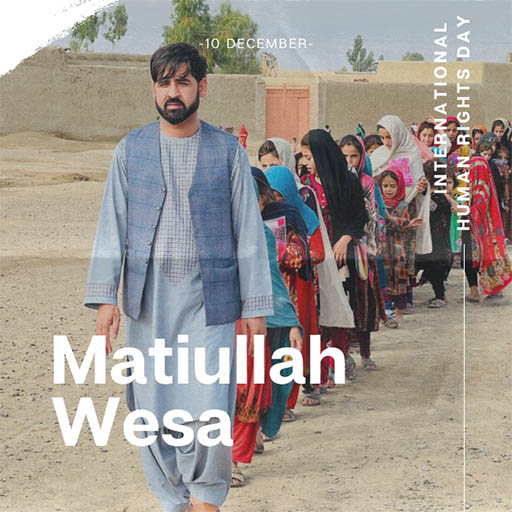
Despite the declaration, all around the world human rights are being challenged, degraded and attacked. That is why this year, on Human Rights Day, we pay tribute to five human rights defenders who have worked tirelessly to defend people’s rights and have been persecuted as a result.
Jemimah Steinfeld, CEO at Index on Censorship said: “In this increasingly polarised and authoritarian world these people stand out as beacons of hope and light. It’s depressing to think that over 75 years since the Declaration, we still need a day like this but that should not detract from the bravery and fortitude of these people. May their example show us all how we can all better fight injustice.”
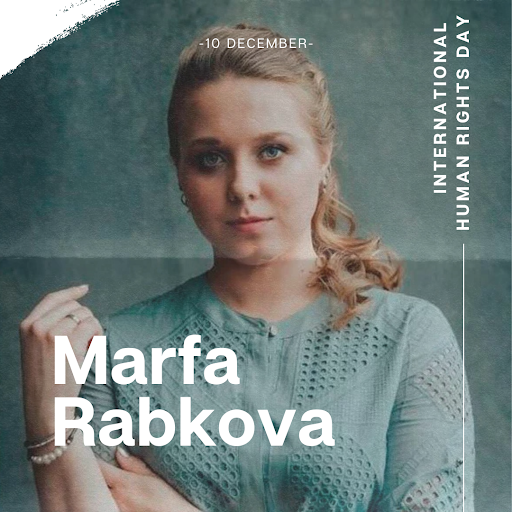
Marfa Rabkova (Belarus) Marfa Rabkova is a human rights defender who has been behind bars since 17 September 2020. She has long been targeted by the Belarusian authorities as a result of her civic activism. Marfa became head of the volunteer service at the Human Rights Centre Viasna in 2019. During the 2020 presidential election, she joined the “Human Rights Defenders for Free Elections” campaign, which registered over 1,500 election observers. When peaceful protests began to take place after the election, she helped document evidence of torture and violence against demonstrators. Marfa was indicted on a long list of charges, including inciting social hostility to the government and leading a criminal organisation. She was sentenced to 14 years and 9 months in prison in September 2022, after nearly two years of pre-trial detention. Index on Censorship calls for her immediate and unconditional release. See also: https://humanrightsdefenders.blog/2021/03/22/belarus-end-reprisals-against-human-rights-defenders/
On 10 December 2020, Human Rights Day, the OSCE Office for Democratic Institutions and Human Rights (ODIHR) issued a statement “The brave people strengthening human rights in 2020 will lead us out of adversity“. A bit belatedly. I reproduce here OSCE paying “tribute to human rights defenders and many organizations across the OSCE region that have protected our rights throughout the Covid-19 pandemic, and will have a key role to play if the global recovery is to put respect for human rights at its core“
OSCE states have long recognized the important role played by human rights defenders in ensuring full respect for human rights, fundamental freedoms, democracy and the rule of law. Throughout the pandemic, numerous organizations, initiatives and activists have worked hard to lessen the suffering caused by the health crisis. They have exposed gaps in responses to the health emergency and drawn attention to the undermining of human rights standards and democratic values in the name of public safety.
As public emergencies were introduced across the OSCE region and human rights and freedoms of millions of people were restricted, national human rights institutions (NHRIs) as well as civil society organizations were swift to hold accountable those states that were using vaguely defined regulations to bypass human rights obligations and lower standards. In addition to their regular monitoring activities, NHRIs were often quick and resourceful in developing solutions and disseminating key information to the public when it was needed.
A spirit of dialogue and compromise, the ability to combat systematic inequality and exclusion, and the will to overcome ever-deepening polarization, are hard to imagine without a strong and vibrant civil society. But in many places across the OSCE region, pressure on civic space is increasing. This takes many forms, from legislation restricting the activities of civil society to smear campaigns against human rights defenders and journalists.
Despite their commitment – or because of it – many courageous human rights defenders across the OSCE region have been the brunt of attacks in 2020. They have faced threats and intimidation, frequently initiated by national authorities, as well as funding cuts and risks to their data security and privacy.
Today, ODIHR wants to thank all those brave people across the OSCE region who are committed to safeguarding the human rights of us all. The Office will continue to support and work with them towards this ultimate goal.
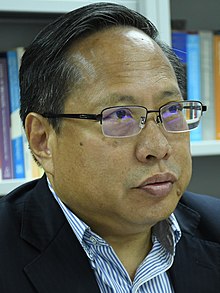
Human Rights First announced today that it will award the 2020 Roger N. Baldwin Medal of Liberty to Hong Kong human rights defender Albert Ho. The award will be presented today 10 December in a virtual event that will include a conversation between Ho and Human Rights First Senior Advisor Brian Dooley.
Albert Ho is a veteran Hong Kong lawyer and advocate whose career in human rights and political activism stretches back almost four decades. A leading figure in the pro-democracy movement for many years, he remains prominent in the protest movement that energized Hong Kong in 2019 and 2020.
“No dictatorship is too big or too strong to take on,” said Vladimir Vladimir Kara-Murza, Senior Advisor for Human Rights Accountability at Human Rights First and 2020 Baldwin Award jury member. “This decision shows who is right and wrong, and Albert Ho is in the right. There are no lost causes, and the cause of democracy in China is not lost.”
Ho is now facing a dozen charges related to those peaceful protests and his law firm continues to represent many others who have protest-related charges.
“I’m honored to accept this award,” said Ho, “but I do it on behalf of many colleagues who have shared the case of human rights in Hong Kong with me for so many years.”
Ho is the co-founder and senior partner of Ho, Tse, Wai and Partners (HTW), a Hong Kong law firm renown for advocacy on landmark human rights cases. Ho and HTW have represented many arrested pro-democracy protestors and challenged many of the Hong Kong government’s dubious actions, such as the banning of face masks under a colonial-era law and the disqualification of numerous pro-democracy lawmakers.
Ho has also done extensive advocacy for human rights lawyers in mainland China. He founded the China Human Rights Lawyers Concern Group in 2007 to provide humanitarian assistance to detained human rights lawyers and their families, advocate on behalf of detained lawyers, and share knowledge and experience with Chinese lawyers.
Despite surveillance and threats by Chinese authorities, Ho has maintained his steadfast support for his peers in mainland China in the face of the government’s crackdown on human rights lawyers, the “709 crackdown” known for the day it began – July 9, 2015. Placing the pursuit of justice before his own safety, Ho continues to raise awareness of the plight of human rights lawyers in China to see that the world holds the Chinese Communist Party accountable for human rights abuses.
Helena Dalli – the European Union Commissioner for Equality – and Dunja Mijatović – the Council of Europe Commissioner for Human Rights – published a joint opinion piece “Stop the rain on human rights” in Euractive at the occasion of International Human Rights Day 2020 on 10 December:
The current pandemic crisis serves as a magnifying glass of all existing inequalities in Europe – racism, gender and sexual discrimination, treatment of migrants: there is still a long way to go to ensure full and real equality in Europe,
Regrettably, for all the progress of the past seven decades, there is still a long way to go to ensure full and real equality in Europe. Our societies breed divisive levels of inequality, fear and polarisation. Structural discrimination keeps millions of Europeans on the margins of our societies, especially in employment, health, education, housing, and the criminal justice system.
The current pandemic crisis serves as a magnifying glass of all existing inequalities in Europe and exacerbates them. Those who were poor before it became poorer; those who were disadvantaged faced even greater disadvantages. Inequalities affecting women, LGBTIQ people and ethnic minorities illustrate this problem well….
Restrictions to freedom of assembly and association, obstacles to legal gender recognition and lack of adequate protection at public events are evident failures of state authorities to uphold their commitments and legal human rights obligations to ensure equality for LGBTIQ people.
The situation is not much better for people from ethnic minority and immigrant backgrounds. If you are of African descent you are more likely than white people to face discrimination in the job market, in education and housing, and to be stopped by the police without reasonable suspicion.
Hate incidents also continue to scar the lives of Jews, Muslims and Roma, who are among the preferred scapegoats of those who still stigmatise some groups of people on the grounds of their ethnic origin or religion.
The unkept promise of equality betrays a long political, philosophical and judicial tradition which places equality at the centre of European democracies. Both the European Court of Justice and the European Court of Human Rights have upheld the principle of equality and non-discrimination since the 1970s.
Yet, more and more governments and parliaments seem to pay little attention to their legal obligations, and to the destabilising consequences that keeping millions of Europeans as second-class citizens is having on our societies. Hard won progress’ longevity is not a given. We must protect and reinforce it every day.
The many challenges that our societies will have to face require that Europe strengthens the place equality occupies in our societies, starting by giving a more central focus to the principle of equality and non-discrimination in relations to all human rights, be they civil, political, economic social or cultural.
We must do better for the rights of the single mother living in poverty and for the disabled child prevented from attending a mainstream school. We must protect the rights of women and girls who have been sexually harassed, of young graduates who face discrimination in the labour market because of how their name sounds.
We also must remain vigilant in the face of worrying attempts to roll back progress towards equality for women and LGBTIQ people.
There is no easy fix, but already taking the decision to address these long-standing problems together is a good start. We firmly believe that the founding principles and values of the Universal Declaration are as relevant today as they were when they emerged from bloodshed, tyranny and war. They require that governments become stronger defenders of human rights.
We are helping them do so by addressing effectively the pervasive discriminations against women in Europe. Ratifying and implementing the Council of Europe Convention on preventing and combating violence against women and domestic violence is key to advance gender equality. This Convention has been ratified by 34 European countries, and signed by the EU.
However, the EU is not yet in a position to ratify because unanimity between member states has not been reached. We will join forces to make clear that the Convention protects from violence and nothing else; contrary to the misconceptions, fallacious and uninformed claims that have circulated and sown doubts.
Likewise, we are committed to fight racism and bring about an anti-racist culture. To this end, we believe that one of the priorities is to help member states stamp out ethnic profiling and end impunity for police misconduct.
We will also strengthen our work to counter discrimination against LGBTIQ people. We will continue to raise the visibility of LGBTIQ people in our dialogue with member states, support activists and use all means at our disposal to defend the right of LGBTIQ people to equality.
For this to happen, however, our voices alone will not suffice. There is the need for a renewed commitment by national authorities to uphold the founding values and legal obligations set out by the European Union and the Council of Europe. And here we get to the heart of the problem.
At best, many politicians in our member states remain indifferent about discrimination. At worst, they instigate violence and hostility. Politicians must be champions of equality, not obstacles to it. International organisations and the human rights community too have their bit to do.
We must become more inclusive in the way we defend human rights. We deliver a public service in the interest of society, but we do not own that service. We talk about, for and sometimes with people who have suffered human rights violations.
But we rarely empower them to speak for themselves. They should take part in decision-making processes as much as possible. We should learn to listen more and they must have the space to tell their stories and shape the policies and laws that concern them.
When states adopted the Universal Declaration on Human Rights on 10 December 1948, they pledged themselves to achieve equality. Giving practical effect to that vision is still possible – but only if we choose to strengthen freedoms, promote participation and empower all people.
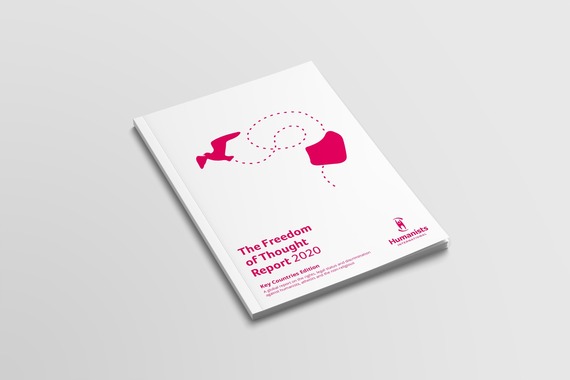
On 10 December 2020 Humanist International launches its annual Freedom of Thought Report. Time: 3pm UTC. Location:Facebook or YouTube Speakers:
● Ahmed Shaheed, UN Special Rapporteur on Freedom of Religion or Belief
● Mohamed Cheikh Ould Mkhaitir, Mauritanian blogger, activist and former prisoner of conscience
● Debbie Goddard, Vice President ofAmerican Atheists and Board Member of Humanists International
● Rev. Frederick Davie, Commissioner of The United States Commission on International Religious Freedom
● Andrew Copson, President of Humanists International
● Emma Wadsworth-Jones, Casework & Campaigns Manager at Humanists International
Since 2012 Humanists International has published the Freedom of Thought Report to monitor the rights and treatment of humanists, atheists and non-religious people in every country in the world.
This year, the thematic focus of the Report is COVID-19, and its impact on the non-religious people globally.
In particular the focus is on restrictions on: ● Women’s rights
● Media freedom, protest and access to information
With a special release on Youtube on the Playing for Change channel on Thursday, December 10th at 12 pm PST / 3 pm EST, Peace Through Music: A Global Event for Social Justice will feature artists and public figures like Aloe Blacc, Angélique Kidjo, Becky G, Brandi Carlile with Mike McCready of Pearl Jam, Carlos Santana and Cindy Blackman Santana, Gabi Melim, Gary Clark Jr., Jack Johnson, Mavis Staples, Peter Gabriel, Rhiannon Giddens, Ringo Starr, Robbie Robertson, Run The Jewels with Josh Homme, Sheila E., Skip and Cedella Marley, The War and Treaty, Yo-Yo Ma and more. Billie Eilish, Killer Mike, Megan Rapinoe and Sue Bird, Norman Lear and Sara Bareilles among others are scheduled to make special appearances.
The event, a collaboration between Playing For Change, an organization that aims to connect the world through music, and the United Nations Population Fund (UNFPA), presented by Corning® Gorilla® Glass and co-produced by Blackbird Presents, calls for equality, the recognition of human rights and an end to racism and discrimination.
“The things in life that divide us disappear when the music plays,” says Mark Johnson, PFC Co-Founder, “and that’s something we hope you see and feel during this event.”
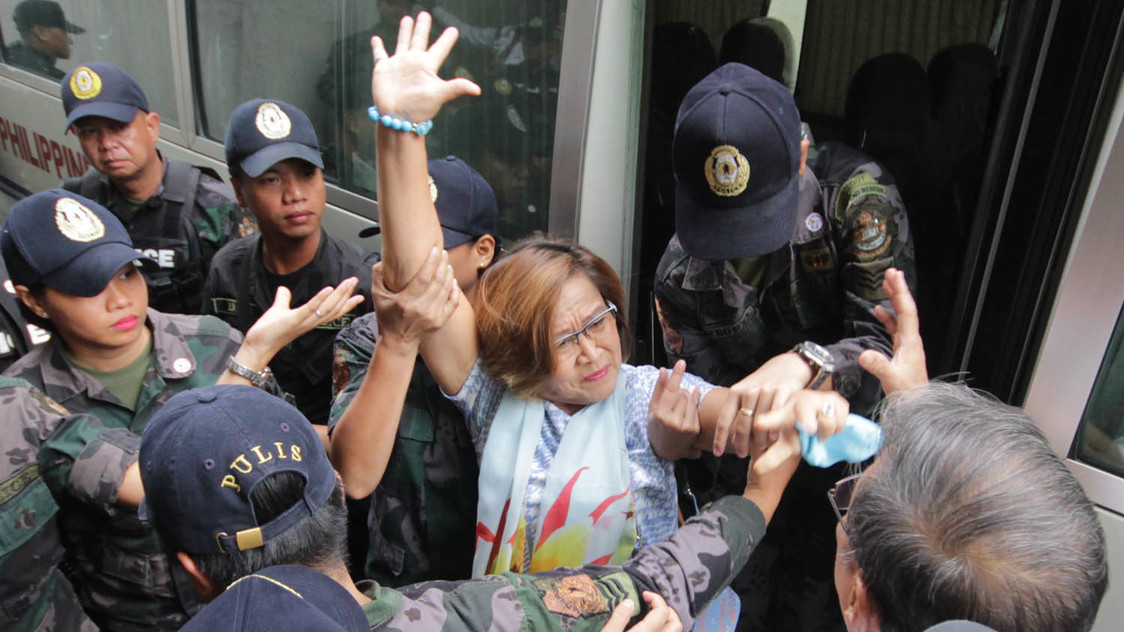
On 9 December 2020 Rappler announced that supporters of embattled Senator Leila de Lima will mark Human Rights Day on Thursday, December 10, with an online film screening titled “CinemaLeila 2020.”
The screenings will include films and documentaries about human rights issues in the Philippines Spearheaded by the Free Leila de Lima Movement, the screening will feature select short films and documentaries about human rights issues in the Philippines.
The line up includes the following titles:
Bad Elements
Miss You ‘Nay
Hayop
I Believe
Marapat Lang
Counter Terror
Paranoia of the Guilty
Dakilang Pagbabago 2020
Sober
Titser Gennie
Selda
Sino si Reina Mae Nasino?
PKNP (Pambili ng Karapatang Pantao)
Pawns
Ili Ili, Tulog Anay
These and other films and documentaries will be streamed on the Facebook page of the Free Leila de Lima Movement and, on De Lima’s official Facebook page.
There will be screenings on Wednesday, December 9 – Human Rights Defenders Day – from 7:30 pm to 9 pm, and on Thursday, December 10, also from 7:30 pm to 9 pm:



 Hans Thoolen on Human Rights Defenders and their awards