Archive for the 'UN' Category

14 major NGOs call for immediate release of Chinese human rights defender Huang Qi

November 6, 2018

Chinese authorities must immediately and unconditionally release citizen journalist and human rights defender Huang Qi, a group of 14 NGOs (and not the least, see below) said on November 5, 2018. Huang Qi (黄琦), the founder and director of 64 Tianwang Human Rights Center, is not receiving adequate medical care in detention and his health has seriously deteriorated, according to his lawyer who visited him on October 23. Huang’s condition is so serious that there is an immediate threat to his life. [see also: https://humanrightsdefenders.blog/2016/12/01/rsfs-press-freedom-prize-2016-goes-to-the-64-tianwang-website-in-china/]

The Chinese government must immediately and unconditionally release Huang, who has been detained solely for the peaceful exercise of his right to freedom of expression, and end its policy of denying prompt medical treatment to prisoners of conscience. Several human rights defenders and ethnic and religious minorities have died in detention in recent years due to a lack of prompt medical treatment, including Liu Xiaobo, Cao Shunli [see: https://humanrightsdefenders.blog/2015/03/27/china-or-the-un-must-ensure-independent-investigation-into-death-of-cao-shunli/], Yang Tongyan, and Tenzin Delek Rinpoche, intensifying fears that Huang Qi might suffer the same fate without urgent intervention.

Authorities have repeatedly rejected applications for release on medical bail despite Huang’s heath condition continuing to deteriorate. He faces charges of “illegally providing state secrets to foreign entities” and “leaking state secrets” due to his work with 64 Tianwang Human Rights Center, which documents and publishes reports on enforced disappearances, trafficking, human rights violations and complaints against government officials. Huang faces the possibility of life imprisonment. His 85-year-old mother has been campaigning for his release, fearing he may die in prison. Last month two of his associates received suspended prison sentences and were released, but authorities have continued to hold Huang. The UN Working Group on Arbitrary Detention issued an opinion in April 2018 that declared Huang’s detention arbitrary, but the Chinese government continues to ignore the Working Group’s recommendation that Huang be released and compensated.

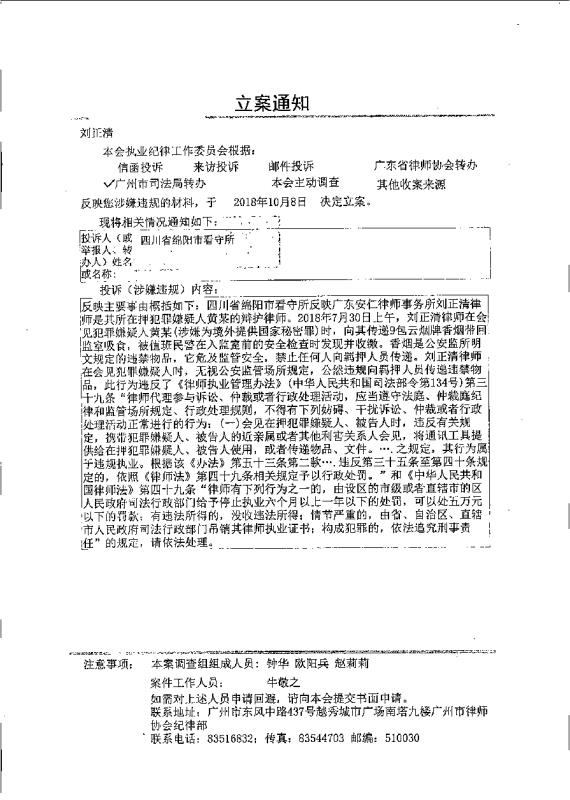
Lawyers representing Huang Qi have also faced retaliation. One of his lawyers, Sui Muqing, was disbarred in February 2018 for defending human rights defenders, such as Huang. [https://www.frontlinedefenders.org/en/case/human-rights-lawyer-sui-muqing-disbarred] Huang’s current lawyer, Liu Zhengqing, received a notice in October that he is under investigation for giving Huang cigarettes during a meeting in July. Liu faces suspension of his law license or a large fine.

http://rsdlmonitor.com/immediately-unconditionally-release-huang-qi/

In this context also relevant is: https://mailchi.mp/ishr/alert-to-the-human-rights-councils-35th-session-31901?e=d1945ebb90

Laureates of 10th Edition of UN Human Rights Prizes just announced

October 26, 2018

On Friday 26 October 2018 the President of the UN General Assembly announced – in a rather summary and informal tweet:

“Today I announced the 2018 winners of the Human Rights Prize. I am proud to recognise the contributions of individuals & organizations that promote & protect human rights Joênia Wapichana Your work is an inspiration to us all “.

This is the tenth time that these awards were since the prize was established in 1968, coinciding this year with the 70th anniversary of the Universal Declaration of Human Rights and the 20th anniversary of the UN Declaration on Human Rights Defenders. For more on this award: http://trueheroesfilms.org/thedigest/awards/united-nations-prizes-in-the-field-of-human-rights

It is probably for that reason that one of the winners is the outstanding Ireland based NGO Front Line Defenders (regularly quoted in the blog, see e.g. https://humanrightsdefenders.blog/tag/front-line-ngo/). The Director Andrew Anderson promptly replies with: “Profoundly honoured that @FrontLineHRD has been named as one of 4 winners of the UN Human Rights Prize. We dedicate this to the courageous & dedicated human rights defenders we work to support.

Three other winners of the prize are

——–

https://www.newstalk.com/Irish-organisation-wins-United-Nations-Human-Rights-Prize

https://www.girlsnotbrides.org/high-court-tanzania-child-marriage/

https://en.wikipedia.org/wiki/Joênia_Wapixana

Burundi outrageously attacks United Nations team

October 26, 2018
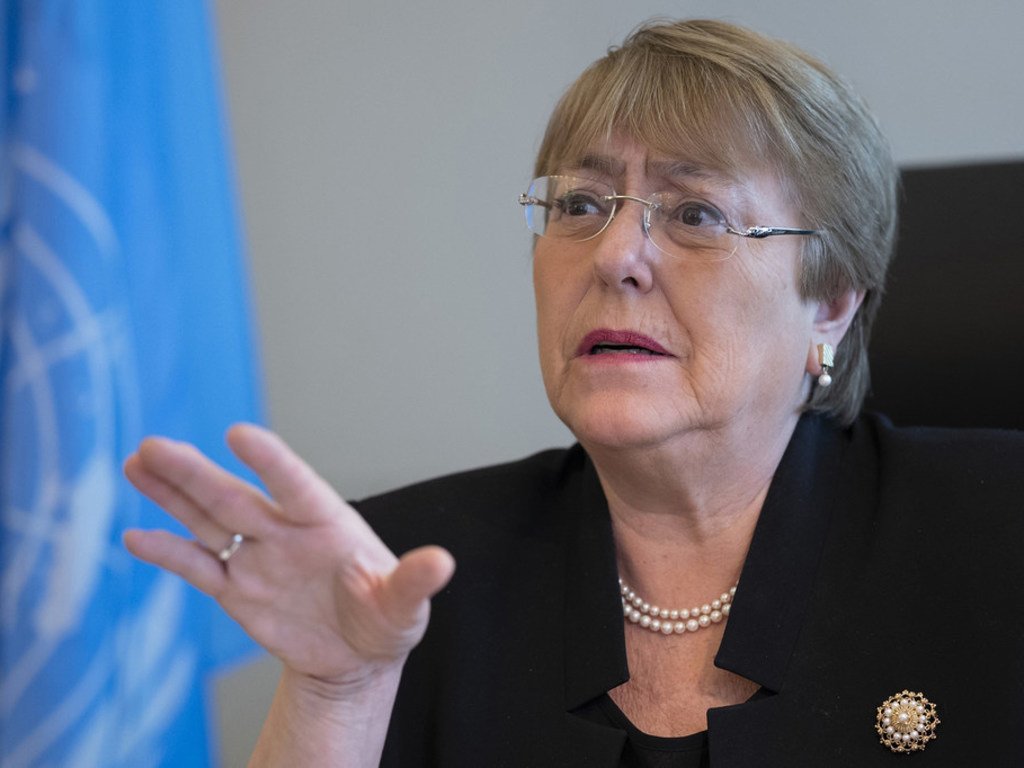
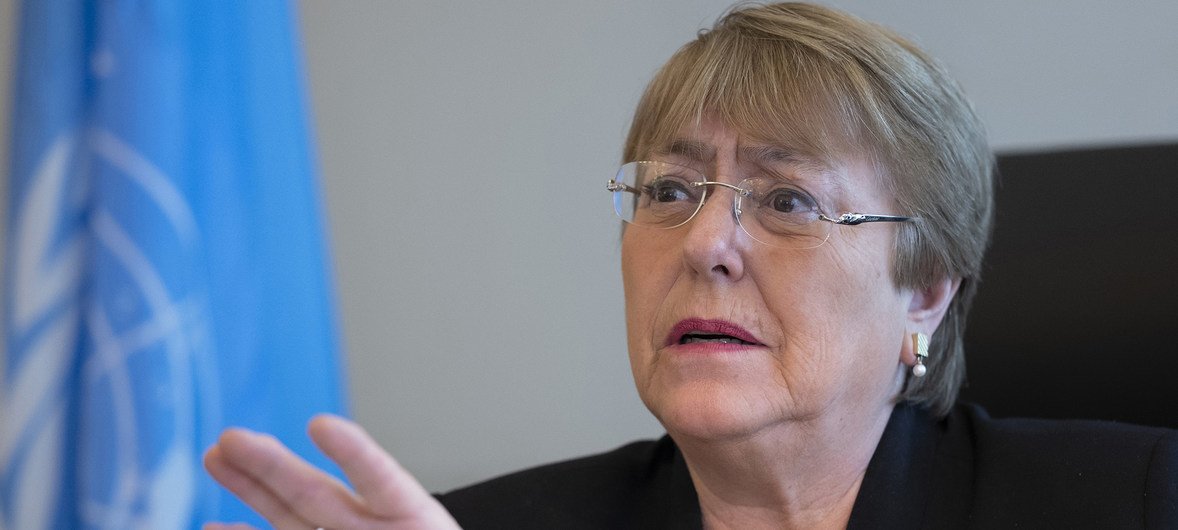
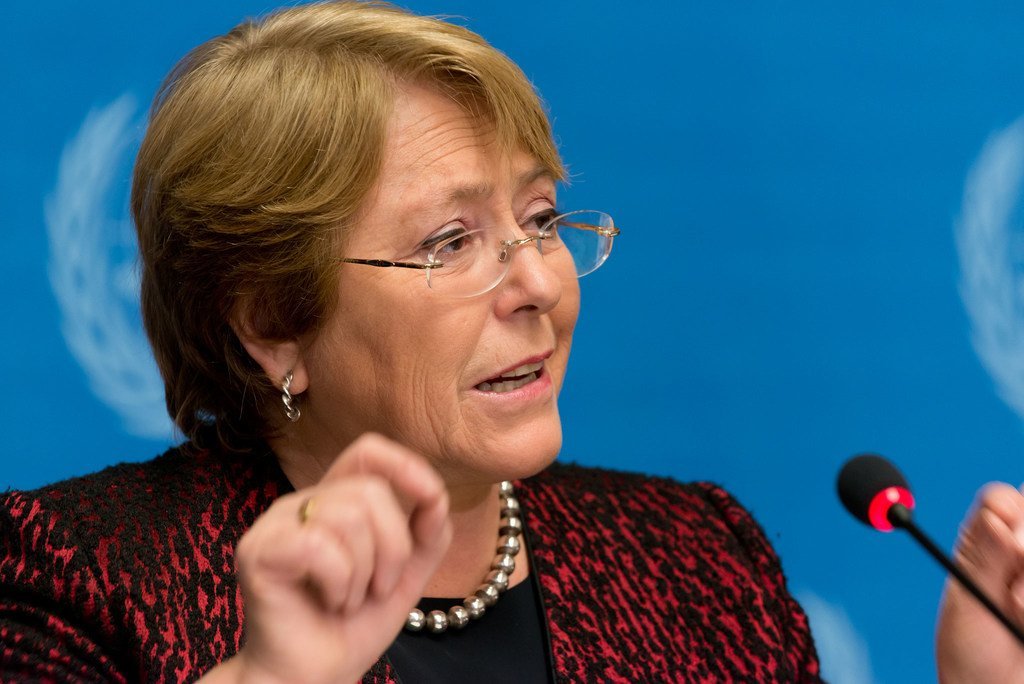
UN High Commissioner for Human Rights Michelle Bachelet. – UN Photo/Jean-Marc Ferre

High Commissioner for Human Rights, Michelle Bachelet, said on Thursday 25 October that comments made by Burundi’s UN ambassador the previous day, were “deeply regrettable in both tone and substance” and demanded that it “immediately retracts” its threat to try and prosecute members of a UN Commission of Inquiry into rights abuses in the central African nation.

She also raised concern over the Burundian Government’s “complete failure” to address the very serious findings of the Commission of Inquiry. On Wednesday, the Ambassador and Permanent Representative of Burundi to the UN, Albert Shingiro, had attacked this independent international inquiry team, threatening to prosecute its members and compared Commission Chair, Doudou Diène, to a participant in the slave trade [SIC].

Amazingly Burundi is also a current member of the Geneva-based Human Rights Council [see: https://humanrightsdefenders.blog/2016/02/08/what-is-burundi-doing-in-the-un-human-rights-council/].

I urge the Government of Burundi to issue an immediate retraction of this inflammatory statement and to offer a full apology to Mr. Diène and the other Commissioners, as well as to the Human Rights Council, which created the Commission, and its President who selected and appointed the three Commissioners,” she said.

Forst in UN New York: ‘more concerned than ever for human rights defenders’

October 25, 2018

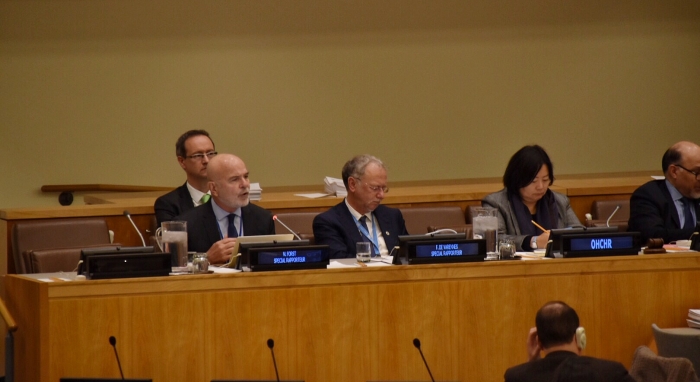
Michel Forst, the UN Special Rapporteur on the situation of human rights defenders, expressed in New York “grave concern” on Tuesday 23 October 2018 regarding the treatment of human rights defenders, as more than 1,000 have been killed between 2015 and 2017. See also the latest report on the situation of human rights defenders issued earlier this year (http://undocs.org/en/A/73/215 – 23 July 2018).

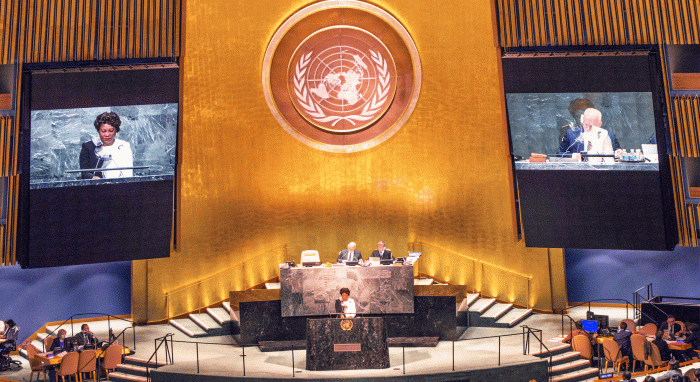
2018 marks the twentieth anniversary of the UN mandate of the Special Rapporteur on Human Rights Defenders. In a speech made to the UN General Assembly, Forst explained how the program’s very existence is in jeopardy but the anniversary presents an “opportunity not only to review the situation of human rights defenders but also to set out a vision for the human rights movement for the coming years.

Forst praised the work that has been done but fears for the safety of human rights defenders. “The Declaration has become a milestone in the human rights project and resources have been provided for the promotion and protection of human rights defenders. However, I am more concerned than ever. … We are facing an alarming panorama for human rights defenders. Their situation is deteriorating all over the world despite States’ obligations to ensure the protection of human rights defenders.”

In honor of the anniversary, a number of events are scheduled in the upcoming months intended to draw attention to the issue of human rights defenders: From October 29-31, the second Human Rights Defenders World Summit will take place in Paris [see: https://humanrightsdefenders.blog/2018/07/24/announcement-of-the-human-rights-defenders-world-summit-in-paris-october-2018/ ]. A UN  “high-level plenary meeting” in New York will take place in mid-December tasked with addressing good practices and new opportunities in the Declaration’s implementation.

Novak Djokovic and Rafael Nadal have a chance to score a point for human rights defenders

October 19, 2018

There may  be still a few people who think that human rights and sports are, or should be, separate worlds but that is pipe dream. [just dee some of these earlier posts: https://humanrightsdefenders.blog/tag/sports-and-politics/].

Now Novak Djokovic and Rafael Nadal have been urged to use an upcoming exhibition match in Saudi Arabia as an opportunity to lend their support to human rights causes. The world’s top-two ranked players will square off against one another at Jeddah’s King Abdullah Sports City on 22 December 2018.

While the world is asking itself literally whether Saudi Arabia will get away with the murder of dissident journalist.Jamal Khashoggi, the two tennis players have both said they’re looking forward to visiting the country for the first time – with both men set to pocket more than $1-million for the match.

Amnesty International says the pair’s visit provides a perfect opportunity for the global stars to lend their support to an important cause. “It’s not for us to say which countries should and shouldn’t be hosting sporting competitions, but it’s also clear that countries like Saudi Arabia are well aware of the potential for sport to subtly ‘rebrand’ a country,” Allan Hogarth of Amnesty International told the Times.  “Tweeting support for Saudi Arabia’s brave human rights defenders would be a start.”

On it is not just Khashoggi. For the second time since July, UN human rights experts are calling on Saudi Arabia to “immediately and unconditionally” release all women human rights defenders, including six imprisoned on charges relating to their peaceful defence of human rights. The detained have been charged for being involved in pro-democracy demonstrations, and previously campaigning for the right of women to vote and drive. In late June 2018, a long-standing ban on women driving in Saudi Arabia, was lifted by royal decree, UN News reports.

In a statement on October 12, the group of nine independent experts has condemned the actions of the Saudi authorities in continuing to detain the women rights defenders, “in the strongest possible terms,” calling for their “immediate and unconditional” release.

A group of those indicted – Samar Badawi, Nassima Al-Sadah, Nouf Abdulaziz, Mayya Al-Zahrani, and Hatoon Al-Fassi – are being held in detention, without any channels of communication. The five were particularly active in demonstrations for women’s rights. The group of women also include Israa Al-Ghomghan, who faces possible execution despite being denied representation during her trial, and is being tried in Riyadh’s Specialized Criminal Court, an entity set up for terrorism-related cases.


https://au.sports.yahoo.com/djokovic-nadal-issued-plea-controversial-clash-230456949.html?guccounter=1

https://socialistworker.org/2018/10/15/will-the-saudi-regime-get-away-with-murder

The United Nations human rights office (OHCHR) on July 31, 2018 called on Saudi Arabia to “unconditionally” release all those being held.

https://www.indepthnews.net/index.php/the-world/middle-east-north-africa/2217-un-urges-saudi-arabia-to-release-all-incarcerated-women-human-rights-defenders


Michelle Bachelet, new UN High Commissioner for Human Rights, gives major interview

October 18, 2018

In August 2018, Michelle Bachelet, twice-elected President of Chile was confirmed as the new UN High Commissioner for Human Rights, replacing Zeid Ra’ad Al Hussein. [see e.g.: https://humanrightsdefenders.blog/2018/08/22/change-of-high-commissioner-for-human-rights-at-the-un-optimism-warranted/]. Minutes after she was approved, UN chief Antonio Guterres told reporters he was “delighted” by the news of her official appointment, describing Ms. Bachelet, a “pioneer”, has been “as formidable a figure in her native Chile, as she has at the United Nations”. Shortly after assuming office in early September, Ms. Bachelet was in New York for the General Assembly’s high-level general debate. She spoke then with UN News on the rights situation around the world, the priorities for her tenure, and how can rights be better protected. It was published on 17 October 2018.

Bearing in mind her own personal experience of being detained and tortured in Chile, the interview started with a question on how she overcame the hardships she suffered under the military dictatorship of Augusto Pinochet.

UN High Commissioner for Human Rights Michelle Bachelet (file photo) ILO/M. Creuset

Michelle Bachelet: ….there was a period of my life that I really hated what was happening – I had so much rage. But afterwards, I started thinking, “you know what, I do not want this to happen anymore in Chile or in any other country of the world. So, what can I do to contribute, that Chile will be a peaceful, democratic society?” So, I sort of put all my energies on that, and that is why I started working on defence issues to be able to speak to the militaries, because I never thought I was going to be Minister of the Defence or President of the Republic.,,I would say it permitted me to understand that, first of all, lessons learned, and if you really want some objective, and in a possible, constructive way, it can be done.

As the High Commissioner, you have come in a time when human rights are under serious attack globally. What your priorities are going to be?

Michelle Bachelet: …. first of all, of course, my priorities are to do what my mandate tells me to do, to be the voice of the voiceless. But also to engage with governments so they respect human rights, protect people from rights violations, and promote human rights.

….But one of my particular priorities from the Secretary-General is prevention. I am not saying I will succeed on that, maybe not. But I will try to design a system where we can have early warning signs and try to think on early action. …..

Right now, some countries do not want to cooperate with OHCHR or question the worth of the Human Rights Council. How do you plan on bringing everyone together?

Michelle Bachelet: In my opening statement, I spoke about, that consensus could be possible, that we should not lose ourselves in sterile disputes. Of course human rights is a very political thing and you see that here in the General Assembly, in the Security Council, so it is not in the Human Rights Council, by itself.

I mean, countries have their visions, their interests, and sometimes, they are not interested in some issues. But what I have been doing is meeting, not only with the whole council, but with groups of countries in Geneva such as the Group of Latin American and Caribbean countries, the African countries, the Arab countries, the Asia-Pacific countries, the West European and Other countries, the Eastern European countries, speaking but also listening. Because, sometimes, you know what you have to do, but the way you do it can be more successful than others. Sometimes you need to speak out. Sometimes you need to strategize in terms of saying, look, it will work better if we do diplomatic prevention, if we start engaging the government. But today the world is complicated, and it is very polarized in some issues………

This year is the 70th anniversary of the Universal Declaration of Human Rights. What progress do you think has been done in the past 70 years?

Michelle Bachelet: …..Think of 1948: how many countries allowed women to vote, for example; how many respected of freedom of speech. If you think of the different aspects of the human rights, even in more complete things that usually people do not think of as human rights, but they are human rights: on health, on education, on sanitation, on housing. The world today is better than 70 years ago. But having said that, there are a lot of threats, there are a lot of threats for multilateralism, there is a lot of threat and pushback on human rights. …We see a pushback, we see that in some documents, human rights is not mentioned, and when you ask, they say, “it is mainstream.” And if it is mainstreamed, it is fantastic, because everybody’s doing their job. But if it is invisible, mainstream, that is not a good thing. On the other hand we see human rights defenders and civil society having their space shrink. They have been under attack. Journalists have been killed.

So there is a lot of challenges. The only thing I can say is that the struggle for human rights probably will never end, because it is a process where you advance, but there will be always people who want to push back, and that could be governments or that could be armed groups. The task of the UN is to ensure and promote the whole human rights system. And I will do what I have to do about it, but it cannot be only the task of the Office of the High Commissioner for Human Rights, it has to be the task of the whole UN system….

I would like to ask you about protecting those who protect: human rights defenders are often targets of abuse and violence. How can they be better protected?

Michelle Bachelet: Well, the curious thing is that, as we are celebrating the 70th year of the Universal Declaration of Human Rights, we are celebrating 20 years of the Declaration on the Protection of Human Rights Defenders. And in November 2017, a resolution on the protection of human rights defenders was approved unanimously by the General Assembly.  No country voted against it. So, the issue is: on paper things can look very good, but reality is another thing. I think we have the task of making people accountable for the things they have approved. Second, to monitor implementation of those agreements that everybody has made, and engage governments, and in the cases where things are happening, holding them accountable and responsible for the killings, the torture, the detentions of many human rights defenders.

You have been a very important defender of women’s rights. How is that going to continue, as the UN High Commissioner for Human Rights?

Michelle Bachelet: The thing is that, people tend to see OHCHR as only concerned with civil and political rights, and that is not it. The Universal Declaration of Human Rights clearly states the rights for migrants, for children, for women; right to health, to education. It is very comprehensive. Even though I am not intending to replace any other agency, I always speak about gender issues, gender empowerment. This morning I was speaking about women who are women’s human rights defenders, who have been attacked, threatened with rape.

I will be always raising the voice for women, trying to support their capacities, and building partnership with UN Women, as we have spoken with Henrietta Fore, the head of UNICEF to see how we can create synergies. …..

One of the most pressing issues for the entire world is climate change. How are human rights linked to the environment?

Michelle Bachelet: ..There are so many concrete consequences that will be effects in people’s lives and their rights. That is why we also believe that working strongly to combat climate change is a very essential task, including of the High Commissioner. I think also that we need to be more part of the 2030 Agenda for Sustainable Development and how we support the Sustainable Development Goals (SDGs). ..

And climate change is of huge importance, because I have seen places where there is no more water and people who depend agriculture, mainly women, and now have to think how they get their incomes. With climate change, we have seen, and scientists tell us … about worsening natural disasters and extreme weather, forest fires. And all of these will have a lot of consequences for the life of people. It is very important to work very closely on that, too. I completely agree with the Secretary-General when said that this is one of the major, major challenges that we have.

Full interview at: Human Rights

 India: attacks on human rights defenders abound under Unlawful Activities Prevention Act

October 7, 2018

I recently wrote about India’s shameful place in the list of countries that practice reprisals [https://humanrightsdefenders.blog/2018/09/22/attack-on-human-rights-defenders-in-india-are-an-attack-on-the-very-idea-of-india/]. On 5 October 2018 this was followed by a joint statement by a large number of UN experts (Mr. Michel Forst, Special Rapporteur on the situation of human rights defenders; Ms. Fionnuala D. Ní Aoláin, Special Rapporteur on the promotion and protection of human rights and fundamental freedoms while countering terrorism; Mr. Fernand de Varennes, Special Rapporteur on minority issues; Mr. David Kaye, Special Rapporteur on the promotion and protection of the right to freedom of opinion and expression; Ms. Ivana Radacic (Chair), Ms. Meskerem Geset Techane (Vice Chair), Ms. Elisabeth Broderick, Ms. Alda Facio, Ms. Melissa Upreti, Working Group on the issue of discrimination against women in law and in practice; Ms. E. Tendayi Achiume, Special Rapporteur on contemporary forms of racism, racial discrimination, xenophobia and related intolerance; Mr. Seong-Phil Hong (Chair), Ms. Leigh Toomy (Vice-Chair), Ms. Elina Steinerte (Vice-Chair), Mr. José Guevara, Mr. Setondji Adjovi, Working group on arbitrary detention) saying that India uses terrorism charges as a pretext to silence human rights defenders

The UN human rights experts did so in the context of terrorism charges – under the Unlawful Activities Prevention Act (UAPA) – laid against 10 human rights defenders working with India’s poorest and most marginalised communities, including the Dalits, and urged authorities to ensure their cases are promptly heard in line with international law. All were arrested in June in connection with investigations into a public meeting organised a day before the 200th anniversary of the commemoration of a battle at Bhima-Koregaon, an important cultural event and a symbol of Dalit empowerment. Police subsequently claimed that the human rights defenders had links with ‘unlawful organisations’. “We are concerned that terrorism charges brought in connection with the commemoration of Bhima-Koregaon are being used to silence human rights defenders who promote and protect the rights of India’s Dalit, indigenous, and tribal communities,” the UN experts said. “We are very concerned about the charges against the human rights defenders and the continuing detention of nine of them,” the UN experts said. “All have been active in peacefully defending human rights, including those of marginalised and minority communities, political prisoners, and women, and their arrests appear to be directly related to their human rights work.


In June2018 Front Line Defenders listed as some of these:


Surendra Gadling <https://www.frontlinedefenders.org/en/profile/surendra-gadling> a human rights lawyer and General Secretary of the Indian Association of Peoples’ Lawyers (IAPL).

Rona Wilson <https://www.frontlinedefenders.org/en/profile/rona-wilson&gt;  is a member of the Committee for the Release of Political Prisoners (CRPP), which has campaigned against the Unlawful Activities (Prevention) Act and other repressive laws.

Sudhir Dhawale <https://www.frontlinedefenders.org/en/profile/sudhir-dhawale&gt;  is a Dalit rights activist and the editor of the Marathi magazine ‘Vidrohi’.

Shoma Sen <https://www.frontlinedefenders.org/en/profile/shoma-sen&gt;  is a professor at Nagpur University and a long time Dalit and women’s rights activist.

Mahesh Raut  <https://www.frontlinedefenders.org/en/profile/mahesh-raut&gt; is a land rights activist working with Gram Sabhas in the mining areas of Gadhchiroli.

On 5 July 2018, Front Line reported that human rights lawyer Advocate Sudha Bhardwaj released a statement refuting the false allegations and defamatory statements levelled against her by Arnab Goswami, news anchor and managing director of Republic TV. In a program that aired on 4 July 2018, Arnab Goswami alleged that the human rights defender was linked to Maoists. (https://www.frontlinedefenders.org/en/profile/sudha-bhardwaj). Sudha Bhardwaj firmly denied that the letter was written by her, and refuted the false allegations as defamatory and hurtful. She also expressed incredulity at the fact that the source of the letter had not been revealed, and that the letter had surfaced at the studio. She believes that the malicious and fabricated attack on her is a result of a press conference she had addressed in Delhi on 6 June 2018, condemning the arrest of Advocate Surendra Gadling. Front Line adds that This smear campaign comes as a part of an ongoing crackdown against human rights lawyers in India, especially those who work with Adivasi people and Dalits. Front Line Defenders condemns the smear campaign against human rights defender Sudha Bhardwaj, which it considers to be in retaliation to her legitimate and peaceful human rights work. Front Line Defenders expresses its concern for the security of Sudha Bhardwaj, particularly as the inflammatory allegations may motivate judicial harassment or other forms of retaliation.  

—–

https://www.jurist.org/news/2018/10/un-experts-decry-india-terrorism-charges-against-human-rights-defenders/

https://www.ohchr.org/EN/NewsEvents/Pages/DisplayNews.aspx?NewsID=23686&LangID=E

https://www.frontlinedefenders.org


Third Committee of UN General Assembly 2018 will consider human rights issues

October 5, 2018
With the last session of the the Human Rights Council having been considered fruitful by civil society [https://humanrightsdefenders.blog/2018/09/29/in-spite-of-or-because-of-the-us-absence-the-39th-human-rights-council-considered-a-relative-success/], the focus is now on New York. This week, the UN General Assembly’s principal human rights committee – the Third Committee – kicked off its deliberations (Tuesday 2 October, running through to 21 November 2018).  This is a key moment in the year for UN member States to take action in support of the respect of human rights globally, through the negotiation and adoption of resolutions focused on thematic or country situations.   The ISHR provides the following insight:

Over 50 Special Rapporteurs, independent experts, chairs of working groups and treaty bodies will present findings and recommendations to the Committee, and engage in interactive dialogues with member States.  These reports and exchanges should inform the focus and shape of negotiated resolutions. 

The Committee will consider over 60 resolutions, this year focusing on a range of issues from extrajudicial, summary or arbitrary executions, to the rights of indigenous peoples, and the human rights situation in Syria.  Once adopted, resolutions will pass to the UN General Assembly plenary for confirmation in early December. 

While opportunities for civil society to interact with the Third Committee are more limited than those available at the Human Rights Council, NGOs can attend formal sessions, follow them on  UN Web TV and engage informally with individual member States.  For more on the Third Committee see here.  

ISHR will be working to see the inclusion of positive references to human rights defenders and civil society space, in Third Committee resolutions.  We will be monitoring the Third Committee closely, as well as the General Assembly plenary meetings, and reporting on key developments. Follow us on Facebook, Twitter and Instagram at @ISHRglobal and at #UNGA73for the latest updates.

Also, note that the ISHR will be hosting two side events during the Third Committee session. [see also: https://humanrightsdefenders.blog/2017/07/09/civil-society-participation-at-the-un-subject-of-ishr-event-on-17-july/]

The first event will be about implementing commitments on human rights defenders, and it will be held on Tuesday 23 October at 1:15 p.m-2.45pm. The location of the event is to be confirmed. See here for updates.

ISHR’s second event will focus on treaty bodies and the importance of ensuring transparent elections. ISHR aims to facilitate dialogue about ways to improve treaty bodies and election processes moving forward. Time and date for this event to be confirmed. See here for updates.

http://www.ishr.ch/news/alert-ga-73rd-session-agenda-third-committee

No naming and shaming on reprisals at 39th Human Right Council session

October 5, 2018

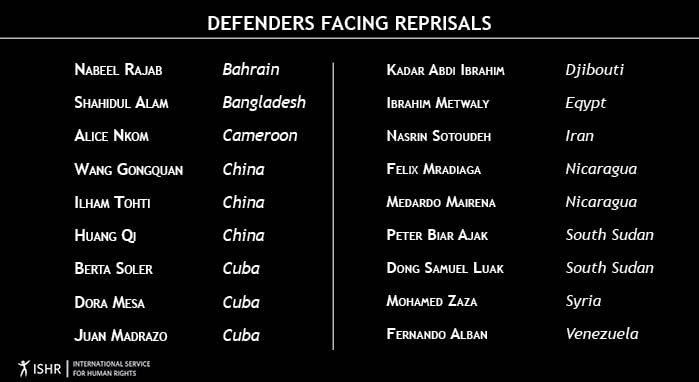
On my ‘favorite’ topic of reprisals [see e.g.: https://humanrightsdefenders.blog/tag/reprisals/ ] the ISHR reported that for the first time, the Human Rights Council had a chance to have a dialogue on the Secretary-General’s annual report on reprisals on 20 September 2018. Civil society had hoped States would seize this opportunity to denounce States carrying out reprisals against defenders engaging with the UN. Regrettably only one State, Germany, made explicit reference to a case of reprisal in the report. ‘We welcome in particular Germany’s intervention in the dialogue, citing the case of Egyptian lawyer Ibrahim Metwally, detained since October 2017 by the Egyptian authorities’, said Salma El Hosseiny, ISHR Human Rights Council Advocate. ‘This is precisely what we need more of—States having the courage and conviction to stand up for defenders and call out countries that attack and intimidate them. What we see now is defenders dissuaded from engaging because the cost is too high. What we need is for States to turn away from repression and attacks, because the cost to them is too high’.

The senior official on reprisals, Andrew Gilmour [https://humanrightsdefenders.blog/tag/andrew-gilmour/], presented the Secretary-General’s annual report on reprisals during the first ever interactive dialogue with the Human Rights Council. The report catalogues 45 new cases of reprisals, ranging from travel bans and smear campaigns to arbitrary arrests and detention, inhuman treatment, torture, and killing. The ASG made it clear in his presentation that reported cases are just the ‘tip of the iceberg’ and spoke of three significant trends:

(1) the systematic denigration of human rights defenders and civil society organizations as “terrorists”;

(2) reprisals often being disguised as legal, political and administrative measures; and

(3) the use of accreditation and security procedures to hinder people from speaking out at UN headquarters and elsewhere.

ISHR delivered a statement during the session citing cases of reprisals against Chinese defenders not included in the report—Wang Qiaoling, Li Wenzu, Cao Shunli, and Uyghur activist Dolkun Isa—and calling for systematic follow-up by the Council on cases in the report.

We are especially concerned, once again, about the high number of Council Members or candidates for Council membership cited in the report, including: Bahrain, Burundi, Cameroon, China, Cuba, Democratic Republic of Congo, Egypt, Hungary, India, Iraq, Japan, Kyrgyzstan, Mexico, Pakistan, Philippines, Rwanda, Saudi Arabia, United Arab Emirates, and Venezuela,’ said El Hosseiny.

Half of the States cited in the report intervened during the dialogue to deny the allegations against them. While a significant number of States engaging in the dialogue supported the mandate to varying degrees and asked the ASG what could be taken to strengthen it, another group questioned the ASG’s methodology. Still others firmly opposed the work of the ASG on reprisals, including China and Cuba. China said it ‘regrets and objects’ to the report and the mechanism, and its use of ‘unproven information’, which it deems an interference with its sovereignty.

A side event organised by ISHR following the dialogue highlighted the urgent need to improve both the physical and digital security of defenders at risk of reprisals, and for States and the OHCHR to take a stronger position on this issue at a time when powerful States are threatening the UN system and its core values. ISHR in particular noted its disappointment with the low number of States in the dialogue that took due note of the allegations in the report, as opposed to attacking the methodology of the report and the reliability of the information.

Watch the statement here: 

Read ISHR’s full statement to the Council here.

https://www.ishr.ch/news/hrc39-l-states-largely-decline-cite-specific-cases-during-councils-first-discussion-reprisals

In spite of or because of the US’ absence, the 39th Human Rights Council considered a relative success

September 29, 2018

Civil society organisations welcomed significant outcomes of the Human Rights Council’s 39th session, including the creation of independent investigative mechanism on Myanmar, the renewal of the mandate of the Group of Eminent Experts on Yemen and the Commission of Inquiry on Burundi, and a dedicated space on the Council’s agenda in 2019 to discuss the human rights situation in Venezuela. [see alsohttps://humanrightsdefenders.blog/2018/09/08/many-hrd-issues-at-the-39th-session-of-the-un-human-rights-council/]

In a joint statement, several NGOs (ISHR The African Centre for Democracy and Human Rights Studies (ACDHRS), Amnesty International, Article 19, Center for Reproductive Rights. CIVICUS, DefendDefenders, FIDH, Forum Asia, Human Rights House Foundation (HRHF), Human Rights Watch, International Commission of Jurists) welcomed the Council’s adoption of landmark resolutions on several country situations:

On Myanmar, the creation of the independent investigative mechanism is an important step towards accountability for the horrific crimes committed in Myanmar, as elaborated in the Fact Finding Mission’s report to this session. The overwhelming support for the resolution, notwithstanding China’s shameful blocking of consensus, was a clear message to victims and survivors that the international community stands with them in their fight for justice. 

On Yemen, the Council demonstrated that principled action is possible, and has sent a strong message to victims of human rights violations in Yemen that accountability is a priority for the international community, by voting in favor of renewing the mandate of the Group of Eminent Experts to continue international investigations into violations committed by all parties to the conflict. 

Furthermore, the leadership by a group of States, including Latin American countries, on the landmark resolution on Venezuela, was as an important step for the Council applying objective criteria to address country situations that warrant its attention. The resolution, adopted with support from all regions, sends a strong message of support to the Venezuelan people. By opening up a space for dialogue at the Council, the resolution brings scrutiny to the tragic human rights and humanitarian crisis unfolding in the country.  

The renewal of the mandate of the Commission of Inquiry (CoI) on Burundi will enable it to continue its critical investigation and work towards accountability. However, the Council failed to respond more strongly to Burundi’s record of non-cooperation and attacks against the UN human rights system. [see alsohttps://humanrightsdefenders.blog/2016/10/26/enough-is-enough-ngos-call-for-burundi-suspension-from-un-human-rights-council/]

The Council also adopted a resolution on Syria, which among other things condemns all violations and abuses of international human rights law and all violations of international humanitarian law committed by all parties to the conflict.

However, on other country situations including China, Sudan, Cambodia and the Philippines, the Council failed to take appropriate action. 

On Sudan, the Council adopted a weak resolution that envisions an end to the Independent Expert’s mandate once an OHCHR office is set up; a “deal” Sudan has already indicated it does not feel bound by, and which is an abdication of the Council’s responsibility to human rights victims in Sudan while grave violations are ongoing. At a minimum, States should ensure the planned country office monitors and publicly reports on the human rights situation across Sudan, and that the High Commissioner is mandated to report to the Council on the Office’s findings.  

The Council failed to take action on the Philippines, in spite of the need to establish independent international and national investigations into extrajudicial killings in the government’s ‘war on drugs’, and to monitor and respond to the government’s moves toward authoritarianism. 

In addition, the Council continued with its weak response to the deepening human rights and the rule of law crisis in Cambodia, failing to change its approach even when faced with clear findings by the Special Rapporteur demonstrating that the exclusive focus on technical assistance and capacity building in the country, is failing.

Many States, NGOs and the High Commissioner, raised concerns about China’s human rights record, specifically noting serious violations of the rights of Uyghurs and other predominantly Muslim minorities in Xinjiang province. It is regrettable that States did not make a concrete and collective call for action by China to cease the internment of estimates ranging up to 1 million individuals from these communities. 

On thematic resolutions, the Council adopted by consensus a resolution on equal participation in political and public affairs, as well as a resolution on the safety of journalists. The latter sets out a clear roadmap of practical actions to end impunity for attacks.  

The Council also adopted by consensus a resolution on preventable maternal mortality and morbidity and human rights in humanitarian settings. Women and girls affected by conflict have been denied accountability for too long. The implementation of this resolution will ensure that their rights, including their sexual and reproductive health and rights, are respected, protected and fulfilled. 

Finally, the Council’s first interactive dialogue on acts of reprisals and intimidation was an important step to ensure accountability for this shameful practice. More States need to have the courage and conviction to stand up for human rights defenders and call out countries that attack and intimidate them. [https://humanrightsdefenders.blog/tag/reprisals/]

Read the full statement here.