Archive for the 'UN' Category

Mary Lawlor condemns ‘criminalization’ of those saving lives in the Mediterranean

October 9, 2020

Carola Rackete, the former captain of the rescue vessel Sea-Watch 3, and the ‘Iuventa 10’ crew members are human rights defenders and not criminals,” said Mary Lawlor, the UN Special Rapporteur on the situation of human rights defenders on 8 October 2020.

“I regret that the criminal proceedings against them are still open and they continue to face stigmatization in connection with their human rights work protecting the human rights of migrants and asylum seekers at risk in the Mediterranean Sea.

In September 2016, a criminal investigation was opened against some crew members of the Iuventa rescue ship. Charges against them included aiding and abetting in the commission of a crime of illegal immigration, an offence that carries a jail term of between five and 20 years, and a fine of 15,000 euros. On 18 June 2019, a motion for the dismissal of the preliminary criminal investigation against the ‘Iuventa 10’ crew members was filed, but a formal decision is still pending. See also: https://humanrightsdefenders.blog/2020/07/31/absurd-prosecution-of-the-crew-of-the-ship-iuventa-continues-in-italy/

Ms. Rackete was arrested by Italian authorities on 29 June 2019 for docking her rescue ship, with 53 migrants on board, without permission. At the beginning of this year, acting upon appeal, the Italian Supreme Court ruled that she should not have been arrested. Despite this, Ms. Rackete continues to face charges, including aiding and abetting in the commission of a crime of illegal immigration. She risks up to 20 years of imprisonment , and various fines of up to 50,000 euros.

Since 2014, at least 16,000 migrants have lost their lives in the Mediterranean, according to the IOM’s ‘Missing Migrants’ project. “The Italian Government must publicly recognise the important role of human rights defenders in protecting the right to life of migrants and asylum seekers at risk in the Mediterranean and must end the criminalization of those who defend their human rights,” Lawlor said.

The expert’s call has been endorsed by: Independent Expert on human rights and international solidarity, Mr. Obiora Okafor, Felipe González Morales, Special Rapporteur on the human rights of migrants; Dubravka Šimonovic, Special Rapporteur on violence against women, its causes and consequences; Elizabeth Broderick, Chair-Rapporteur of the Working Group on discrimination against women and girls.

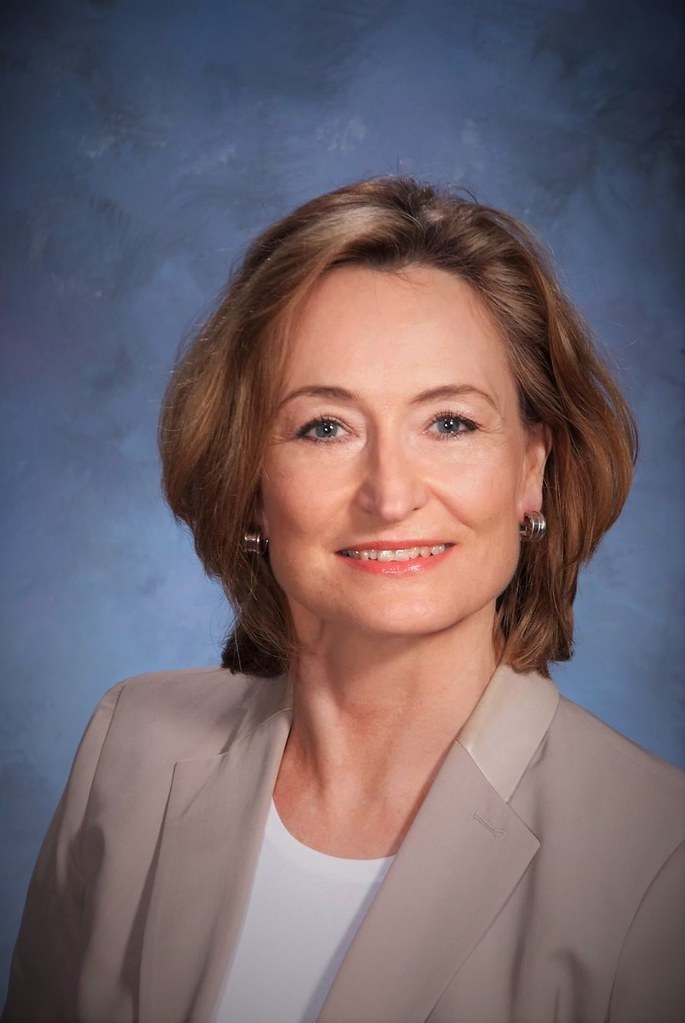
Ms Mary Lawlor, (Ireland) is the Special Rapporteur on the situation of human rights defenders. See: https://humanrightsdefenders.blog/2020/05/07/mary-lawlor-takes-up-post-as-un-special-rapporteur-for-human-rights-defenders/

The same day Human Rights Watch came out with an initial assessment by civil society of the legislative and non-legislative proposals contained in European Commission’s Pact on Migration and Asylum.: The commitment to a more human approach to protection and the emphasis on the fact that migration is needed and positive for Europe with which the European Commission launched the Pact on Migration and Asylum is welcome. However, this rhetoric is reflected only sparsely in the related proposals. Instead of breaking with the fallacies of the EU’s previous approach and offering a fresh start, the Pact risks exacerbating the focus on externalisation, deterrence, containment and return.


https://www.hrw.org/news/2020/10/08/pact-migration-and-asylum

UN rights chief urges Iran to release jailed Sotoudeh and other human rights defenders, citing COVID-19 risk

October 7, 2020
Home

According to the UN human rights office (OHCHR), conditions in Iranian prisons, suffering from chronic overcrowding and poor sanitary conditions, have worsened during the pandemic. Shortage of water and inadequate protective equipment, testing, isolation and treatment have led to a spread of coronavirus among detainees, reportedly resulting in a number of deaths. 

Michelle Bachelet, UN High Commissioner for Human Rights, underlined the responsibility of States to ensure health and well-being of all individuals under their care, including those in prisons. 

Under international human rights law, States are responsible for the well-being, as well as the physical and mental health, of everyone in their care, including everyone deprived of their liberty,” she said in a news release, on Tuesday 6 October 2020.  

People detained solely for their political views or other forms of activism in support of human rights should not be imprisoned at all, and such prisoners, should certainly not be treated more harshly or placed at greater risk,” she added. 

In February, the Iranian judiciary issued directives on temporary releases to reduce the prison population and avoid further spread of the virus, benefiting some 120,000 inmates, according to official figures, said OHCHR, adding that the measures appear to have been suspended, and prisoners have been required to return in large numbers.  

In addition, people sentenced to more than five years in prison for “national security” offences were excluded from the schemes. 

As a result, most of those who may have been arbitrarily detained – including human rights defenders, lawyers, dual and foreign nationals, conservationists, and others deprived of their liberty for expressing their views or exercising other rights – have been placed at a heightened risk of contracting the virus, added the Office. 

“I am disturbed to see how measures designed to mitigate the spread of COVID-19 have been used in a discriminatory way against this specific group of prisoners,” said High Commissioner Bachelet. 

One of the most emblematic cases is that of prominent lawyer and women’s rights defender, Nasrin Sotoudeh, who was given a combined prison sentence of over 30 years on charges related to her human rights work. Her life is believed to be at considerable risk as she suffers from a heart condition, and has been weakened by a long hunger strike.  

Once again, I urge the authorities to immediately release her, and grant her the possibility of recuperating at home before undergoing the medical treatment of her choice,” said Ms. Bachelet 

Over the years, she has been a persistent and courageous advocate for the rights of her fellow Iranians, and it is time for the Government to cease violating her own rights because of the efforts she has made on behalf of others.”  [see also: https://humanrightsdefenders.blog/2020/10/01/four-well-known-human-rights-defenders-are-the-2020-right-livelihood-laureates/]

The High Commissioner also voiced concerns over persistent and systematic targeting of individuals who express any dissenting view, and the criminalization of the exercise of fundamental rights. 

“It is disheartening to see the use of the criminal justice system as a tool to silence civil society,” said Ms. Bachelet. 

https://news.un.org/en/story/2020/10/1074722

UN SG Antonio Guterres rebukes Polisario for human rights violations

October 5, 2020

In a strong worded report, Guterres recalled that the Office of the High Commissioner for Human Rights (OHCHR) has pointed out in multiple reports this year to the surge of “harassment, arrests and ill-treatment of bloggers, doctors and nurses” by the Polisario militias.

The Polisario used the Covid-19 pandemic to crackdown on dissent in a new wave of repression to silence critical bloggers, journalists, activists and anyone who challenges the authoritarian status quo in the camps.

Repression did not spare the medical staff and human rights activists in the Camps who exposed the cover up by the Polisario of the real scale of Covid-19 outbreak.

Last May, the UN Working Group on Arbitrary Detention said in a response to a complaint submitted by polisario opponent El Fadel Breica against the Algerian State, following his abduction by the polisario, that Algeria is responsible for the violations committed in its territory.

Similarly, the Human Rights Committee reaffirmed in its findings, in March 2020, the full responsibility of Algeria in the abduction and enforced disappearance of the Polisario dissident, Khalil Ahmed, whose case was raised in the Secretary-General’s report of 2019.

International rights watchdogs, including Human Rights Watch and Amnesty International, have on multiple reports drew attention to the plight of the population held against their will in Tindouf where the Algerian state has relegated the destiny of thousands of Sahraouis to the mercy of a separatist militia that trades in their suffering.

From humanitarian aid embezzlement by the Polisario officials to slavery and forced disappearances in the Tindouf camps, Algeria has abdicated its responsibilities and forsaken a civilian population to the mercy of a separatist militia.

The UN Security Council has repeatedly called on Algeria to uphold its responsibility and allow a census of the population held in the camps to enable them to enjoy full refugee rights including having the choice to return to their homeland Morocco.

https://northafricapost.com/44289-antonio-guterres-rebukes-polisario-for-human-rights-violations.html

Nansen Refugee Award 2020 to Maye Vergara Pérez of Colombia

October 2, 2020

Committed to a better future, Maye is a fierce advocate for children and teens who have endured sexual exploitation.

UNHCR Nansen Refugee Award Laureate 2020, Mayerlin Vergara Perez, pictured on the beach in Riohacha, La Guajira, Colombia.  © UNHCR/Nicolo Filippo Rosso

The 2020 laureate of the Nansen Refugee Award is a Colombian educator who has spent more than 20 years rescuing sexually exploited and trafficked children, many of them refugees. Mayerlín Vergara Pérez, Maye, has dedicated her life to defending children. As the Caribbean Regional Coordinator for the Renacer Foundation she has devoted more than two decades to helping the Colombian non-profit reach its goal of eradicating sexual exploitation and abuse of children and adolescents. Founded 32 years ago, the organisation has assisted over 22,000 child and adolescent survivors of commercial sexual exploitation, and survivors of other types of sexual and gender-based violence.

People like Maye represent the best of us. Her bravery and selfless pursuit to rescue and protect some of the world’s most vulnerable children is nothing short of heroic,” said Filippo Grandi, UN High Commissioner for Refugees.  “She embodies the essence of this award. Her unwavering dedication has saved the lives of hundreds of refugee children and restored their hopes for a better future,” he added.

UNHCR’s Nansen Refugee Award honours outstanding service to people who have been forcibly displaced [for more on  this award, see; https://www.trueheroesfilms.org/thedigest/award/CC584D13-474F-4BB3-A585-B448A42BB673%5D

For over 20 years, Maye has gone to extraordinary lengths, often risking her own safety to rescue girls and boys who are victims of sexual exploitation and trafficking. On foot, she combs the streets of remote communities in north-east Colombia where human traffickers and smugglers operate. Maye leads a team of dedicated staff at the Renacer Foundation in close coordination with the Colombian Family Welfare Institute, a government body tasked with protecting children in the South American nation. By speaking out against the abuses she has witnessed, she has called on civil society, Colombian authorities, and the tourism sector – which is fertile ground for sexual exploitation and trafficking in the country – to ensure that children and adolescents are protected.

Sexual exploitation has a huge impact on children, emotionally, psychologically, physically and socially,” said Maye. “We see girls who don’t feel that their bodies belong to them. Their bodies have been so maltreated, so abused, so exploited that they feel alienated from those bodies, as if they don’t belong to them.”

In 2009, Maye’s relentless activism and advocacy helped usher in two landmark pieces of legislation. Law 1329 established a mandatory minimum sentence of at least 14 years in prison for those convicted of aiding and abetting the sexual exploitation of children and adolescents. While Law 1336 targeted the owners of establishments that allow the sexual exploitation of children on their premises.

Since 2015, the deteriorating situation in Venezuela has forced millions to flee. An estimated 1.7 million have sought shelter in neighbouring Colombia. Desperate to find safety and a better life, Venezuelans have resorted to any means possible to flee the country, with many falling prey to human trafficking networks, criminal gangs, and illegal armed groups that are often active along borders. Women and girls are often forced into sexual exploitation by smugglers to pay for their passage.

According to data provided by Colombian authorities, between 2015 to 2019, the number of victims of human trafficking there increased by 23 per cent. The rise is partly linked to the influx of Venezuelan refugees and migrants into the country.

Data from the Colombian government shows that in just the first four months of 2020, authorities had already identified a 20-per cent rise in trafficking involving foreign nationals over the previous year. In over half of cases, sexual exploitation was the ultimate goal of the trafficking.

See also: https://humanrightsdefenders.blog/2019/09/18/nansen-refugee-award-regional-winners-for-2019-are/

https://www.unhcr.org/news/press/2020/10/5f73260b4/colombian-child-rights-defender-wins-unhcrs-nansen-refugee-award.html

Criminalisation of human rights defenders in Europe denounced in UN

September 30, 2020


In a statement delivered on 24 September 2020 in Geneva, ISHR was joined by human rights groups and other community organisations defending the rights of migrants to draw attention to the concerning trends of criminalisation of solidarity in Europe. Responding to the opening remarks of UN High Commissioner for Human Rights Michelle Bachelet, and building on years of work by other experts in the UN system, the groups highlighted the links between protecting the rights of migrants, and the creation of a safe environment for those who seek to protect them. See also: https://humanrightsdefenders.blog/2020/07/31/absurd-prosecution-of-the-crew-of-the-ship-iuventa-continues-in-italy/

ISHR human rights advocate Sarah M Brooks, pointing to research conducted by Migration Policy Group (MPG), CEPS, PICUM and other partners within the frame of the ReSOMA project, noted that in the last five years – from 2014 to 2019 – at least 60 cases of criminalisation, concerning more than 170 individuals, had been documented across the European Union.

Carmine Conte, legal policy analyst at MPG, underlines that since the emergence of the ‘refugee crisis’, there has been an escalation of judicial prosecutions and investigations against volunteers, human rights defenders, crew members of boats involved in search and rescue operations, but also ordinary citizens, journalists, mayors and religious leaders helping migrants.

The European Fundamental Rights Agency has also spoken out on this concern. In the area of migrant search and rescue (SAR) NGOs alone, in the two years between 2018 and 2020, experienced 40 cases of criminal charges, disciplining including administrative fines, de-flagging, seizure and confiscation of ships, or their crews were otherwise were prevented from leaving or docking at port. The Council of Europe Commissioner of Human Rights has recently condemned Malta and Italy using COVID-19 as yet another excuse for non-rescue:

The rights of migrants cannot be fulfilled, Brooks said, without protection of fundamental freedoms for those engaged in the defence of migrants’ rights. ‘Whether it is through humanitarian assistance and search-and-rescue, legal aid or policy advocacy, exercising the right to protest and civil disobedience – including migrants’ own strikes,’ she said, ‘these are protected acts. ‘European governments must do more to protect the right to defend rights.

Lina Vosyliute, Research Fellow at CEPS, one of the leading think-tanks on the EU affairs, has described the increasing suspicion, harrasment, disciplining and criminalisation of those who help migrants  as ‘policing humanitarianism’. At the heart of the problem are so-called  ‘crimes of facilitation of irregular migration’, which Vosyliute deems ‘the most misused criminal provision against human rights defenders in Europe’. The EU Facilitation Directive falls short of the UN Migrant Smuggling protocol, since it does not require any evidence nor suspicion of ‘financial or other material gain’. Under this provision in the EU and Schengen states introduced laws that prosecute ‘any intentional assistance’ to migrants, leaving out the question of motive and, specifically, ‘material or financial benefit’ that are central to smuggling crimes.

Vosyliute concludes, ‘The vague definition of crime is counterproductive. While some prosecutors are investigating on human traffickers or migrant smugglers, who take thousands of euros from asylum seekers and migrants to board on unseaworthy dinghies, others keep policing humanitarians and human rights defenders.’  The prosecutions of Sea Watch 3 captain Carola Rackete in Italy, Team Humanity and Proem Aid volunteers in Greece, or farmer Cedric Herrou in France [see: https://humanrightsdefenders.blog/2019/07/18/interview-with-cedric-herrou-migrants-rights-defender-who-is-the-central-person-in-the-film-libre/], and many others, who helped migrants out of compassion, are used by governments to rather show a strong stance against irregular migration, than to fight the crime.

But far more simple acts of solidarity are also being met with administrative, civil and even criminal penalty. [see: https://humanrightsdefenders.blog/2020/03/04/new-amnesty-report-on-human-rights-defenders-helping-migrants/]

Says Marta Gionco of PICUM, a platform representing more than 160 organisations across Europe and globally that defend undocumented migrants’ human rights: ‘In recent years,  people across Europe have been put on trial for simple acts of human kindness: giving someone a ride in their car in a mountainous area so that they won’t get hypothermia; saving someone’s life who is drowning at sea; giving someone food or shelter; providing shelter and food; or lending a cell phone’.

In response to this trend, last year more than 110 organisations signed a statement asking the European Union to revise the EU Facilitation Directive and support and defend the rights of migrant rights’ defenders across the EU.

Although the majority of documented cases end in acquittal, the financial, social and psychological impact of months, and often years, of criminal proceedings has had a clear chilling effect on their work.

When courts have determined that an individual is not guilty of a crime, state prosecutors – for example, in France – have nonetheless appealed. In the case of defender Pierre Manoni, despite a court decision finding that solidarity is constitutionally protected, prosecutors have filed four separate appeals to question his acquittal on the grounds that he acted out of compassion.  Short-term detentions are also common, with police often failing to substantiate charges. These lengthy and expensive judicial proceedings put peoples’ lives on hold risk.

When these human rights defenders are migrants themselves, the consequences of criminal proceedings are often harsher, frequently resulting in loss of residence permits and threats of deportation. For instance, in 2018 asylum seekers in Moria camp protested in Sappho square after the death of an Afghan asylum seeker.  They were violently attacked by extreme right groups. However, it was not violent attackers, but the asylum seekers themselves who were prosecuted, for the ‘occupation’ of public space.

In another case, Ahmed H – a long-term resident in Cyprus – organised a protest at Hungarian border zone. He has been accused of terrorism-related crimes, for holding a megaphone, and deprived family life for four years. Time and again, asylum seekers and migrants helping each other during the journey are prosecuted as criminals. And in some cases, when they arrive in their destination country, this ‘criminal record’ alone can preclude the access to the right of asylum.

Brooks notes that the European Union, and many EU member states, have been powerful voices at the Human Rights Council and abroad in defending and supporting human rights defenders. However, when it comes to policies at home – often driven by border management mindsets and national security rationales – those same governments are engaged in judicial harassment of defenders.

As Front Line Defenders has noted, criminalisation is only one way in which migrant rights defenders are being targeted, including within Europe. They are also subjected to physical and verbal attacks, short term detention, smear campaigns and arson attacks on their property. Their experiences are largely under-reported because, the organisation notes, human rights defenders and aid workers prioritise cooperation with the authorities; even if it’s extremely fragile, it can be beneficial to the protection of migrants.

‘Judicial harassment, trumped-up charges, threats and intimidation and chilling effects are not unique to countries outside of Europe’s borders. It’s time that European governments took seriously their obligations at home’, Brooks asserts.

The right to help is especially important during the COVID-19 pandemic to ensure that, as the UN has emphasised, ’no one is left behind’.

Says CEPS’ Vosyliute: ‘Our newest study on civic space shows that the work of human rights defenders is ever more vital. Volunteers are sewing masks and distributing soap and hand sanitizer to stop the spread of the virus among various marginalized communities, like those in Moria refugee camp. At the same time, human rights defenders are even more at risk’.

Yet, COVID-19 restrictions are also disproportionately targeting refugees and other migrants and those who assist them. ‘For instance, in France, volunteers helping those stuck in Calais Jungle, received fines for violating social distancing rules. In Greece, some NGOs could not provide psychosocial counseling in camps due prolonged quarantine imposed on refugee camps, but not on the rest of the island. Italian and Maltese governments have  prevented SAR NGOs to disembark rescued migrants for weeks’.

Civil society actors have raised concerned over worsening legal environment. For instance, the Greek authorities have advanced additional registration requirements targeting NGOs working in the area of migration, asylum and integration.

According to the NGO law experts of the Council of Europe, those regulations are incompatible with the freedom of association – ‘onerous, complex, time-consuming and costly for NGOs’ – especially given the context and dire needs among asylum seekers and migrants.

European governments and the EU should be expected to uphold their human rights obligations to create and enabling environment for human rights defenders, as outlined in the UN Declaration on Human Rights Defenders. A recent legal analysis of the so-called ‘Stop Soros’ legal package in Hungary, conducted by law firm Freshfields Bruckhaus Deringer LLP on behalf of ISHR and the Slovenia-based Legal-Informational Centre for NGOs (PiC), found that such an obligation exists for European governments in view of international and EU law.

At the same time, clear expectations have been set out by the Organisation for Security and Cooperation in Europe (OSCE), whose human rights watchdog, ODIHR, has called out dangers for human rights defenders in similar situations. As early as 2014, their guidelines on protection of human rights defenders alerted European states that ‘[any] legal provisions that directly or indirectly lead to the criminalisation of such [human rights] activities should be immediately amended or repealed’. More recently, the Council of Europe’s NGO Expert Council came up with Guidelines that seek to prevent the misuse of criminal law provisions against NGOs that assist migrants and uphold their rights.

‘The framework is there’, the groups conclude, ‘but Europe needs to choose to do more’.

Watch the statement here: https://youtu.be/ZHat_xPd2z8

https://www.ishr.ch/news/hrc45-criminalisation-defenders-europe-must-end

Brooking’s webinar on China’s growing international ambition

September 30, 2020


Over the last several years, the world has seen China taking on more responsibility and power in international institutions. China’s growing ‘activism’ has provided a glimpse into its ambitions to assert a greater role for itself on matters of global governance. China’s growing activism also has raised key questions about the scale of Beijing’s ambitions and the tools it would be willing to use to advance them. On September 21, Foreign Policy at Brookings hosted a webinar to address these and other questions concerning China’s evolving approach to international institutions, rules, and norms. The event launched the next tranche of Brookings papers released as part of its series “Global China: Assessing China’s Growing Role in the World.” From human rights to energy to trade, these papers present a range of arguments for observers of China and policymakers to consider as they evaluate China’s role on the international stage.

in this context see also; https://humanrightsdefenders.blog/2012/12/06/china-and-its-amazing-sensitivity-on-human-rights-defenders/ and https://humanrightsdefenders.blog/2018/03/07/china-and-the-un-human-rights-council-really-win-win/  as well as recent: https://humanrightsdefenders.blog/2020/09/29/kenneth-roth-speaks-plainly-on-international-human-rights-china-a-violator-and-us-unprincipled/

Business and human rights: Updated list of companies supporting HRDs

September 30, 2020

Business support for HRDs & civic freedoms does exist but is not widespread. The Business and Human Rights Resource Centre just updated its list of 29 companies that do.

One of the most important and urgent opportunities for responsible business is to support civic freedoms – freedoms of association, assembly, expression and privacy – and the people who exercise the rights to defend all human rights. There is a clear normative responsibility for companies to respect human rights, as set forth in the Guiding Principles on Business & Human Rights (UNGPs), and companies also have a discretionary opportunity to go above and beyond these defined responsibilities and expectations. The UNGPs are a hard floor, not a low ceiling, for company action to support civic freedoms and human rights defenders (HRDs). This page gathers the latest news on business action in support of human rights defenders and features a collection of company and investor policies that mention HRDs.

You can download the List of statements and commitments on HRDs & civic freedoms (last updated in August 2020) from:

https://www.business-humanrights.org/fr/th%C3%A8mes-majeurs/human-rights-defenders-civic-freedoms/how-companies-investors-can-support-hrds/

This would seem to fit nicely with the Open call for input by the UN: June 2021 marks the tenth anniversary of the unanimous endorsement by the Human Rights Council of the United Nations Guiding Principles on Business and Human Rights (UNGPs). A major step forward in efforts to prevent and address business-related human rights abuse, they provide a global authoritative framework for State duties and business responsibilities to achieve the UNGPs’ vision of “tangible results for affected individuals and communities, and thereby also contributing to a socially sustainable globalization.”

UN Working Group on Business and Human Rights is undertaking a new project to chart a course for a decade of action on business and human rights. This effort, informed by wide-ranging stakeholder consultations, will take stock of achievements to date, assess existing gaps and challenges, and, most importantly, develop an ambitious vision and roadmap for implementing the UNGPs more widely and more broadly between now and 2030.

Open call for input – ‘Have your say’ PDF: English

see also: https://humanrightsdefenders.blog/2020/04/29/covid-and-human-rights-shifting-priorities-also-for-companies/

https://www.ohchr.org/EN/Issues/Business/Pages/UNGPsBizHRsnext10.aspx

Nasrin Sotoudeh ends her hunger strike as UN experts write joint letter

September 27, 2020
Iranian human rights lawyer Nasrin Sotoudeh

Sotoudeh had been on a hunger strike in Tehran’s Evin prison since August 11 to protest the risk that political prisoners in Iran face amid the coronavirus pandemic. [see also: https://humanrightsdefenders.blog/2020/09/06/german-judges-give-their-human-rights-award-to-iranian-human-rights-lawyer-nasrin-sotoudeh/%5D

On September 19, she was taken to hospital for a serious heart condition. But four days later, she was taken back to Evin prison, triggering disbelief from UN independent experts among others.

“It is unfathomable that the Iranian authorities would return Ms. Sotoudeh to prison where she is at heightened risk to COVID-19, as well as with her serious heart condition,” the experts said.

We urge the authorities to immediately reverse this decision, accept her requests to recuperate at home before undergoing a heart procedure, and allow her to freely choose her own medical treatment,” they added in a statement.

The experts echoed Sotoudeh’s call for the Iranian authorities to grant temporary release to human rights defenders, lawyers, dual and foreign nationals, prisoners of conscience, political prisoners, and all other individuals detained without sufficient legal basis during the COVID-19 pandemic.

47 countries called on Iran to “protect the human rights of all its citizens and release all political prisoners and arbitrarily detained” in a Friday session of the UN Human Rights Council, according to a German diplomat, Susanne Baumann:

Susanne Baumann
@GERMANYonUN
Joint Statement on the dire human rights situation in Iran today in the Human Rights Council #HRC45, presented by Germany on behalf of 47 countries. We call on Iran to protect the human rights of all its citizens and release all political prisoners & arbitrarily detained.
———

https://www.rferl.org/a/jailed-iranian-human-rights-defender-ends-hunger-strike-as-health-deteriorates/30859117.html

https://www.rudaw.net/english/middleeast/iran/26092020

https://www.scoop.co.nz/stories/WO2009/S00203/iran-human-rights-lawyer-nasrin-sotoudeh-must-be-freed-for-treatment-say-un-experts.htm

Geneva Roadmap for environmental defenders

September 25, 2020

This session aims to explore how civil society organizations can use the UN Resolution A/HRC/40/L.22/. The session also intends to discuss the “ Road Map to Geneva” which was created in April of this year to facilitate international engagement on processes that support defenders at the national and international level. Join us as we highlight the work of the new Special Rapporteur on Human Rights Defenders and her vision as well as provide a practical list of events that can move the agenda forward.

Speakers

  • Ms. Mary Lawlor, Special Rapporteur on the situation of human rights defenders
  • Peter Bille Larsen, University of Geneva
  • Enteng Bautista, National coordinator of Kalikasan People’s Network for the Environment, Philippines

https://www.wri.org/events/2020/09/implementation-human-rights-council-resolution-ahrc40

Sergio Pinheiro, UN human rights veteran, speaks out

September 21, 2020
Jamil Chade in Geneva spoke with Paulo Sergio Pinheiro, 25 years with the UN, recently as Chairperson of the Commission of Inquiry on Syria. Swissinfo published the result on 20 September 2020 under the title UN human rights veteran is a target in his native Brazil

swissinfo.ch: After 25 years of service at the UN, what role do you believe the international body can actually play to protect human rights? 

Paulo Sérgio Pinheiro: If we think of the United Nations as a whole, from the very beginning human rights have been at its core, starting with the 1948 Universal Declaration of Human Rights. They are present in decisions at the General Assembly and the Security Council. All UN agencies protect human rights around the world. But the most important body that ensures this is the UN Human Rights Council in Geneva, with its special rapporteurs [in place] since 1979 examining the human rights situation in various countries, assisted by the UN High Commissioner for Human Rights.

Paulo Sergio Pinheiro (centre) listens to an official while visiting the Shwedagon pagoda in Yangon, Myanmar, during his visit to the Asian country in November 2007 as an independent rights investigator. Keystone / Str

Have you experienced any frustrations because of the limits of the international role?

Only the victims – whom I prefer to call survivors – of human rights violations can feel frustration. Those of us who try to bring rights violations to light and seek justice are only frustrated by UN bodies that don’t function as they should. After more than 10 years of human rights violations and war crimes [in Syria, for example], the malfunctioning of the Security Council means that these crimes are not being tried at the International Criminal Court. This is not only frustrating but also inexplicable for survivors of the war.

In Burundi, in your first assignment in 1995, there was a real expectation that progress would be made. Did it work out?

The special rapporteur has no magic wand to change the situation in a particular country. But it makes a difference that there were special rapporteurs and, after 2016, a commission of inquiry. Local civil society is stronger, and the government feels empowered in the area of human rights. My best interlocutor there was the human rights minister Eugene Nindorera, who later became a UN director of human rights for missions in Ivory Coast and South Sudan.

You also spent years dealing with Myanmar and its leader, Aung San Suu Kyi, when she was still under house arrest. What were those meetings like?

Myanmar was an exceptional case, because it was a military government that wanted to get closer to UN human rights bodies and civil society. During the first four years, I got access to all the places and institutions I requested. But neither I nor the other UN representatives in the country responded satisfactorily to this openness. The government therefore was not able to justify our presence to the military junta [which effectively ruled the country] and was eventually ousted. I did not go back until four years later, in 2007, when there was an uprising by the [Buddhist] monks and civil society.

The war in Syria is now nearly ten years old, and the inquiry you are leading has gathered an unprecedented amount of information on the crisis. What can you do with this information? 

The Independent International Commission of Inquiry on the Syrian Arab Republic is not a court, and it doesn’t have any competence in political negotiations. The aim of these commissions is to investigate and document human rights violations, war crimes, and crimes against humanity. We work to address the right to truth of the Syrian people.

Our database has been used in investigations into human rights perpetrators of the conflict that were opened in several countries. Our data has also been used by the International Impartial and Independent Mechanism on Syria, which is preparing criminal cases to be brought before the courts in the future.

2020 also marks the 75th anniversary of the UN. What is there to celebrate? 

There is more to commemorate than there is to regret. Let’s imagine that the UN did not exist. International conflicts would be much more intense, humanitarian crises would not be addressed, and there would be even fewer guarantees of economic and social rights. And the application, even if flawed, of the principles of the Universal Declaration and the human rights conventions would be even less effective. My assistant when I was working in Burundi, Brigitte Lacroix, said to me when she left: “Paulo, what really matters is what you will do for the victims. From the perspective of the survivors, we must be glad because they are at the centre of our actions.”

The UN and multilateralism are at a crossroads, and the response to the pandemic is showing that. Is there a real risk to the system?

The pandemic has clearly exposed the inequality, the concentration of income, and the racism that continue to prevail in almost all societies, both in the North and the South. No one has escaped. Those who were poor are getting poorer, the healthcare situation of the poor has gotten worse, not only in the lack of care for those affected by Covid-19, but in the right to healthcare in general.

I don’t think that after the pandemic there will automatically be greater solidarity […] or better care for the disenfranchised. For this to happen, UN member states, instead of denying resources to the system – as they did with the WHO – have to increase their political support and financial resources to the UN.

Has your Brazilian citizenship helped you in your international work over the last 25 years?

Latin America, as a former French ambassador to Brazil, Alain Rouquié, says in one of his books, is the “Far West”, a category apart from the western world. Because they are in this group, Brazilians are perceived as being independent. After the return to democracy in 1985 and until the Dilma Rousseff administration [in 2016], Brazil was considered an honest broker – a reliable negotiator. Because during this period we never denied serious human rights violations in Brazil. Every country wanted to be in the picture with Brazil – until the coup against President Dilma Rousseff took place. At the UN Human Rights Council, Brazil was always present for the most sensitive resolutions, such as on homosexuality, racism, and violence against women and children. I think that Brazil’s aura has certainly been of benefit to me.

You were included in a list [of so-called “anti-fascists”] prepared by the Ministry of Justice in Brazil this summer – a dossier of sorts of those who question the government.

It was a strange honour to have been included, when it would have been enough to open Google to see what I think, say and do in Brazil, in UN bodies and around the world. It was a regrettable initiative to resurrect the abhorrent political espionage dossiers of the military dictatorship.

Fortunately, the Federal Supreme Court made a historic decision – in a 9-1 vote on August 21 – to prohibit the Ministry of Justice from distributing these reports on what certain citizens think and do.

https://www.swissinfo.ch/eng/un-human-rights-veteran-is-a-target-in-his-native-brazil/46025454