“Effectively realising human rights for everyone, everywhere is the pathway to free, fair and just communities and a more peaceful and sustainable world“, write ISHR Director Phil Lynch and Board Chair Vrinda Grover on 8 March 2024. Here some excerpts from a piece worth reading:
We face a global climate emergency. We witness atrocity crimes being perpetrated with apparent impunity, from Afghanistan to Sudan, Palestine to Ukraine, and Nicaragua to Xinjiang. We confront rising populism and propaganda, with artificial intelligence misused to fuel disinformation and discrimination, and democracy facing a ‘make-or-break year’ in 2024, with over 70 national elections. Each of these crises and conflicts are complex, yet they are also interconnected in four fundamental ways.
First, repression and rights violations are among the root causes of all these crises and conflicts…
Second, respect for human rights, and accountability for violations, is essential to address and resolve these crises and conflicts. ..
Third, very few States, if any, have been prepared to treat human rights as paramount and apply human rights standards in a principled, consistent way to each crisis and conflict. ..The selective and inconsistent application of international human rights law undermines the integrity of the framework, as well as the credibility, legitimacy and influence of States and other actors who engage in such double standards.
Fourth and finally, the work of human rights defenders at the national level, as well as their engagement and advocacy at the international level, is essential to address and resolve each of these conflicts and crises. Defenders prevent rights violations, document abuses, promote accountability, and propose solutions that are grounded in community priorities and needs. Indigenous rights defenders carry the knowledge that is necessary to live sustainably and to respect and protect the environment. Digital rights activists are pushing for rights-based regulation of artificial intelligence to ensure that humanity benefits from its innovations and efficiencies. Whistleblowers are exposing government wrongdoing and corporate misfeasance, working to safeguard democracy, while corporate accountability activists are campaigning for an international treaty on business and human rights. Women human rights defenders from Afghanistan are leading the campaign to hold the Taliban accountable for the crime of gender apartheid, while also ensuring that humanitarian aid reaches the most vulnerable populations. In Sudan, women defenders are leading peace movements and protests at the local level, as well as international advocacy, which was instrumental in the establishment of a UN investigative mechanism, further adding to the pressure on the Sudanese Armed Forces and the Rapid Support Forces to end the war. Despite the challenges, complexities and uncertainties we collectively face, we remain convinced that, with international human rights laws and standards providing a compass, human rights defenders can chart a course to a more peaceful, just and inclusive world….
Despite the challenging times, exacerbated by declining funding for international human rights advocacy and organisations by some States and foundations, ISHR continues to pursue a positive and forward-looking agenda.
We’re pleased that in 2023 the Democratic Republic of Congo enacted a specific national law on the protection of defenders, the culmination of years of work by ISHR and national partners. With this development, the DRC joins the ranks of countries like Côte d’Ivoire, Niger, Burkina Faso, Mali, and Mongolia amongst the countries where we have worked alongside national partners to strengthen legal frameworks for defenders and establish specific defender protection laws and will continue to work to ensure effective implementation.
In the area of women’s rights, we are working with defenders from Afghanistan and Iran, together with international legal experts, to push for the explicit recognition and codification of the atrocity crime of gender apartheid. This would fill an international protection gap for women and girls, as well as impose responsibilities on third States and non-State actors to take concrete steps to prevent and end gender apartheid.
With 2023 marking the 25th anniversary of the Declaration on Human Rights Defenders, we are coordinating a broad coalition to develop an authoritative baseline document of international and regional jurisprudence in relation to the protection of defenders, which will be launched in 2024.
And throughout 2024 we’ll continue allying with Black-led organisations to promote racial justice, with feminist and LGBTIQ+ organisations to resist anti-rights narratives and movements, with corporate accountability activists to strengthen laws on business and human rights, and with Global South defenders to ensure that key multilateral fora are relevant, accessible and responsive to them.
Reflecting on our collective wins over 2023, we identified one golden thread: human rights defenders working in dynamic coalitions, movements and networks to strategically leverage international law and mechanisms to contribute to positive change. With 2023 marking both the 75th anniversary of the Universal Declaration of Human Rights and the 25th anniversary of the Declaration on Human Rights Defenders, and 2024 marking ISHR’s own 40th anniversary, it is apt to recall that the work of defenders and the integrity of the international framework are essential to the realisation of human rights on the ground.
The promise of the Universal Declaration will only be fulfilled when we work in coalition to ensure that defenders are protected and that standards are consistently respected and applied.
Internally displaced families gather at a temporary gathering point outside a school in El Geneina town following recent intercommunal conflict in West Darfur. Modesta Ndubi/UNHCR
Ela Yokes in The New Humanitarian (Geneva) of 11 March 2024 reports on the role of young people documenting the abuses in the war in the hope that it will contribute to justrice in the future.
Sudanese civil society groups are playing a pivotal role in documenting human rights abuses committed during 10 months of conflict, even as volunteers risk being arrested by the warring parties and are struggling with a month-long internet blackout. Youth groups, legal associations, and civilians acting in a personal capacity have all been involved in cataloguing the human rights impacts of the conflict that commenced in April 2023 and sets the army against the paramilitary Rapid Support Forces (RSF).
“Documentation is a pathway to justice,” Noon Kashkoush of the Emergency Lawyers, a legal group monitoring abuses, told The New Humanitarian. She said she hopes the evidence her group has gathered will be used one day in the Sudanese justice system….
Access challenges for international aid agencies mean local mutual aid groups have shouldered the bulk of the relief effort in the most conflict-affected places. And likewise, civil society initiatives have carried the burden of human rights documentation. Despite the volatile security situation, local groups have led efforts to document sexual violence and killings, monitor ceasefire violations, track down missing persons, and report on the makeshift detention sites run by both the army and the RSF.
The findings of these civil society groups have fed into numerous human rights reports, including a detailed report last month by the UN, which charges both sides of the conflict of committing widespread abuses, some of which may amount to war crimes.
The report accuses RSF fighters of occupying residential buildings to shield themselves from army attacks, of massacring thousands of people in the Darfur region, and of committing extensive sexual abuse, including cases of rape and gang rape.
For its part, the army is accused of killing more than 100 civilians in airstrikes that were ostensibly targeting RSF positions but carried out in densely populated urban areas, or on public buildings including churches and hospitals.
The report also documents attacks on human rights defenders. It states that activists have been kidnapped and subjected to death threats and smear campaigns organised by army supporters, while several Darfuri rights monitors have been killed by the RSF.
Many groups documenting rights violations were active during the 2018-2019 Sudanese Revolution that toppled dictator Omar al-Bashir, and during the protests that followed the 2021 army-RSF coup that ended the post-Bashir democratic transition. Prior to the war, the Emergency Lawyers group was providing legal assistance to the families of pro-democracy protestors and activists who had been arbitrarily arrested, tortured, or killed by security forces.
Kashkoush said the group is now focused on war-related abuses, including the bombardment of civilian areas and the detention centres set up by the army and RSF in the capital, Khartoum, and the neighbouring cities of Omdurman and Bahri.
Kashkoush said the publication of the group’s reports and announcements have helped secure the release of hundreds of detainees – including some from the Emergency Lawyers network itself – though she described facing many difficulties.
“All of those documenting violations face the issue that movement on the ground is very challenging,” she said. “We depend a lot on open-source [information], such as video footage, and we work to verify it using witness statements.”
Another group involved in documenting abuses is the Youth Citizens Observers Network (YCON). It was established in late 2021 by volunteers wanting to shed light on violations committed against pro-democracy protesters and civil society activists. After the current conflict broke out, the network relaunched its platform under an anti-war stance, according to one of the group’s volunteers, who requested to remain anonymous to ensure their safety.
The volunteer said YCON has observers across Sudan and releases monthly reports on the impact of the war and the human rights situation. It also monitored several army-RSF truces that were violated last year. “In any given region, civilian monitors who are trained in documentation and verification methods are present on the ground and have a very wide network of connections,” said the volunteer. “Any event happening in a specific area, they would know about it.”
In cases where access to places affected by fighting has been too difficult for civil society groups, civilians already on the ground have taken it upon themselves to document what they are witnessing and publish evidence on social media.
When clashes between the RSF and the army first broke out in Khartoum, Hassan Abd al-Rauf, a local shop owner who ran a travel agency and a men’s clothing store, found himself caught in the epicentre.
Instead of escaping or complying with an RSF order that civilians should leave his neighbourhood, al-Rauf decided to stay, guard his properties, and offer assistance to others who were struggling to flee.
Walking through deserted streets, al-Rauf began recording live broadcasts on his Facebook page. His footage revealed the extent of the destruction and showed unarmed civilians who had been killed in the crossfire or targeted by snipers.
“When I started with the broadcasts, the aim was to connect people with what was happening on the ground and send photos [of the damage] back to the property owners in the area,” al-Rauf said in an interview after escaping Sudan for Qatar.
Two weeks after starting the broadcasts – which were getting hundreds of thousands of views – al-Rauf’s uploads suddenly stopped. He said he was captured by RSF fighters in the capital and held in a detention centre for 25 days.
“[The RSF] were certainly aware and it was the reason for my arrest,” al-Rauf said. “[One of my videos showed] a number of RSF vehicles after they had robbed the Bank of Khartoum and were hit by army aircraft.”
The volunteer at YCON said members of their group have faced harassment and the threat of detention from security forces as they attempt to move across different locations to document violations.
Similar threats were also described by Thouiba Hashim Galad, a member of the Missing Initiative, a local group with a platform that lets people post information about missing people. The group has a Facebook page with hundreds of thousands of followers.
“On a personal level, I receive private messages that include threats and very bad language,” Galad said. “Before the war, [the military authorities] were trying to hack our page many times,” she added.
On top of the security risks, volunteers told The New Humanitarian they are also struggling with a nationwide communication blackout that began in early February and has been blamed on the RSF.
Kashkoush of the Emergency Lawyers group said her organisation is unable to receive daily updates about human rights abuses, and instead gets a flurry of reports during the brief moments when they have an internet connection.
Kashkoush called for an international investigation into the blackout, which she described as a “constitutional violation” and a “deliberate attempt by one or both sides” to restrict access to information and thwart documentation efforts.
Documenting rights abuses has also had a psychological impact on volunteers, according to Galad of the Missing Initiative, which was founded in 2019 shortly after the RSF killed over 120 pro-democracy protesters at a Khartoum sit-in.
Galad, who currently volunteers for the initiative from outside Sudan, said the most difficult aspect of her work is delivering bad news to families when she learns that a missing person has been found dead.
During the first few weeks of the conflict, the Missing Initiative’s Facebook page was flooded with requests for information about people who had gone out to buy groceries or fuel and hadn’t returned.
Between April and August 2023, Galad said the group received over 600 reports of missing persons. She added that they stopped publishing statistics when they realised the actual number of cases was likely much greater than those reported to them.
Despite the challenges the group faces, Galad told The New Humanitarian she is determined to keep the initiative alive, especially as the conflict slips out of international focus.
“The main reason I am doing this is because I am a defender of human rights,” Galad said. “This is a continuation of the work we began after the [2019 Khartoum sit-in] massacre, on the basis that, in the future, both sides will be held accountable.”
The volunteer from YCON shared a similar view: “The fundamental motivation that allows us to continue monitoring the situation… is that this will provide accurate, recorded information for the institutions that will later work on [justice].”
Read this report on The New Humanitarian. The New Humanitarian puts quality, independent journalism at the service of the millions of people affected by humanitarian crises around the world.
On 12 March 2024 the recently appointed UN Special Rapporteur on the promotion and protection of human rights while countering terrorism, Ben Saul, warned that two decades of prolific global efforts to counter terrorism have not been matched by an equally robust commitment to human rights.
In his first report to the Human Rights Council, the Special Rapporteur painted a counter-terrorism landscape strewn with human rights violations, including unlawful killings, arbitrary detention, torture, unfair trials, privacy infringements from mass surveillance, and the criminalisation of freedoms of expression, assembly, association and political participation. For earlier posts on this topic, see: https://humanrightsdefenders.blog/tag/anti-terrorism-legislation/
“The misuse of counter-terrorism measures not only violates the rights of suspected criminals but can also jeopardise the freedoms of the innocent,” Saul said.
He condemned the rampant weaponisation of overly-broad terrorism offences against civil society, including political opponents, activists, human rights defenders, journalists, minorities, and students. Unjustified and protracted states of emergency continue to undermine human rights, the expert warned.
“Excessive military violence in response to terrorism also destroys fundamental rights, including through violations of international humanitarian law and international criminal law,” Saul said. “Cross-border military violence is increasingly used by states even when it is not justified under the international law of self-defence.”
“Many states have also failed to address the root causes of terrorism, including state violations of human rights – while impunity for those violations is endemic,” he said.
Saul said regrettably, the UN has been part of the problem, by encouraging authoritarian regimes to strengthen counter-terrorism laws in the absence of a rule of law culture or human rights safeguards. “The UN must also do better to meaningfully consult civil society on counter-terrorism,” he said.
Announcing his priorities for his three-year term, the Special Rapporteur said his focus would include ensuring regional organisations respect human rights when countering terrorism; all coercive administrative measures used to prevent terrorism comply with human rights; and States are held accountable for large-scale violations of human rights resulting from counter terrorism – and victims receive full and effective remedies.
Saul will also continue the efforts of his predecessor on preventing the abuse of counter-terrorism measures against civil society; protecting the 70,000 people arbitrarily detained in north-east Syria in the conflict against ISIL; protecting detainees and transferees from the detention facility at Guantánamo Bay, Cuba; ensuring that the UN safeguards human rights in its counter-terrorism work, regulating new technologies used in counter-terrorism; and protecting the victims of terrorism.
“Human rights in counter-terrorism are at increased risk because of rising authoritarianism, surging domestic polarisation and extremism, geopolitical competition, dysfunction in the Security Council and new tools, including social media, for fuelling dehumanisation, vilification, incitement and misinformation,” the Special Rapporteur warned.
“Double standards and selectivity by major powers in the enforcement of human rights is also eroding public confidence in the credibility of the international human rights system,” he said. “States must move beyond rhetorical commitment to human rights and instead place human rights at the heart of all counter-terrorism measures.”
Global Voices has released a special coverage called Empowering voices: Women in politics, which explores the state of women’s political participation around the world.
Human Rights First referred to a new report reveals that WHRDs face increasing harassment and threats from a global movement against gender equality and LGBTQI+ rights. The Kvinna till Kvinna Foundation, a leading feminist women’s rights organization, released Hope and Resistance Go Together: The State of Women Human Rights Defenders 2023, a report that found discouraging growth in harassment of WHRDs. The foundation surveyed 458 women’s and queer rights activists and interviewed 25 activists representing WHRDs from 67 countries affected by violence or conflict.
They found that 75% reported facing harassment for their activism, a 15% increase from two years ago, and 25% of respondents have received death threats. Most harassment comes from government authorities, but increased harassment from far-right groups and anti-gender equality actors is also driving these startling statistics. Human Rights Defenders (HRDs) across the world face resistance and violence. In 2022, at least 401 HRDs were killed for their peaceful work. But some of the obstacles facing WHRDs are distinct. https://humanrightsfirst.org/library/recognizing-women-human-rights-defenders-on-international-womens-day/
Human Rights Watch on 7 March carried a piece by Macarena Sáez who says inter alia:
On this International Women’s Day, we march for the one in three women who experience physical or sexual violence in their lifetime. We cheer for countries like Argentina, Colombia, and Ireland that value our autonomy to choose to be pregnant and have legalized access to safe abortion, while protesting that abortion is still or again illegal in many places, including US states like Alabama and Texas. At the same time, we march to honor the women who marched before us, like the Mexican women who organized the first feminist congress in 1916 to push for family law reforms and their right to vote, and the Nigerians who waged their “Women’s War” against colonization and patriarchal laws in 1929. Their struggles sadly mirror the reality of many women around the world today – especially women who belong to historically marginalized groups – who continue to rally against violence and abuse.
Fearing the power of women’s solidarity and collective actions, governments have stifled women’s speech through restrictions on movement, censorship, smear campaigns, and criminal prosecutions. In highly repressive contexts, like Afghanistan and Iran, women suffer arbitrary detention, and even enforced disappearance and torture, for their activism. Meanwhile, social media companies have not done enough to protect women from online violence, chilling women’s freedom of expression on and offline. These barriers make it hard for women’s equality to become reality. Gender justice requires an enabling environment in which women can express themselves, speak and spread their political views, and participate in political and public life. Instead of repressing or tolerating the repression of women, governments should recognize our collective actions – and consequent power – and enshrine our rights in laws, policies, and practice. [https://www.hrw.org/news/2024/03/07/womens-voices-have-power-drive-change]
On 8 March 8, 2024 Almyra Luna Kamilla and Rosalind Ratana opined in IMHO on “Navigating the storms of repression: The resilience of young women rights defenders in Asia”
In recent years, Asia has been witnessing rising authoritarianism and shrinking civic space. Among those in the frontlines of resistance are young women human rights defenders. As we celebrate International Women’s Day, let us demand for an enabling world where women human rights defenders can continue their noble pursuits without fear of reprisals.
In Thailand, the royal defamation law is being excessively used to silence criticisms against the monarchy. Meanwhile in Sri Lanka, economic and political mismanagement has sparked peaceful protests that are met with violence and intimidation. The fate of Asia’s political climate hangs by a thread as elections are held across many countries, including Bangladesh, Indonesia, India, South Korea, and Pakistan. Now more than ever, governments across the region are finding ways to solidify their power, putting an even tighter grip on civil society to the detriment of democracy and people’s fundamental rights and freedoms.
Despite such challenges, many are courageously speaking out and taking collective action to reclaim power for the people. This includes young women human rights defenders – or Youth WHRDs – who are claiming space to call out human rights violations and to demand accountability from oppressive governments. [https://www.rappler.com/voices/imho/young-women-rights-defenders-asia/]
The Alliance for Human Rights in Afghanistan(a coalition of 9 major NGOs) urgently appealed to the international community to significantly bolster its support and actively safeguard the human rights of Afghan women and girls, including Afghan women human rights defenders who face persecution for their peaceful campaigns for rights and basic freedoms.
In 2023, the Taliban further intensified its oppressive policies toward women, girls, the LGBTIQ+ community, and religious minorities. Afghan women and girls have seen their rights and prospects increasingly curtailed, from greater enforcement of restrictions on education – including a ban on girls attending secondary schools and universities – to intensifying exclusion of women from political and public life. Women have been banned from a growing list of forms of paid employment, and economic barriers, such as the ban on women registering organisations and undergoing vocational training, have contributed to a sharp decline in women’s participation in the labour market, impeding their right to make a living. This exacerbates financial insecurity, widens gender disparities, and further confines women to the private sphere. Lesbian, bisexual, and transgender women face severe threats, including torture, sexual violence, forced marriage, and death. Victims of gender violence, including those who identify as such, lack minimal legal and practical support. Obstacles to healthcare and education have exacerbated poverty and vulnerability among women and girls. In 2023, new discriminatory restrictions imposed by the Taliban included the closure of all beauty salons, blocking women from overseas travel for study, mandating female health workers in some areas to have a male chaperone while travelling or at work, and prohibiting women from entering a famous national park.
The oppressive environment extends to female activists, NGO leaders and journalists. Notable cases include the arrests of women’s rights activists Neda Parwani and Zholia Parsi, the enforced disappearance and subsequent discovery of Manizha Seddiqi in Taliban custody to date, the arrest of Matiullah Wesa, founder of an NGO advocating for girls’ education rights, and the arbitrary detainment of Ahmad Fahim Azimi and Seddiqullah Afghan—both dedicated girls’ education activists, among many others. Journalists reporting on the Taliban, facing arrests and threats, equally illustrate the difficulties encountered by the media, particularly women, when covering crimes against women or advocating for women’s rights. Collectively, these cases underscore the near-total denial of freedom of expression, gender equality, or any other internationally recognized right in Afghanistan under the Taliban.
Amid this growing oppression, segregation and fear, Afghan women human rights defenders have urged the international community to exert greater pressure on the Taliban. They call on international bodies to involve Afghan women in all negotiations with the Taliban and to facilitate direct meetings between women and the de facto authorities to address their concerns. Afghan women have also stressed the importance of advocacy for women’s rights by external actors based on the voices and realities of women inside Afghanistan. They call for coordinated efforts between organisations inside and outside the country to defend the rights of Afghan women and girls.
The UN Special Rapporteur on the situation of human rights in Afghanistan, Richard Bennett, called on the Taliban to release women human rights defenders as the world marks International Women’s Day.
I reiterate my appeal to the Taliban to respect all the human rights of women and girls in Afghanistan, including to education, work, freedom of movement and expression, and their cultural rights, and I urge the meaningful and equal participation of Afghan women and girls in all aspects of public life. I call on the Taliban to immediately and unconditionally release all those who have been arbitrarily detained for defending human rights, especially the rights of women and girls.”
On International Women’s Day, the a group of NGOs (ALQST for Human Rights, Amnesty International, CIVICUS, European Saudi Organization for Human Rights (ESOHR), Front Line Defenders, Gulf Centre for Human Rights (GCHR), HuMENA for Human Rights and Civic Engagement, International Service for Human Rights (ISHR),MENA Rights Group, Salam for Democracy and Human Rights) renewed their call on Saudi Arabian authorities to release all women human rights defenders (WHRDs), women’s rights activists and their supporters who are detained in contravention of international human rights standards. The organisations further call on Saudi authorities to lift travel bans imposed on WHRDs and their relatives, and to abolish the male guardianship system. [https://ishr.ch/latest-updates/civil-society-reiterates-their-call-on-saudi-authorities-to-release-jailed-womens-rights-activists/]
The President of Georgia awarded severl with mesla of honor: co-founder of “Safari” organization Babutsa Pataraia, human rights defender Ana Arganashvili, founders of “National Network for Protection from Violence”: Eliso Amirejibi and Nato Shavlakadze and founder of “Vedzeb” organization Tamar Museridze.
UN Report Unveils Strategies to Shield Child, Youth Human Rights Defenders
Emmanuel Abara Benson, on 6 March 2024, unveils in BNN a new UN report which highlights the challenges faced by young activists, advocating for global support and legal frameworks to safeguard their rights and efforts:
Amnesty International heralds a new UN report as a significant advancement for young activists worldwide, set to be introduced by UN Special Rapporteur Mary Lawlor during the 55th Session of the Human Rights Council on 12 March 2024. The document, titled “We are not just the future”: challenges faced by child and youth human rights defenders”, highlights the unique challenges faced by young activists, including oppression, age-based discrimination, and barriers to resources and legal aid.
The report by Mary Lawlor sheds light on the considerable obstacles child and youth defenders encounter, such as intimidation, threats, and attacks, both in physical and digital realms. Amnesty International’s Sara Vida Coumans emphasizes the overdue recognition of the distinct experiences and adversities young defenders face compared to their adult counterparts. The report also addresses the issue of “gatekeeping” by adult-led groups, which hampers the ability of young activists to access necessary resources and participate in decision-making processes.
Amnesty International has documented numerous instances of abuses against young human rights defenders. Examples include Fatima Movlamli from Azerbaijan and Mahmoud Hussein from Egypt, who faced intimidation and arbitrary detention, respectively, due to their activism. Moreover, the report mentions the plight of child climate defender Leonela Moncayo in Ecuador, who was intimidated with an explosive device outside her home, highlighting the risks young activists face. The organization calls for governments worldwide to heed the Special Rapporteur’s recommendations, particularly in providing legal aid and support for young defenders. See also: https://humanrightsdefenders.blog/2023/11/13/hrw-submission-to-special-rapporteur-focuses-on-child-and-youth-human-rights-defenders/
The document not only brings to the forefront the specific challenges faced by child and young human rights defenders but also underscores the importance of global support and legal frameworks to safeguard these individuals. By spotlighting the adverse impact of social media, the right to peaceful assembly, and the effects of climate change on young people, the report advocates for a more inclusive and supportive environment for young activists. Governments are urged to adopt the recommendations, recognizing the vital role of young defenders in advocating for human rights and democratic reforms.
This groundbreaking report marks a pivotal moment in the recognition and support of child and young human rights defenders. By highlighting the unique challenges they face and offering targeted strategies for protection, the UN and Amnesty International are paving the way for a more inclusive and equitable future for young activists. The global community’s response to these recommendations will be instrumental in ensuring that young voices are not only heard, but also protected in their brave efforts to defend human rights.
On Tuesday, 5th March, 2pm – at the Palais des Nations, Room XXV- will take place the side event Resisting in Exile: Voice of Human Rights Defenders
“I do not like the idea of being a refugee. I do not want to leave the country because I wanted to make it better.” Human rights defender quoted by the Special Rapporteur on Human Rights Defenders in A/HRC/37/51.
In ‘People Power Under Attack’ (2022), CIVICUS reports that the number of countries where civic freedoms are being curtailed and civil society is under severe attack is increasing… In such contexts and under such pressure, defenders can see leaving the country as their only option. These defenders, along with defenders expelled by their home governments, face the huge challenges of short or protracted exile, including economic insecurity and ongoing threats. Defenders in exile question if and how they can continue human rights work from abroad and how those who remain deal with a fractured human rights community.
In this event the four organisers [Centre for Civil and Political Rights (CCPR-Centre), International Institute on Race, Equality and Human Rights, (Race and Equality), International Service for Human Rights (ISHR), and DefendDefenders] will bring the voices of human rights defenders from around the world to the Council so that States, UN experts and officials and civil society colleagues can hear their voices. What is the experience of being in exile like? What is the impact on individual work and that of the community of defenders? What demands do exile defenders make to the Council?
This event aims to raise greater awareness about the phenomenon of defenders in exile and encourage discussion and action on how to support these defenders. It is also aimed at looking at what is needed to prevent exile becoming some defenders’ only feasible option.
During this event, defenders in exile from will speak of the impact of their experience of exile on their own lives, those of their families, and their communities. They will highlight the specific needs defenders in exile have in terms of legal guarantees, and political and financial support and of their ongoing work to defend rights from exile.
Defenders in exile will also send in testimonies, to be shown in video form or read out by fellow defenders. We aim to fill the room with the voices of those in exile who cannot be in Geneva to participate directly.
Recall the recommendations made by the previous Special Rapporteur on Human Rights Defenders, Michel Forst, in his 2018 report to the Council (A/HRC/37/51), including in regard to the prohibition of non-refoulement to persecution, relocation schemes, and access to protection measures for defenders in exile.
The conversation will take place during the Council session when the Special Rapporteur on Human Rights Defenders will be presenting her report to the Council. We hope that the Special Rapporteur will be available to, highlight the need for greater attention to, and investment in the prevention of, the closure of civic space so as to forestall the need for defenders to leave the country.
In a landmark paper, the UN Special Rapporteur on Environmental Defenders under the Aarhus Convention warns that the continued State efforts to repress and criminalise environmental protests, including direct action and civil disobedience, are a threat to fundamental freedoms and democracy itself.
The world is currently facing a triple planetary crisis and despite this alarming and unprecedented situation, States are failing to meaningfully address it. In response to this, environmental human right defenders (EHRDs), Indigenous Peoples, peasants movements and civil society from around the world have exercised their right to peacefully protest and participate in demonstrations to pressure their governments into taking concrete actions.
Some of these demonstrations have taken the form of civil disobedience which has been disproportionately repressed by governments and law enforcement officials.
On 28 February 2024 Michel Forst, the UN Special Rapporteur on Environmental Defenders, published a position paper highlighting a trend towards the repression and criminalisation of defenders engaging in environmental protests and civil disobedience in Europe, as well as an alarming toughening of stances against them in political discourse and the law enforcement and judicial practices. [The UNECE Convention on Access to Information, Public Participation in Decision-making and Access to Justice in Environmental Matters – known as the Aarhus Convention – was adopted in 1998. It aims to protect every person’s right to live in an environment adequate to his or her health and well-being.] See also: https://humanrightsdefenders.blog/tag/aarhus-convention/]
Forst also points to legislative attempts to ban specific organisations – citing France’s Soulèvements de la Terre, Spain’s Futuro Vegetal, or Letze Generation in Germany and Austria. These moves come alongside new or updated laws – including the UK’s ‘2022 Police, Crime, Sentencing and Courts Act’ and Italy’s 2024 ‘eco vandalism’ law -, which the paper says have virtually prohibited certain kinds of protests.
The Special Rapporteur flags how politicians demonise environmental movements engaging in civil disobedience, while national or pan-European intelligence services no longer hesitate to label peaceful groups or individuals as potential or genuine terrorist threats.
The paper also recognises that European States have been disproportionately and increasingly used criminal, administrative and civil measures against environmental human rights defenders recurring to civil disobedience. This includes excessive and disproportionate use of force against them and extensive investigation and surveillance measures.
Other takeaways include the use of social media by State and non-state actors that have contributed to creating negative narratives against EHRDs and the challenges that defenders and activists face to access to justice.
While civil disobedience tactics have been recently used in protests related to climate justice, they have been constantly used to advocate for other legitimate causes including international solidarity, where States have also criminalised such moves.
This paper also comes shortly after the 25th anniversary of the UN Declaration of Human Right Defenders and it is a good reminder that civil disobedience is and should be recognised as a legitimate form of exercising the rights to freedom of expression and peaceful assembly.
States must stop criminalising human right defenders exercising these rights and focus on addressing the root causes of their mobilisation.
At the 55th session of the Human Rights Council, Volker Türk – UN High Commissioner for Human Rights – made his overview statement on 4 march 2024. Here some highlights:
….Around the world, 55 conflicts are flaring. Widespread violations of international humanitarian and human rights law are generating devastating impact on millions of civilians. Displacement and humanitarian crises have already reached an unprecedented scale. And all of these conflicts have regional and global impact.
Overlapping emergencies make the spectre of spillover conflict very real. The war in Gaza has explosive impact across the Middle East. Conflicts in other regions – including in the Horn of Africa, Sudan and the Sahel – could also escalate sharply. Increasing militarisation on the Korean Peninsula raises threat levels. The deteriorating security c risis in the eastern provinces of the Democratic Republic of the Congo, which the Council will address on 3 April, is alarming. In the Red Sea, as well as the Black Sea, attacks are creating shock-waves for the global transport of goods, adding to the economic pain inflicted on less developed countries…..
In Latin America and the Caribbean, the prevalence and violence of gangs and organized crime have severe impact on the lives and rights of millions of people, including in Ecuador, Haiti, Honduras and Mexico. Punitive and militarized responses have in some cases led to grave human rights violations, potentially further fuelling violence. Only policies grounded in human rights can provide effective and sustainable solutions. Corruption, impunity, poor governance and the structural root causes of violence – such as discrimination and failure to uphold economic, social and cultural rights – must be tackled, with the full participation of civil society and affected communities. International cooperation needs to be enhanced, to address the illegal arms trade and ensure accountability for transnational crimes…
Fear is fragmenting societies across the world, unleashing fury and hatred. They are also fuelled by a winner-take-all attitude that frames elections as the spoils of conquest.
..Good governance requires constant oversight and accountability, via independent checks and balances to the exercise of power, meaning that it is strongly underpinned by the rule of law, including independent justice systems. Fundamental freedoms – the rights to freedom of opinion, expression, peaceful assembly and association – are also essential.
…
I am profoundly concerned by the prospect of intense disinformation campaigns in the context of elections, fuelled by generative artificial intelligence. There is an acute need for robust regulatory frameworks to ensure responsible use of generative AI, and my Office is doing its utmost to advance them…
Autocracy and military coups are the negation of democracy. Every election – even an imperfect one – constitutes an effort to at least formally acknowledge the universal aspiratio n to democracy However, in a so-called ‘illiberal democracy’ – or, as the Prime Minister of Hungary referred to his country, an ‘illiberal State’ – the formal structure of election is maintained, civic freedoms are restricted, the media’s scrutiny of governance is eroded by installing government control over key media outlets, and independent oversight and justice institutions are deeply undermined, concentrating power in the executive branch.
It is important to recognise that in many cases, this year’s electoral processes will ensure a smooth transfer of power, free of hatred; and that the governance structures that result will broadly achieve their main function of representing the many voices of the people, and advancing their rights.
But in other cases, I have serious concerns about the human rights context in which several elections are taking place.
In the Russian Federation, the authorities have further intensified their repression of dissenting voices prior to this month’s Presidential election. Several candidates have been prevented from running, due to alleged administrative irregularities. The death in prison of opposition leader Alexei Navalny adds to my serious concerns about his persecution. Since the onset of Russia’s war on Ukraine, t housands of politicians, journalists, human rights defenders, lawyers and people who have simply spoken their minds on social media have faced administrative and criminal charges, and this trend appears to have worsened in recent months, with many cultural figures targeted. Last month, a new bill passed into law that further punishes people convicted of distributing information deemed to be false about Russia’s armed forces, as well as people who seek to implement decisions by international organizations that the Russian Federation “does not take part in”. I urge a swift and comprehensive review of all cases of deprivation of liberty that result from the exercise of fundamental freedoms; as well as an immediate end to the repression of independent voices and the legal professionals who represent them. The future of the country depends on an open space.
Iran’s legislative election three days ago was Iranians’ first opportunity to vote since the “Women, Life, Freedom” protests of 2022 and 2023. It took place in a country that has been deeply divided by the Government’s repression of the rights of women and girls. People who participated in the protests have been persecuted, imprisoned on long sentences and in some cases, put to death. The draft Bill on “Supporting the Family by Promoting the Culture of Chastity and Hijab”, if adopted, would impose severe punishments for acts that should not be deemed criminal in any country. In my ongoing engagement with the Iranian authorities, I have urged immediate reforms to uphold the rights of all Iranians, including the right of women to make their own choices, and an immediate moratorium on the death penalty….
In the United States of America, in this electoral year, it is particularly important for authorities at all levels to implement recent recommendations by the UN Human Rights Committee to ensure that suffrage is non-discriminatory, equal and universal. A 2021 Presidential executive order acknowledges that disproportionate and discriminatory policies and other obstacles have restricted the right to vote for people of African descent, and emphasises the need to overturn them. Yet according to the Brennan Center for Justice , at least 14 states have passed laws in 2023 that have the effect of making voting more difficult. In a context of intense political polarisation, it is important to emphasise equal rights, and the equal value of every citizen’s vote…
In Afghanistan, I deplore continuing and systematic violations of human rights, particularly the comprehensive violations of the rights of women and girls, which exclude them from every aspect of public life, including secondary and tertiary education; employment; and movement. Advancing the rights of women and girls must be the highest priority for all who work on and in Afghanistan. The civic freedoms and media freedoms of all Afghans are profoundly curtailed, with many women human rights defenders and journalists suffering arbitrary detentions. The resumption of public executions is horrific. I remain concerned about forced expulsion of Afghans from neighbouring countries, particularly for those who face a risk of persecution, torture or other irreparable harm in Afghanistan.
In the United Arab Emirates, another mass trial is underway based on counter-terrorism legislation that contravenes human rights law. In December, new charges were brought against 84 people, including human rights defenders, journalists and others who were already in prison. Several were nearing the end of their sentence or have been arbitrarily held in detention after completion of their sentence. Their joint prosecution constitutes the second-largest mass trial in the UAE’s history, after the so-called “UAE94” case in 2021, and includes many of the same defendants. I remain concerned about broader patterns of suppression of dissent and the civic space in the country, and I urge the Government to review domestic laws in line with international human rights recommendations.
Dialogue between China and my Office continues in areas such as counterterrorism policies, gender equality, minority protection, civic space, and economic, social and cultural rights. As we move forward, it is important that this dialogue yield concrete results, notably in respect of the policy areas raised during the Universal Periodic Review. I recognise China’s advances in alleviating poverty and advancing development, and I have urged that these advances be accompanied by reforms to align relevant laws and policies with international human rights standards. During the UPR, China announced plans to adopt 30 new measures for human rights protection, including amendments to the Criminal Law, and revisions of the Criminal Procedure Law. My Office looks forward to engaging with China on this; I particularly encourage revision of the vague offence of “picking quarrels and making trouble” in Article 293 of the Criminal Law, and I urge the release of human rights defenders, lawyers and others detained under such legislation. I also call on the Government to implement the recommendations made by my Office and other human rights bodies in relation to laws, policies and practises that violate fundamental rights, including in the Xinjiang and Tibet regions. I am engaging with the Hong Kong authorities on continuing concerns about national security laws…
In many countries, including in Europe and North America, I am concerned by the apparently growing influence of so-called “great replacement” conspiracy theories, based on the false notion that Jews, Muslims, non-white people and migrants seek to “replace” or suppress countries’ cultures and peoples. These delusional and deeply racist ideas have directly influenced many perpetrators of violence. Together with the so called “war on woke,” which is really a war on inclusion, these ideas aim to exclude racial minorities – particularly women from racial minorities – and LGBTQ+ people from full equality. Multiculturalism is not a threat: it is the history of humanity, and deeply beneficial to us all.
Peace, like development, is built and nourished through rights. It is by upholding and advancing the full spectrum of human rights, including the right to development and the right to a clean, healthy and sustainable environment, that States can craft solutions that are durable – because they respond to the universal truth of our equality and the inextinguishable desire for freedom and justice.
History is a record of humanity’s capacity to surmount the worst challenges. Among the greatest achievements of humanity over the past 75 years has been the recognition that addressing human rights in every country– all human rights; it is not an à la carte menu – is a matter of international concern.
Thematic areas of interest… Acts of intimidation and reprisals ISHR remains deeply concerned about reprisals against civil society actors who engage or seek to engage with UN bodies and mechanisms. We call for all States and the Council to do more to address the situation. HRC55 is a key opportunity for States to raise concerns about specific cases of reprisals and demand that governments provide an update on any investigation or action taken toward accountability. An increasing number of States have raised concerns in recent sessions about individual cases of reprisals, including at HRC39, HRC41, HRC42, HRC43, HRC45, HRC51, HRC52, and HRC53, and HRC54. States raising cases is an important aspect of seeking accountability and ending impunity for acts of reprisal and intimidation against defenders engaging with the UN. It can also send a powerful message of solidarity to defenders, supporting and sustaining their work in repressive environments. We urge States to continue to raise the cases ISHR has campaigned on in the last two years in their statements. We also urge States to raise and follow up on individual cases of reprisals in the country specific debates taking place at this session. Further information on these cases can be found here or by contacting the ISHR team at s.hosseiny@ishr.ch
Other thematic debates
At this 55th session, the Council will discuss a range of economic, social and cultural rights through dedicated debates with Special Rapporteurs.
Country-specific developments
Attacks against fundamental freedoms in relation to Palestine in Western Europe and North America (including Austria, France, Germany, Italy, United States, United Kingdom): Civil society and international experts have raised grave concern at the attacks on fundamental freedoms when advocating for the rights of Palestinians by authorities in Western Countries. The attacks on freedoms of expression, assembly and association being monitored since October 2023 are by no means a new trend. For example, in September 2023, Amnesty International issued a statement addressing ‘restrictions of freedom of expression and freedom of assembly through blanket, pre-emptive bans imposed on assemblies on the occasion of Nakba Remembrance Day in Berlin’ by the Berlin Assembly Authority. However there has been a notable escalation in the intensity of these attacks as well as the political and legal measures put forward to further curtail fundamental freedoms in relation to Palestine since October 2023. Western governments, who regularly call for strong protection of human rights and civic space, are emboldening Israel’s indiscriminate attacks by cracking down on free expression and peaceful assembly, online and offline. Authorities have resorted to banning the holding of demonstrations, cracked down on demonstrators, and arrested protesters. Moreover, individuals have been fired from their jobs for voicing opinions on social media. Individuals have also reported facing hate speech, censorship and self-censoring fearing reprisals, including discrimination and criminalisation for voicing their opinions online and offline. Special Procedures have concluded that the undue restrictions imposed by States, especially Western States, ‘on peaceful protests and civil society working to protect human rights and humanitarian law in the context of the Gaza war are contrary to States’ obligation under international law to prevent atrocity crimes, such as genocide, war crimes, crimes against humanity and apartheid’. They stressed ‘that inclusive and meaningful collaboration with civil society, human rights defenders, […] and protest movements is vital to end the cycle of violence and impunity […], dismantling apartheid and ensuring justice and accountability […]’. Special Procedures have also addressed how ‘risks of potential anti-Semitism have also been used as a justification by some States to ban and criminalise peaceful assemblies and expressions in support of Palestinians’ rights’. Civil society has for years deplored the misuse by Israel and Western States of this argument to suppress Palestinian rights advocacy through the IHRA working definition of antisemitism. The Arab Center Washington DC stressed that ‘conflation between antisemitism and legitimate criticism of Israeli crimes against Palestinian civilians (heightened by the adoption of the International Holocaust Remembrance Alliance (IHRA) definition of antisemitism by many States and organisations), leads to the silencing of Palestinian voices’. The normalisation of anti-Palestinian racism, rarely treated as equal human beings by the media or politicians, has also led to the dehumanisation of Palestinians as emphasised by the Special Procedures who stressed that ‘States have sought to justify these restrictions by referring to risks related to incitement to hatred and ‘glorification’ or ‘support of terrorism’, and potential risks to national security or public order. This approach is not only arbitrary, but it also dehumanises Palestinians by unjustly linking them as a whole to criminal endeavours and terrorism.’ Moreover, Special Procedures have stressed that ’employees in the public and private sectors should also not face reprisals, such as disciplinary measures or loss of employment, for speaking out’. They emphasised the importance for States and relevant academic institutions to respect academic freedoms, and ensure that students and teaching staff can freely associate, assemble and express their views with regards to the war in Gaza and the Israeli occupation of Palestine. The European Legal Support Center (ELSC) has monitored 661 incidents of repression against the Palestinian solidarity movement or individuals advocating for Palestinian rights since 7 October : 219 took place in Germany, 172 in the UK, 72 in France, 45 in Italy, 16 in Austria and 137 in other European countries. These include legal action or threats of legal action; restriction of movement, harassment, intimidation or violence; smear campaigns; threats to citizenship of residency status; disciplinary investigation, loss of employment or suspension from position; threats to academic freedom; refusal or withdrawal of use of venue or cancelation of events; defunding or financial de-risking. Since 2014, Palestine Legal has responded to over 2200 incidents in the US of suppression of Palestinian rights advocacy aimed at intimidating Palestinians and their supporters into silence and inaction. Since October 7, Palestine Legal responded to over 1258 reports of suppression of Palestinian rights advocacy in the US. Palestine Legal and over 600 legal organisations and professionals based in the USA urged in a joint letter elected officials and institutional leaders ‘to take urgent measures to address the surging racist attacks and unlawful retaliation against advocates for Palestinian right They address ‘an unprecedented barrage of extreme attacks that Palestinians and their allies in the U.S. are facing, including violent assaults, hate speech, employment discrimination, severe harassment and doxxing of students, law enforcement visits, and censorship in different arenas of civic and social life’. The organisation stressed that ‘hundreds of incidents happening across the country signal a much broader effort to criminalise dissent, justify censorship, and incite anti-Palestinian, anti-Arab, and anti-Muslim harassment, doxing and vigilantism against Palestinians and their allies. This is not a new phenomenon, but it is escalating at terrifying speed.’ In line with Special Procedures recommendations, we urge States, in particular Western States to: immediately and unconditionally release all arbitrarily detained individuals ‘for the exercise of their rights to freedom of peaceful assembly, of association and of freedom of expression in the context in Israel/occupied Palestinian territory’. Put an end to the intimidation and criminalisation of ‘civil society and activists advocating for respect of Palestinians’ rights, including the right to self-determination, for boycotts, divestment and sanctions, international criminal accountability, and an end to the alleged crimes of apartheid and genocide against Palestinians’ Ensure that ‘legislation and policy measures designed to counter anti-Semitism or terrorism are not used to suppress fundamental freedoms or to restrict civil society’s access to resources and/or criminalize them for their legitimate work.’ Ensure that ‘civil society organizations, human rights defenders and academics, working on Palestinian rights can exercise the ability to seek, receive and use financial resources, including foreign funding; and that counter-terrorism laws, including financing laws, are not applied in a manner contrary to international standards.’
Algeria
The sustained repression against the pro-democracy movement and human rights defenders in Algeria was addressed in the end of session statements of the Special Rapporteur on freedom of association and assembly as well as the Special Rapporteur on human rights defenders who conducted official visits to Algeria in 2023. These were the first visits since 2016 by UN mandate holders to the country. The Special Rapporteur on Freedom of Assembly and Association addressed the ‘criminalisation of civil society work’, and the ‘suspension or dissolution of political parties and associations, including prominent human rights advocacy organisations’ (including RAJ and LADDH), as well as ‘overly restrictive laws and regulations’ hindering their work. The rapporteurs called for the amendment of laws used to curtail fundamental freedoms, including article 87 bis of the Penal Code, used to outlaw movements such as the Movement for the Autonomy of Kabylie (MAK) and the Islamic political movement Rachad, both declared terrorist entities, and to bring criminal charges against individuals for exercising their rights to expression and assembly. Following her visit and attending the trial of three Algerian human rights defenders who faced terrorism charges, UN Special Rapporteur on Human Rights Defenders ‘welcomed the acquittal of Jamila Loukil, Kaddour Chouicha and Said Boudour’. While this is a positive development, a big number of activists and HRDs remain arbitrarily detained in Algeria. The SR on HRDs addressed the arbitrary detention of Kamira Nait Sid, a WHRD and co-president of the World Amazigh Congress sentenced to three years in prison where she visited her. She was arrested and tried on charges of ‘undermining national unity” and “belonging to a terrorist organisation’. The Special Rapporteur also met with HRD Ahmed Manseri, was put in pre-trial detention following meeting the Special Rapporteur on FoAA, ‘a picture of him meeting the Special Rapporteur on Freedom of Association and Assembly was included in his case file’. In line with the decision of the WGAD, Algeria should release arbitrarily detained HRD Mohamed BabaNadjar, detained since 2005 and serving a life sentence for his work on the rights of the Amazigh people. ISHR is alarmed at the level of self-censorship and risk of reprisals individuals face for engaging with the UN and its mechanisms. The SR on HRDs reported that individuals were self-censoring ‘for fear of being charged under Article 87 bis’. The SR on FoAA reported that activists told him that they were not willing to meet him ‘in person as they feared they could be subject to reprisals by authorities for undermining national security.’ The SR on HRDs also reported that some HRDs she intended to meet “refused or cancelled at the last minute, for fear of reprisals”. We urge all States to demand that Algeria, an HRC member, end its crackdown on human rights defenders and civil society organisations as well as put an end to all acts of intimidation and reprisals. We also call on States to call for the immediate release of all individuals arbitrarily detained, including woman human rights defender Kamira Nait Sid, and Mohamed BabaNadjar, and to urge Algeria to amend all legislation that hinders the work of civil society, including article 87 bis, regulations on funding, and other undue limitations to freedom of assembly and association.
Bahrain
Bahrain continues to imprison human rights defenders, including Abduljalil Al-Singace, Abdulhadi Al-Khawaja and Naji Fateel, despite their prolonged incarceration deemed arbitrary by the UN Working Group on Arbitrary Detention. High profile opposition figures such as Sheikh Ali Salman, Hassan Mushaima, and Abdulwahab Hussain also remain behind bars.
On 19 September 2023, the UN Secretary-General published their annual report naming five individuals who faced reprisals for cooperating with United Nations mechanisms. The death penalty continues to be used, with 26 individuals on death row, many alleging torture and coerced confessions. Death row inmates Mohamed Ramadhan and Husain Moosa have been detained for a decade and are at risk of imminent execution despite UNWGAD calling for their immediate and unconditional release and impending execution. Last year, over 800 political prisoners in Jau Prison launched a hunger strike to protest harsh conditions, discrimination and ill-treatment.
We call on States to urge Bahraini authorities to unconditionally release all those sentenced for their political opinions, including human rights defenders, stop reprisals for cooperating with the UN, and implement recommendations by UN Special Procedures.
China
China’s fourth UPR review on January 23 exposed strong international condemnation over grave abuses, and calls for unfettered access to the whole country for UN Special Procedures experts, including from the Global South. Numerous recommendations and advanced questions referred to the overwhelming evidence of grave abuses documented by UN bodies since 2018, compiled in a repository published by ISHR. This vast array of UN recommendations constitute an impartial benchmark to assess the Chinese government’s willingness and actions to address systematic and widespread human rights violations. Follow-up to these welcome steps must be ensured. To uphold the integrity of its mandate and put an end to China’s exceptionalism, the HRC must establish a monitoring and reporting mechanism on the country, as repeatedly called for by over 40 UN experts and hundreds of human rights groups globally. States should further urge the UN High Commissioner to strengthen follow-up action on his Office’s Xinjiang report, including through public calls for implementation, translation of the report, and an assessment of its implementation. States should ensure sustained visibility at the HRC of China’s abuse of national security and other cross-cutting abuses affecting Uyghurs, Tibetans, Hong Kongers and mainland Chinese defenders, including the latest crackdown on human rights lawyers. Finally, States should ask for the prompt release of human rights defenders, including feminist activists Huang Xueqin and Li Qiaochu, human rights lawyers Chang Weiping, Ding Jiaxi, Yu Wensheng and his wife Xu Yan, legal scholar Xu Zhiyong, Uyghur doctor Gulshan Abbas, Hong Kong lawyer Chow Hang-tung, and Tibetan climate activist A-nya Sengdra.
Democratic Republic of the Congo
The government must engage civil society in the drafting of the implementation, ensure it is in line with international standards and doesn’t further restrict the rights of defenders in the country. The United Nations Joint Human Rights Office (UNJHRO) must support the calls of civil society and ensure the protection and promotion of defenders is part of its support to the government of the DRC.
The Council will consider oral updates with the High Commissioner and the team of international experts on the DRC on 3 April, followed by General Debate.
According to human rights organisations, at least 251 defendants were rotated to new cases in 2023, and another 620 defendants in 2022, demonstrating the continued involvement of the judicial authorities in violations of the right to fair trial and undermining the rule of law.
The Human Rights Committee also called on Egypt to ‘ensure that court proceedings in terrorism cases are fully in line with articles 14 and 15 of the Covenant to ensure fair trials and put an end to the use of mass trials that are inherently not aligned with international standards’. UN Special Procedures have raised their concerns with Egypt on the ‘Terrorism Circuit Courts and allegations of their incompatibility with international due process guarantees, as well as alleged violations of fundamental rights of many individuals, including human rights defenders, who have been tried, or are still waiting to be tried, before these courts’. According to the Egyptian Front for Human Rights’ annual report, the Terrorism Circuit Courts ordered the release of only 3 defendants, approximately 0.1% of the 35966 cases of detention renewals under its consideration in 2023. The Egyptian Initiative for Personal Rights (EIPR) has also documented this pattern of what is commonly referred to as ‘hearings of detention renewals’ by the Terrorism Circuit Courts, including most recently renewals of detention of almost 900 defendants on 21 and 22 January 2024. Since the Committee against Torture (CAT) reached ‘the inescapable conclusion‘ in 2017 that ‘torture is a systematic practice in Egypt,’ the Egyptian government has not taken any serious steps to address the issue. In a new report submitted to the CAT, REDRESS and a coalition of Egyptian and international civil society organisations – including the Egyptian Initiative for Personal Rights, the Egyptian Commission for Rights and Freedoms, Dignity, and the International Commission of Jurists – conclude that the widespread and systematic use of torture by the Egyptian authorities amounts to a crime against humanity under customary international law. ISHR reiterates the calls of more than 100 NGOs from around the world in urging the HRC to create a monitoring and reporting mechanism on the ever-deteriorating human rights situation in Egypt.
Guatemala
Guatemala is living historic and hugely challenging times. The undermining of Guatemala’s State institutions over many years has led to a collapse in the rule of law and a worsening human rights crisis. The judicial system has been largely stripped of its independence and attacks and threats against human rights defenders and justice operators have been rife. Currently at least 45 former justice operators have been forced into exile, with at least 10 facing criminal proceedings against them in the country. Guatemala’s new President, Bernardo Arévalo, has promised to re-establish the rule of law, fight against corruption and impunity and address poverty. At this session under General Debate 2, the Council will consider the High Commissioner’s report on OHCHR activities including in Guatemala. This is the opportunity for States to speak of their support for effective measures to address corruption, impunity and for the respect of human rights under the new Presidency, and to continue their commitment to monitoring government actions. States should call on Guatemala to use UPR and treaty body recommendations as a road map for the necessary reforms to reintroduce the rule of law, fight impunity and uphold human rights. States should call on Guatemala to commit to and accept visits of Special Procedures as a means to institute a regime of rights monitoring and recommendations. They should welcome the good news of the three year renewal of the mandate of the Office of the High Commissioner in Guatemala and suggest that the High Commissioner for Human Rights visit the country at his earliest convenience. States should urge the government to guarantee the security of indigenous communities and leaders and institute an ongoing dialogue with indigenous communities to hear and respond to their demands. In that regard, Guatemala should sign and ratify the Escazú Protocol as a matter of urgency. States should call on Guatemala to put the protection of defenders at the heart of the new government’s actions, including through the implementation of the public human rights defenders public protection policy, ordered by the Inter-American Court of Human Rights in 2014.
Israel/OPT
The Council will hold an interactive dialogue with the High Commissioner on ensuring accountability and justice in the Occupied Palestinian Territory, including East Jerusalem on 29 February and an interactive dialogue with the Special Rapporteur on the oPt on 26 March. ISHR welcomes South Africa’s proceedings at the International Court of Justice (ICJ) on the situation in Gaza as an important step towards effective measures and accountability for atrocity crimes committed by Israel in the context of its decades long colonial apartheid imposed over the Palestinian people, including its latest war on Gaza. It also upheld international law in the face of decades of double standards during which the international community failed to take effective measures to ensure Israel complies with international law and the numerous UN resolutions and recommendations by UN special procedures, treaty bodies, and investigative mechanisms. Civil society organisations stressed that by ‘drawing on the nature of Israel’s military action, and ‘dehumanising’ statements by Israeli government officials, the Court found that Israel’s actions in Gaza are plausibly genocidal’, pending its final decision. These provisional measures which have a legally binding effect, ‘cannot be carried out without a full cessation of hostilities’, thus can only be effective with a ceasefire. In a joint statement from January 2024, Special Procedures deplored that they had raised the alarm of the risk of genocide several times and for months, ‘reminding all governments they have a duty to prevent genocide’ and stressing that ‘not only is Israel killing and causing irreparable harm against Palestinian civilians with its indiscriminate bombardments, it is also knowingly and intentionally imposing a high rate of disease, prolonged malnutrition, dehydration, and starvation by destroying civilian infrastructure’. The UN Committee on the Elimination of Racial Discrimination raised ‘serious concerns regarding the obligation of Israel and other State parties to prevent crimes against humanity and genocide.’ Responding to arguments of Israel and other States, the Commission of Inquiry on the Occupied Palestinian Territory, including East Jerusalem, and Israel reiterated that article 51 which ‘provides for the use of force by a State in self-defense of the Charter […] is not applicable’. Special procedures expressed their profoundly concern about ‘the support of certain governments for Israel’s strategy of warfare against the besieged population of Gaza, and the failure of the international system to mobilise to prevent genocide’. ISHR and over 180 organisations, deplored the continued transfer of arms to Israel by States, including the US, the UK, Germany, Canada, Italy, the Netherlands, and stress that the provision of military equipment and military support to Israel with knowledge that they are likely to be used in serious violations of international law, including international crimes, invites charges of complicity. ISHR also denounces the defunding civil society organisations and UNRWA by Western States, a strategy implemented by Israel and discursively imposed by some States to silence the work of human rights defenders and ensure the demise of the Palestinian refugee issue and with it the right of the Palestinian people to self-determination. We call for an immediate and unconditional release of all Palestinians deprived of liberty without due process, and all Israeli hostages; and the lifting of the 17 year-old illegal blockade and closure of the Gaza Strip, which constitutes collective punishment. In line with the ICJ provisional measures, and based on the obligations of States under international law, including the Genocide Convention, we urge States to take immediate and effective measures to: Impose a ceasefire and ensure that Israel provides immediate and unhindered delivery of aid to the Gaza Strip; Implement a two-way arms embargo on Israel; Ensure that internally displaced Palestinians return to their areas of previous residence and are provided with safe shelters in accordance with IHL provisions; Support the work of the CoI to investigate the root causes of the situation on both sides of the Green Line, including through providing sufficient resources for the mechanism, to ensure accountability and redress; and Restore funding of UNRWA and civil society organisations working to ensure the delivery of humanitarian aid in the context of starvation and genocide as well as document human rights violations, respectively.
Mali
In Mali the human rights situation continues to deteriorate, with the government increasingly cracking down on media and opposition voices, significantly narrowing civic space. During the presentation of his last report at the 52nd session of the Human Rights Council, the Independent Expert highlighted the threats, physical assaults and attacks on their property defenders faced because of their opinions.
Additionally, he recognised that the progress recently made towards the return to constitutional order may not lead to credible, free, fair and inclusive electoral processes unless appropriate measures are taken to address the shrinking civic space in the country. Since the adoption of the defenders’ law in 2018, Mali is yet to fully guarantee the protection of the rights of defenders through its implementation. In 2020, Mali finally adopted its implementation decree for the HRD law shortly followed by the decision adopted by the Malian government which establishes the characteristics, procedures for granting and withdrawing the professional card of human rights defenders. ISHR continues to ask the independent expert what support he planned to give to the Malian government to ensure the full implementation of the defenders law and its protection mechanism. The HRC must keep the scrutiny on Mali to ensure that defenders in the country are protected in line with the UN Declaration and not restricted by the limitation imposed by a card defining the status of defenders. The Council will hold an interactive dialogue with the independent expert on 28 March. Nicaragua
The human rights situation in Nicaragua comes back on the agenda against this session with two planned debates. On 29 February the Group of Human Rights Experts will present its report followed by an interactive dialogue. On the 4 March there will be an oral update of the HC on the situation of human rights in Nicaragua followed by a general debate. At the Council’s last interactive dialogue on Nicaragua, on 18 December 2023, the UN Deputy High Commissioner for Human Rights said of Nicaragua: ‘Every day the country deviates further from human rights.’ The last months have shown how true this remains. Upcoming regional elections on the Caribbean Coast (4 March) have provided a context for government crackdowns on opponents. The main indigenous and Afro-descendant political party in the country, YATAMA, has had its legal status revoked and two of its leaders, National Assembly legislator and YATAMA party chair Brooklyn Rivera and YATAMA legal representative Nancy Elizabeth Henríquez were arrested. The whereabouts of Brooklyn Rivera remain unknown. These arrests have been followed by increased militarisation in the territories on the Caribbean coast. The Inter-American Commission on Human Rights (IACHR) and its Special Rapporteurship for Freedom of Expression have expressed concern about these and other attacks against indigenous communities in the country. Many Nicaraguan human rights defenders remain in exile with no possibility of return. These include Rolando Álvarez, sentenced to 26 years in prison after strongly criticising government repression last year and expelled from the country in mid-January 2024 alongside 17 other clerics. Repression against defenders continues. States must call on Nicaragua to immediately release all arbitrarily detained people including Freddy Quezada, subject of precautionary measures by the IACHR; to provide immediate information about the whereabouts of all those disappeared, including poet Carlos Bojorge, detained and disappeared one month ago, and Brooklyn Rivera. States should express firm support of the work of the Group of Experts on Nicaragua and OHCHR and call on Nicaragua to take urgent steps to meet the recommendations made to it by the Group of Experts, as well as OHCHR and – in the words of Nicaraguan HRD Cristina Huerta made in December at the Council – to call on Nicaragua to ‘put an end to the State violence against women and civil society and retake the path to democracy’. ISHR is co-organising a side event ‘The situation for exiled Nicaraguan activists a year after being released and stripped of nationality’ on 5th March, 15.30-16.30pm Geneva time, Room XXVII Palais de Nations. Co-organisers include the Permanent Missions of Argentina, Canada, Chile, Costa Rica, Ecuador and Paraguay, as well as NGOs CCPR, Race and Equality and PBI.
Occupied Western Sahara In October 2023, the UN Working Group on Arbitrary Detention requested the immediate release of 18 Gdeim Izik prisoners from Western Sahara, held for over 13 years in Moroccan jails. In the last six years, the UN Working Group on Arbitrary Detention has rendered at least 11 decisions highlighting a systematic pattern of violations of the right to due process and fair trial, arbitrary arrests, torture, as well as violations to the right to freedom of expression, discrimination based on language, ethnicity and religion, especially targeting Saharawi activists advocating for the right to self-determination of Western Sahara. Prior, UN CAT issued five decisions on the Gdeim Izik prisoners, including in the case of Human rights activists Enaâma Asfari. Western Sahara is a former Spanish colony that remains under Moroccan occupation (despite a 1992 UN governed agreement for a referendum on independence, which Morocco continues to fail to comply with). In 1990, the General Assembly had reaffirmed that Western Sahara was a question of decolonisation
which remained to be completed by the people of Western Sahara. We urge States to call on Morocco to implement the decisions of the CAT and the WGAD and unconditionally release the Gdeim Izik arbitrarily detained activists, and all arbitrarily detained journalists and human rights defenders, while putting an end to all forms of harassment and reprisals against prisoners and their family. We further urge States to call on Morocco to put an end to its crackdown on civil society, particularly Saharawi human rights defenders in the occupied territory, ensure they are able to conduct their human rights work, and provide access to occupied Western Sahara to human rights bodies, including OHCHR, special procedures, and human rights organisations. As a member of the Human Rights Council and its president, and in line with resolution 60/251, Morocco should ‘uphold the highest standards in the promotion and protection of human rights’ and ‘fully cooperate with the Council’. In his update to the Council in March 2023, High Commissioner Turk highlighted that his Office has not been granted access to Western Sahara for the last eight years. Local human rights organisations report that international organisations and observers are barred from entering the territory to carry out meaningful human rights documentation and that human rights defenders trying to document and ensure monitoring are being targeted by the State.
In a joint statement, Special Procedures decried ‘the systematic and relentless targeting of human rights defenders in retaliation for exercising their rights to freedom of association and expression to promote human rights in Western Sahara’. They urged Morocco to ‘stop targeting human rights defenders and journalists standing up for human rights issues related to Western Sahara, and allow them to work without reprisals’.
Saudi Arabia According to ALQST’s annual report, despite the Saudi authorities’ recent efforts to open up to tourism and host international events, a prevailing climate of closure prevails – independent monitors are denied access to the country, the prison system is shrouded in secrecy, and trials are held behind closed doors.
In this ominous atmosphere, and following the almost complete diplomatic rehabilitation of crown prince and de facto ruler Mohammed bin Salman, widespread violations persist, including but not limited to: further decades-long prison sentences, and even a death sentence, meted out for peaceful social media use; the prosecution of women for their choice of clothing and advocacy for women’s rights; prisoners of conscience held incommunicado beyond the expiration of their sentences; arbitrary travel bans imposed on detainees and their family members in a form of collective punishment; and the execution of 172 individuals carried out over 2023, with several young men at imminent risk of execution for alleged crimes committed as minors.
In light of these alarming developments, ALQST and ISHR call on the Council to adopt a resolution mandating an independent international monitoring and investigative mechanism to address the human rights violations perpetrated in and by Saudi Arabia.
Sudan The humanitarian crisis in Sudan is dire, with millions displaced, widespread attacks on civilians including systematic SGBV as a weapon of war, amidst lack of global attention and adequate funding to respond to the crisis. Sudan faced a total communication blackout on 7 February 2024, following earlier disruptions at the end of January. These shutdowns severely endanger women human rights defenders and their work, hindering their ability to document atrocities and access essential resources such as mobile banking apps. Since the attack on Wad Madani in December 2023, WHRDs have lost resources, faced displacement, and enormous challenges searching for safe locations across states and neighboring countries. Dozens of women defenders were harassed, detained, summoned and threatened by both warring parties during the last few weeks. In recent months, the Sudanese Military Forces have intensified attacks on human rights defenders, journalists, and humanitarian workers in their controlled areas. Rapid Support Forces (RSF) have arrested civilians, engaged in looting, and perpetrated sexual violence systematically. WHRDs struggle to operate in these areas as the risks of sexual violence are expanding, with at least 5 WHRDs and first responders detained, summoned, or harassed recently. The attacks, which have resulted in the deaths of 4 WHRDs including 2 journalists and 11 women health workers, have occurred in territories controlled by both warring factions. Threats against medical services by both the RSF and the Sudan Armed Forces (SAF) continue to be reported including killings and kidnappings of health workers, attacks on hospitals and theft of medical supplies; exacerbating the humanitarian crisis for millions internally displaced without access to necessities and healthcare, and at risk of diseases such as outbreak of cholera. Sudanese rights groups have documented more than 2000 cases of enforced disappearances in Khartoum and other affected regions since the start of the war, with victims often detained by RSF or SAF, some killed under unclear circumstances. Detainees endure inhumane conditions, lacking medical care, proper food, and subjected to torture and sexual violence. Authorities in safer regions of Northern and Eastern Sudan dissolved resistance committees, active since the 2018 protests. Governors of five states prohibited information dissemination on social media, detaining journalists and activists in three states. Peaceful civic activities are banned or unauthorized in several states, creating hostile environments for WHRDs. The civic space in Sudan is closed with increasing militarization of the state and communities. During the last three months, Sudanese authorities launched a mobilization campaign to arm civilians, leading to unprecedented threats to women, peace and security and GBV in the areas out of the fighting zones. The Council will hold, on 1 March, an enhanced interactive dialogue on the comprehensive report of the HC, presented with the assistance of the designated Expert on human rights in the Sudan, on the situation of human rights in the Sudan. During the debate, States should reiterate joint civil society calls on the warring parties for an immediate ceasefire and the prompt creation of safe corridors for humanitarian aid organisations and groups, and to guarantee the safety of their operations; an immediate restoration of telecommunications across the country; and cease attacks on health facilities, medical supplies, and health workers, and uphold obligations under international humanitarian law. States should also declare their support for joint civil society calls on States to create an immediate long-term protection program for WHRDs; provide support for the FFM and other international mechanisms mandated to document human rights violations in Sudan, including by ensuring that these entities have the necessary resources to carry out their work effectively; support local initiatives providing humanitarian support to local communities as well as support services to victims, and to support civil society’s documentation and reporting efforts so that the evidence obtained can be used for future judicial proceedings; to call for the disclosure of the whereabouts of the disappeared and the release of detainees, and to urgently address the issue of enforced disappearances and grave violations in detention centers, including GBV; and to call for the reinforcement and protection of medical staff in accordance with international humanitarian law.
Tunisia
Since 25 July 2021, President Saied has dismantled Tunisia’s democratic institutions, undermined judicial independence, stifled the exercise of freedom of expression and repressed dissent. In June 2023, the High Commissioner urged Tunisia to ‘change course’, ‘respect due process and fair trial standards in all judicial proceedings, cease trying civilians before military courts and release all those arbitrarily detained’. He expressed ‘deep concern at the increasing restrictions on the right to freedom of expression and press freedom in Tunisia’, noting that vague legislation is being used to criminalise independent journalism and stifle criticism of the authorities. He further addressed the ongoing crackdown ‘against judges, politicians, labour leaders, businesspeople and civil society actors’. The situation has since further deteriorated. Authorities have continued to escalate their crackdown on free speech and peaceful dissent, using unfounded conspiracy, terrorism and expression-related charges against opposition figures, journalists, lawyers, judges and businesspeople. Public remarks from the president about the prosecution of perceived critics has continued to undermine judicial independence. At least 20 people have been in pretrial detention for long periods of time (8 months to more than two years). In November 2023, civil society organisations warned that the draft law on associations submitted to the Tunisian Parliament on 10 October 2023 would violate the right to freedom of association and endanger civic space in Tunisia. The draft law would grant the government pervasive control and oversight over the establishment, activities, operations and funding of independent groups, which are one of the last remaining counterweights to President Kais Saied’s autocratic rule. We urge States to call on Tunisia to refrain from adopting the proposed draft law and, instead, commit to safeguarding the right to freedom of association as enshrined in Decree-law 88 and under international human right law binding on Tunisia. The authorities should ensure that associations are able to operate without political interference, intimidation, harassment or undue restrictions. Moreover, Special Procedures have raised alarm at the collective expulsions targeting sub-Saharan migrants from Tunisia as well as ‘violence and racist hate speech, including perpetrated by the country’s top leadership and law enforcement officials’. While collective expulsions started being documented in early July, they are ongoing and target asylum seekers, refugees and children, to Libya and Algeria.
ISHR reiterates the recommendations by Tunisian civil society, Special Procedures and the Committee on the Elimination of Racial Discrimination to put an end to these practices, and for the authorities to investigate, provide remedies to victims, and hold perpetrators accountable. Ukraine Two years on from the launch of Russia’s full scale invasion and war of aggression against Ukraine, the perpetration of which has involved the widespread commission of war crimes and crimes against humanity, it is vital that the Council continue to mandate mechanisms to investigate violations, promote accountability, support victims, and address root causes of conflict.
At the March session of the Council, this should include renewing the mandate of the Commission of Inquiry, the work of which is essential to promote accountability for atrocity crimes in Ukraine, as well as address root causes such as the repression and criminalisation of human rights defenders and independent journalists in Russia itself. The Council will hold an interactive dialogue with the Commission of Inquiry on 19 March. The Council will also hold an interactive dialogue on the OHCHR report on Ukraine on 2 April.
Venezuela The Human Rights Council session just as that Venezuela has suspended OHCHR activities in the country and ordered personnel to leave the country and amid a context of a foretold pre-electoral increase in threats and attacks against defenders.
The arbitrary detention and disappearance of human rights defender Rocío San Miguel, president of NGO Control Cuidadano, on 9 February is evidence of this and of a wider pattern of attacks against defenders, as noted by the UN fact-finding mission on Venezuela. The re-activation of the process related to a highly restrictive and much criticised NGO bill at the start of this year, is a sign of the government’s interest in restricting civil society’s ability to operate. This is no time to reduce efforts to demand the respect of human rights in the country including the respect of the rights of human rights defenders, and to express support for ongoing monitoring and reporting work by OHCHR in the country and by the UN Fact-Finding Mission. Venezuela will be the focus of two specific debates during the session. On 19 March, the High Commissioner will present an oral update informed by the conclusions and recommendations of his team in the country. The UN fact-finding mission will provide an oral update on the 20 March. Both of these updates will be followed by interactive dialogues. During this session, States must be of one voice in calling for the reactivation of the work of OHCHR in the country. Also, the immediate release of Rocío San Miguel and that of Javier Tarazona, arbitrarily detained almost three years ago. States must also express deep concern at the re-introduction of the NGO bill and call on the government to cease threats and attacks against defenders in the country. States should restate the importance of the work of Venezuelan defenders and commit to support their work politically and, where possible, financially. States must insist on the reestablishment of an effective OHCHR presence in the country and speak to the essential, ongoing work of the UN fact-finding mission, stressing upon Venezuela the importance of its cooperation with all the UN bodies and mechanisms with mandates related to Venezuela and with all Special Procedures. States’ participation in the two interactive dialogues on Venezuela – through individual and joint statements – is key to making evident that the human rights situation in the country and the UN’s monitoring and reporting mechanisms remain a priority and reassuring those demanding accountability for human rights violations in Venezuela that they are being heard.
Yemen In 2023, Mwatana documented the continuation of human rights violations committed by various conflicting parties in Yemen, including ground and aerial attacks, attacks on vital facilities, child recruitment, arbitrary detention, enforced disappearance, and torture, sexual violence, attacks on African migrants, denial of humanitarian access, as well as the the impact of the widespread presence of landmines and explosive devices. In 2023, over 40 civil society organisations, victims and survivor associations from Yemen launched the Yemen Declaration for Justice and Reconciliation, in which they set forth their common vision for achieving justice that is inclusive, victim-centred, and includes accountability, reparations, and redress.
ISHR calls on the international community to address the demands made by Yemeni civil society, including for an independent, impartial, and fair accountability for all crimes under international humanitarian law and international human rights law committed in Yemen, by all parties to the conflict. Failure to address atrocities in the past has led to a culture of impunity throughout generations. We urge the international community to take effective measures to assess the full extent of civilian harm in coordination with local civil society and call on parties to the conflict to ensure reparation and redress.
Other country situations The High Commissioner will provide an oral update to the Council on 4 March. The Council will consider updates, reports on and is expected to consider resolutions addressing a range of country situations, in some instances involving the renewal of the relevant expert mandates. These include: Interactive dialogue with the Special Rapporteur on Afghanistan Enhanced interactive dialogue with the Special Rapporteur on Eritrea ID with the Special Rapporteur on the Democratic People’s Republic of Korea and a presentation of the report of the High Commissioner Interactive Dialogue with the High Commissioner on Belarus Interactive dialogue on the High Commissioner oral update on Myanmar, and interactive dialogue with the Special Rapporteur Interactive Dialogue with the Special Rapporteur on Iran and Interactive Dialogue on the comprehensive report of the independent international fact-finding mission Interactive Dialogue with the Commission of Inquiry on Syria Enhanced interactive dialogue on the comprehensive written report of the Commission on Human Rights’ South Sudan and the participation of the High Commissioner, and an interactive Dialogue on the OHCHR report on South Sudan High-level Dialogue with the Independent Expert on Central African Republic Interactive Dialogue with the High Commissioner and the Independent Expert on Haiti Interactive Dialogue with the International Expert on Colombia, and presentation of the report on the OHCHR activities in Colombia under General debate 2
Resolutions to be presented to the Council’s 55th session At the organisational meeting on 12 February the following resolutions were announced (States leading the resolution in brackets): Combating intolerance, negative stereotyping and stigmatization of, and discrimination, incitement to violence and violence against, persons based on religion or belief (Pakistan on behalf of the OIC) Human rights situation in the Occupied Palestinian Territory, including East Jerusalem, and the obligation to ensure accountability and justice (Pakistan on behalf of the OIC) Right of the Palestinian people to self-determination (Pakistan on behalf of the OIC) Israeli settlements in the Occupied Palestinian Territory, including East Jerusalem, and in the occupied Syrian Golan (Pakistan on behalf of the OIC) Human rights in the occupied Syrian Golan (Pakistan on behalf of the OIC) Human rights and the environment (Costa Rica, Maldives, Morocco, Slovenia, Switzerland) – mandate renewal Prevention of genocide (Armenia) The right to work (Egypt, Greece, Indonesia, Mexico, Romania) The right to food (Cuba) Promotion of the enjoyment of the cultural rights of everyone and respect for cultural diversity (Cuba) – mandate renewal The effects of foreign debt and other related international financial obligations of States on the full enjoyment of all human rights (Cuba) The right to adequate housing (Brazil, Finland, Germany, Namibia) Combating violence, discrimination, and harmful practices against intersex persons (Australia, Chile, Finland ,South Africa) Human rights in Ukraine stemming from the Russian aggression (Ukraine) The role of States in countering the negative impact of disinformation on the enjoyment and realization of human rights (Ukraine, Japan, Latvia, Lithuania, Poland, UK, US) The right to privacy in the digital age (Austria, Brazil, Germany, Liechtenstein, Mexico) – mandate renewal Cooperation with Georgia (Georgia) Situation of Human Rights in the Republic of South Sudan ( Albania, Norway, UK, US) – mandate renewal The human rights situation in the Syrian Arab Republic (United Kingdom, France, Germany, Italy, Jordan, the Netherlands, Qatar, Turkiye and the United States of America) – mandate renewal Torture and other cruel, inhuman or degrading treatment or punishment (Denmark) Promoting and strengthening a culture of peace (Gambia, Lesotho, Chile, Mozambique, South Sudan, Côte d’Ivoire, Kazakhstan, Botswana) The rights of persons belonging to minorities (Austria, Slovenia, Mexico) The right of persons with disabilities (New Zealand and Mexico) The situation of human rights in Belarus (European Union) The situation of human rights in the DPRK (European Union) – mandate renewal The situation of human rights in Myanmar (European Union) – mandate renewal Freedom of religion or belief (European Union) Rights of the child (EU and GRULAC) Situation of human rights in the Islamic Republic of Iran (Iceland, Moldova, North Macedonia, United Kingdom) and the deteriorating situation of human rights in the Islamic Republic of Iran, especially with respect to women and children (Iceland and Germany) – two mandate renewals in one resolution. Furthermore, according to the voluntary calendar for resolutions, it is possible that more resolutions could also be presented at this session. Read the calendar here.
Adoption of Universal Periodic Review (UPR) reports During this session, the Council will adopt the UPR working group reports on Azerbaijan, Bangladesh, Burkina Faso, Cabo Verde, Cameroon, Canada, Colombia, Cuba, Djibouti, Germany, Russian Federation, Turkmenistan, Tuvalu, Uzbekistan. ISHR supports human rights defenders in their interaction with the UPR. We publish and submit briefing papers regarding the situation facing human rights defenders in some States under review and advocate for the UPR to be used as a mechanism to support and protect human rights defenders on the ground.
ISHR is organising a side event on 6 March at 13:00 (CET) on the role of defenders in fostering accountability for atrocity crimes. Further information will be published on ISHR’s website.
ISHR is co-organising a side event ‘The situation for exiled Nicaraguan activists a year after being released and stripped of nationality’ on 5 March, 15.30-16.30pm (CET), Room XXVII, Palais de Nations. Other co-organisers include the Permanent Missions of Argentina, Canada, Chile, Costa Rica, Ecuador and Paraguay, as well as NGOs CCPR, Race and Equality and PBI. ISHR is co-organising a side event, ‘Resisting Exile: Voices of Human Rights Defenders’ on 5 March, 2pm Palais de Nations, along with CCPR and Race and Equality.
Photo: Freedom of Speech Includes The Press by Narih Lee under CC 2.0
INVITATION to the side event: IN DEFENCE OF CIVIC SPACE AND DEMOCRACY SUPPORTING THE WORK OF HUMAN RIGHTS DEFENDERS on Monday 26 February 2024, 1pm – 2pm CET, Room XXII, Palais des Nations, Geneva
Human rights defenders promote democracy and a vibrant civic space, too often, in dangerous circumstances. This event aims to discuss the crucial work of defenders, how the international community can best support them and how crucial gender equality is for the full realisation of democracy.
Speakers:
Sviatlana Tsikhanouskaya, Leader of democratic forces (Belarus)
Dr. Sara Abdelgalil, Paediatric Consultant NHS UK, Democracy & Governance Advocate, Active member of Sudanese Diaspora
Phil Lynch, Executive Director, International Service for Human Rights
Elina Valtonen, Minister for Foreign Affairs, Finland
Moderator: Imogen Foulkes, BBC Geneva
A light lunch will be served. The event will be recorded and published as a podcast (Inside Geneva, produced by Swiss Broadcasting).
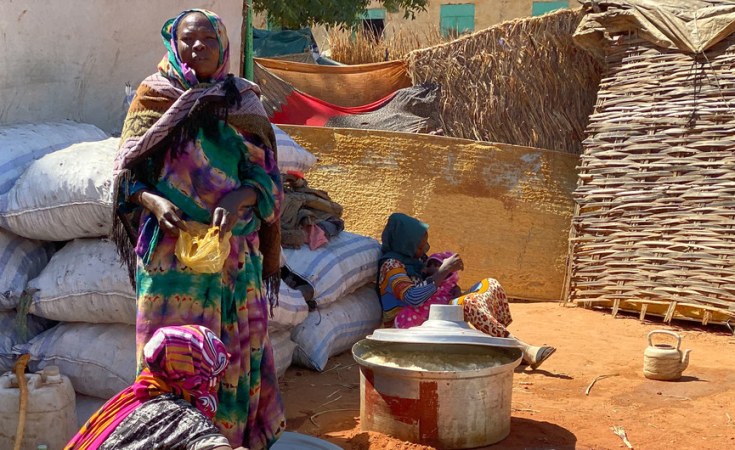
![[OPINION] Navigating the storms of repression: The resilience of young women rights defenders in Asia](https://www.rappler.com/tachyon/2024/03/women-rights-defenders-asia-mar-7-2024.jpg)
/bnn/media/media_files/7d7279a6fe08cbdd641cda8431af6038216be3c9c100f79beacc07763c194f26.jpg)
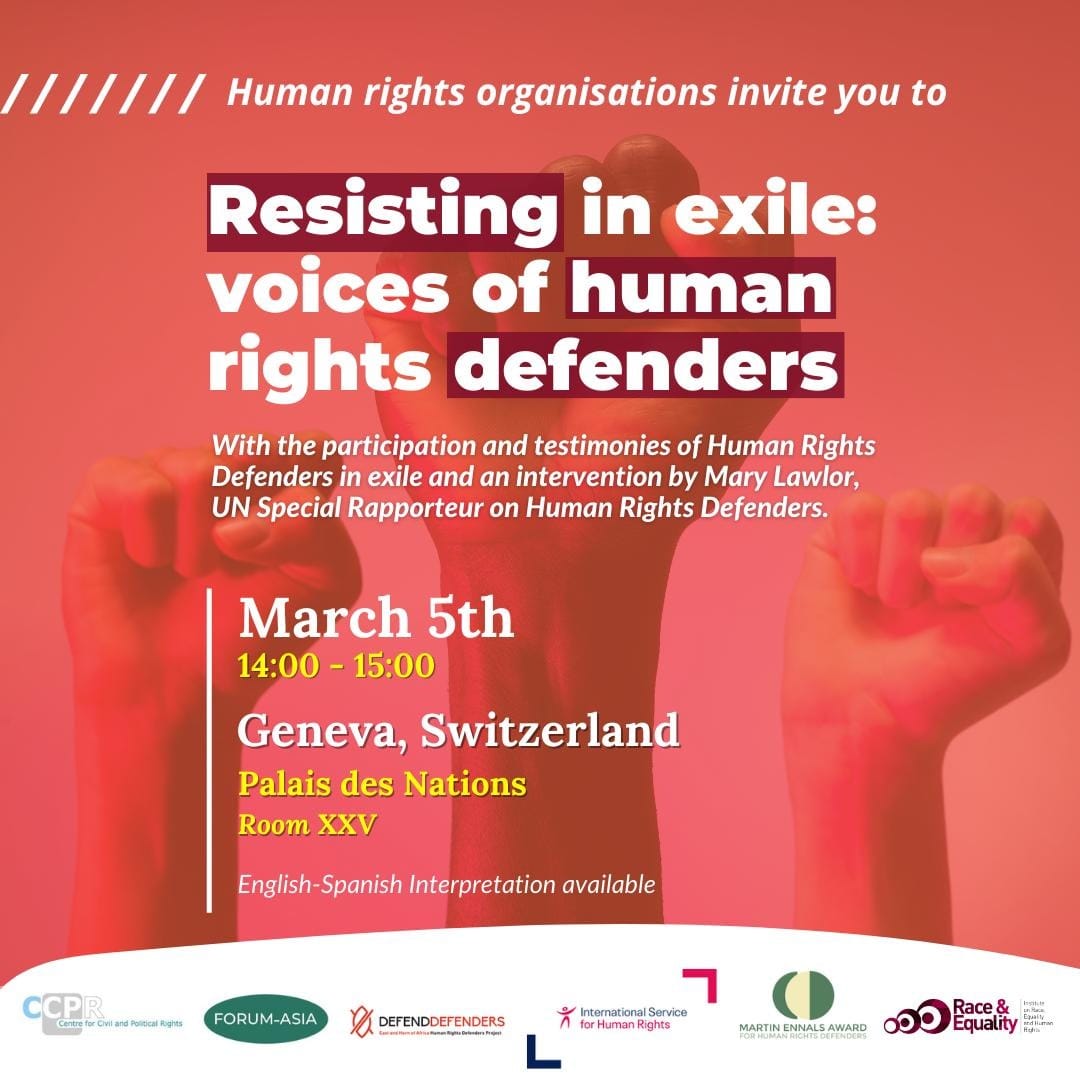


 Stay up-to-date by following

