Archive for the 'OHCHR' Category

More short films on each article of the UDHR

November 27, 2018

Further to my post on the series of short films – one for each article in the 70-year old Universal Declaration of human rights [https://humanrightsdefenders.blog/2018/11/15/each-article-in-the-universal-declaration-on-human-rights-has-its-human-story/], there now more out to watch: see e.ghttps://www.facebook.com/unitednationshumanrights/videos/380180556054710/.

70th anniversary of the Universal Declaration of Human Rights: the UN plans

November 26, 2018

Series of events to shine a light on the UDHR across the world. I already referred to the series of short films – one for each article in the 70-year old Universal Declaration of human rights [https://humanrightsdefenders.blog/2018/11/15/each-article-in-the-universal-declaration-on-human-rights-has-its-human-story/].

But there is more going on: The UDHR, based on the powerful premise that we are all “born free and equal in dignity and rights,” has spread further and been translated into more languages than any other text ever. The aim of the celebratory events sponsored by the UN Human Rights Office is “to shine a light on the many ways in which universal human rights contribute to the daily lives of people everywhere.” Signature events will be held in 14 cities, spanning seven time zones, with each spotlighting a human rights theme relevant to that location:

Africa

  • Dakar (Nov 30) – Our right to accountability when rights are violated
  • Pretoria (Dec 7) – Young people standing up for rights
  • Marrakesh (Dec 10) – The human rights of migrants

Asia-Pacific

  • Suva (Nov 16) – Our right to live on a healthy planet
  • Bangkok (Nov 28) – The rights of people on the move

Europe

  • Manchester (Nov 12) – Our right to live in harmony
  • Paris (Dec 4) – The city where the UDHR was adopted in 1948
  • Geneva (Dec 13) – Upholding rights for a future we all want

Latin America

  • Mexico City (Dec 6) – Our right to defend human rights
  • Panama City (Dec 10) – Children as defenders of rights
  • Santiago (Dec 10) – Women’s rights are human rights

Middle East

  • Doha (Dec 9) – Our right to peace

North America

  • Los Angeles (Dec 10) – Human rights in the city
  • New York (Dec 18) – UN Human Rights Award ceremony

In addition to the 14 signature events, each of which will be accompanied by a social media campaign featuring prominent global and local public figures standing up for human rights, numerous other celebrations are being organized by Governments, NGOs, academic institutions, and many others all over the world.

I urge everyone to join in celebrating the 70th anniversary of the Universal Declaration.  Join us at the public events if you can, or organize one yourself.  Any way that you can take part actively – shining your light on rights – will make a difference, even if it is simply by participating on social media,” said UN High Commissioner for Human Rights Michelle Bachelet.By doing so, we can show just how precious the UDHR is to people all over the world, and the universal nature of the values it contains.  It was an inspiration, a sensation, in 1948, and it is still an astonishing and inspiring document today.

The preservation of the human rights set out in the Declaration is vital to each and every one us – woman, man and child. Human rights are essential for the protection and dignity of our loved ones, our families and friends, our neighbours and our communities – for all of us, whether living in the smallest village or in the greatest of cities.  Violations of anyone’s rights potentially undermine the rights of all of us. So I urge everyone to use the UDHR’s 70th anniversary to reflect on what rights mean, and think of ways we can actively stand up for the rights of not just ourselves, but of everyone else.”

In addition to the events taking place over the next month, on 9 November the UN Human Rights Office will start publishing a series of short articles on each of the 30 Articles of the Universal Declaration. These will be published – one article a day – on www.ohchr.org and issued to media across the world.

For more information on the events listed in this advisory, please contact Rajat Khosla at rkhosla@ohchr.org / +41 22 917 3311

Twitter: @UNHumanRights and Facebook: unitednationshumanrights

https://www.ohchr.org/EN/NewsEvents/Pages/DisplayNews.aspx?NewsID=23832&LangID=E

Each article in the Universal Declaration on Human Rights has its human story

November 15, 2018

The Universal Declaration of Human Rights – celebrating its 70th anniversary – has 30 articles. True Heroes Films (THF) made for the UN 30 short video stories to show the impact of the Declaration around the world. Go to:  or YouTube. The series runs until 10 December, Human Rights Day. Everyday a new one!

“Reprehensible” says UN about Mexican killing of human rights defender

November 7, 2018

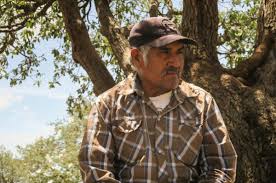
On 6 November 2018, four UN Special  Rapporteurs have strongly condemned the killing of Julián Carrillo, an indigenous rights defender from the state of Chihuahua, Mexico, who had worked tirelessly for over two decades to defend his community against the exploitation of Rarámuri ancestral lands.

On 23 October 23 2018, Julián Carrillo told a friend by phone that he believed he was being watched and said he would go into the forest in an attempt to hide. On the evening of 25 October, his body was found. He had multiple bullet wounds. “We urge the Mexican authorities to identify the perpetrators of this reprehensible crime and to bring them to justice in accordance with the law,” the experts said.

The experts also urged the Government to address the underlying causes of such violence. “The killing of Julián Carrillo highlights the serious situation in the Sierra Tarahumara where the lack of recognition of indigenous land rights is a root cause of the recurring violence against and displacements of indigenous communities.”… [The UN experts are: Mr. Michel Forst, Special Rapporteur on the situation of human rights defenders; Ms. Victoria Tauli Corpuz, Special Rapporteur on the rights of indigenous peoples;  Ms. Agnès Callamard, Special Rapporteur on extrajudicial, summary or arbitrary executions; and Ms. Cecilia Jimenez-Damary, Special Rapporteur on the Human Rights of Internally Displaced Persons.]

Julián Carrillo’s murder is one of a spate of killings of human rights defenders in the country. According to official OHCHR figures, 21 human rights defenders have been killed so far this year, nine of them from indigenous communities. Four members of Julián Carrillo’s family – his son, son-in-law and two nephews – have been killed since February 2016.

This follows soon after the assassination on Wednesday 23 October of journalist Gabriel Soriano Kuri.  Soriano had been covering Governor Héctor Astudillo Flores’ third annual report for the Radio y Televisión de Guerrero (RTG) broadcaster that evening. After the event, held in Acapulco, he was driving a company vehicle when he was attacked and killed by armed civilians. Following the murder, Astudillo offered his condolences to Soriano’s family via Twitter. But it didn’t go down very well. Soriano’s daughter replied with a blunt message: “My dad was assassinated doing his job. Covering your report to the state! Do your job and fix the situation the state is in. It’s not right,” she wrote. Her discontent was echoed in at least three demonstrations where journalists demanded that authorities solve the assassination of their colleague. A state journalists’ association reported that three members of the profession have been slain during Astudillo’s three years in office.

https://www.frontlinedefenders.org/es/profile/noel-castillo-aguilar

https://www.amnesty.org/en/latest/news/2018/10/mexico-asesinato-de-lider-raramuri-demuestra-falta-de-proteccion-estatal/

https://mexiconewsdaily.com/news/demonstrations-follow-journalists-assassination/

14 major NGOs call for immediate release of Chinese human rights defender Huang Qi

November 6, 2018

Chinese authorities must immediately and unconditionally release citizen journalist and human rights defender Huang Qi, a group of 14 NGOs (and not the least, see below) said on November 5, 2018. Huang Qi (黄琦), the founder and director of 64 Tianwang Human Rights Center, is not receiving adequate medical care in detention and his health has seriously deteriorated, according to his lawyer who visited him on October 23. Huang’s condition is so serious that there is an immediate threat to his life. [see also: https://humanrightsdefenders.blog/2016/12/01/rsfs-press-freedom-prize-2016-goes-to-the-64-tianwang-website-in-china/]

The Chinese government must immediately and unconditionally release Huang, who has been detained solely for the peaceful exercise of his right to freedom of expression, and end its policy of denying prompt medical treatment to prisoners of conscience. Several human rights defenders and ethnic and religious minorities have died in detention in recent years due to a lack of prompt medical treatment, including Liu Xiaobo, Cao Shunli [see: https://humanrightsdefenders.blog/2015/03/27/china-or-the-un-must-ensure-independent-investigation-into-death-of-cao-shunli/], Yang Tongyan, and Tenzin Delek Rinpoche, intensifying fears that Huang Qi might suffer the same fate without urgent intervention.

Authorities have repeatedly rejected applications for release on medical bail despite Huang’s heath condition continuing to deteriorate. He faces charges of “illegally providing state secrets to foreign entities” and “leaking state secrets” due to his work with 64 Tianwang Human Rights Center, which documents and publishes reports on enforced disappearances, trafficking, human rights violations and complaints against government officials. Huang faces the possibility of life imprisonment. His 85-year-old mother has been campaigning for his release, fearing he may die in prison. Last month two of his associates received suspended prison sentences and were released, but authorities have continued to hold Huang. The UN Working Group on Arbitrary Detention issued an opinion in April 2018 that declared Huang’s detention arbitrary, but the Chinese government continues to ignore the Working Group’s recommendation that Huang be released and compensated.

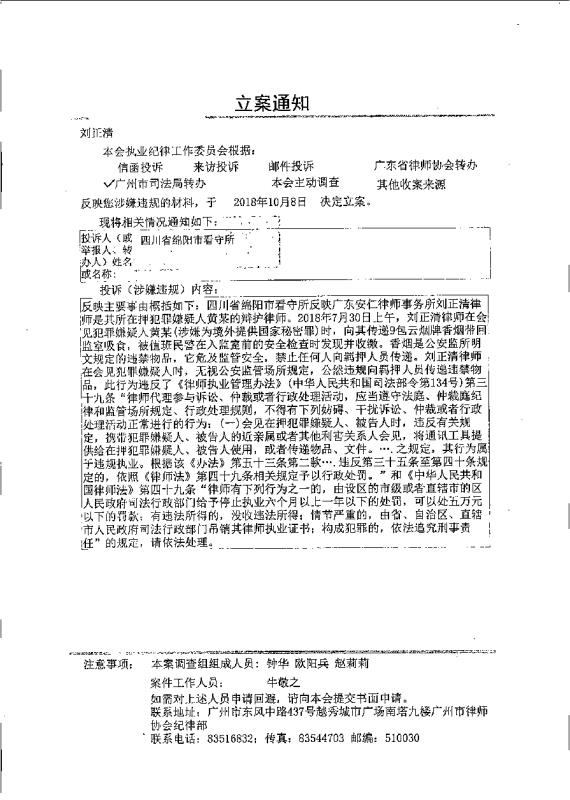
Lawyers representing Huang Qi have also faced retaliation. One of his lawyers, Sui Muqing, was disbarred in February 2018 for defending human rights defenders, such as Huang. [https://www.frontlinedefenders.org/en/case/human-rights-lawyer-sui-muqing-disbarred] Huang’s current lawyer, Liu Zhengqing, received a notice in October that he is under investigation for giving Huang cigarettes during a meeting in July. Liu faces suspension of his law license or a large fine.

http://rsdlmonitor.com/immediately-unconditionally-release-huang-qi/

In this context also relevant is: https://mailchi.mp/ishr/alert-to-the-human-rights-councils-35th-session-31901?e=d1945ebb90

Burundi outrageously attacks United Nations team

October 26, 2018
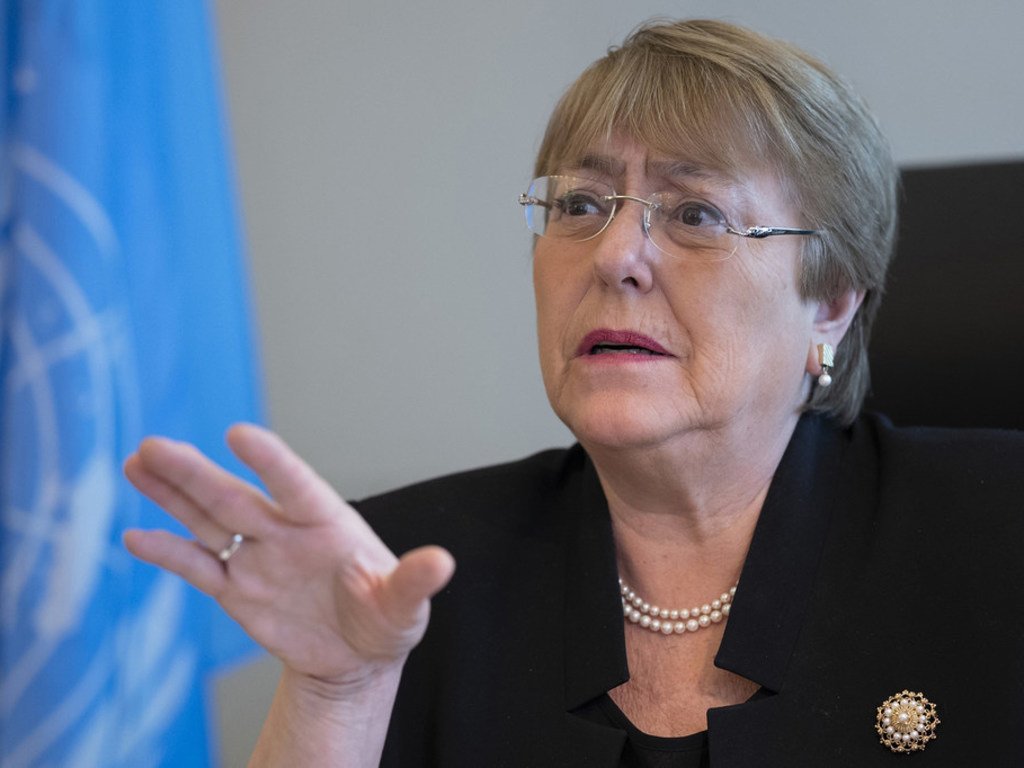
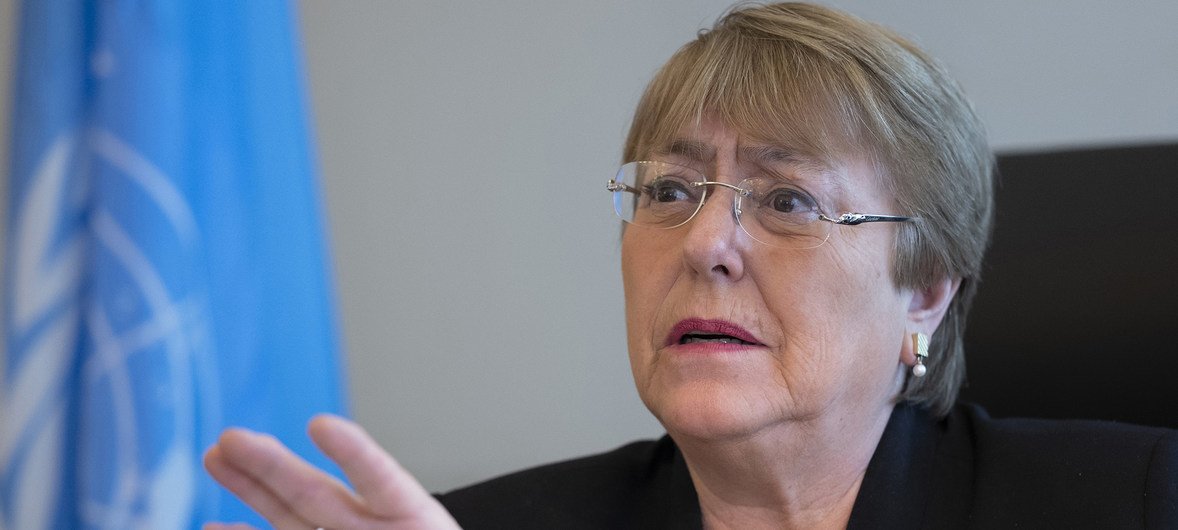
UN High Commissioner for Human Rights Michelle Bachelet. – UN Photo/Jean-Marc Ferre

High Commissioner for Human Rights, Michelle Bachelet, said on Thursday 25 October that comments made by Burundi’s UN ambassador the previous day, were “deeply regrettable in both tone and substance” and demanded that it “immediately retracts” its threat to try and prosecute members of a UN Commission of Inquiry into rights abuses in the central African nation.

She also raised concern over the Burundian Government’s “complete failure” to address the very serious findings of the Commission of Inquiry. On Wednesday, the Ambassador and Permanent Representative of Burundi to the UN, Albert Shingiro, had attacked this independent international inquiry team, threatening to prosecute its members and compared Commission Chair, Doudou Diène, to a participant in the slave trade [SIC].

Amazingly Burundi is also a current member of the Geneva-based Human Rights Council [see: https://humanrightsdefenders.blog/2016/02/08/what-is-burundi-doing-in-the-un-human-rights-council/].

I urge the Government of Burundi to issue an immediate retraction of this inflammatory statement and to offer a full apology to Mr. Diène and the other Commissioners, as well as to the Human Rights Council, which created the Commission, and its President who selected and appointed the three Commissioners,” she said.

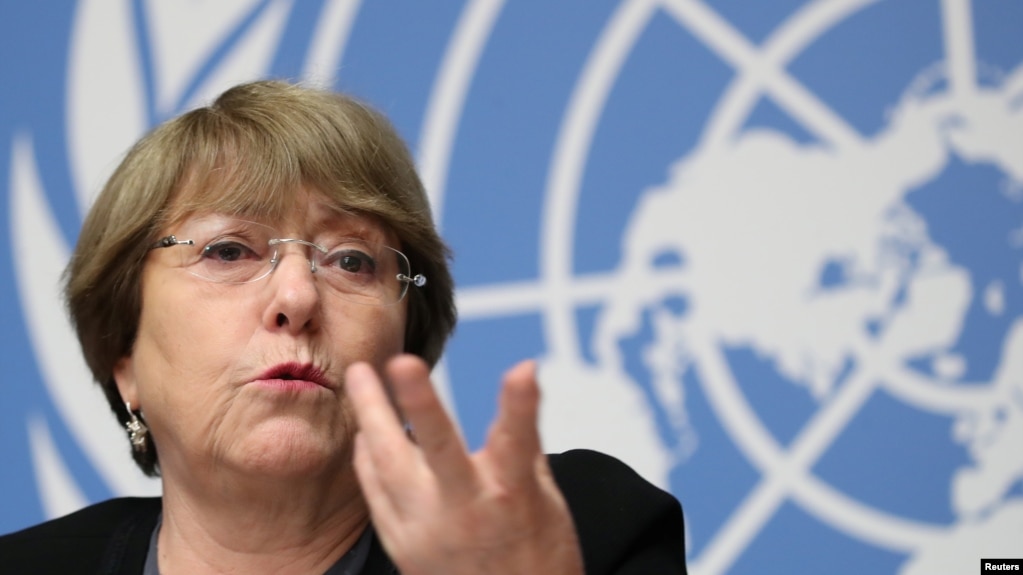
Michelle Bachelet, new UN High Commissioner for Human Rights, gives major interview

October 18, 2018

In August 2018, Michelle Bachelet, twice-elected President of Chile was confirmed as the new UN High Commissioner for Human Rights, replacing Zeid Ra’ad Al Hussein. [see e.g.: https://humanrightsdefenders.blog/2018/08/22/change-of-high-commissioner-for-human-rights-at-the-un-optimism-warranted/]. Minutes after she was approved, UN chief Antonio Guterres told reporters he was “delighted” by the news of her official appointment, describing Ms. Bachelet, a “pioneer”, has been “as formidable a figure in her native Chile, as she has at the United Nations”. Shortly after assuming office in early September, Ms. Bachelet was in New York for the General Assembly’s high-level general debate. She spoke then with UN News on the rights situation around the world, the priorities for her tenure, and how can rights be better protected. It was published on 17 October 2018.

Bearing in mind her own personal experience of being detained and tortured in Chile, the interview started with a question on how she overcame the hardships she suffered under the military dictatorship of Augusto Pinochet.

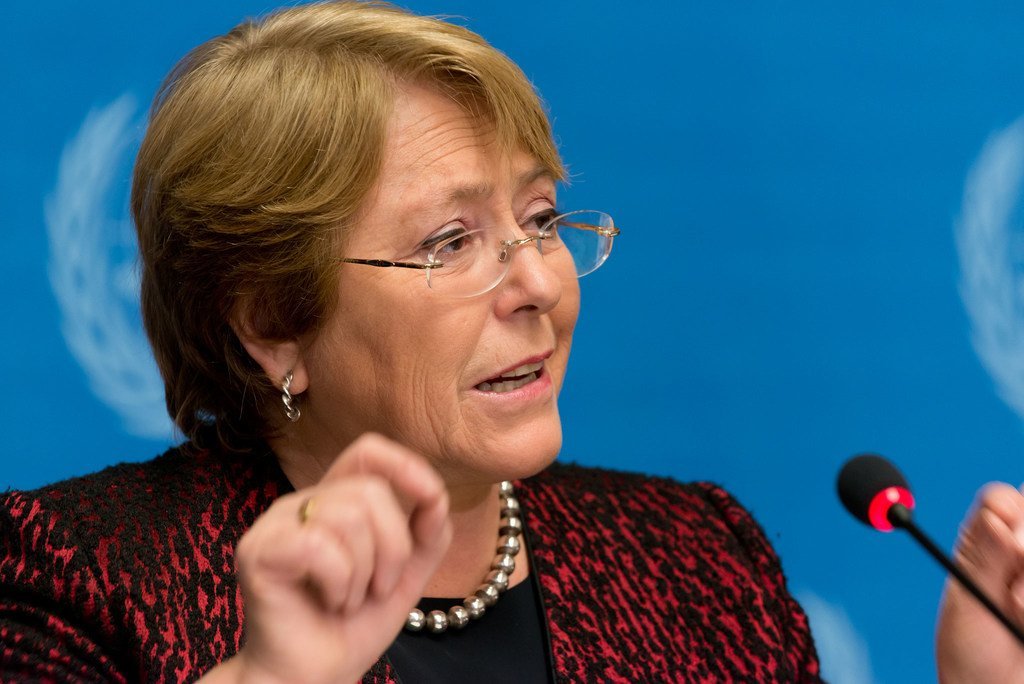
UN High Commissioner for Human Rights Michelle Bachelet (file photo) ILO/M. Creuset

Michelle Bachelet: ….there was a period of my life that I really hated what was happening – I had so much rage. But afterwards, I started thinking, “you know what, I do not want this to happen anymore in Chile or in any other country of the world. So, what can I do to contribute, that Chile will be a peaceful, democratic society?” So, I sort of put all my energies on that, and that is why I started working on defence issues to be able to speak to the militaries, because I never thought I was going to be Minister of the Defence or President of the Republic.,,I would say it permitted me to understand that, first of all, lessons learned, and if you really want some objective, and in a possible, constructive way, it can be done.

As the High Commissioner, you have come in a time when human rights are under serious attack globally. What your priorities are going to be?

Michelle Bachelet: …. first of all, of course, my priorities are to do what my mandate tells me to do, to be the voice of the voiceless. But also to engage with governments so they respect human rights, protect people from rights violations, and promote human rights.

….But one of my particular priorities from the Secretary-General is prevention. I am not saying I will succeed on that, maybe not. But I will try to design a system where we can have early warning signs and try to think on early action. …..

Right now, some countries do not want to cooperate with OHCHR or question the worth of the Human Rights Council. How do you plan on bringing everyone together?

Michelle Bachelet: In my opening statement, I spoke about, that consensus could be possible, that we should not lose ourselves in sterile disputes. Of course human rights is a very political thing and you see that here in the General Assembly, in the Security Council, so it is not in the Human Rights Council, by itself.

I mean, countries have their visions, their interests, and sometimes, they are not interested in some issues. But what I have been doing is meeting, not only with the whole council, but with groups of countries in Geneva such as the Group of Latin American and Caribbean countries, the African countries, the Arab countries, the Asia-Pacific countries, the West European and Other countries, the Eastern European countries, speaking but also listening. Because, sometimes, you know what you have to do, but the way you do it can be more successful than others. Sometimes you need to speak out. Sometimes you need to strategize in terms of saying, look, it will work better if we do diplomatic prevention, if we start engaging the government. But today the world is complicated, and it is very polarized in some issues………

This year is the 70th anniversary of the Universal Declaration of Human Rights. What progress do you think has been done in the past 70 years?

Michelle Bachelet: …..Think of 1948: how many countries allowed women to vote, for example; how many respected of freedom of speech. If you think of the different aspects of the human rights, even in more complete things that usually people do not think of as human rights, but they are human rights: on health, on education, on sanitation, on housing. The world today is better than 70 years ago. But having said that, there are a lot of threats, there are a lot of threats for multilateralism, there is a lot of threat and pushback on human rights. …We see a pushback, we see that in some documents, human rights is not mentioned, and when you ask, they say, “it is mainstream.” And if it is mainstreamed, it is fantastic, because everybody’s doing their job. But if it is invisible, mainstream, that is not a good thing. On the other hand we see human rights defenders and civil society having their space shrink. They have been under attack. Journalists have been killed.

So there is a lot of challenges. The only thing I can say is that the struggle for human rights probably will never end, because it is a process where you advance, but there will be always people who want to push back, and that could be governments or that could be armed groups. The task of the UN is to ensure and promote the whole human rights system. And I will do what I have to do about it, but it cannot be only the task of the Office of the High Commissioner for Human Rights, it has to be the task of the whole UN system….

I would like to ask you about protecting those who protect: human rights defenders are often targets of abuse and violence. How can they be better protected?

Michelle Bachelet: Well, the curious thing is that, as we are celebrating the 70th year of the Universal Declaration of Human Rights, we are celebrating 20 years of the Declaration on the Protection of Human Rights Defenders. And in November 2017, a resolution on the protection of human rights defenders was approved unanimously by the General Assembly.  No country voted against it. So, the issue is: on paper things can look very good, but reality is another thing. I think we have the task of making people accountable for the things they have approved. Second, to monitor implementation of those agreements that everybody has made, and engage governments, and in the cases where things are happening, holding them accountable and responsible for the killings, the torture, the detentions of many human rights defenders.

You have been a very important defender of women’s rights. How is that going to continue, as the UN High Commissioner for Human Rights?

Michelle Bachelet: The thing is that, people tend to see OHCHR as only concerned with civil and political rights, and that is not it. The Universal Declaration of Human Rights clearly states the rights for migrants, for children, for women; right to health, to education. It is very comprehensive. Even though I am not intending to replace any other agency, I always speak about gender issues, gender empowerment. This morning I was speaking about women who are women’s human rights defenders, who have been attacked, threatened with rape.

I will be always raising the voice for women, trying to support their capacities, and building partnership with UN Women, as we have spoken with Henrietta Fore, the head of UNICEF to see how we can create synergies. …..

One of the most pressing issues for the entire world is climate change. How are human rights linked to the environment?

Michelle Bachelet: ..There are so many concrete consequences that will be effects in people’s lives and their rights. That is why we also believe that working strongly to combat climate change is a very essential task, including of the High Commissioner. I think also that we need to be more part of the 2030 Agenda for Sustainable Development and how we support the Sustainable Development Goals (SDGs). ..

And climate change is of huge importance, because I have seen places where there is no more water and people who depend agriculture, mainly women, and now have to think how they get their incomes. With climate change, we have seen, and scientists tell us … about worsening natural disasters and extreme weather, forest fires. And all of these will have a lot of consequences for the life of people. It is very important to work very closely on that, too. I completely agree with the Secretary-General when said that this is one of the major, major challenges that we have.
Full interview at: Human Rights

 India: attacks on human rights defenders abound under Unlawful Activities Prevention Act

October 7, 2018

I recently wrote about India’s shameful place in the list of countries that practice reprisals [https://humanrightsdefenders.blog/2018/09/22/attack-on-human-rights-defenders-in-india-are-an-attack-on-the-very-idea-of-india/]. On 5 October 2018 this was followed by a joint statement by a large number of UN experts (Mr. Michel Forst, Special Rapporteur on the situation of human rights defenders; Ms. Fionnuala D. Ní Aoláin, Special Rapporteur on the promotion and protection of human rights and fundamental freedoms while countering terrorism; Mr. Fernand de Varennes, Special Rapporteur on minority issues; Mr. David Kaye, Special Rapporteur on the promotion and protection of the right to freedom of opinion and expression; Ms. Ivana Radacic (Chair), Ms. Meskerem Geset Techane (Vice Chair), Ms. Elisabeth Broderick, Ms. Alda Facio, Ms. Melissa Upreti, Working Group on the issue of discrimination against women in law and in practice; Ms. E. Tendayi Achiume, Special Rapporteur on contemporary forms of racism, racial discrimination, xenophobia and related intolerance; Mr. Seong-Phil Hong (Chair), Ms. Leigh Toomy (Vice-Chair), Ms. Elina Steinerte (Vice-Chair), Mr. José Guevara, Mr. Setondji Adjovi, Working group on arbitrary detention) saying that India uses terrorism charges as a pretext to silence human rights defenders

The UN human rights experts did so in the context of terrorism charges – under the Unlawful Activities Prevention Act (UAPA) – laid against 10 human rights defenders working with India’s poorest and most marginalised communities, including the Dalits, and urged authorities to ensure their cases are promptly heard in line with international law. All were arrested in June in connection with investigations into a public meeting organised a day before the 200th anniversary of the commemoration of a battle at Bhima-Koregaon, an important cultural event and a symbol of Dalit empowerment. Police subsequently claimed that the human rights defenders had links with ‘unlawful organisations’. “We are concerned that terrorism charges brought in connection with the commemoration of Bhima-Koregaon are being used to silence human rights defenders who promote and protect the rights of India’s Dalit, indigenous, and tribal communities,” the UN experts said. “We are very concerned about the charges against the human rights defenders and the continuing detention of nine of them,” the UN experts said. “All have been active in peacefully defending human rights, including those of marginalised and minority communities, political prisoners, and women, and their arrests appear to be directly related to their human rights work.


In June2018 Front Line Defenders listed as some of these:


Surendra Gadling <https://www.frontlinedefenders.org/en/profile/surendra-gadling> a human rights lawyer and General Secretary of the Indian Association of Peoples’ Lawyers (IAPL).

Rona Wilson <https://www.frontlinedefenders.org/en/profile/rona-wilson&gt;  is a member of the Committee for the Release of Political Prisoners (CRPP), which has campaigned against the Unlawful Activities (Prevention) Act and other repressive laws.

Sudhir Dhawale <https://www.frontlinedefenders.org/en/profile/sudhir-dhawale&gt;  is a Dalit rights activist and the editor of the Marathi magazine ‘Vidrohi’.

Shoma Sen <https://www.frontlinedefenders.org/en/profile/shoma-sen&gt;  is a professor at Nagpur University and a long time Dalit and women’s rights activist.

Mahesh Raut  <https://www.frontlinedefenders.org/en/profile/mahesh-raut&gt; is a land rights activist working with Gram Sabhas in the mining areas of Gadhchiroli.

On 5 July 2018, Front Line reported that human rights lawyer Advocate Sudha Bhardwaj released a statement refuting the false allegations and defamatory statements levelled against her by Arnab Goswami, news anchor and managing director of Republic TV. In a program that aired on 4 July 2018, Arnab Goswami alleged that the human rights defender was linked to Maoists. (https://www.frontlinedefenders.org/en/profile/sudha-bhardwaj). Sudha Bhardwaj firmly denied that the letter was written by her, and refuted the false allegations as defamatory and hurtful. She also expressed incredulity at the fact that the source of the letter had not been revealed, and that the letter had surfaced at the studio. She believes that the malicious and fabricated attack on her is a result of a press conference she had addressed in Delhi on 6 June 2018, condemning the arrest of Advocate Surendra Gadling. Front Line adds that This smear campaign comes as a part of an ongoing crackdown against human rights lawyers in India, especially those who work with Adivasi people and Dalits. Front Line Defenders condemns the smear campaign against human rights defender Sudha Bhardwaj, which it considers to be in retaliation to her legitimate and peaceful human rights work. Front Line Defenders expresses its concern for the security of Sudha Bhardwaj, particularly as the inflammatory allegations may motivate judicial harassment or other forms of retaliation.  

—–

https://www.jurist.org/news/2018/10/un-experts-decry-india-terrorism-charges-against-human-rights-defenders/

https://www.ohchr.org/EN/NewsEvents/Pages/DisplayNews.aspx?NewsID=23686&LangID=E

https://www.frontlinedefenders.org


Children as Human Rights Defenders: UN Committee has discussion

September 29, 2018

On 28 September the United Nations’ Committee on the Rights of the Child held a Day of General Discussion on the topic “Children as Human Rights Defenders”. United Nations Deputy High Commissioner for Human Rights, Kate Gilmore, gave the opening speech; here some excerpts:

….It is my great pleasure to join in welcoming you all to this Day of General Discussion on Children Human Rights Defenders..I am most excited of course to be welcoming the members of the Child Advisory Team. You make this such a very special moment for us all – for us personally who work here and for the human rights work we try to do here. This year is the 20th birthday of the UN Human Rights Defenders Declaration and the 70th birthday of the UDHR. ….

Today, we will talk with you, about you. We will listen to you, …….

….We older people have failed you – have failed children. In so many places, in so many ways – older people are still failing children…….

Yet, the strange thing about this, is that it was older people – even older people – including some working 70 years ago – who made those laws and standards that recognise you have those rights, and yet it is older people who are breaking those promises.

……………If young age is no barrier to experiencing the worst consequences of older people’s decisions, then why use young age as an excuse to leave you out, to lock you out, from the places where those decisions could be changed. As human rights defenders, you know far better than I do why it is so important that we rethink the power relationship between older and young people.  If we would just change how we older people relate to children, make more room for you, listen to you more respectfully, value your experiences more, keep our promises to you then maybe we too would grow up and with you, just get on with changing the world for better.

https://www.ohchr.org/EN/NewsEvents/Pages/DisplayNews.aspx?NewsID=23654&LangID=E


High Commissioner, please put human rights defenders up front

September 20, 2018

In a briefing paper for the new UN High Commissioner for Human Rights, Michelle Bachelet, ISHR has set out ten concrete and practical ways in which the High Commissioner and her Office can contribute to protecting human rights defenders and promoting a safe and enabling environment for their work at the international and national-levels.

Supporting and empowering these defenders – and protecting them against those governments, corporations and fundamentalists whose currency is prejudice, profit or privilege – should be the new High Commissioner’s highest priority. She should consult closely with defenders, speak out and pursue accountability when they are attacked, push for laws and mechanisms to protect them at the national level, and ensure that the UN human rights system is safe, accessible and effective for them,‘ ISHR Director Phil Lynch said.

The ISHR briefing paper complements a broader civil society letter supported by more than 750 civil society [https://humanrightsdefenders.blog/2018/09/08/civil-society-sends-letter-to-new-high-commissioner-for-human-rights-bachelet/].

Recommendations for the High Commissioner to support human rights defenders

  1. Be proactive in regularly consulting and working in partnership with human rights defenders and other independent civil society actors.
  2. Make clear and regular statements on the essential role played by human rights defenders and the need to ensure they can work in a safe and enabling environment without fear or hindrance, acknowledging the protection needs of particular groups of defenders.
  3. Speak out and demand accountability on cases of threats, attacks and reprisals against human rights defenders, including by calling for and supporting impartial investigations, prosecution of perpetrators, and effective remedies for victims.
  4. Push and work with States to fulfil the commitments laid out in the UN Declaration on Human Rights Defenders, including through repealing restrictive legislation and developing specific laws, policies and mechanisms to protect defenders.
  5. Establish a comprehensive set of indicators to assess State fulfilment of human rights obligations related to human rights defenders, which could be used as an evidentiary basis for assessing compliance.
  6. Build strategic alliances with States, civil society, academics, business enterprises and other actors with a shared interest in human rights, ensuring an enabling environment for civil society and respect for the rule of law.
  7. Define an operating procedure at OHCHR to ensure that all offices establish and apply minimum standards in regard to their work on and with human rights defenders.
  8. Encourage the Secretary General to carry out a full audit of UN work on human rights defenders and to develop an organisation-wide policy on supporting and protecting defenders. More generally, work closely with the Secretary-General to ensure that all UN agencies contribute to, and coordinate on, the protection of defenders and ensuring an enabling environment for their work.
  9. Encourage the development and implementation of an effective UN-wide policy on preventing and addressing reprisals and strongly support continuation and adequate resourcing of the mandate of the UN Senior Official on reprisals.
  10. Work to ensure that UN human rights bodies and mechanisms are accessible, effective and protective for human rights defenders, in particular by ensuring that any reform efforts are informed by the full and meaningful participation of civil society. Strong leadership from the High Commissioner is essential to ensure that the process to strengthen the Treaty Bodies in 2020, and the General Assembly mandated status review of the Human Rights Council in 2021, are underpinned by these principles.

http://www.ishr.ch/news/high-commissioner-put-human-rights-defenders-front